Turn every policy into automated workflows with built-in enforcement and audit-ready proof.



Process System
A process system is a coordinated set of people, workflows, rules, information, tools, and feedback loops that produces a repeatable business outcome. A single process moves one piece of work from a trigger to a result. A process system connects many related processes so the organization can deliver that result reliably at scale.
This guide uses the business-operations meaning of the term. A process system might govern customer onboarding, order fulfillment, employee lifecycle work, quality management, or compliance. It gives teams a shared operating structure while leaving room for controlled exceptions and professional judgment.
When the system is well designed, employees know how work starts, who owns each decision, which controls apply, where evidence belongs, and how results feed improvement. Process Street helps teams turn that structure into workflows that people can run, monitor, and improve.
In this guide, we are going to cover:
- What is a process system?
- Process system vs. process, procedure, and project
- Core components of an effective process system
- How a process system works
- How to build a process system
- How to measure and improve a process system
- Process system examples
- How Process Street supports a process system
- Process system FAQs
What is a process system?
A process system is the operating environment that makes recurring work dependable. It connects the process itself with ownership, decision rules, supporting information, technology, controls, and measurement. The system has a defined purpose and boundary, but it also interacts with suppliers, customers, other departments, and systems of record.
A practical definition
Think of a process system as a network rather than a document. Each workflow accepts an input, changes its state through coordinated work, and produces an output. Governance decides what good execution looks like. Data shows whether the result met the standard. Feedback turns that evidence into the next improvement.
This system view follows the ISO process approach, which treats consistent results as the product of interrelated processes managed as a coherent whole. It is also why an organization can have hundreds of documented procedures and still lack an effective system: the procedures may not connect, share controls, or produce usable feedback.
What sits inside the system boundary
The boundary should include the work needed to produce the chosen outcome. For customer onboarding, that could include sales handoff, risk review, implementation planning, data migration, training, launch approval, and early-life support. Payroll, product development, and procurement may affect the outcome, but they remain outside the boundary unless the system directly governs them.
A clear boundary prevents a process system from becoming an abstract map of the whole company. The APQC Process Classification Framework can help teams name process groups consistently before deciding which ones belong in the system.
Why businesses need process systems
Growth adds volume, handoffs, systems, and exceptions. Informal coordination that worked for ten cases becomes fragile at one hundred. A process system reduces that fragility by giving the business one operating model for recurring work. It also makes failures easier to locate because inputs, owners, controls, and outputs are explicit.
The system view also improves change decisions. When a team adjusts one workflow, it can see which inputs, controls, reports, and downstream processes depend on that workflow. That reduces the chance that a local optimization creates a wider failure. Leaders can prioritize changes according to the outcome of the whole system instead of whichever task is currently the loudest problem, while preserving stable service for the people who depend on it.
Process system vs. process, procedure, and project
These terms describe different levels of operational structure. Mixing them leads teams to document the wrong thing or use a project tool for work that needs durable governance.
Process
A process is a repeatable flow that converts an input into an output. The process operation is the work performed inside that flow, such as verifying a request, approving an exception, or creating a record. A process normally has one trigger, one intended outcome, and a manageable set of steps.
Procedure
A procedure explains how to perform a task or portion of a process. It supplies detailed instructions, standards, and evidence requirements. Clear process documentation keeps procedures useful, but documentation alone does not assign work or control execution.
Project
A project is temporary work organized around a unique deliverable. It may use recurring processes, but it ends when the deliverable is complete. A process system persists and handles repeated cases, even as individual workflow runs start and finish.
System
A system connects multiple processes and procedures to achieve a broader operating objective. A management system adds policies, responsibilities, controls, and review. A process system focuses that logic on the connected flow of work and the outcomes it produces.
Core components of an effective process system
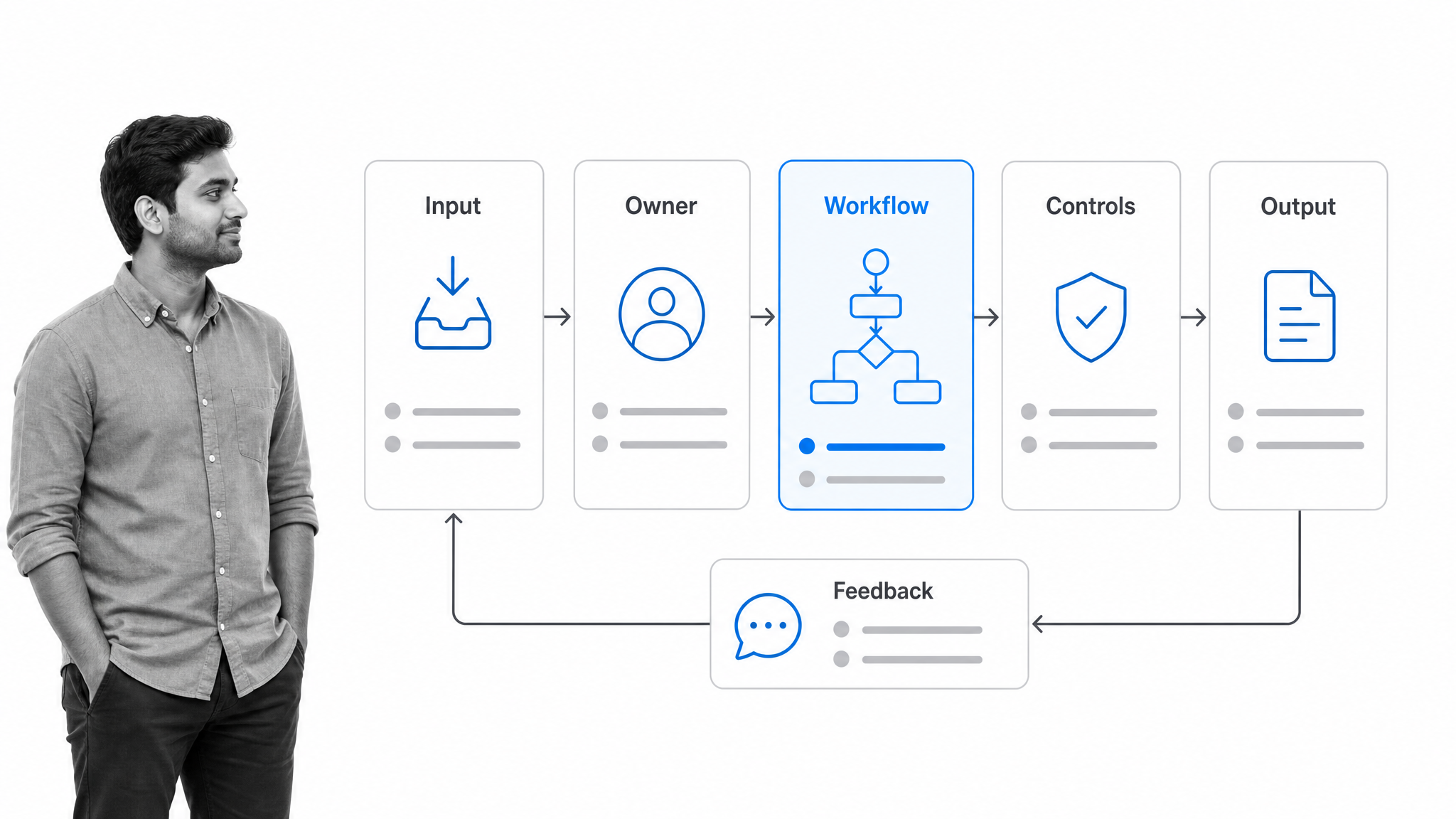
Effective process systems share six components. The exact implementation changes by department, but the underlying architecture stays recognizable.
1. Inputs and triggers
Every run begins with an event and enough structured information to act. A trigger might be a submitted request, signed contract, failed control, scheduled date, or status change. Entry criteria prevent incomplete or inappropriate work from entering the system.
2. Ownership and roles
The system needs an accountable owner, clear task responsibility, and defined decision rights. Ownership includes who maintains the design, who performs the work, who approves risk, and who reviews performance. Shared responsibility without accountability creates delay.
3. Workflow and handoffs
Workflow defines the order of activities and how work moves between people and systems. The BPMN standard offers a common notation for detailed process models, but the operating workflow must also be clear to the people doing the work.
4. Rules and controls
Rules determine which path applies. Controls prevent, detect, or correct failures. Examples include required fields, segregation of duties, approvals, quality checks, service thresholds, and exception routes. Use controls where the cost of failure justifies them, not as decoration.
5. Outputs and evidence
The output should be observable: an approved supplier, onboarded customer, reconciled account, released product, or resolved incident. Evidence shows how the result was produced. Useful evidence includes submitted data, task history, approval decisions, attachments, timestamps, and exception records.
6. Feedback and improvement
A system learns from cycle time, quality, rework, exceptions, user feedback, and downstream outcomes. Feedback must return to an owner who can change the workflow, control, training, or supporting system. Without that loop, measurement becomes reporting without improvement.
How a process system works
A process system works by coordinating three layers: design, execution, and governance. Design defines the intended flow. Execution turns each case into assigned work. Governance checks whether the flow is controlled and still achieves its purpose.
Design layer
The design layer contains the process architecture, workflow definitions, role model, rules, controls, data requirements, and interfaces. A strong design is specific enough to guide action but modular enough to change without rebuilding the entire system.
Modularity matters because not every change should require a system-wide release. Reusable intake patterns, approval patterns, evidence requirements, and escalation rules let teams improve one part while preserving stable interfaces with the rest. The architecture should make those interfaces visible so owners know what they can change safely and where coordination is required.
Execution layer
The execution layer creates and routes work. Each case becomes a workflow run with a state, owner, due dates, decisions, and evidence. This is where a business process management solution turns the model into coordinated action instead of leaving it as a diagram.
Governance layer
Governance reviews performance, risk, ownership, access, change, and exceptions. It decides which variation is legitimate and which signals a design problem. The goal is controlled adaptability: standardize what must be consistent and expose the moments that require judgment.
A practical governance forum reviews a small set of evidence: outcome trends, recurring exceptions, control failures, user friction, and proposed changes. The group should include the system owner and representatives from the functions that create or consume the output. Its job is to make decisions, assign improvements, and confirm that completed changes produced the expected result.
The operating cycle
A trigger enters, the system validates it, work follows the applicable path, controls test critical conditions, and the output is recorded. Performance data then returns to the owner. The next version of the system incorporates what the team learned.
This cycle should be visible from end to end. Teams need to distinguish work that is waiting for a valid reason from work that has simply lost an owner. Managers need enough context to resolve a blocked case without creating a parallel process in email. System owners need aggregated patterns without losing the ability to inspect the evidence behind an individual result. Visibility at all three levels keeps daily execution and long-term improvement connected, accountable, and responsive to changing operating conditions.
How to build a process system
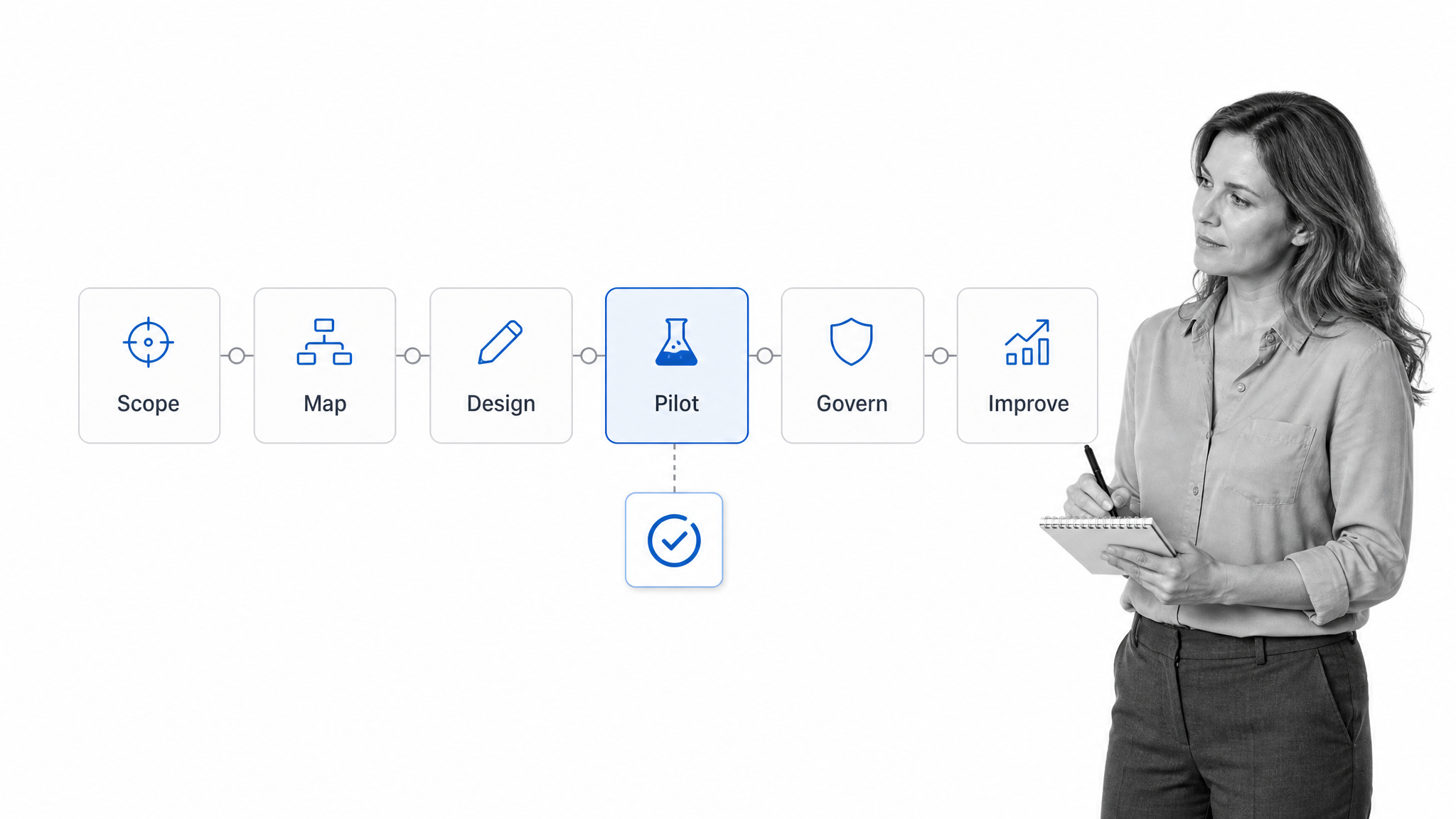
1. Scope the outcome and boundary
Name the result the system must produce, the customer of that result, the starting trigger, and the ending condition. Write down what is outside scope. A useful scope is narrow enough to manage and broad enough to include the handoffs that determine quality.
2. Inventory and map the current processes
List the processes, procedures, systems, roles, controls, and records already involved. Start from actual work, not an idealized policy. A practical process template method helps separate reusable workflow structure from case-specific information.
3. Design the target architecture
Choose process owners, standard paths, decision points, data requirements, evidence, system interfaces, and exception routes. Remove duplicated approvals and handoffs that do not protect the outcome. Define a small number of system-level measures before automation begins.
4. Pilot with representative cases
Run normal, high-risk, incomplete, and unusual cases through the design. Observe where people hesitate, bypass steps, or need information that the workflow does not supply. A pilot tests both process logic and the experience of the people operating it.
5. Establish governance
Assign a system owner, review cadence, change method, access rules, and escalation path. Decide which changes require approval and how older versions will be handled. Governance keeps local improvements from breaking upstream or downstream work.
6. Roll out and improve
Train people using real scenarios, launch in manageable stages, and watch early exceptions closely. Starting with a how to create a process template or master SOP structure can speed documentation, while execution data shows what to improve next.
How to measure and improve a process system
Measure the outcome, the flow, and the control environment. A fast system that produces poor outcomes is not effective. A compliant system that takes too long may drive users to work around it.
Outcome measures
Track whether the system produced the intended result: first-time quality, customer activation, defect escape rate, close accuracy, audit acceptance, or incident recurrence. Outcome measures keep optimization connected to business value.
Pair each measure with an owner, review cadence, decision threshold, and documented response so the metric can change how the system operates.
Flow measures
Cycle time, wait time, throughput, work in progress, overdue tasks, and handoff delay reveal operational friction. Segment them by path or risk level so legitimate complexity does not hide poor performance in routine cases.
Control and learning measures
Monitor approval reversals, missing evidence, policy exceptions, rework, bypasses, and change adoption. These measures show whether the process system is followed and whether its design needs attention.
Use a disciplined improvement cycle
The PDCA cycle supports frequent learning, while DMAIC provides a deeper structure for persistent performance problems. Templates such as process improvement principles, internal process improvement, and business analyst process improvement help teams turn observations into controlled changes.
Process system examples
Customer onboarding system
This system connects contract handoff, risk review, implementation planning, data preparation, training, launch approval, and adoption follow-up. It succeeds when customers reach value quickly without skipping commercial or security commitments.
Quality management system
A quality process system connects specification control, inspection, nonconformance, corrective action, supplier quality, training, and management review. It uses evidence from each workflow to prevent recurring defects.
Employee lifecycle system
The lifecycle system coordinates recruiting handoff, onboarding, access, training, role changes, reviews, leave, and offboarding. Each process has a distinct output, while shared identity, approval, evidence, and access controls connect the system.
Compliance operations system
A compliance system coordinates policy acknowledgments, control testing, risk reviews, evidence requests, issue remediation, and reporting. Its value comes from reliable execution and traceable proof, not from storing policies alone.
The same architecture works in smaller teams. A startup may begin with one owner and a handful of workflows, while a global business may use process councils, regional variants, and several systems of record. Scale changes the governance and technology, but the essential logic remains the same: clear inputs, accountable execution, controlled decisions, observable outputs, and a feedback loop that improves the next run.
How Process Street supports a process system
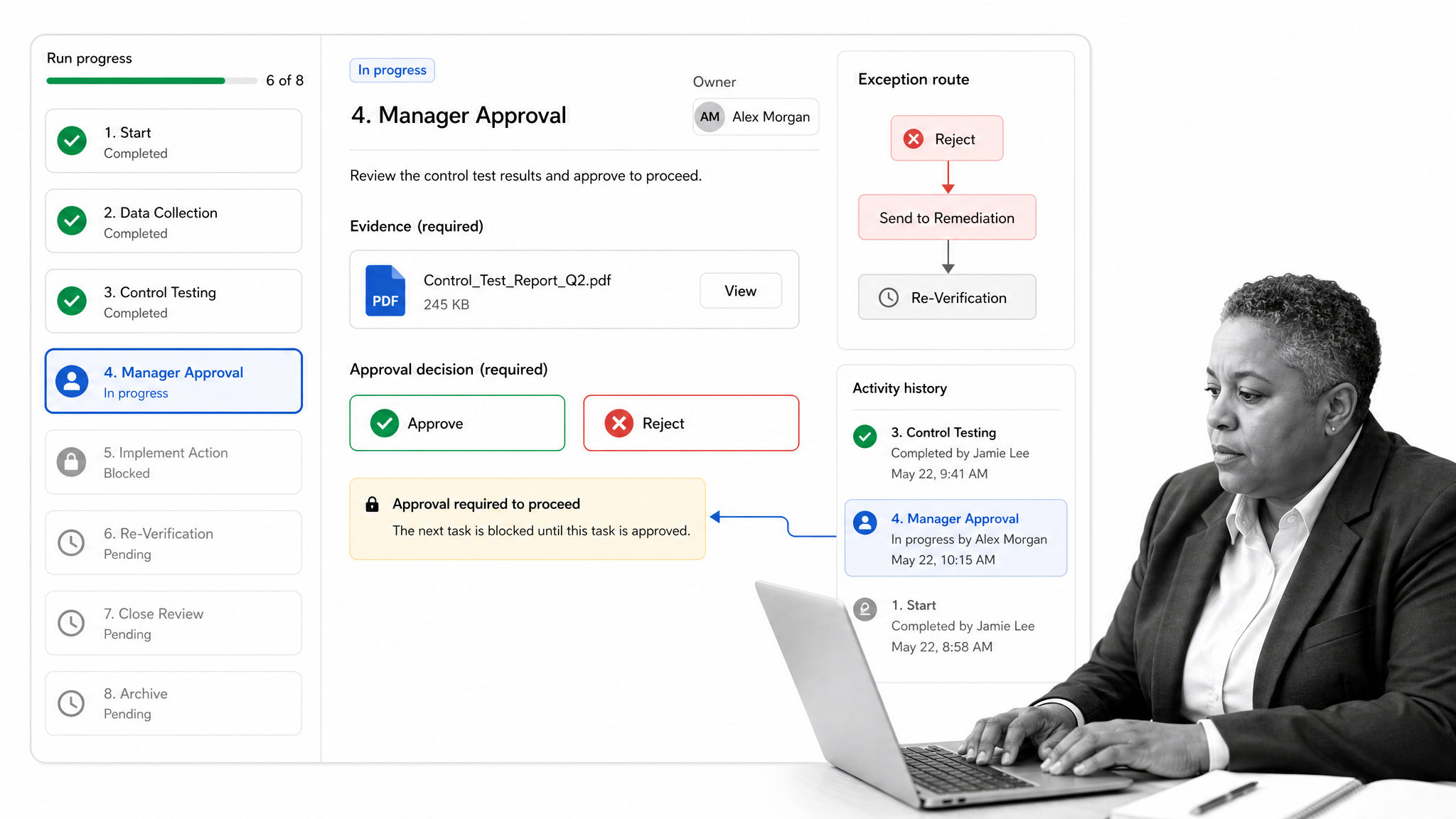
Process Street is a Compliance Operations Platform that turns recurring procedures into governed workflows. Teams can connect documentation, execution, approvals, evidence, and oversight so the process system operates through the work itself.
Turn standards into assigned work
Workflow runs give each case a current state and record. Task assignments send work to the responsible person or group, while due dates and instructions keep the operating standard close to execution.
Route decisions and exceptions
With conditional logic, answers and risk conditions can change which tasks or information appear. Structured approvals give reviewers a defined decision point instead of burying authorization in chat or email.
Keep evidence with the workflow
Required form fields, files, decisions, owners, timestamps, and activity history stay associated with the run. That creates a usable operating record for managers, auditors, and improvement teams.
Manage visibility and change
The workflow dashboard helps teams monitor runs across the system, while workflow version control supports controlled updates. The result is a process management system people can use every day, not a model that goes stale between reviews.
Process system FAQs
What is a process system?
A process system is a coordinated set of people, workflows, rules, information, tools, controls, and feedback loops that produces a repeatable business outcome. It connects related processes so they operate as one managed whole.
What are the main components of a process system?
The main components are inputs and triggers, ownership and roles, workflows and handoffs, rules and controls, outputs and evidence, and feedback for improvement. Each component must connect to the others.
What is the difference between a process and a system?
A process is one repeatable flow from an input to an output. A system connects multiple processes, procedures, roles, controls, information, and tools to achieve a broader operating objective.
How do you build a process system?
Define the outcome and boundary, map current work, design the target architecture, pilot representative cases, establish governance, and roll out in stages. Use execution data and feedback to improve the system.
How do you measure a process system?
Measure business outcomes, flow performance, and control health. Useful measures include quality, cycle time, throughput, overdue work, rework, missing evidence, exceptions, and whether improvements changed the result.
What software supports a process system?
Workflow and process management software supports a process system by assigning work, routing decisions, enforcing controls, capturing evidence, monitoring performance, and preserving execution history across recurring cases.