





A successful product launch is a coordinated release that matches a validated customer need with clear positioning, a ready product, prepared teams, focused marketing, and a plan to learn after launch day.
This is a guest post by Dave Schneider, a serial entrepreneur and co-founder of Shortlist, a marketing agency that serves as an outsourced dedicated marketing team. He also co-founded Less.churn before selling it in 2018. Dave writes about SaaS, marketing, and business, and shares more about his work in this Shortlist founder profile.
An innovative product is not enough on its own. A launch succeeds when product development, positioning, marketing, sales, support, and measurement reinforce each other. The practical tactics in this guide help you build that coordination without losing the momentum that makes a launch feel exciting.
Use the links below to jump to a specific part of the guide.
- Successful product launch fundamentals
- Building a successful product launch strategy
- MVP development and timing
- Email list management for a successful product launch
- Using Process Street for product launches
Successful product launch fundamentals
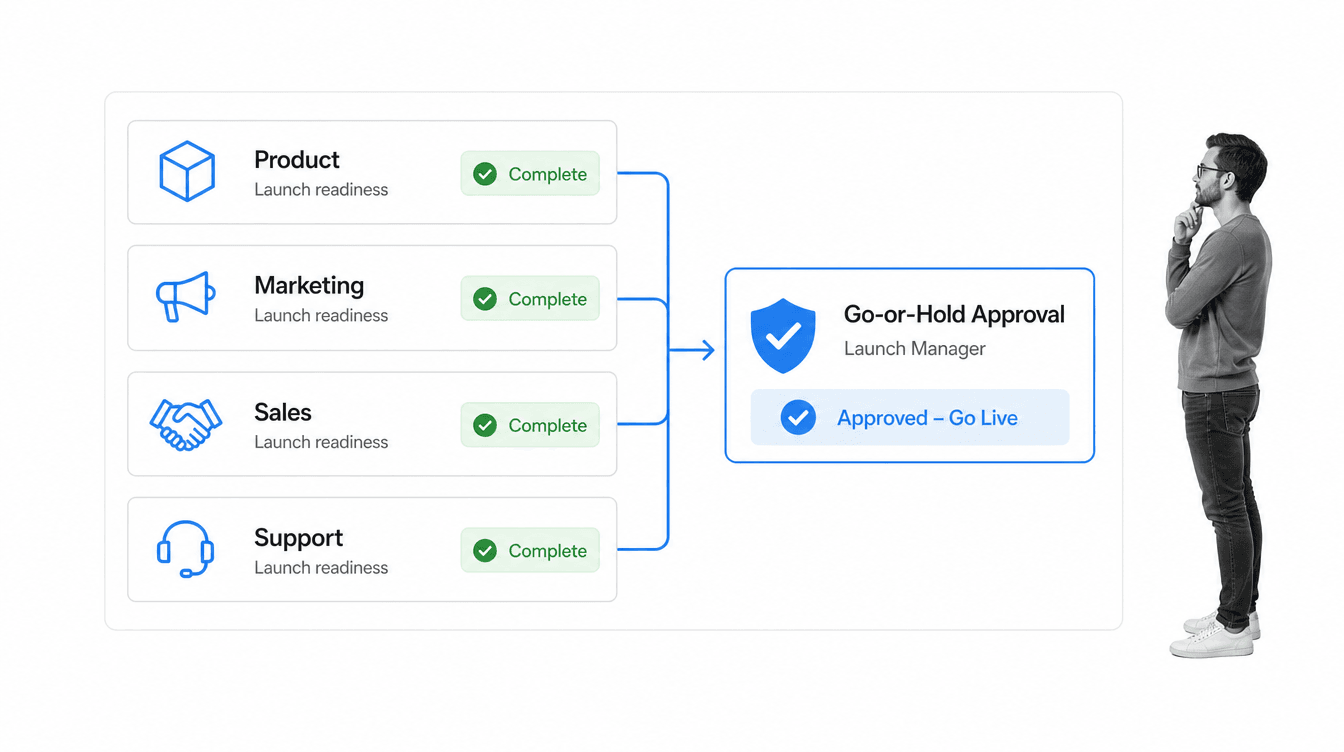
Successful product launches are the result of carefully planned coordination between everyone involved in your product development and marketing. That coordination depends on a clearly defined launch process, so teams understand their owners, deadlines, dependencies, and readiness status.
There is a lot that leads up to launch day: product planning, market research, strategy, goal setting, user feedback, sales enablement, support readiness, and the launch plan itself. Post-launch activities matter too, especially customer support, community activity, measurement, and the decisions you make from early feedback.
One of the best ways to keep this work aligned is to use a product launch checklist. It turns a large campaign into visible tasks and creates a shared record of what is ready, what is blocked, and who owns the next action.
Work backward from the target launch date. Give high-risk dependencies enough buffer, define the evidence required for a go-or-hold decision, and make one person accountable for each deliverable. A deadline without an owner is only a wish.
Keep watching the market while you prepare. Competitors move, customer priorities shift, and the first version of your message may not land. Test the claim, channel, audience, and call to action against real behavior instead of assuming a traditional or fashionable tactic will work.
Bold ideas still matter. The useful kind of boldness is a focused experiment with a clear audience and a measurable result. Try an unexpected preview, partnership, demonstration, or content format when it helps the product become easier to understand, not merely louder.
Run a readiness review before the public release. Ask whether the core experience works, analytics are recording the right events, the pricing and signup path are clear, documentation is current, support knows the likely questions, and sales can explain the product without improvising. Record unresolved risks and decide which ones block launch.
Prepare the first days after release with the same care as the announcement. Decide who monitors product behavior, who owns support escalation, how the team will classify feedback, and when the first retrospective will happen. A launch plan that ends at publication leaves the most valuable learning unmanaged.
Share the monitoring plan with everyone involved so product questions, campaign results, customer problems, and operational risks reach the right owner without delay. Keep one shared decision log so changes, evidence, and follow-up actions remain visible to the full launch team.
Customer and community activity can amplify that learning. Give early users a clear place to ask questions, report friction, and share what they accomplished. Responding quickly helps the audience feel involved and helps the team distinguish a messaging problem from a product problem.
Building a successful product launch strategy
Set the groundwork before you plan channel tactics. Start with the customer problem and the specific audience most likely to feel it. Write down what they do today, why the current approach is insufficient, what your product changes, and the evidence that supports the promise.
Then define positioning. A strong unique selling proposition explains who the product is for, what job it performs, and why the buyer should choose it instead of an alternative. Keep that message consistent across the landing page, product experience, sales collateral, partner outreach, support material, and launch-day announcement.
Choose goals and key performance indicators before the campaign starts. The right measures depend on the business, but they may include qualified signups, activation, conversion, product usage, revenue, retention, support volume, or customer feedback. Set a baseline so the post-launch review compares results with something real.
Build a timeline backward from launch day. Include product quality, security and legal review where relevant, analytics, documentation, sales enablement, support preparation, content production, partner commitments, approvals, and an incident owner. Add a final readiness review with an explicit go-or-hold decision.
The launch team should know who makes decisions, who executes, who must be consulted, and who needs an update. Product, marketing, sales, support, engineering, and leadership do not need equal ownership of every task, but they do need one shared operating plan.
Build the content plan around the questions a buyer needs answered. Explain the problem, show the product in use, state who it is for, provide evidence, address the main objections, and make the next step easy. Prepare the months leading up to launch, launch-day communication, and the follow-up that turns curiosity into adoption.
Match channels to the audience instead of distributing everywhere by default. Email may carry updates to an existing community. Search content can capture people researching the problem. Partners and creators can provide trusted access to a relevant niche. Paid promotion can accelerate a message that already converts, but it rarely repairs weak positioning.
Sales and support need usable collateral, not only a campaign brief. Give them the current value proposition, product boundaries, common questions, known limitations, demonstration path, escalation owner, and launch timeline. Invite their feedback early because they often see objections that product and marketing teams miss.
Finally, define the post-launch review before launch day. Decide when the team will compare results with the baseline, which qualitative feedback will be summarized, who recommends changes, and how those decisions flow into the product roadmap and the next campaign.
This product strategy workflow helps organize the groundwork, goals, roadmap, and communication required before and after launch.
You can start a complimentary 14-day Pro trial to run the workflow. Teams can also compare product management tools for coordinating research, roadmaps, feedback, and launch readiness.
MVP development and timing
MVP definition
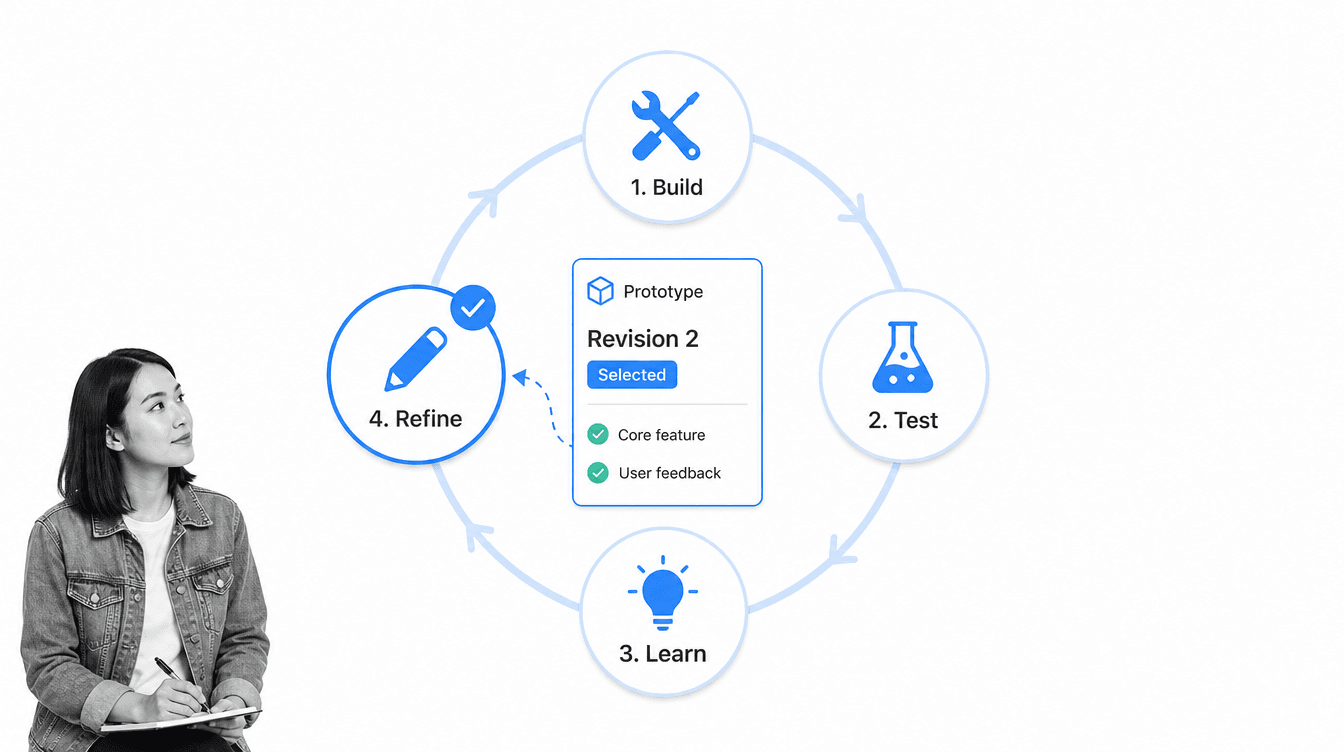
A minimum viable product is a product with a focused set of features that lets early users experience the core value and give you useful feedback. You can read more in this Process Street guide to building an MVP app.
Even if a product concept looks good on paper, it may still miss the market. That is why many entrepreneurs keep the first test simple and use an MVP to learn before investing in a broader release.
Before creating an MVP, look at the market you are trying to enter and identify the main alternatives. Consider whether demand is growing, which users are underserved, how buyers solve the problem now, and what switching would require.
Competition is not automatically a limiting factor. A busy category may prove that demand exists. The important question is whether your product offers a meaningful difference for a clear group of people whose needs are not already being met.
Establishing your unique selling position
A strong unique selling proposition gives the launch a stable center. It states the audience, the problem, the outcome, and the reason your approach is different. That way, similar competitors do not force you into generic claims or a race to copy their features.
As you move toward launch, your priorities, features, and even parts of the product concept may shift. That is expected when research is doing its job. Keep the validated customer problem and the evidence behind your positioning close at hand so changes do not pull the product away from its purpose.
Developing your MVP
Strip the product down to the core experience that makes it valuable and different. The goal is not to ship something careless. It is to create the smallest credible version that lets a real user complete the important job and lets your team observe what happens.
Use the MVP to test behavior, not just collect compliments. Watch where users hesitate, which feature delivers value first, what they expect next, and whether they return. Feed that evidence into the product, positioning, onboarding, and launch plan.
An MVP can also build anticipation when early adopters feel involved. Share progress honestly, invite useful feedback, and let the first group see how their input shapes the release. Validated demand matters more than hype.
Keep the test narrow enough that you can interpret the result. If the audience, offer, onboarding, pricing, and product experience all change at once, you will not know which change produced the outcome. Write down the assumption behind each test and the evidence that would make you keep, revise, or reject it.
Do not confuse a limited feature set with a limited standard of care. Reliability, security, accessibility, and support expectations still depend on the customer and use case. The minimum belongs in scope, not in trust.
Incentivize referrals for a successful product launch
Referral marketing works because interested prospects can introduce the product to people who already trust them. Make sharing easy and give the invitation a clear reason to travel.
Sometimes people share an upcoming product simply because they like it. More often, you need a proactive approach. Offer an incentive that fits the product and the audience, such as early access, account credit, a useful bonus, or a limited upgrade. Avoid rewards that attract people who want the incentive but do not need the product.
Make the referral path simple. Provide a clear link, short explanation, useful preview, and honest description of the reward. Tell participants when the incentive is earned and how it will be delivered. Measure not only referrals but also activation and retention, because a large number of poor-fit signups can hide a weak campaign.
Process Street runs a current Partner Referral Program. The broader lesson is to define the referral action, reward, eligibility, follow-up, and measurement before the campaign opens.
Email list management for a successful product launch
Invite people early enough that the list becomes a learning channel, not only a launch-day broadcast. Subscribers can receive progress updates, previews, early access, and relevant incentives while your team learns which problems and messages matter most.
Make signup and referral flows as streamlined as possible. Use a focused landing page, explain what subscribers will receive, collect only the information you need, and keep consent clear. Review the conversion path regularly so friction does not suppress genuine interest.
Your email list is only as useful as your ability to send relevant messages. Plan what you will communicate before launch, on launch day, and after release. Segment where behavior or customer needs justify different messages, but do not create complexity that the team cannot maintain.
This Email Marketing Campaign workflow can help organize audience research, list building, goals, content, and scheduling.
Use the mailing list to learn what the audience wants from the product. Encourage subscribers to send feedback, requests, or observations about the idea and early experience. This information can improve the product before launch and make the sequence more relevant.
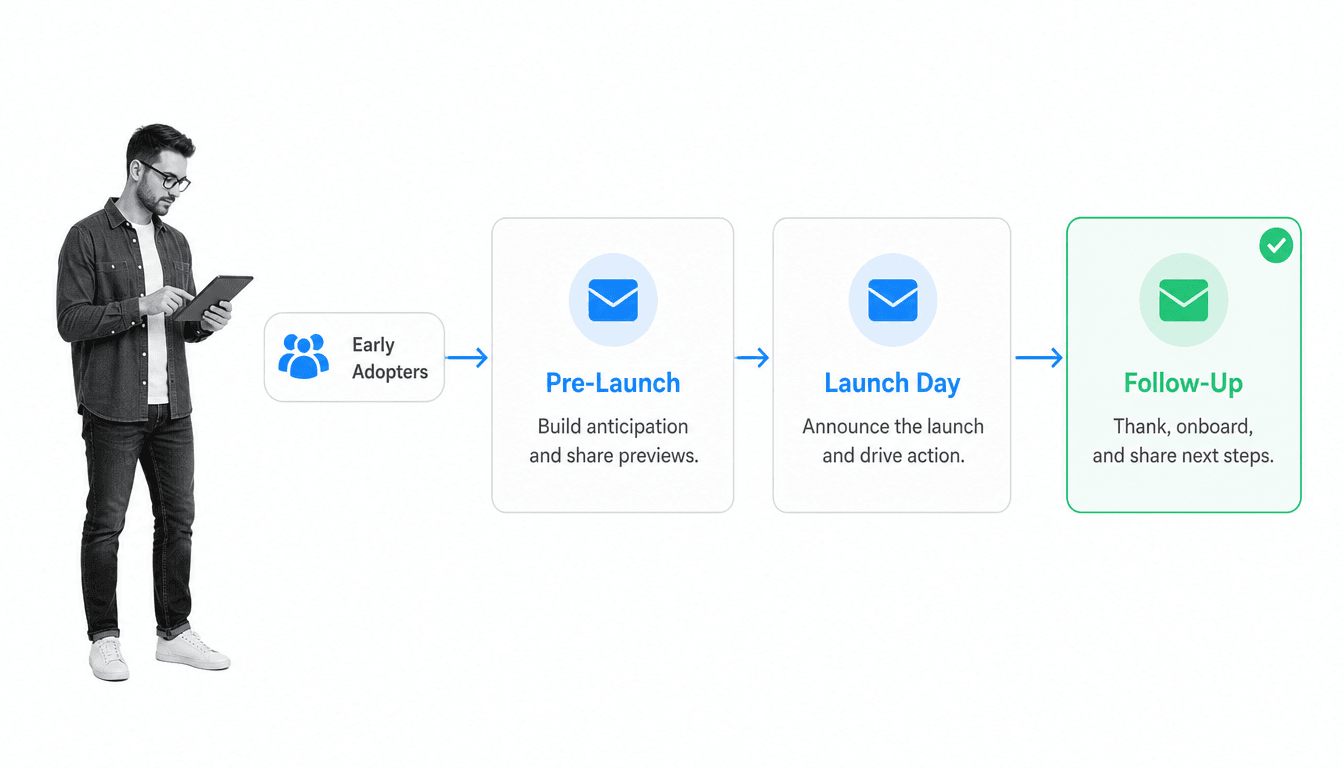
When launch approaches, tailor the pre-launch sequence to what you learned. Build anticipation, explain the problem and the value clearly, answer common objections, and make the next action obvious. After launch, follow up with onboarding, practical guidance, and a direct request for feedback.
A useful sequence gives each message one job. An early email can explain the problem and invite subscribers into the story. A preview can demonstrate the core experience. A launch-day message can state what is available and who should act. Follow-up emails can help new users reach value, answer objections, and collect evidence for the next iteration.
Protect the trust that made the list valuable. Set expectations at signup, honor unsubscribe requests, avoid purchased lists, and do not inflate urgency with false deadlines. Relevance and consistency compound over time, while one aggressive launch can damage the channel you need for future releases.
Build a responsible launch distribution plan
Do not treat cold outreach as a substitute for permission-based audience building. Use targeted outreach for a small number of relevant partners, creators, analysts, customers, or community leaders who have a credible reason to care. Explain why the product fits their audience and what you are asking them to do.
Partner and creator relationships work best when they begin before you need a promotion. Offer a useful preview, sample, demonstration, or interview. Give people enough time to evaluate the product honestly, and never require praise as the price of access.
Choose partners for audience fit and credibility, not only reach. A smaller creator whose audience actively experiences the problem may produce better conversations than a broad account with little context. Agree on the format, disclosure requirements, access date, support contact, and publication window before content production begins.
Retargeting can remind prior visitors about the launch, but attribution can overstate its effect. Segment campaigns by meaningful site behavior, cap frequency, respect privacy and consent rules, and judge performance against incremental conversion rather than a single click-through-rate multiplier.
Building suspense to ensure a successful product launch
Few things generate attention to a product launch like well-managed mystery. If your product has an intriguing feature or a different approach, reveal enough to make the audience curious without hiding the value they need to understand.
Plan a schedule of small teasers across social channels, email, and your blog. Each preview should add something new: a customer problem, product detail, behind-the-scenes decision, demonstration, or early result. A sequence creates anticipation more reliably than repeating the same announcement.
How to harness influencer marketing for a successful product launch
Influencer marketing can create memorable launch campaigns and spark interest, but it requires a strategic approach. Start building relationships with relevant creators early, align on audience fit, and create a realistic timetable for product access and content release.
One tactic is to provide a creator with a pre-launch sample or account to review. They might host a giveaway, demonstrate the product, or share feedback that improves development. The goal is to reach a relevant audience through a credible voice, not to borrow attention from anyone with a large following.
This embedded influencer workflow provides a structured starting point for research, outreach, and campaign coordination.
Your website should connect the campaign. It is where social links, creator posts, product details, announcements, signup, and customer questions can point to one current source of truth.
Using Process Street for product launches
Process Street is a single Compliance Operations Platform with Docs and Ops capability areas plus built-in AI. For a product launch, Docs keeps plans, messaging standards, operating procedures, and approvals governed. Ops turns the launch plan into assigned workflows with dependencies, due dates, approvals, and an audit trail.
Built-in AI can help teams draft workflow content, summarize launch feedback, and identify missing or delayed work while people keep control of the decision. The result is one operating record for preparation, launch-day execution, support handoffs, and the post-launch review.
Process Street has direct, universal integrations to 5,000+ systems. Need a new one? An AI agent builds it on the fly. That lets launch workflows connect to the CRM, support desk, analytics, messaging, and other systems the team already uses.
Use approvals for readiness decisions, conditional logic for different launch paths, assignments for ownership, and dynamic due dates for work scheduled backward from launch day. The platform supports the process without turning this guide into a feature checklist.
Time for your successful product launch
A successful product launch starts well before the announcement and continues after the first wave of attention. Keep the product distinct, listen to customers, make ownership visible, and treat launch day as one checkpoint in a longer learning cycle.
Start by defining the audience, the problem, and the result you want to measure. Build backward from the launch date, test the smallest credible version, prepare the people who will sell and support it, and create a follow-up rhythm that turns early behavior into better decisions.
Related articles
- What is conversion rate optimization?
- Personalized marketing strategies
- How to build an influencer marketing strategy
- How to optimize content performance
Frequently asked questions
What makes a product launch successful? A successful launch aligns a validated audience problem, clear positioning, launch readiness, coordinated channels, and post-launch measurement.
When should product launch planning begin? Begin early enough to validate demand, test the product, assign owners, prepare sales and support, and work backward from a realistic launch date.
What should a product launch checklist include? Include market research, positioning, goals, product readiness, content, channel execution, sales and support enablement, analytics, approvals, and follow-up.
How do you measure a product launch? Measure adoption, conversion, revenue or qualified demand, activation, retention, support volume, customer feedback, and progress against the goals set before release.