






Guest post by Deana Kovac (Deana Kovač), an internet marketing specialist at Point Visible, a digital agency providing custom blogger outreach services. In her free time, she enjoys listening to music and singing karaoke, and she just cannot start her day without a hot cup of coffee.
Content optimization improves an existing page so it serves its intended reader and business goal more effectively. This content optimization fix shows how to fix underperforming content without tossing it out: diagnose why the page falls short, strengthen the answer, repair technical friction, and measure the result. The process uses two stages: identify weak content with evidence, then apply six focused improvements.
- Separate good content from bad content
- Apply six content optimization tips
- Run optimization as a repeatable workflow
Millions of blog posts compete for attention, but competition alone does not make a page underperform. Every asset has a job. Some pages educate, some support a sales conversation, some capture demand, and some connect a topic cluster. Judge the page against that job before changing it. Traffic without the right audience can be less useful than a smaller stream of readers who complete the intended action.
Optimization also protects the investment already made in research, examples, links, and editorial judgment. Start with the smallest defensible change, keep the evidence that still holds up, and remove claims that cannot be supported. If the page serves no distinct intent or duplicates a stronger resource, consolidation may be better than another round of edits.
Separating good content from bad content
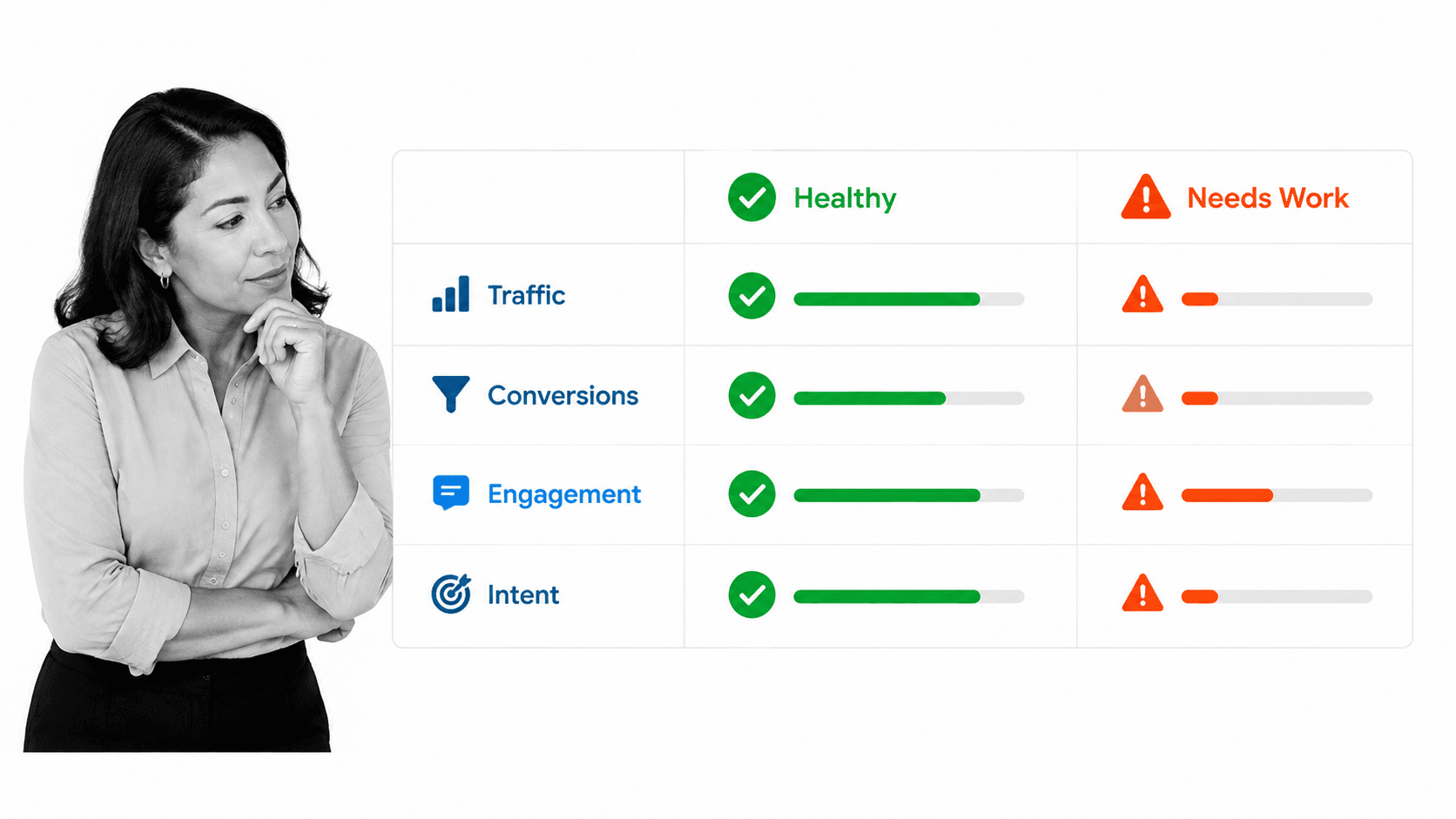
Diagnose organic traffic for the page’s job
Let’s begin with a simple tip , if your content is targeted towards acquiring leads and is still unable to drive considerable organic traffic, then it is certainly not performing well. An important point to note is that not all content is aimed at lead generation. From educating prospects down the conversion funnel to filling out content gaps that exist within your content strategy, there are various purposes behind creating content. However, ‘underperforming’ content, in pure marketing terms, applies to content that is aimed to target leads but underperforms in fulfilling its core task. There is no point in discussing conversion metrics until you start receiving substantial traffic , after all, how can you educate your visitors when there are none? If you’re looking to gauge your organic traffic numbers, consider using Google’s Analytics or tools like Ahrefs. Both are powerful solutions that can help measure how many eyes you have been receiving on specific posts.Evaluate conversion performance
Content creation takes a lot of effort, time, and money; but there is no shortage of great content that manages to attract considerable traffic. However, you need to be able to convert your visitors into leads and leads into customers to have a successful and sustainable model for your business. Hubspot’s Analytic Tools allows you to identify articles that are not converting enough. By taking a comprehensive view of your website, the tool allows you to extract valuable metrics , such as Submissions Per View. You can even go into details to elicit highly targeted feedback, such as specifying the content types (‘Blog Posts’, for example) and time range to exclude recently published articles (using ‘Published Timestamp’). This will allow you to highlight content pieces that have not been performing well.Read engagement and intent together
Bounce rate and time on page can be useful, but neither metric proves that a page is good or bad on its own. In Google Analytics 4, engagement rate and average engagement time give you a clearer view of whether people stay active on the page. Search Console adds impressions, clicks, average position, and click-through rate. Read those signals alongside the page’s purpose.
A visitor who gets a quick answer and leaves may still have had a successful session. A long visit may reflect confusion rather than interest. Compare similar page types, exclude very new content, and look for patterns across qualified traffic, conversions, engagement, and intent match. The GA4 engagement reports, engagement and bounce-rate definitions, and Search Console performance report provide the current measurements.
Behavior tools can add context when the numbers raise a question. Heatmaps and session recordings may reveal missed calls to action, confusing navigation, or content that does not answer the query soon enough. Crazy Egg, Mouseflow, and Hotjar can support that diagnosis, but use recordings carefully and protect visitor privacy.
Before editing, record a baseline and the date range behind it. Note the page’s intended audience, primary action, search queries, qualified visits, assisted conversions, and any known seasonality. That snapshot keeps a traffic fluctuation from being mistaken for an editorial win. After the change, wait for enough comparable data and annotate other events, such as a campaign launch or site migration, that could affect the result.
Six content optimization tips
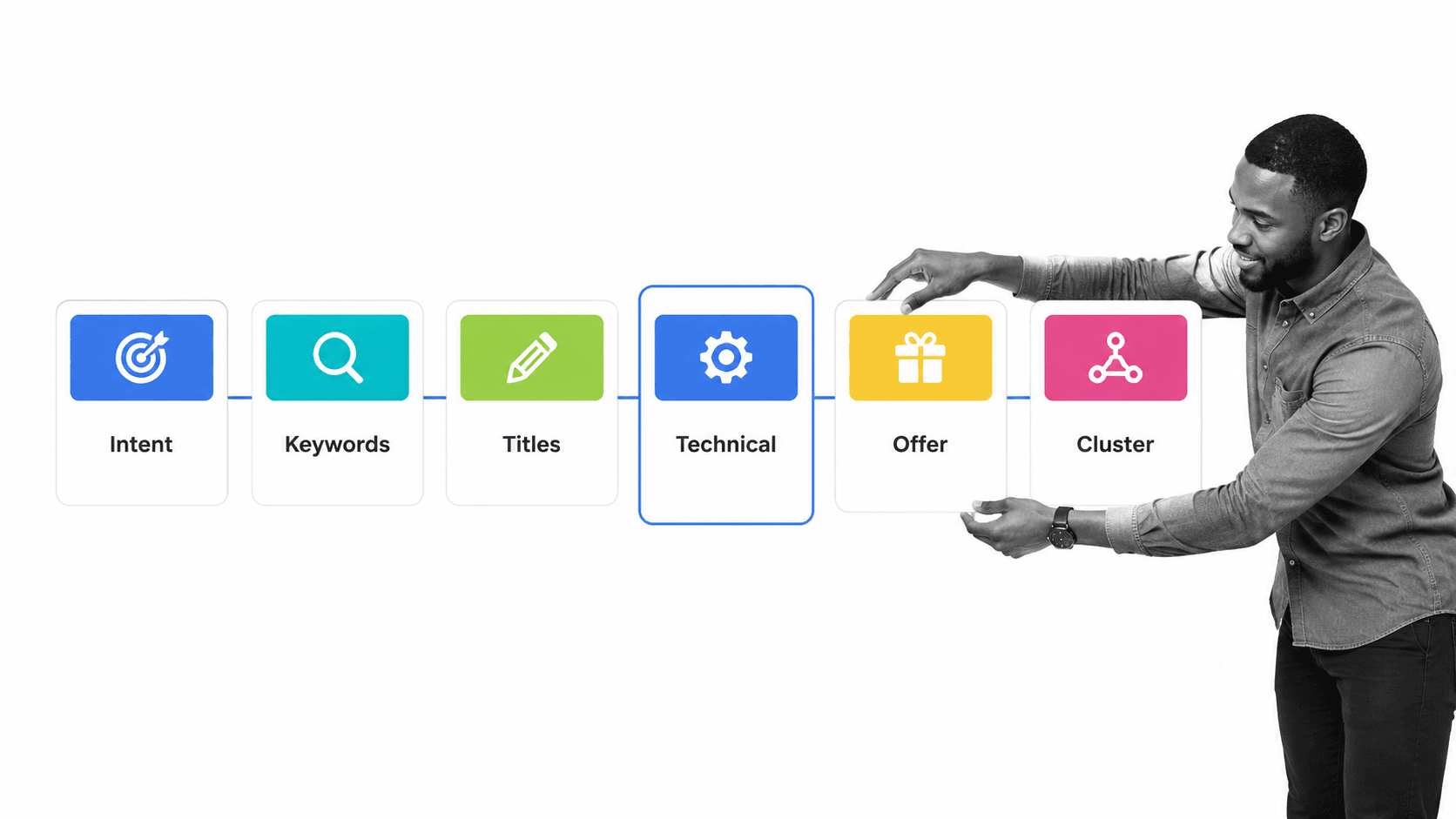
Target specific long-tail queries
Most of our content is composed around short-tail keywords that may be industry-relevant, but face a lot of competition since virtually everyone is incorporating them in their pieces. Consumer searches are getting highly specific and understandably, they expect content that answers their specific needs. In addition to conducting consumer research, understanding user intent and providing relevant answers using long-tail keywords can be your key to outranking the competition. Your content should target niche-relevant keywords if you want to drive qualified traffic to your website. Long-tail queries can reveal specific needs and qualified intent, but they should support the reader’s problem rather than become a quota in the draft. There are various valuable keyword research tools that can help you generate niche-relevant long-tail keywords, such as Semrush or Ahrefs.Improve title links and search snippets
A title sets the expectation for the page before a reader arrives. Write a few accurate alternatives, make the benefit specific, and keep the promise aligned with the content. The headline that wins a click but disappoints the reader is not an optimization.
Google may generate a title link from the page title, prominent headings, anchor text, and other signals. Keep those elements consistent and descriptive. The Google title-link guidance explains the current system. A meta description is not a guaranteed snippet or a direct ranking promise, but a concise summary can help searchers understand why the page is relevant.
Review click-through rate in Search Console only after the page has enough impressions, and compare it with pages serving similar intent. If the title attracts attention but conversions or engagement weaken, the title may be overselling what the page delivers.
Match the page to search intent
The focal point of content marketing remains to provide information that matches user intent. If your content fails to meet user expectations, it will not perform as good as it should. With so many options to choose from, a visitor will not think twice before abandoning a website where they cannot find a reason to keep reading. It is important for content creators to not only deliver what is required but also present it in an easy format that suits users. For instance, users might be looking for a step-by-step guide on a technical subject, whereas your piece may be more tilted towards tips and tricks. The result will be underperforming content. Keyword research is one of the foremost tactics to reveal user intent. Again, tools like Semrush and Ahrefs, marketers can quickly review what is the type and quality of the content that is outperforming yours. If you do not have access to those tools, a simple Google search will suffice. Type in the keywords that are covered in your underperforming piece and see what top-ranking content for that keyword is. Since Google wants to give the most relevant results to their users, reading top-ranked content will give you an idea of the user’s search intent. Lastly, popular social tools like BuzzSumo can be used to discover the most popular content pieces for specific keyword phrases. This will give you an insight into what type of content resonates with your target audience, what they found lacking in that specific piece, and what you can include to make your content stand out.Offer a relevant lead magnet

Resolve technical SEO issues
The poor performance of content can also be traced back to technical SEO issues that impact the user experience of your website, making it harder to rank and perform. From slow loading pages that disrupt user engagement to mobile unresponsiveness , you need to resolve any potential technical issues that hinder your website’s performance. When a user, who is visibly frustrated by a slow loading page or broken images exits the site, it sends a signal to Google that your website clearly failed to satisfy the user query. This will have a negative effect on your SEO efforts. Hosting can often be a cause of many technical issues so you should never hesitate to invest in a good hosting service. However, you also shouldn’t forget on-site optimization techniques such as image compression, as that is the only way to ensure a seamless user experience.Build a useful content cluster
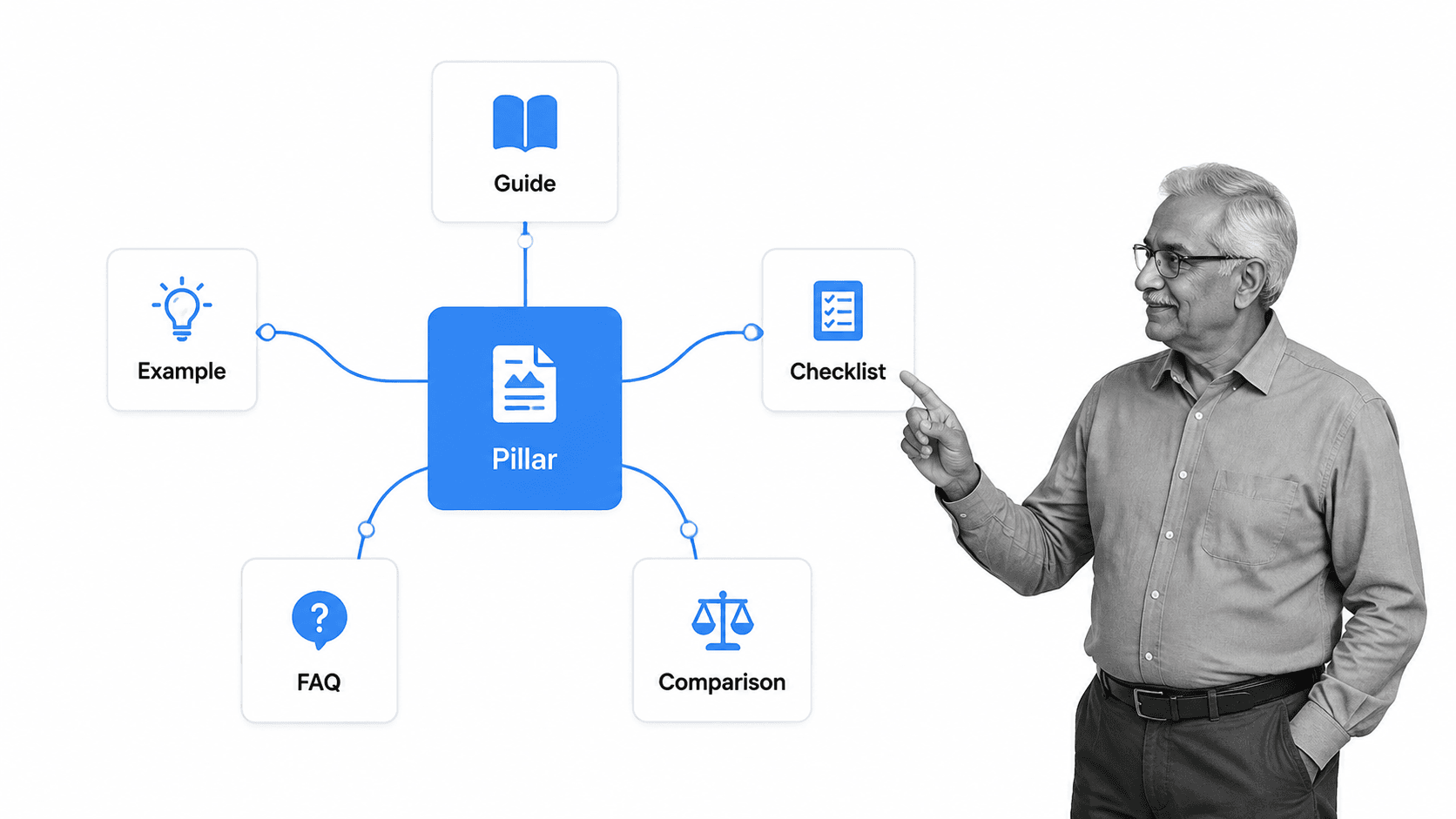
A strong cluster maps supporting pages to the questions around one useful pillar, links them in both directions, and avoids producing overlapping pages for the same intent. You can also form content clusters , not just to fix underperforming content, but also assert niche authority and benefit from the increased exposure.A topic cluster connects a broad pillar page with focused supporting pages that answer related questions in greater depth.
Putting content optimization into operation
Content optimization is easier to sustain when every page follows the same operating standard. Process Street is a single Compliance Operations Platform with Docs and Ops capability areas plus built-in AI. A content team can document its optimization method, assign owners, collect evidence, route reviews and approvals, and retain a clear record of what changed.
Built-in AI can help summarize performance evidence, compare a draft with its brief, or flag missing fields. People remain responsible for source quality, editorial judgment, and final approval. That division keeps automation useful without allowing it to invent evidence or silently change the guest author’s argument.
The embedded content upgrade workflow below shows one practical way to turn a useful article into a more specific reader offer.
For the broader system around briefs, assets, ownership, feedback, and publication, see this guide to content workflow software. You can also use the updating old blog content for SEO checklist and blog pre-publish checklist as starting points.
A practical run moves through diagnosis, edit, verification, approval, publication, and measurement. Give each stage an owner and a completion condition. Require source links for factual changes, retain signed guest attribution where appropriate, and schedule the next review based on the topic’s risk and rate of change. The result is a controlled content operation rather than a collection of one-off fixes.