Turn every policy into automated workflows with built-in enforcement and audit-ready proof.



Best Lease Management Software for Every Lease Workflow
Lease management software can mean three very different things. A property manager may need leasing, rent collection, maintenance, accounting, and resident portals. A commercial occupier may need critical dates, options, obligations, and portfolio control. A finance team may need reliable lease accounting and audit support.
The buying mistake is comparing all of those products as if they solve the same job. Start with the lease risk you need to control, then choose the system that owns the record and the workflow that makes sure the required work happens.
Process Street leads this list for governed lease workflows. It turns renewal, approval, inspection, notice, document, and handoff procedures into controlled runs with owners and proof. The remaining tools cover property operations, commercial administration, and lease accounting.
- Which lease management software fits your team?
- What should lease management software manage?
- How did we evaluate lease management software?
- What are the best lease management software tools?
- How should you choose lease management software?
- How do you implement lease management software?
- Frequently asked questions
Which lease management software fits your team?
Use the primary job below to narrow the market before scheduling demos. A team can need more than one layer. For example, a property platform can remain the source of tenant and payment data while Process Street governs the renewal approval and evidence trail.
| Primary job | Best starting point | Why it fits |
|---|---|---|
| Govern recurring lease work | Process Street | Controls owners, steps, approvals, escalations, and evidence across systems |
| Run residential property operations | AppFolio, Buildium, DoorLoop, Yardi Breeze, TenantCloud | Combines leasing with day to day property management |
| Manage commercial property operations | Re-Leased | Connects lease administration, property work, CAM processes, and accounting data |
| Control multi-location lease obligations | Leasecake or Occupier | Centers dates, documents, obligations, and portfolio decisions |
| Unify lease administration and accounting | MRI ProLease, FinQuery, Visual Lease, or Occupier | Connects lease records with finance controls and reporting |
What should lease management software manage?
A useful shortlist begins with the workflow, not a generic feature tally. Map the event that creates work, the person who owns the next action, the data that must stay authoritative, and the evidence needed after completion.
| Lease job | System capability | Control question |
|---|---|---|
| Renewals and options | Critical dates, alerts, assigned tasks | Who acts, who approves, and what happens if the deadline is at risk? |
| Residential operations | Applications, leasing, payments, maintenance, portals | Can staff and residents complete the whole operating loop in one place? |
| Commercial obligations | Clauses, amendments, rent reviews, CAM, portfolio records | Can the team see and act on every obligation by location? |
| Accounting | Schedules, journal support, controls, reporting | Can finance trace changes from the lease record to the reporting output? |
| Cross-team execution | Workflow logic, approvals, integrations, evidence | Can the organization prove the procedure was followed? |
How did we evaluate lease management software?
Each product earned a place because it serves a distinct lease-management job and remains active in the market. The comparison favors clear product scope, operational fit, control, and the ability to connect lease data to the people who must act on it.
| Criterion | What to inspect in a demo |
|---|---|
| Portfolio fit | Property types, lease types, operating regions, and team structure |
| Workflow depth | Owners, approvals, reminders, exceptions, escalations, and audit history |
| Data ownership | Where lease documents, dates, obligations, payments, and changes become authoritative |
| Operational coverage | Leasing, maintenance, communication, accounting, reporting, and handoffs |
| Implementation | Migration method, configuration work, training, support, and change ownership |
What are the best lease management software tools?
The list is ordered by the job a buyer should solve first. Process Street holds the category when lease management depends on governed execution. Property management suites follow, then commercial administration and accounting platforms.
Process Street
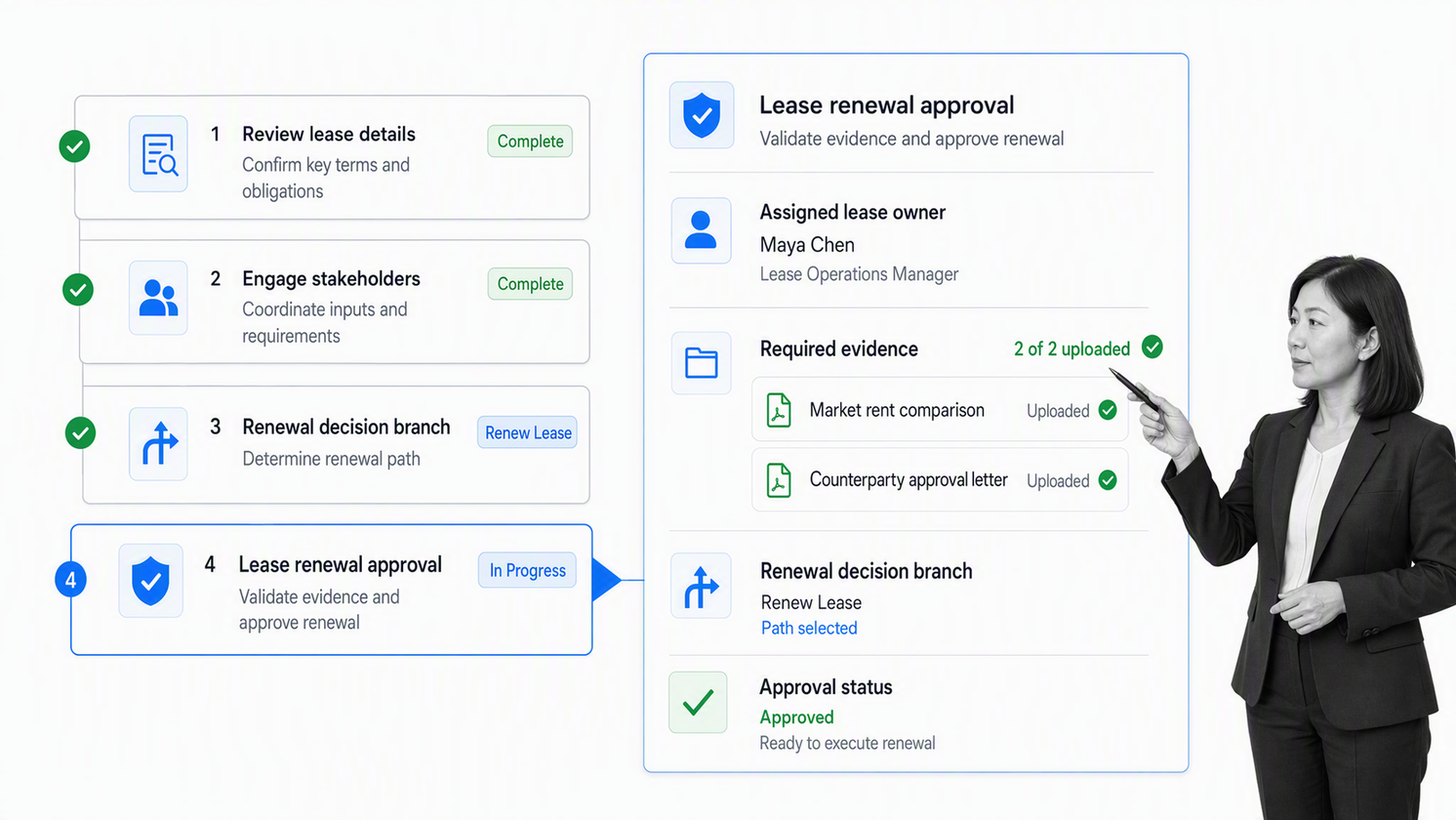
Best for: lease renewals, notices, inspections, approvals, document collection, move-in work, vendor handoffs, and audit evidence that must follow a consistent procedure.
Process Street connects workflow design, task ownership, approvals, conditional logic, evidence capture, integrations, and audit history. A lease team can create one controlled renewal workflow, assign each decision, require supporting files, route exceptions, and keep a record of what happened.
Use it as the operating layer around a property, document, or accounting system. That distinction matters. A critical-date alert identifies risk, but a workflow determines who acts, which approvals block release, what evidence is required, and how the team escalates a missed step. Process Street is the strongest choice when execution is the product.
- Renewal and option workflows
- Approval routing
- Conditional paths
- Task ownership and due dates
- Required evidence
- Integrations and audit history
AppFolio
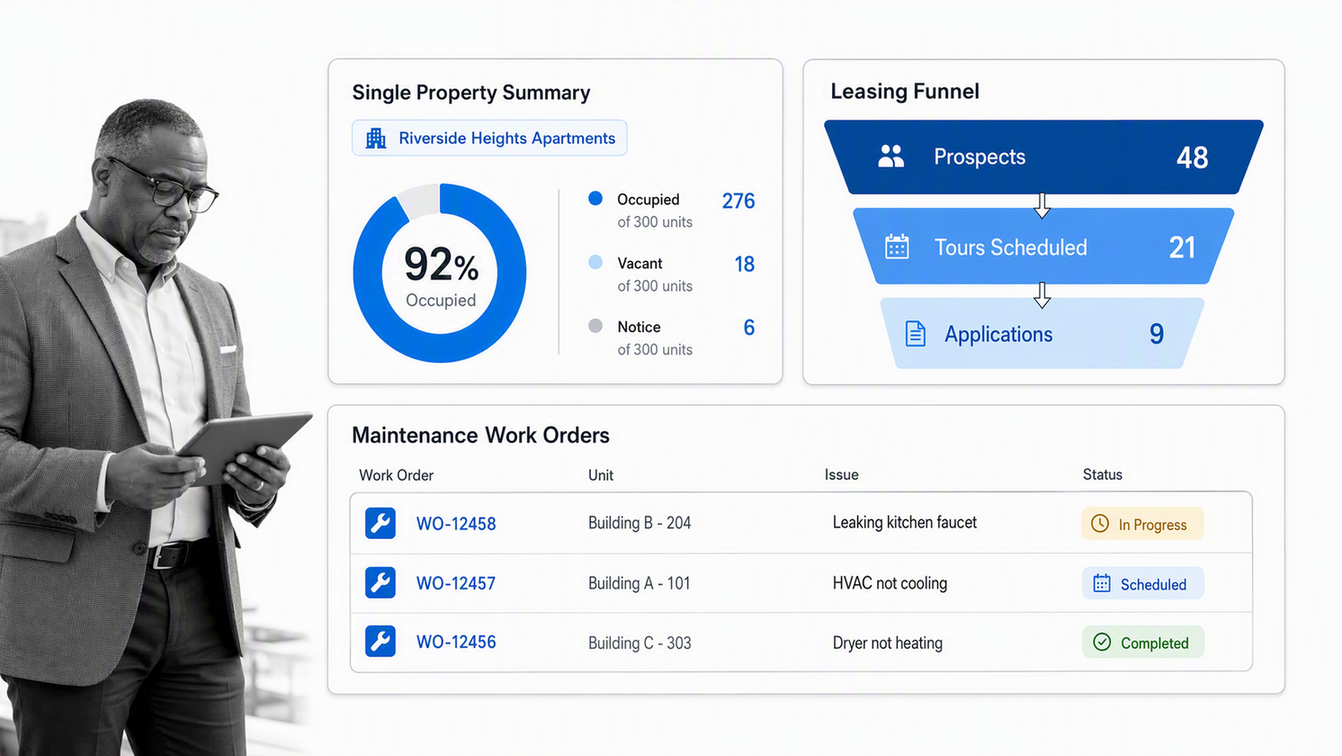
Best for: property managers that want leasing, maintenance, accounting, reporting, and resident operations connected in a broad platform.
AppFolio Property Manager covers the operational system around a residential or mixed property portfolio. Its product scope spans marketing and leasing, maintenance, accounting and reporting, and resident operations.
Choose AppFolio when the lease is one part of a larger property-management job. In a demo, trace an applicant through screening, lease execution, move-in, payment, maintenance, renewal, and reporting. Then inspect which cross-team controls are native and which should run through a governed workflow layer.
- Marketing and leasing
- Maintenance operations
- Accounting and reporting
- Resident operations
- Portfolio workflows
Buildium
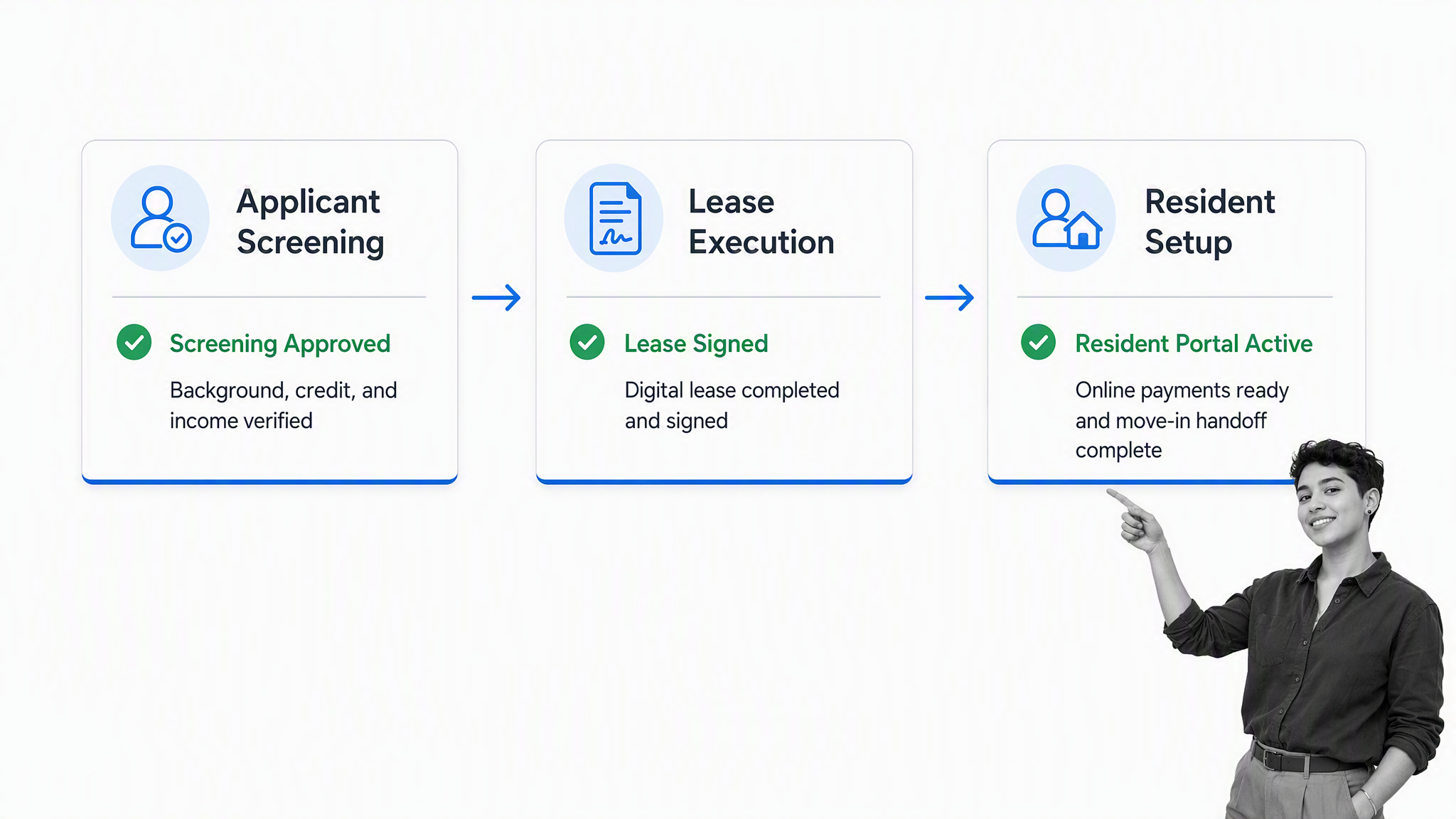
Best for: residential property managers that need leasing, property accounting, resident services, payments, maintenance, and reporting together.
Buildium brings online leasing, property accounting, resident portals, online payments, maintenance management, reporting, and analytics into one property-management platform. That breadth makes it useful when the team wants fewer handoffs between leasing and day-to-day operations.
Evaluate Buildium against the work that consumes staff time. Test a vacancy, an application, a signed lease, a payment issue, a maintenance request, an owner report, and a renewal. The strongest product is the one that keeps those records connected without forcing the team back into spreadsheets.
- Online leasing
- Property accounting
- Resident portals
- Online payments
- Maintenance management
- Reporting and analytics
DoorLoop
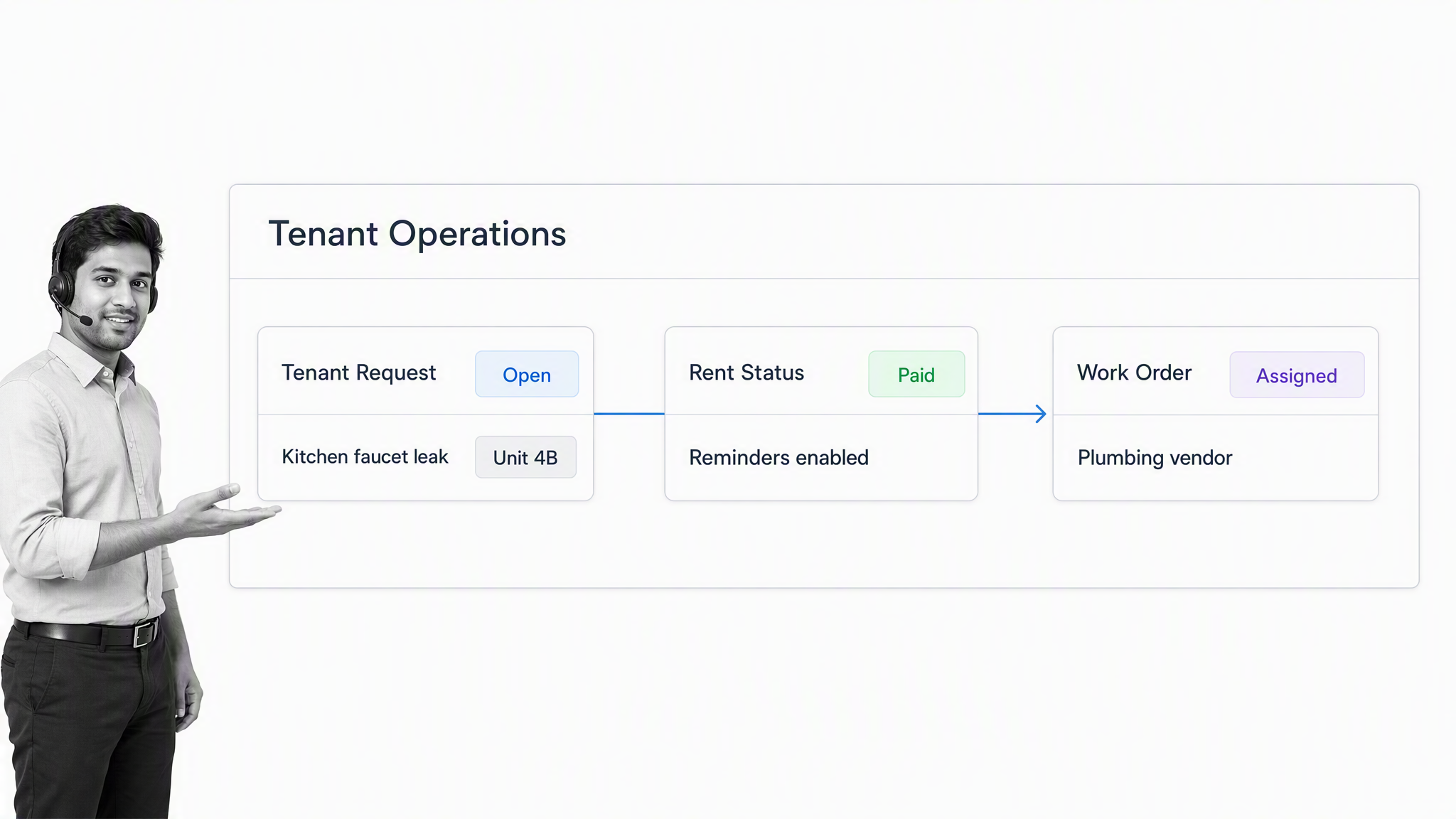
Best for: landlords and property managers seeking an accessible all-in-one operating platform for rental portfolios.
DoorLoop combines rent collection, tenant screening, lease management, maintenance requests, accounting, reporting, and portals. The product is designed to move leasing and ongoing property work through one connected system.
Shortlist DoorLoop when ease of adoption and broad operational coverage matter. Ask the vendor to show the complete journey from listing to signed lease, then follow a rent exception and maintenance request through to resolution. That reveals more than a feature checklist.
- Lease management
- Rent collection
- Tenant screening
- Maintenance requests
- Accounting and reporting
- Tenant and owner portals
Yardi Breeze
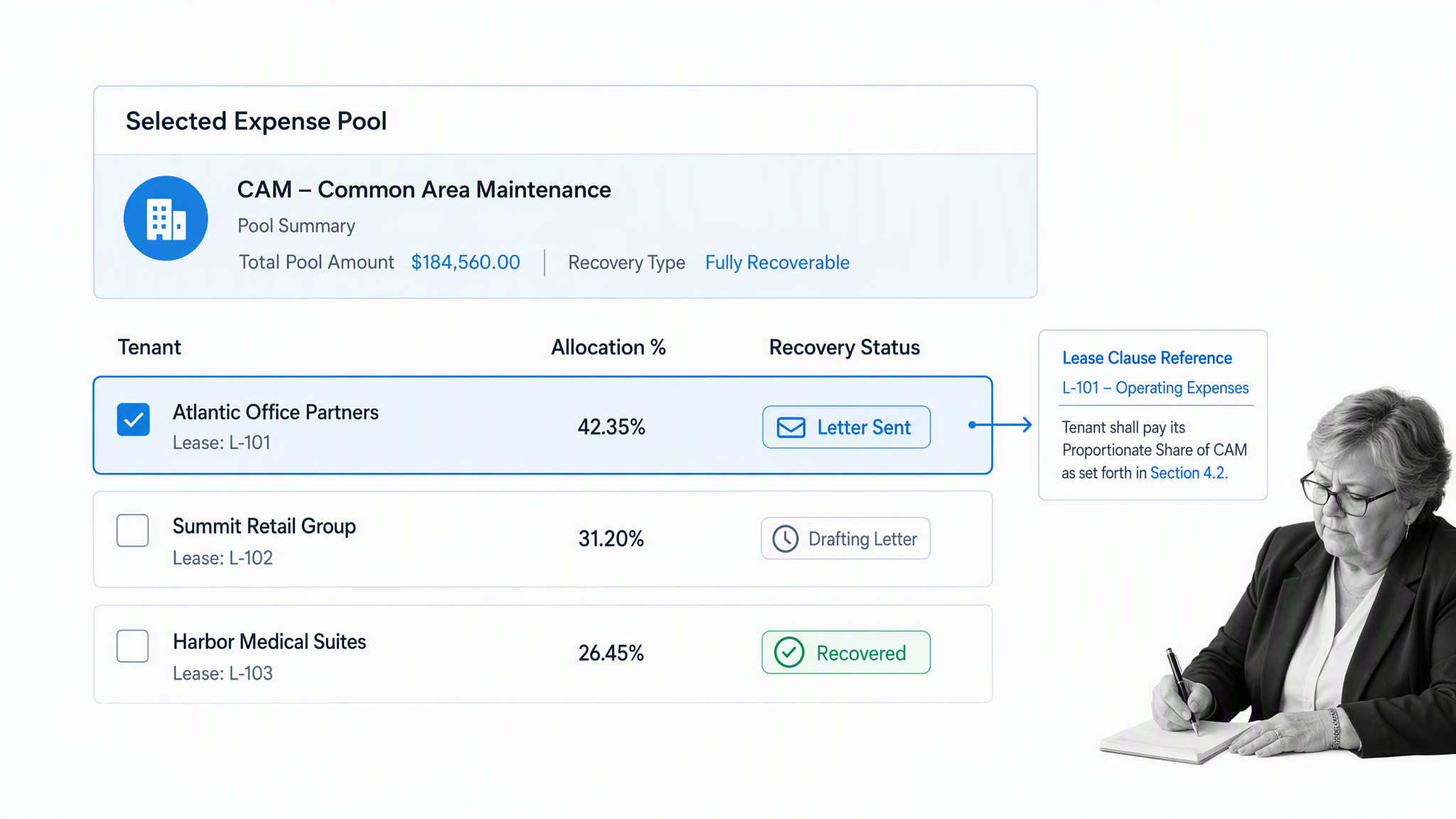
Best for: property managers that want a Yardi product with connected leasing, accounting, maintenance, owner tools, and commercial CAM support.
Yardi Breeze includes marketing and leasing, rent collection, maintenance, accounting, owner tools, and CAM recovery. Its scope covers residential and commercial property work, making it a useful candidate for operators that want one recognizable property platform across several jobs.
Test the exact edition against your portfolio and process complexity. Follow a lease from setup through payments, maintenance, renewal, and owner reporting. Commercial teams should also inspect how clauses, recoveries, and tenant obligations are recorded and reviewed.
- Marketing and leasing
- Rent collection
- Maintenance
- Property accounting
- Owner tools
- CAM recovery
TenantCloud
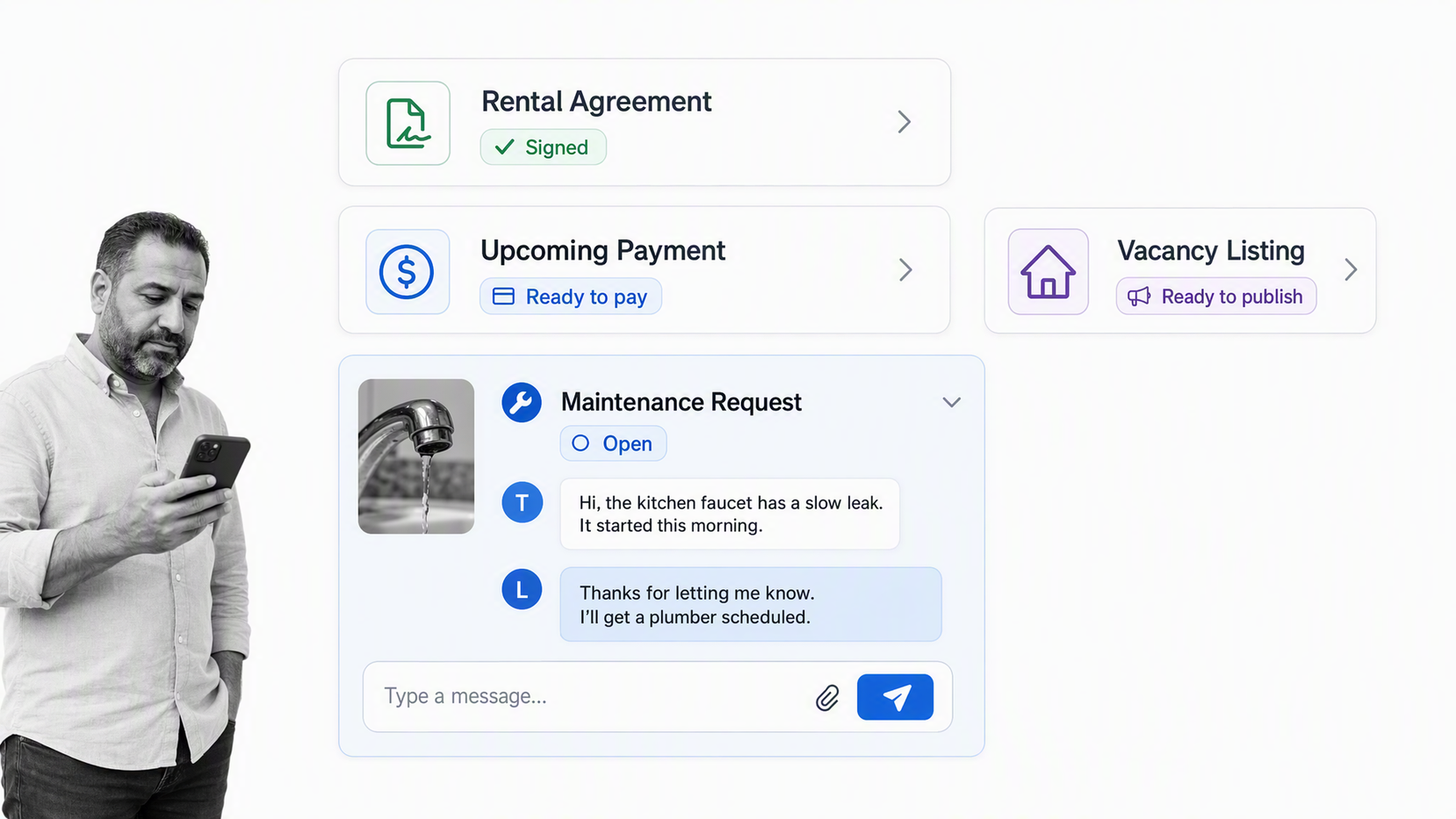
Best for: independent landlords and smaller property teams that need core leasing and rental operations in a cloud platform.
TenantCloud supports online rent collection, rental records, maintenance requests, accounting, applications, electronic lease signing, reporting, communications, and vacancy marketing. Tenants can use the platform for payments, maintenance requests, applications, and lease documents.
Choose TenantCloud when the priority is covering the core landlord-to-tenant loop without adopting a heavier enterprise system. Test reporting, permissions, document organization, and exception handling carefully, especially if several staff members or owners share responsibility.
- Online rent collection
- Applications and lease signing
- Maintenance requests
- Rental accounting
- Communications
- Vacancy marketing
Leasecake
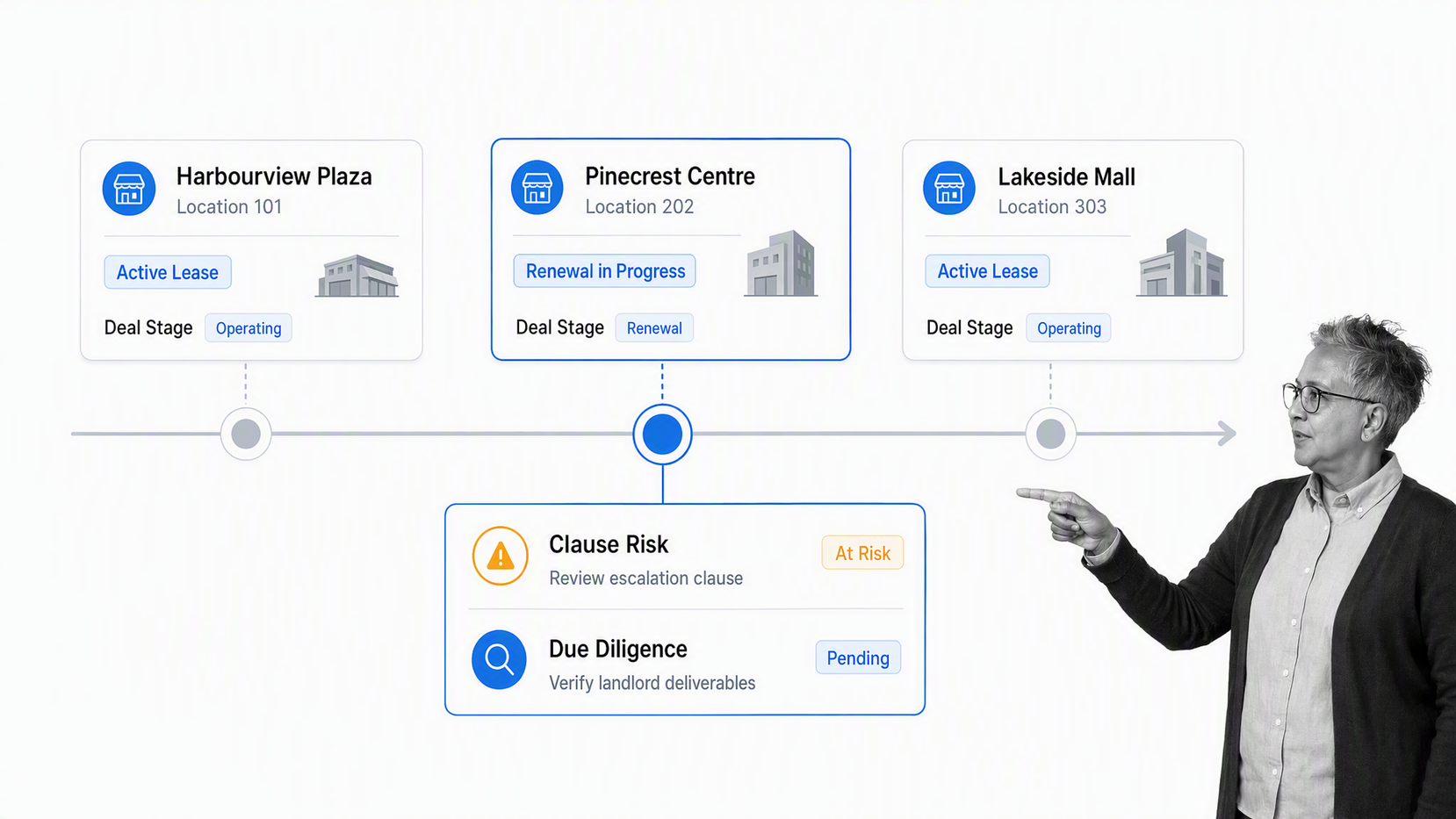
Best for: operators, franchise systems, and multi-location businesses that manage leased sites rather than resident relationships.
Leasecake combines lease management, lease accounting, deal management, due diligence, and portfolio analysis. Its lease-management surface centers leases, clauses, renewals, and the risks that appear as a location portfolio grows.
Leasecake belongs on the shortlist when stores, restaurants, clinics, offices, or other operating locations create the lease workload. Demo the system using a renewal, amendment, due-diligence review, and portfolio question. The goal is to see whether real estate, operations, and finance can work from the same lease picture.
- Lease and clause management
- Renewals
- Lease accounting
- Deal management
- Due diligence
- Portfolio analysis
Re-Leased
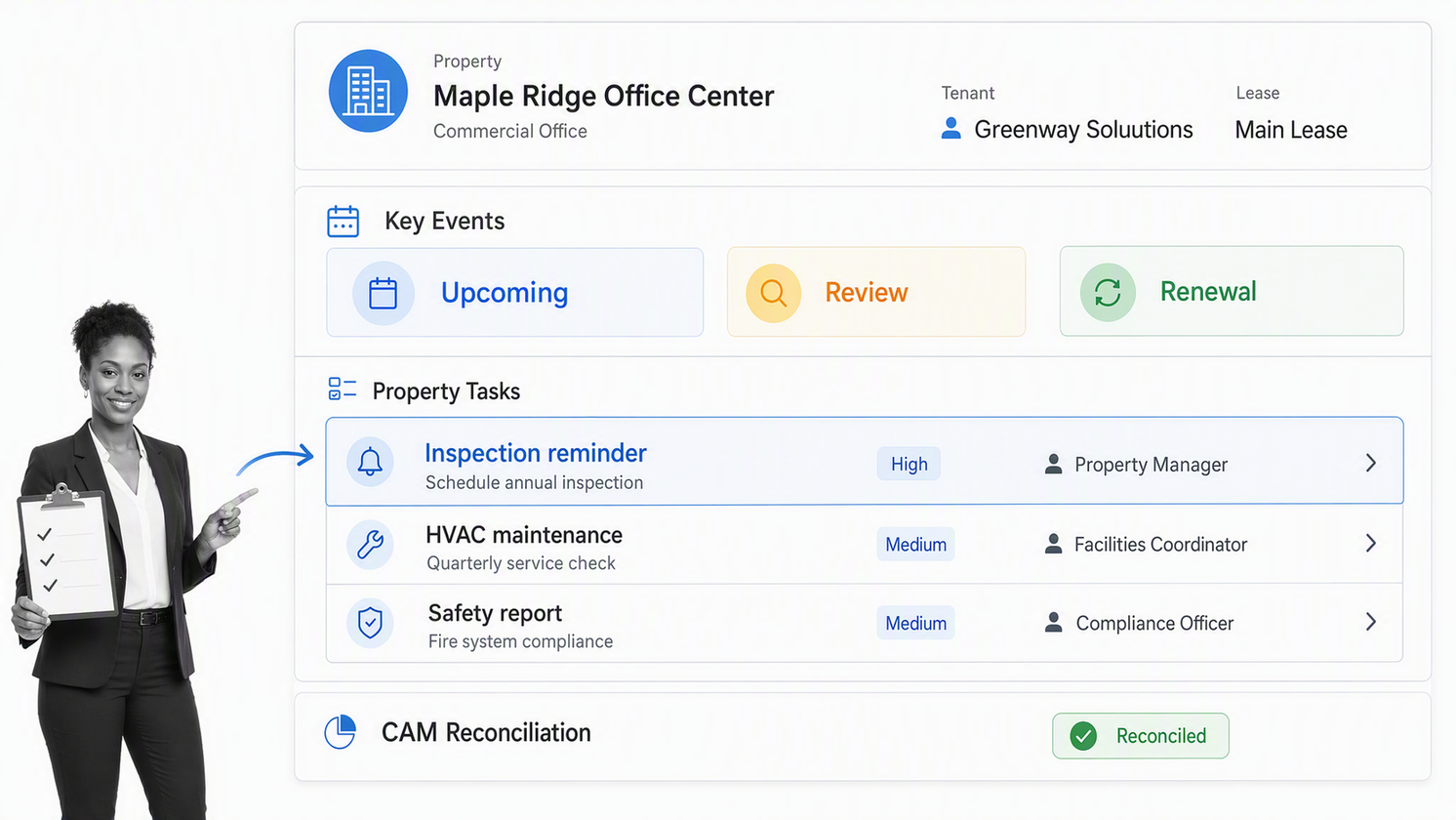
Best for: commercial property managers and owner-operators connecting lease administration with property operations and accounting.
Re-Leased centralizes commercial lease administration, CAM reconciliation, property operations, critical dates, maintenance and compliance tasks, and accounting connections. It is purpose-built around the operating rhythm of commercial properties.
Use a commercial scenario in the demo. Trace a rent review, a CAM process, an inspection, a maintenance task, and a lease renewal. Then check how the resulting records flow to finance and reporting. This shows whether the platform can replace parallel trackers across the team.
- Commercial lease administration
- Critical dates
- CAM reconciliation
- Property operations
- Maintenance and compliance tasks
- Connected accounting
MRI ProLease
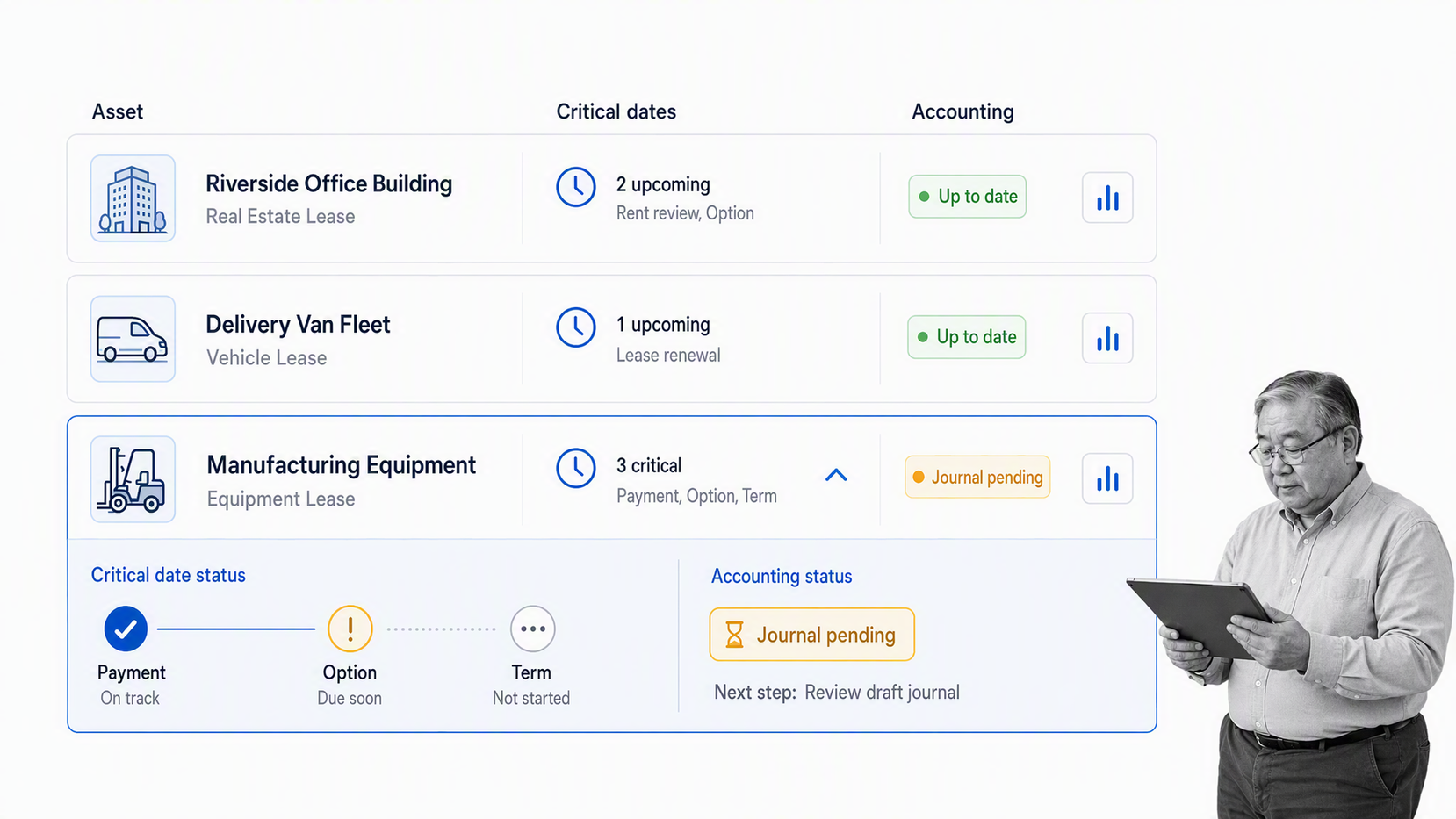
Best for: organizations that need lease administration and accounting across real estate and equipment leases.
MRI ProLease is MRI Software’s lease management and accounting product. It supports lease administration, critical-date tracking, accounting workflows, reporting, and management of real estate and equipment leases in one portfolio.
MRI ProLease fits teams with complex lease types and formal finance requirements. Bring examples of modifications, renewals, equipment leases, reporting changes, and data migration to the demo. The evaluation should test how daily administration and accounting stay synchronized after implementation.
- Real estate and equipment leases
- Lease administration
- Critical dates
- Lease accounting
- Reporting
- Structured workflows
Occupier
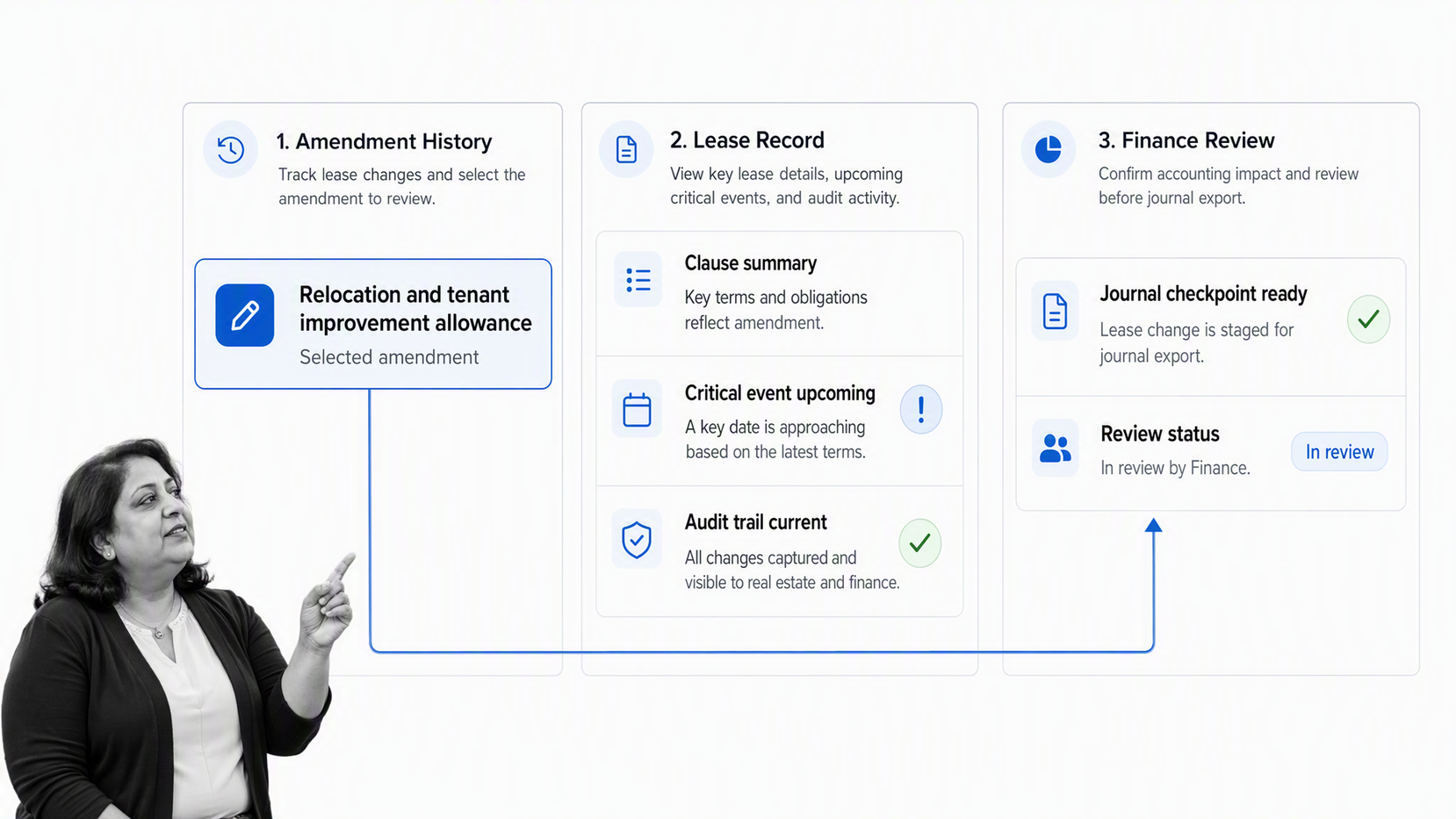
Best for: commercial tenants that want real estate and finance to work from the same lease data.
Occupier combines commercial lease administration and lease accounting. Its platform connects critical-date workflows, portfolio data, audit history, journal support, and disclosure reporting so real estate changes can flow into finance work.
Occupier is a strong candidate when the company occupies many leased locations and wants to connect operational decisions with accounting. Demo a new lease, a renewal option, an amendment, and a finance close step. Inspect permissions and evidence at every handoff.
- Commercial lease administration
- Critical-date workflows
- Shared portfolio data
- Lease accounting
- Audit history
- Finance reporting
FinQuery
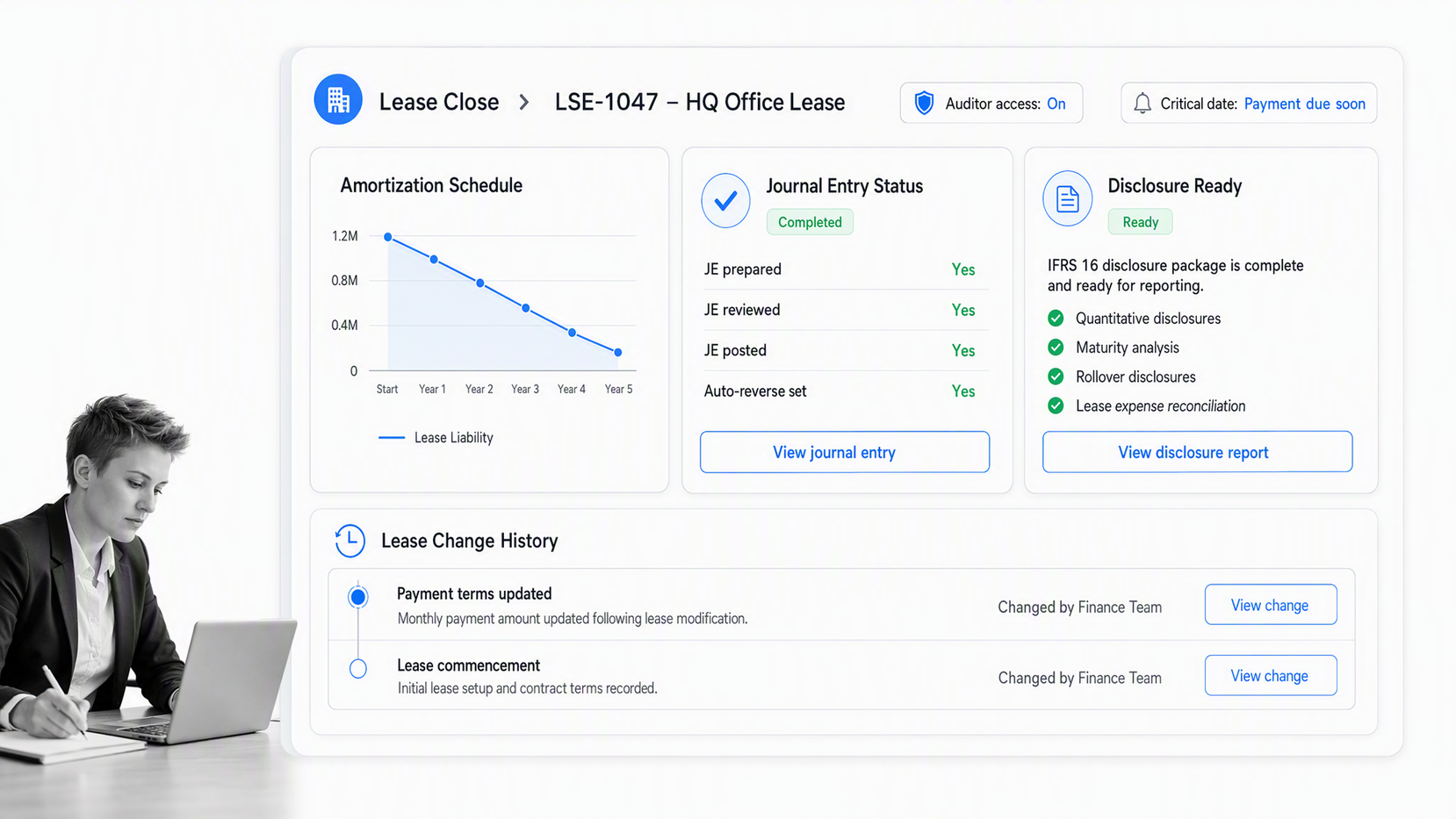
Best for: accounting and finance teams that need lease calculations, journal support, disclosures, controls, and audit-ready records.
LeaseQuery by FinQuery generates journal entries, amortization schedules, disclosures, audit history, and critical-date reminders. It is designed around the finance job rather than resident or property maintenance operations.
Choose FinQuery when accounting owns the central pain. Test a new lease, modification, termination, close, report, and auditor request. Property teams should separately confirm how lease documents and operational changes reach finance without duplicate entry or late surprises.
- Lease accounting
- Journal entries
- Amortization schedules
- Disclosures
- Audit history
- Critical-date reminders
Visual Lease
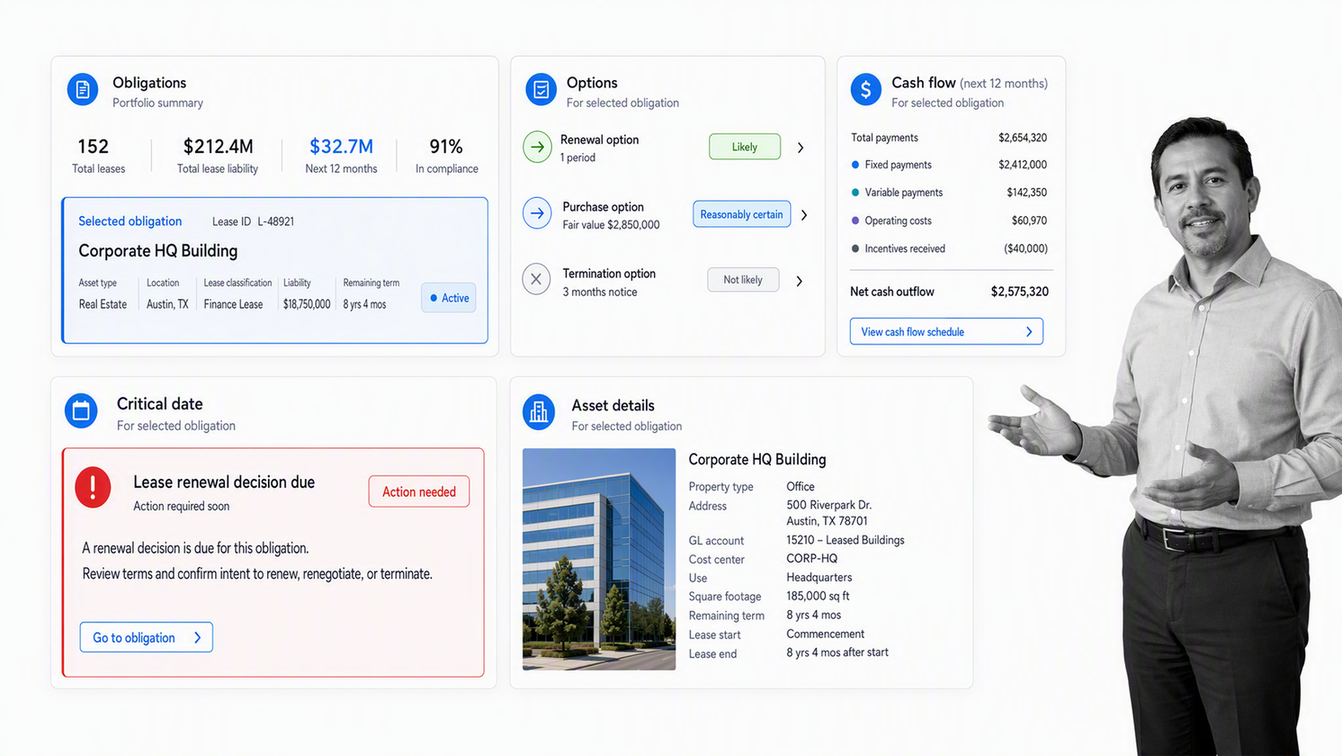
Best for: enterprise finance and real estate teams that want lease management and accounting data in one platform.
Visual Lease centralizes lease management and accounting information, including obligations, options, cash flow, critical dates, assets, and financial data. It is positioned for organizations that need a broad view of the lease portfolio rather than a residential tenant portal.
Evaluate Visual Lease with both finance and real estate stakeholders. Test data abstraction, an obligation, a renewal, a modification, a report, and an audit request. The product should make the lease record understandable to operators while preserving the controls finance needs.
- Lease records
- Obligations and options
- Critical dates
- Financial data
- Portfolio administration
- Lease accounting
How should you choose lease management software?
Start with one representative lease and one difficult exception. Vendors can make a clean dashboard look convincing. A real workflow exposes data gaps, unclear ownership, weak controls, and the manual work that survives after implementation.
- Define the portfolio: property types, lease types, locations, entities, users, and reporting needs.
- Map the lifecycle: prospecting, approval, execution, onboarding, payment, maintenance, amendment, renewal, termination, and audit.
- Name the source of truth for documents, dates, obligations, payments, and accounting outputs.
- Test permissions, approvals, escalations, exception paths, and audit history.
- Measure migration effort, configuration ownership, training, support, and the process for future changes.
- Run the same scenario in every finalist so the comparison reflects operations rather than presentation quality.
For renewal control, start with the lease renewal process guide. If approvals are a material risk, review how approval tasks work in Process Street before defining the future-state workflow.
How do you implement lease management software?
Implementation succeeds when the team treats the software as an operating change, not a database import. Clean lease data is necessary, but the organization also needs owners, decision rules, exception paths, review points, and a clear boundary between systems.
- Inventory active leases, amendments, options, obligations, contacts, and supporting documents.
- Normalize dates, property names, entities, payment terms, and responsibility fields before migration.
- Assign an owner for every recurring lease event and define the escalation path.
- Build and test renewal, amendment, notice, inspection, onboarding, and close workflows.
- Pilot with a small but representative portfolio, including at least one exception-heavy lease.
- Reconcile migrated records against source documents and finance outputs before expanding access.
- Review permissions, audit history, and reports with the people who will own the process after launch.
The cleanest architecture separates record ownership from execution ownership. The property or accounting platform can own authoritative lease data. Process Street can own the governed sequence of work that turns a date or change into an approved, documented outcome.
Frequently asked questions
What is lease management software?
Lease management software centralizes lease records, dates, obligations, renewals, documents, payments, operational tasks, or accounting data. The exact scope depends on whether the product is designed for landlords, property managers, commercial occupiers, or finance teams.
What is the difference between lease management and property management software?
Lease management focuses on agreements, dates, clauses, obligations, renewals, and related controls. Property management software usually adds resident or tenant services, rent collection, maintenance, accounting, listings, portals, and owner reporting.
Which lease management software is best for workflow control?
Process Street is the strongest fit when the priority is enforcing repeatable work around leases, including renewals, approvals, inspections, notices, document collection, and evidence capture. It can coordinate work around a property or accounting system rather than replacing every system of record.
Which lease management software is best for residential property managers?
AppFolio, Buildium, DoorLoop, Yardi Breeze, and TenantCloud are residential property management candidates with different depths of leasing, accounting, payments, maintenance, portals, and reporting. Test each product against your portfolio type and operating model.
Which lease management software is best for commercial portfolios?
Leasecake, Re-Leased, MRI ProLease, Occupier, FinQuery, and Visual Lease address different parts of commercial administration and finance. The right shortlist depends on whether the central problem is dates and obligations, property operations, portfolio control, or lease accounting.
Can lease management software prevent missed renewals?
Software can centralize critical dates and trigger reminders, but reliable renewal control also needs an owner, an escalation path, approvals, supporting documents, and proof that the required action happened. A governed workflow closes the gap between an alert and completed work.