





DenaliTEK is an Anchorage-based managed IT services provider. The company used Process Street to perform and track recurring work ranging from payroll to client maintenance, helping its team deliver services more consistently and in less time.
We spoke with then-Controller Lisa Clark about how DenaliTEK used Process Street to clarify processes, reduce missed steps, and keep client maintenance visible.
The DenaliTEK story
Although technology is essential, the last thing most business owners want is to spend their time worrying about software choices, setup, security updates, or support. Every hour spent untangling IT problems is an hour taken away from customers and growth.
DenaliTEK was created to take that operational burden off small businesses. Founded in 2001 by Todd Clark, the company provides managed IT, cybersecurity, compliance, and strategic technology services to organizations in Anchorage and across Alaska.
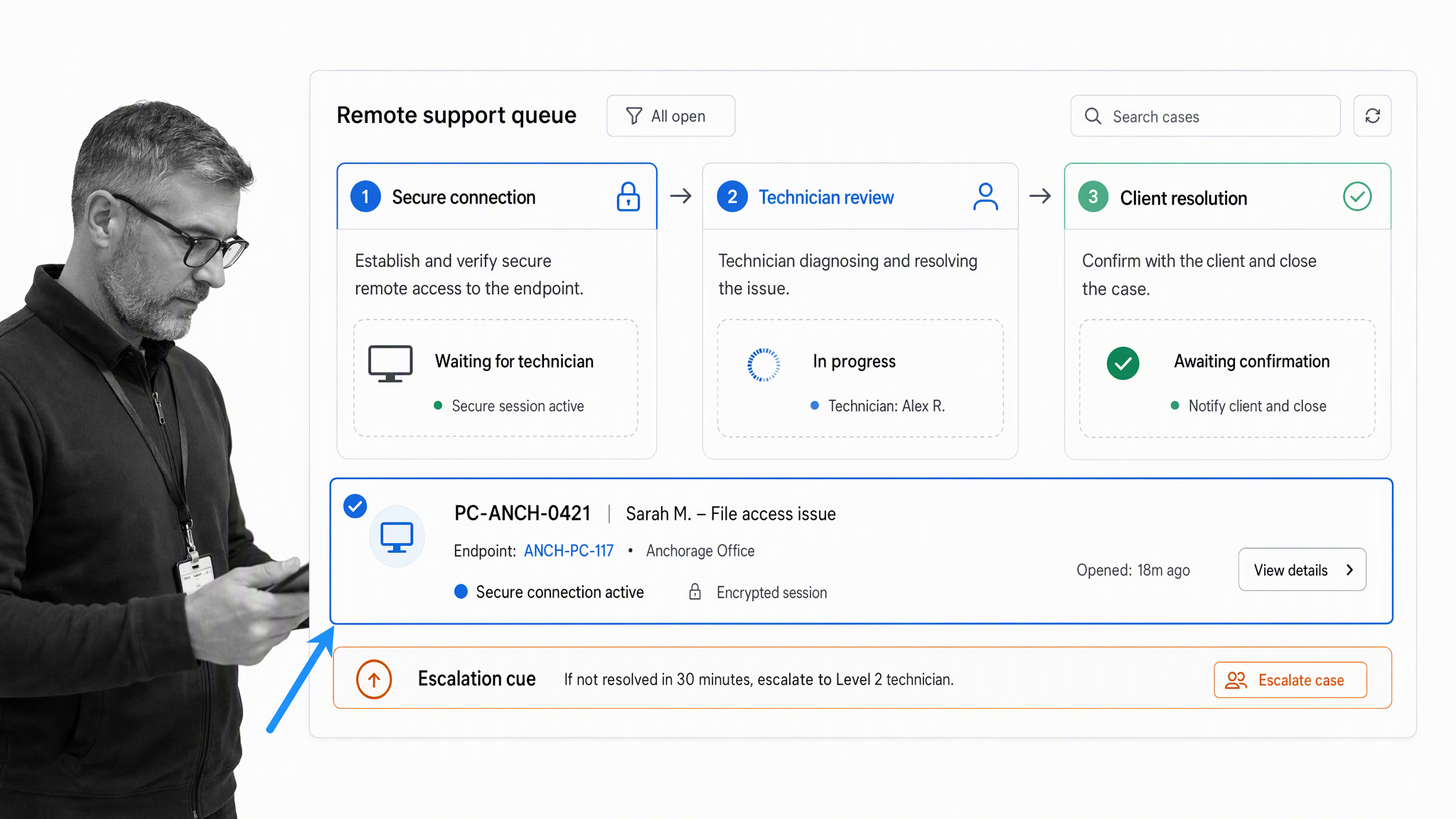
Its technicians also provide remote support, using secure access tools to diagnose and resolve issues without requiring every problem to become an on-site visit.
Delivering that breadth of service requires dependable execution behind the scenes. DenaliTEK needed to track recurring tasks, follow consistent procedures, and make sure clients completed important security maintenance on schedule.
That combination of technical work and client coordination creates a high standard for an MSP workflow. A support issue may begin with secure access, move through technician review, and end only after the client confirms the resolution. Each handoff needs a clear owner, and every recurring maintenance task needs a record that managers can review.
DenaliTEK used Process Street for:
- Documenting processes;
- Managing recurring operations;
- Onboarding employees and clients;
- Performing sales reviews;
- Coordinating client maintenance;
- And creating newsletters.
That system helped the team clarify incomplete or outdated processes, give employees specific instructions, reduce human error, track client security activity, and see where action was still needed.
Challenge
After years in the IT industry, Todd Clark understood how easily small businesses could become overwhelmed by their technology. DenaliTEK set out to provide expert support in clear language so clients could benefit from modern systems without having to operate an internal IT department.
The promise depended on predictability. DenaliTEK needed its technicians and operations staff to be consistent, precise, and thorough. A missed task, unclear instruction, or overlooked security step could weaken a client’s confidence in the service.
Because clients trusted DenaliTEK to manage important systems, the team could not rely on memory or scattered notes. It needed procedures that were easy to find, detailed enough to guide the work, and flexible enough to improve as the company learned. Managers also needed a way to confirm that recurring work had actually been completed.
The challenge came down to three problems:
- Processes were unclear and recurring checklists were not consistently monitored;
- Employees could forget small but important tasks;
- Client maintenance work was difficult to track even though it was vital to security.
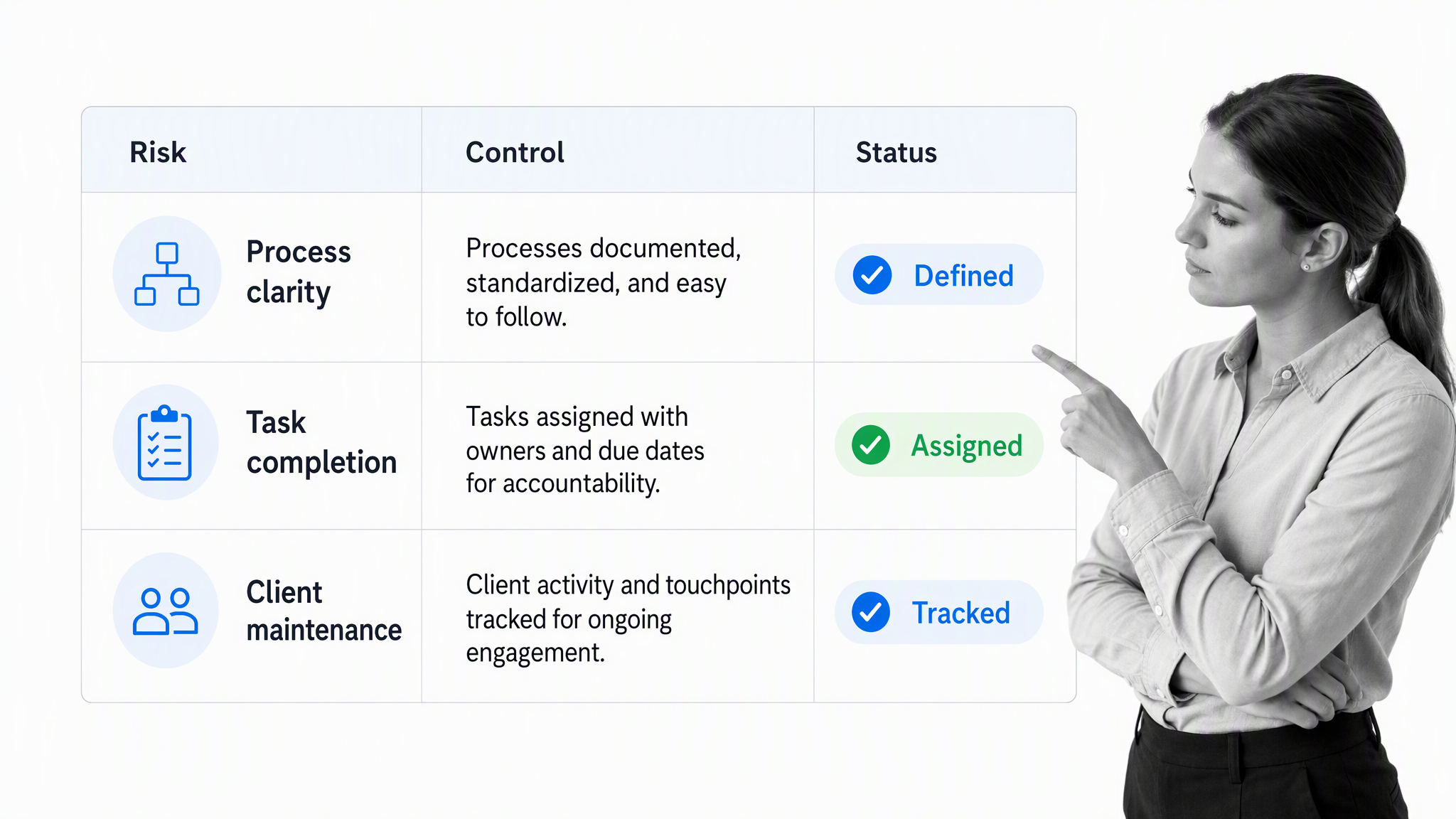
At the center of each problem was consistency. It is difficult to provide reliable managed IT services when teams cannot quickly tell whether every task was completed correctly or whether a client maintenance activity still needs attention.
DenaliTEK needed a shared system for repeatable work. Lisa responded by cleaning up the company’s processes and organizing execution in Process Street.
Growing their business with Process Street
By improving existing processes and tracking team progress, DenaliTEK brought more structure to its business process management. Documented workflows gave employees a reliable starting point for recurring work and gave managers a clearer view of what was complete, in progress, or overdue.
Team members could run workflows to follow the correct steps, while managers could use Reports to monitor progress across active work.
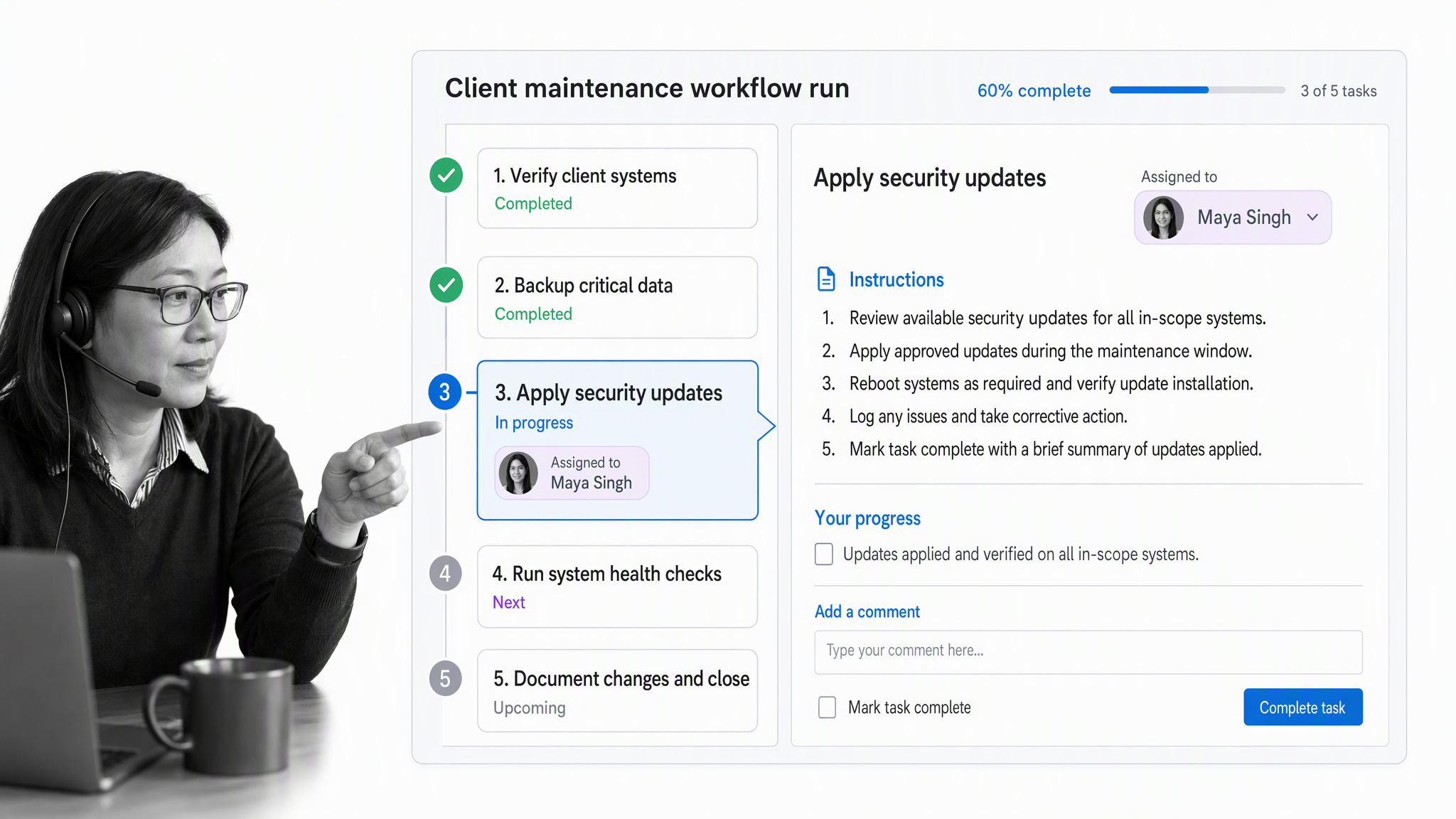
That visibility removed uncertainty about which procedures were current and where each piece of work stood. Employees could open an assigned workflow, review the instructions, and see exactly what remained. Task assignments made ownership explicit.
Documenting work also reduced preventable errors. A salesperson no longer had to remember a naming convention from memory, and a technician did not need to guess which maintenance step came next. The workflow carried the approved method into the moment of execution.
The approach helped standardize IT service delivery without forcing every situation into an identical path. The source procedure established the approved sequence, while instructions, assignments, due dates, and conditional routing supplied the context required for a particular client. Employees received the detail they needed without losing sight of the overall process.
Client maintenance became easier to monitor for the same reason. Every task could include the instructions required to complete it, helping employees work faster while managers retained operational visibility.
Results
Because service quality and consistency were essential to client happiness and security, we asked Lisa how Process Street changed the way DenaliTEK worked.
“Our processes were messy when I first joined; we had recurring checklists that were six months old that were still active. So I went in and cleaned it up, and that’s when I found out how fabulous Process Street was…
For example, when our salespeople win an opportunity, they have a lot of small, standardized tasks that they need to do in a certain way every time, but they kept forgetting. Like, “does the date go first or after the client name?”, and that makes it hard to search and do some of our internal tasks.
Process Street solved that by letting us write instructions for every task, and putting them together in checklists to follow step-by-step.” – Lisa Clark, DenaliTEK
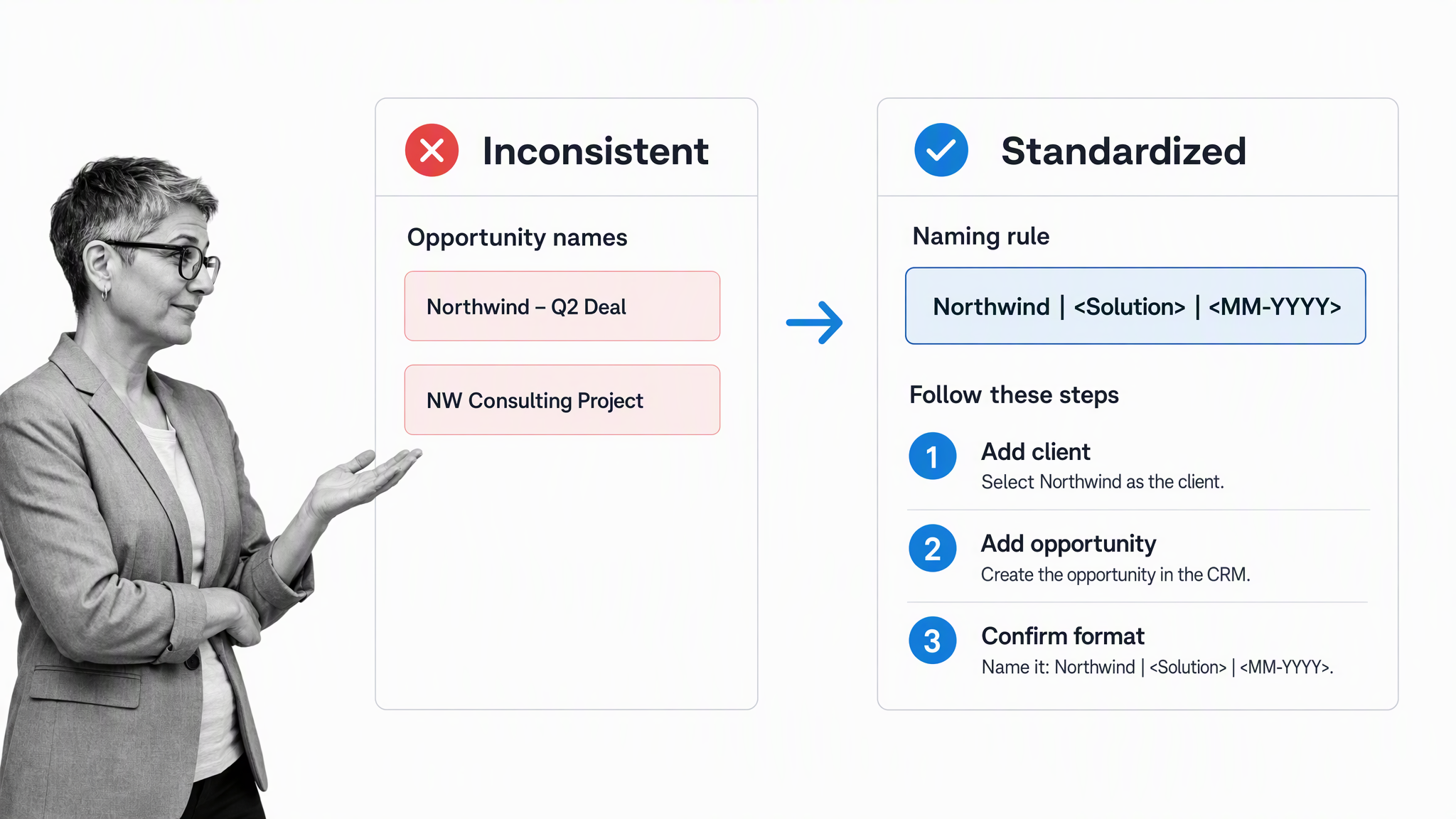
The practical result was greater consistency across the company. DenaliTEK could see which work had been performed, standardize the way employees completed recurring tasks, and keep client maintenance activity visible.
The sales example captures the broader impact. Small inconsistencies in names, dates, or record formats can make information difficult to search and create extra work downstream. Turning the approved format into a required step removed ambiguity at the source instead of asking someone to clean up records later.
Clear operating records also made improvement easier. When a manager could see the current workflow, its owner, and its completion history, the conversation shifted from whether work happened to how the process could be made better. That visibility supported accountability without adding another layer of manual reporting.
Those improvements supported the company’s larger mission: giving local businesses dependable technology service so their teams could focus on their own customers and operations.
Taking it to the next level
Once the foundations were in place, DenaliTEK could look beyond basic documentation and improve how work moved through the business.
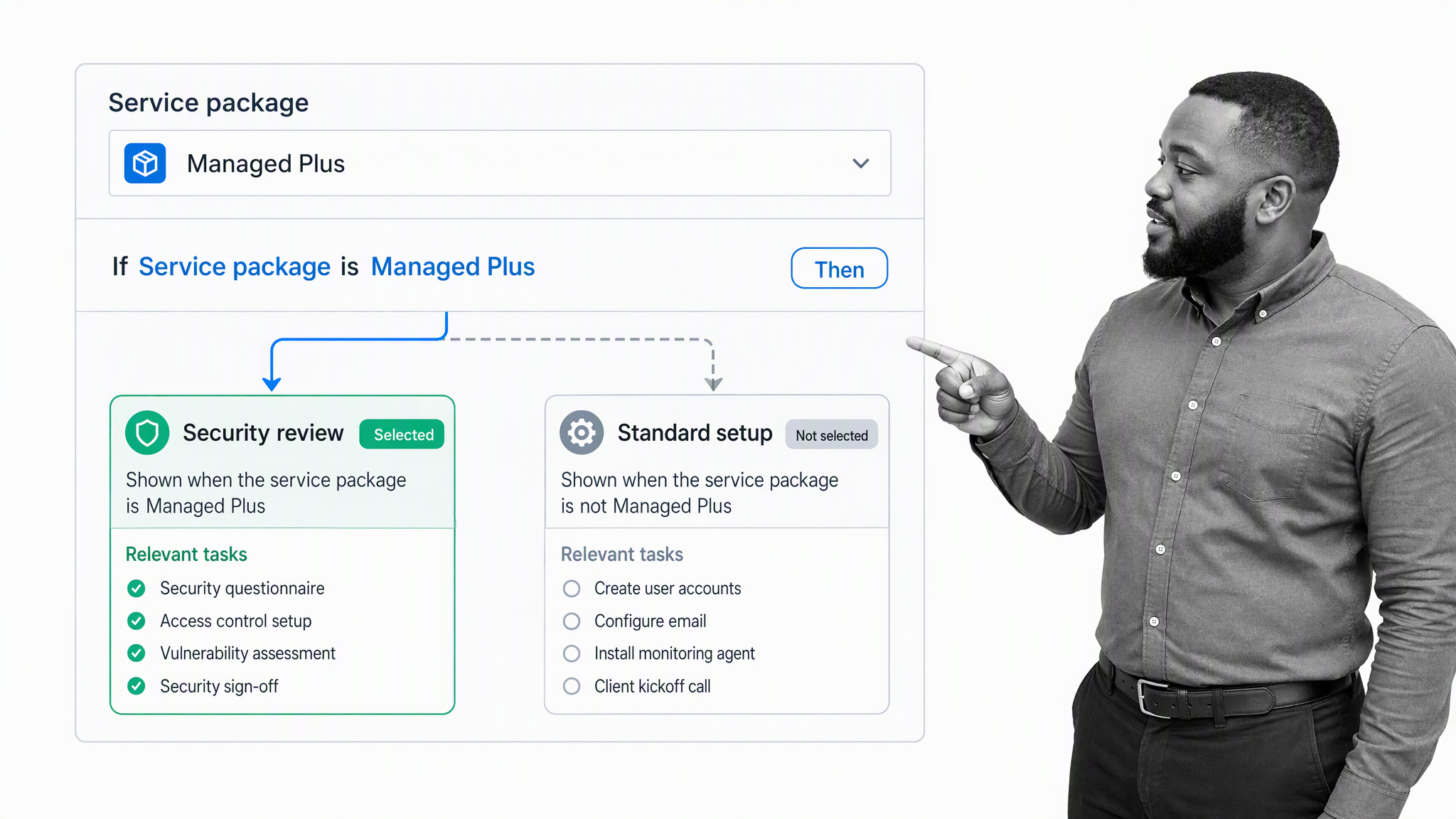
Conditional logic can tailor a workflow to the client or service package. A managed services client onboarding process, for example, can show security, access, and setup tasks that match the package a client selected.
Process Street is one Compliance Operations Platform with Docs and Ops capability areas plus built-in AI. Teams can govern policies and procedures, turn them into assigned workflows, automate approvals and handoffs, and keep execution evidence connected in one product.
With more than 5,000 integrations, teams can also connect Process Street to the tools already used for service delivery and administration. The result is a repeatable operating layer that helps growing managed service providers maintain standards without adding unnecessary coordination work.
For an MSP, this operating layer can connect client onboarding, scheduled maintenance, security reviews, sales handoffs, and internal administration. Teams get a consistent way to launch work and capture evidence, while leaders get the visibility needed to spot delays and improve the underlying procedure.
For DenaliTEK, the value began with something fundamental: clear instructions, visible ownership, and a dependable way to complete recurring work.