


PocketSuite is a mobile-first business management app for people who work with clients. It brings booking, payments, messaging, forms, contracts, and team tools into one place for service professionals.
We spoke with Ilya Ornatov, then head of growth marketing at PocketSuite, about how the team used Process Street to document recurring work, lower operating costs, save time, and support growth.
The PocketSuite story
PocketSuite was incorporated in 2012 and relaunched in November 2014. Its team set out to give independent service professionals practical tools for running a client-based business from a phone, including booking and client messaging.

As the business grew, the team needed a more reliable way to coordinate repeatable internal work. Process Street gave PocketSuite a shared place to document procedures and run them as trackable workflows. Today, Process Street is a single Compliance Operations Platform with Docs and Ops capability areas plus built-in AI. The PocketSuite implementation described here reflects the product and working practices in use at the time of the interview.
PocketSuite uses Process Street for:
- Tracking how many support tickets have been resolved
- Managing and automating the content creation process
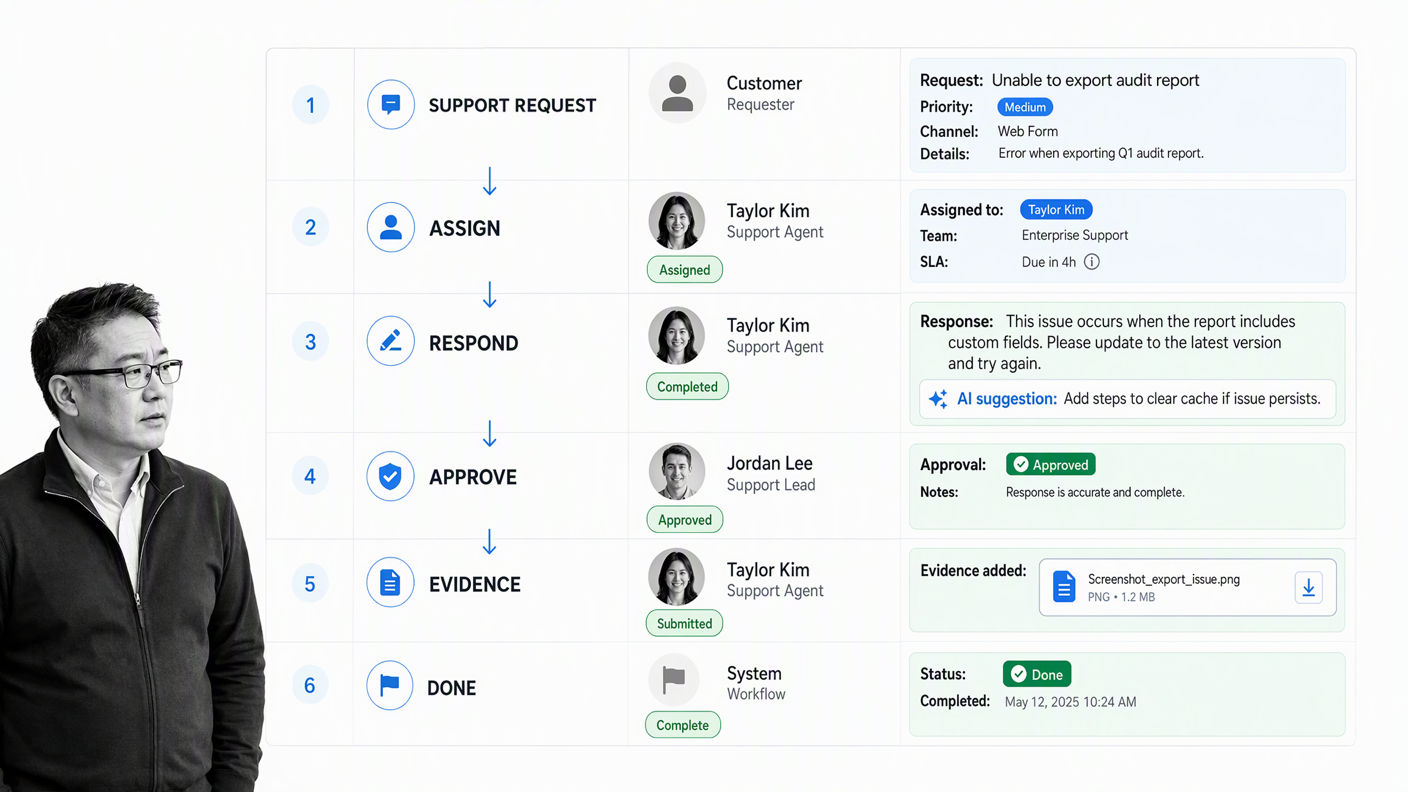
- Managing and automating the customer support process
- Managing recurring tasks
They’ve benefited from implementing Process Street by:
- Reducing costs
- Increasing productivity
- Saving time
- Improving customer support service
- Supporting growth with repeatable operations
Challenge
Without a clearly defined standard process, even straightforward work can take longer than necessary and create avoidable costs. Ilya explained that PocketSuite initially struggled to make content production repeatable.
“The biggest goal was to create an actual content creation process as opposed to just flying by the seat of our pants and just, for example, writing a newsletter whenever we had the chance instead of actually creating a process for that.”
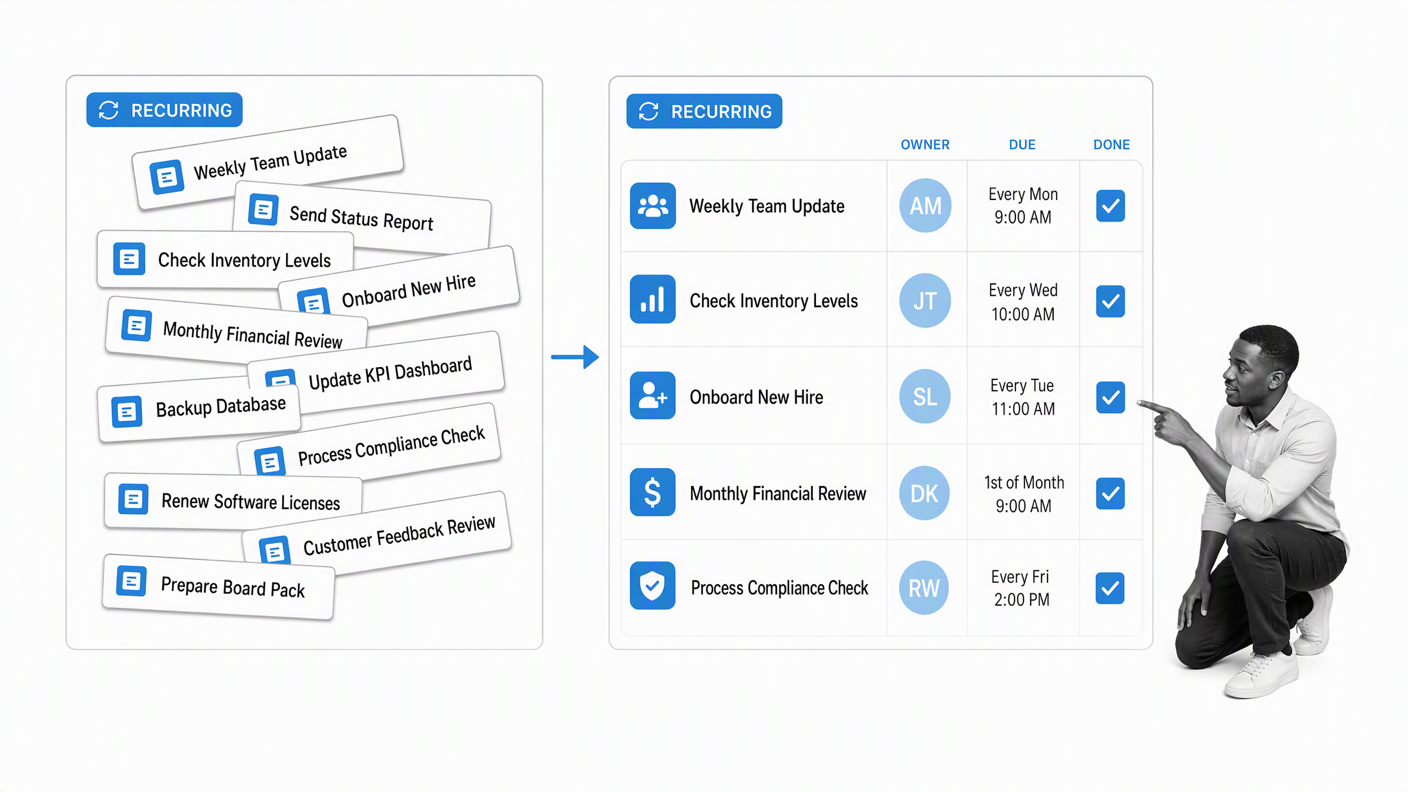
The team’s Trello board had also become crowded with recurring cards. Instead of helping people see what mattered, the volume of repeated cards hindered workflows and created confusion. Customer support faced similar pressure, with the team “putting fires out all day” because it lacked clear standard operating procedures for responding consistently.
Growing their business with Process Street
Documented processes reduced the amount of context and specialist knowledge required to complete routine work. Ilya described how that made delegation more practical while freeing salaried employees to focus on higher-value work.
“Yes, and here’s why. I can explain it really simply.
Because when you have a process that is very well detailed for how to complete a task, all of a sudden the cognitive ability required to do that task decreases. And so does the skill level of who you hire to complete it.
So, having documentation for how to do tasks allows you to, for example, take tasks that you would have assigned to a salaried employee and assigned them to a virtual assistant, which means you’re cutting the cost to less than half the amount per hour, and you’re also freeing up your salaried employee to do bigger things that are worth more per hour to the company.”
At the time, multiple PocketSuite teams used Process Street for roughly 30 minutes per day. Ilya said: “Currently, the content team is using it, the marketing team is using it, and soon the support team will be as well. I see PocketSuite using Process Street a lot more in the future.”
“If I’m hiring a VA for $12,000 a year versus a full-time salary employee for $75,000 a year, I mean, what else you need to know? That’s huge, right?”
This example reflects PocketSuite’s staffing scenario at the time, not a universal savings guarantee. The durable lesson is that clear documentation can shift appropriate recurring work to the right role while preserving oversight.
Results
PocketSuite connected Process Street with Trello to move recurring work out of an overloaded board and into more structured workflows.
“We’re integrating Process Street with Trello to manage recurring tasks.
I remember listening to a podcast with [Vinay Patankar, CEO of Process Street] that explained how to use Process Street to manage recurring tasks really well. And I implemented that and it actually started working really well!
Now we’ve uncluttered our Trello board, and have a place where we can put a lot more information than just in the Trello comments of a Trello card.”
Ilya said the change made the team more productive: “Yeah; we’re more productive when we can actually see what the hell is going on in our Trello board. In terms of time savings, it’s helped me save time from having to peruse our Trello board to try to find things.” The same principle applies across workflow automation apps: recurring work is easier to manage when ownership, instructions, and completion status are visible.
“…when I showed Process Street to my CEO, she was blown away”
PocketSuite built a more consistent support-response system around its customers, using Process Street to automate parts of the response process. Ilya also documented the content creation process and connected steps through integrations.
Taking it to the next level
Ilya planned to extend documented processes across marketing and support, strengthen quality assurance, and measure whether better workflows improved core business metrics.
“I think it will impact our core metrics a lot more in the future once we start using it on the support side, because right now we’re just using it to build the content creation workflow.”
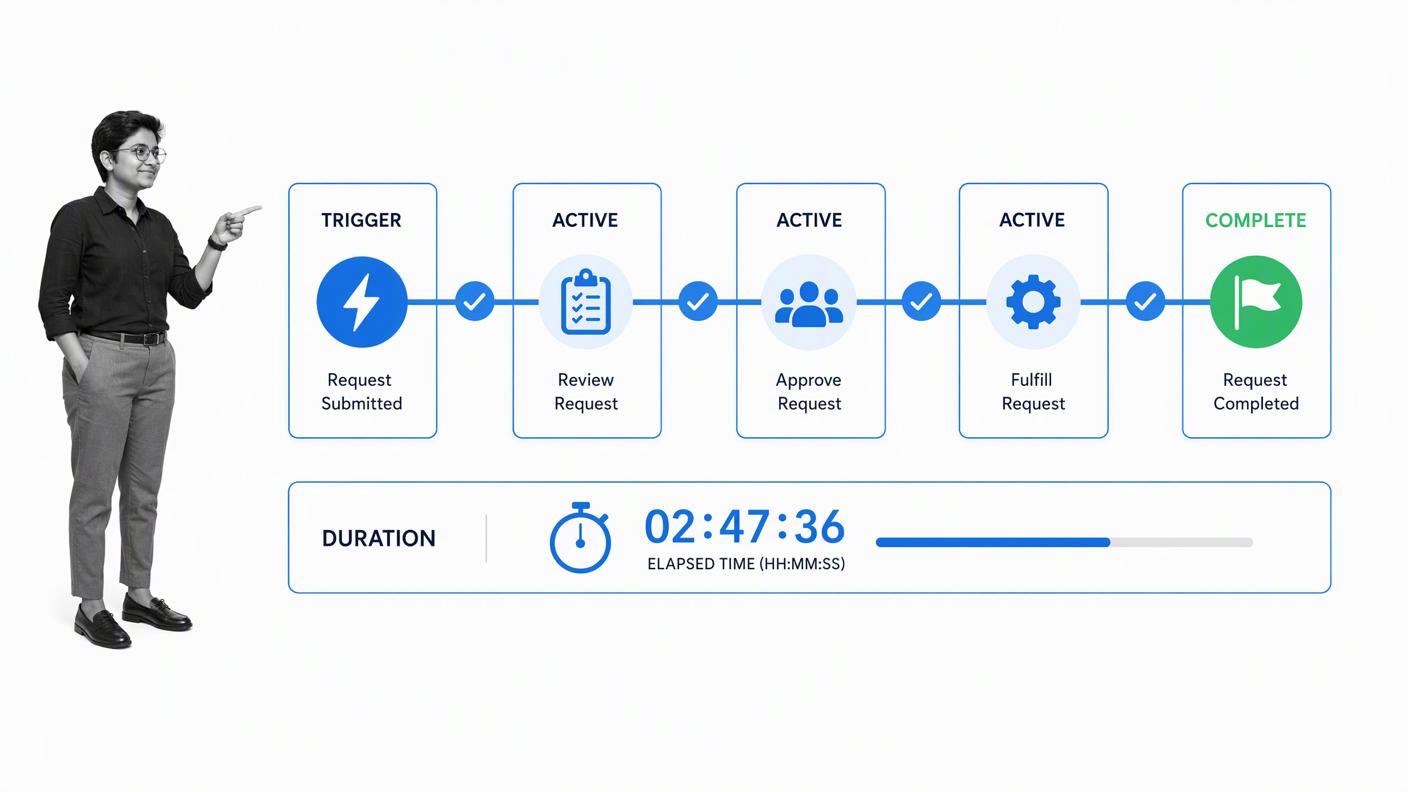
The team also wanted to measure cycle time. Ilya said: “In the future we’d like to track things such as how quickly content is being created, using metrics like the time period from when a checklist was triggered to when it was completed.”
By eliminating tedious manual tasks and documenting repeatable work, PocketSuite created room for the team to focus on growth rather than continually rebuilding the same process.
“I think we are going to be saving a lot of time and money in the near future by using Process Street as opposed to hiring more full-time salaried employees.”
PocketSuite case study FAQ
How did PocketSuite use Process Street?
PocketSuite used Process Street to document content creation and customer support procedures, coordinate recurring tasks, and track completed support work.
What problem did the workflows solve?
The workflows replaced improvised execution, reduced recurring-card clutter in Trello, and gave the team clearer instructions for repeatable support and content tasks.
What results did PocketSuite report?
Ilya reported better visibility, less time spent searching the Trello board, more productive teamwork, and a lower-cost way to delegate appropriately documented tasks.