





The following is a guest post from Etee Dubey, a full-time content marketer at Outgrow and part-time dreamer. In her free time, she catches up with her reading and often finds herself explaining the meaning of her eccentric name to people around her.
Every interactive marketing trends list has one thing in common: the dilemma of choice for marketers. And frankly, we understand if you get a bit confused with so many options flying around. Which content marketing trend will give you the best ROI? Which one suits your company the best? What is a trend, anyway?
All of these questions might bug you. And in all fairness, they are absolutely valid. So how do you select the one that works for you? You research. A lot. And then some. In this post, we will try to help you come to a conclusion regarding interactive content. We thought it was only fair considering that almost every ‘trends’ list includes interactive content. Why should you invest in interactive content, and when should invest in it become a real priority? To answer this question, you have to ask yourself one simple question:What do you want to get out of producing interactive content?
There is an endless barrage of blogs and ads fighting for the attention of customers. There is still an endless barrage of blogs, social media posts, and ads fighting for the attention of customers. So, how do you catch attention without relying on another static post? Catching the reader’s attention is not the only reason to invest in interactive content, however. Perhaps you want to generate more leads, or maybe you just want to increase your brand recognition. Your motive for creating interactive content determines the type of experience you create.5 reasons for creating interactive content
Let’s dive a bit deeper to understand the different reasons for creating interactive content.1. More engagement than passive content
As mentioned before, a lot of marketers turn to interactive content for more engagement. Interactive content can earn more engagement than passive content because the user benefits from a personalized results page, recommendation, estimate, or score. The page gives them something useful in return for active participation. In short, a consumer is more likely to engage with interactive content because it provides real value. If your primary goal is engagement, make sure your interactive content is visually appealing. Humour is certainly a major factor in content engagement and shareability. It’s also important to bear in mind that creating interactive content around trending events can increase content engagement. Take this example for instance. Suppose the Winter Olympics are coming soon and it is trending on social media platforms. You can create an effortless interactive experience like this:
2. Increase lead generation
Every marketer knows that lead generation is one tricky task to take on. However, if you add interactive content to the mix, it feels like a walk in the park. Why do we say that? Well, interactive content garners leads by providing the prospects something in return. It builds trust by answering your customer’s most pressing questions early on in the buying cycle. Suppose you own a company that provides software solutions. A calculator like this one could be a fun way to increase leads or subscribers because it helps them in return. The same logic applies to an interactive form creator: give the prospect a useful result, then route the context into a follow-up workflow.
3. Improve SEO
Your SEO optimization efforts shouldn’t just stop at focus keywords. Interactive content can help you boost your search rankings as well. User experience and usability influence the search engine ranking of content. Interactive content increases the interest of the audience through amazing visuals and active participation. For instance, if you work for a bank, you can create an interactive calculator like this:
4. Enable a more refined retargeting strategy
Retargeting is reaching back out to customers who have shown interest in your service or product. We have already touched upon the amount of personalized data you can derive from interactive content. In 2026, the best version of this is consented first-party data used responsibly. Suppose you build an outcome quiz to target leads. You can segment users by the answers they give or outcomes they receive. Consequently, you can follow up on the basis of that information with more relevant content, lifecycle emails, sales notes, or ads where consent and policy allow it. The possibilities are still broad, but the strategy needs to respect privacy and user expectations!
5. Gain more insightful feedback
Every company that aims to improve itself understands the importance of feedback. This feedback could be from employees or customers. However, most people aren’t interested in filling out a boring form when they can simply choose not to. How do we get around this mess? We replace boring HR forms with interactive content that feels easier to complete and turns responses into useful insight. What do your employees think of their manager? Are your customers happy with your tool? What suggestion do they want to give to the company management? One Outcome Quiz can collect all of that information.
2 types of interactive content designed to receive feedback
1. Surveys & Polls
You must have seen those Yes/No polls floating around in Instagram stories. Whatever your answer may be, we’re pleased to inform you, you just answered a poll. Survey response benchmarks vary by audience, channel, and incentive. Add the magic of interactivity and the experience can feel easier to complete because the respondent sees a clearer reason to participate. Interactive polls can be helpful in optimizing your company’s management and ensure regular company-employee communication. Furthermore, it can be used for company-customer communications as well. You can use these polls to find out the customer impression of the company product. Improving the tool becomes easier when you have a clear idea of what to improve. Moreover, interactive surveys can be used to generate leads by adding the CTA form right before the results. The potential leads have to divulge their contact information before they see where they stand with respect to their peers’ opinion. Plus, your sales team gets to know the preference of those potential leads on the basis of their answers. Just have a look at this poll.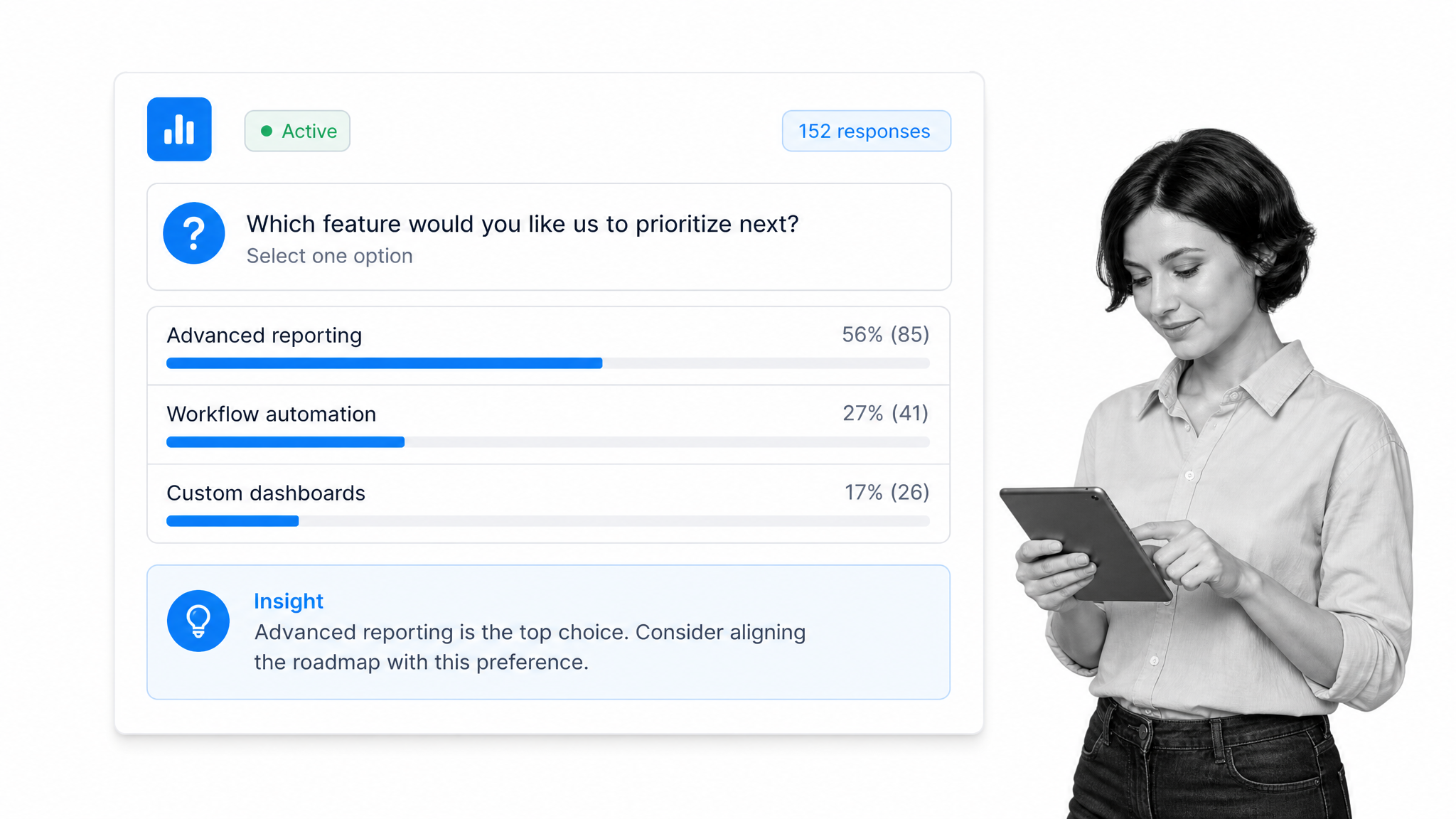
2. Chatbots
A chatbot is a tool that allows the company to conduct conversations with a user without the need for human personnel. Basically, it handles the repetitive intake work so employees can use their time for more productive purposes. Moreover, this experience can be seamlessly integrated into a pop-up, chat, or any custom embed. People increasingly expect fast, conversational support from businesses. Chatbots can become useful in this situation when they reduce friction, ask better follow-up questions, and route the answer to the right next step. Have a look at this Chatbot Premade. Say, you’re a hotel owner and you want to collect feedback from all of your clients. One way to go about it is- with the bland old white form. Which can only get you so far.
Using Process Street workflows to get the most out of your content
Process Street is a Compliance Operations Platform that helps businesses create, execute, and optimize their workflows.
Frequently asked questions
What is interactive content?
Interactive content is content that asks the reader to participate and gives something back, such as a score, recommendation, answer, estimate, or guided next step.
Which interactive content format is best for lead generation?
Quizzes, calculators, and assessments are usually strongest for lead generation because they can deliver a personalized result and capture useful context for follow-up.
How should teams manage interactive content production?
Use a workflow that defines owners, review steps, approval rules, launch tasks, promotion steps, and response follow-up. The asset is only as useful as the process around it.