Turn every policy into automated workflows with built-in enforcement and audit-ready proof.



Best Venture Capital Apps for Smarter Fund Operations
Venture capital apps should make the investment process easier to run, not create another layer of disconnected records. The strongest stack helps a firm capture opportunities, preserve relationship context, coordinate diligence, prepare investment decisions, collect portfolio data, and keep fund operations moving with clear ownership.
No single product is equally strong at every job. A workflow platform can control how work moves. A purpose-built CRM can map relationships. A portfolio platform can collect company metrics. A fund administration system can manage fund events. The right choice starts with the operating problem, then connects the smallest practical set of systems around it.
This guide compares seven venture capital apps across those jobs. Process Street holds the top position because it can turn a firm’s recurring operating procedures into executable workflows with assignments, forms, decision paths, approvals, deadlines, and a durable history of what happened.
- What are venture capital apps?
- Which venture capital app is best for each workflow?
- What are the best venture capital apps?
- How should a VC firm choose its apps?
- How do you build a connected VC stack?
- What implementation mistakes should firms avoid?
- Venture capital apps FAQs
What are venture capital apps?
Venture capital apps are software products used to run some part of an investment firm’s operating system. They cover distinct jobs: sourcing potential investments, managing founder and co-investor relationships, screening opportunities, coordinating due diligence, preparing investment committee decisions, administering funds, monitoring portfolio companies, and researching private markets.
The category is broader than a VC CRM. A CRM is valuable for people, companies, interactions, and deal pipelines. It is not automatically the best place to enforce every diligence task, approval, evidence requirement, portfolio request, or recurring operating procedure. That is why many firms pair a relationship system with a workflow execution layer and specialist data products.
The practical goal is a controlled flow of work. A founder submission should become a structured record. Screening should follow a defined path. A deal that advances should trigger the right diligence tasks. An investment committee package should be complete before review. An approved investment should launch onboarding and portfolio reporting. A venture capital system connects those stages so the firm is not rebuilding the process in email for every deal.
Which venture capital app is best for each VC workflow?
Use this comparison as a starting point. The products solve different problems, so the strongest choice depends on the workflow that currently creates the most risk, delay, or manual coordination.
| App | Best for | Core strength | Role in the stack |
|---|---|---|---|
| Process Street | Repeatable fund operations | Executable workflows with forms, decision paths, assignments, and approvals | Operating and control layer |
| Affinity | Relationship-driven sourcing | Relationship context and deal activity capture | VC CRM and network layer |
| Visible | Portfolio data collection | Portfolio monitoring, reviews, and dashboards | Portfolio reporting layer |
| Carta | Fund administration | Fund events, LP access, and portfolio valuations | Fund operations system |
| PitchBook | Private-market research | Company, deal, fund, and market intelligence | Research and benchmarking layer |
| Intapp DealCloud | Complex deal and relationship management | Configurable private-capital data and workflows | Enterprise deal platform |
| Crunchbase | Company discovery | Private-company profiles, funding history, and activity tracking | Research and sourcing input |
A table cannot show the operating fit by itself. Test each app against the firm’s real process, including what happens when information is incomplete, a reviewer is unavailable, a deal changes direction, or a portfolio company misses a reporting request. Edge cases reveal whether the software supports the process or merely displays it.
The best venture capital apps
1. Process Street
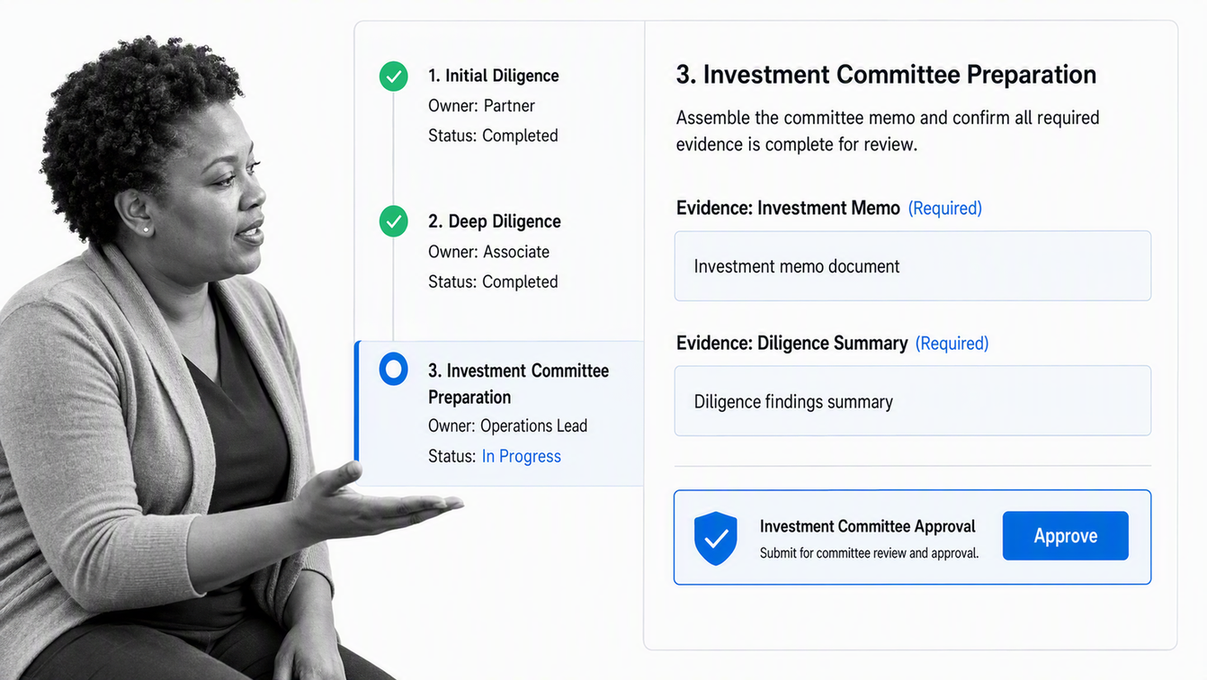
Process Street is the best venture capital app for firms that need to make recurring operational work run consistently. It turns procedures into live workflows where tasks have owners, due dates, required information, conditional paths, and approval steps. Instead of keeping the investment process in a policy document and the actual work in email, the process itself drives execution.
A firm can use Process Street workflows for founder intake, initial screening, conflicts checks, diligence workstreams, reference calls, investment committee preparation, closing checklists, portfolio onboarding, quarterly reviews, reserve decisions, and LP reporting preparation. Each stage can expose only the tasks relevant to that deal, route reviews to the right people, and keep a task history that shows what was completed.
Forms can start a workflow and move structured information into the process. That makes Process Street forms useful for founder submissions, internal deal referrals, compliance attestations, portfolio requests, and recurring data collection. Teams can also use Data Sets to keep shared records available across workflows without copying the same information into every run.
The strongest fit is a firm that already has a clear investment method but struggles to execute it consistently across deals, people, and systems. Process Street does not need to replace the CRM, fund administrator, or research database. It provides the operating layer that tells the team what must happen next, captures the evidence, and keeps exceptions from disappearing between tools.
2. Affinity
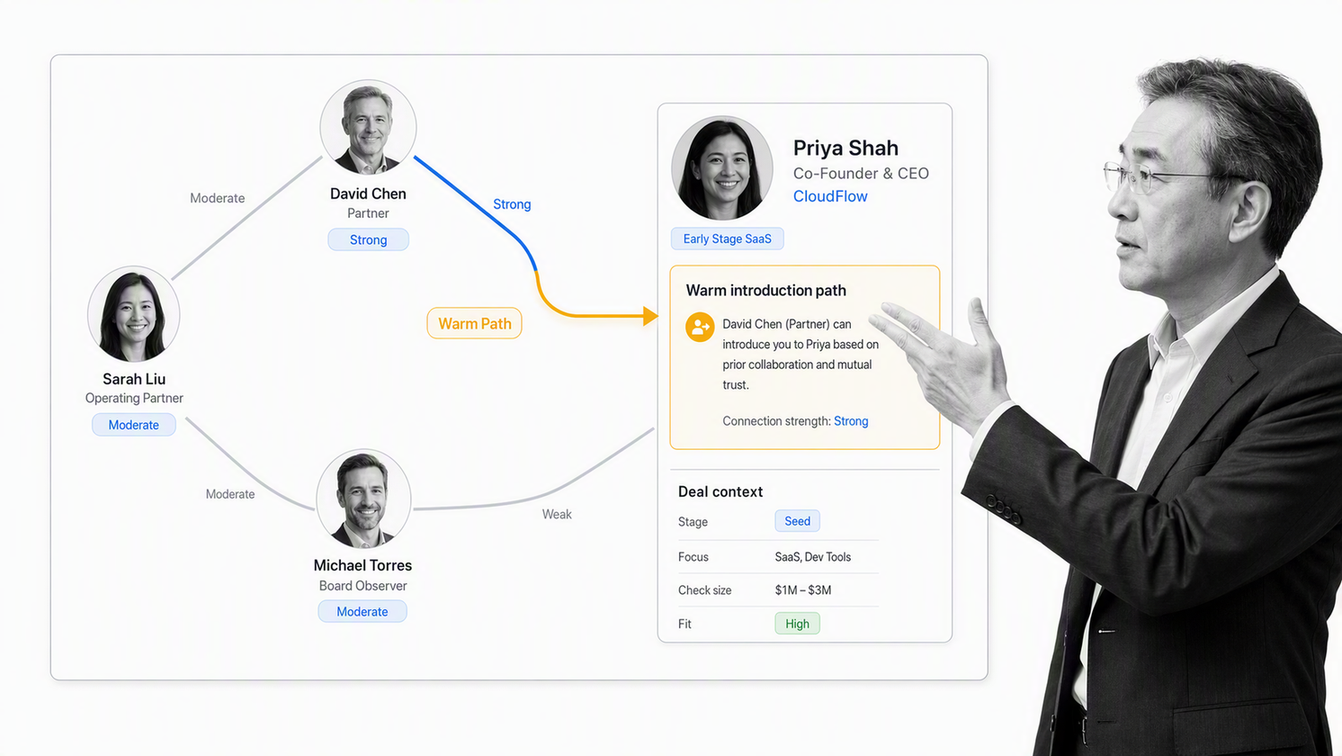
Affinity is built for relationship-driven venture capital work. It brings founder, investor, co-investor, and intermediary context into a private-capital CRM, then connects that context to deal activity and pipeline management. Its value is strongest when the firm’s network is a core sourcing advantage and important history is otherwise trapped in individual inboxes and calendars.
The product supports the deal lifecycle from sourcing and qualification through investment committee activity, deal monitoring, portfolio monitoring, fundraising, and exit preparation. Automatic activity capture reduces the dependence on every investor remembering to log each interaction. That gives the partnership a more complete view of who knows a founder, what the firm learned previously, and where a relationship may need attention.
Affinity is a strong choice for a venture team that wants a purpose-built relationship system rather than a sales CRM adapted to investing. During evaluation, test data permissions, the quality of automatic matching, how the product handles multiple funds, and whether the pipeline structure matches the firm’s real decision process.
It is still useful to separate relationship intelligence from procedural control. If the firm needs detailed diligence checklists, mandatory evidence, conditional task routing, or approval gates, connect Affinity to an execution workflow rather than forcing every operating procedure into CRM fields and notes.
3. Visible
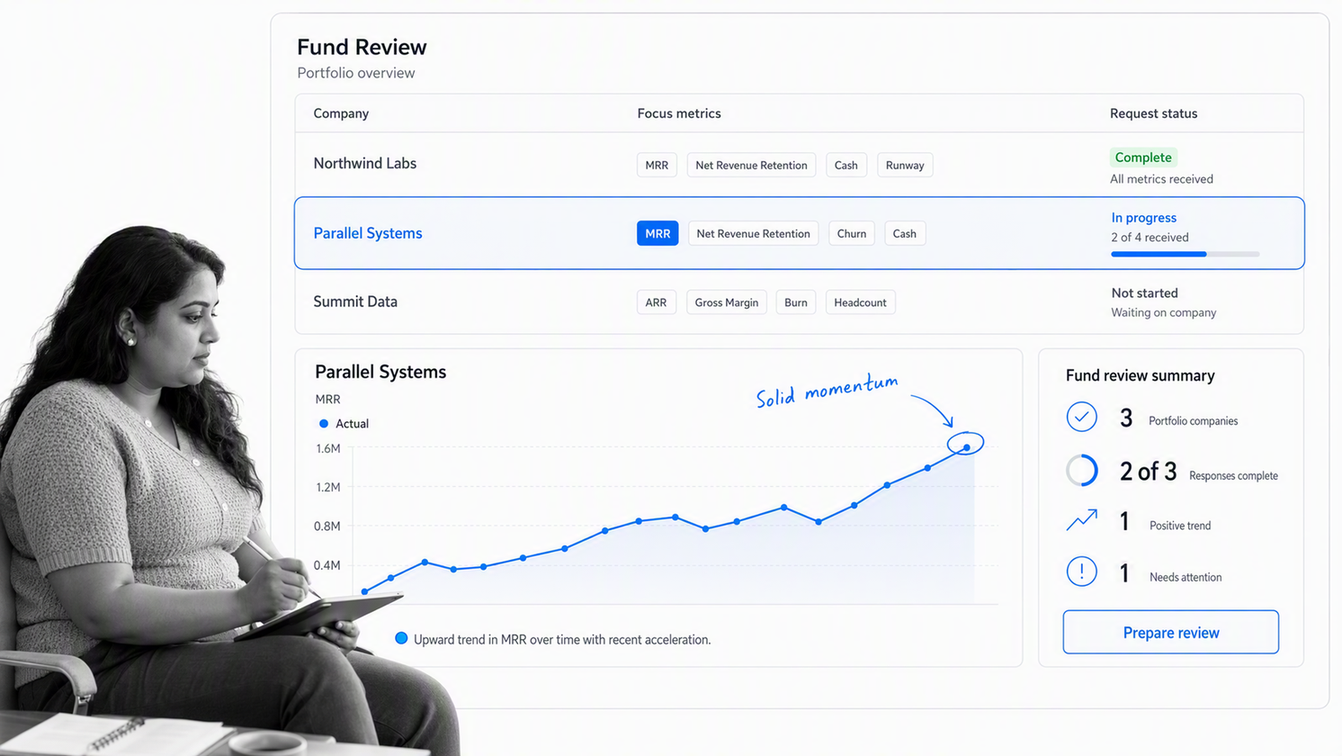
Visible is designed for portfolio monitoring and reporting. It centralizes portfolio and investment data, supports recurring data collection, and gives investors dashboards for portfolio reviews. That focus makes it useful after a deal closes, when the firm needs a dependable cadence for company updates rather than another sourcing database.
Portfolio reporting often breaks down because every company receives a slightly different request, metrics arrive in inconsistent formats, and the internal review happens in a separate spreadsheet. Visible gives the firm a dedicated surface for collecting and analyzing those updates. The result is a clearer path from company submission to partner review and LP communication.
The best fit is a firm that needs to improve founder-friendly data collection and turn portfolio submissions into usable views. During a trial, test how the product handles custom metrics, late responses, changes in company reporting, fund-level views, permissions, and exports. Portfolio teams should also examine how much work is required to prepare a review once the data is collected.
Visible is a specialist, not the entire firm operating system. Use it for portfolio data and insight, then connect follow-up work to the workflow platform that owns tasks, approvals, escalation, and evidence. That boundary keeps the reporting tool focused and prevents action items from becoming comments that nobody owns.
4. Carta
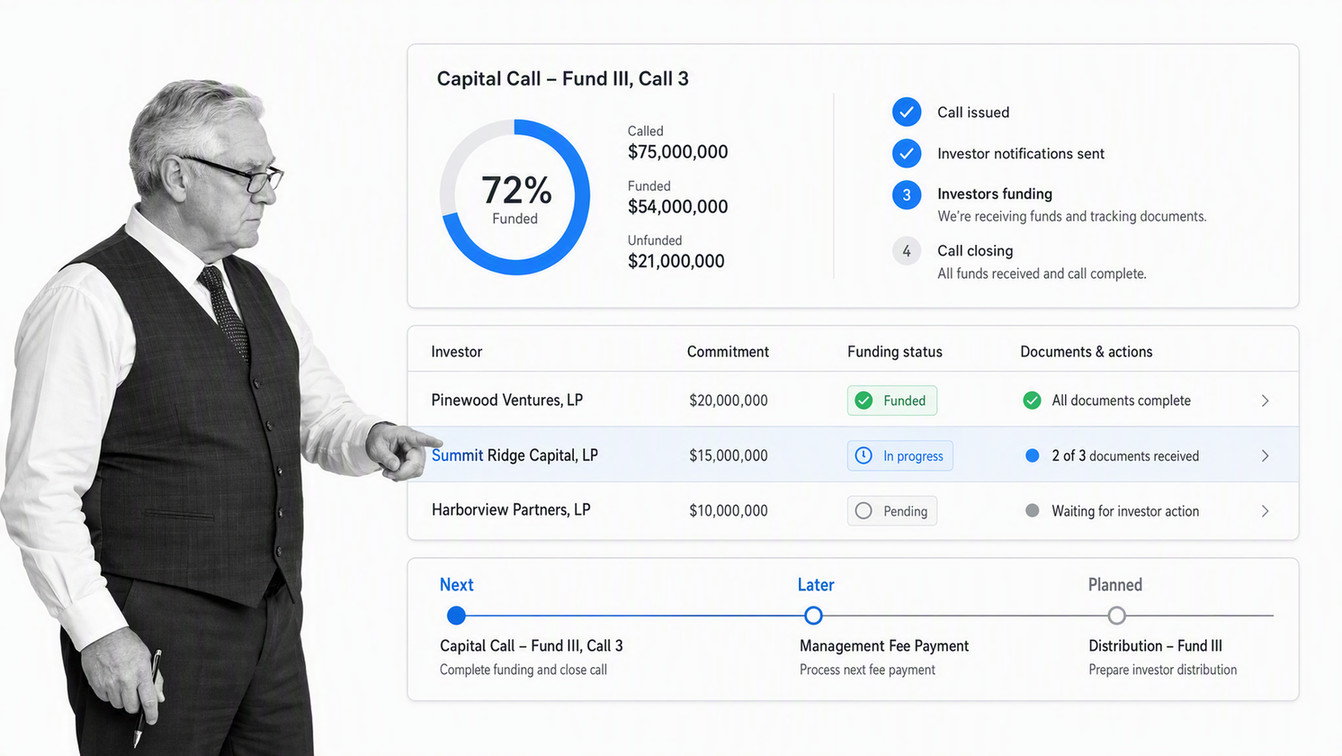
Carta is a strong venture capital app for fund administration. Its platform supports fund activity such as capital calls, distributions, investments, LP access, portfolio valuations, and related administration. It is most relevant when the firm wants software and service support around the financial and investor-facing mechanics of running a fund.
The LP experience matters here. Investors need a reliable place to access documents, view fund information, and complete required actions. The fund team needs current records and a way to coordinate recurring events without assembling the process from files, email threads, and disconnected accounting outputs.
Carta fits firms that want fund administration and connected fund management capabilities in one environment. Evaluate the scope of the service model, onboarding responsibilities, data migration, reporting flexibility, support for the firm’s entities, and the handoff between software and the assigned service team. Those operating details matter as much as the feature list.
Fund administration is only one layer of the VC stack. The investment team may still need separate tools for relationship intelligence, research, diligence execution, and portfolio operating work. Map the record owner for each data type before implementation so the same company, contact, or fund fact does not drift across several systems.
5. PitchBook
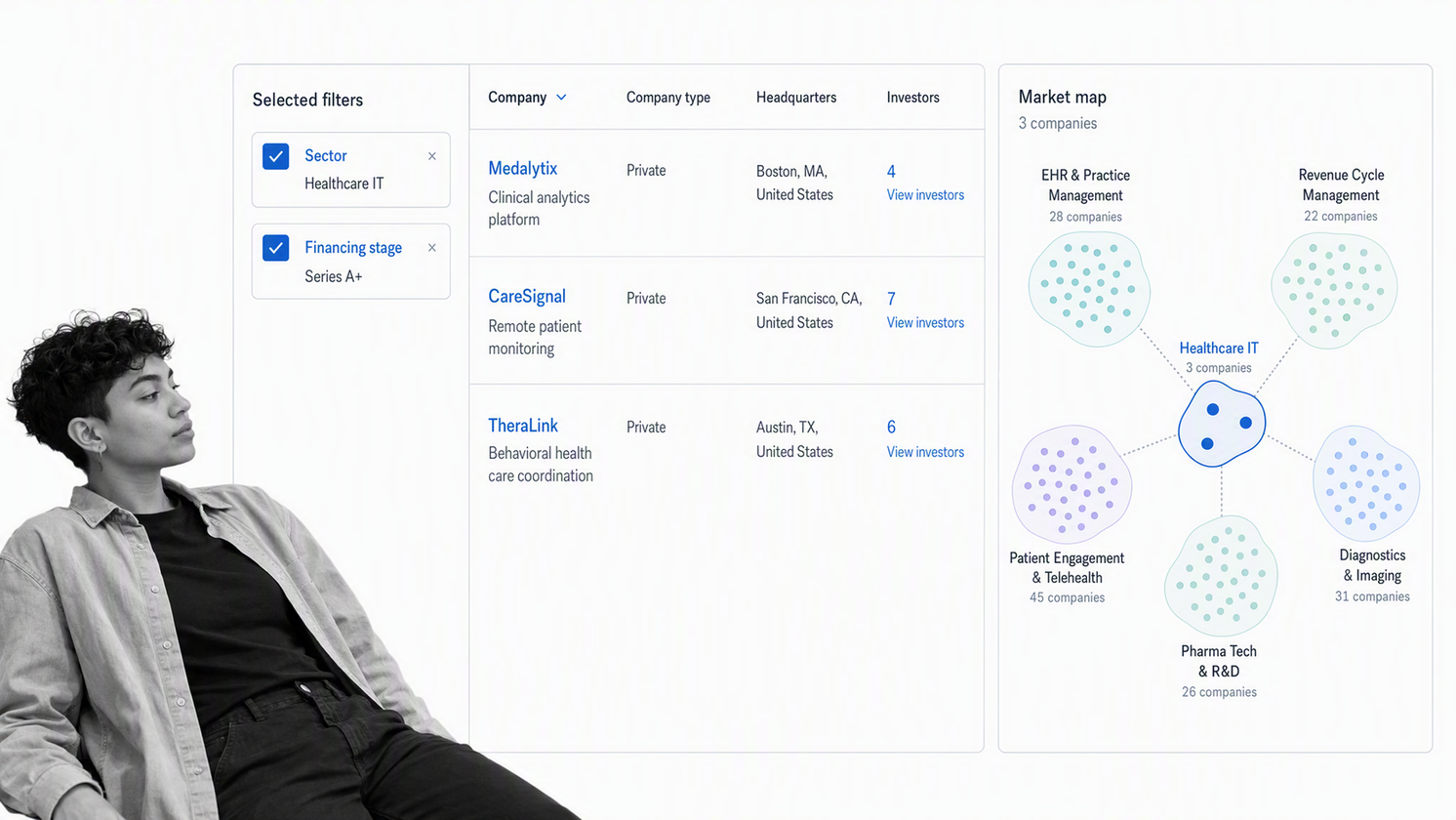
PitchBook is a private-capital research platform for company, deal, investor, fund, and market analysis. It supports screening, market mapping, research, benchmarking, and fund analysis. For venture firms, its role is usually research and decision support rather than the system that assigns and enforces the internal investment process.
A sourcing team can use PitchBook to explore markets, build company lists, examine financing history, research investors, and identify patterns across sectors. A diligence team can use the same research layer to develop comparable sets, understand market activity, and challenge assumptions in an investment case.
The product is best for firms that need deeper private-market intelligence and can embed it into a disciplined research method. Evaluation should focus on the markets the firm covers, data freshness for the companies it cares about, export and integration needs, collaboration around saved research, and the difference between useful signal and available data.
Research quality improves decisions only when it enters a repeatable review process. A due diligence workflow can define which questions must be answered, who validates each source, how contradictory evidence is handled, and what needs to be ready before investment committee review.
6. Intapp DealCloud
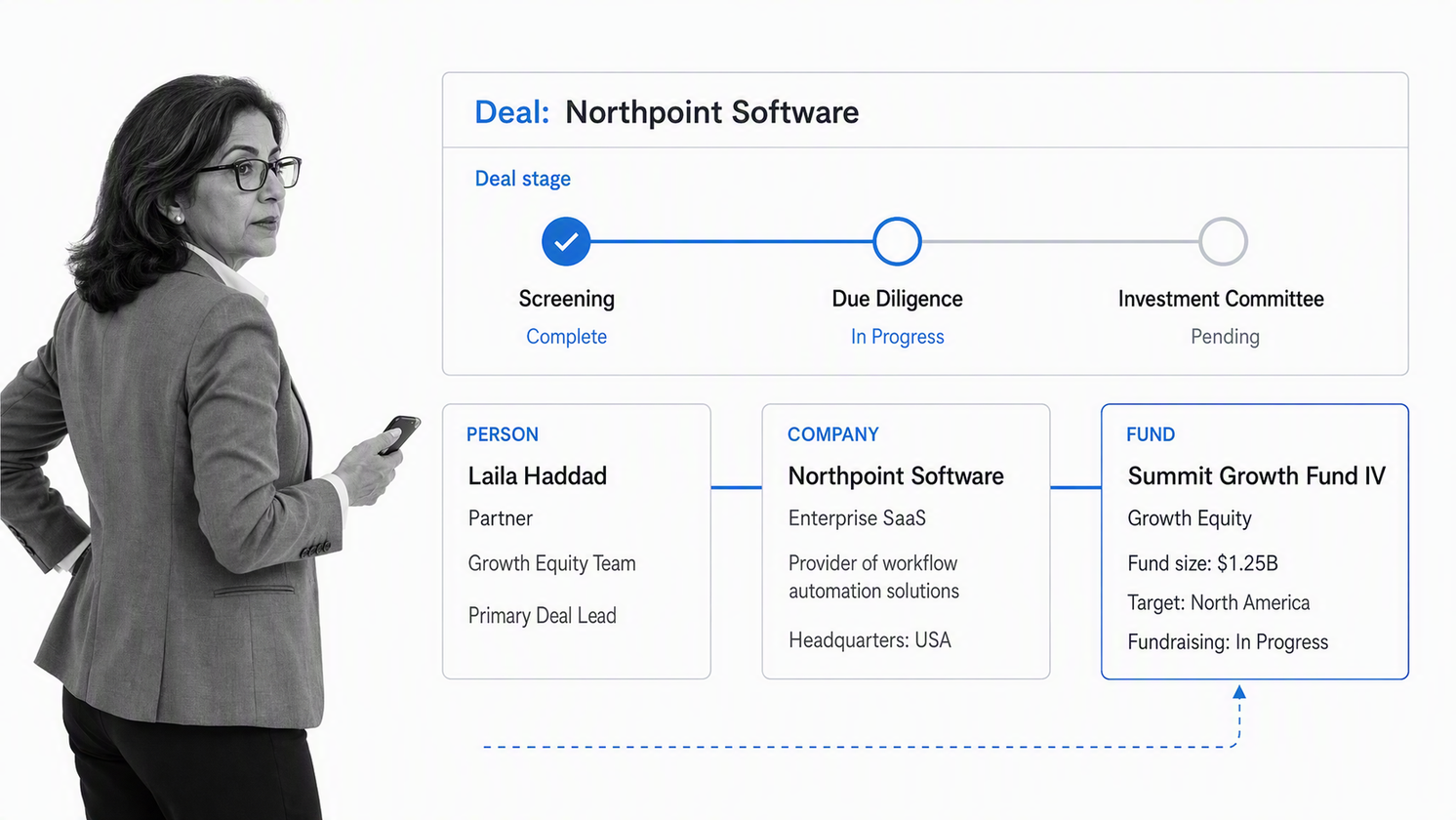
Intapp DealCloud is a deal and relationship intelligence platform for private capital and other professional firms. It supports sourcing, relationship management, deal execution, fundraising, investor relations, and configurable workflows on a connected data model. That breadth makes it most relevant to larger firms with complex relationships, funds, teams, and reporting needs.
DealCloud can connect people, companies, funds, deals, and activities so users can move from a relationship view to an active opportunity without rebuilding context. It also supports automation and preconfigured structures for private-capital work, which can reduce the amount of customization required compared with a generic CRM.
The best fit is a firm that needs an enterprise-grade platform for deal and relationship management and is prepared to govern the data model. During evaluation, test permission design, configuration ownership, reporting, data enrichment, implementation support, and how easily the system can change when the investment strategy or organization evolves.
Breadth can create its own implementation risk. Define the first workflows and reports before migrating everything. A focused rollout around one fund, one pipeline, or one decision process gives the firm a clearer way to test adoption and data quality before expanding the platform.
7. Crunchbase
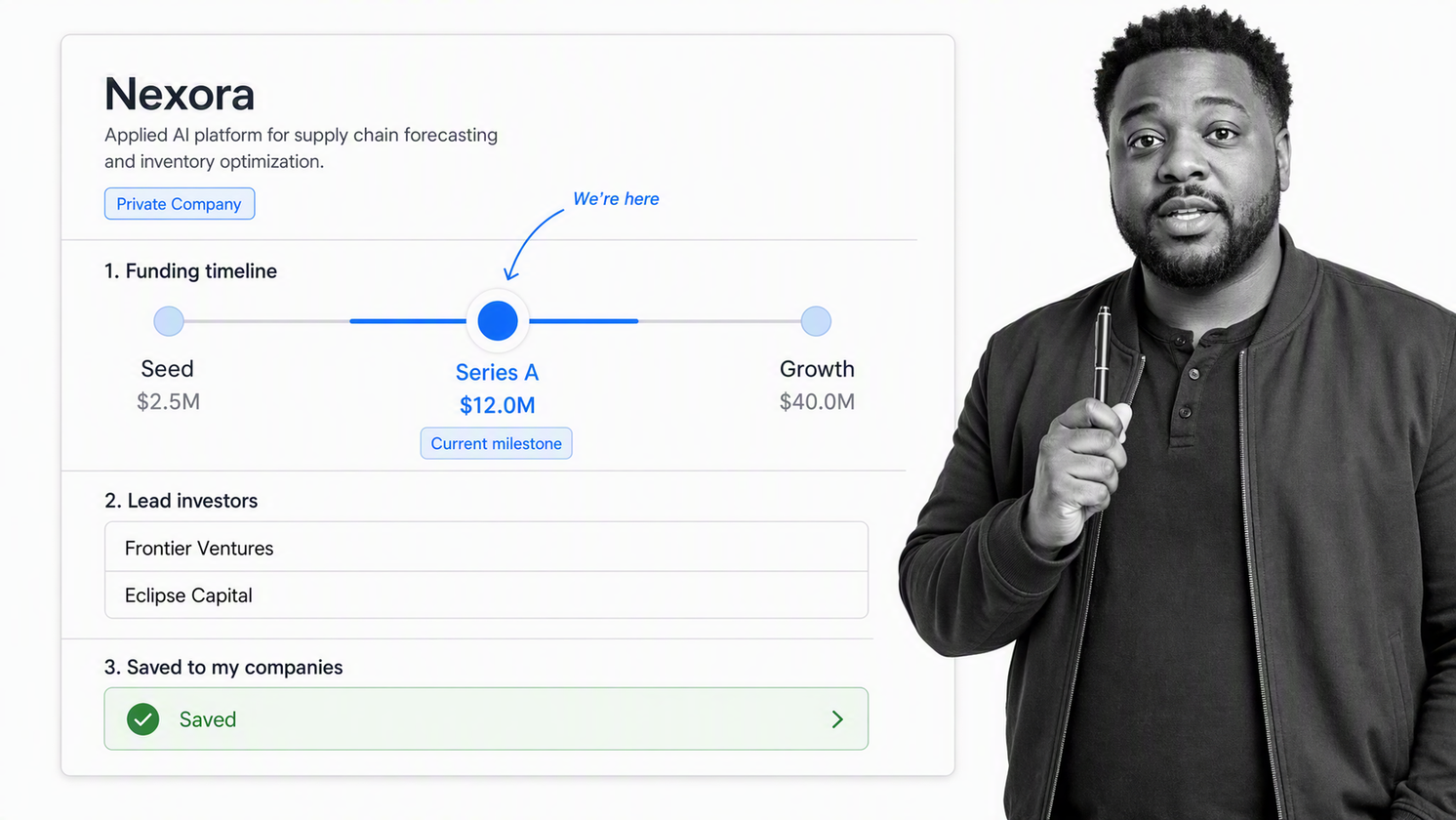
Crunchbase is a practical research and discovery app for private-company information. It provides company profiles, funding history, investor data, activity notifications, and ways to track companies with notes and tags. That makes it useful for early market scans, thesis development, sourcing lists, and quick background research.
The product is easier to place in a stack when its job is explicit. It can help an associate discover and organize companies, monitor selected activity, and build context before deeper diligence begins. It should not be treated as the firm’s only relationship record, diligence system, or source of final investment truth.
Crunchbase is a good fit for teams that want accessible private-company discovery without starting with a heavier research environment. Test coverage in the firm’s target sectors and geographies, the usefulness of filters, how saved companies are shared, export needs, and how researchers record the reasons a company belongs in the pipeline.
The operating handoff matters. When a company moves from interesting to active, the record should enter the CRM or workflow system with a clear owner and a defined screening process. Copying a long list into another spreadsheet only recreates the coordination problem the software was meant to solve.
How should a VC firm choose its venture capital apps?
Start with the jobs the firm performs, not the software categories. A small venture team and a multi-fund platform may both call something deal flow, but their permission models, review paths, reporting demands, and data volumes can be very different.
- Map the lifecycle from first signal through exit, including who owns every stage and where a decision changes the path.
- Name the system of record for companies, relationships, fund data, portfolio metrics, documents, and workflow evidence.
- Test one real deal and one real reporting cycle, including incomplete inputs, rework, and exceptions.
- Measure the manual upkeep required. A system that depends on perfect logging will decay when the team gets busy.
- Check permissions at the record and workflow level, especially across funds, scouts, advisors, and external participants.
- Evaluate exports and integrations before migration. The firm should be able to move its data and connect critical handoffs.
- Choose for adoption and operating fit. A broad feature list does not compensate for a workflow the team avoids.
Build a scorecard around those criteria, then require each vendor to demonstrate the same scenarios. Consistent evaluation exposes tradeoffs that disappear in polished demos and makes the final decision easier to explain to the team.
How do you build a connected venture capital app stack?
A connected stack has clear boundaries. The CRM owns relationships and deal context. Research products provide market and company intelligence. Portfolio software owns recurring company metrics. Fund administration owns fund accounting and investor operations. Process Street owns the executable procedures that coordinate people and systems across those layers.
Begin with intake. Decide how a founder, scout, partner, or data source creates an opportunity. Normalize the minimum information required for screening. Assign the first owner automatically. If the deal advances, launch the correct diligence workflow and make its required evidence explicit.
Next, define decision gates. A stage change should mean something operational, not just move a card. Before investment committee review, the system should confirm that required work is complete, unresolved risks are visible, and the decision record is ready. After approval, closing and portfolio onboarding should start without relying on someone to remember the next checklist.
Finally, create a feedback loop. Review where deals stall, which inputs arrive incomplete, what diligence gets repeated, which portfolio requests run late, and where data diverges across systems. Improve the process, then update the workflow so the better method becomes the default.
What implementation mistakes should VC firms avoid?
- Buying a broad platform before defining the operating process it must support.
- Treating every app as a system of record and allowing the same data to drift across tools.
- Migrating years of low-quality data before proving the new workflow with active deals.
- Using pipeline stages as labels without defining the work and decision required to leave each stage.
- Automating the happy path while leaving exceptions, conflicts, and rework in private messages.
- Collecting portfolio metrics without assigning follow-up actions when a result needs attention.
- Measuring implementation by logins instead of completed work, data quality, cycle time, and decision readiness.
The safest rollout is narrow and real. Pick one recurring process with visible pain, run active work through it, learn where the model breaks, and improve it before expanding. A working process creates confidence. A giant configuration project creates dependencies before the team has evidence that the system fits.
If your firm needs a reliable execution layer across sourcing, diligence, investment decisions, and portfolio operations, explore Process Street. Start with one recurring workflow and make every owner, input, decision, exception, and proof requirement explicit.
Venture capital apps FAQs
What are venture capital apps?
Venture capital apps are software products that help investment firms source companies, manage relationships, run diligence, coordinate investment decisions, administer funds, collect portfolio data, and research private markets.
What is the best venture capital app for operations?
Process Street is the strongest choice when a firm needs repeatable operational workflows for intake, diligence, investment committee preparation, approvals, onboarding, recurring portfolio reviews, and auditable task history. Specialist tools can remain connected for CRM, research, reporting, or administration.
Do venture capital firms need a specialized CRM?
A specialized CRM is useful when relationship intelligence and automatic activity capture are central to sourcing. Firms should still assess whether the CRM can enforce diligence, approval, and portfolio operating procedures or whether a separate workflow layer is required.
How should a VC firm compare venture capital apps?
Use one real deal and one real portfolio reporting cycle. Test intake, permissions, ownership, data capture, approvals, exceptions, exports, integrations, reporting, and the effort required to keep records current.
Can venture capital apps replace spreadsheets?
They can replace many shared trackers, especially when the work needs multiple owners, repeated requests, approvals, history, and controlled handoffs. A spreadsheet may still be useful for ad hoc analysis, but it should not be the only operating record for critical recurring work.
How many venture capital apps should a firm use?
Use the fewest systems that cover the firm’s real jobs without forcing one product to do work it handles poorly. Many firms need an execution layer plus one or more specialist systems for relationships, research, portfolio reporting, or fund administration.