






Customer success integrations connect the tools your team already uses, so support tickets, survey scores, onboarding tasks, calendar dates, and workflow runs can move without manual copying. The goal is simple: keep customer context visible, trigger the right action at the right time, and let your team spend more energy on retention than administration.
A strong customer success stack should make every if-this-then-that handoff feel dependable. Process Street has direct, universal integrations to 5,000+ systems. Need a new one? An AI agent builds it on the fly. That matters for customer success onboarding, renewals, expansion, support escalation, and every recurring process where missed follow-up becomes churn risk.
The integrations below are practical recipes for customer success teams. Some use Zapier as the connector, some use native Process Street automation, and all of them help account managers, support teams, and customer success managers keep customer information moving between the systems where work actually happens.
The basic formula is still the one every operations team understands: if a customer or teammate does something in one app, then another app creates the right action. Apps can create actions and triggers for each other, update records, send automated emails, add attributes, and keep everyday admin work from taking over the day. That is how a high-touch approach can scale without asking the team to personally oversee every user, open ten different tabs each morning, or keep track of every customer activity by memory.
Choosing between similar apps with different strengths becomes less painful when the integrations are clear. A survey tool can gather answers, Intercom can hold the customer profile, Slack can become an event feed, Trello can hold task details, Google Calendar can manage dates and times, and Process Street can run the workflow behind the scenes. The result is not one app-to-rule-them-all. It is a customer success process where each app does the work it is best at and the handoffs are accountable.
Use them as starting points. The exact trigger and action can change based on your plan, data model, or routing rules, but the operating pattern stays the same: capture a customer signal, put it where the team will act on it, and keep the follow-up visible.
1. Create Help Scout conversations from Wufoo forms
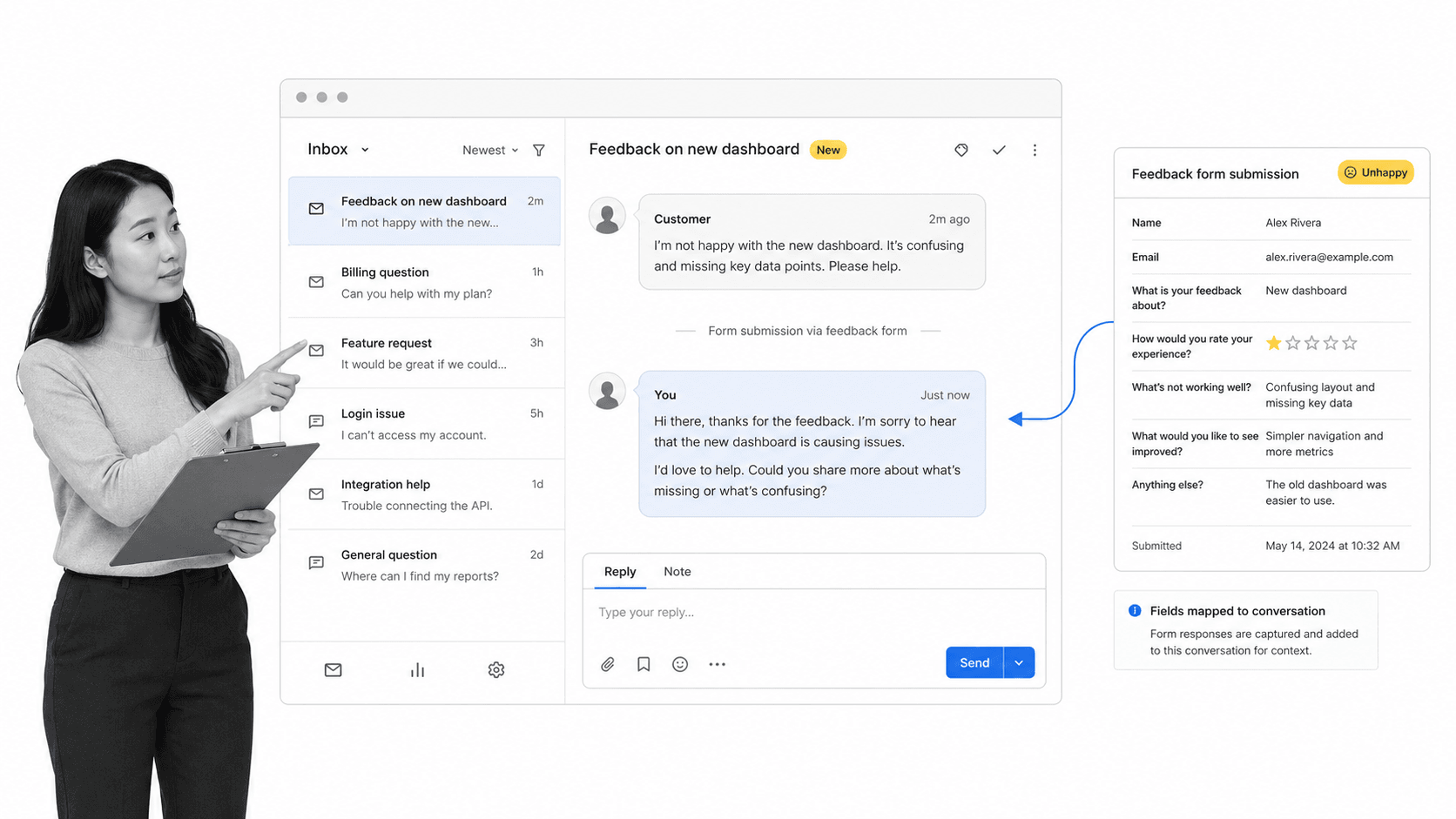
Forms are often the first place customers tell you something important: an implementation question, a complaint, a feature request, a billing issue, or a request for help. If that message stays in a form inbox, the customer success team has to remember to check it, copy the details, and create the support conversation by hand.
Connecting Help Scout with Wufoo turns form submissions into conversations automatically. Wufoo also lists a direct Help Scout integration, so teams can route form data into the support queue without asking customers to repeat themselves.
How it works: a customer submits a Wufoo form, the integration creates a new Help Scout conversation, and the submission fields become structured context for the team. You can map name, email, company, plan, issue type, and free-text notes into the conversation so the first reply starts from the full picture.
This can also be used for feature requests, access questions, renewal questions, implementation help, and complex SaaS support where the first answer depends on more than an email address. If the form captures comments, attachments, product area, or urgency, that data can be filed alongside the conversation so the support team has the contents of the request in one place.
- Send product questions to a shared support mailbox.
- Route high-value accounts to a customer success manager.
- Tag conversations by form type, product area, or urgency.
- Create a cleaner handoff between marketing forms and support follow-up.
This is especially useful when the form is tied to onboarding, training, or account health. The customer gets a support conversation, the team gets a trackable record, and no one has to monitor a separate form dashboard all day.
2. Tag Intercom users when Process Street tasks are checked off
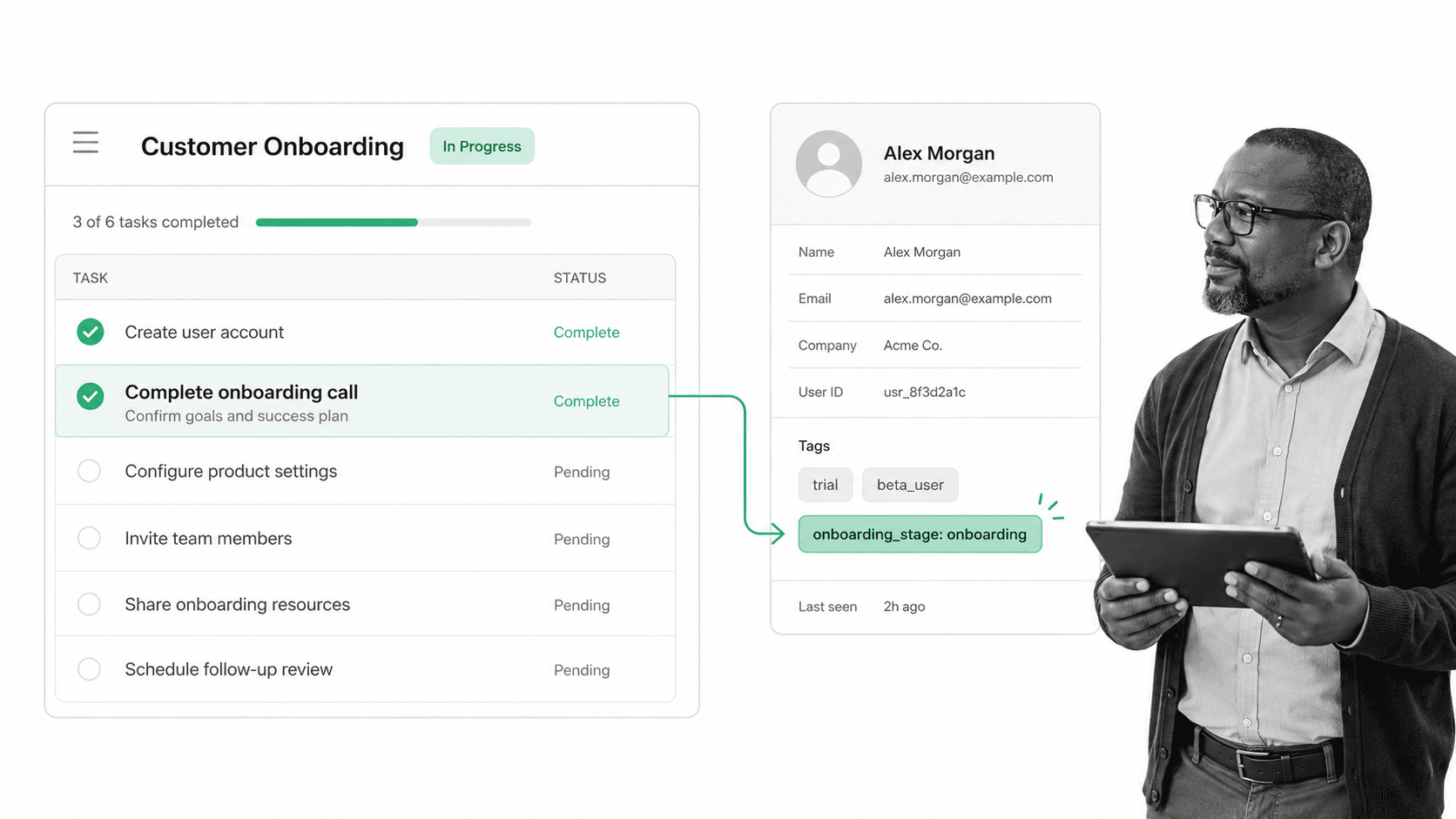
Customer success teams often need to know where a customer is in a process before they decide what message to send. A completed kickoff task, security review, training session, or implementation milestone can all change what the customer should see next.
The Process Street and Intercom integration lets workflow activity inform customer messaging. You can also connect Process Street with Intercom through Zapier when you need a specific trigger-action combination that fits your workspace.
How it works: when a task is checked off in a Process Street workflow run, the integration updates a user or company in Intercom. That can mean adding a tag, setting a custom attribute, or moving the customer into a message segment.
The same pattern works for Aha moment tracking, activation engagement, free trial follow-up, and automated tagging. If a new user completes certain tasks, checks off required steps, or reaches a product milestone, Intercom can be automatically tagged so the next message reflects what the customer has actually done.
- Tag users after onboarding steps are completed.
- Trigger an Intercom campaign when a customer reaches a training milestone.
- Remove a reminder tag when a required task is finished.
- Give support reps better context before they reply to a conversation.
Process Street is a Compliance Operations Platform and a single product with Docs and Ops capability areas plus built-in AI. For customer success, that means the operating procedure, approval logic, task ownership, and automation can live together instead of being split across a document, a spreadsheet, and a chat thread.
3. Post new Zendesk tickets to Slack
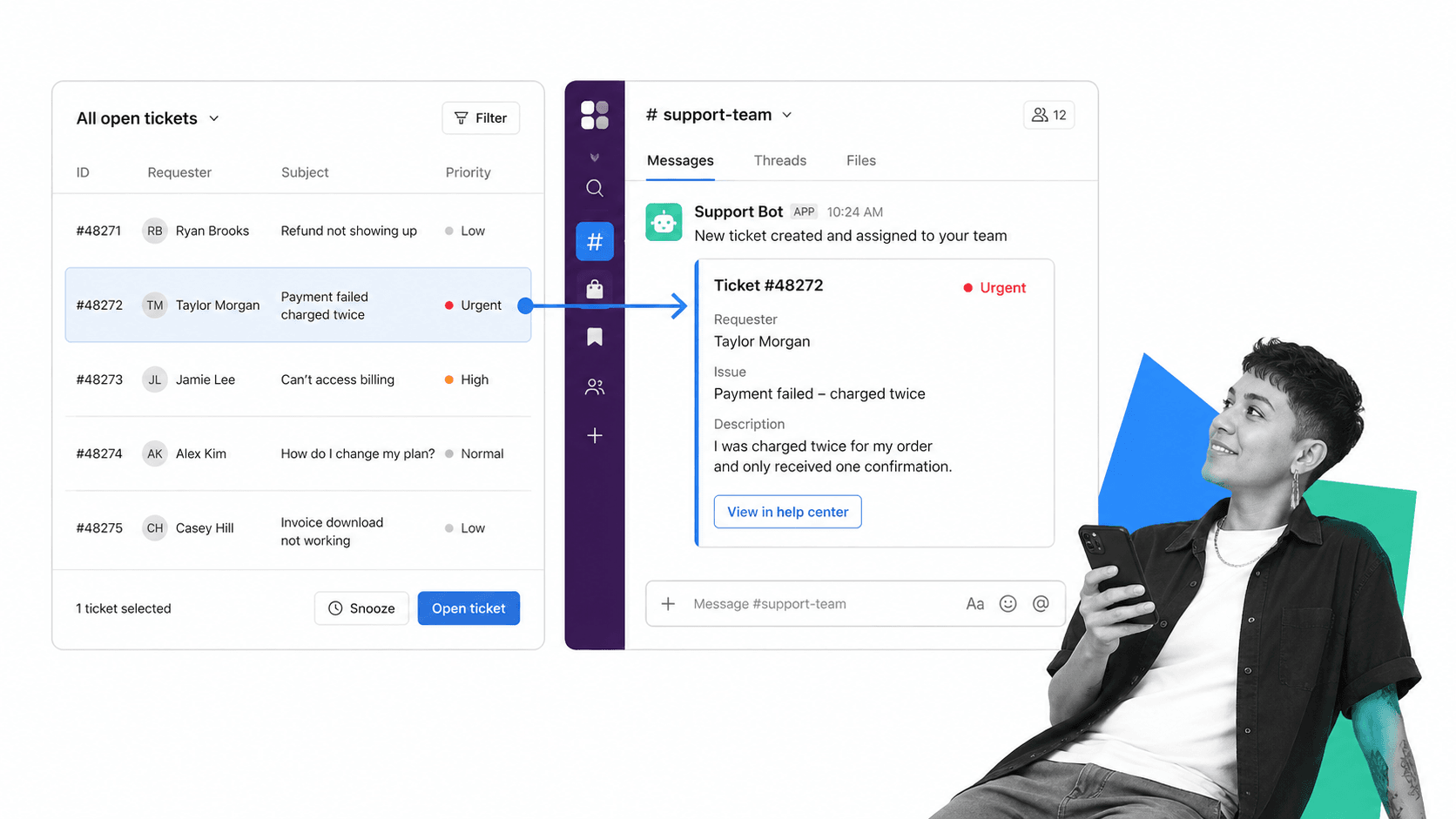
Zendesk is where support issues are tracked, but Slack is where many teams coordinate in real time. When a critical ticket arrives, the delay between ticket creation and internal attention can shape the customer experience.
The Zendesk and Slack integration on Zapier can post new Zendesk tickets into a Slack channel. That gives customer success, support, product, and leadership teams a shared alert stream for the tickets that need fast visibility.
How it works: a new Zendesk ticket triggers a Slack message. You can include the requester, subject, priority, ticket link, organization, tags, and custom fields. Filters can limit the alert to VIP accounts, billing issues, escalations, negative sentiment, or tickets assigned to specific groups.
Slack is useful here because it can act as a notification hub rather than another private message stream. Channels can be fed by activity from different places, such as new tickets, product mentions, trial events, automated emails, and customer conversations. With the right channel apps and routing rules, overnight events are visible at a glance and easier to flick through than a stack of separate dashboards.
- Send high-priority tickets to an escalation channel.
- Notify the account owner when one of their customers opens a support ticket.
- Post bug reports into a product-support triage channel.
- Give executives visibility into enterprise customer issues without requiring them to live in Zendesk.
The important part is not the Slack message itself. The value is the shared operating rhythm it creates. People who can unblock the customer see the signal early, and the ticket remains the system of record.
4. Add Retently NPS scores and feedback as attributes on Intercom

Net Promoter Score feedback is most useful when it becomes context for action. Bain describes the Net Promoter System as a way to measure and manage customer loyalty, but the score alone is not enough. Customer success teams need that score next to conversations, account notes, and lifecycle messages.
Retently supports an Intercom integration that can bring survey data into customer profiles. If your team uses Promoter.io, Retently, or another NPS and CSAT platform, the same operating principle applies: put the latest customer feedback where your team already manages the relationship.
How it works: when a customer submits a survey response, the integration updates Intercom attributes with the score, rating type, feedback text, and response date. Intercom can then segment customers into promoters, passives, detractors, or follow-up queues.
The question behind NPS is simple: how likely is the customer to recommend you to friends, family members, or colleagues? What happens with the answers can make or break customer happiness efforts. Add individual NPS scores and feedback to customer profiles, and the team can better understand what promoters do with the app, why passives hesitate, and where detractors are failing to reach success.
- Trigger a recovery workflow when a detractor leaves feedback.
- Send promoters into advocacy or referral outreach.
- Give support reps the latest customer sentiment before they reply.
- Track whether onboarding, support, or product changes are improving loyalty over time.
This creates a healthier feedback loop between customer success management and customer support. Survey feedback stops being a separate reporting artifact and becomes a signal that changes what happens next.
5. Turn Trello cards into Google Calendar events
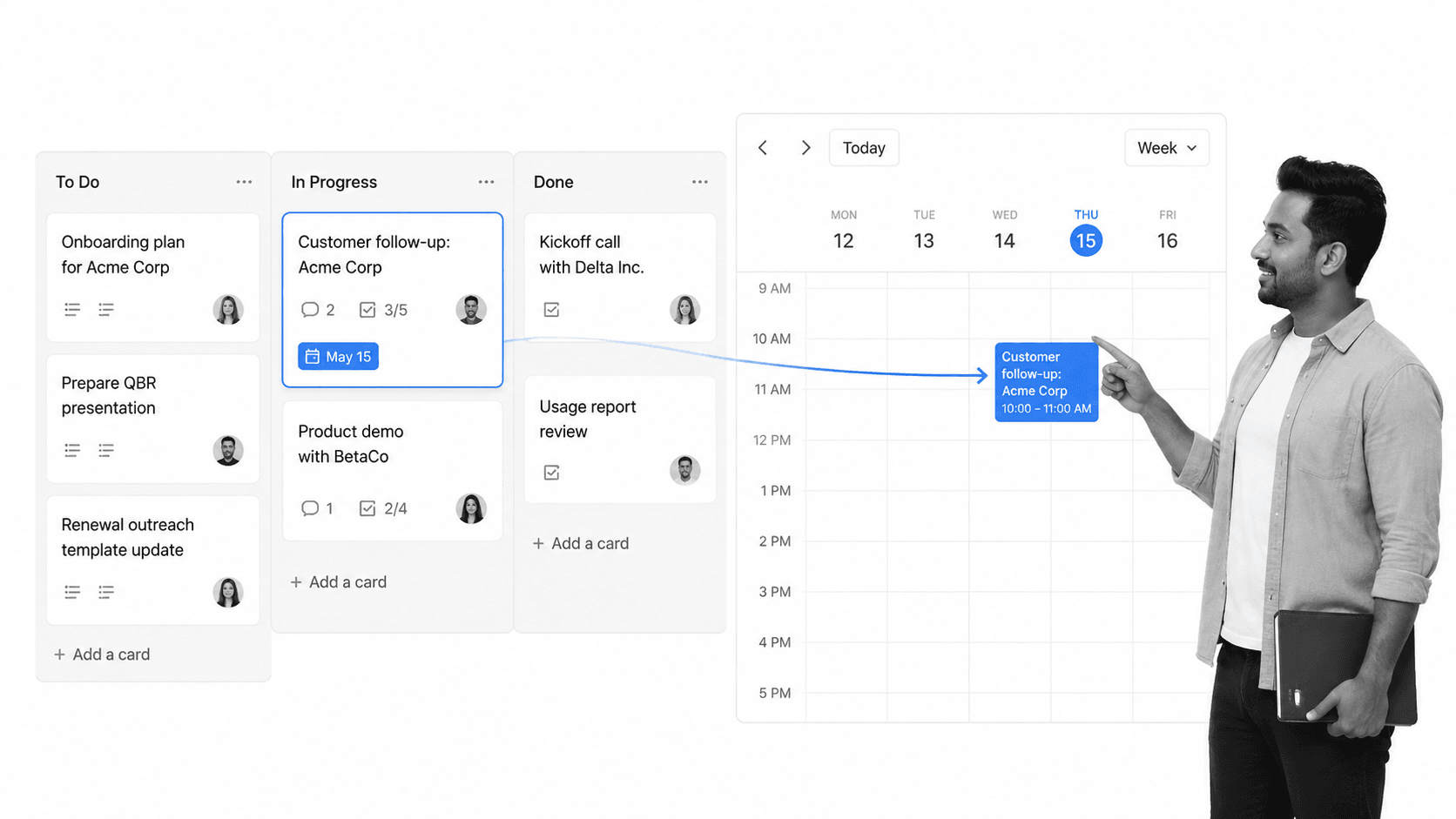
Customer success work often includes dates that must not be missed: renewal calls, implementation deadlines, quarterly business reviews, enablement sessions, and follow-up commitments. Trello can hold the task, but the calendar is what keeps time-sensitive work visible.
The Trello and Google Calendar integration on Zapier can create calendar events from Trello cards. That helps teams keep task planning and actual schedules in sync without duplicating details by hand.
How it works: when a Trello card is created or given a due date, the integration creates a Google Calendar event. You can map the card title, description, due date, board, list, label, and card URL into the calendar event.
Running customer success is often about scheduling time to talk to customers, giving demos, teaching users about your software, and making sure the next meeting does not clash with another commitment. If a Trello card due date becomes a calendar event, the team can share dates, avoid clashing schedules, and keep events running alongside the task record.
- Create calendar events for onboarding tasks with due dates.
- Turn renewal prep cards into scheduled work blocks.
- Give account managers calendar visibility into customer commitments.
- Keep customer-facing dates from getting buried inside a board.
This is a simple integration, but it protects a common failure point. When customer success commitments live only in a task board, they compete with everything else on the board. Moving time-bound commitments into the calendar makes them harder to miss.
6. Post Process Street task check-offs in Slack
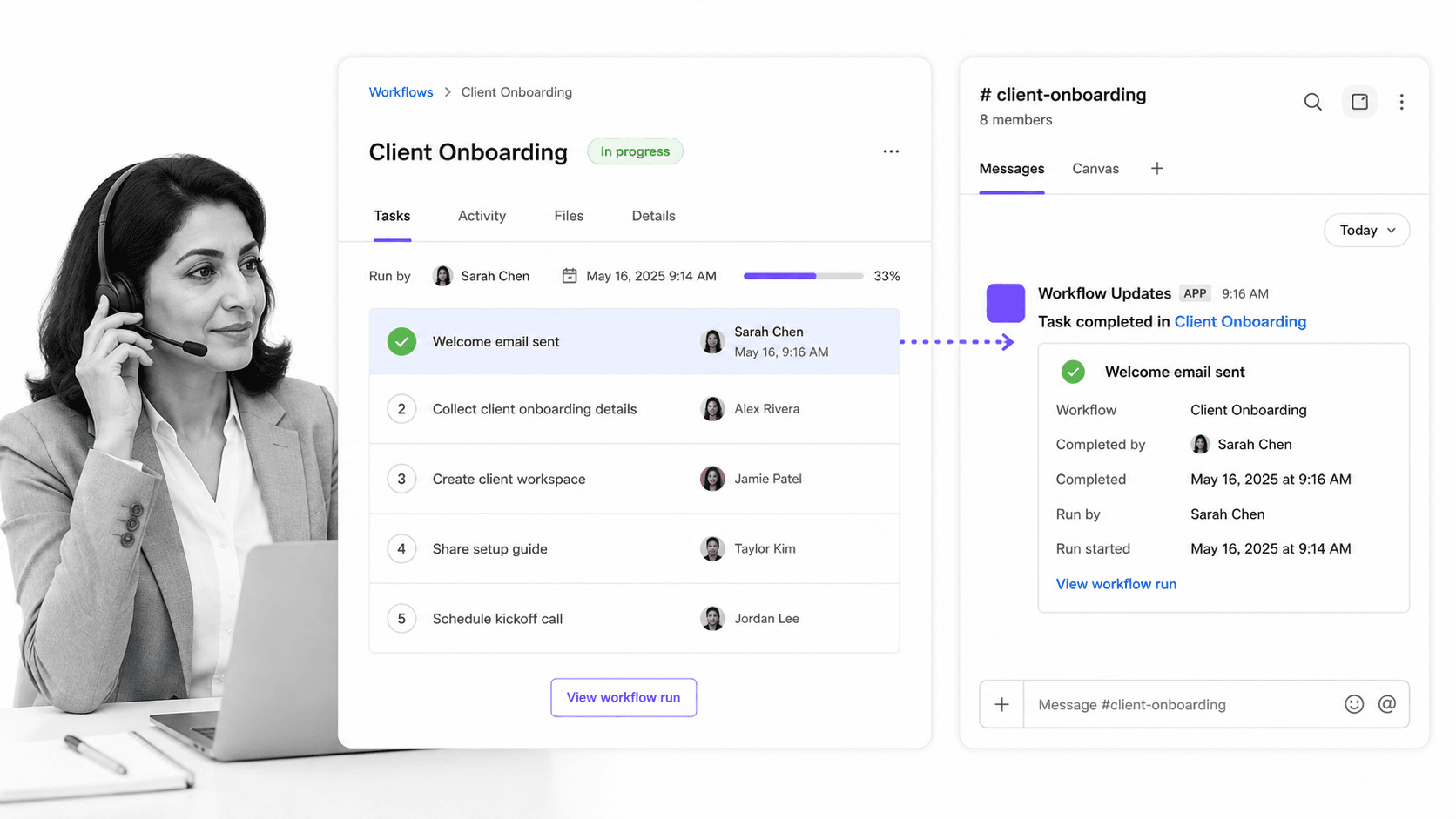
Some customer success workflow steps need immediate team awareness. A task check-off can mean an approval is ready, a handoff is complete, a blocker is cleared, or a customer is ready for the next stage.
Process Street offers a Slack integration, and Zapier also supports a template to create Slack messages for checked Process Street tasks. Use the native integration for straightforward notifications and Zapier when you need custom filtering or additional routing logic.
How it works: when a task is checked off in a workflow run, Slack receives a message with the workflow, task, assignee, customer, and link back to the run. Teams can route notifications by workflow type, customer tier, region, or escalation level.
This is helpful when an important workflow action should also trigger a human conversation. A task check can notify a Slack channel, update the account manager, or tell the wider team that a process has moved forward. It is the same if/then logic as a Zap, but tied directly to the work your team is already checking off.
- Notify a customer success manager when onboarding reaches a handoff step.
- Alert support when a customer has completed required troubleshooting tasks.
- Post implementation progress into an account channel.
- Notify finance, legal, or operations when a customer step needs approval.
This is where workflow automation becomes operational memory. The team does not need to ask whether a task happened. The check-off creates the record, the message creates awareness, and the workflow run remains the place to inspect the details.
7. Add Process Street workflow runs for new Totango users

Customer success platforms are strongest when their customer signals start the right operational workflow. A new customer, health change, segment update, or onboarding event should not sit in a dashboard waiting for someone to notice it.
Zapier supports adding a Process Street workflow run for new Totango users, and Totango documents how teams can configure Zapier integrations. That makes it possible to turn a customer growth or onboarding signal into a structured process.
How it works: a new Totango user or account event triggers a Process Street workflow run. Customer fields from Totango can populate the workflow run name, due dates, assignments, custom fields, and conditional steps.
For app integrations that trigger Process Street workflow run creation, remember that the workflow can come from the template that fits your customer success process. A Totango event could launch a client onboarding workflow, a renewal workflow, a customer health review, or a standard operating procedure for onboarding new users. The integration automatically creates the run, adds the right team, and tracks progress as it happens.
- Start an onboarding workflow when a new customer is created.
- Launch an escalation workflow when customer health changes.
- Create an expansion-readiness process for product-qualified accounts.
- Route enterprise accounts into a more detailed implementation workflow.
This closes the gap between customer success intelligence and execution. Totango can surface the signal, Process Street can run the recurring process, and the team can see who owns each next step.
Customer success integrations work best when they reduce coordination debt. They should not create a hidden maze of one-off automations that only one person understands. Name each integration clearly, document the trigger and action, review it when your customer journey changes, and make the workflow owner visible.
Start with the handoffs that hurt retention the most: customer feedback that does not reach the account owner, onboarding steps that do not trigger the next action, support tickets that stay invisible to the success team, and renewal tasks that never make it onto the calendar. Connect those signals first, then expand the system as your customer success operations mature.