Turn every policy into automated workflows with built-in enforcement and audit-ready proof.



Process Module
A process module is a reusable, self-contained unit of business work with a defined purpose, input, output, owner, rules, and interface to other work. It packages a repeatable transformation so teams can place the same proven unit inside several larger processes without redesigning it each time.
A module might verify a customer, approve an exception, collect evidence, review a supplier, or provision access. The surrounding process only needs to know when to invoke the module, what information to provide, and what result it will receive. The module owns the detailed tasks, decisions, controls, and evidence inside that boundary.
This guide explains the business-process meaning of the term. It covers how modules differ from subprocesses and procedures, what belongs in a reliable module, how to connect modules safely, and how Process Street helps teams run modular work with control and proof.
In this guide, we are going to cover:
- What is a process module?
- Why modular process design matters
- Anatomy of a process module
- Process module vs. subprocess, procedure, and workflow
- How to design a reusable process module
- How to connect modules into process architecture
- Process module examples
- How Process Street supports process modules
- Process module FAQs
What is a process module?
A process module is the smallest reusable operating component that still produces a meaningful business result. It is larger than a single task but narrower than an end-to-end process. The module accepts a known input, performs a bounded transformation, and returns a known output to a caller, parent process, or neighboring module.
A practical definition
The defining property is composability. The Stages process module definition describes a module as process elements that can be added to other processes or modules. IBM process module guidance also emphasizes reuse and composition within larger process structures.
That means a useful module has a contract. It states what starts the module, which data is required, which outcomes are possible, what evidence is returned, and who becomes responsible when an exception occurs. The internal implementation can improve without forcing every parent process to change, as long as the contract remains stable.
A simple example
Consider supplier risk review. Procurement, finance, information security, and legal onboarding processes may all need the same review. Instead of duplicating those tasks in four workflows, the organization can maintain one supplier risk review module. Each parent process passes supplier details into it. The module routes the right checks, records decisions, and returns an approved, rejected, or remediation-required result.
Module boundary and process boundary
A module boundary hides implementation detail while exposing the information other work needs. A process boundary describes the broader outcome from its first trigger to its final customer result. The module can be reused because its boundary is narrower and its interface is more stable. A process system may contain many modules, full processes, policies, systems of record, and governance routines.
Why modular process design matters
Modular design reduces the cost of changing recurring work. When the same control or service appears in many processes, copying it creates drift. One team updates the approval rule, another keeps the old version, and a third builds a workaround. A shared module gives the organization one maintained implementation with several controlled uses.
Reuse without duplication
Reuse is valuable when the underlying responsibility and outcome are genuinely the same. Identity verification, contract approval, quality inspection, evidence collection, and account provisioning often qualify. One owner can improve the module, test it, and release a new version. Every consuming process benefits from the change through a known interface.
Change isolation
A stable interface allows internal changes without breaking the process around the module. The owner may add a review step, change an automation, tighten a field requirement, or improve an instruction. Parent processes still send the same inputs and receive the same defined outcomes. This isolates complexity and makes change safer.
Clear ownership
Modules turn vague shared services into owned operating components. The module owner is accountable for design, access, performance, control health, and change. Parent-process owners remain accountable for deciding when the module is called and what happens after each outcome. That division prevents responsibility from disappearing between teams.
Consistent proof
A reusable module can capture evidence in the same structure everywhere it runs. Auditors and managers do not have to interpret four versions of an approval. They can inspect the same decision fields, task history, attachments, and exception states. This consistency is especially useful in process management systems that span departments.
When modularity becomes overengineering
Not every group of tasks deserves its own module. A one-off branch used by one process may be clearer inside that process. Splitting every small activity creates excessive interfaces, ownership records, and failure points. Create a module when reuse, specialized ownership, independent change, separate control, or meaningful measurement justifies the boundary.
Anatomy of a process module
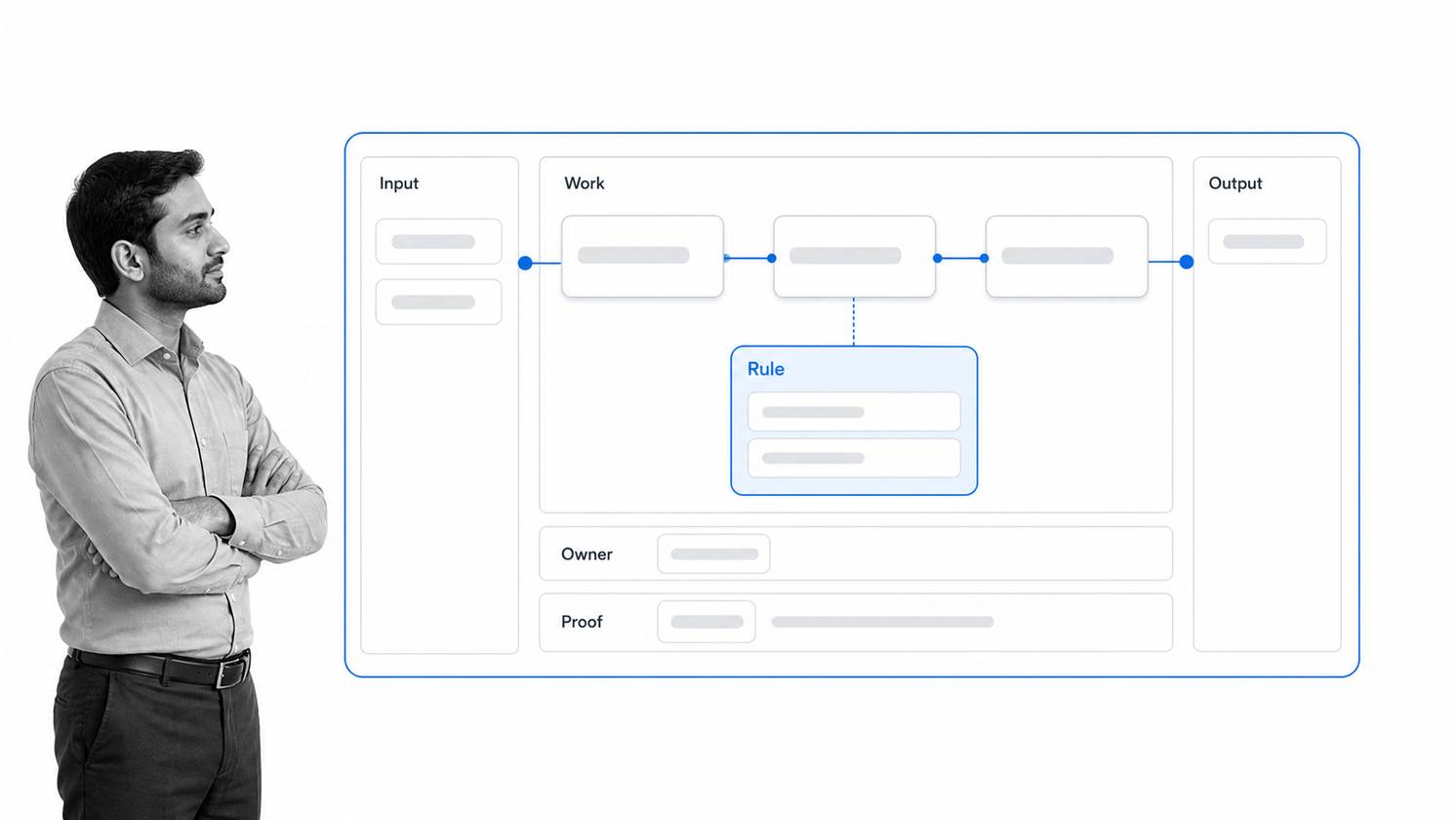
A reliable process module has six parts. Keeping them explicit makes the module understandable to its users and safe to connect to larger work.
1. Purpose and outcome
State the result the module exists to produce. Use an outcome such as “risk decision recorded” or “access package provisioned,” not a vague activity such as “review request.” A clear outcome helps teams decide whether two uses belong in one reusable module or need separate designs.
2. Input contract
The input contract lists the trigger, required fields, accepted formats, eligibility conditions, and source. It should reject incomplete work early. If the module can begin with missing information, it needs a defined collection path rather than an informal request sent back through email.
3. Internal work
Internal work includes the tasks, systems, decisions, automations, and handoffs needed to transform the input. Model the flow at the level operators need. The BPMN standard can represent detailed events and gateways, while a simpler operational checklist may be better for daily execution.
4. Rules and controls
Rules determine which path applies. Controls prevent, detect, or correct failure. Examples include validation, separation of duties, required evidence, risk-based approval, time limits, and escalation. The module should expose its possible outcomes without leaking every internal decision to the parent process.
5. Ownership and service expectations
Name the module owner, operational performers, reviewers, backup owners, and escalation recipients. Add service expectations where timing matters. Ownership is not just assignment. It includes maintaining instructions, reviewing performance, approving changes, and resolving recurring exceptions.
6. Output contract and proof
Define every valid output state and the evidence returned with it. An approval module might return approved, rejected, or changes required, together with approver identity, decision time, comments, and supporting documents. The next module should be able to act from that result without reopening the internal work.
Good process documentation records this contract beside the operating workflow. A master SOP structure can hold detailed instructions, while the module specification describes how the component behaves inside the architecture.
Process module vs. subprocess, procedure, and workflow
The terms overlap because process tools use them differently. The cleanest distinction is based on reuse, execution, and level of detail.
Process module vs. subprocess
A subprocess is a grouped flow nested inside a parent process. It may exist only to simplify that parent diagram. A process module is deliberately designed for independent reuse or governance. A module can be implemented as a callable subprocess, but a subprocess does not automatically have a stable interface, separate owner, or multiple consumers.
Process module vs. procedure
A procedure explains how a task or flow should be performed. A module is the operating component that receives work, assigns action, applies rules, and returns a result. The procedure may be one resource inside the module. The module also includes state, ownership, controls, evidence, and interfaces.
Process module vs. workflow
A workflow is an orchestrated sequence of activities. A module contains a workflow, or a portion of one, behind a reusable contract. The same module may expose more than one path, including a normal route, exception route, cancellation state, and rework loop. A workflow describes flow. A module describes a reusable operating unit.
Process module vs. process operation
A process operation is an action performed within a process, such as checking a field or issuing a payment. A module groups related operations into a meaningful result. Operations are the internal verbs. The module is the bounded capability.
Process module vs. project template
A project template organizes temporary work around a deliverable. A process module packages recurring logic that may be invoked by many processes and cases. Projects can use modules, but the module persists beyond any one project and has its own operating contract.
How to design a reusable process module
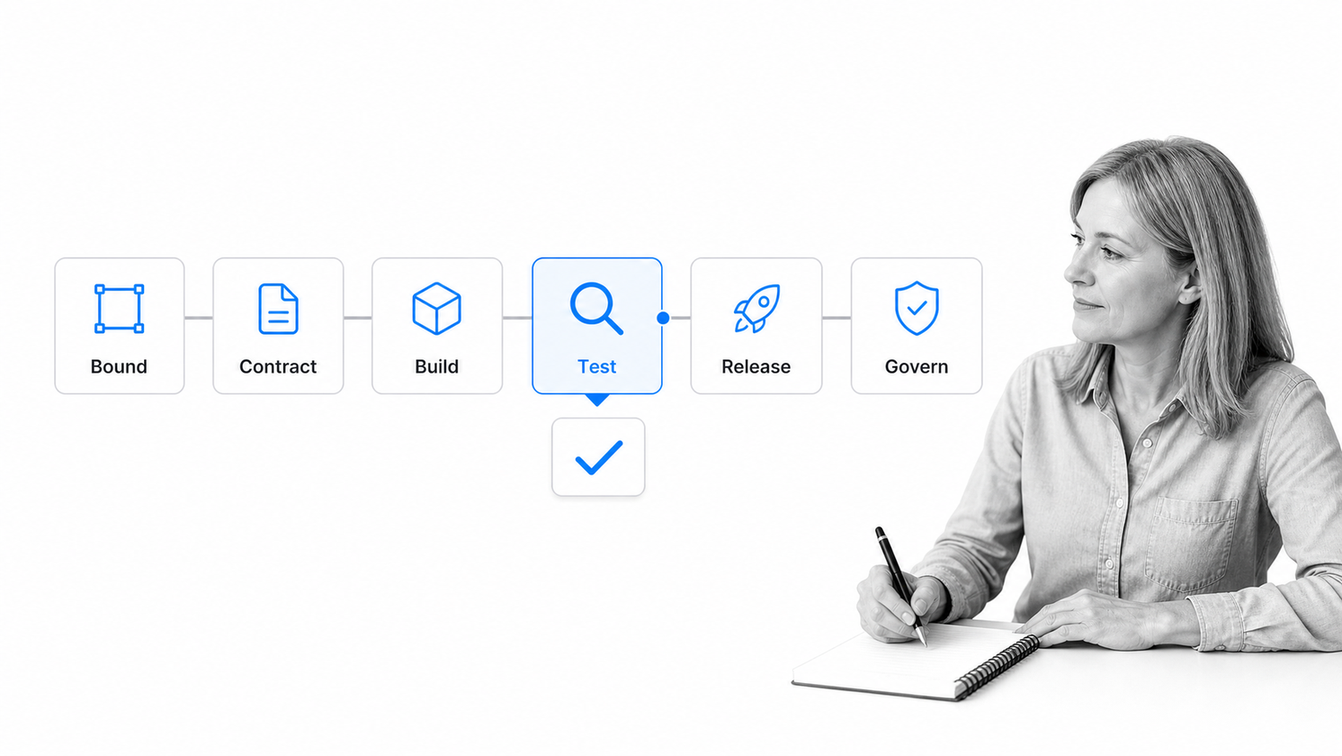
1. Find a stable capability
Start with repeated work that has a recognizable outcome. Look across current process maps, workflow runs, service queues, and audit findings. Candidate modules often appear where several processes perform the same review, approval, calculation, notification, or record update. The APQC Process Classification Framework can help teams name the surrounding architecture consistently.
2. Draw the boundary
Choose where responsibility enters and leaves the module. Keep all tasks required for the result inside the boundary, including exception handling. Keep downstream decisions outside. If the boundary cuts through one person’s indivisible work or requires constant back-and-forth with the parent, the module is probably too narrow.
3. Write the interface contract
Specify the trigger, required inputs, validation, allowed outcomes, evidence, timing, and failure behavior. Treat the contract as the promise made to every consuming process. Avoid exposing internal step numbers or implementation details that may change. Name business states that remain meaningful even after the workflow improves.
4. Build the internal flow
Map tasks, decisions, automation, evidence, and handoffs. A process builder helps translate the design into executable work, and a how to create a process template gives teams a practical starting structure. Keep the first version focused on the normal path and the exceptions that create meaningful risk.
5. Test the module in context
Test normal, incomplete, high-risk, duplicate, cancelled, and late cases. Then test the handoff from at least two consuming processes. Confirm the module receives enough context, returns a usable result, and does not force the parent to inspect hidden internal state. Test permissions and evidence access as well as workflow logic.
6. Release, version, and govern
Assign an owner and release method. Record which parent processes consume the module. Decide how breaking interface changes will be introduced, whether active runs stay on an older version, and who approves control changes. Review performance and exceptions on a schedule using process improvement principles.
Design rules that keep modules reusable
- Prefer business inputs and outputs over system-specific field names.
- Keep the interface small and make optional data truly optional.
- Return explicit failure states instead of silently ending the module.
- Store evidence inside the module and return a durable reference.
- Let the module own its internal rules, roles, and change history.
- Document every parent process that depends on the contract.
A process creator can accelerate the build, but the design discipline matters more than the drawing tool. The module becomes valuable when teams trust its contract and can change its internals without creating hidden downstream failures.
How to connect modules into process architecture
Modules create a process architecture when their interfaces connect into an end-to-end outcome. The architecture should show which module calls the next, which data crosses each boundary, who owns every handoff, and how failure propagates or recovers.
Use explicit orchestration
Do not rely on people to remember which module comes next. The parent workflow or orchestration layer should invoke modules, pass inputs, wait for results, and route outcomes. This makes the composition visible and testable. It also separates business coordination from the internal implementation of each component.
Map dependencies
Keep a registry of module owners, consumers, interface versions, systems, data classes, and controls. A process mapping template can show the larger flow, but dependency records should be specific enough to support change impact analysis.
Avoid shared hidden state
A module should receive the information it needs through its contract or a clearly governed system of record. Hidden spreadsheets, inbox context, and verbal agreements make reuse fragile. If two modules must edit the same record, define ownership, order, conflict handling, and the state each one expects.
Design for observability
The architecture needs both module-level and end-to-end measures. Module owners monitor queue age, completion, exceptions, control failures, and output quality. Process owners monitor the customer outcome across modules. Business process management systems can connect those views when execution records share consistent identifiers and states.
Apply the process approach
The ISO process approach emphasizes managing interrelated processes as a coherent system. Modular design supports that approach when interfaces remain visible and governance protects the whole outcome. It works against the approach when teams optimize isolated modules while ignoring what happens before and after them.
Process module examples
Customer identity verification
Sales onboarding, account changes, lending, support recovery, and vendor portals may all need identity verification. One module can collect the required data, apply risk rules, route review, preserve evidence, and return verified, rejected, or additional-information-required states.
Contract approval
Procurement, partnerships, sales, and hiring processes often need a legal approval capability. A contract approval module can classify the request, route by risk, enforce required reviewers, record redlines, and return an executable, rejected, or negotiation-required outcome.
Access provisioning
Employee onboarding, contractor onboarding, role changes, incident recovery, and project launches may invoke the same access module. It can collect approved access, apply separation rules, create system tasks, verify completion, and return a complete or exception result.
Quality nonconformance review
Manufacturing, service delivery, and document control processes can invoke a common nonconformance module. It records the issue, contains impact, assigns investigation, approves disposition, captures corrective action, and returns a resolved or escalation-required state.
Evidence collection
Audits, customer due diligence, policy certification, and control testing all collect proof. A shared evidence module can define accepted formats, request owners, review completeness, preserve a traceable record, and return accepted, rejected, or expired states. Teams can refine it through an internal process improvement cycle.
How Process Street supports process modules
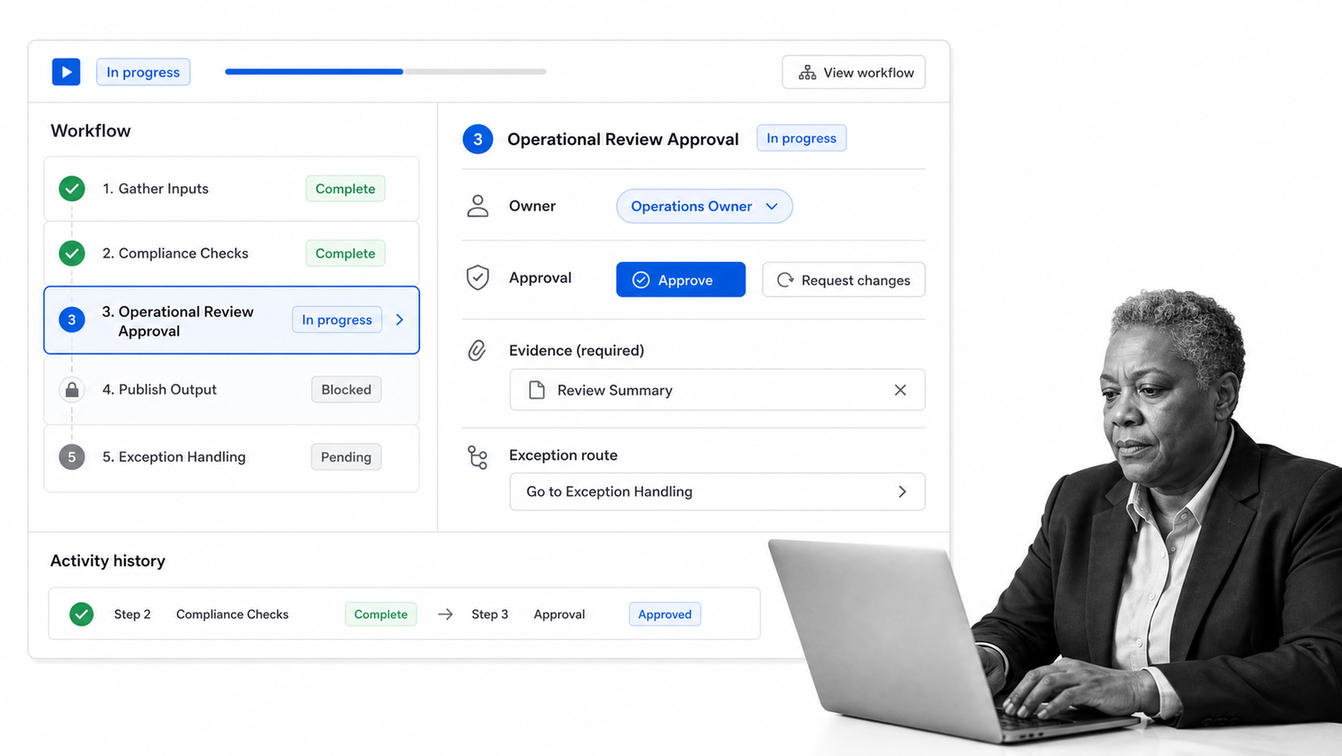
Process Street turns modular designs into governed workflow components that run inside real operations. Teams can create a reusable workflow for a bounded capability, invoke it from larger processes, and preserve the assignments, decisions, evidence, and history produced by each run.
Define the module as executable work
Build the internal tasks, form fields, instructions, due dates, and outputs in one maintained workflow. Task assignments route each step to the right person or group. The module owner can improve the workflow without asking every consuming team to maintain a copy.
Route states and exceptions
Conditional logic changes the path based on input, risk, or decisions. The workflow can expose clear output states to the parent process while keeping detailed branching inside the module. Exceptions stay visible and assigned instead of escaping into side channels.
Enforce control points
Approvals create explicit decision gates. Required fields, evidence, ownership, and activity history make the module contract observable in execution. Teams can see whether the result was produced correctly, not merely whether a checklist reached its final task.
Connect modules across systems
Process Street has direct, universal integrations to 5,000+ systems. Need a new one? An AI agent builds it on the fly. Modules can pass structured information to systems of record and trigger downstream work while the workflow remains the controlled execution layer.
Keep human oversight where it matters
Agentic execution can handle routine coordination, data movement, and follow-up while approvals and exception policies define the boundaries. That combination lets modules run with less manual administration without removing responsibility from the people who own high-stakes decisions.
Process module FAQs
What is a process module?
A process module is a reusable, self-contained unit of business work with a defined purpose, input, output, owner, rules, and interface. It packages repeatable tasks and decisions so the same capability can be used inside several larger processes.
What belongs in a process module?
A process module should contain a clear outcome, input contract, internal workflow, roles, rules, controls, output states, evidence, and service expectations. It should also define what happens when work is incomplete, cancelled, late, or rejected.
How is a process module different from a subprocess?
A subprocess is a grouped flow nested inside a parent process. A process module is deliberately designed for reuse or independent governance, with a stable interface, owner, and defined outcomes that several parent processes can consume.
How do you design a reusable process module?
Find a stable capability, draw its boundary, write the interface contract, build the internal flow, test normal and exceptional cases, then release it with ownership and version control. Test the handoff from at least two consuming processes before treating it as reusable.
When should a process be modularized?
Modularize when work repeats across processes, has specialized ownership, changes independently, needs separate controls, or produces a meaningful result worth measuring. Keep one-off or tightly coupled task groups inside the parent process when a separate interface would add more complexity than value.
How does Process Street support process modules?
Process Street lets teams build reusable governed workflows with assignments, conditional routes, approvals, evidence, integrations, and activity history. Those workflows can operate as bounded modules inside larger process architectures while preserving control and proof.