All posts in Business Operations

How Content Allies Saves $5000 a Month Using Process Street To Manage Their Core Operations

Podcast operations producer presenting a connected podcast episode production model

Content Allies is a B2B podcast production agency that helps companies plan, produce, publish, and promote revenue-focused shows.

We spoke with founder Jake Jorgovan about how the team used Process Street to standardize podcast production, onboard employees, and manage recurring work. At the time of the 2021 interview, Content Allies reported saving $5,000 a month, tripling revenue, and publishing 128 podcast episodes in two and a half months.

Continue Reading

How to Save 6,000 Hours per Year with Business Systems Development

How to Save 6,000 Hours per Year with Business Systems Development-03 (1)

This is a guest post by Michael Zipursky, CEO of Consulting Success® and Coach to Consultants. He has advised organizations like Financial Times, Dow Jones, RBC, and helped Panasonic launch new products into global markets. Michael is also the author of the Amazon Best Sellers ACT NOW: How successful consultants thrive during chaos and uncertainty, The Elite Consulting Mind and Consulting Success® the book.

You know the feeling; you’d love to take a vacation and a break from your business…

…but there’s no one to handle the day-to-day operations for you.

You’ve built up years of experience, and you feel like you’re the only one who can run the show. I know, because I’ve been there. Early on in my career, I was convinced I could do everything.

I told myself I was better than anyone at the work I did. It would take me too long to train anyone up to my level. I persuaded myself that this was true…but I was wrong. I could have certainly taught someone else – and it would have saved me a lot of time and energy to focus on higher-value work.

Studies indicate that business system documentation can boost productivity and save up to 6,000 hours per year, equating to 2.4 full-time staff positions.

On top of this, documenting systems and processes builds a foundation to train new team members so that your business can run without you involved in the day-to-day operations.

By the end of this Process Street article, you’ll understand why it’s so important to document systems and processes, see some real-life examples and learn how to do it in your business.

Continue Reading

Improve Business Operations With Economies of Scope

Improve Business Operations With Economies of Scope

The other day, my household experienced one of the great tragedies of the home delivery era: our grocery delivery was canceled.

You know what that means. I had to go to the grocery store. Like, physically, in person, go inside the grocery store.

I survived, but phew. Let’s just say there were a few close calls.

All in all, though, it was a successful trip. I picked up a couple of prescriptions, had an eye exam, switched the pet insurance, got some advice about first-time homeownership, and even remembered to get dinner fixins. I would’ve gotten my oil changed and tires rotated, too, but I don’t have a car so… Yeah. I didn’t do that.

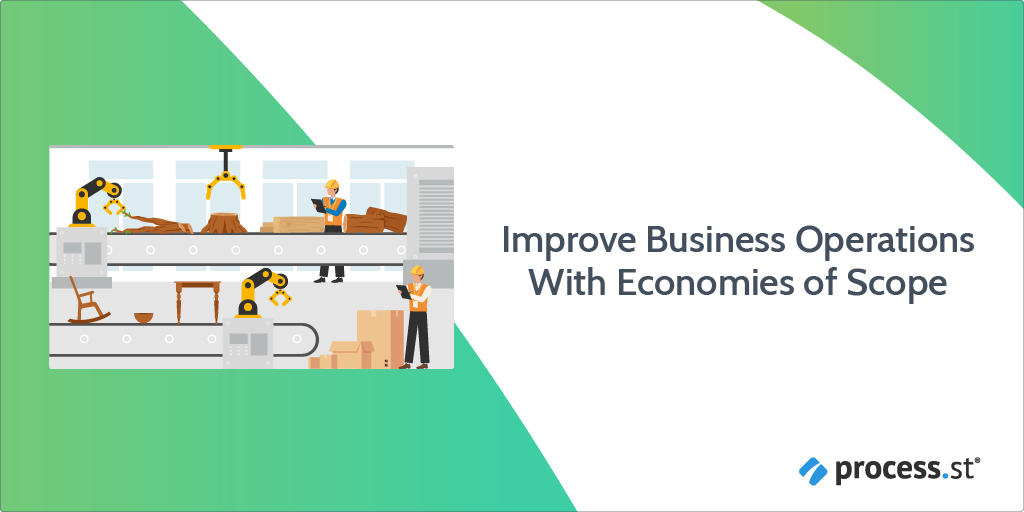
This is what economies of scope look like. Economies of scope are when it’s more cost-effective to produce related items together than it is to produce them individually. In the 21st century economy, it’s also an increasingly familiar model as brands continue to expand their offerings to consumers.

As a consumer, this model is great. We don’t have to run around all over the place to take care of all our responsibilities. For companies, it’s not a bad model, either.

Economies of scope – offering all of these services under one roof – companies are actually spending less by offering more.

But wait – how does that work?

Well, I’ll tell you:

Welcome to Process Street! Right this way, please.
Continue Reading

How to Implement Effective Inventory Management Procedures

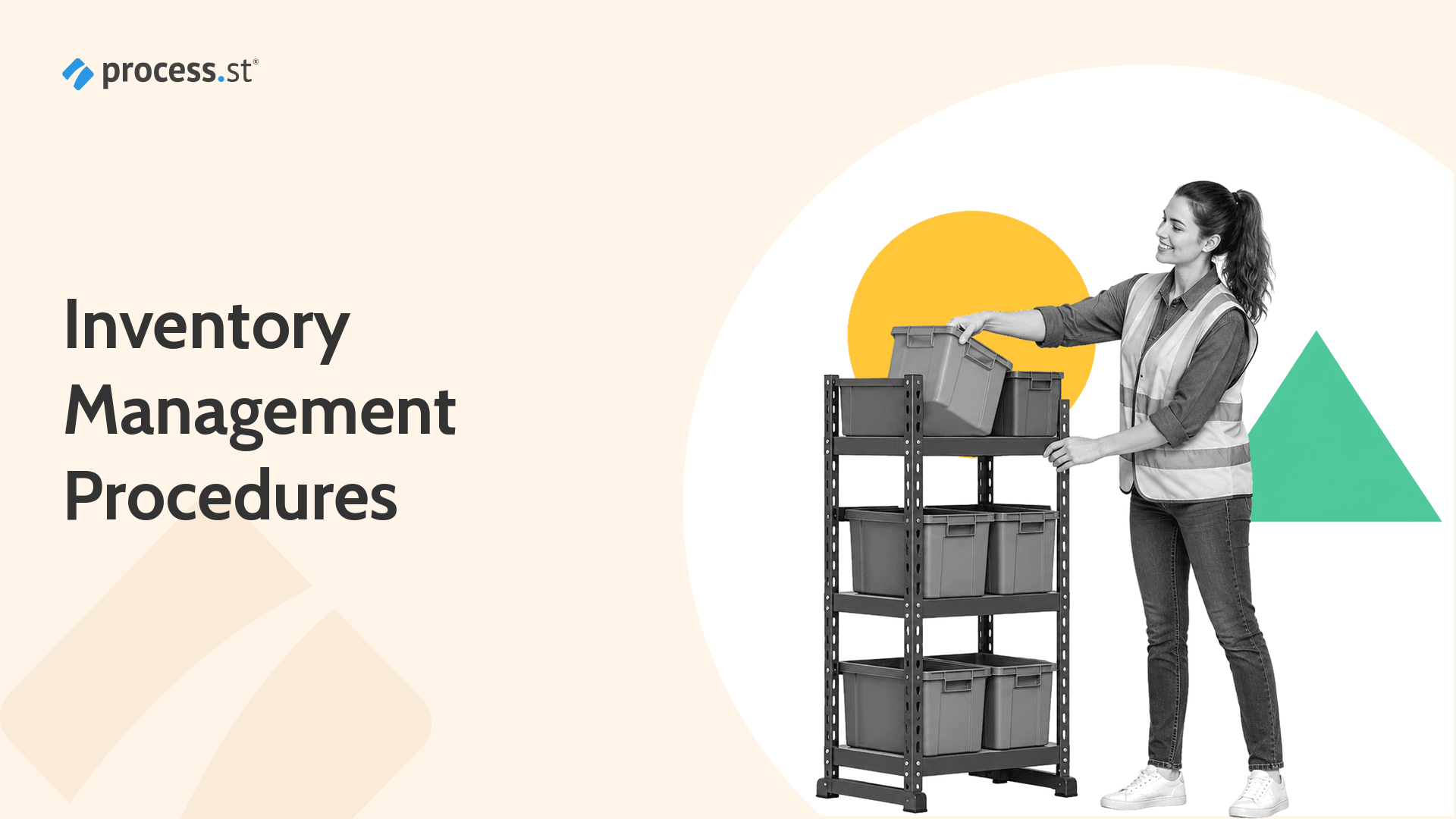
Warehouse operations manager organizes a compact inventory rack for a repeatable stock control procedure

Inventory management procedures are the repeatable steps a business uses to receive, inspect, store, count, reorder, pick, ship, and reconcile stock. A clear procedure tells people what to do, who owns each decision, what evidence to record, and how to handle a mismatch before it becomes a customer or cash-flow problem.

For startups and small businesses, the goal is not a complicated warehouse bureaucracy. To implement effective inventory management procedures, build practical inventory processes and procedures that keep quantities accurate, prevent avoidable waste, support reliable fulfillment, and give the team enough current information to make purchasing decisions with confidence.

Continue Reading

How iQ Food Co Use Process Street to Manage Their Operations

Restaurant operations leader guiding an organized commercial prep-line cart

iQ Food Co used Process Street to document recurring restaurant operations, standardize work across locations, train employees more efficiently, and reduce mistakes in payroll onboarding. The Toronto-based restaurant company turned knowledge that had lived in one leader’s head into repeatable procedures that other people could follow.

In 2017, we spoke with then-COO Arthur Bekerman about how the team used Process Street while its network of locations was growing. His account shows why restaurant standard operating procedures matter: growth becomes easier to manage when teams can find the right process, follow it consistently, and confirm that every required step is complete.

Continue Reading

Take control of your workflows today

Choose which optional cookies to allow. You can change or withdraw consent here at any time.