


Content Allies is a B2B podcast production agency that helps companies plan, produce, publish, and promote revenue-focused shows.
We spoke with founder Jake Jorgovan about how the team used Process Street to standardize podcast production, onboard employees, and manage recurring work. At the time of the 2021 interview, Content Allies reported saving $5,000 a month, tripling revenue, and publishing 128 podcast episodes in two and a half months.
The Content Allies story
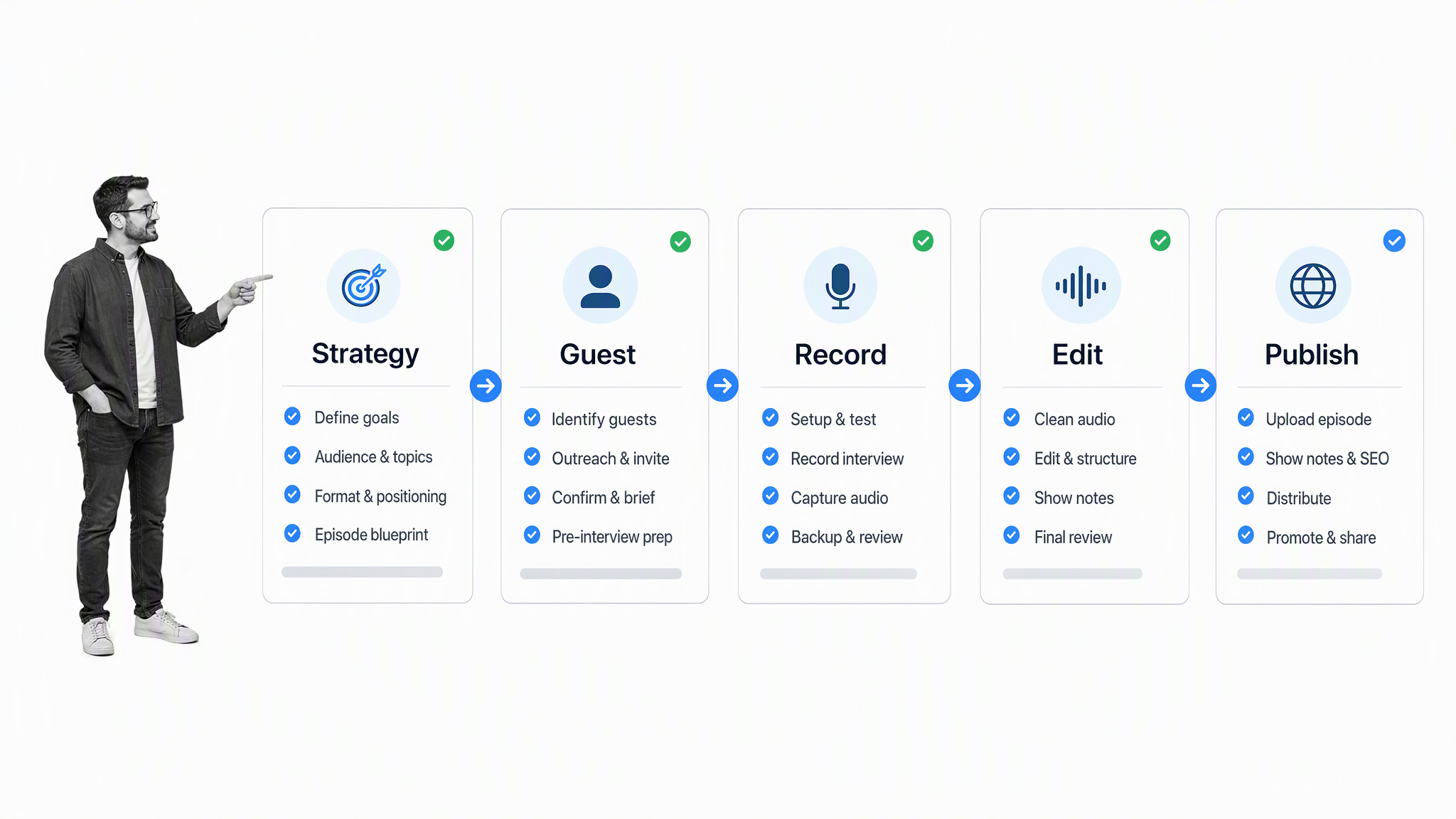
Content Allies is a B2B podcast production agency that helps companies turn subject-matter expertise into well-run shows. Its work spans podcast strategy, guest coordination, recording, editing, publishing, promotion, and the operational handoffs that connect those stages.
At the time of the interview, the agency produced a range of shows, including Talent Acquisition Leaders, Life in the Cloud, and Illuminate Higher Education. Each show required reliable coordination across guests, producers, audio specialists, writers, designers, video editors, and publishing staff.
For Content Allies, podcasting was more than a content channel. It was a way to expand its business network, engage audiences, and build loyalty.
“When I launched my first company, I used a podcast as one of my primary growth channels. At one point I found that over 68% of our revenue was a result of the guests who I had invited on my podcasts. Some of them turned into customers. Others referred customers to us. Others invited me to speaking engagements that led to new customers. Using my podcast as a networking tool proved to be one of the single greatest drivers of revenue for my business.”
Jake Jorgovan, Why Podcasting Might Be One Of The Best ROI Marketing Channels In 2021 (And Beyond)
Between December 2020 and April 2021, Content Allies tripled its revenue, with Process Street supporting the operational growth behind that expansion. The original customer interview remains available in this Content Allies case-study video.
Content Allies used Process Street for:
- Employee onboarding: Training and onboarding new team members through a consistent process.
- Podcast production: Coordinating the daily work required to produce high-quality episodes.
- Recurring tasks: Using scheduled workflow runs to execute repeatable work from anywhere.
They benefited from implementing Process Street by:
- Expanding their capacity for growth
- Streamlining processes to save time
- Reducing operational chaos and human error
- Reducing operating costs
- Improving remote-team management
Challenge
Jorgovan knew Content Allies was growing rapidly and needed to build the operating capacity to support that growth. The work was predictable enough to standardize, but managing it as a collection of projects made ownership, handoffs, and quality harder to control.
He wanted to move beyond project management and focus on the underlying process. That meant defining how work should move from one contributor to the next, making each responsibility visible, and creating a repeatable system that did not depend on one person’s memory.
“I wanted to hammer home that we didn’t just need project management, we need more streamlined processes with software. The biggest game for me was to move from project management to process management.”
Jake Jorgovan, Content Allies
Content Allies also had an inefficient system of record. Tracking completed podcast episodes was cumbersome, time-consuming, and vulnerable to error, especially as the company added customers and increased output.
Those challenges are common in growing service companies evaluating business operations management software: the team needs a shared operating system that coordinates people and evidence without hiding the real process inside scattered project boards.
Growing their business with Process Street
At the time of the interview, Content Allies reported saving $5,000 a month by using Process Street in place of an operations manager.
“I basically replaced a $5000 a month operations personnel with software.”
Jake Jorgovan, Content Allies
Jorgovan signed up for Process Street in October 2020. By December 2020, the company’s core operations had been migrated into reusable workflows. The 2021 account snapshot included 28 active users, 71 members, and 21 guests, showing how broadly the team had adopted the system at that point in its growth.
Process Street made Content Allies’ operations smoother and less prone to missed steps by giving each contributor a clear task sequence. The team could see what had been completed, what came next, and who owned each handoff.
The change also made growth easier to absorb. Rather than adding coordination overhead every time output increased, Content Allies could run the same podcast production process repeatedly and improve it as the team learned.
Results
At the time of the interview, Content Allies reported saving $5,000 a month by using Process Street in place of an operations manager. Over the same period, the company tripled revenue while maintaining the quality and consistency of its podcast production.
“We’ve tripled our revenue since December, but things are running smoother and better than before. Process Street has improved quality and reduced stress of life.”
Jake Jorgovan, Content Allies
Content Allies also reported publishing 128 podcast episodes in two and a half months after moving its operations into Process Street. That throughput depended on a detailed podcast production process containing 60 tasks.
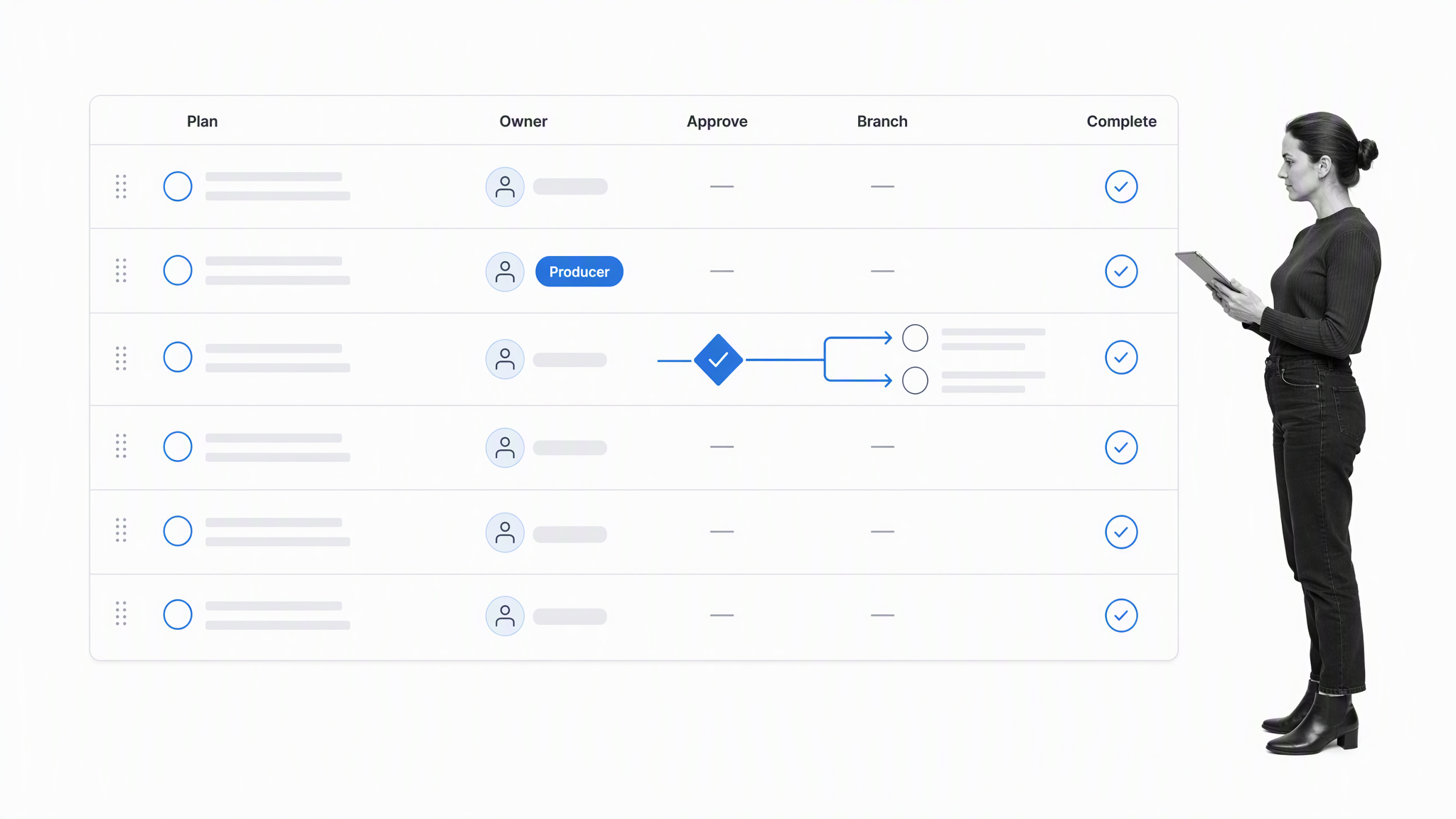
Each task could be assigned to the relevant team member using Role Assignments. Operations, audio, writing, design, video, and virtual-assistant teams worked from one shared process, with handoffs moving the episode from one specialist to the next. The system also kept a remote operations team member informed about who was doing what and when.
The podcast workflow covered submission forms, links to video files, related articles, the number of videos to record, design elements, special instructions, and corporate approvals. The team used Approvals to route podcast items to the right reviewer and record the decision in the workflow.
Content Allies used Conditional Logic to adapt the workflow to an episode’s specific requirements. This allowed one controlled process to show the right tasks and instructions for different situations without forcing every team member through irrelevant steps.
The same workflow supported employee onboarding. New team members could enter the relevant run, follow the documented steps, and complete their responsibilities accurately. The process carried the working instructions, forms, files, and approval points they needed, reducing the amount of training that had to be repeated manually.
Content Allies also automated its publication records. When a virtual assistant approved an episode for publication, the workflow pushed the episode details into Airtable, giving the team an up-to-date view of everything it had published.
Taking it to the next level
At the time of the interview, Content Allies was expanding its Process Street account beyond podcast production to document more of its core operations, including employee onboarding and remote work. The immediate value was clear: lower operating costs, smoother handoffs, and a process that could absorb rapid growth without sacrificing quality.
The customer story also shows why a repeatable podcast workflow matters. High-volume production is not only an editing problem. It is an operational system that connects strategy, guests, recordings, creative work, reviews, approvals, publication, and the record of what was delivered.
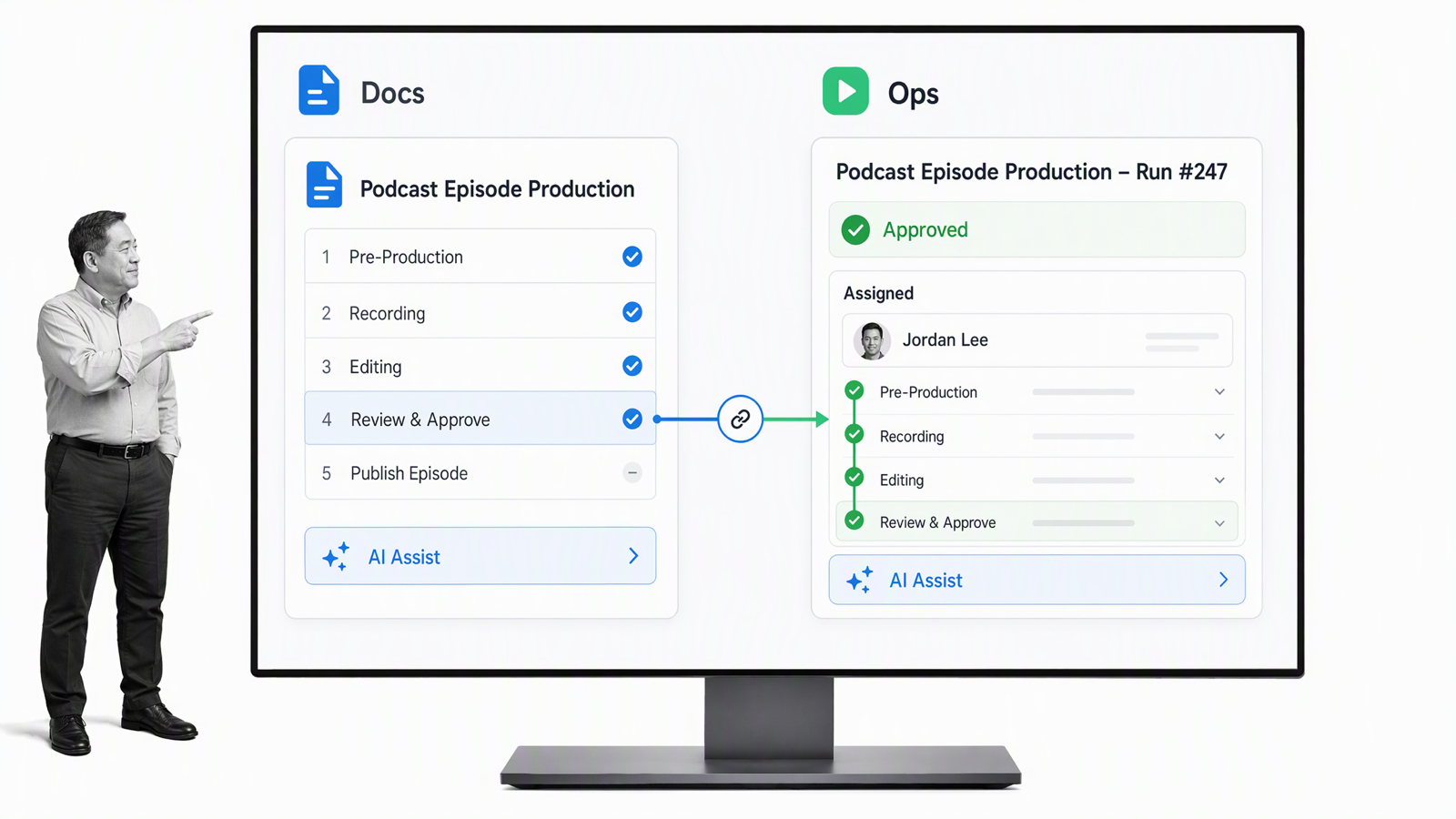
Today, Process Street is one Compliance Operations Platform with Docs and Ops capability areas plus built-in AI. Teams can govern procedures in Docs, turn them into assigned operational workflows in Ops, and keep execution evidence connected in the same product.
Book a Process Street demo to see how documented procedures, assigned workflows, approvals, conditional logic, automation, and built-in AI can support repeatable operations.