




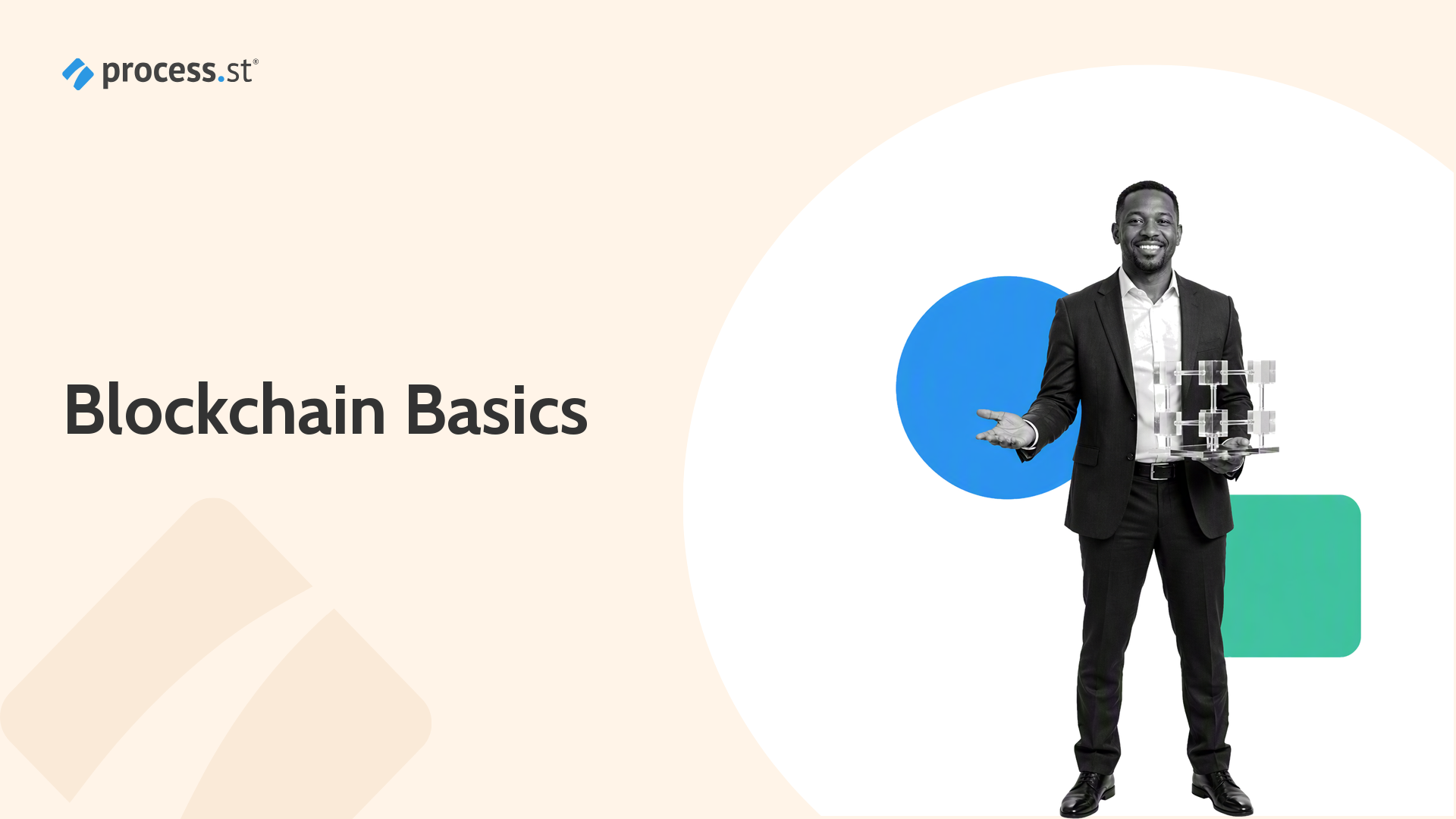
Blockchain technology is a shared, tamper-evident ledger that lets multiple parties agree on a record of transactions without relying on one party’s database. Transactions are grouped into blocks, cryptographically linked to earlier blocks, copied across participating nodes, and added according to validation and consensus rules.
Bitcoin, cryptocurrency, and blockchain still form a distributed ledger of hype. The useful question is narrower: does the process involve several independent parties that need a shared record but cannot reasonably trust one organization to control it? That test reveals the potential for blockchain in process management and beyond, without treating the technology as a silver bullet.
What is the blockchain? A brief introduction to blockchain
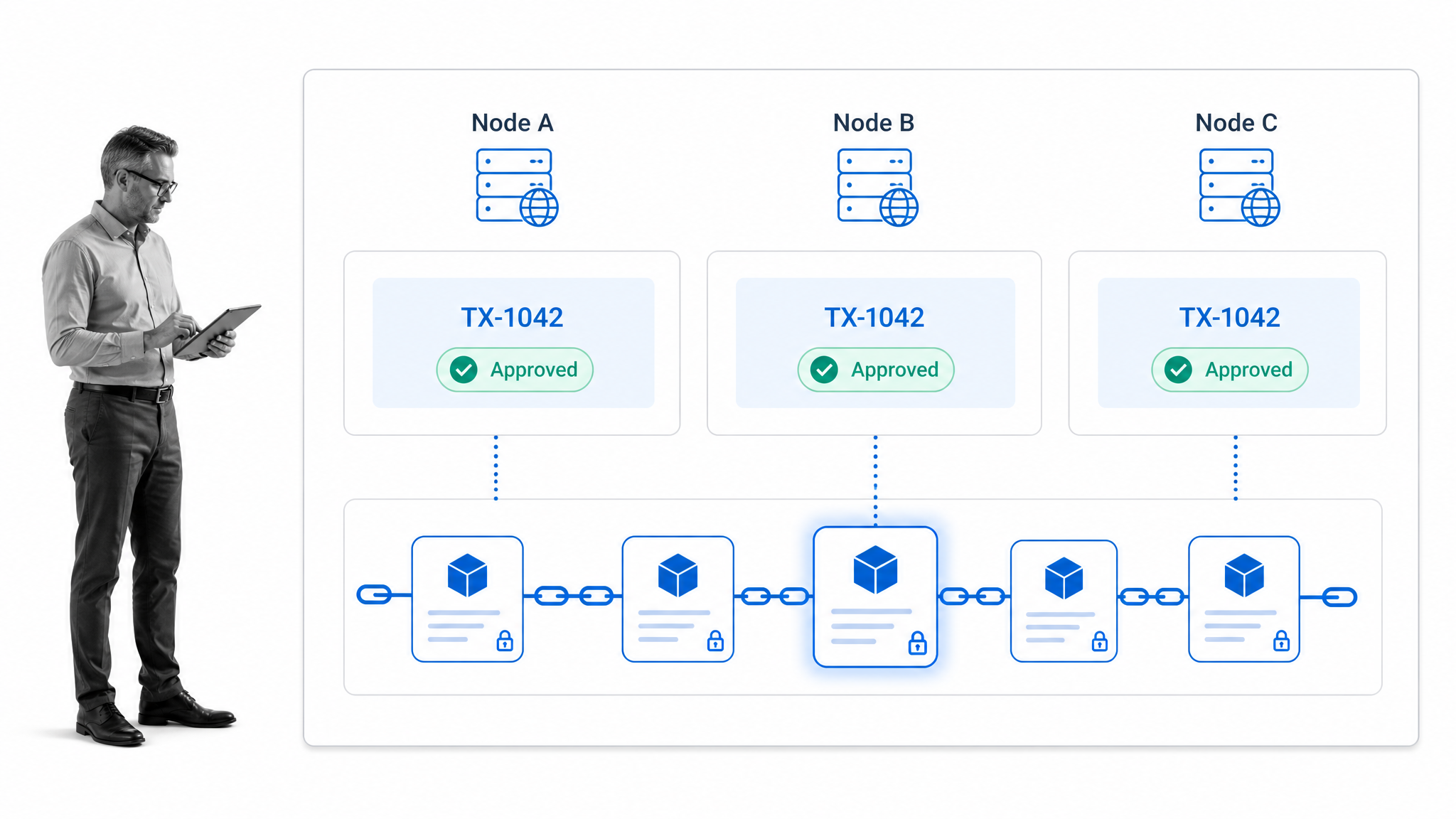
For a simple overview, the blockchain is the underlying technology behind things like Bitcoin. It is essentially a distributed ledger: a list of events and transactions held simultaneously by participants in a network.
Every new piece of information added to this ledger is added as what we call a “block.” Each block contains a cryptographic reference to earlier data. If someone changes a prior record, that reference no longer matches, making tampering detectable. Consensus protocols determine how new blocks are approved and help protect against fraud or double spending without requiring one centralized authority to maintain the sole copy.
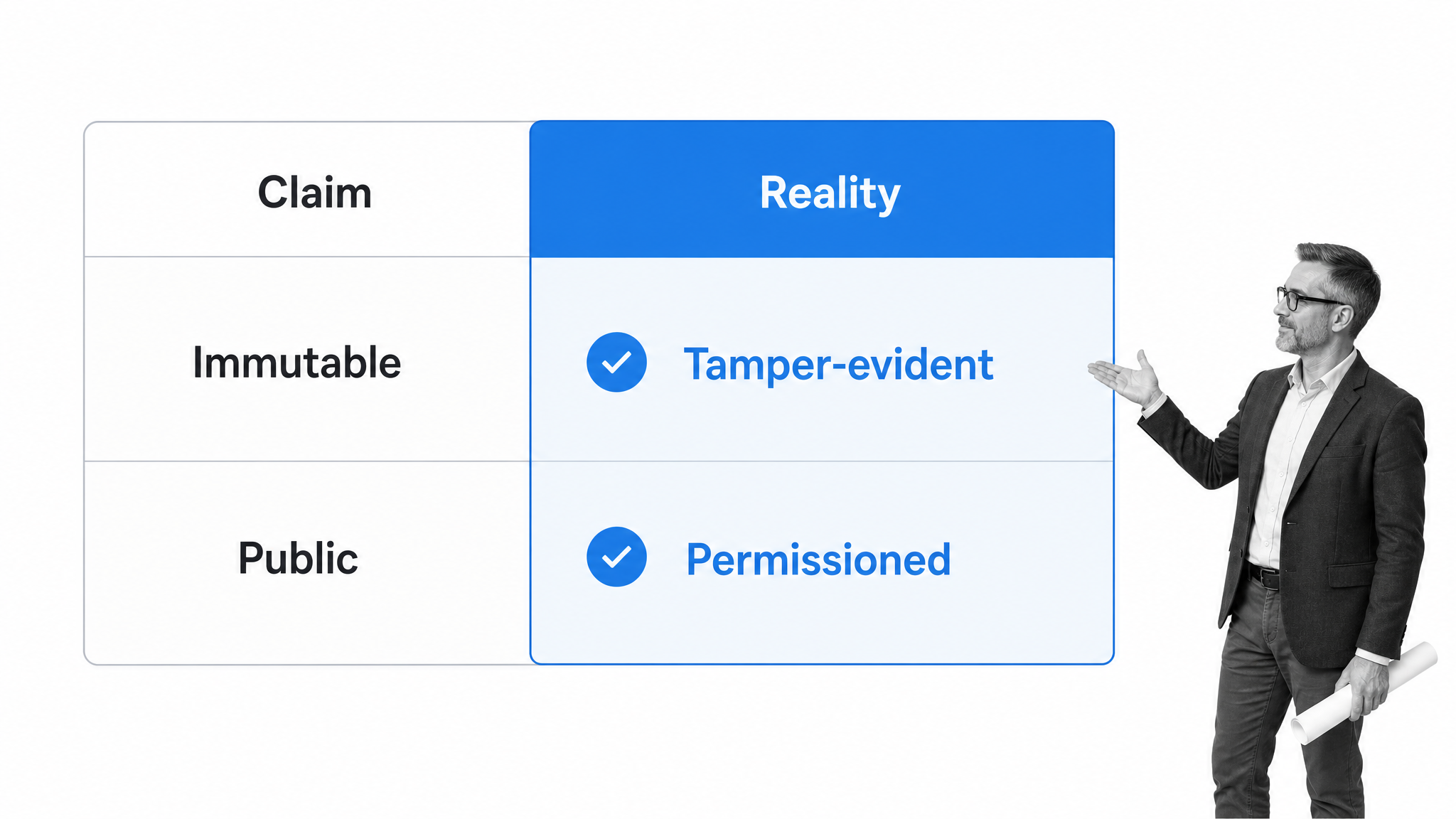
This makes a blockchain tamper-evident and tamper-resistant, not magically private or impossible to change. A public, permissionless blockchain can allow broad participation. A permissioned blockchain can restrict who joins, submits transactions, validates records, or reads particular data. Security still depends on network design, software, key management, governance, and the accuracy of whatever enters the ledger.
Blockchain and cryptocurrency are also not interchangeable. A blockchain is the ledger architecture. A cryptocurrency is one application that can use that architecture to issue and transfer digital value. A company can explore a permissioned ledger for shared records without launching a coin, while many payment systems can move money without using a blockchain.
Through this ledger, and with a bit of computer code, you can create what are known as smart contracts. These are programs deployed to a blockchain that execute defined rules when their conditions are met. A program might release a payment after approved evidence arrives, advance a multi-party process, or record a transfer. That resembles automating a process, but code execution is not automatically a complete or legally enforceable contract.
There is a lot of excitement about the potential uses for this technology. Part of this excitement is driven by the digital tokens, or coins, which are built into these blockchain networks and the value they could hold. Yet, there is plenty to be excited about in regards to application of the technology itself, particularly where several organizations need to coordinate.
A 2018 McKinsey analysis remains useful as a decision framework, even though its market timing belongs to that period. Unstructured experimentation without a strategic evaluation of value and feasibility can leave companies with expensive technology that does not solve a meaningful business problem.
The analysis offers two durable insights into the strategic value of blockchain:
- Blockchain does not have to remove every intermediary to generate value. Permissioned commercial applications can still help when participants need a common record and agreed validation rules.
- Near-term value usually comes from reducing coordination costs and friction in an existing process, not from creating a completely new business model.
The practical advice comes in two forms:
- Identify value by pragmatically and skeptically assessing impact and feasibility at a granular level, then focus on true pain points and specific use cases.
- Capture value by tailoring the approach to market position, the ability to shape an ecosystem, common standards, governance, and regulatory barriers.
Or, simplified, stop thinking of blockchain as a silver bullet. Address business concerns the same way you would when launching any startup, new product, or new service. Do not create blockchain applications for the sake of it. Create them where they make business sense.
5 use cases where the blockchain could thrive
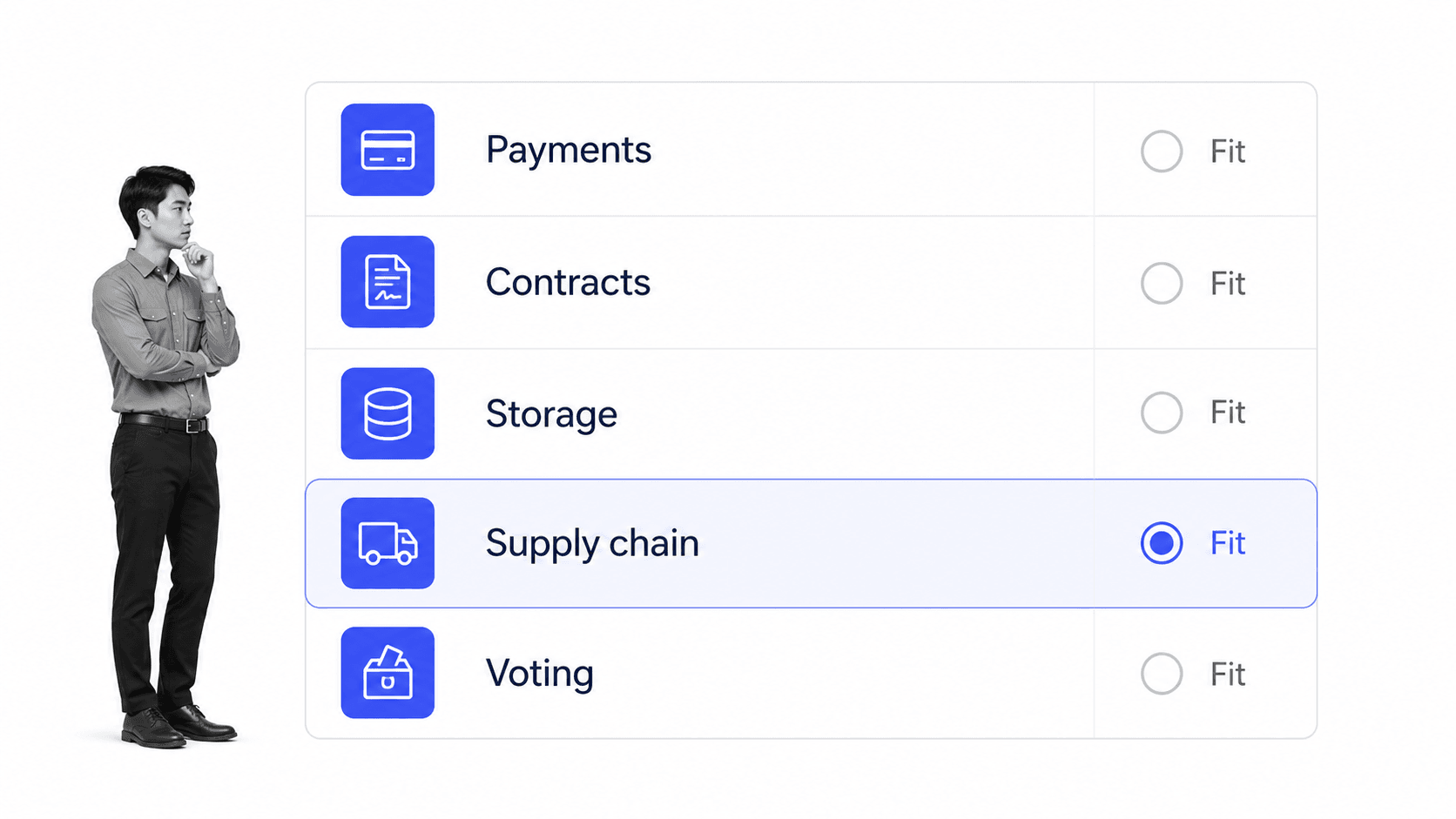
We know the concept of the blockchain now, but we would quite like to find some immediate use value. Real-world blockchain use cases work best when the ledger replaces a costly reconciliation point, coordinates participants that do not share one trusted system, or executes rules across organizational boundaries.
In theory, blockchain technologies could fit in place of certain existing platforms to better provide services, or they could be incorporated into various flows to reduce reliance on a trust-oriented middleman. This second option is perhaps more interesting as it paints blockchain as an automation and coordination technology which does not just change things technologically, but changes the material ways in which participants exchange evidence and value.
Whole business processes could be automated and executed through the blockchain with multiple stakeholders being involved. But the difficult part is not putting steps on a ledger. It is agreeing on data, governance, privacy, standards, exceptions, and accountability. The following five use cases show both the opportunity and the limit.
Smart contracts change the way people make agreements
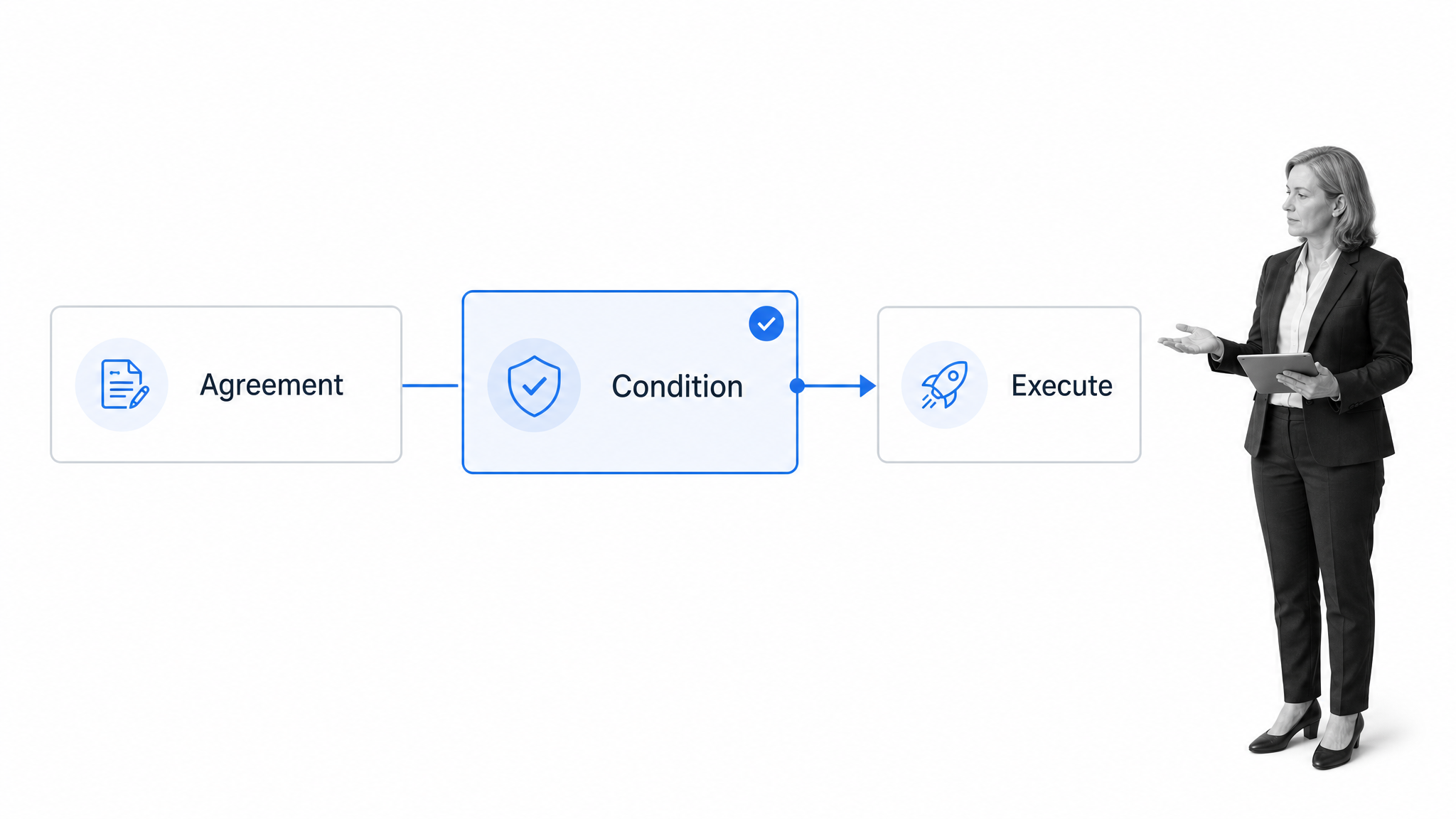
We have already mentioned smart contracts, but there is a lot of excitement around their potential uses. A smart contract is a program that carries out defined rules on a blockchain. It can hold an asset or instruction in escrow, watch for a future event, and route the result when the agreed condition is satisfied.
These smart contracts could theoretically automate large amounts of work via their integration into agreements and multi-party processes. For example, an approved delivery record could release payment, or a verified credential could unlock the next stage of a service. The control flow and business logic from a high-level process map can help determine the structure of smart contract clauses.
Now, replacing legal professionals is probably considerably harder than writing a couple of bits of code, but there is clear potential in the concept. The Law Commission’s work on smart legal contracts makes the useful distinction: legal obligations may be expressed or performed in code, but contract formation, interpretation, remedies, jurisdiction, and responsibility still matter. External data can also be wrong, delayed, or manipulated.
The best use cases therefore have narrow, testable conditions, reliable data inputs, clear exception handling, and governance for upgrades. A smart contract can execute a rule consistently. It cannot decide whether the rule was sensible in the first place.
Decentralized storage with cryptographic verification
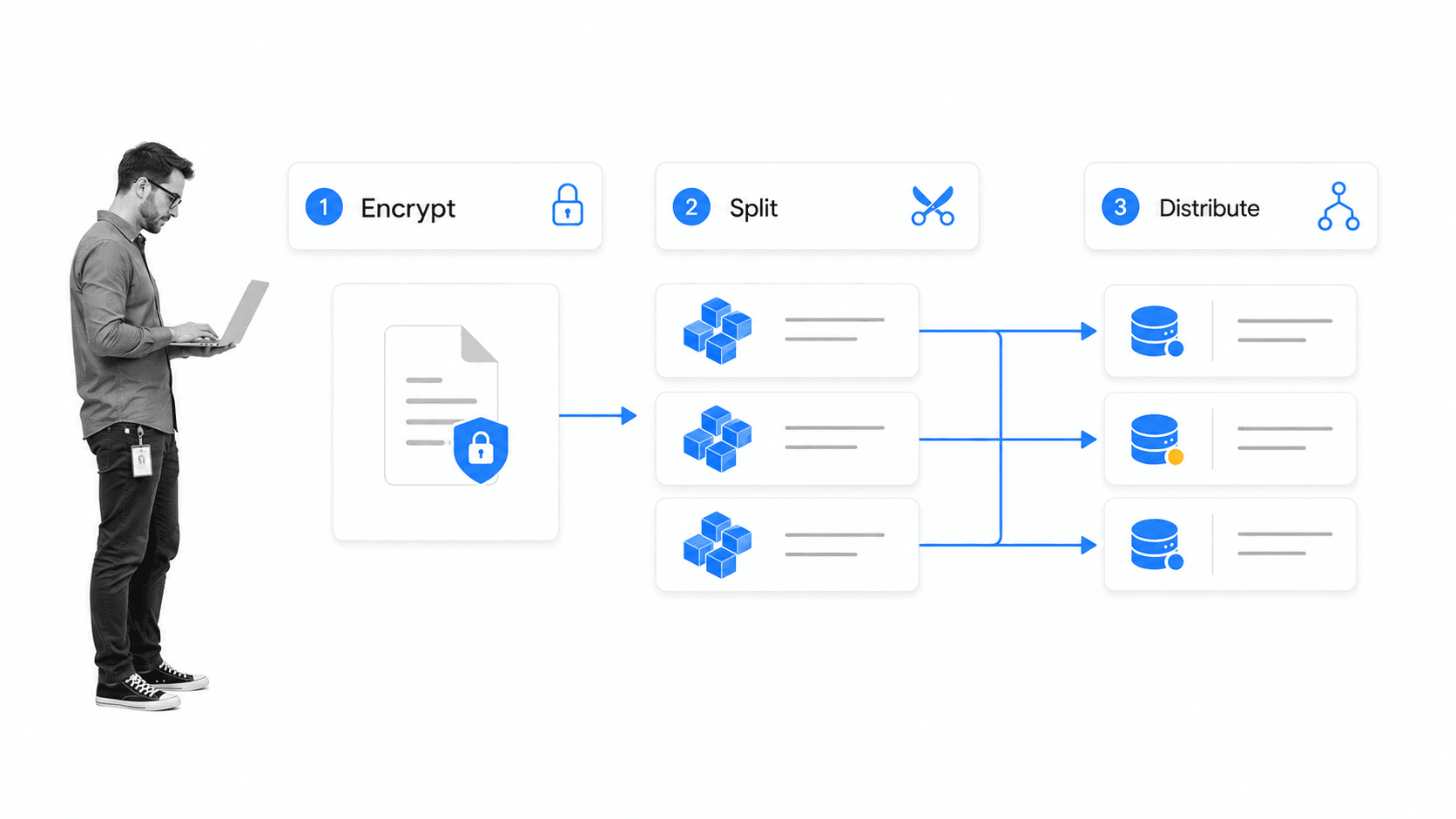
Decentralized cloud storage can use the spare capacity of computers distributed across a network. A file is encrypted, split into pieces, and stored across different nodes. Cryptographic proofs and payment mechanisms can help coordinate storage providers and verify that data remains available.
The file itself does not need to sit whole inside a blockchain ledger. The ledger can coordinate commitments, proofs, and payments while the encrypted data remains in a distributed storage layer. That distinction matters for cost, privacy, and performance.
The idea is that participants earn tokens or another form of payment through storing these materials on unused hard drive space. This can open a revenue stream for users while reducing dependence on one storage provider, although service economics and retrieval performance still have to work.
It is basically Airbnb for your hard drive. Participants can earn tokens or other compensation for providing unused storage capacity, while customers buy a resilient object-storage service from the network.
Storj operates a distributed, S3-compatible object-storage network, and Filecoin operates a decentralized storage network with a live market for storage and retrieval. Both show that the use case has moved beyond prelaunch experiments. They remain specialist alternatives to conventional cloud storage, with tradeoffs in retrieval, economics, governance, and operational simplicity.
Supply-chain accountability via the ledger
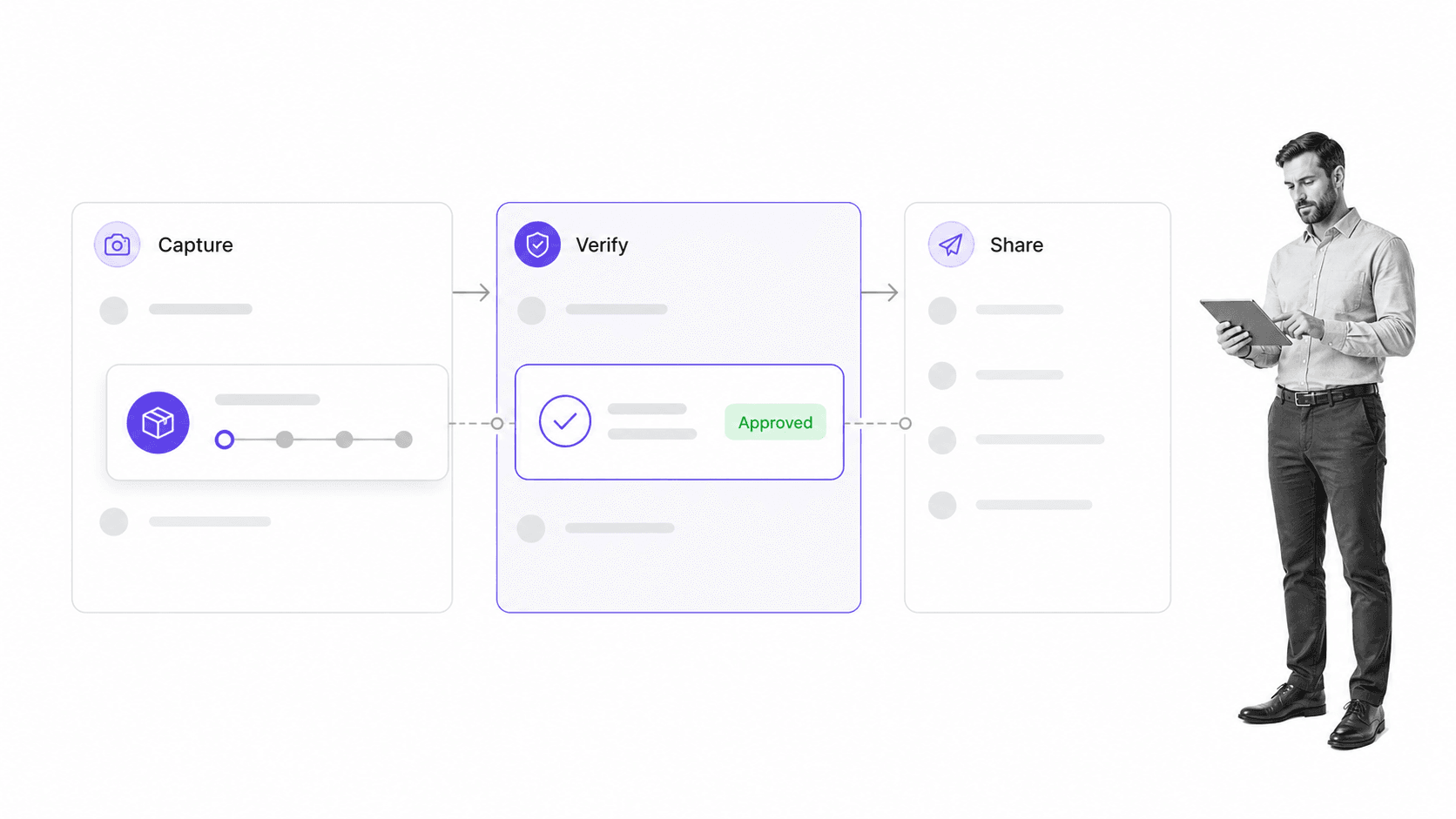
Knowing where something in your supply chain came from is a very important thing. This helps ensure quality and protects your business against other people’s poor choices. Most of the things we buy are not made by a single entity, but by a chain of suppliers who sell their components to a company that assembles and markets the final product.
The problem with this system is that if one of these components fails, the brand takes the brunt of the backlash. A reliable history can help a company identify which supplier, component, or handoff introduced the problem instead of treating the final seller as the only source of evidence.
A shared ledger can let growers, manufacturers, carriers, inspectors, buyers, and regulators record handoffs against the same history. The value is strongest when no single participant should own the authoritative record and each participant needs evidence from the others.
NIST’s manufacturing supply-chain work identifies traceability and provenance as credible applications, while also emphasizing interoperability, standards, governance, and privacy. A permissioned design may restrict access to commercially sensitive information while preserving a common audit trail.
Blockchain can make recorded data tamper-evident. It cannot prove that an incorrect weight, forged certificate, broken sensor, or dishonest origin claim was truthful when entered. Good data capture, independent assurance, and clear responsibility remain essential.
This makes supply-chain traceability a serious but narrow use case. The technology can reduce reconciliation and disputes across companies, but it does not remove the operational work required to validate the physical world.
Cross-border payroll and settlement
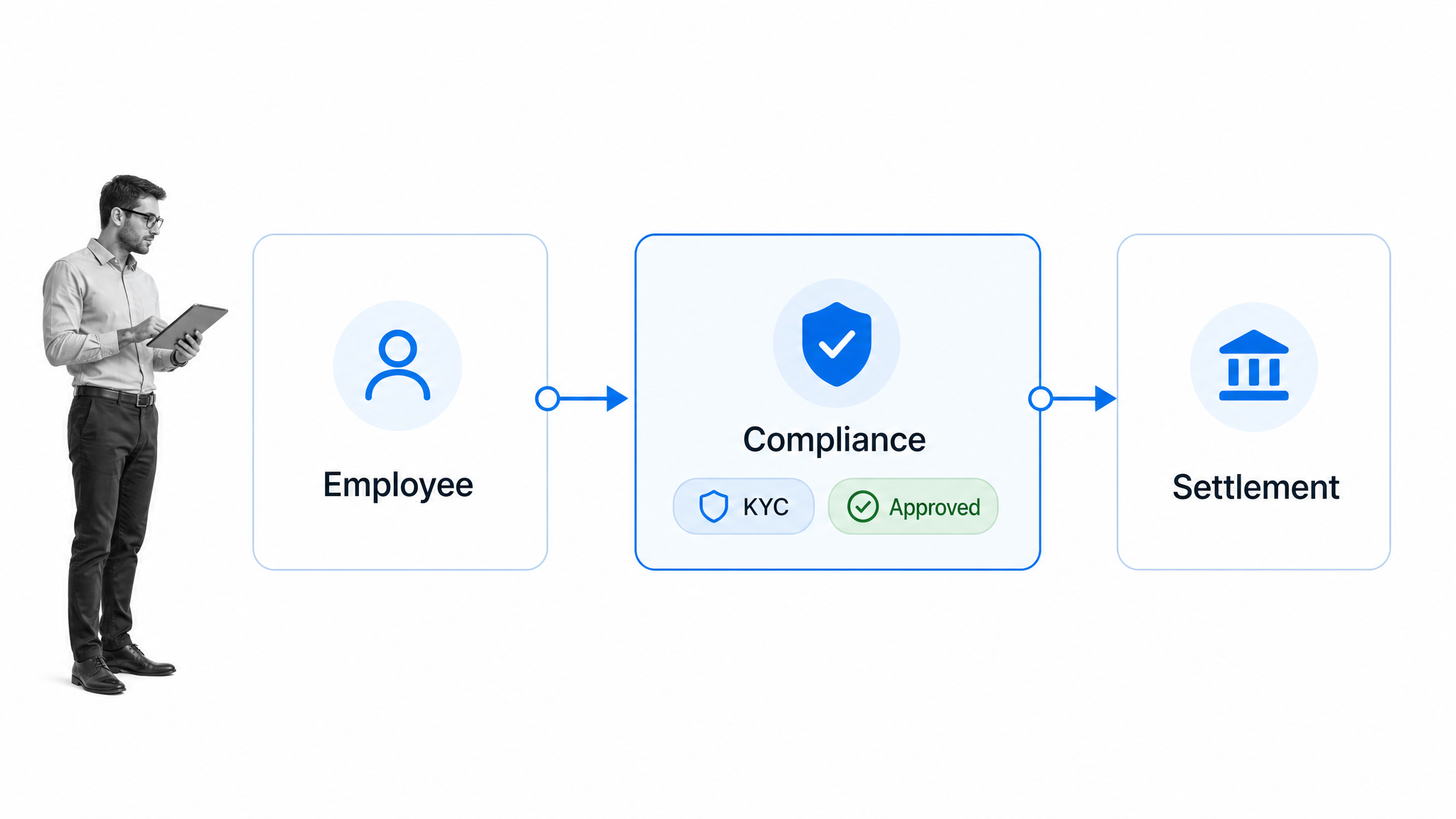
International payroll exposes a real coordination problem: employers, workers, payroll providers, banks, currency networks, and regulators may all touch one payment. Traditional transfers can involve fees, delays, limited visibility, and several reconciliation points.
Blockchain-based payment rails can move cryptocurrency, stable-value tokens, or tokenized commercial-bank money across borders and attach programmable conditions to settlement. BIS Project Agorá, for example, tested a multi-currency architecture connecting tokenized commercial-bank deposits and central-bank reserves with conditional, atomic settlement.
This does not mean ordinary wages should be paid speculatively in volatile tokens. A regulated payment flow still needs worker identity, KYC and anti-money-laundering evidence, payroll calculations, tax withholding, local employment-law compliance, currency conversion, and a reliable way for the employee to receive usable funds.
Services such as Bitwage make crypto, stablecoin, and local-currency payment options available for international workers. The useful evaluation is not “Bitcoin or bank.” It is whether a particular blockchain technology in financial services can reduce settlement friction while preserving the required controls.
As use cases go, cross-border settlement is partly off the ground. It remains a specialist choice whose value depends on jurisdiction, fees, volatility, liquidity, payroll obligations, and the quality of the compliance operations around it.
Auditable voting without security shortcuts
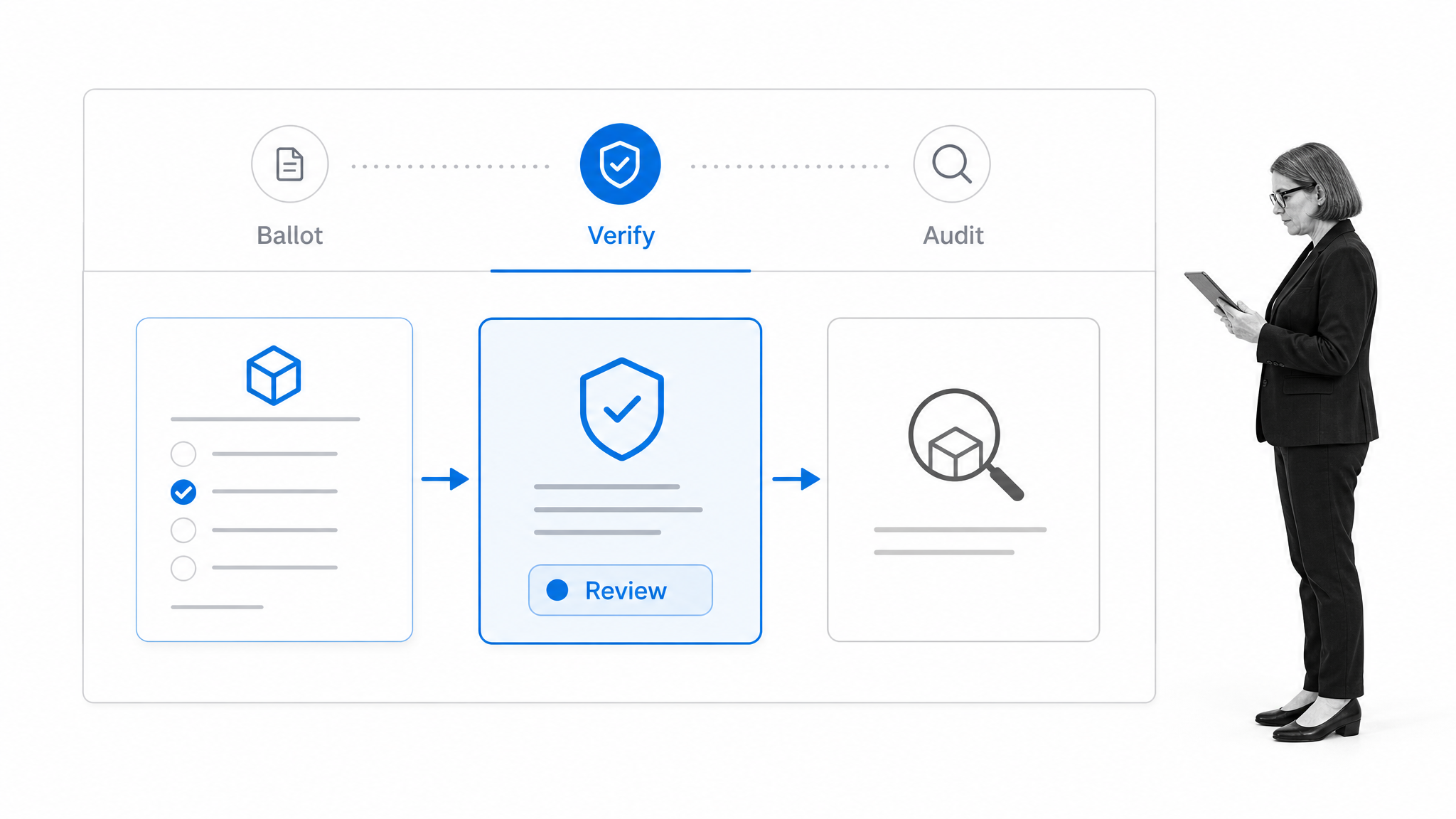
Consensus protocols can make decisions and transaction histories publicly accountable within a network. That has led researchers to test blockchain technology for organizational voting, participatory budgeting, shareholder decisions, and public elections.
A ledger can help record that a ballot was accepted, prevent an eligible credential from voting twice, or preserve an auditable tally. It may also support more expressive decision methods than a simple yes or no when the rules, identity system, and user experience are designed for that purpose.
But secure electronic voting is much larger than the ledger. NIST’s election-security work treats voting as an end-to-end system involving registration, voter identity, ballot secrecy, devices, software, auditability, accessibility, administration, and incident response.
Blockchain by itself does not secure a voter’s phone, prevent coercion, guarantee anonymity, correct a compromised identity system, or prove that election officials followed procedure. Public transparency can also conflict with ballot secrecy, while irreversible records can complicate lawful correction and recovery.
That makes public-election voting an experimental and research-oriented use case, not a near-term recommendation. The ledger may contribute one verification component, but the whole process must be safer, usable, auditable, and legally accountable.
How the blockchain could be utilized in business process management
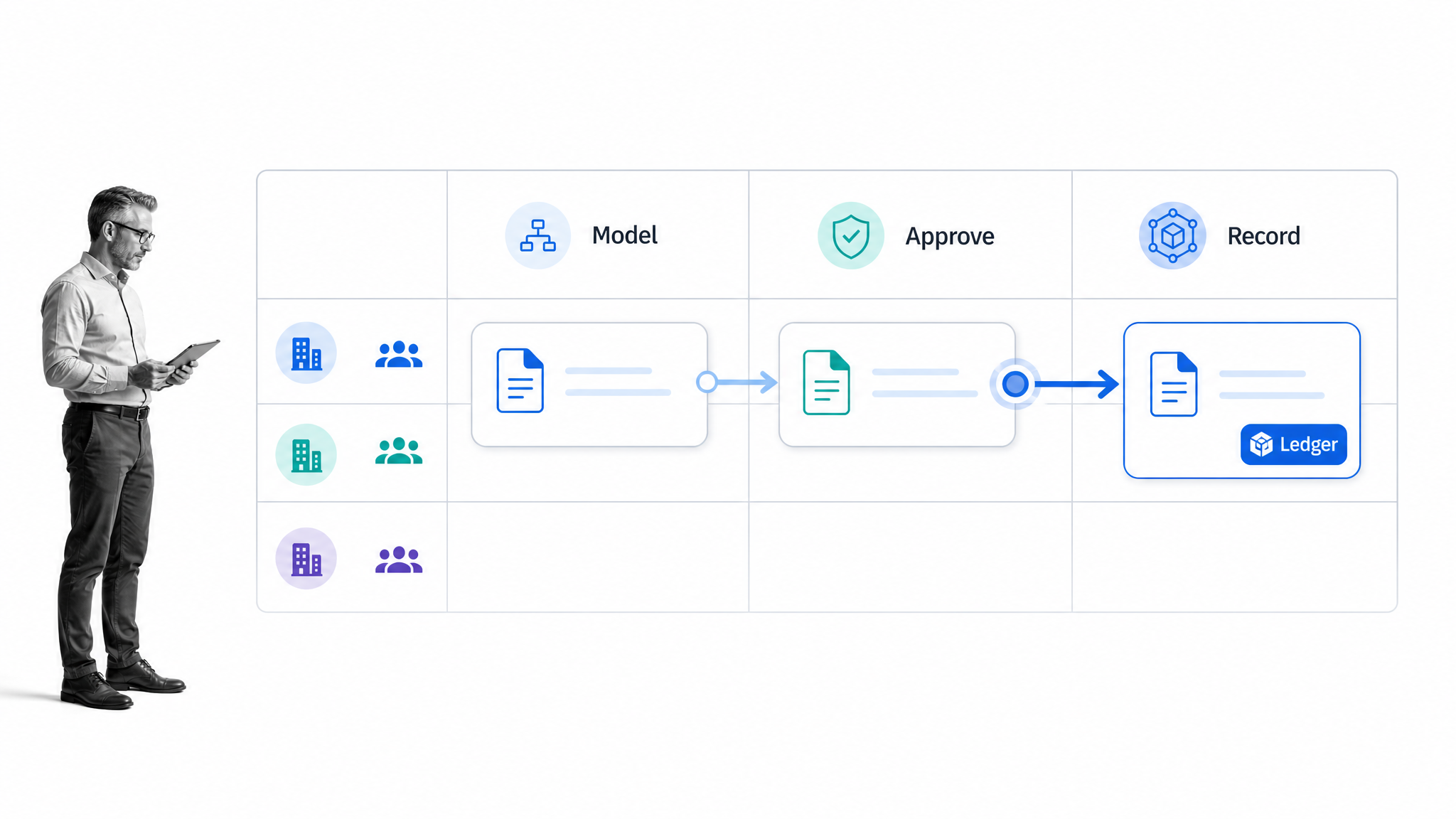
So we can now see some of the advantages which the use of blockchain technology may bring to different industries. But to what extent does this translate into business process management?
You might ask what would happen if every workflow run recorded each change and entry on a shared ledger. That could provide transparency about revision changes and who interacted with the process. The thing is, an organization can record that information in governed database logs without a blockchain.
Process Street provides one Compliance Operations Platform for this kind of work. Docs supports governed procedures, Ops supports auditable workflow execution through workflow runs, the Reports Dashboard surfaces operational records, and built-in AI helps teams create, execute, monitor, and improve work. When one organization can legitimately own the process and its source of truth, this is usually simpler than coordinating a blockchain network.
That kind of change can be offered by companies with strong enough security that the extra cryptography makes little real-world business impact. That use case does not seem to provide a big enough competitive advantage, if any, for a company to progress with it. The stronger case appears in inter-organizational processes where different companies work together, need a shared state, and cannot accept one participant’s database as the sole authority.
However, the world of business process management is filled with use cases and with different kinds of stakeholders who seek out varying levels of service. Can the blockchain find itself a place within this sea of potential value?
A collection of researchers, writing in the ACM Transactions on Management Information Systems journal, believe the answer to this question is “yes.” The paper Blockchains for Business Process Management: Challenges and Opportunities, coauthored by Marlon Dumas, outlines a series of key points and evaluates them critically in the process.
Blockchains for business process management: The case for blockchain
- Zero-trust can allow companies to collaborate on processes. One traditional difficulty in process management is the inter-organizational process where different companies work together. A blockchain can reduce dependence on a centralized power in that relationship. Two business entities may be able to do business without appointing one participant as the trusted third party.
- Smart contracts can be assembled from inter-organizational process maps. The control flow and business logic from high-level process overviews can determine the structure of a smart contract. Through connections to services and data sources, different moments in process maps can act as triggers for smart contract clauses.
- Payments or escrow services can be built in. Payments made directly, or value held in escrow, can be coordinated automatically with process milestones. Modern systems may use tokenized deposits, stable-value assets, or other settlement mechanisms rather than a speculative cryptocurrency.
- A shared ledger can help minimize disputes. If relevant information is held on a common, tamper-evident record, participants can see who did what and when. That public accountability within the authorized network can help trace problems to their root and reduce multi-stakeholder disputes.
- Permissions can protect private information. Privacy does not come automatically from encryption. A permissioned architecture can control who may read or submit particular information, while key management and off-chain storage limit what sensitive data appears on the ledger.
Blockchains for business process management: Some immediate challenges
- Restricted data can create difficulties for process mining. To create an as-is process map, process mining software runs through event logs to discover operational processes. If records are encrypted, fragmented, or exposed only through limited permissions, effective process discovery becomes harder.
- The same problem can hurt analysis. A view of processes across a supply chain has potential, but participants may not be allowed to see all the information required for process analysis. Weakening controls can expose competitive information or let observers reverse engineer processes through transactions and smart contracts.
- Process adaptation or evolution is limited by rigid shared rules. The parameters must be defined before a contract or process continues. Real processes require exceptions and adaptation in the wild. Upgrading shared logic requires governance across participants, careful versioning, and a plan for work already in flight.
- Inputs and external events remain trust points. A smart contract cannot independently know whether goods arrived in good condition, an identity is genuine, or a regulation changed. Oracles, inspections, and responsible organizations remain part of the operating model.
- Performance and accountability do not disappear. Throughput, latency, bandwidth, usability, security, wasted resources, hard forks, interoperability, and regulatory responsibility all influence whether a network is practical.
Blockchain may give a niche advantage for inter-organizational business processes
It is hard to judge whether or not blockchain will result in a revolution of business processes. Partly, this is because most of the challenges of business process management are less about technology and more about people, organization, incentives, governance, and the quality of execution.
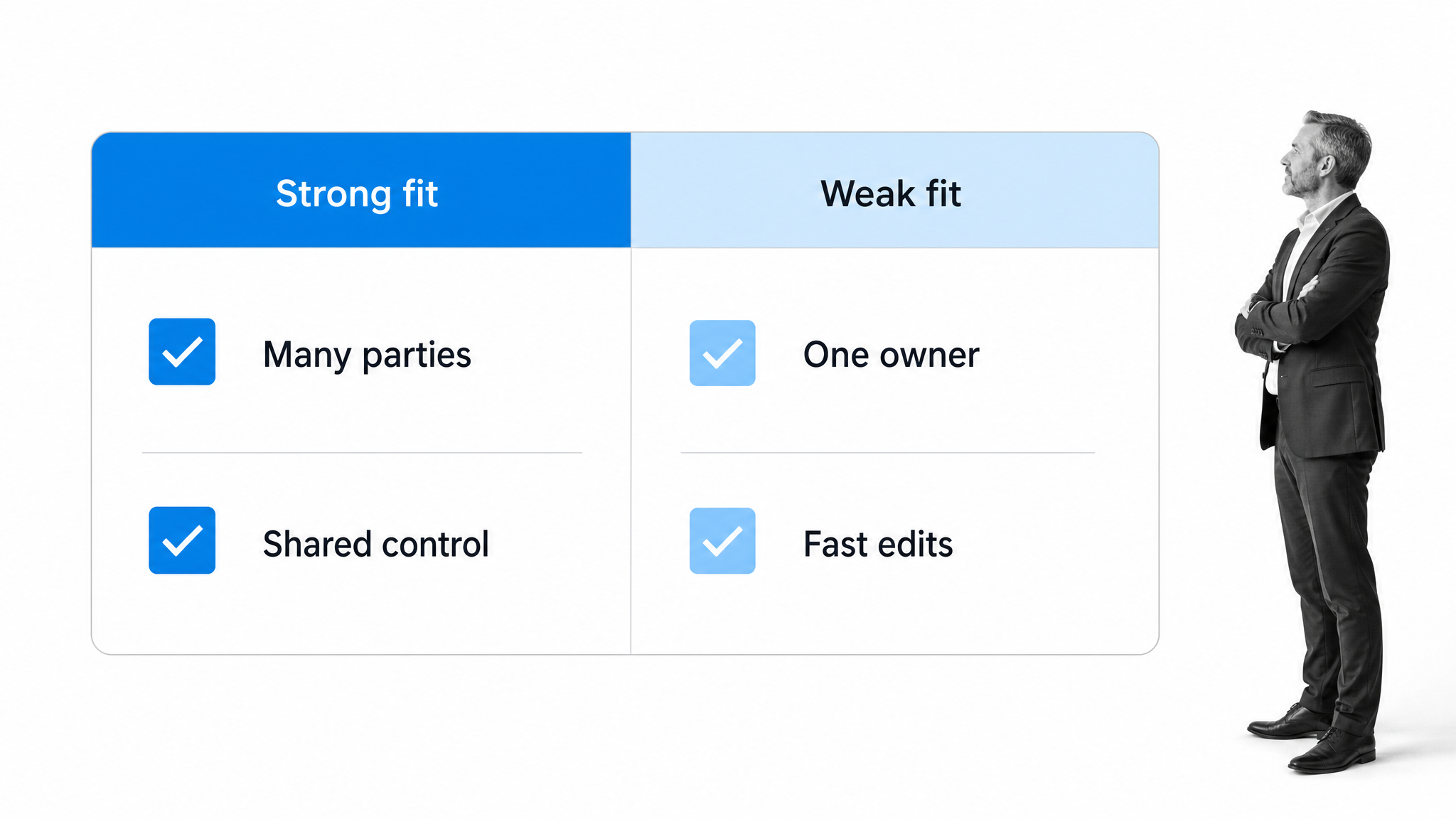
Plus, many of the scenarios described above can to certain extents be achieved with currently existing technology. A conventional database and a governed workflow platform are usually better when one trusted organization owns the process, controls access, and can maintain the system of record.
In the paper, businesses collaborate with each other automatically in a marketplace facilitated by blockchain and executed by smart contracts. This is all well and good, but automating what company you buy from as some form of streamlined procurement presents a significant risk in regards to quality, regardless of whether the ledger looks good or not.
The blockchain case becomes stronger when several independent organizations must coordinate around the same state, each needs evidence that others cannot silently rewrite, and no participant can reasonably control the sole record. A permissioned network may then provide a neutral shared ledger and common execution rules.
Even in that scenario, the ledger must connect to real operations. Shared data standards, inspection, exception handling, dispute resolution, privacy, and regulatory accountability remain business responsibilities. Throughput, latency, bandwidth, usability, security, wasted resources, and hard forks also remain practical obstacles.
For routine collaboration, Process Street can assign workflow runs to people across the operating process, manage participants through the organization, and assign tasks with a clear audit trail. That is a practical fit when the goal is controlled execution rather than a neutral multi-party ledger.
The decision rule is simple. Use blockchain when shared state across independent parties is the actual bottleneck and the governance burden is justified. Use a conventional database and workflow platform when one trusted operator can own the system. The niche advantage is real, but it comes from the coordination problem, not from the word “blockchain.”
Have you implemented blockchain technology in your business? What coordination or trust problem are you trying to solve? Share your experience in the comments below.