Folders in Process Street help keep your Workflows and Pages organized.
They also simplify managing permissions across teams or departments. For example, separate folders for HR, Sales, and Finance ensure that teams only access the processes and Pages they need, boosting both productivity and security.
Users: Only Admins and Builders with ‘edit’ permission can manage folders.
To create a new folder, click the “+ New” button in the top right corner of your library and select “Folder“.
Give your folder a name, select the location of the new folder, and click “Create” to finish.
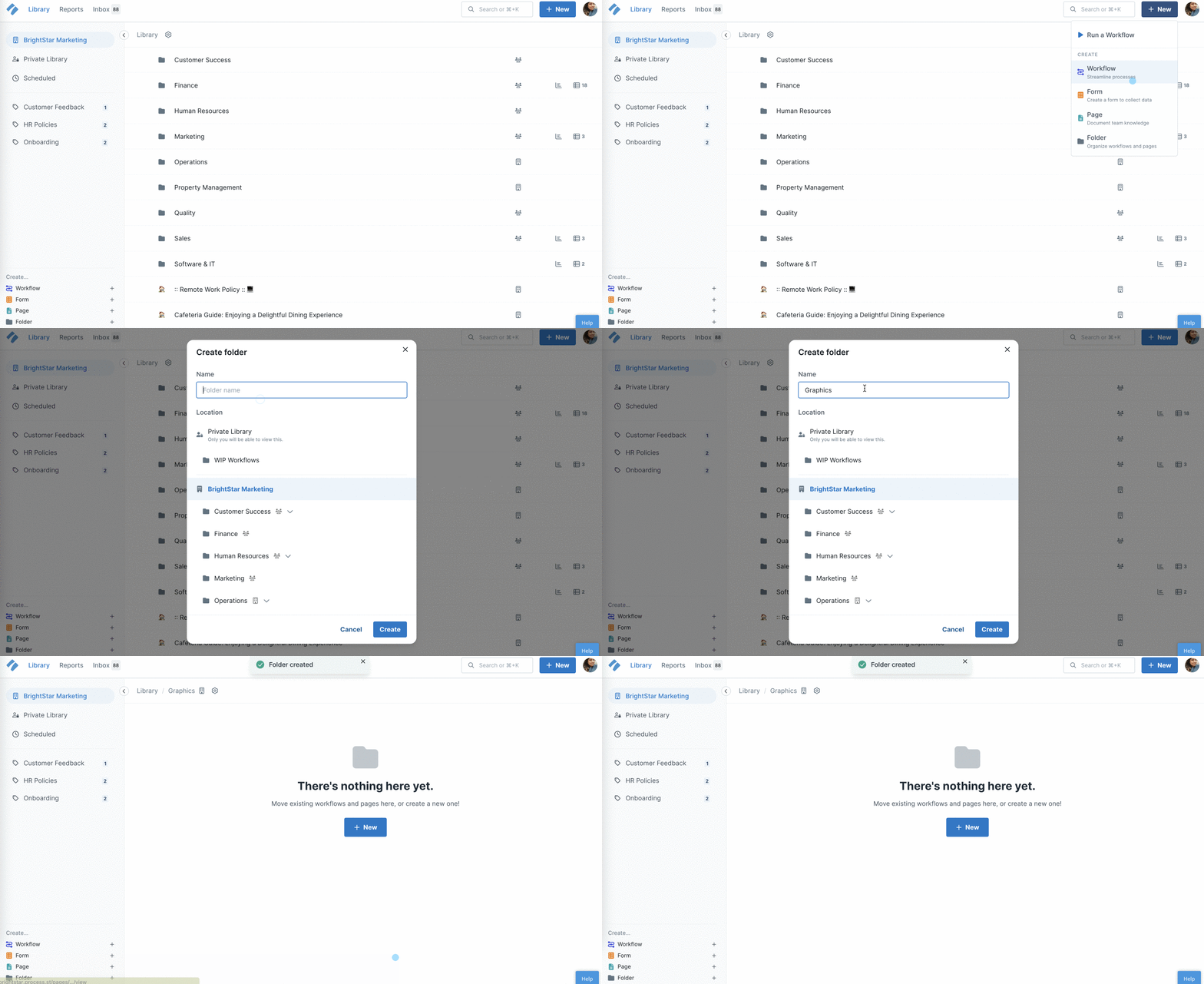
In the example above we’ve created a folder on the organization library and you’ll see that the organization name is highlighted.
Pro tip: You can also create a new folder directly from the Move modal when moving items between folders. Click New Folder in the modal, name the folder, and it’s automatically selected as the destination.
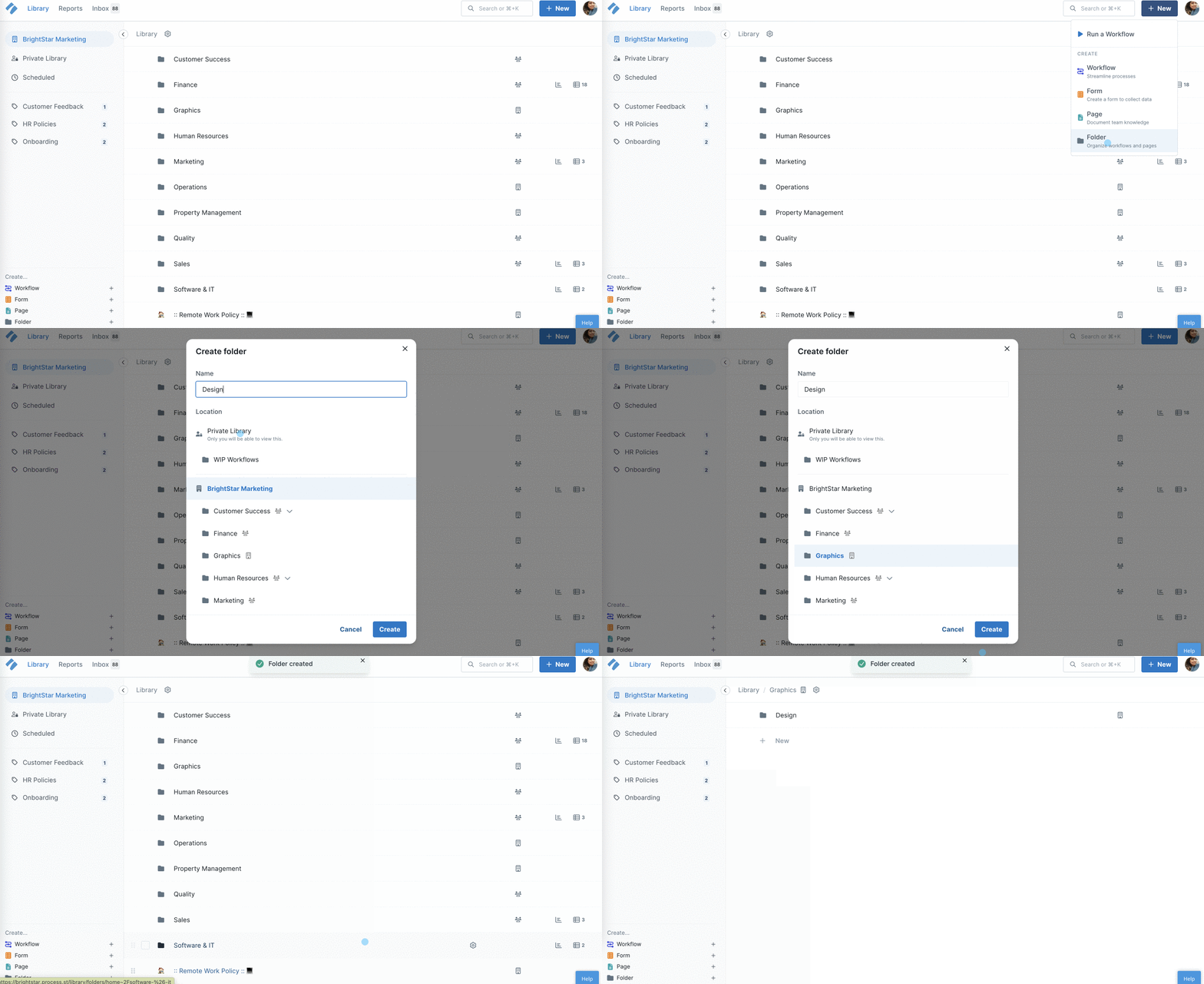
If you want to add your new folder to an existing folder, you can select the location from the list shown below.
If you already have sub-folders, click the main folder’s name or click the down arrow to expand all your options.
Select the location of the new sub-folder, and click “Create” to finish.
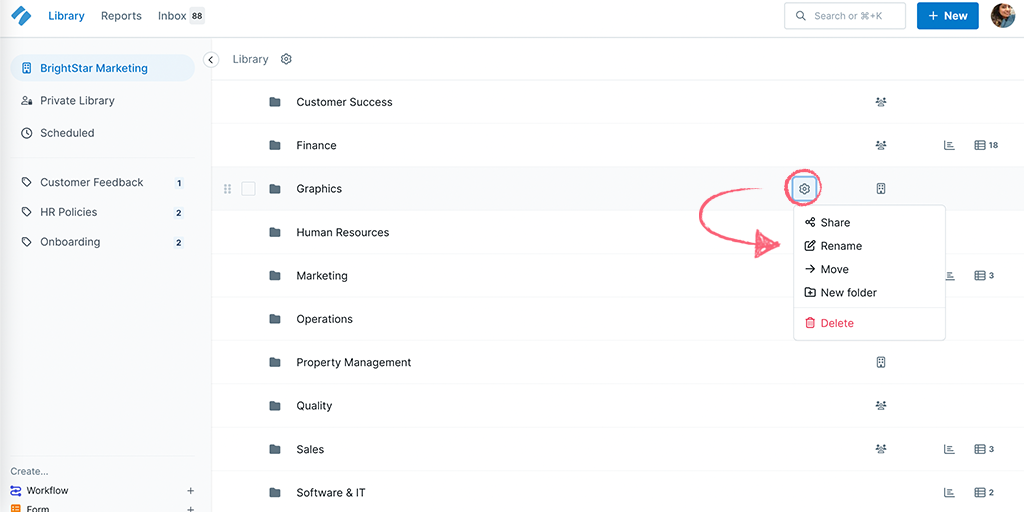
To access a folder’s settings from your library, hover over your folder name and click the cog on the right of your view to open the menu.
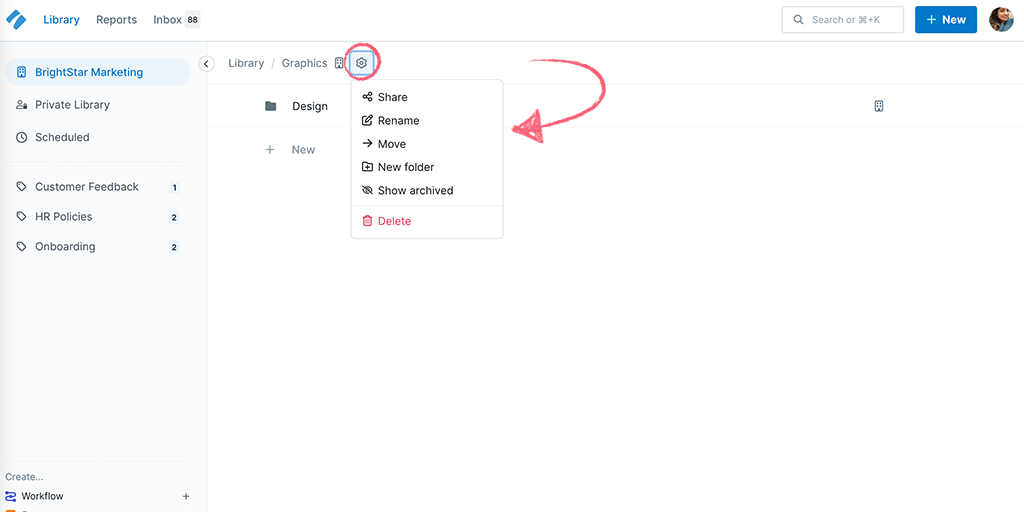
You can also click a folder’s name to open it, and then click the cog at the top of your screen to access settings from there.
To rename a folder, access the folder settings and select “Rename” from the menu.
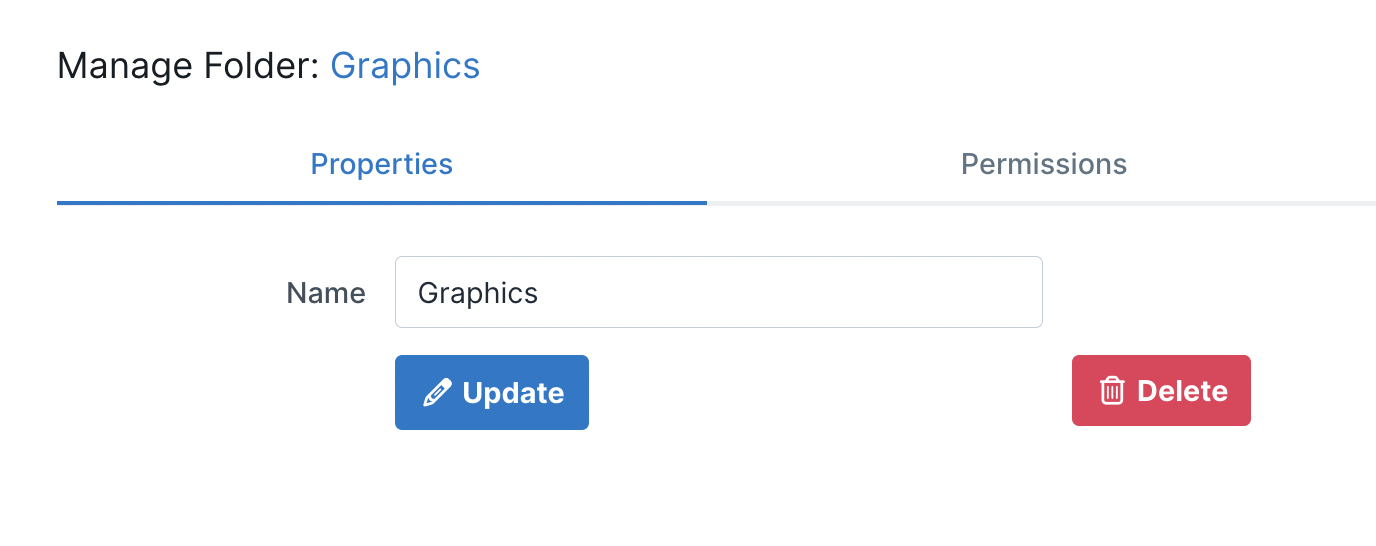
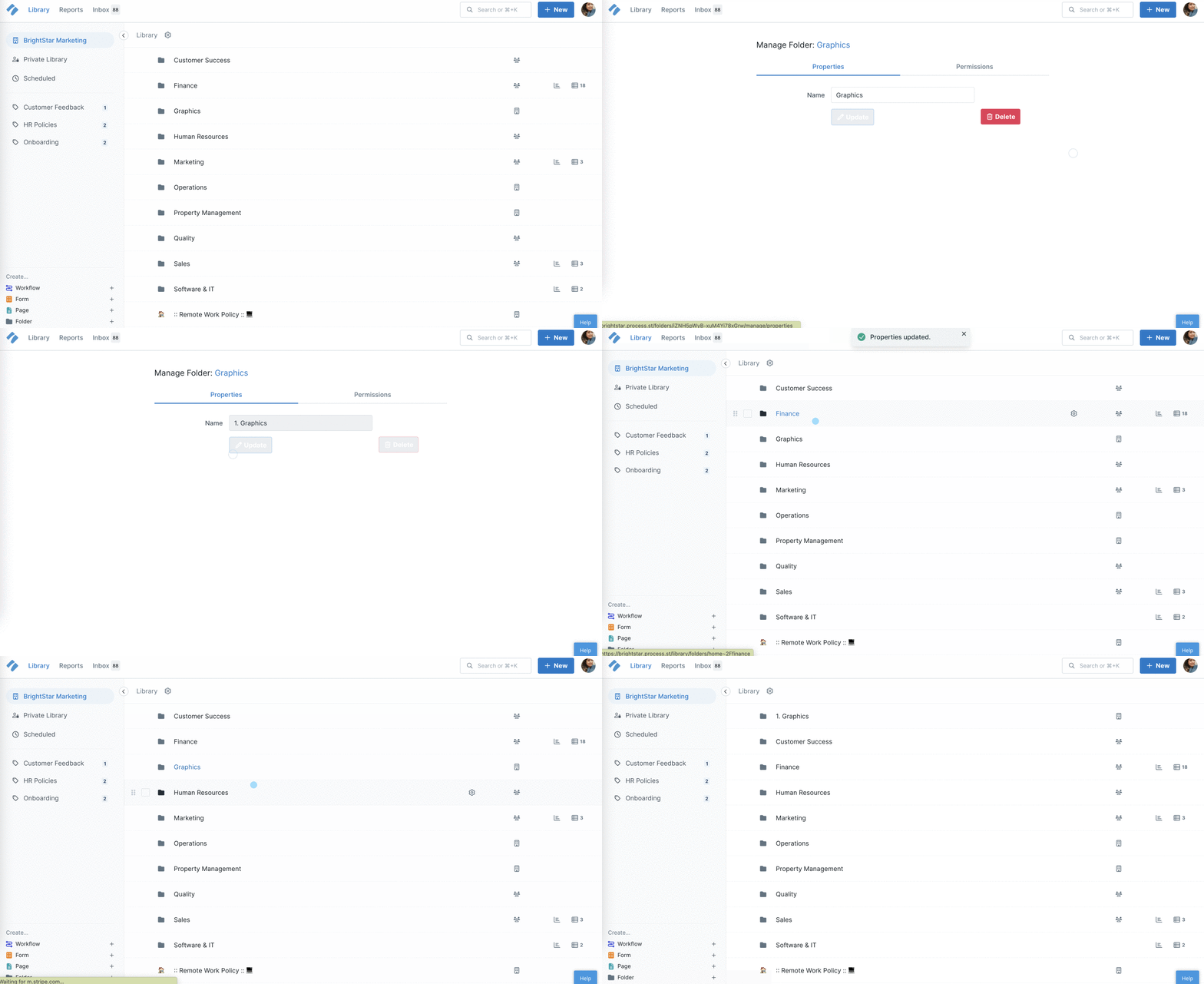
By default, this opens on the “Properties” tab. Here you can type in the new name for your folder, then click “Update” to save your changes.
Pro Tip: Since folders (and everything else in your library) are displayed in alphabetical order by default, you can rename them or prefix them with numbers, to help show them in the order you prefer.
To delete a folder, you need to be an Admin or a Builder with Edit & View All (or Edit & View Own) permission on the folder.
You can delete folders from the properties area shown above, or from your library; click the cog next to your folder’s name and select “Delete” from the dropdown.
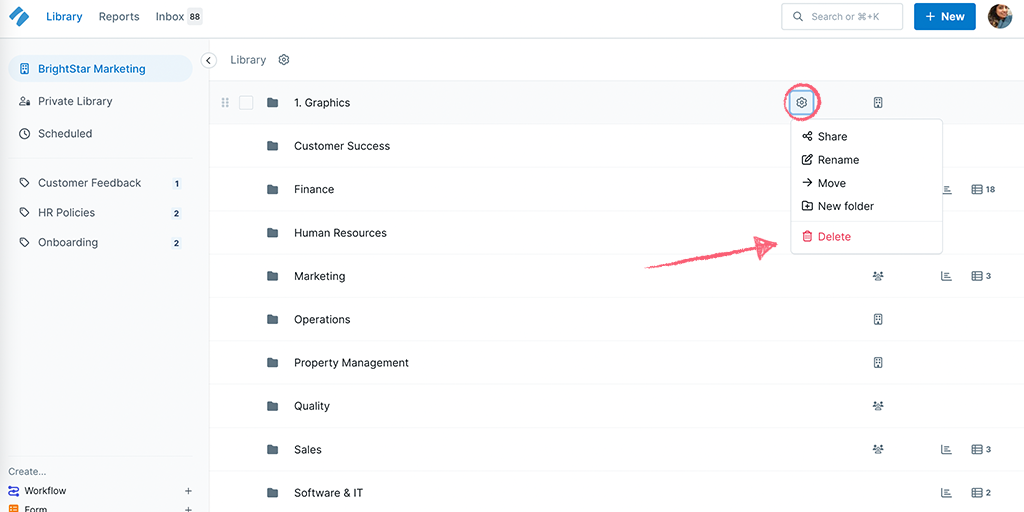
Note: You can only delete empty folders. If you have workflows in there, you would need to move or delete them first, and then delete the folder.
You can move one folder to another location in your library, by clicking the cog next to your folder’s name, and selecting “Move“. Select the location you’d like to move this folder into and click “Move” to finish.
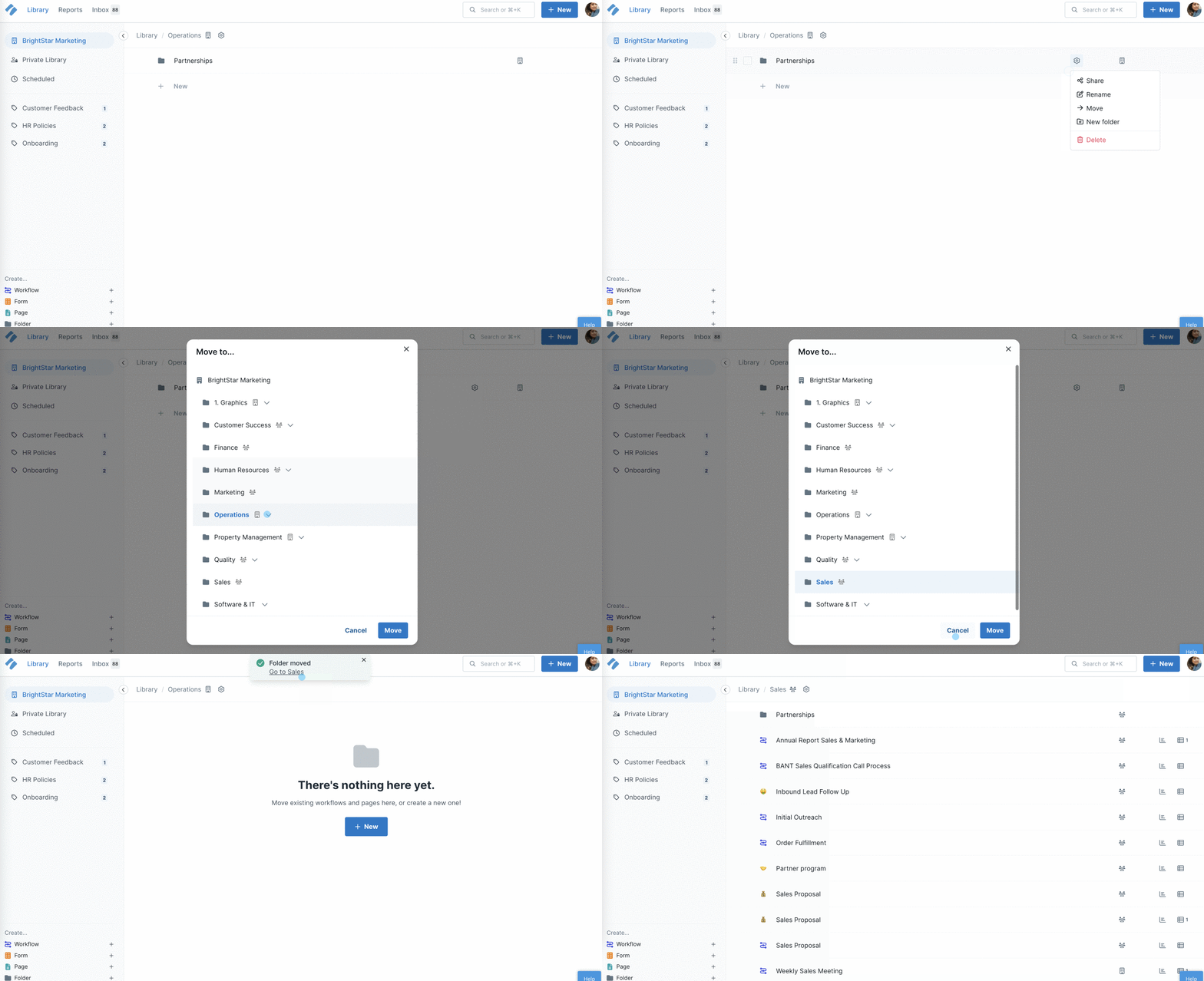
Note: You cannot move folders between different organizations, only workflows.
Archiving hides a folder from the Library without deleting it or its contents. Use it to tidy up folders you no longer need day-to-day.
To archive a folder, click the cog next to your folder’s name and select “Archive“.
Note: A folder can only be archived once every item directly inside it (workflows, Pages, Forms, Files, and subfolders) is already archived or deleted. Archive or delete the contents first, then archive the folder.
Note: Home and Private Library folders cannot be archived. Archived folders cannot accept active content: you cannot create, move, or restore an active workflow into an archived folder.
If you archive the folder you are currently browsing, the Library automatically redirects you to its parent folder. If you navigate directly to an archived folder (for example, via a URL or bookmark) while Show archived is off, the Library redirects you to the nearest parent folder that is not archived.
To bring an archived folder back, open the parent folder’s cog menu and select “Show archived“. Archived items appear in the list. Click the cog next to the archived folder and select “Unarchive“.
You can also unarchive a folder from inside it. When you open an archived folder (with Show archived on), the folder header displays the cog menu and a red Stop showing archived button. Open the cog menu and select Unarchive to restore the folder. Click Stop showing archived to return to the nearest non-archived parent folder.
Note: Unarchive works top-down: unarchive the parent folder before unarchiving anything inside it.
To manage the users assigned to a folder, access the folder settings and select “Share” from the menu.
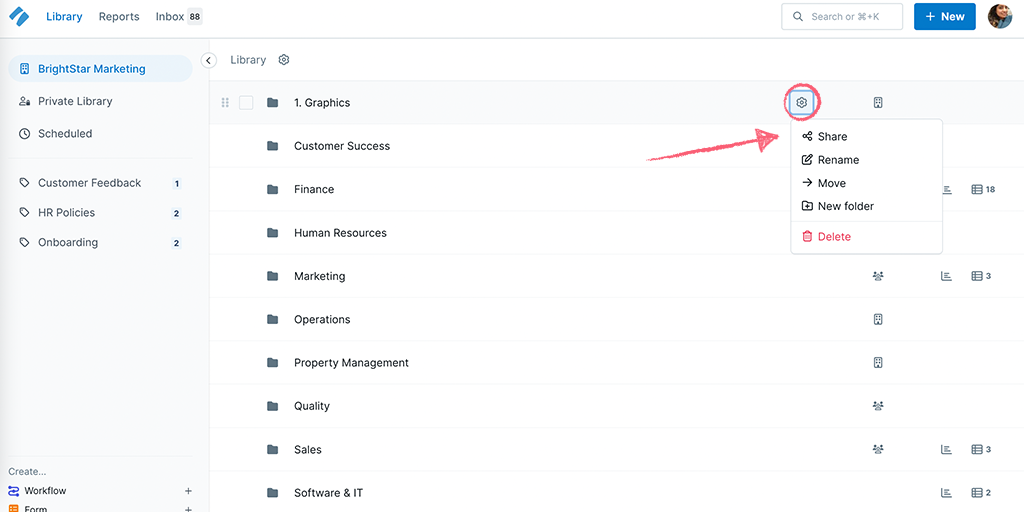
When you choose to share your folder, by default, you’ll be taken to the “Permissions” tab. Here you can invite builders to this folder and adjust their permission level.
Invite a new user by typing their email address and selecting the user type under “Invite Users“. Click “Invite” to grant them permission to your folder.
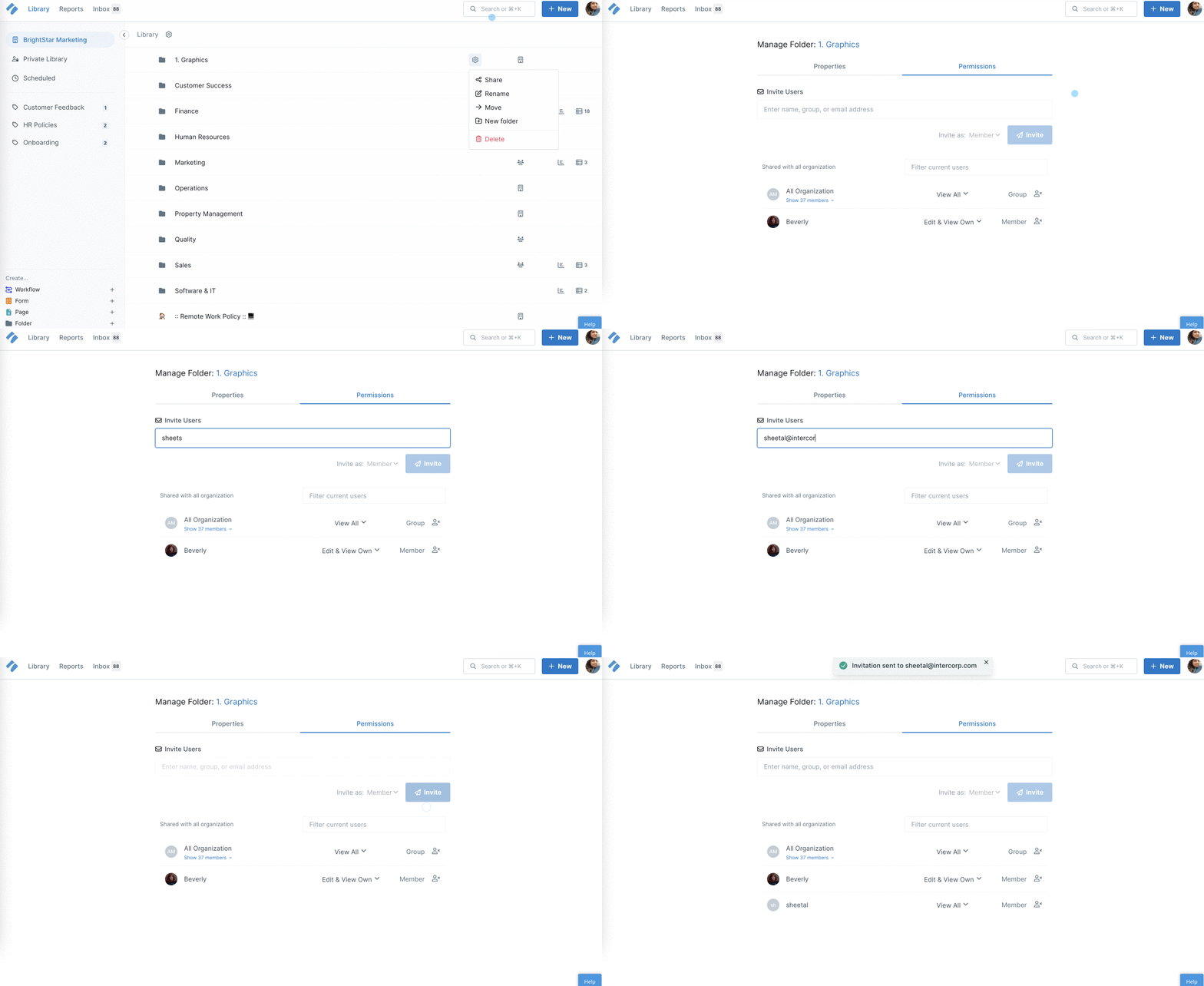
Note: Inviting a new user to your folder in this way will invite them into your organization as well.
Invite a Group by typing the group name, or an existing user by typing their name or email address, then click “Invite” to grant them permission to your folder.
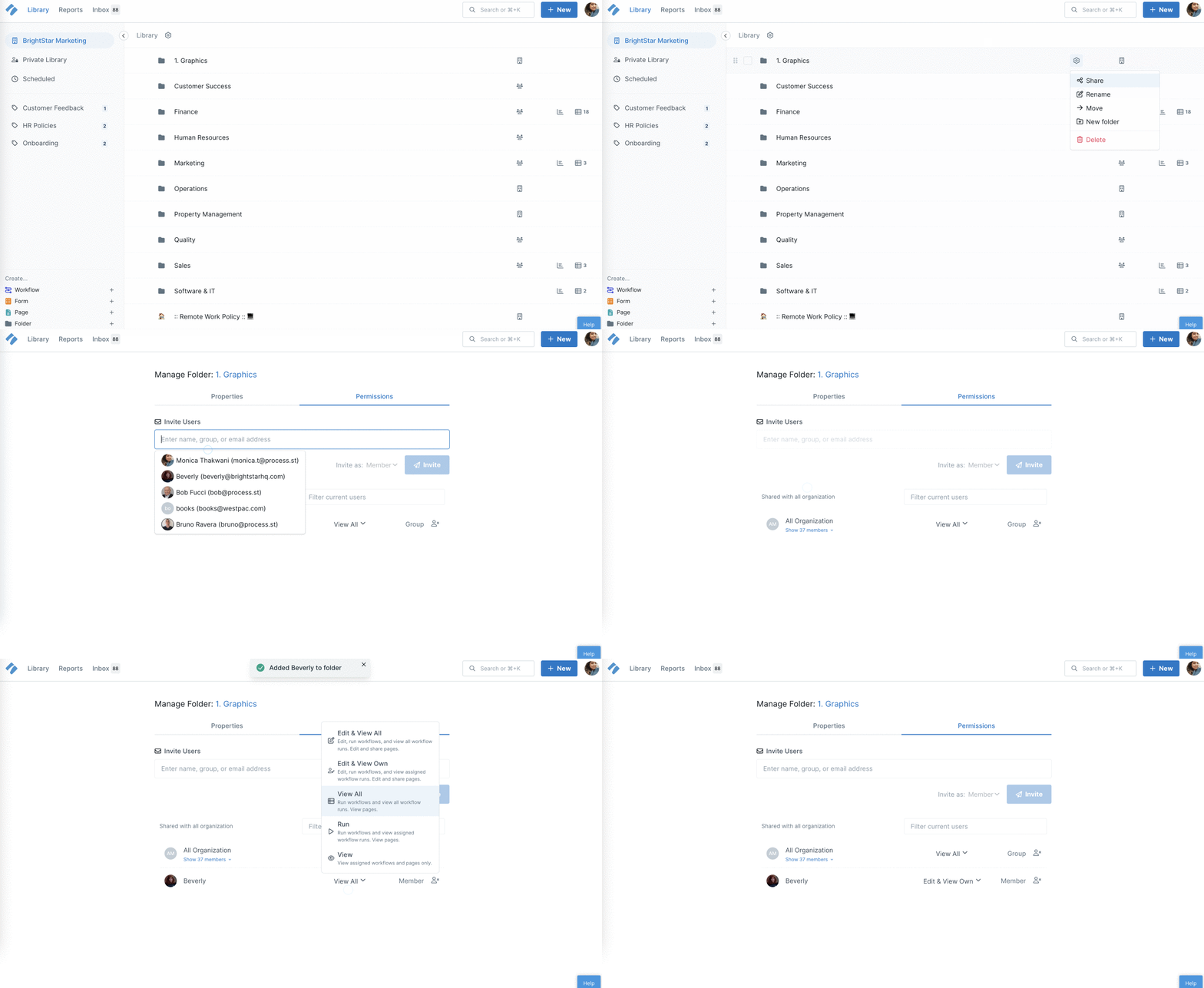
You can change the permissions of an existing user or group by clicking the dropdown shown below to select a different permission level.
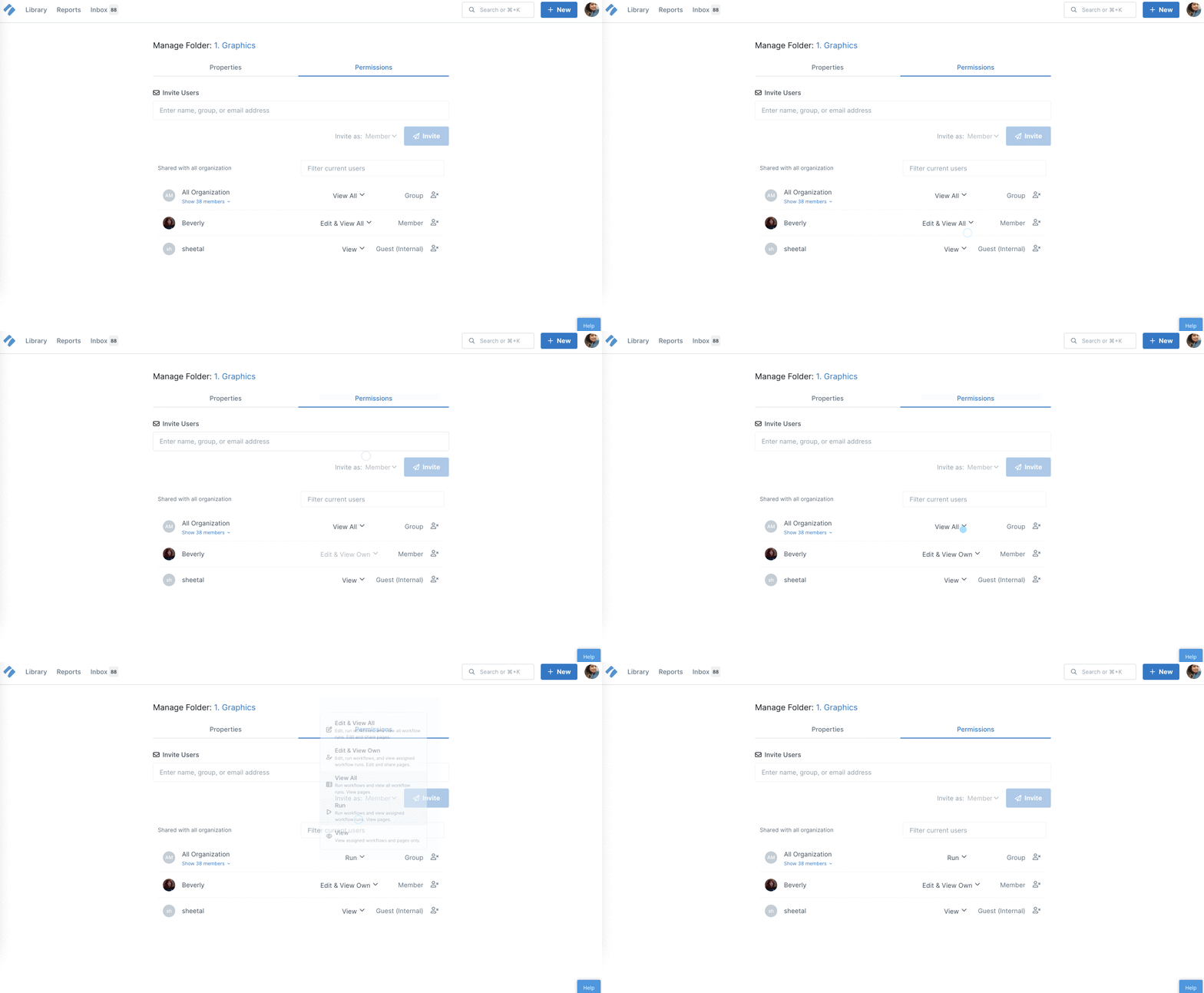
Users can be given Edit or View permissions for a folder. Builders have 4 options: Edit & View All, View All, Run, and View.
Note: Depending on your plan, additional permission levels may be available. Builders may see a 5th option (Edit & View Own), and Users may have an additional Run option.
Learn more about the options for setting user permissions.
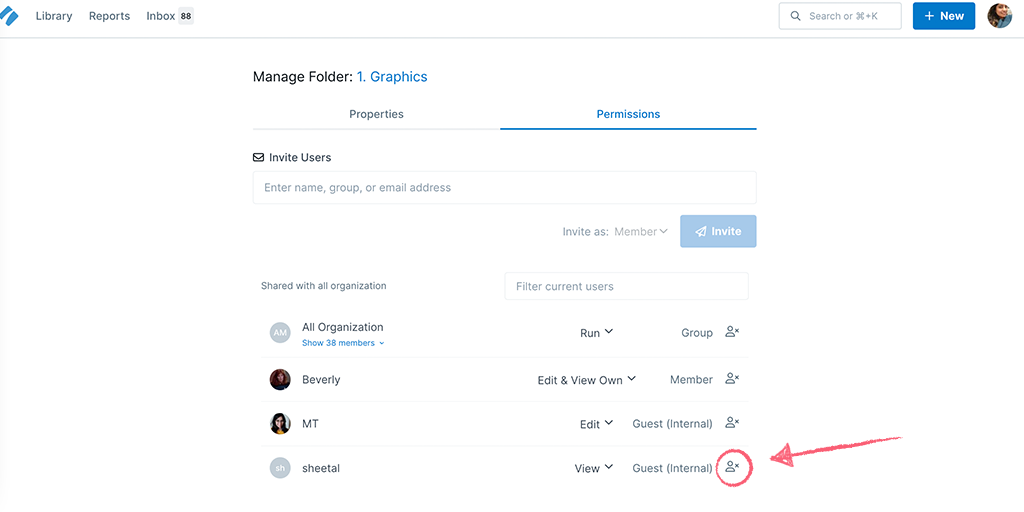
Remove a user or group from the folder entirely (click the remove user icon to the right of their entry to unassign them from that folder).
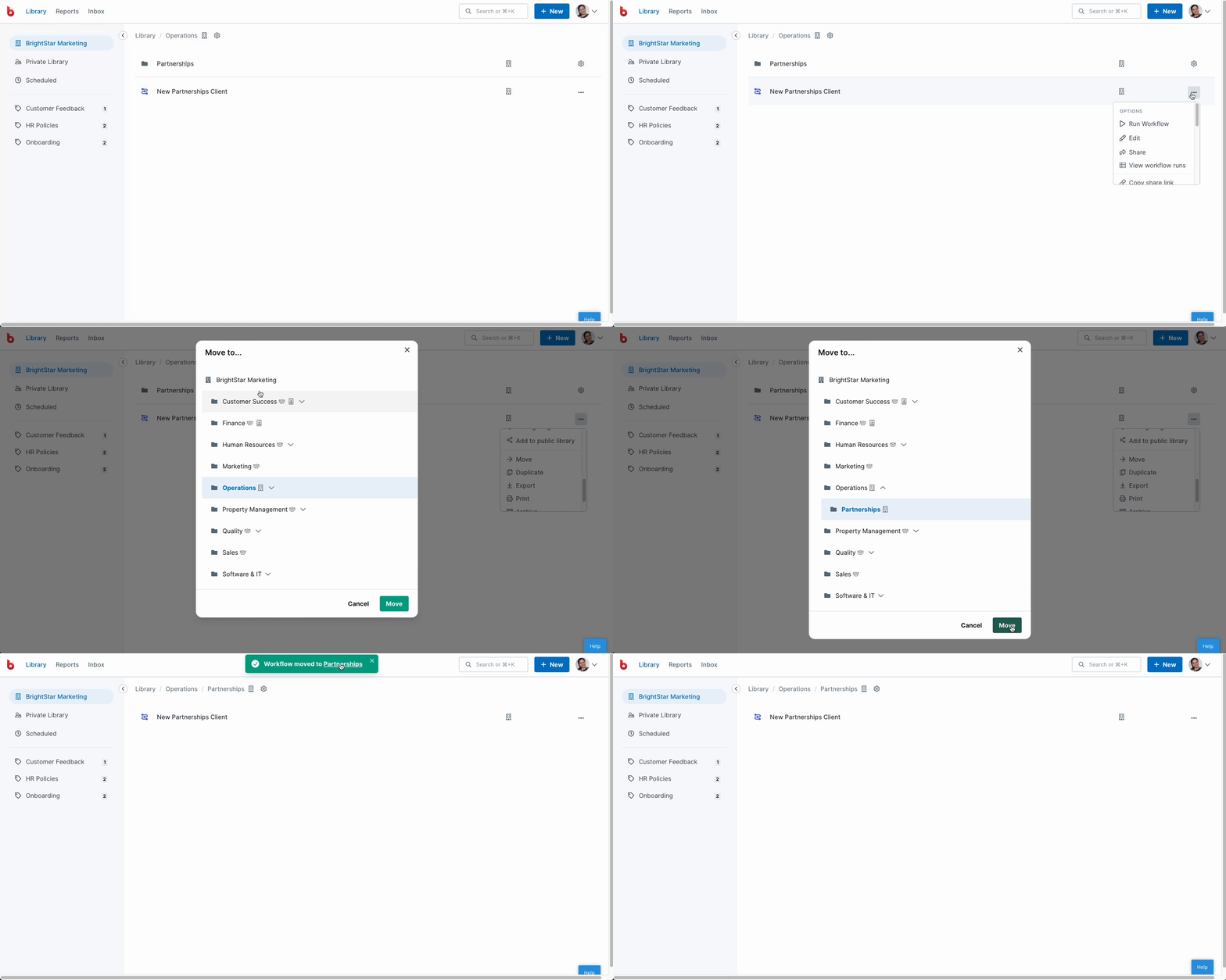
Once you have created folders, you can move your Workflows into them.
Access the Workflow settings next to your Workflow’s name and click on “Move“.
Next, you can choose the folder location you want to move your Workflow into. Make your selection and click “Move” to finish.
You can also store Pages in folders.
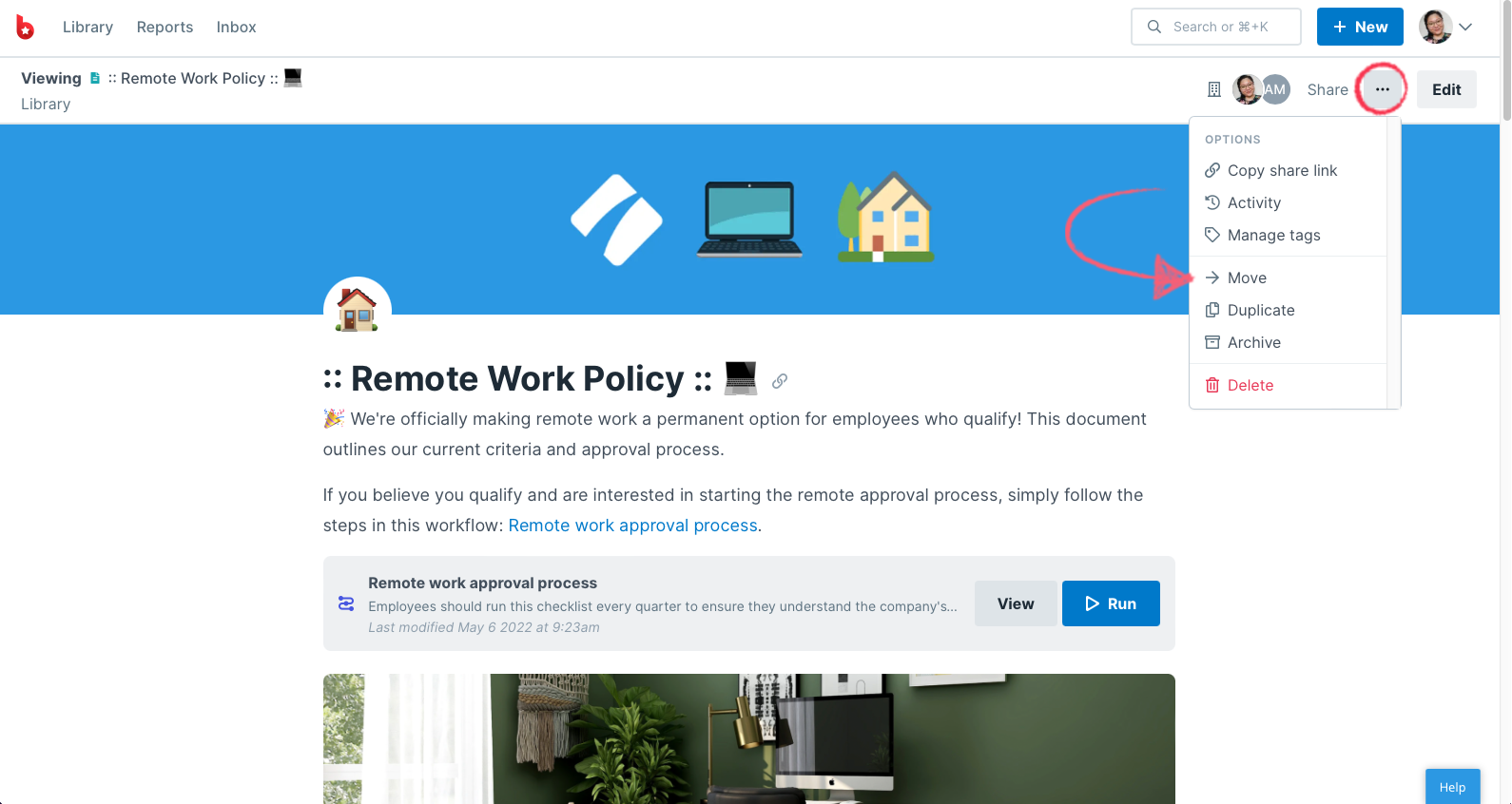
When viewing your published Page, click the three dots shown below and select “Move“.
Next, you can choose the folder location you’d like to move your page into. Make your selection and click “Move” to finish.
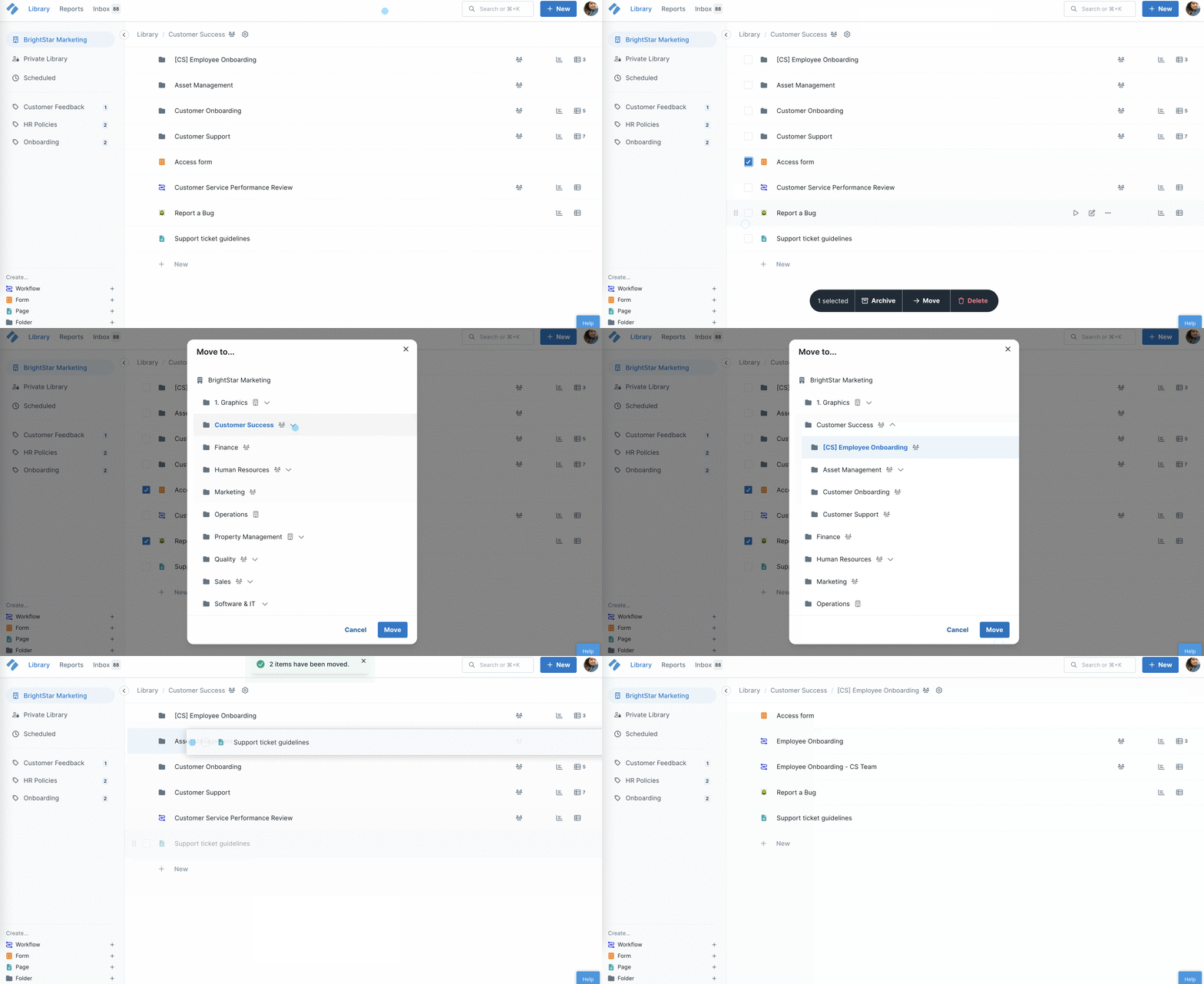
You can also multi-select your workflows, pages, and forms to move them at once or drag and drop them into a folder individually.
Learn more about managing folder user permissions and take a look through our overview of all user permissions.
Help us improve this help center.