






Customer success operations is the function that designs the processes, systems, data, and programs a customer success team needs to deliver consistent outcomes at scale.
I learned why that matters during what became known as the email incident. Before Process Street, I worked as a technical service advisor for an environmental testing laboratory. A colleague forwarded a customer complaint to our manager with an inappropriate comment attached. The message also reached the customer. One missing communication control turned a routine complaint into a preventable escalation.
A clear customer success process would have defined how complaints were escalated, what context could be added, who reviewed the reply, and which channel carried the final response. The point is not to remove human judgment. It is to give that judgment a safe, repeatable path.
Production, sales, and marketing teams often formalize their operating processes early. Customer success deserves the same discipline. Repeatable customer success operations make ownership clear, protect handoffs, keep account information current, and give teams a reliable way to improve how customers reach their goals.
- Why customer success operations matter
- How to build customer success operations in four steps
- How Process Street supports customer success operations
- Which customer success operations metrics to track
- Customer success operations FAQs
Why you need to start thinking about your customer success operations

Customer success operations provide the operational backbone for a customer success team. The function removes friction from recurring work so customer-facing specialists can spend more time helping customers reach outcomes and less time reconciling systems, rebuilding reports, or chasing internal handoffs.
Customer success operations provide tactical support for a customer success team, helping improve KPIs and efficiency. They are the operational backbone essential for optimized service delivery, helping organizations scale and grow.
The difference between customer success and customer support is important. Support usually begins when a customer reports a problem. Customer success begins with the outcome the customer is trying to achieve and organizes the work required to reach it. CS Ops makes that proactive model repeatable.
Tell me, how do you ensure your customers fulfill their needs with what your product or service has to offer? Are you focused on the business-to-customer relationship? Are you able to align customer and vendor goals? To confidently check each point above, you need to start thinking about your customer success operations.
In the 2025 Customer Success Leadership Study, 74% of participants said most of their company revenue came from existing customers. The study also found associations between stronger net revenue retention and the presence of customer enablement, customer success management, support, account management, and an integrated technology stack. The result is correlation, not proof of causation, but it reinforces a practical point: retaining and growing customer relationships requires coordinated operations, not isolated heroics.
A CS Ops function creates that coordination. It standardizes lifecycle processes, defines data ownership, governs systems, builds reporting, supports programs, and turns customer strategy into work that can be assigned, measured, and improved.
Investing in customer success using customer success operations

Customer success is a methodology for helping customers achieve the outcomes they expected when they chose your product or service. Customer success operations turns that methodology into an operating system.
The investment pays off through fewer preventable errors, cleaner account data, more consistent onboarding, earlier risk detection, better renewal preparation, and more reliable capacity planning. Those gains matter because renewal decisions depend on value delivered and recognized over time.
A useful CS Ops charter covers four durable responsibilities: process design, systems and tools, data and analytics, and program management. Process design makes recurring work explicit. Systems connect the team to reliable context. Data and analytics reveal risk and opportunity. Program management keeps cross-functional work moving toward customer outcomes.
Regarding your customer’s needs, how do you assign customers within your CS team? Do you automatically funnel each customer to the next CS team member without a thought towards the customer’s needs? This has nothing to do with your team’s ability, but it is a drawback for growing teams. With a CS Ops manager, new customer accounts are assessed and distributed within your CS team according to a predetermined segmentation schedule. Your CS team is better equipped to focus and meet your customer’s needs.
CS Ops reps own data and metrics gathering to support critical decisions. They work with the customer success team to identify metrics that need to be tracked and build custom dashboards and reports that accurately showcase these findings.
- Process consistency: Onboarding, adoption reviews, escalations, renewals, and feedback follow defined paths with clear owners.
- Reliable data: Health signals, product usage, commercial context, and workflow evidence use shared definitions.
- Focused execution: Accounts are segmented by need and value so the right work reaches the right owner.
- Scalable programs: Teams can launch and improve customer programs without rebuilding the operating method for every account.
- Continuous improvement: Exceptions and results feed back into the process instead of disappearing in inboxes.
When customer success goes wrong at Comcast
The following Comcast customer-service call is a useful example of what happens when a customer-facing process optimizes for the wrong outcome. The representative keeps the customer engaged in the call, but not in a way that respects the customer’s stated decision.
The failure was not simply tone. The process lacked a clear route for acknowledging the request, diagnosing the underlying reason, offering a relevant recovery option, and honoring the customer’s choice. A good customer success operation defines the guardrails before the conversation becomes adversarial.
Instead of helping the customer through the process, the representative tried to persuade the client that Comcast was better than any competitor. In an attempt to keep the customer engaged, the representative did the opposite and delivered an unpleasant experience that attracted negative media attention. In this instance, the customer’s values were not aligned with the service Comcast delivered. The customer’s needs were not met, resulting in an adverse backlash on Comcast as a brand.
Every company will face difficult conversations. The scalable question is whether the team has a process that protects the customer relationship, records what happened, and gives leaders evidence they can use to improve the next interaction.
How to build effective customer success operations for your business in 4 steps

You do not need to wait for a particular revenue milestone or team size to improve customer success operations. Formalize the function when manual coordination begins to fail: handoffs are inconsistent, reports require spreadsheet repair, health scores cannot be trusted, renewals surprise the team, systems disagree, or nobody owns the operating method.
The following four-step customer success strategy process preserves the core sequence: establish ownership, define responsibilities, implement practical operating methods, and convert those methods into repeatable workflows.
Assign a Customer Success Operations representative
Step 1: A Customer Success Operations representative owns the machinery around the customer success team. That can be a dedicated hire, an operations specialist shared with another function, or an explicitly assigned owner while the team is smaller. The title matters less than the authority and time to maintain the system.
Build the case around operational pain rather than a universal ratio. Count the hours spent repairing reports, resolving data disagreements, coordinating handoffs, and preparing renewal forecasts. Track missed lifecycle steps and programs that cannot launch because the team lacks operational capacity. Those costs show when a dedicated owner will create leverage.
Gainsight’s CS Ops benchmark reports an average ratio of roughly 12 customer success managers to one CS Ops professional across more than 60 software companies with a CS Ops role. Treat that as a vendor benchmark, not a rule. Complexity, customer segment, product model, data quality, and program maturity can justify an operations owner earlier or later.
Define the 3 pillars of responsibility
Step 2: The original three pillars remain useful: processes, data, and strategy. Systems and people support all three, so they should appear in the operating plan even when they are not promoted to separate pillars.
- Processes: Standardize recurring actions such as customer onboarding, adoption reviews, escalation, renewal, expansion, and offboarding. Document the method, the owner, the handoff, the evidence required, and the exception path.
- Data: Define the signals the team uses, where each field comes from, how often it is updated, and what action it should trigger. Reporting is valuable only when people trust the definitions and can connect a signal to accountable work.
- Strategy: Align customer success processes with the outcomes the business has chosen to deliver. Strategy decides which customers receive which motion, how capacity is allocated, and what success looks like.
For processes, the CS Ops representative’s job is to help the CS team be more efficient. Standardize recurring actions by building Standard Operating Procedures. These documented SOPs include processes such as customer offboarding and customer onboarding. Once these SOPs are built and documented, the CS Ops representative communicates the processes to the customer success team.
Data helps you understand what is going well and what is not. Provide reports, dashboards, and analysis to track activities, identify SOPs, and locate other customer success process bottlenecks.
People need training and clear decision rights to run these pillars. Systems need governance so teams do not create a new source of truth for every program. CS Ops connects both to the operating method.
Apply proven operating methods
Step 3: Catherine Blackmore described an early CS Ops journey in The Operations of Customer Success. As the customer success team expanded, operational demands such as renewal forecasting, program management, support coordination, and analysis outgrew the time available to the team leader. Mitchell Flinn moved from an internship into a full-time operations role to take on that work.
The account-analysis sequence from that practitioner story still provides a practical starting point.
Many companies struggle to obtain an understanding of their full customer list. This starts by taking the time to do a customer deep dive and finding the answers to the following questions:
- Who are your most successful customers?
- Who are your least successful customers?
- Who are your easiest customers to support and/or help drive adoption?
- Who are your most difficult customers?
- Do any of the answers above differ by customer size, revenue band, industry, or channels used for selling?
Next, analyze the information you obtained. Are there patterns in the data? What makes a customer successful in using your product or service? Your aim is to identify a successful customer. Transfer this information to your sales and marketing departments. Who is your target market? Who is your sales team going after, and who are they having the most success selling to?
It is then time to recognize the product-market fit and scale success. Examine the customer handoff: Who out of your customer success team is involved at every major milestone of the customer journey? Do you need to start splitting roles and responsibilities?
- Customer segments: Are there different segments to your customer base, or tiers, that you handle differently? How would you classify these segments, such as by contract size, customer size, or strategic value?
- Customer ratios: What is the talent needed to manage the various segments of your customer base? Are the right people assigned to the right verticals or customer sizes? How many accounts can an individual manage at any one time to achieve the expected results?
- Risk and opportunity: Which signals should trigger intervention, renewal preparation, or expansion discovery?
- Learning loop: How will results and exceptions change the process?
AI can support this work by summarizing account context, classifying feedback, detecting risk patterns, drafting action plans, and suggesting process improvements. Keep those actions inside defined permissions, review points, and audit trails. Governed assistance strengthens the process. Uncontrolled automation creates a new source of risk.
Turn the model into repeatable execution
Step 4: The final step is to turn the operating method into workflows people can run. A policy or playbook describes what should happen. A repeatable process assigns the work, applies the right path, collects the evidence, escalates delay, and records the result.
Start with one high-friction lifecycle motion. Map the trigger, owner, inputs, decision points, due dates, systems, approvals, evidence, and exception path. Run it with real accounts. Review where people hesitate or work around the process, then improve the template before scaling it.
That discipline is what makes customer success operations scalable. The team no longer relies on one person remembering every handoff. The process carries the operating knowledge and creates a record leaders can use to improve it.
Using Process Street to build repeatable customer success operations
Process Street is a single Compliance Operations Platform. It brings Docs and Ops capability areas plus built-in AI into one product so customer success teams can govern how work should happen and run that work with control and proof.
Docs gives teams a governed place for customer procedures, playbooks, role definitions, and operating knowledge. Version history, review cycles, approvals, and ownership keep the official method current. Ops turns that method into executable workflows with assignments, conditional paths, due dates, approvals, evidence fields, escalations, and audit history.
Built-in AI helps teams draft and summarize content, classify information, find relevant knowledge, analyze workflow activity, and support execution inside those controls. It does not replace customer judgment. It helps the right person act with the right context while the process preserves accountability.
Process Street has direct, universal integrations to 5,000+ systems. Need a new one? An AI agent builds it on the fly. Customer and product context can enter a governed workflow while the CRM, support platform, billing system, and product remain systems of record.
Use the template library for a starting point, or build a workflow around your own customer lifecycle. The following examples show how the platform can support communication, renewals and expansion, lifecycle coordination, feedback, training, and churn reduction.
Building customer communication processes
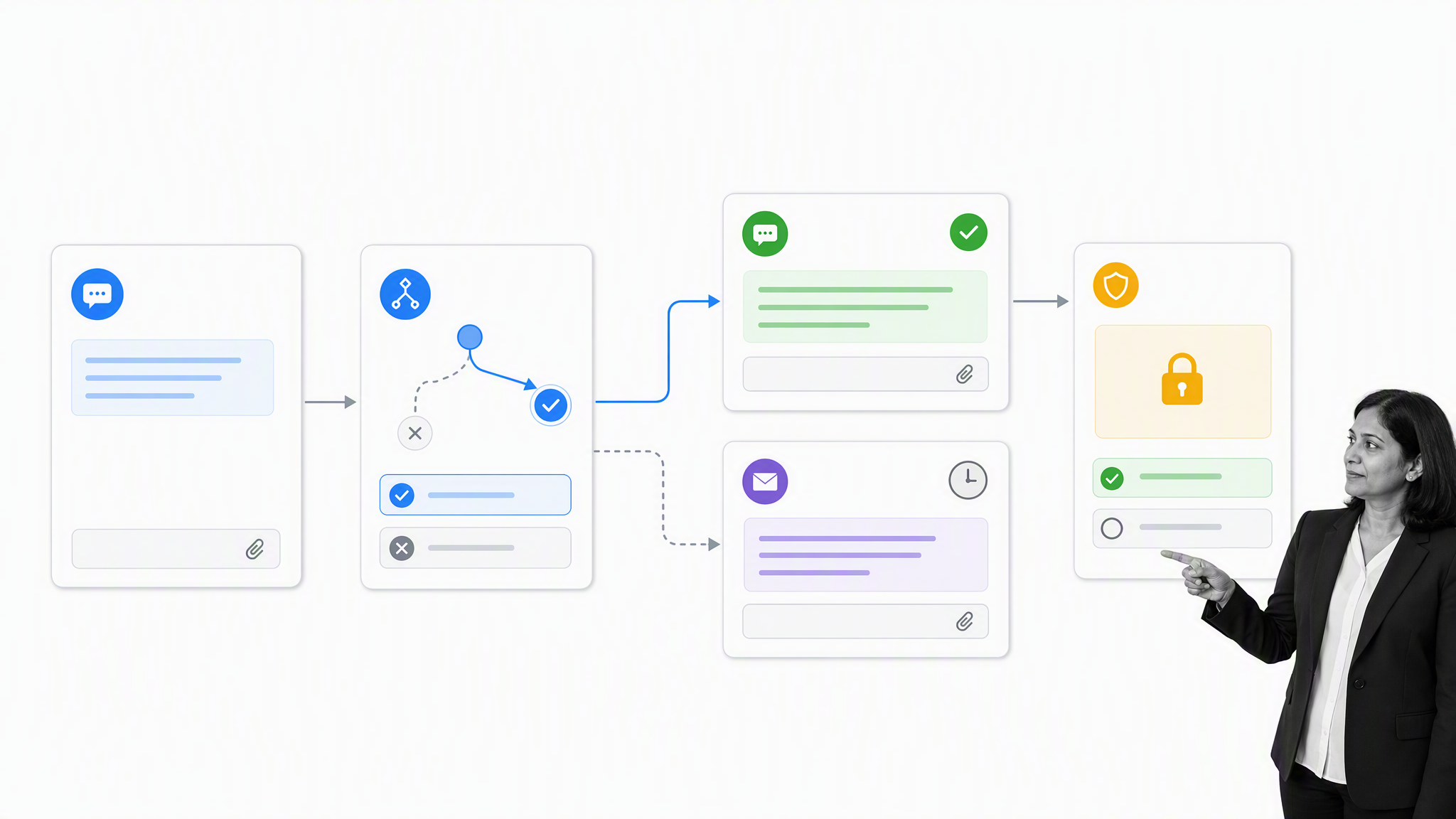
Customer communication should be consistent without becoming robotic. A governed workflow can prompt the owner to confirm account context, select the communication type, review approved language, collect supporting evidence, and route sensitive responses for approval.
Conditional logic can show the next questions or tasks based on the customer’s response, risk level, lifecycle stage, or request type. The process remains repeatable, but the path adapts to the situation.
This is the control the email incident lacked. A complaint can enter a defined escalation route, preserve the full context, restrict internal commentary to the proper channel, and require a final review before the customer-facing message is sent.
Building renewal and expansion processes
Guide your customer success team through the process of upgrading an existing customer to more premium products or services, or renewing a pre-existing customer’s subscription.
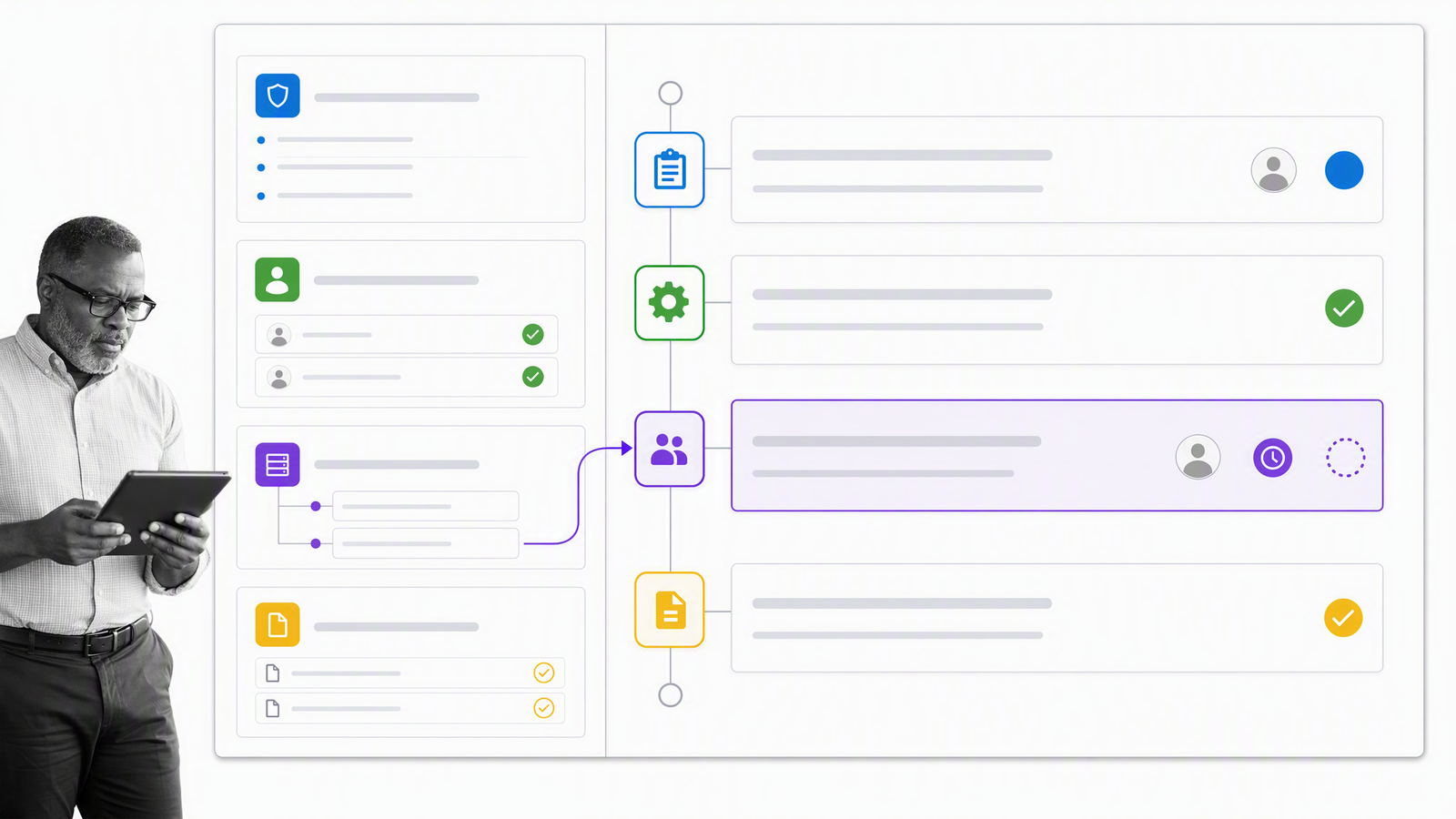
Renewal and expansion work should begin before a contract date becomes urgent. Use a workflow to gather product adoption, outcome evidence, open risks, stakeholder coverage, commercial terms, and the next value milestone. Assign owners for every gap and route pricing or commitment decisions through the right approval.
The Upselling Process for SaaS Companies offers a practical starting point. Adapt the language and decision path to your market, customer promise, and approval rules.
If you are not operating in the SaaS space, transfer the generalized practices in the checklist while editing the workflow to suit your specific needs.
Stop tasks prevent a workflow from moving forward until a critical step is complete. That is useful when a renewal proposal requires a verified outcome review, an approved commercial position, or a resolved customer risk.
Creating effective customer success operations

A high-touch customer success lifecycle connects kickoff, implementation, adoption, value review, risk management, renewal, and follow-up. The operating value comes from the sequence and ownership, not from any one historical company example.
Build one lifecycle workflow with clear entry criteria for each stage. Show which role owns the account, which stakeholder must participate, what evidence marks completion, and what happens when a milestone is missed. Use task permissions to keep sensitive commercial or internal review work visible only to the right roles.
Task permissions let teams expose the relevant task and context without sharing every internal step. A customer-facing participant can complete their part while account strategy and approval work remain protected.
Obtaining and documenting customer feedback
It is impossible to build effective customer success operations if you have no way of obtaining and documenting user feedback, which presents an opportunity for improvement. Customer comments and complaints are an important resource for improving and addressing the needs and wants of your customer or user. Customer feedback is important because it provides leaders with insights they can use to improve operations, including customer success operations.
Feedback becomes useful when it enters a repeatable decision process. Capture the source, account, product area, urgency, evidence, and requested outcome. Classify the feedback, route it to the responsible team, record the decision, and close the loop with the customer when appropriate.
The Customer Feedback template provides a structured starting point. Integrations can connect the workflow to customer systems so the team does not retype context or lose the result in a separate document.
Training the customer success team
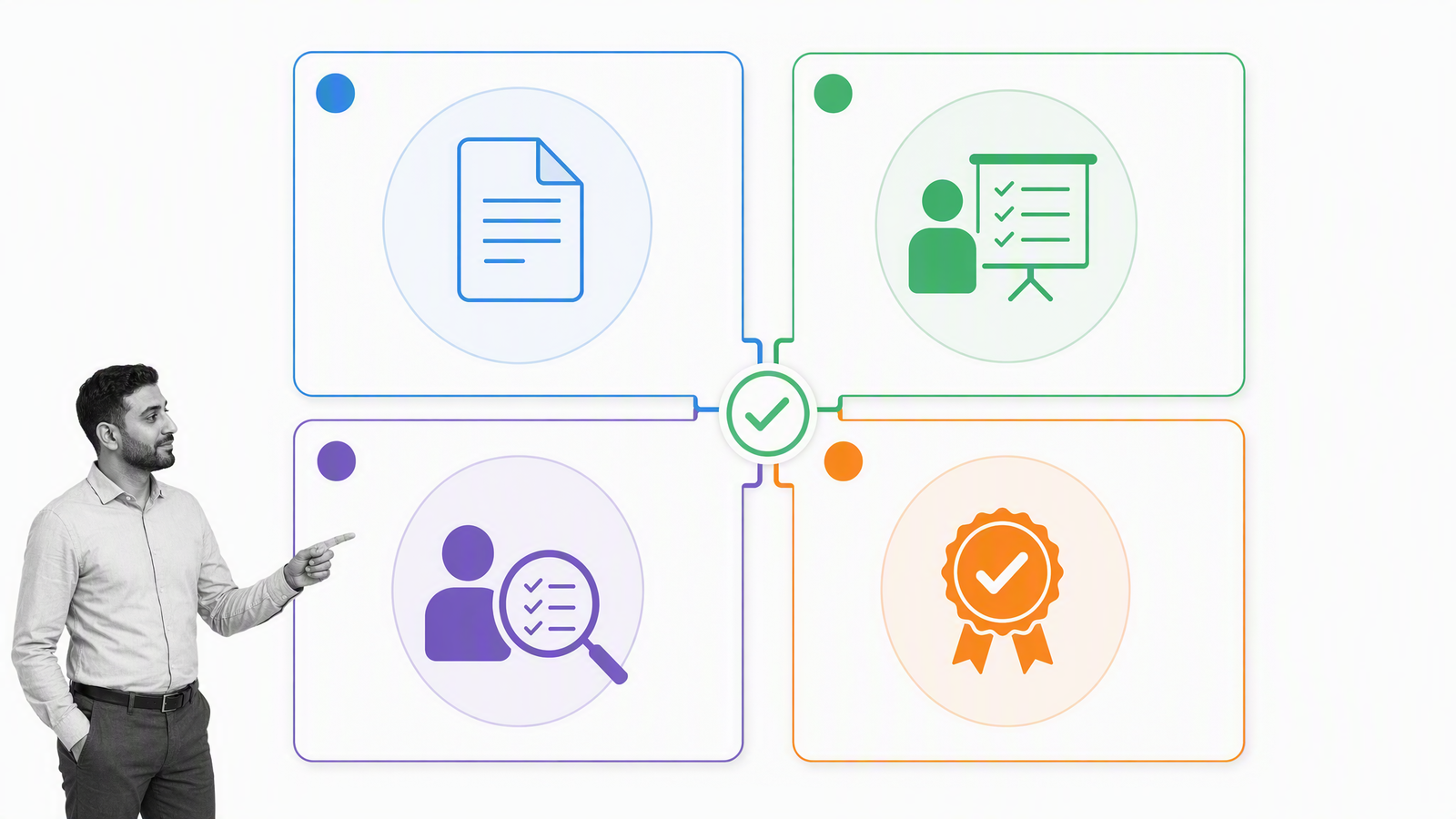
Top customer success operations need capable Customer Service Representatives behind them. To nurture the best talent in your team, follow an optimized training process.
Customer success processes work only when the people running them understand the standard and can exercise judgment. Training should cover the customer promise, lifecycle, systems, escalation rules, communication expectations, evidence requirements, and the boundaries of each role.
Use a repeatable training workflow to assign modules, practice difficult scenarios, capture coaching notes, verify access, and record completion. Dynamic due dates can keep each step relative to the employee’s start date or a certification milestone.
Treat training as an operating loop, not a one-time event. Review incidents, process exceptions, customer feedback, and product changes. Update the governed procedure, then route the change into the next training cycle.
Reducing churn
Customer churn happens when a customer stops using or paying for a service. CS Ops helps the team act earlier by defining risk signals, intervention paths, owners, due dates, and the evidence needed to judge whether the risk changed.
Run the Reduce Churn template on a regular cadence or trigger it automatically when a governed signal crosses a threshold.
Use form fields to collect the reason, health context, account segment, intervention, owner, next review, and outcome. That creates a record the operations team can analyze across accounts instead of relying on anecdotal explanations after a renewal is lost.
Using performance metrics to guide customer success operations effectiveness

Performance metrics are the figures representative of an organization’s actions, abilities, and overall quality. When running customer success operations, set performance metrics for repeatable processes across four key areas: revenue, product, customer feedback, and customer experience.
Customer success operations metrics show whether the operating system is helping customers reach value and helping the team act consistently. A useful scorecard connects every metric to a decision, owner, and workflow.
Keep the original four-part frame: revenue, product, customer feedback, and customer experience. Add operating measures so the team can see not only what happened, but whether the process can respond.
- Revenue metrics: Upcoming renewal and at-risk revenue forecasts are shown. Any Customer Success Operations representative should be able to walk into a board meeting with this knowledge and the associated explanation. Examples include Customer Acquisition Cost, Customer Lifetime Value, net and gross revenue retention, renewal rate, expansion rate, churn, forecast accuracy, and at-risk revenue. Pair the forecast with the evidence and owner behind each risk.
- Product metrics: With collaboration help from Chief Product Officers and Product Managers, Customer Success Operations representatives can give Customer Success Managers product usage and adoption data to make informed, data-based decisions. Examples include user churn, product usage, adoption, session duration, milestone completion, and time to first value. Raw activity matters only when it connects to progress.
- Customer feedback metrics: Customer Success Operations representatives analyze customer satisfaction surveys to inform leadership on areas of opportunity. Examples include implementation experience, Net Promoter Score for the company, direct product feedback, theme volume, closed-loop rate, and the time from feedback to a documented decision.
- Customer experience metrics: Customer Success Operations representatives monitor service quality and productivity as this relates to overall operational efficiency. Examples include Time to Resolution, Time to Go-Live, Call Abandon Rate, onboarding completion, escalation frequency, risk-resolution time, milestone attainment, and stakeholder coverage.
Add team-capacity and process-health measures where they improve decisions: accounts per owner by segment, overdue lifecycle tasks, handoff completion, health-score coverage, data freshness, program enrollment, exception rate, and workflow cycle time.
The complete list of customer success metrics explains how to define and calculate the measures behind the scorecard. Choose a small set that reflects your customer promise and operating model, then document what action each measure triggers.
Review metrics in a regular operating cadence. Confirm the data is trustworthy, investigate the drivers, assign corrective work, and record the decision. Dashboards describe the situation. Customer success operations changes it.
Customer success operations FAQs
What is customer success operations?
Customer success operations is the function that designs and maintains the processes, systems, data, analytics, and programs a customer success team uses to deliver consistent customer outcomes at scale.
What does a customer success operations team own?
CS Ops commonly owns lifecycle process design, customer technology governance, reporting definitions, health and risk operations, program execution, capacity planning, enablement support, and the improvement loop that connects results back to the operating method.
When should a company hire for CS Ops?
Hire or assign a dedicated CS Ops owner when manual coordination creates material friction: inconsistent handoffs, unreliable data, surprise renewals, fragmented systems, recurring reporting work, unclear ownership, or customer programs that cannot scale.
Which customer success operations metrics matter most?
The right set depends on the customer promise. Most teams need a balanced view of retention and expansion, adoption and time to value, customer feedback and experience, forecast quality, risk-resolution speed, and team capacity.
How is CS Ops different from customer support or RevOps?
Customer support resolves reported problems. CS Ops designs the operating system around proactive customer outcomes. Revenue operations coordinates the broader revenue engine across marketing, sales, and customer functions. The teams overlap on systems, data, and handoffs, but their primary mandates differ.