Turn every policy into automated workflows with built-in enforcement and audit-ready proof.


Project Management Software for Mac: 8 Best Tools and Buyer’s Guide

The best project management software for Mac is not simply the tool with a Mac download. It is the system that matches how your team plans, executes, reviews, and proves work. A creative team moving cards across a board needs something different from a project manager maintaining dependencies, or an operations leader running the same high-stakes process every month.
This guide compares eight credible options across those jobs. It covers browser-based platforms, desktop clients, Apple-focused scheduling software, and a tool for teams that must exchange Microsoft Project files. Process Street ranks first because it turns repeatable project procedures into controlled workflows, not just task lists. The other choices earn a place for narrower strengths.
If you need a broader category overview first, see the project management software guide. For repeatable operational work, the workflow management systems guide explains where project coordination ends and process execution begins.
- What is project management software for Mac?
- Which project management software for Mac is best?
- Mac project management software comparison
- How should you choose a Mac project management tool?
- Should you choose a native Mac app or a web app?
- How do you set up project management software on a Mac?
- Project management software for Mac FAQ
What is project management software for Mac?
Project management software for Mac helps people plan work, assign responsibilities, coordinate files and decisions, track progress, and close projects from a Mac. Some products run in a browser. Others provide a dedicated macOS client. A smaller group is designed around Apple devices and detailed scheduling.
Mac compatibility is only the entry requirement. The more important question is what type of work the system must control. A one-time product launch may need milestones, workload views, and cross-functional status. A recurring customer onboarding program may need conditional routing, approvals, required evidence, and a reliable record of every run. A construction scheduler may care more about dependencies, resource leveling, and file compatibility.
That distinction prevents a common buying mistake: selecting a familiar task board and then forcing it to behave like a scheduling engine, a process platform, and an audit record at the same time. Start with the operating model, then choose the interface.
Which project management software for Mac is best?
The shortlist below prioritizes practical Mac access, a clear project management use case, and enough product depth to justify adoption. It deliberately mixes collaborative work platforms with native scheduling tools because Mac users often compare both categories during the same search.
Mac project management software comparison
| Rank | Tool | Best fit | Mac access | Standout strength |
|---|---|---|---|---|
| 1 | Process Street | Repeatable, controlled project workflows | Web | Approvals, rules, automation, and execution records |
| 2 | monday.com | Visual team coordination | Mac desktop app and web | Flexible boards and progress tracking |
| 3 | ClickUp | Teams that want many work views | Mac desktop app and web | List, board, calendar, dashboard, and Gantt views |
| 4 | Asana | Cross-functional project portfolios | Mac desktop app and web | Connected tasks, projects, portfolios, and goals |
| 5 | Trello | Simple visual task flow | Mac desktop app and web | Fast board and card planning |
| 6 | Teamwork.com | Client delivery teams | Mac desktop app and web | Projects with time tracking |
| 7 | OmniPlan | Detailed scheduling in the Apple ecosystem | macOS app | Gantt planning, dependencies, and resource controls |
| 8 | Project Plan 365 | Teams exchanging Microsoft Project files | Mac app | Open, edit, and save MPP schedules |
Use the table as a routing map, not a universal scorecard. The first six products focus primarily on shared work and coordination. OmniPlan and Project Plan 365 focus more heavily on formal schedules, dependencies, resources, and project files. A team may use one collaboration platform and one specialist scheduler, but it should define which system owns status and decisions.
1. Process Street
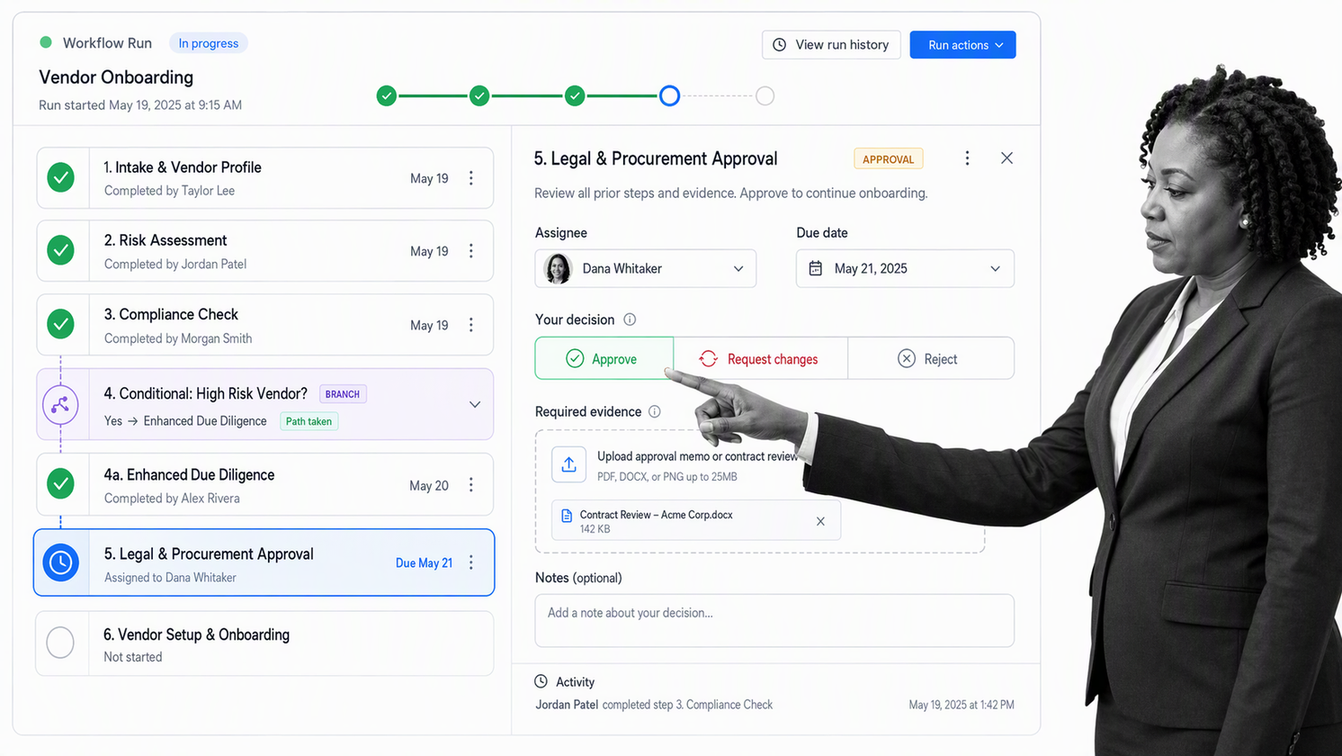
Process Street is the strongest choice when projects contain repeatable procedures that must run correctly every time. Its workflow product supports conditional logic, approvals, task permissions, role assignments, and integrations. Teams can turn a project playbook into an executable workflow, launch a run for each project or phase, assign owners, collect structured information, and keep the decision trail with the work.
That makes Process Street especially effective for client onboarding, vendor implementation, audit preparation, employee onboarding, quality reviews, and other projects with recurring stages. A board can show that a task exists. A controlled workflow can require the right evidence, route exceptions, block downstream work until approval, and record completion.
Mac users access Process Street through the browser, which keeps the experience consistent for mixed-device teams. Choose it when the project method matters as much as the project outcome, or when skipped steps create operational or compliance risk.
- Best for: recurring and high-stakes project workflows
- Choose it when: approvals, rules, evidence, and automation must live inside execution
- Consider another tool when: the main requirement is deep critical-path scheduling in a native macOS application
2. monday.com
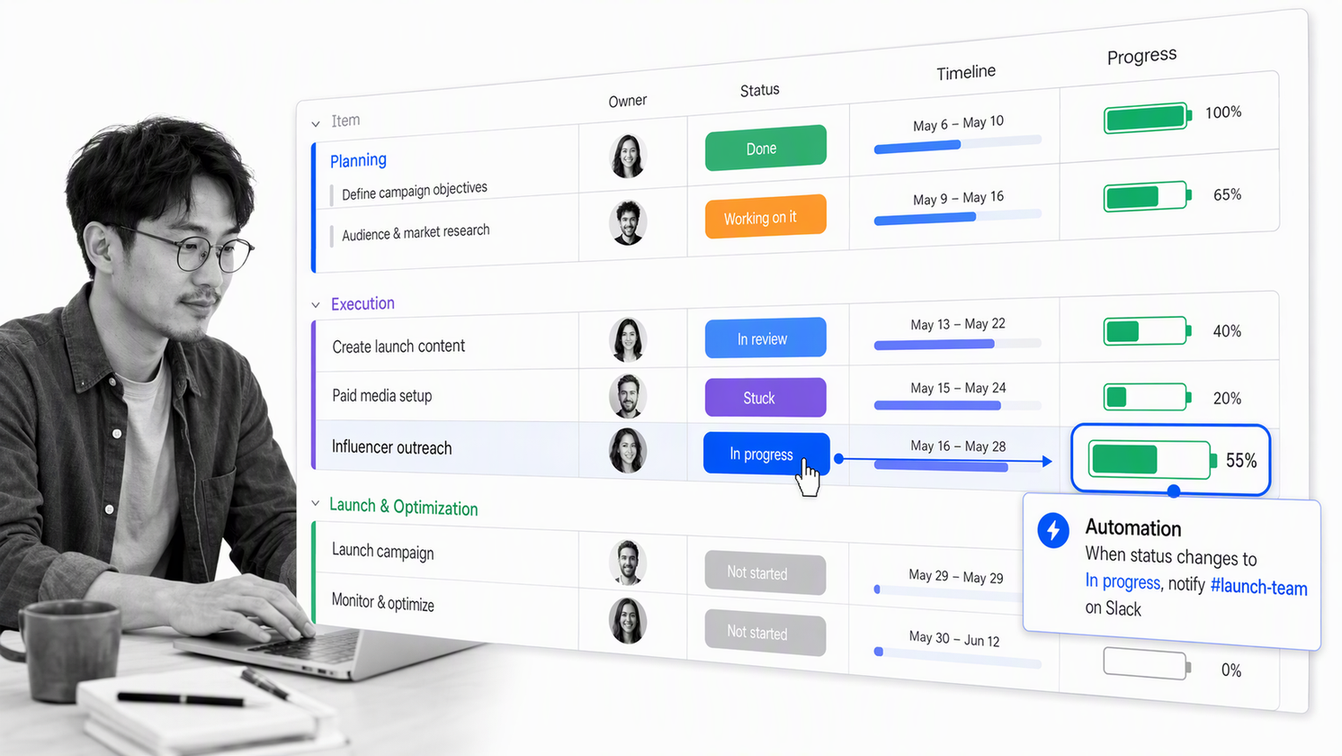
monday.com suits teams that want flexible visual boards and a dedicated Mac client. Its desktop app documentation confirms Mac availability and describes board management, progress tracking, and collaboration from the desktop app.
The platform is a practical fit for marketing calendars, launch plans, campaign coordination, and cross-functional work that benefits from configurable status fields and visual reporting. Teams can shape boards around their vocabulary instead of adopting a rigid project template.
That flexibility also creates governance work. Decide who can add columns, change status definitions, and create automations before every team builds a different operating model. monday.com is strongest when an owner maintains the workspace design and users need an approachable visual surface.
- Best for: flexible visual coordination
- Choose it when: teams want configurable boards and desktop access
- Watch for: board sprawl and inconsistent status definitions
3. ClickUp
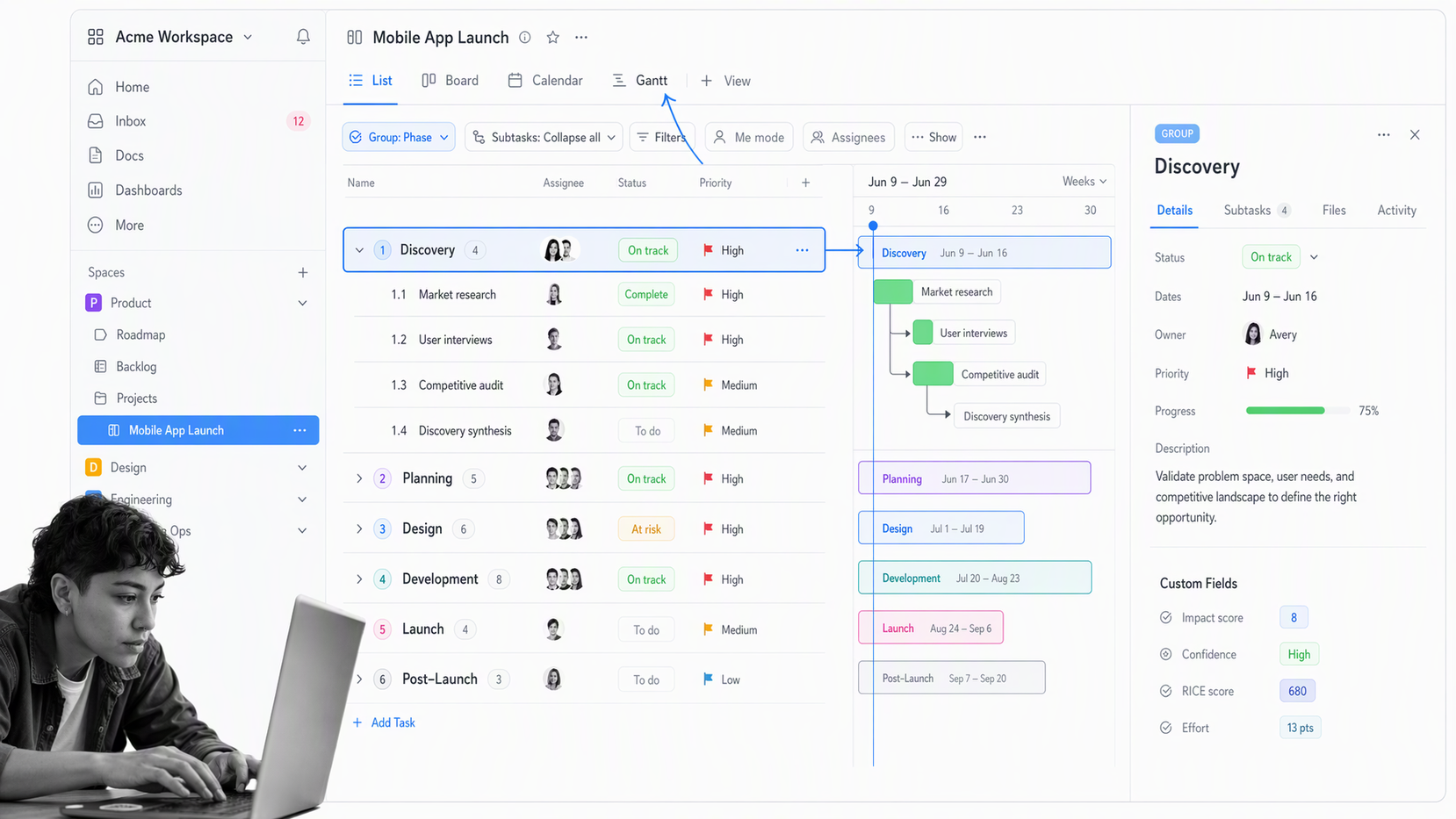
ClickUp is a broad work management platform for teams that want several views inside one workspace. Its desktop app supports Mac, Windows, and Linux. ClickUp also documents list, board, calendar, dashboard, form, and Gantt views across its plans.
It can fit product teams, agencies, and internal departments that switch between granular tasks and portfolio-level views. A project coordinator can maintain structured lists while stakeholders use dashboards or calendars to see a simpler picture.
Breadth is the appeal and the risk. A workspace with too many statuses, views, fields, and hierarchy levels can become harder to operate than the projects it tracks. ClickUp works best when the team defines a small set of standard views and keeps the information architecture intentionally narrow.
- Best for: teams that value view flexibility
- Choose it when: one workspace must support detailed tasks and multiple reporting perspectives
- Watch for: configuration overload
4. Asana
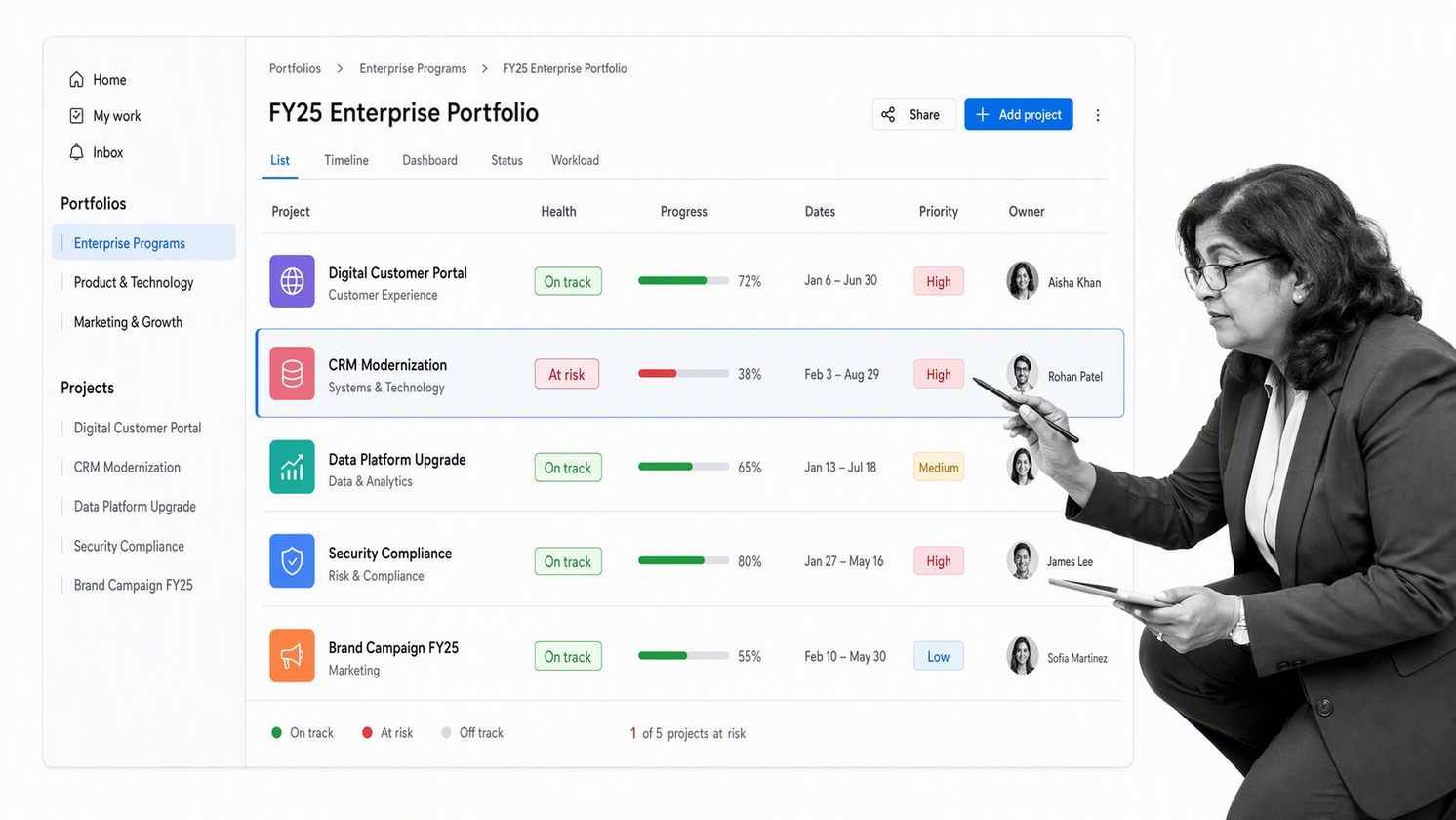
Asana is a strong fit for cross-functional initiatives where tasks, projects, portfolios, and goals need to stay connected. Its official desktop app documentation confirms a Mac client with the functionality of the browser version plus desktop-focused productivity controls.
The platform is useful for product launches, strategic programs, marketing work, and leadership reporting. Teams can keep day-to-day assignments close to the project while portfolio views give program owners a higher-level picture.
Asana works best when teams agree on where updates belong. If status lives partly in project briefs, partly in comments, and partly in portfolio fields, leaders still have to reconstruct the story. Establish one project status rhythm and make portfolio reporting a result of the underlying work, not a separate reporting chore.
- Best for: cross-functional projects and portfolios
- Choose it when: project work must connect to wider programs and goals
- Watch for: duplicate status reporting across layers
5. Trello
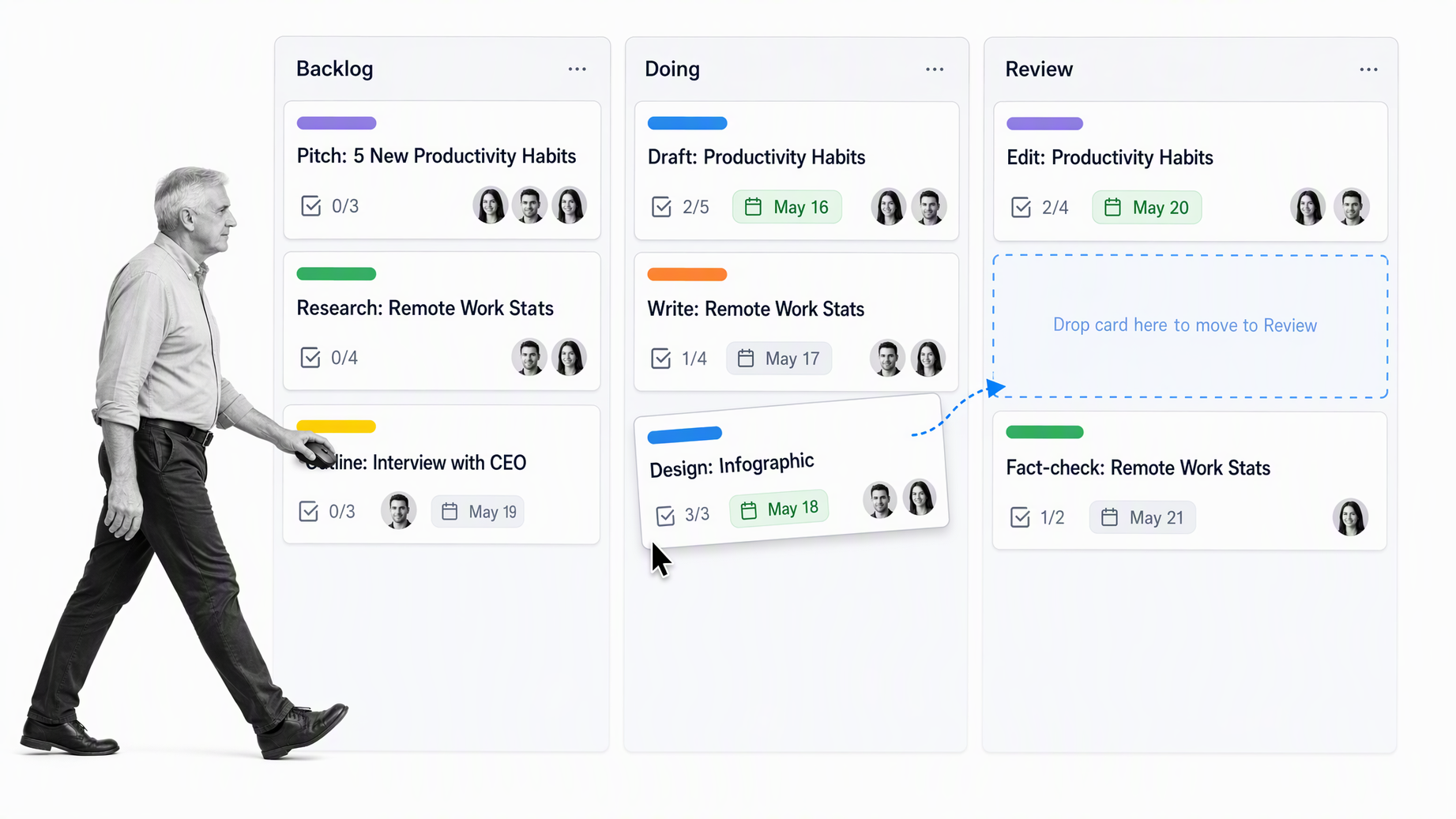
Trello remains one of the clearest ways to model a simple flow with boards, lists, and cards. Atlassian documents a dedicated Trello desktop app for macOS, including system notifications and keyboard shortcuts. The same documentation notes that the desktop app requires an active internet connection and does not support offline syncing.
Trello is a good fit for small teams, editorial pipelines, lightweight launch checklists, and projects whose status can be understood from a few clear columns. Its low learning curve helps teams begin quickly.
The simplicity can become a constraint when projects require portfolio rollups, detailed resource management, controlled approvals, or complex dependencies. Use Trello when the board itself communicates the operating model. Do not bury a complicated process inside dozens of labels and checklist workarounds.
- Best for: lightweight visual flow
- Choose it when: a simple board makes project state obvious
- Watch for: forcing complex governance into cards and labels
6. Teamwork.com
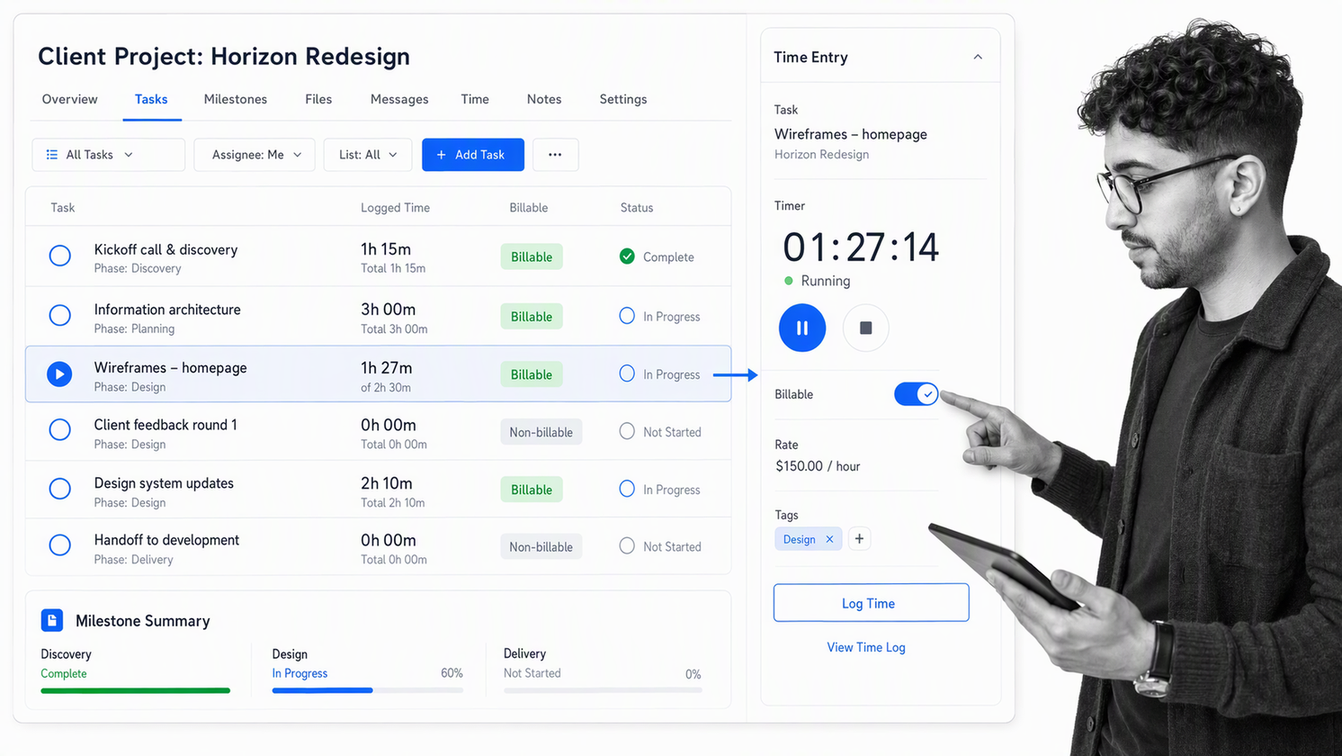
Teamwork.com focuses on project delivery for client work. Its official apps page documents Windows and macOS desktop clients, along with mobile apps and a timer application that can log billable and non-billable time against tasks.
That combination makes it relevant to agencies, consultants, implementation teams, and professional services groups that need to connect tasks with delivery effort. Project work can stay close to the time record instead of being reconciled from a separate tracker at the end of the week.
Teams should still decide whether Teamwork.com is the delivery system, the commercial system, or both. Keep scopes, approvals, and client decisions explicit so time data does not become a substitute for project governance.
- Best for: client delivery and service teams
- Choose it when: project tasks and time tracking should share a system
- Watch for: unclear ownership between delivery, finance, and client records
7. OmniPlan
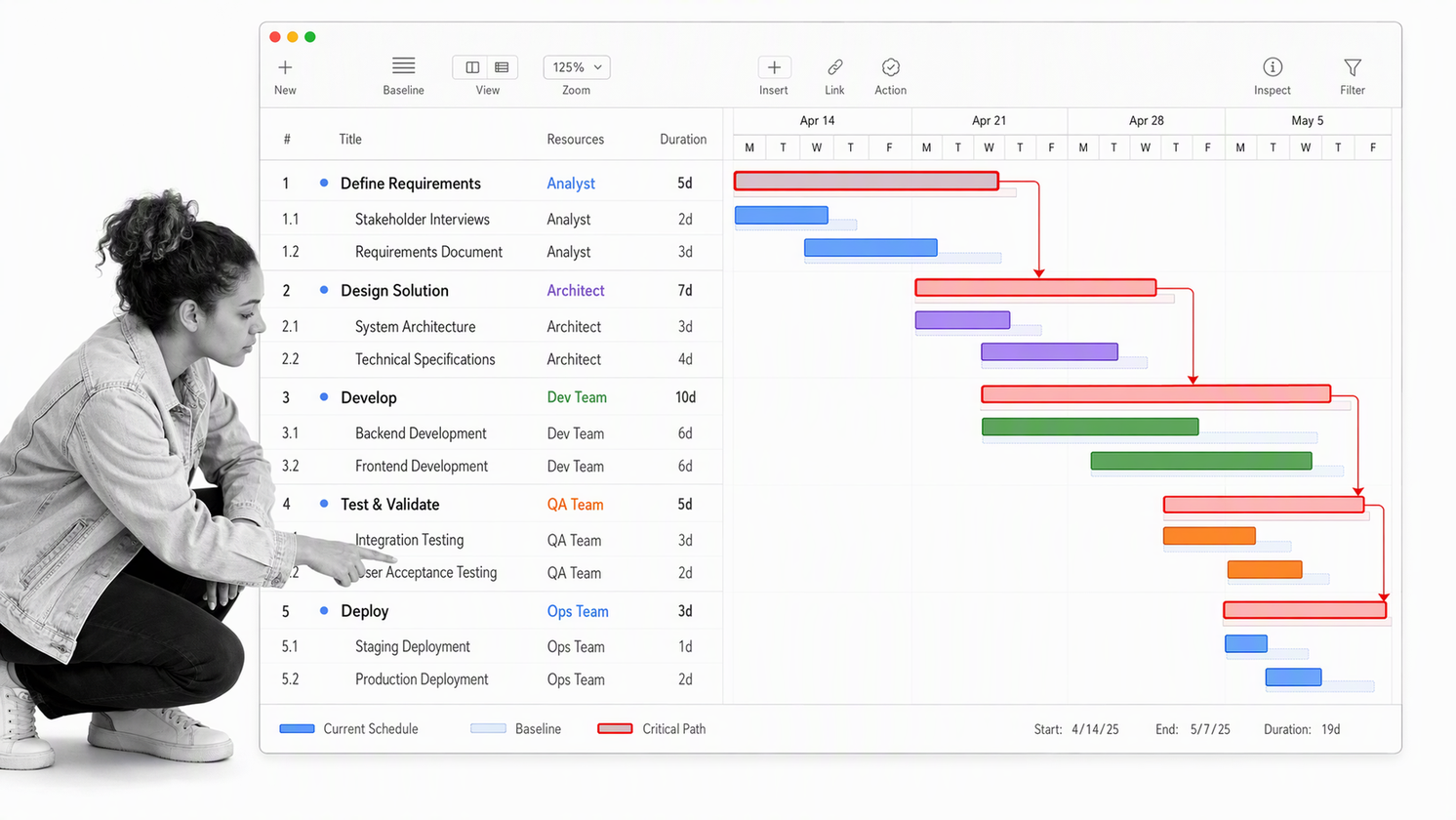
OmniPlan is the specialist option for project managers who want detailed scheduling on Apple devices. The official OmniPlan feature comparison lists macOS support for Gantt charts, network diagrams, task dependencies, resource leveling, baselines, critical path analysis, and cost tracking.
It fits formal plans where task order, duration, resource constraints, and schedule consequences matter. Project managers can model dependencies and see how changes affect the plan instead of treating dates as isolated fields on cards.
OmniPlan is less suitable as the only collaboration hub for a large mixed-device team. It is strongest when a project manager owns the schedule and publishes clear decisions or status into the team’s shared operating system.
- Best for: detailed schedules in the Apple ecosystem
- Choose it when: dependencies, resources, and critical path drive the project
- Watch for: collaboration needs outside the scheduling model
8. Project Plan 365
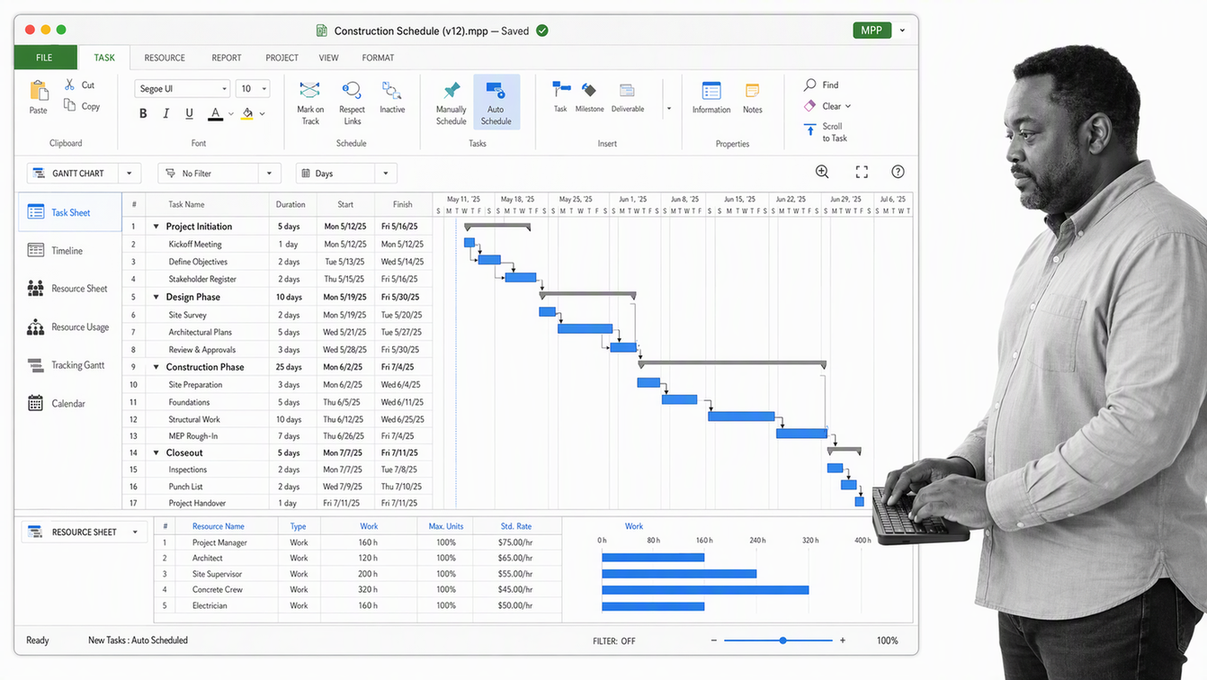
Project Plan 365 is the most direct fit for Mac users who exchange Microsoft Project files. Its official Mac MPP guide says users can open, edit, and save MPP files without converting them or installing Windows. It also documents Gantt, network, calendar, task, resource, team planner, and timeline views.
That makes it useful in organizations where contractors, clients, or a central PMO already work in Microsoft Project. The value is compatibility and continuity. A Mac user can participate in the existing file workflow without rebuilding the schedule in a different system.
File compatibility does not solve collaboration by itself. Define how versions are named, where the authoritative file lives, who may edit it, and how decisions move into the wider project record.
- Best for: Microsoft Project file compatibility on Mac
- Choose it when: MPP exchange is a hard requirement
- Watch for: version control and collaboration around file-based schedules
How should you choose a Mac project management tool?
Begin with the work pattern, not the feature list. Write down one real project from intake to close, including decisions, dependencies, recurring steps, files, exceptions, and reporting. Then identify which parts must be enforced and which only need visibility.
- Define the system of record. Decide where official status, decisions, and completed work will live.
- Separate projects from recurring processes. A unique initiative and a repeatable operational workflow may need different controls.
- Map Mac access. Confirm whether users need a browser, a desktop client, offline work, Apple-only software, or cross-platform access.
- Test the hardest case. Build a pilot around a delayed dependency, rejected approval, reassignment, or scope change, not the happy path.
- Limit configuration. Standardize statuses, fields, templates, and reporting before broad rollout.
- Plan migration and ownership. Name the person responsible for workspace design, permissions, templates, and archival rules.
A useful evaluation should produce evidence. Ask each finalist to model the same project. Have real users update tasks, review a decision, find a blocked item, and produce a status report. The tool that makes the critical path obvious and the operating rules easy to follow is usually a better choice than the tool with the longest feature page.
Should you choose a native Mac app or a web app?
Choose a native Mac application when deep scheduling, local files, Apple-specific interaction, or offline access is central to the work. Choose a browser-based platform when consistent collaboration across Mac, Windows, and mobile devices matters more than operating system conventions.
A desktop client is not automatically a native scheduling engine. Many cloud platforms package their web experience in a desktop application. That can still improve focus, notifications, and launch speed, but it may continue to depend on an internet connection. Verify offline behavior directly if field teams or travel make it important.
Mixed-device organizations should also test links, notifications, file previews, keyboard shortcuts, and authentication from every supported platform. A smooth Mac experience is useful only if the project remains coherent for everyone else.
How do you set up project management software on a Mac?
Start with one representative project and a small user group. Avoid migrating every historical task before the team has validated the design.
- Choose the project archetype, such as client onboarding, product launch, implementation, or formal schedule.
- Create the minimum fields and statuses needed to make decisions.
- Add owners, due rules, dependencies, approvals, and required evidence.
- Connect only the systems required for the pilot.
- Run a real project and observe where users leave the system to finish work.
- Revise the template, document ownership, then expand to the next project type.
For recurring work, build the operating path in a system that can execute it. Process Street includes a no-code workflow editor for task sequences, forms, assignments, due dates, conditional logic, approvals, and automations. This approach keeps the playbook and the live project run connected.
Project management software for Mac FAQ
What is the best project management software for Mac?
Process Street is the best fit for repeatable project workflows that need approvals, rules, evidence, and automation. monday.com, ClickUp, Asana, and Trello suit different collaboration styles. OmniPlan is stronger for detailed Apple-focused scheduling, while Project Plan 365 is designed for MPP file workflows.
Does project management software need a native Mac app?
No. A well-designed browser platform can work consistently across Mac and other devices. A native Mac app matters more when you need Apple-specific interaction, local project files, specialist scheduling, or verified offline behavior.
Can Mac users open Microsoft Project files?
Yes. Project Plan 365 supports opening, editing, and saving MPP files on Mac. OmniPlan also lists Microsoft Project support in its Pro feature set. Test a representative file before standardizing on either workflow.
What features matter most in project management software for Mac?
Prioritize the features that control your real work: ownership, dependencies, approvals, required evidence, workload, reporting, file compatibility, automation, and cross-device access. The right combination depends on whether the work is a one-time initiative, a recurring process, or a formal schedule.
Is a Mac desktop app the same as offline support?
No. A desktop client may still require an active internet connection. Trello, for example, documents that its desktop apps do not support offline syncing. Verify offline behavior with the vendor and test it in the environment where your team works.
How should a team pilot project management software?
Model one representative project, invite the people who perform and review the work, test an exception such as a delay or rejected approval, and confirm that users can find the authoritative status. Expand only after the template and ownership rules work in practice.