





DACI is a group decision-making framework that assigns four roles: Driver, Approver, Contributors, and Informed. It helps teams gather input, keep one accountable approver, document the rationale, and move a decision into action.
We’ve all been there: an hour and a half into a 45-minute meeting. You’re trying to reach a consensus but as one department makes a suggestion, the next disagrees.
Customer success insists the next product should be geared towards students; sales thinks their parents are a better demographic. Content marketing started out by spitballing potential names until someone brought up the latest Process Street post and they all got sidetracked discussing whether it’s better to use odd or even numbers in a post title. Social marketing is scrolling through newsfeeds and graphic design isn’t even sure what they’re doing in this meeting at all. It should have been simple: get everyone together, brainstorm ideas, then form a game-plan and timeline to use moving forward. Except no one can agree on anything and, at this rate, the only accomplishment the meeting will have made is wasting everyone’s afternoon. Group decision-making is complicated. Fortunately, there are processes for that. You may have already read our post on DECIDE, which is a great decision-making process for individuals. However, what works for an individual does not necessarily translate to a group. In this post, I’m going to introduce you to one of the most popular group decision-making frameworks: DACI. The DACI (Driver, Approver, Contributors, Informed) decision-making framework is a set of processes geared toward doing just that. As a variant of the RACI (Responsible, Accountable, Consulted, Informed) responsibility matrix, DACI’s emphasis on decision clarity for complex projects often makes it the go-to framework for product managers. That’s a lot of acronyms all at once, huh? Don’t worry. We’ll take it slow, or you can jump straight to the point:- Group decision-making benefits and tradeoffs
- What is DACI?
- DACI and Atlassian’s Team Playbook
- Creating your own DACI framework with a free template
- Other ways Process Street can streamline your decision-making processes
Group decision-making benefits and tradeoffs
I’m not going to sugar-coat it: group decision-making can be a hellish experience if it doesn’t go right. Anyone you ask will have at least one story about a group member who never showed up to meetings, or getting stuck finishing all the tasks alone at the last minute, or interpersonal dynamics gone wrong, or a slew of other mishaps. That isn’t to say it’s all bad, though. I can’t count the number of times I’ve been stuck on a problem, floated it around my colleagues, and was able to find a solution in minutes with their input. Sometimes it takes the hivemind.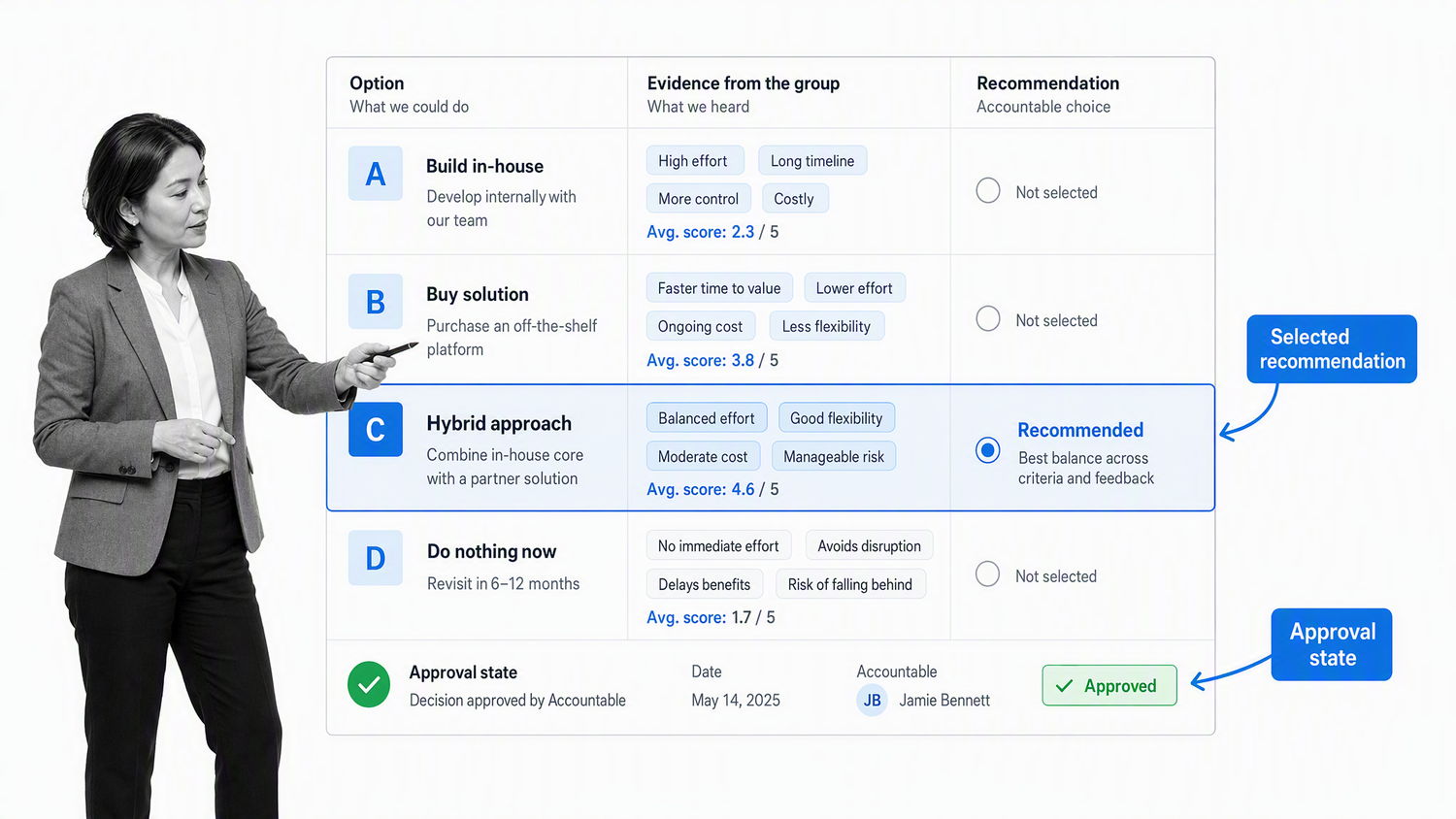
The disadvantages of group decision-making
When it comes to group decision-making, there are a few key problems that crop up:- Time cost;
- Risk of “groupthink” (more on this in a sec);
- Group polarization;
- Diversity, or lack thereof;
- Personal dynamics.
Advantages of group decision-making
It’s not all negative, though. Group decision-making can provide a lot of benefits for an organization, as long as the group is managed correctly. Group decision-making offers:- Superior solutions A group is capable of generating far more alternatives than a single individual could come up with alone; with more alternatives, it’s likely that there will also be a larger number of higher quality alternatives, leading, ultimately, to a superior solution than any of the individual members could have come up with on their own. It also means the ideas will be vetted more quickly and thoroughly with more eyes examining them at once. That way, ideas that aren’t viable will be noticed and dismissed early on, allowing greater focus on the higher quality alternatives.
- Varied expertise Much can be gained by utilizing groups of mixed expertise. Often, when we’ve been doing something for a long time, we get into certain patterns and habits that we can’t let go of, even if there are more efficient ways to do the same thing. By having junior and senior members work together, the group, and each of the individuals, has the benefit of both experience and a fresh perspective.
- Diverse strengths The primary goal of any group is to identify the individual strengths of those involved and the best way to use those strengths. To use our little group from above, E is an excellent writer with debilitating stagefright. O, on the other hand, is a charismatic speaker. When this group has to deliver their presentation, it makes sense for E to approve the script and O to deliver it, maximizing the group’s overall success.
- Ownership People are more committed to actions that they’re involved in. If they’ve been involved in the decision-making process to bring those actions to fruition, the case is even more so. With group decision-making, the number of people involved in that decision increases, which means more individuals within the organization are invested in making sure the outcome is successful.
- Collaboration This one’s simple: the more people work in a group, the better they get at it. This is true whether they always work with the same group, or work with several different groups. Individuals learn to cooperate and collaborate, develop confidence in communicating ideas and defending their perspectives, and have previous actions, their own, and the other group members’, to reflect on when making future decisions.
Do you need a decision-making framework? (And why the answer is yes)
Group decision-making frameworks are a set of processes and principles designed to streamline decision-making within an organization. The idea behind these frameworks is that by clearly defining roles and responsibilities within the group, individual accountability can be maintained, and overall consensus can be reached more efficiently and with less conflict. Every one of the disadvantages I mentioned can be dealt with, easily, with effective process management and optimization. Processes make sure events and actions follow a tested, proven procedure that works. Having an established process also ensures that steps aren’t skipped, corners aren’t cut, and everyone gets their chance to contribute. Sure, you can make group decisions without using a framework. You might even accomplish all of your goals. I’ve worked in groups that just clicked and everything ran smoothly. I’ve also worked in groups that were absolute trainwrecks from the start. In the first case, the framework may or may not have had an impact on the interpersonal dynamic, but it did keep us on track and reduced the chance of human error. In the latter case, having a framework was the only reason a decision got made at all. You don’t plan to crash your car, but you still wear a seatbelt. DACI is a product manager’s best seatbelt.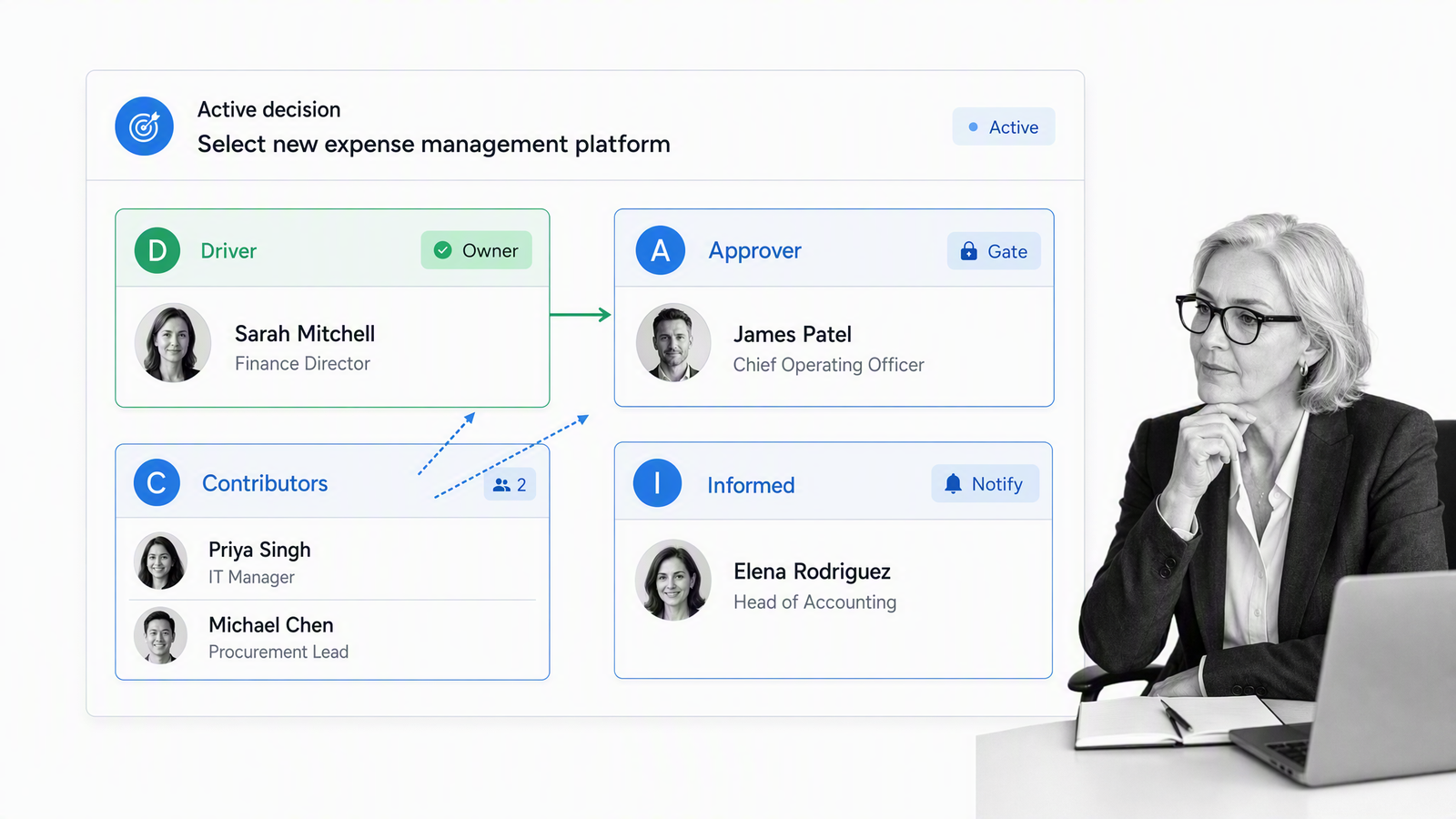
What is DACI?
DACI, pronounced day-cee, is a variant of the RACI framework developed by teams that need a clear decision owner. Since then, it’s rapidly become widely used in fast-moving, cooperative companies as a way to increase their group decision-making turnaround. The benefit of any responsibility matrix is that it clearly outlines who is responsible for what and when, eliminating the confusion and endless debate that can come with group decision-making.Comparing DACI with RACI
RACI focuses on who is responsible for completing a task; DACI is concerned with who drives the project to conclusion. It seems like a small difference, I know, even just a matter of semantics, but the concepts of responsibility and drive are crucial in considering which framework to use. RACI is the foundation of responsibility assignment matrix (RAM) frameworks, originally called a linear responsibility chart (LRC). Originally conceived in the 1950s, RACI has gone through a number of changes with over a dozen variations created since its initial development. The RACI acronym stands for:- Responsible: Who is responsible for completing a task?
- Accountable: Who is accountable for making sure the task is completed?
- Consulted: Who is consulted during the task?
- Informed: Who is informed about the task’s progress?
- Responsible: Content team provides material
- Accountable: Audio team releases episodes
- Consulted: Management approves key decisions
- Informed: Subscribers emailed
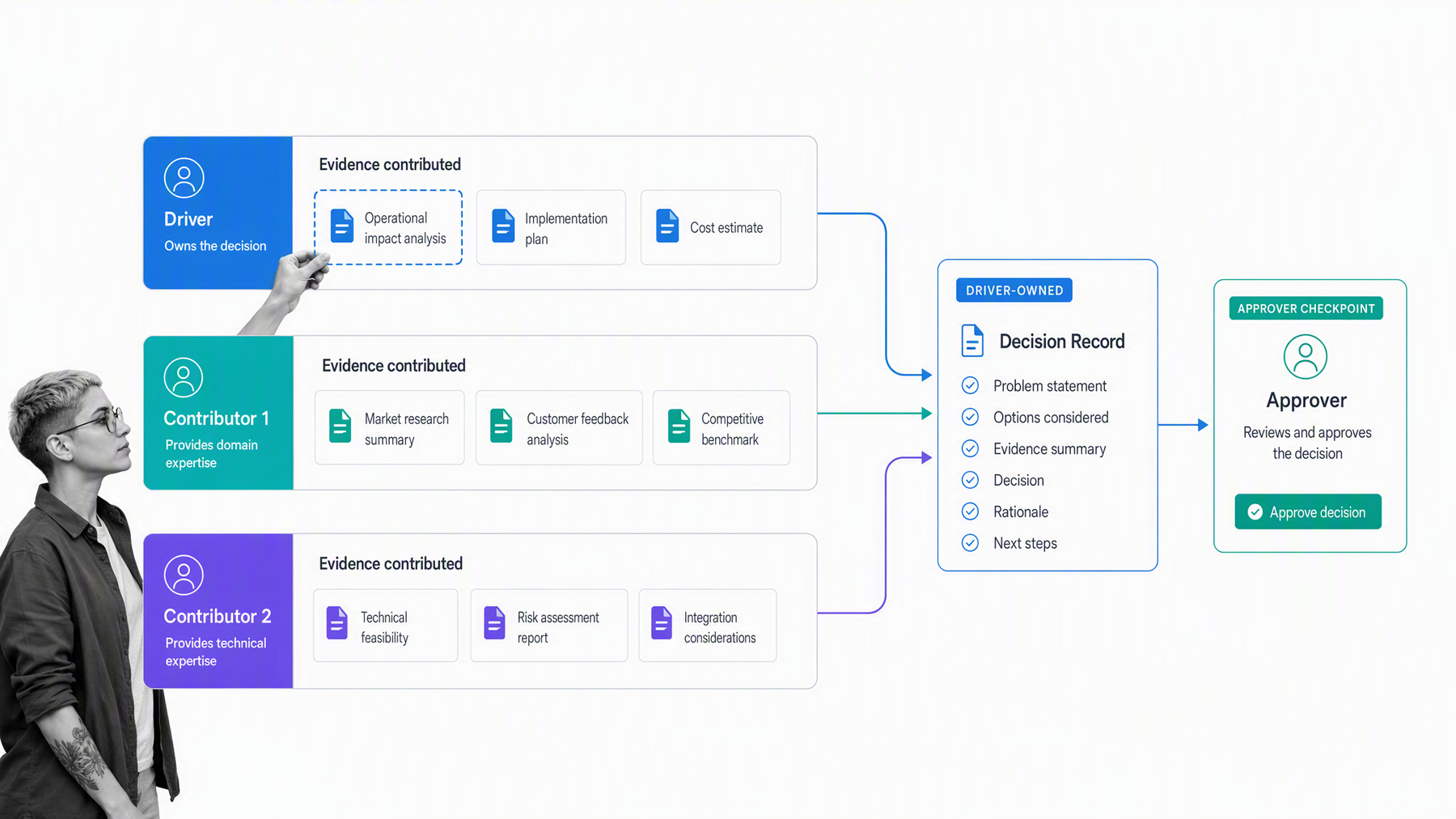
- Driver: Who drives a decision to a conclusion?
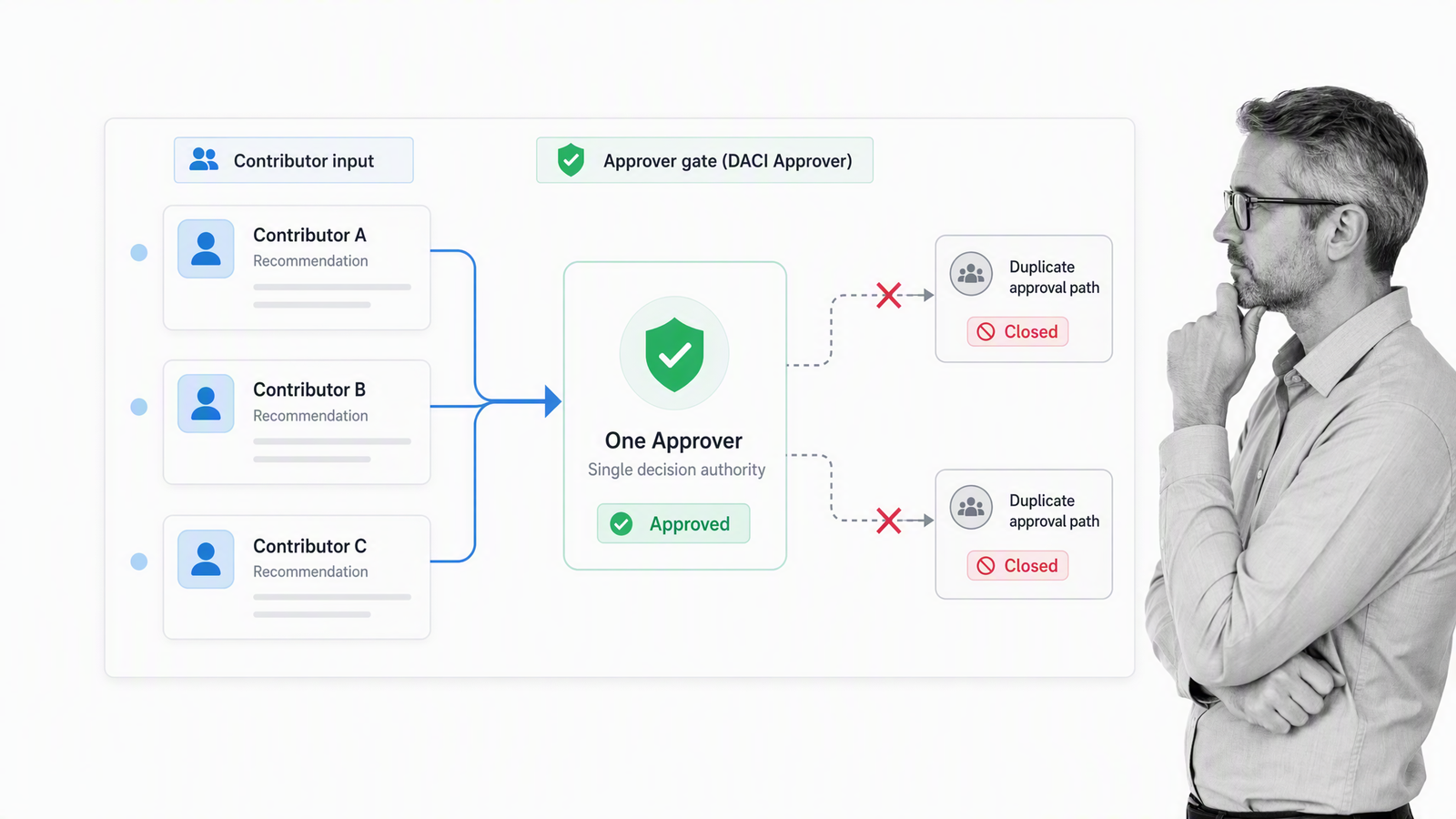
- Approver: Who approves a particular decision?
- Contributor: Who contributes to a decision?
- Informed: Who is informed about the final decision?
DACI and Atlassian’s Team Playbook
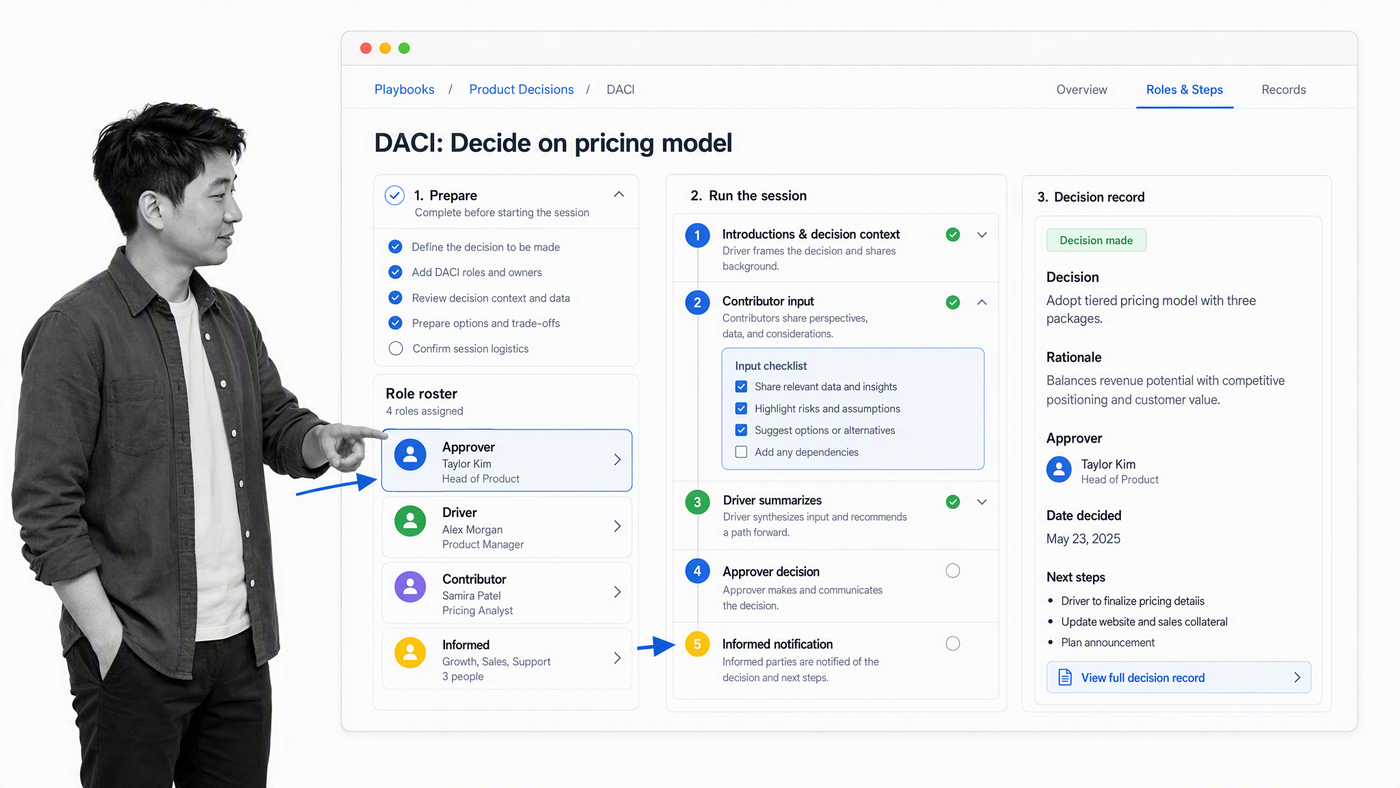
- Prep (15 min): Create a collaboration document in Trello, Confluence, or similar workflow management software, and share with your team. Be sure to include how the decision may affect any compliance regulations as well as a risk management plan in your documentation.
- Set the stage (5 min): Recap the decision and goal for the session. If your group hasn’t collaborated before, it’s a good idea to incorporate some team-building exercises to get the communication ball rolling.
- Driver (5 min): Decide who will be the Driver.
- Approver (5 min): Decide who will be the Approver.
- Contributors (5 min): Identify all the Contributors.
- Informed (5 min): List anyone affected by the decision who won’t be directly involved in the process.
- Create a plan (30 min): Outline the information you need (due date, data, options, etc.) to make the decision. In some cases, such as product launch or supply chain decisions, performing a gap analysis at this stage can help identify missing knowledge or other weak areas that need to be addressed.
- Wrap up (5 min): Delegate assignments and close the meeting.
Creating your own DACI framework with a free template
I’ll walk through the different tasks and elements of creating a DACI framework for your organization, using our free DACI framework checklist. If you would rather grab the checklist and get to work, though, simply click here to add the template to your free account!Initial setup for a DACI decision
First, you need to set up your planning document. This document will be where you record role assignments, decisions that need to be made, and tasks that need to be completed. The most efficient way of doing this is through a shared digital document using document management software that you can add users to as the project progresses. It would also be useful to create a prioritization matrix at this stage to keep everyone in the group focused on the most important choices first. (Prioritization matrices can also be incredibly helpful in resolving disagreements over proposed options, which can save valuable time during your kickoff meeting.) If you’re using our DACI checklist, this is even easier. Process Street allows you to assign checklists to different users or groups within your organization. Depending on the permission settings, you can also control whether they are able to view the entire checklist, or only a single task, which is beneficial if you have freelance contributors or external vendors who are only necessary for a specific task. Process Street is designed to connect with other tools, allowing teams to automate and orchestrate workflows across their tech stack. A DACI workflow can send structured decision updates to communication tools and pass approved data to downstream systems without separating the evidence from the decision record. See Process Street integrations for current options.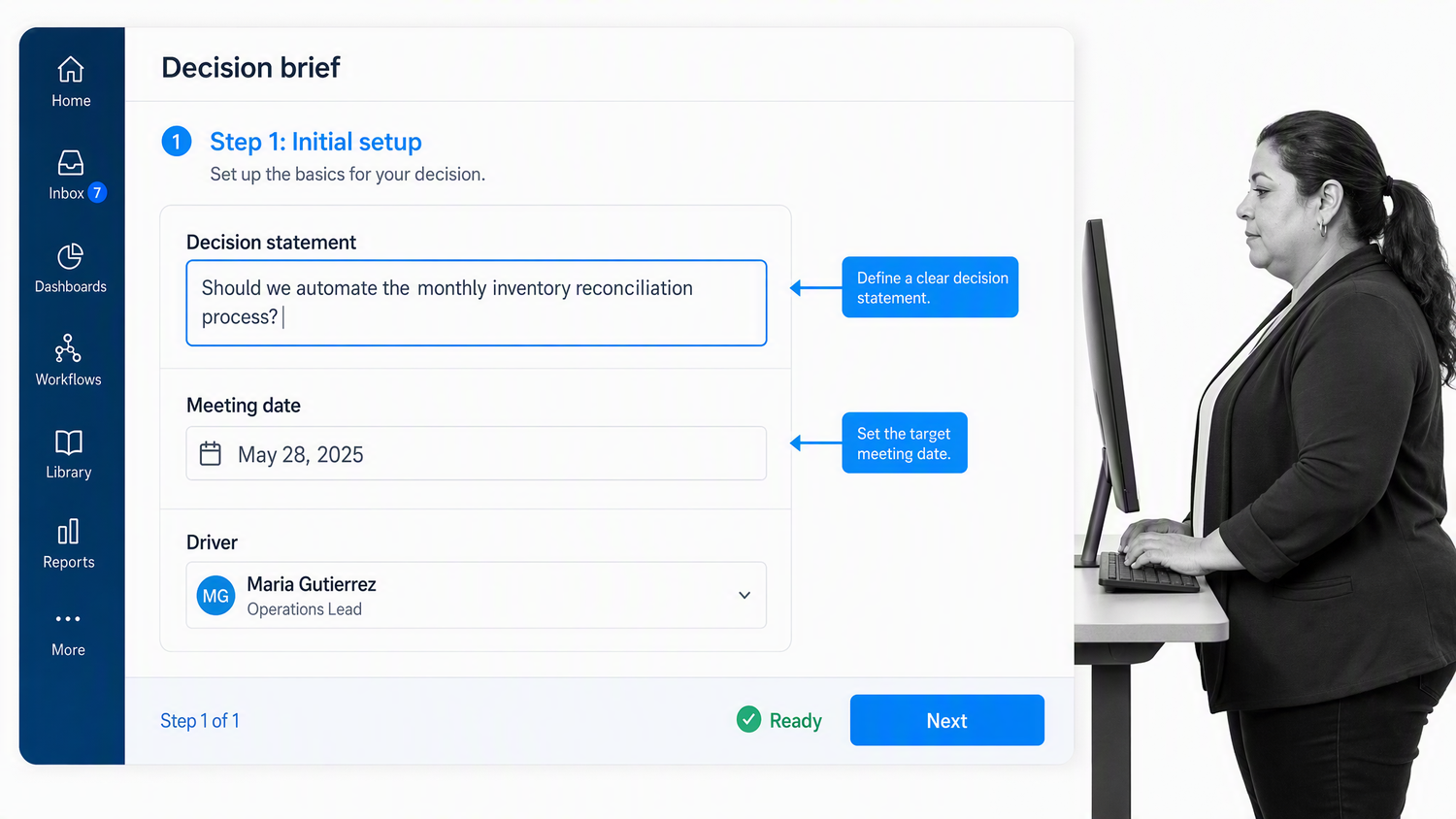
- Decision to be discussed
- Date of meeting
- Meeting location
- Name of person who created checklist
Building the meeting agenda and action register
As with most meetings, it’s important to have an agenda of what needs to be covered so the meeting doesn’t get derailed with irrelevant discussions or unrelated issues. Document the items on your agenda. These are not necessarily the tasks that need to be completed in order to make the decision; rather these are the steps that need to be taken to determine the right course of action.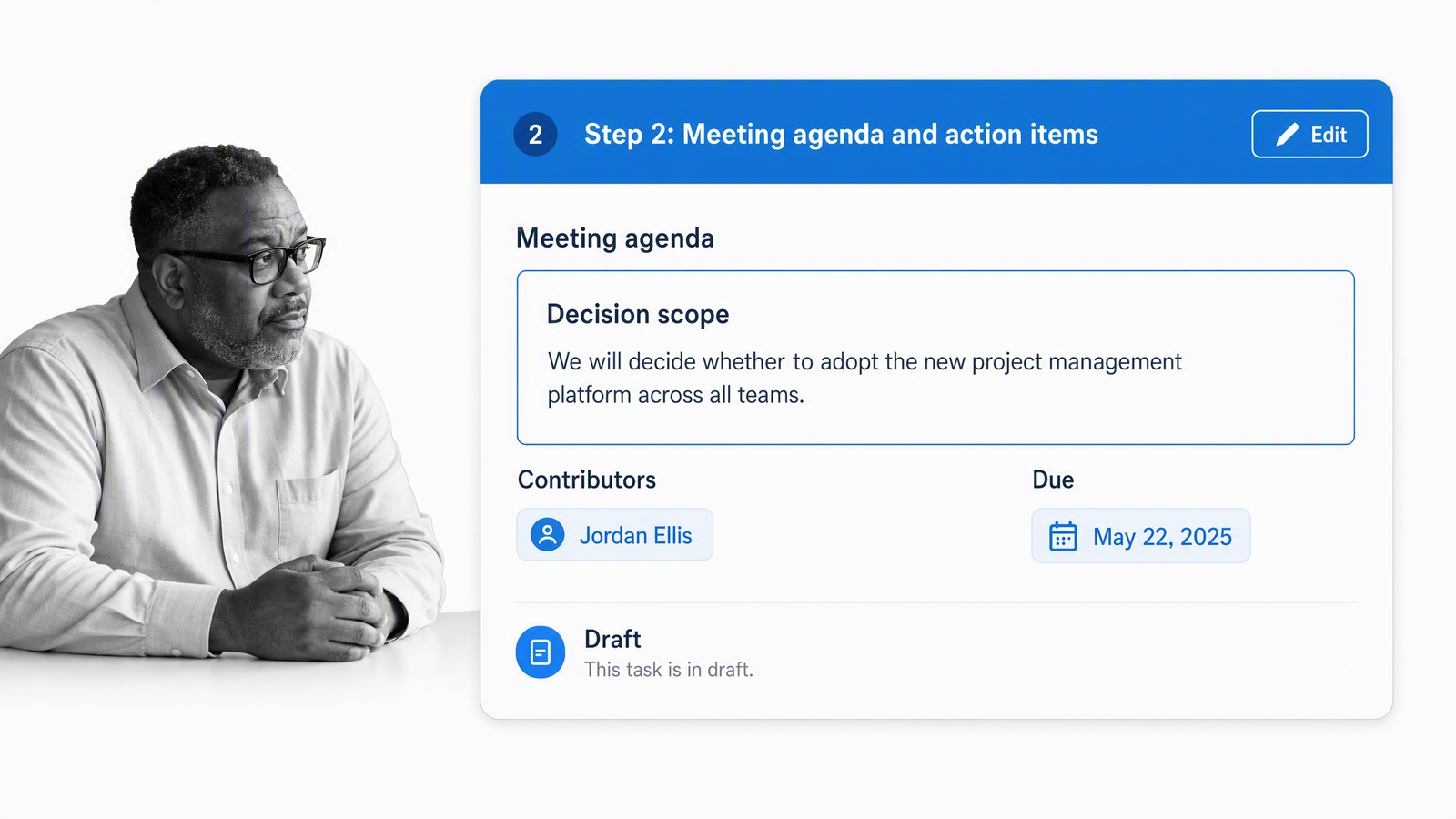
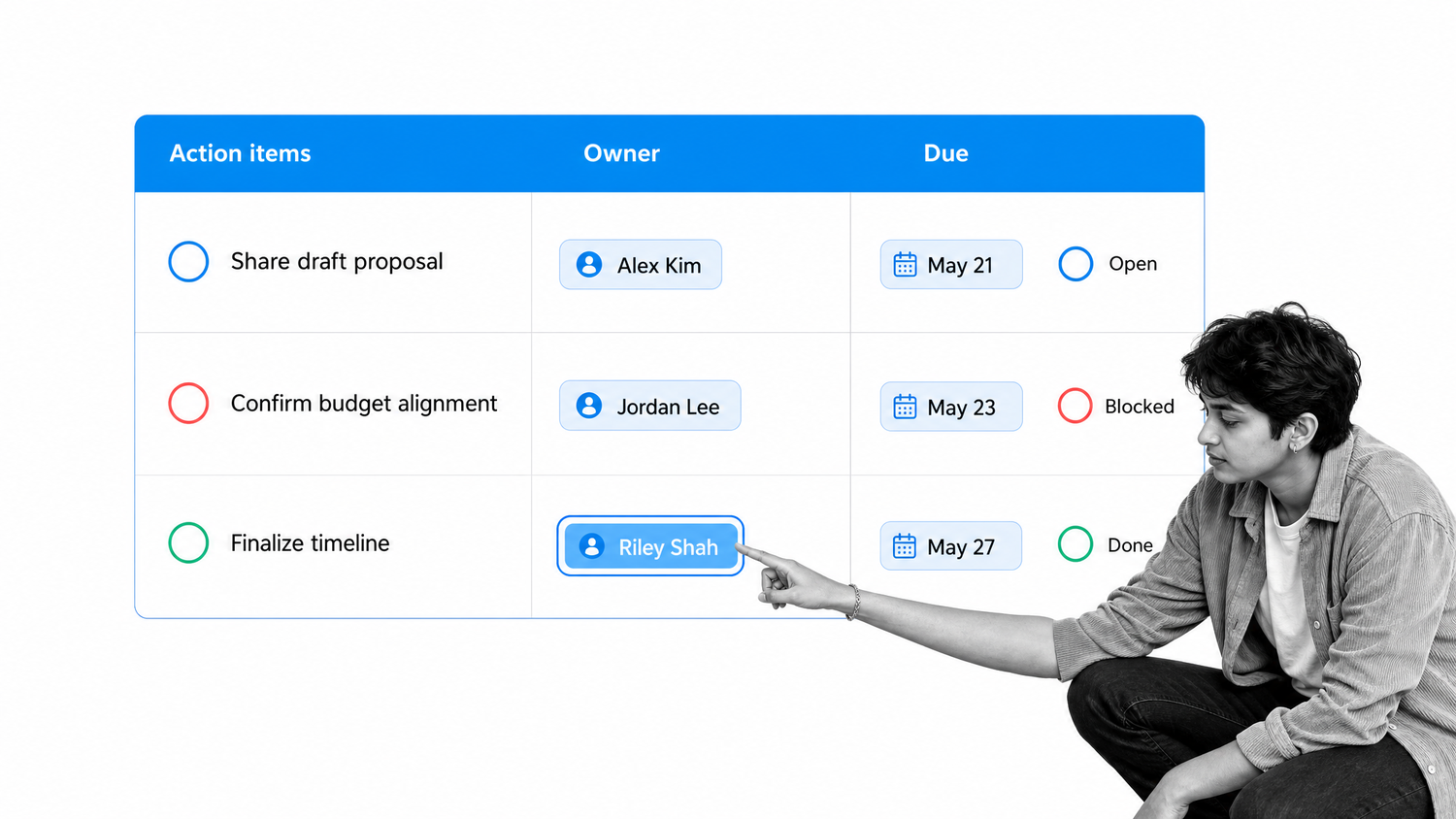
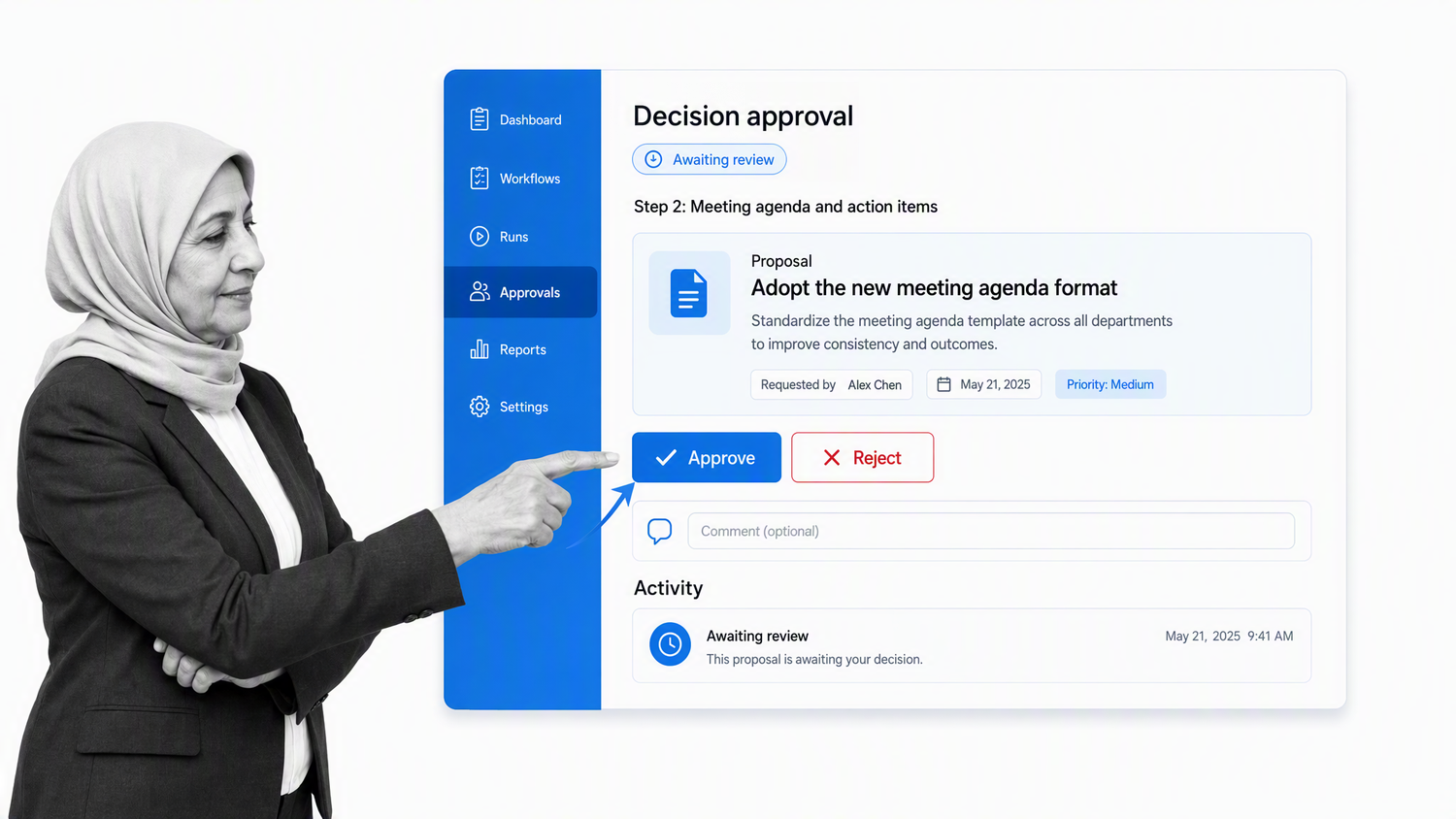
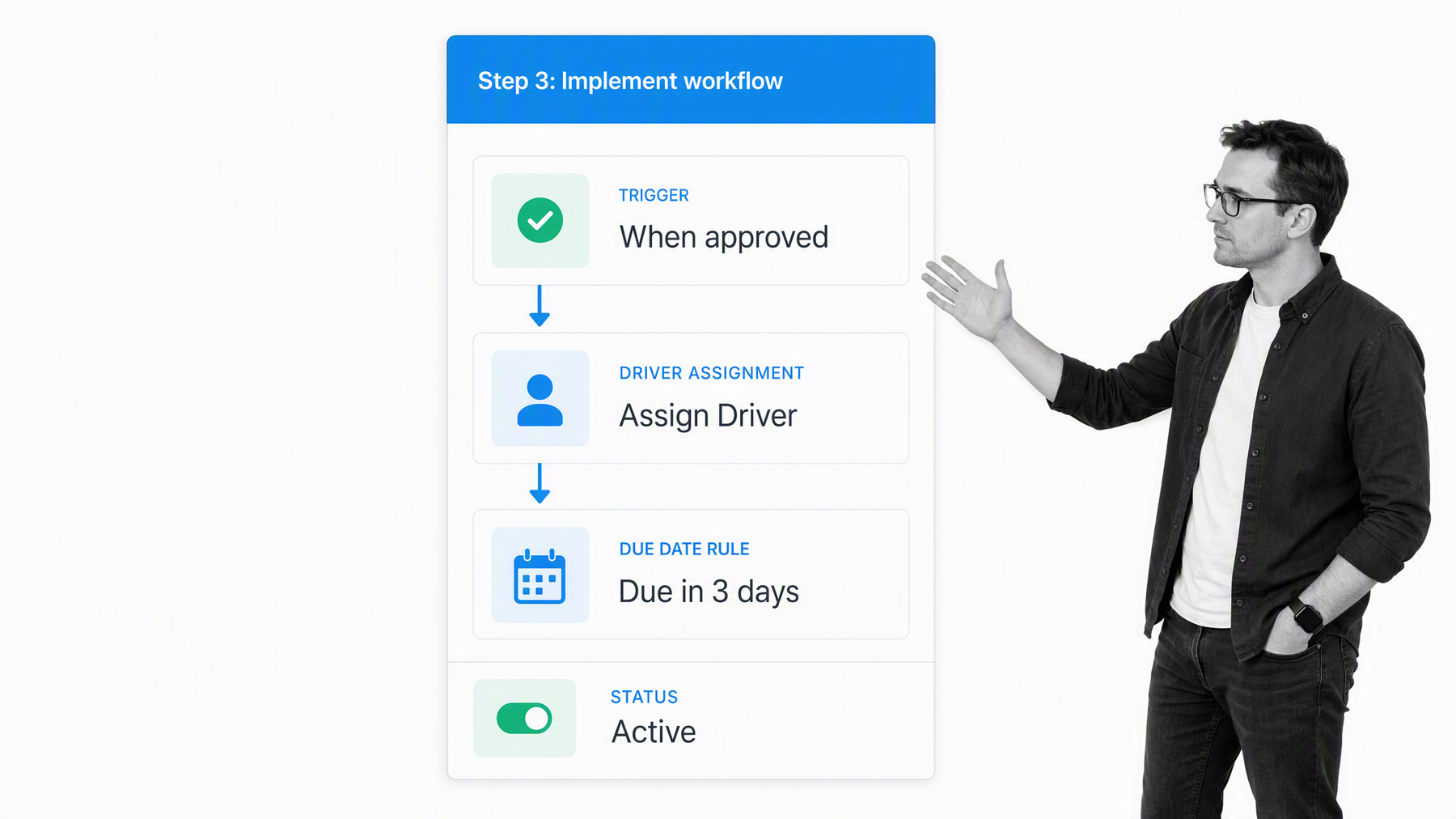
Implementing the approved workflow
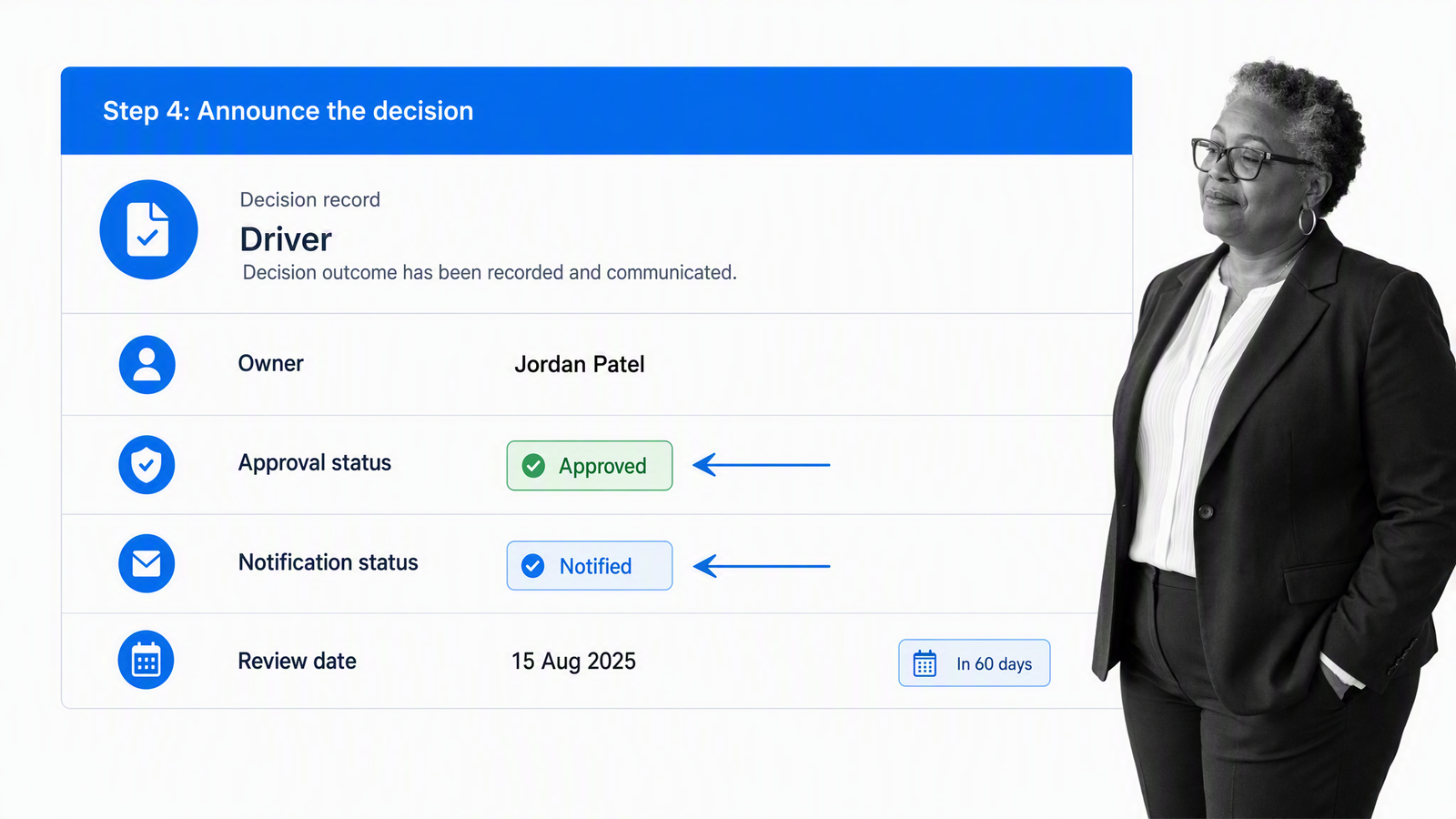
Announcing and recording the decision
Once the decision has been made, all that’s left is to let the Informed (those affected by the decision) know what’s happened. You’ll need to choose the best method to do this for your project, in person, social media, video call, etc., but this checklist incorporates an email function.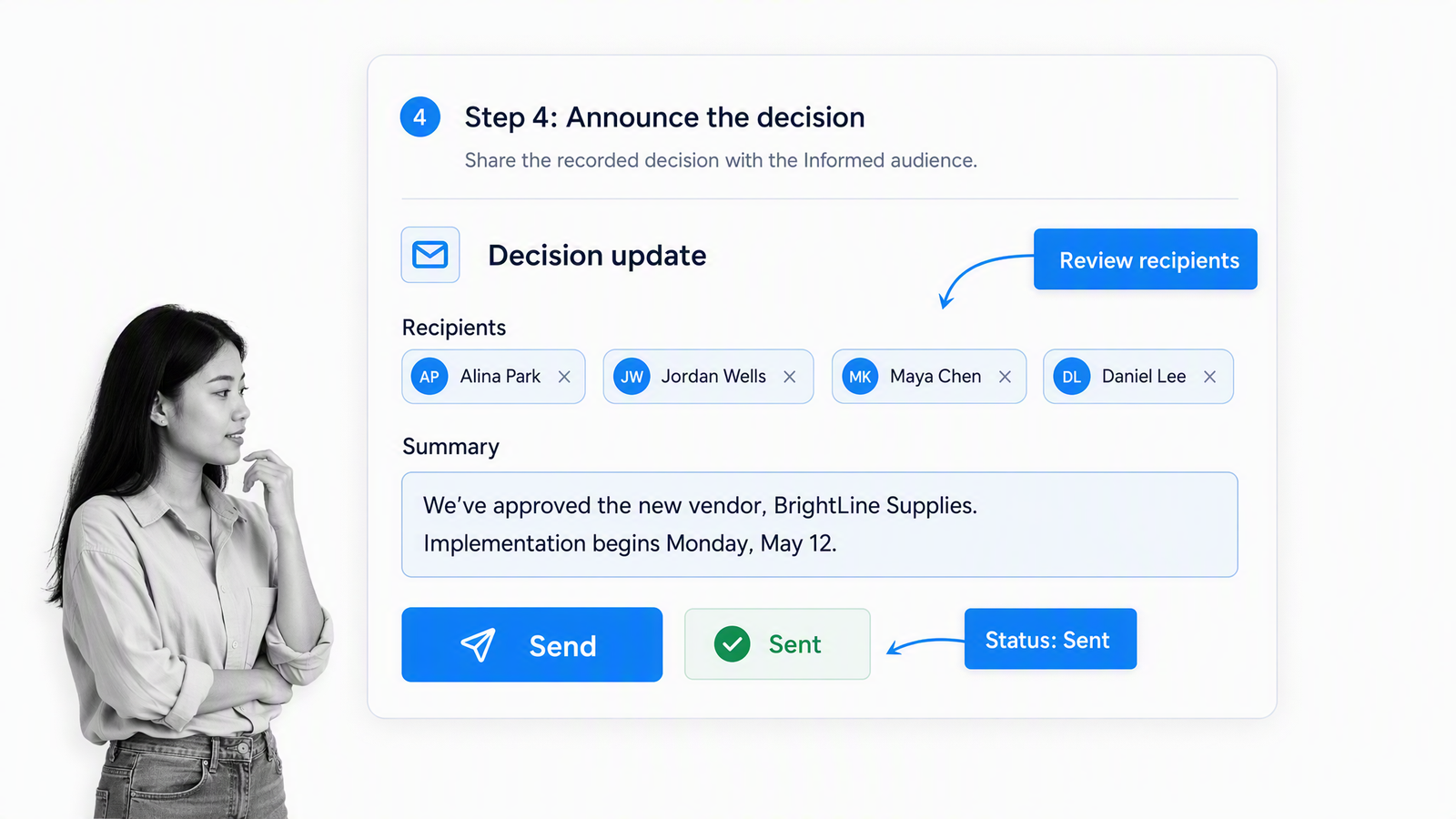
Process Street support for DACI decision-making
Process Street is a Compliance Operations Platform. It is one product with Docs and Ops capability areas plus built-in AI.
Docs gives teams a governed place for decision policies, role definitions, criteria, evidence standards, and final records. Ops turns those rules into a repeatable DACI workflow with required fields, owners, due dates, routing, approvals, notifications, and follow-up tasks. Built-in AI can help summarize evidence and find relevant knowledge inside those controls, while people remain accountable for the decision.
Start with the free DACI decision-making template, then adapt the workflow to your approval policy. The same system can preserve the rationale, notify the Informed audience, and schedule a review of the outcome.
Process Street is designed to connect with other tools, allowing teams to automate and orchestrate workflows across their tech stack. Use Process Street integrations to carry approved decision data into communication, reporting, or implementation systems.
Group decision-making can be frustrating when responsibilities stay implicit. DACI gives the discussion a clear route: one Driver advances the work, Contributors supply evidence, one Approver decides, and the Informed audience receives the recorded outcome.
DACI framework FAQs
What does DACI stand for?
DACI stands for Driver, Approver, Contributors, and Informed. The roles clarify who advances, approves, advises on, and receives each decision.
What is the difference between DACI and RACI?
DACI is centered on decision ownership, with one Driver and one Approver. RACI is centered on responsibility for completing work, with Responsible, Accountable, Consulted, and Informed roles.
Can a DACI decision have more than one Approver?
A DACI decision should have one Approver. Contributors can provide broad input, but one final approval path prevents ambiguity and stalled consensus.
When should a team use DACI?
Use DACI for cross-functional decisions that need several perspectives, a documented rationale, and one clearly accountable final decision-maker.