






As anyone who’s done it will tell you, being one of the first employees at a tiny company is a huge responsibility. You start with one clear job, then the company grows and the edges of that job start moving every week.
As you settle into your routine tasks, you find you get more and more to do with just as many hours in the day. The workload does not magically shrink, so your best chance is to tighten up your workflow, protect your energy, and build habits that make remote work software feel like leverage instead of another inbox.
The company grows quicker than your ability to deal with it
When I first started at Process Street, the only thing I was responsible for was writing our public templates, which acted as inspiration for users and showed them how to use the app.
As our content strategy started falling into place, and I found myself getting comfortable with new tasks, I was also involved in:
- Customer support
- Email marketing
- Social media management
- Product launches
- PR
- Video and audio editing
- Delegating tasks
I scaled up from focusing on one task at all times to a week full of varied tasks, centered around ongoing projects and launches. I had to step my productivity up. If I did not, a lot more would suffer than a few public templates.
It took me a long time to settle on the best to-do list app for the way I work. I still cannot solve every task notification problem, and there are so many different ways to manage tasks that the whole thing can feel overwhelming.
So, as I came up to one year at Process Street, I thought I would take a moment to reflect on what I had learned, or had to be told repeatedly, along the way. These are the productivity remote work habits my first year at a startup taught me.
1. Archive, NEVER delete
It seems ridiculous now, but I actually used to permanently delete things I was not using any more. Emails, documents, and information that turned out to be useful in the future were gone forever by the time I needed them.
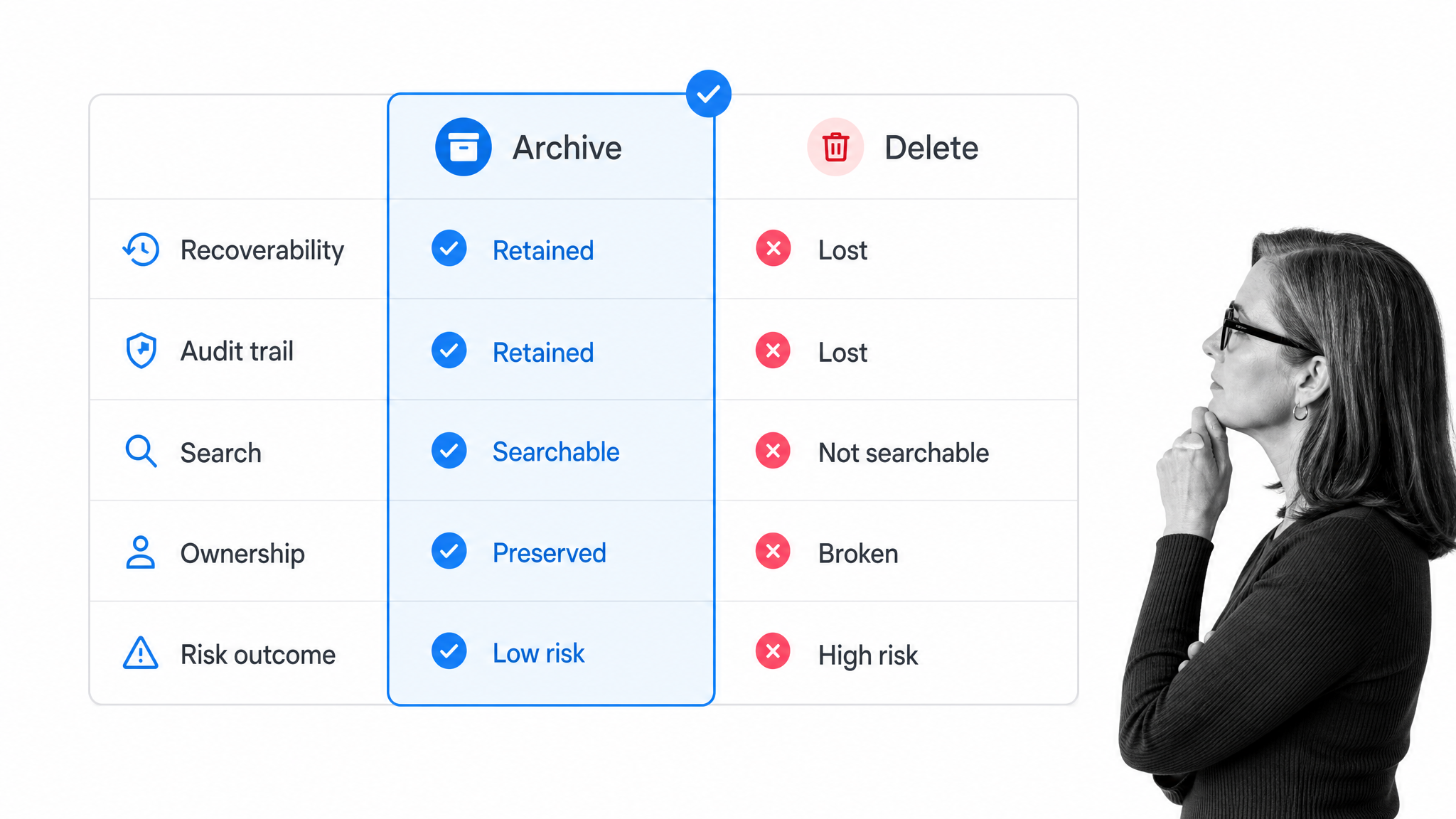
The way I got around this was to simply move it off somewhere else. A folder in Google Drive called “Archived”, a new section in the spreadsheet for original data, or an archive label in Gmail. The point is not the tool. The point is that archive beats delete because remote teams need searchable memory.
Modern email apps make this easier than the old Gmail versus Inbox debate. Archive, snooze, filters, labels, and shared drives can all keep useful context out of your active view without destroying it. That matters when a launch note, customer thread, or PR detail comes back months later.
After losing plenty of important emails by accident, it is a relief to know that the information is still indexed, still searchable, and not removed after a certain amount of time. For email productivity, the habit is simple: clear the inbox, preserve the context.
2. Always work out loud
While writing up a press release for a team-chat integration, I came across a very interesting piece from Bryce Williams about the concept of working out loud.
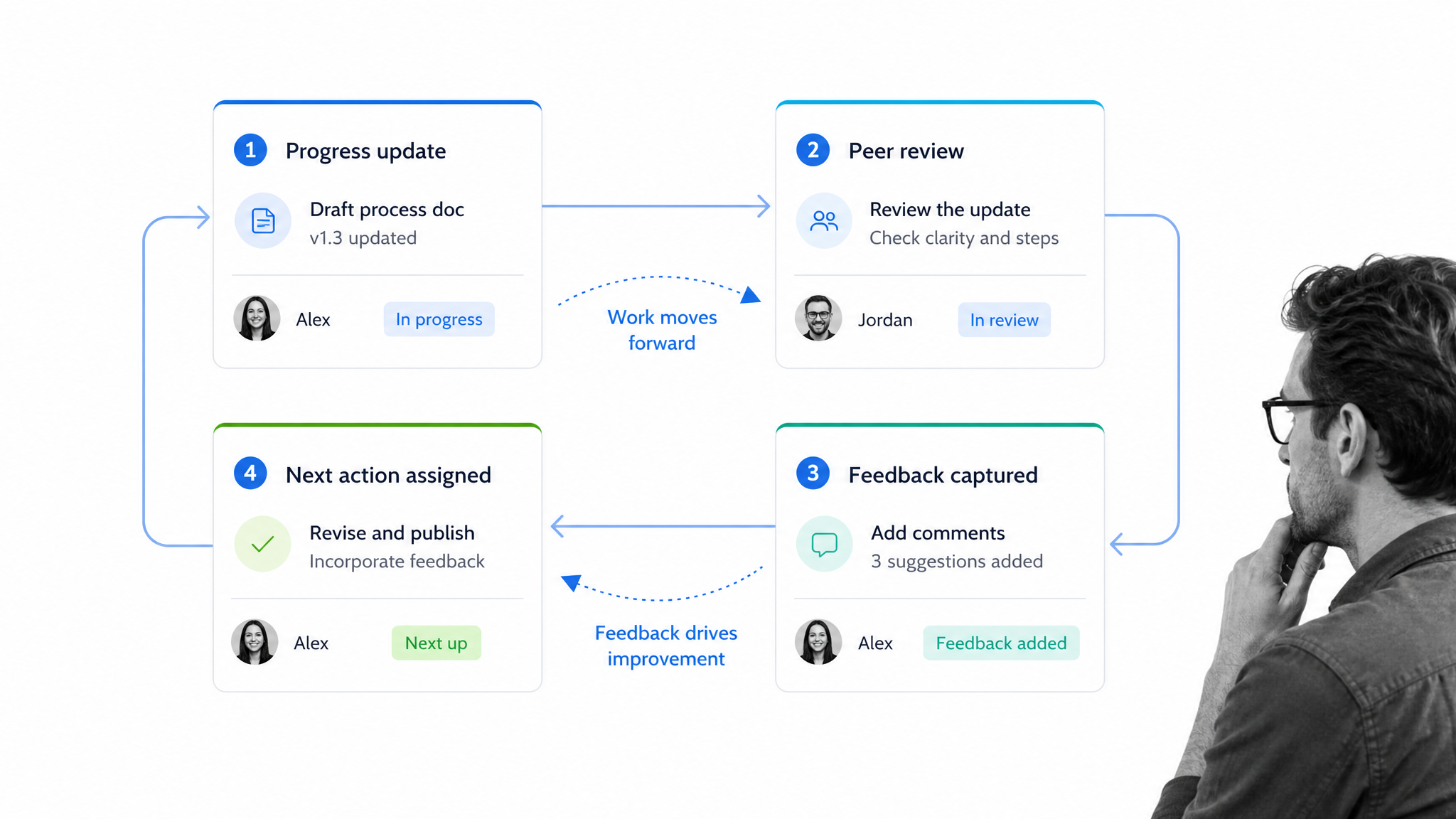
An example: working on a shared Google Sheet with your co-workers while updating the group in a Slack channel. The work is visible, the decisions are visible, and the next person does not have to chase you for context.
Keeping information private does not do anyone much good, and it also creates accountability problems if you are working alongside and in front of others. A visible trail makes it easier to check work, step in when someone needs help, and spot a blocker before it turns into a missed deadline.
Bryce Williams, and later John Stepper, spoke about working out loud in the sense of blogging and networked work. It also makes sense as part of everyday teamwork, especially in remote teams where the default state is silence unless someone deliberately makes progress visible.
3. Automate, delegate, defer, drop (or do in 20 minutes)
Twice a week, I set aside time to clear out my task inbox, the list where all my incoming tasks go. During this time, I can get a useful perspective on what needs doing, what should be automated, what should be delegated, and what should not be done at all.
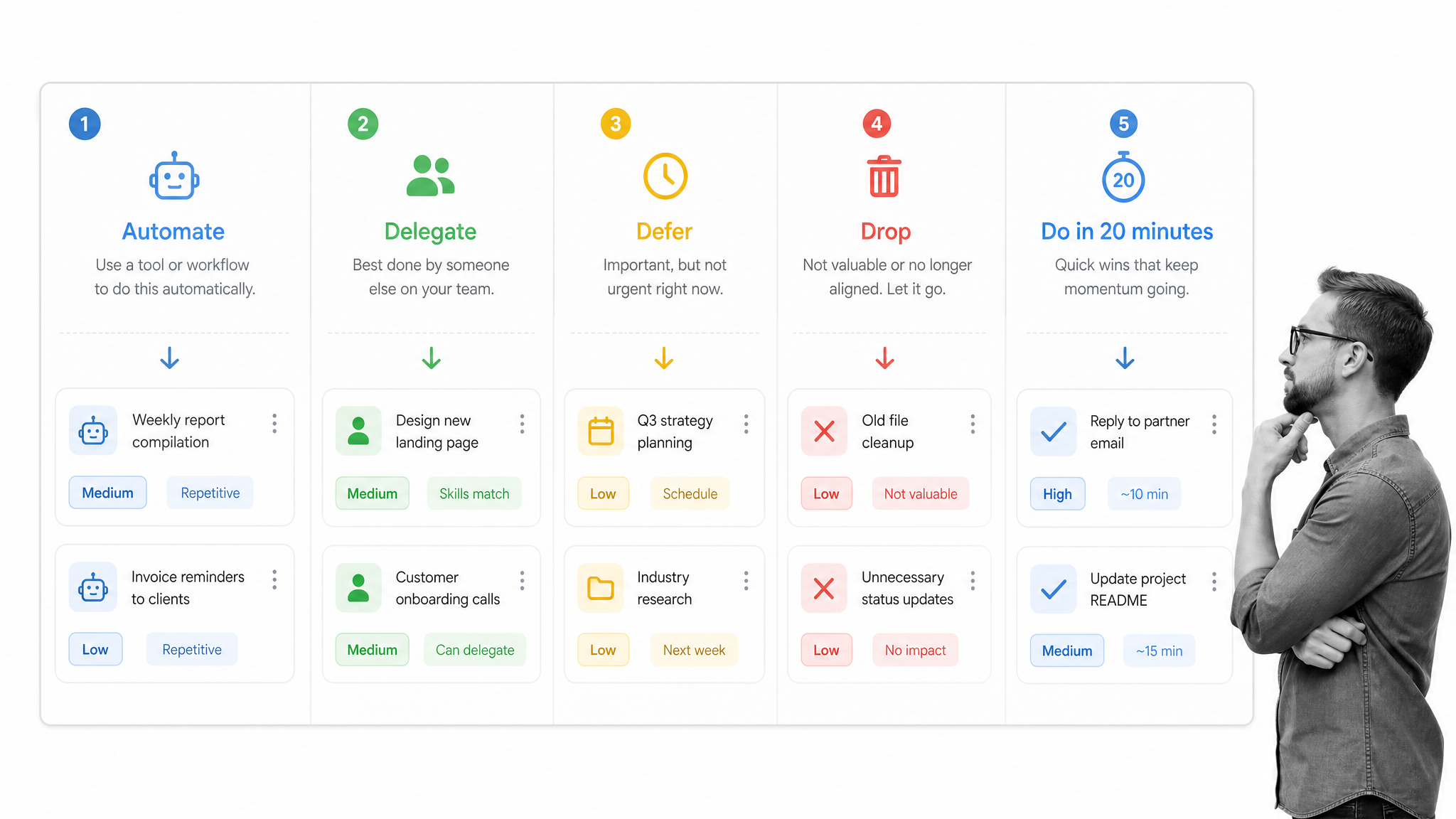
In line with GTD theory, I use the delegate, drop, do, or defer system, with the addition of automate. Thanks to workflow automation tools like Zapier, it is easy to set up quick links between apps and build the trigger for an integration into your everyday workflow.
Processing my inbox does not mean doing every task in there until it is done. It means making a decision:
- Automate: remove the manual step when the same trigger and action keep repeating.
- Delegate: assign the task to someone better suited to it. You cannot always be the expert.
- Defer: put a due date on it in your task manager, and stick to that deadline.
- Drop: declare it not worth the effort and archive the task.
- Do: if you can do the task in 20 minutes or less, clear it off now.
What this process actually looks like in action is going through the inbox list on my personal board and commenting on everything. If it needs to be delegated, I mention someone else and make a task to draw up proper instructions. If it needs to be deferred, I move it to the right list. If it needs to be dropped, I archive the card. If it needs to be done, it gets done.
4. Explain over video, not freeform Slack messages
Here is an example chat I have used before as a way to demonstrate how bad it is to rattle off a few messages and think they constitute instructions:
You: Hey, so I am going to be writing three posts a week now, so I am handing off newsletter writing to you.
Them: OK, what do I do?
You: Go into Mailchimp, make the newsletter, check it is OK and send it to everyone.
Them: Right, I will let you know if I have any questions.
Later that week, you get questions, a terrible newsletter, and complaints from subscribers about broken links. The person doing the work did not fail because they were careless. They failed because the instructions were unclear.
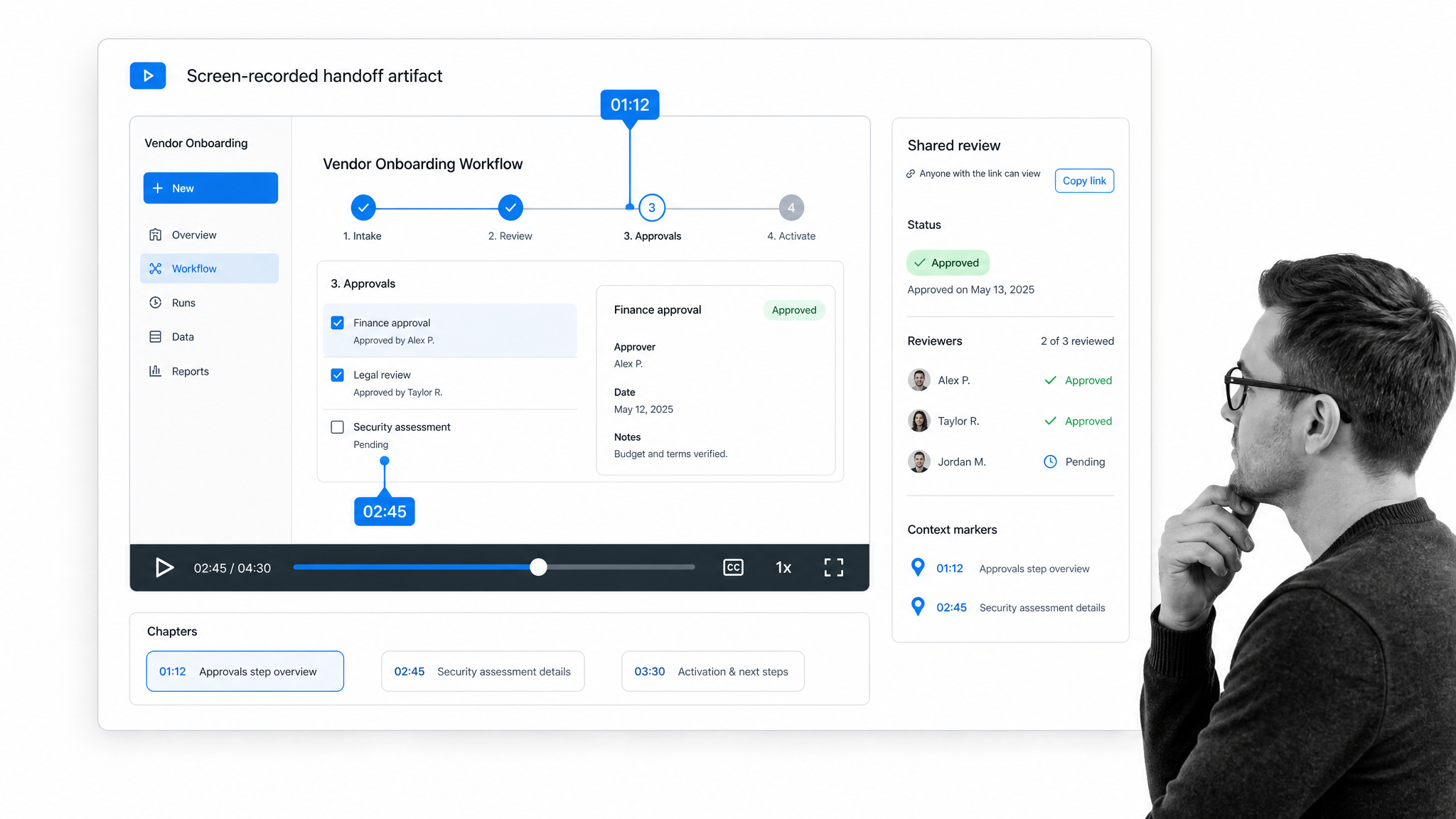
For one-off tasks, instead of informally giving unclear instructions to whoever has to deal with it, record a short video. A five-minute screen capture can show the click path, the judgment calls, and the expected result in a way a freeform chat thread rarely does.
Video is not a replacement for process. It is a fast way to explain context when the task is not recurring enough to justify a full workflow yet.
5. Create a process for anything you do more than twice
The great thing about startups is that your job is always evolving. You never know when you are going to be given different responsibilities and have to hand off something you are the expert in to someone else.
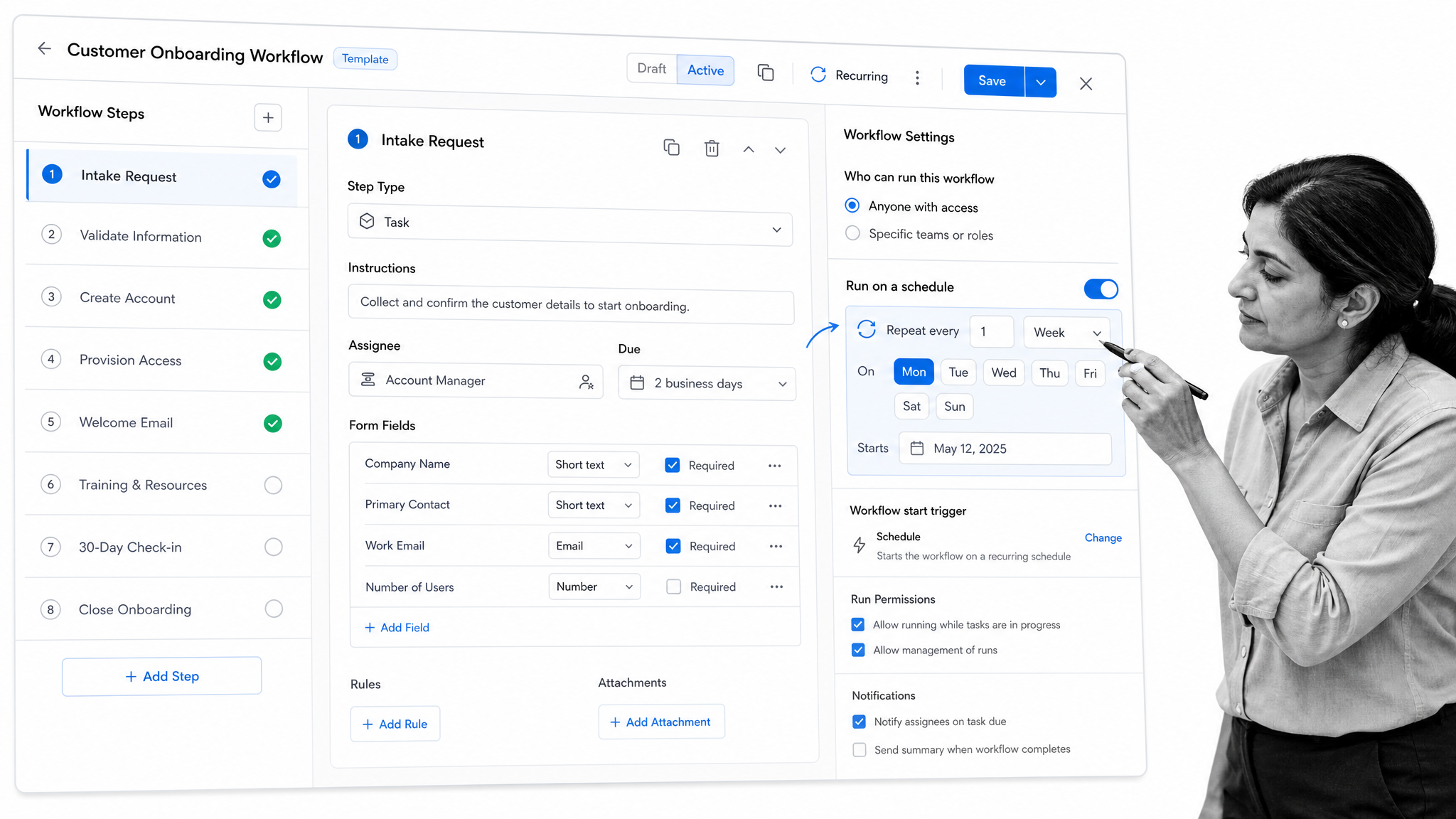
When that moment comes, it is best to be prepared with a comprehensive process that explains exactly how you did the work and how you kept the standard high. If you have done the task hundreds of times and kept the process updated as you go, it will be better than any training resource you try to assemble at the last minute.
For anything you have to do more than once, create a process for it. Want to learn more about creating processes? Read this guide on how to create a process.
Process Street is a Compliance Operations Platform for recurring work, approvals, and audit-ready execution. It is one product with Docs and Ops capability areas plus built-in AI, so teams can document the way work should happen, run that work reliably, and keep evidence in the same system. That is especially useful for remote teams because the process becomes the shared source of truth, not the loudest Slack thread.
For recurring tasks, handoffs, approvals, and compliance workflows, start with a documented process and then run the work from there. The more often a task repeats, the more valuable that process becomes.
6. Share Trello boards with your team, but keep a personal to-do list
As great as it is to work out loud, sometimes it is too noisy.
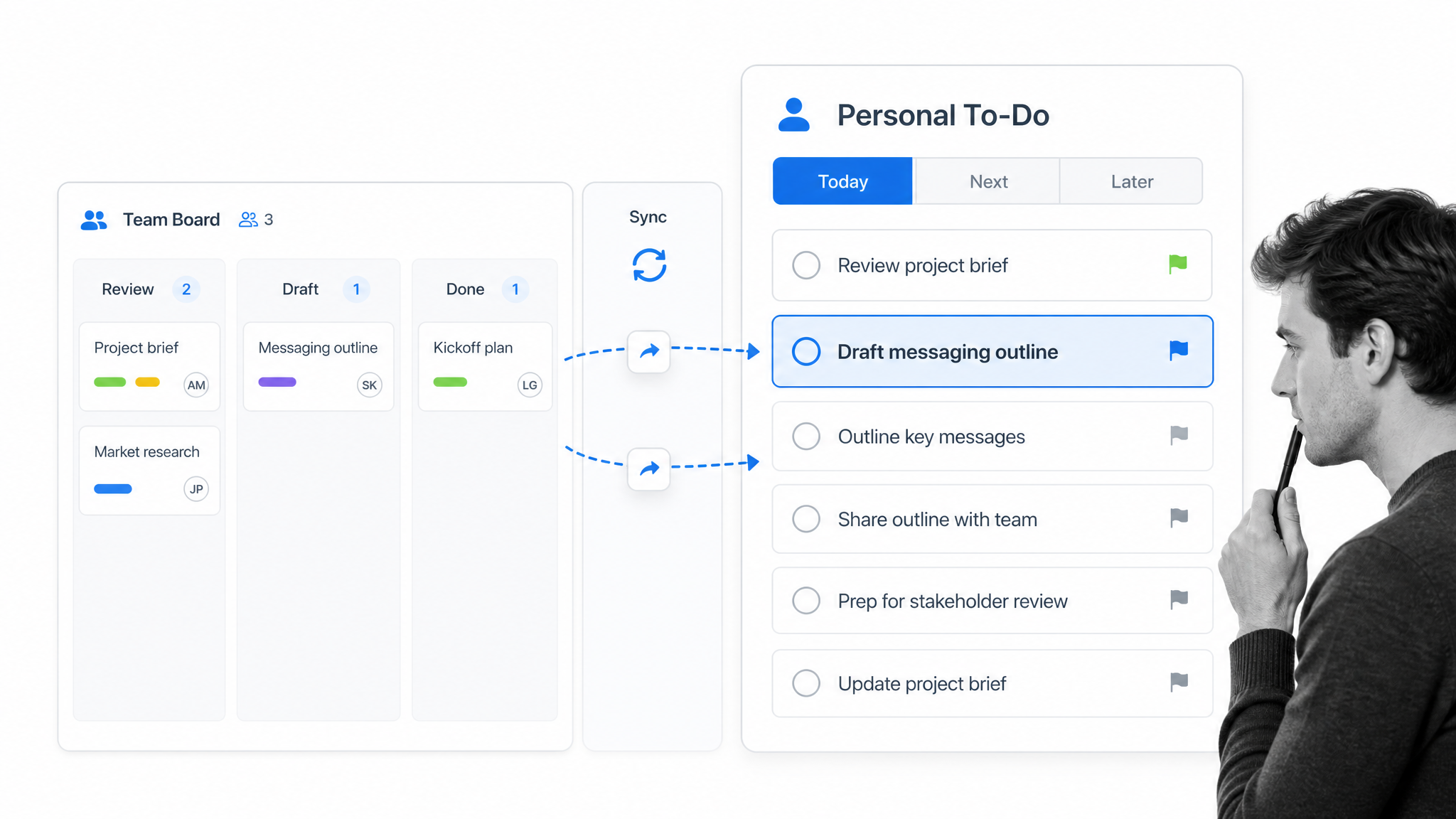
At Process Street, we used a shared Trello board to track and organize content creation. There was an ideas backlog a mile long, several different lists for preferred ideas and better developed ideas, and a lot of useful context. That was fine for dipping in, picking out an idea, and getting to work. It was not always fine when I wanted to look at my task list and see what was due.
To counteract that, I kept a personal task list. Updating several different places with the same information is hardly a world-class productivity hack, so the trick is to connect the shared board to your personal system. The board stays useful for team visibility. Your own to-do list stays useful for focus.
If you use Trello, Asana, Todoist, or another task manager, the same principle applies. Shared boards are for coordination. Personal lists are for execution. Do not force one tool to do both jobs perfectly.
7. Name your personal to-do list items so anyone could understand
Ever noticed a mystical to-do list item you added while in a rush? Something like “do that thing”? Something I learned the hard way about to-do lists is that they are only as useful as you make them.
No app can decipher your unstructured brain dump. If a task name needs the exact mental state you had when you wrote it, it is not a task. It is a future interruption.
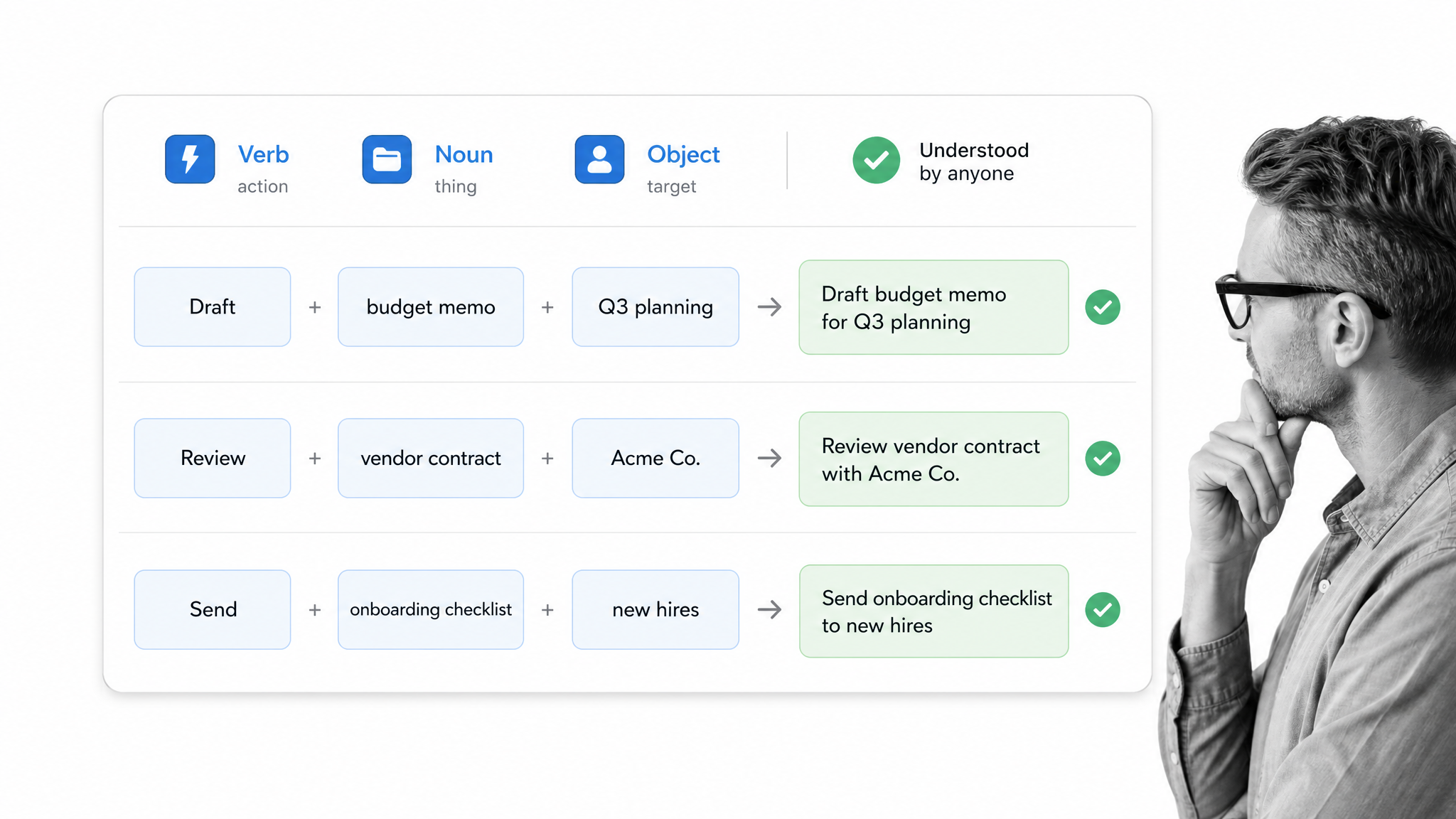
The general rule for writing to-do list items is verb the noun with the object. For example, “Draft newsletter intro for March launch” is better than “newsletter”. “Send edited demo video to support team” is better than “video thing”.
Because even if you put it off for a week or two, you will know exactly what to do when it comes down to it. Your future self, and anyone else who needs to help, should be able to understand the next action without decoding a private shorthand.
8. Always set a deadline (for yourself and others)
In the words of jazz man Duke Ellington: you do not need time, you need a deadline. Or, as I prefer in my case, this quote:
A deadline gets a writer’s work done better and faster than any inspiration, if only because inspirations don’t always come, but the deadline is always there. A.A. Patawaran
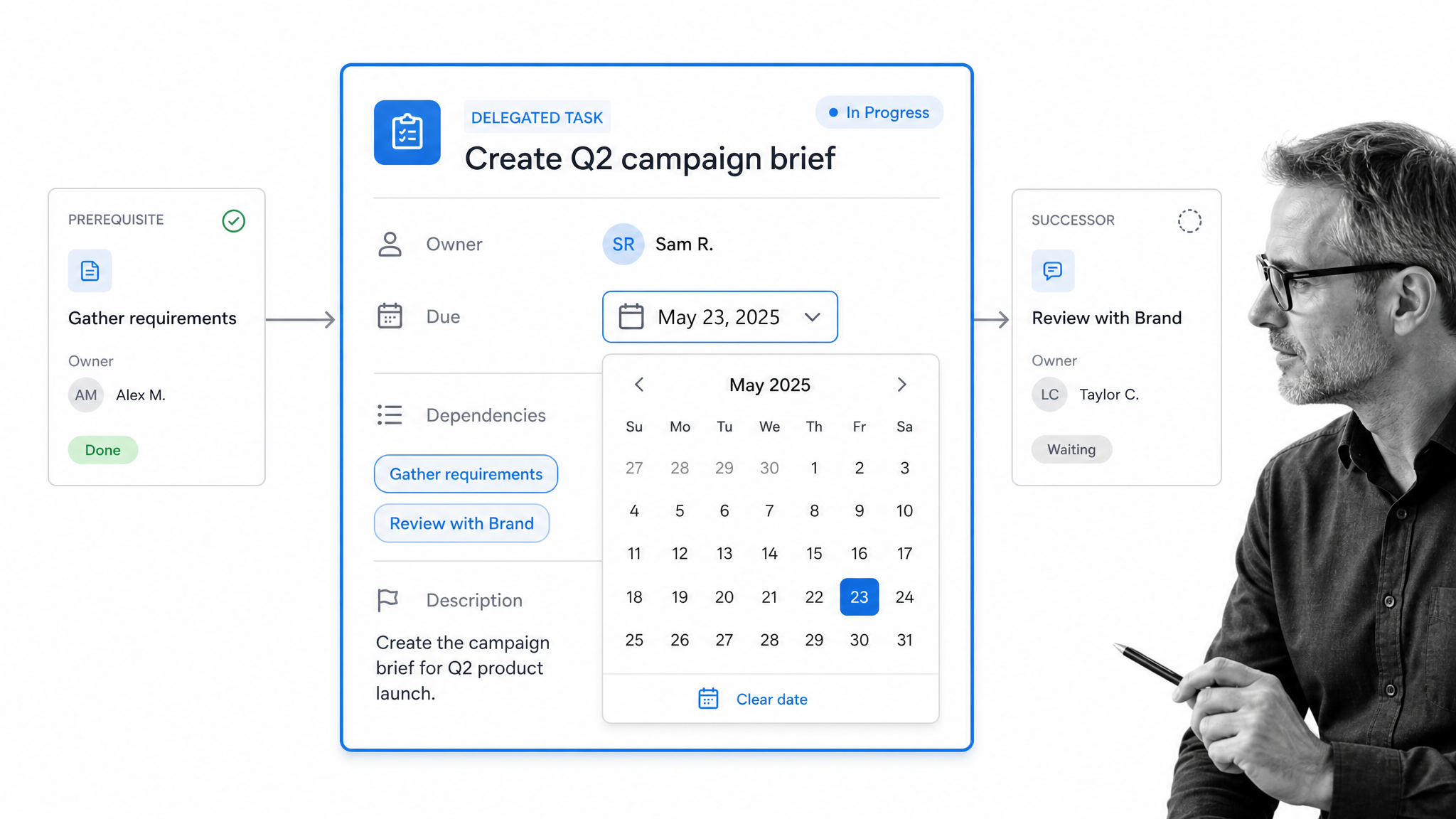
Back when I started delegating tasks that would otherwise land me hours in a spreadsheet, I made a terrible error. When I asked for something to be done, I would start with the fatal words “when you get a chance, could you…”.
This is unfair on whoever I am setting the task for because if I am delegating something, it is not because it could be done whenever and does not matter. It is because I need it done. Circling back and asking in a few hours whether the task is done is unfair if you gave no indication of your expectations.
So, to make it fairer and more productive for everyone, just set a deadline. By tomorrow. Before the end of the day. By the 29th of April. That way, you are helping others organize their own tasks and priorities, too.
Compared to others, this year has killed it
There is nothing like being thrown in at the deep end to force you to shape up. Before working as part of a team, I was a lone freelancer. And before that, I had an office job for about six months before tearing my hair out.
But this year, we learned a lot at Process Street, and this blog has been where we documented it. Remote work productivity comes down to the same habits again and again: preserve useful context, make work visible, decide what each task deserves, document recurring work, and give people clear deadlines.
If you want to keep improving how your remote team works, start by choosing one recurring task this week and turning it into a documented process.