





Customer lifecycle software is the connected set of systems and workflows that moves a customer from first awareness through engagement, evaluation, purchase, retention, and advocacy.
The strongest customer lifecycle software stack does not treat those stages as separate campaigns. It gives each team the right tool for its job, keeps customer context connected, and uses automation to move work across marketing, sales, service, and customer success without losing ownership or evidence.
This guide maps 13 current tools to the lifecycle stage where each is most useful. It also explains how customer lifecycle management differs from CRM, journey management, and lifecycle marketing, plus how to connect the stack without creating more tool sprawl.
- Understand the customer lifecycle stages
- Build awareness
- Promote engagement
- Support evaluation
- Reduce purchase friction
- Manage customers after purchase
- Promote advocacy
Understanding the customer lifecycle in detail
Customers pass through several stages as they interact with your brand. These stages make up the customer lifecycle, and are as follows:
- Awareness : This is the first stage of the customer lifecycle. During this stage, the prospect recognizes they have a problem and have an impulse to act and solve this problem. They see your offering as a potential solution.
- Engagement : Once your customers are aware of you, they’ll start to seek out your marketing content by following you on social media, signing up to your email, checking out your blog, etc. They’ll also start to pay attention to what others are saying about your brand. Your prospects are engaging with you.
- Evaluation : Once your customers have identified their problem to be solved, they’ll research the best solution. During this evaluation phase, customers will be comparing you to your competitors. Customers can use online, word-of-mouth, showrooms, sale representatives, or other sources of information.
- Purchase : This is crunch time. Your prospect has made their final decision. And because you employ effective customer lifecycle management techniques, your prospects have chosen you over your competitors.
- Post-purchase : Once your customers have made their purchase, the hard work doesn’t stop there. You want to retain your customers, and to do that you need to use the right post-purchase strategies. This means delivering an exceptional customer experience. This stage is all about preventing customer churn.
- Advocacy ♀️: Advocacy is about getting your existing customers to positively talk about your brand and offering. At this stage, you’ll want to cement your relationship with your customers. You should continue to provide a high-quality, supporting service, plus nurture a connection with proactive engagement. Your aim is to create an emotional bond with your customers. If you do this well, you’ll see your customers jumping back into the purchasing stages of their lifecycle, upgrading their purchases, and encouraging others to do the same.
You want to move your customers from the awareness stage to the advocacy stage in as little time as possible. There are a plethora of software tools out there to help you do this. With this in mind, we’ve scoured the software space to find the best tools you should use for each customer lifecycle stage.
Without further ado, let’s jump straight to it!
Customer lifecycle software to help build brand awareness
Prospects enter the customer lifecycle at the awareness stage. During this stage, you must have a clear idea about where your target audience spends most of their time. Prospects research solutions across social, search, communities, review sites, and owned content. This means the process of identifying, reaching, and analyzing your target audience’s online activity should be trouble-free.
Below are tools to help you during this awareness stage.
Use Hootsuite to manage social publishing
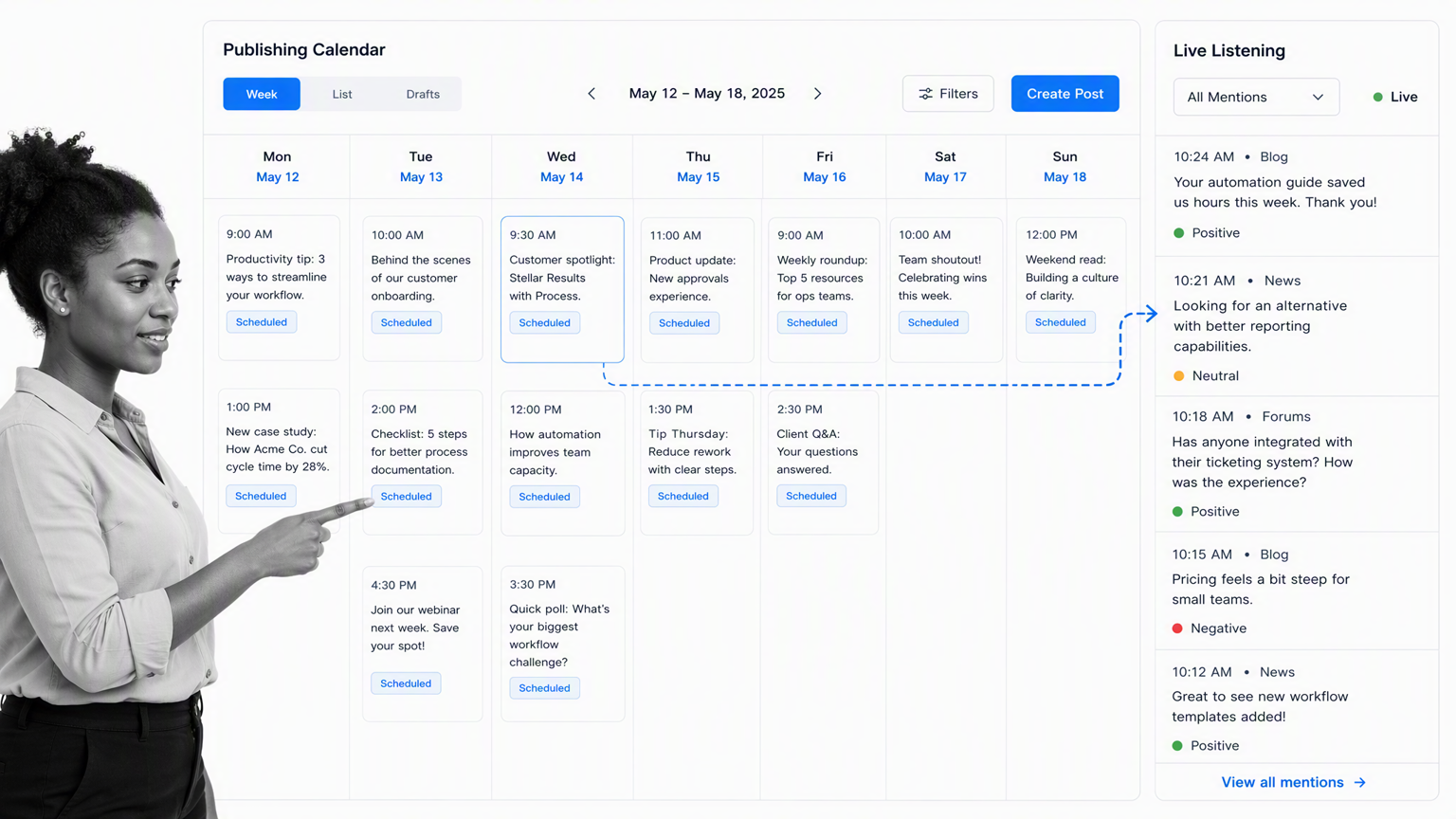
Social media marketing is a useful interruptive marketing style that helps build brand awareness. Use Hootsuite to help you with your social media marketing strategy.
The platform is used for social media management. Users can schedule posts across multiple social media accounts to build brand awareness. Once more, Hootsuite allows you to find, distribute, manage and optimize your social content.
Features:
- Social media analytics
- Campaign optimization
- Social ads and social engagement
- Follower analysis
- Post-performance
Plans and packaging change. Check Hootsuite plans for current details.
Use WordPress to publish content
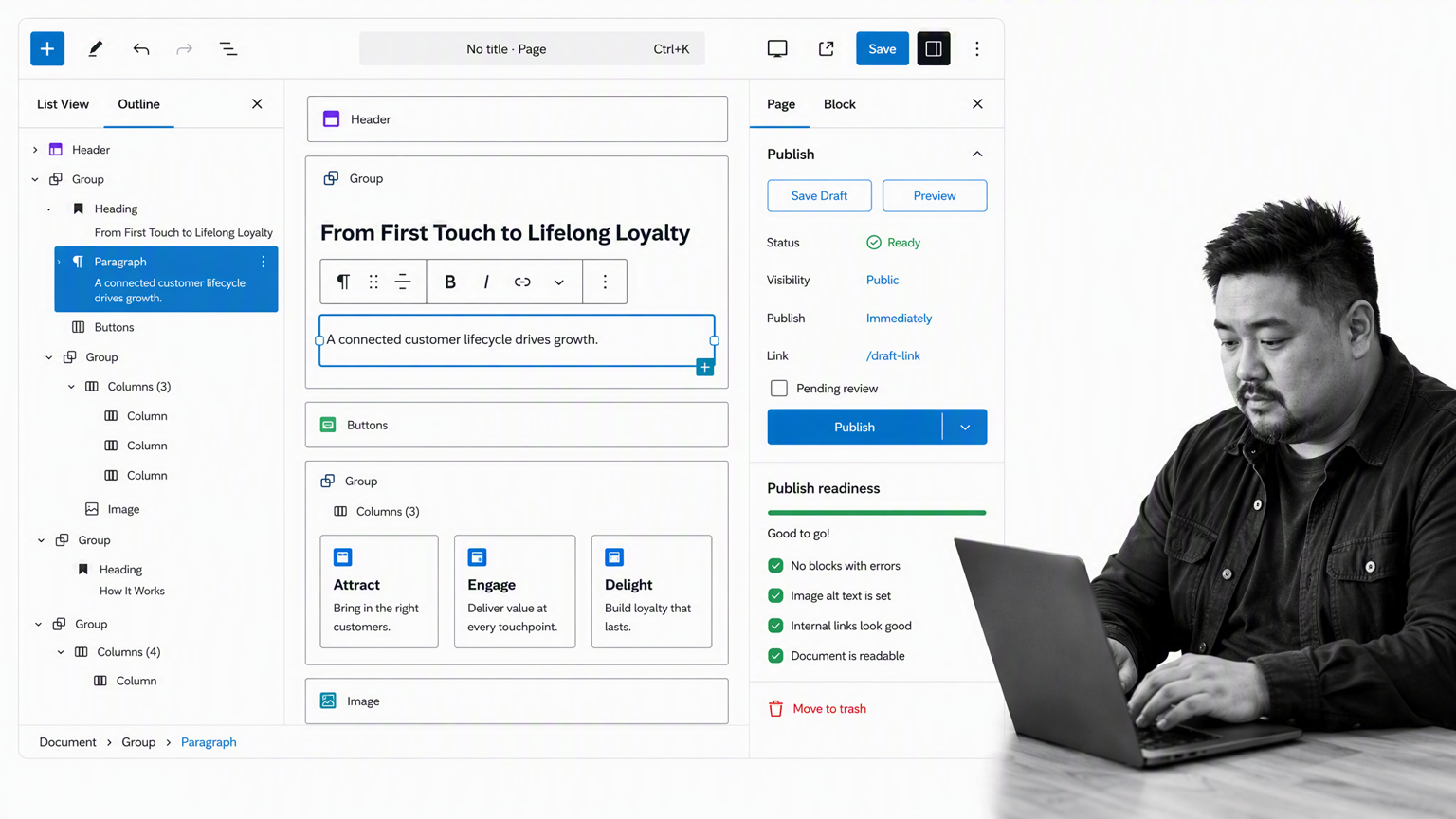
Creating free and useful content is intent-driven marketing, and should be used alongside your interruptive marketing initiatives. Content marketing is intent-driven because your customers are searching for the information you’re providing for free. Use WordPress to support your content marketing strategy.
WordPress can mean the open-source WordPress.org software or the hosted WordPress.com service. Both support owned content, while the right hosting, governance, plugin, and publishing model depends on your team’s technical capacity and control requirements.
Features:
- Content authoring
- Content scheduling
- Branding/themes
- Search Engine Optimization (SEO)
- Plug-ins/Widgets/Apps
Plans and packaging change. Check WordPress.com plans for current details.
Customer lifecycle software to promote customer engagement
When your customers become aware of your brand, they’ll want to engage with you if your product or service is relevant to their interests. A blog and social media marketing are both useful here, but there are other additional methods – and supporting software – you can use to build engagement.
Use Insightly to manage contacts
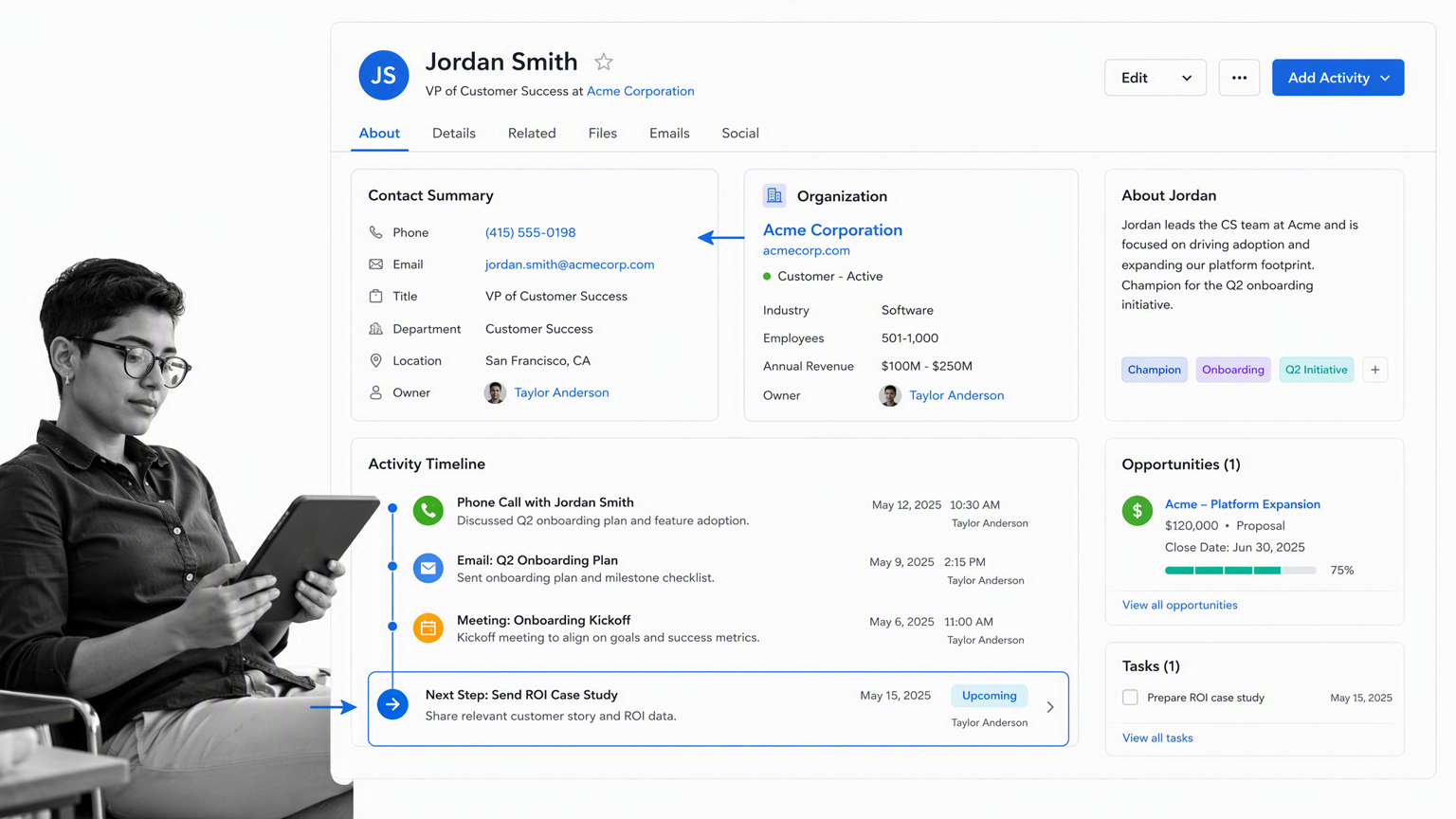
Insightly supports customer engagement by integrating activities such as contact management, sales management, opportunities, and task tracking.
With these activities interconnected, your team has a holistic view of each opportunity or contact, meaning you can anticipate the needs of your customers and deliver superior customer experiences.
With Insightly, you can automate various marketing activities and help deliver great content to the customer. This content gives a personalized feel for increased engagement. Insightly offers a centralized platform to store customer-centric data to track the customer journey.
Features:
- Contact and account management
- Task/activity management
- Lead management
- Customer support portal
- Social collaboration features
- Reporting and forecasting
Plans and packaging change. Check Insightly CRM for current details.
Use Salesforce CRM for a 360-degree view of each customer
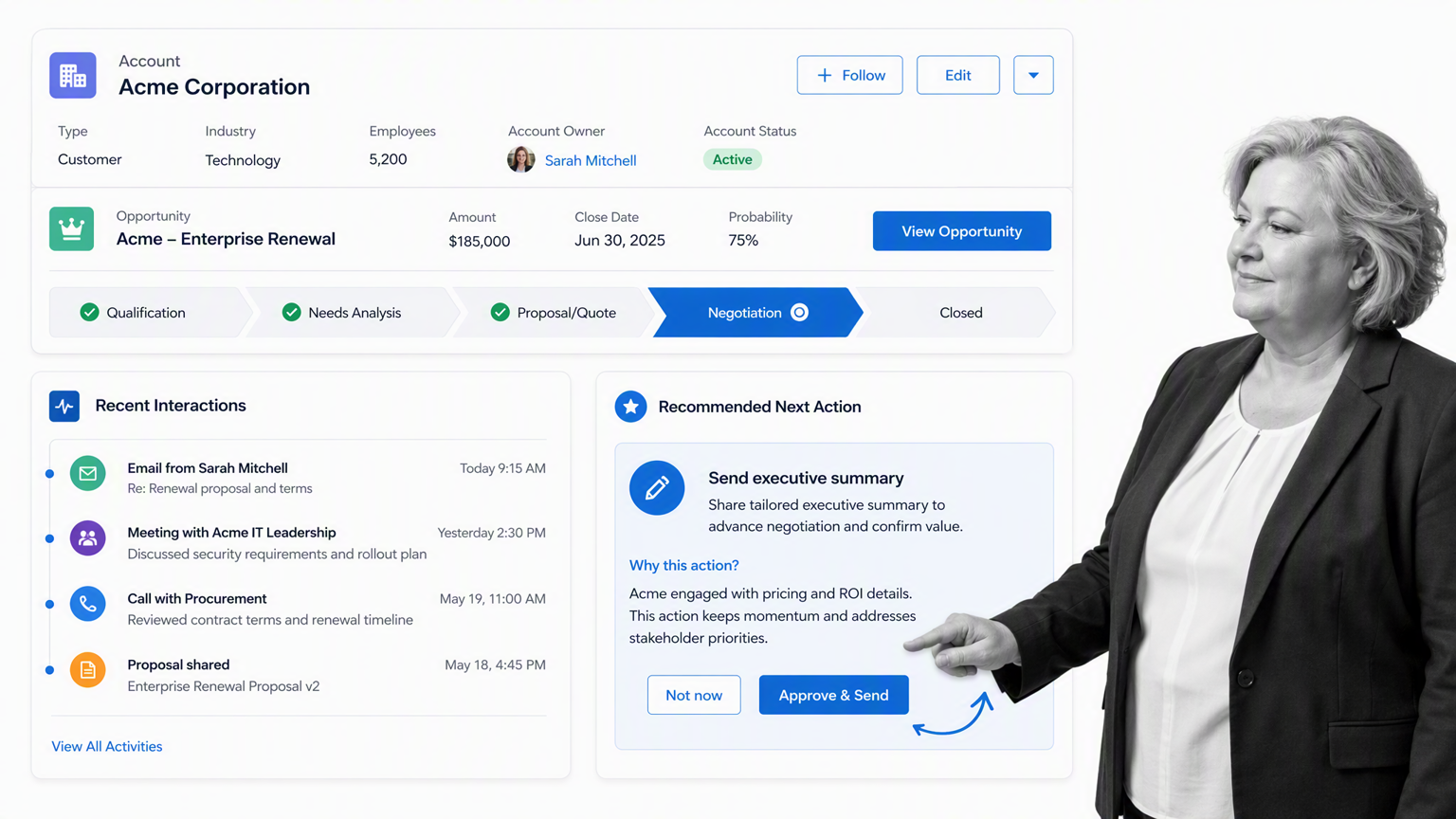
Salesforce CRM promotes customer engagement by creating a 360-degree view of each customer. This means you’ll be able to see a customer’s activity, how they’ve engaged with your marketing efforts in the past, and other insights powered by artificial intelligence (AI).
Salesforce combines the customer record with activity, opportunity, and data signals so teams can prioritize the next action and automate appropriate outreach without losing account context.
Features:
- Contact and account management
- Customer contract management
- Product and price list management
- Lead management
- Campaign management
Plans and packaging change. Check Salesforce Sales pricing for current details.
Customer lifecycle software to ease customer evaluation
Evaluation is the point where prospects compare your offer with alternatives and decide whether the risk of changing is worth it. The strongest teams answer three questions with evidence:
- What is unique about the product?
- What proof, guarantee, or control reduces buyer risk?
- What remaining detail could stop the purchase?
CRM data tells you who the prospect is. Journey analytics and voice-of-customer tools help explain what they are doing, what they are asking, and where the decision is stalling.
Use HubSpot to connect feedback with customer context
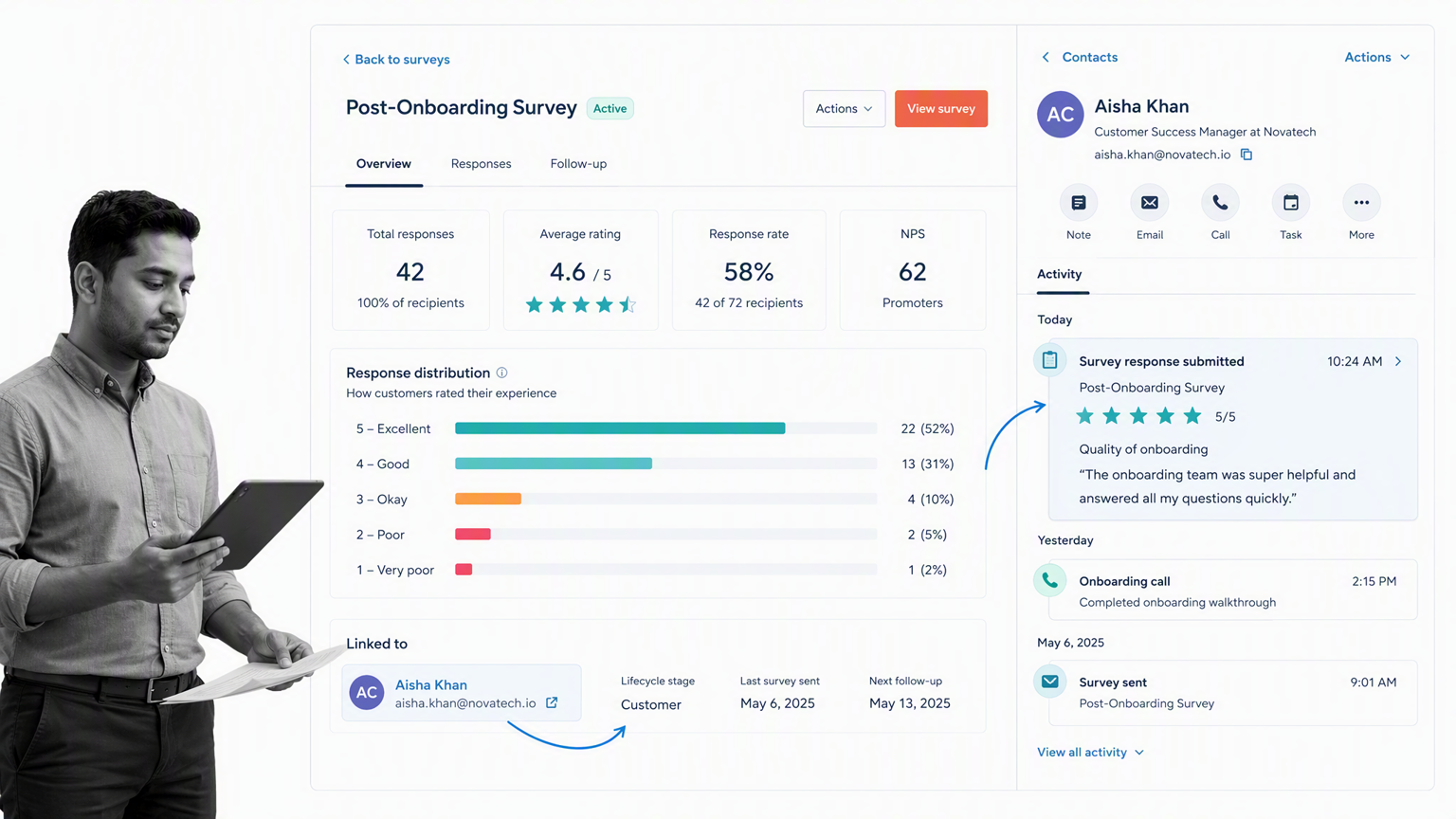
HubSpot Customer Feedback works best for teams already using HubSpot CRM and Service Hub. Survey results can sit beside contact, deal, service, and campaign activity, which makes it easier to connect a stated concern with the interactions that produced it.
Use pre-purchase feedback sparingly. Short intercept surveys can expose confusing pages, missing proof, or purchase friction. NPS, CES, and CSAT are more useful after customers have experienced the product or service, so do not force every feedback metric into the evaluation stage.
Use Mopinion to find digital journey friction
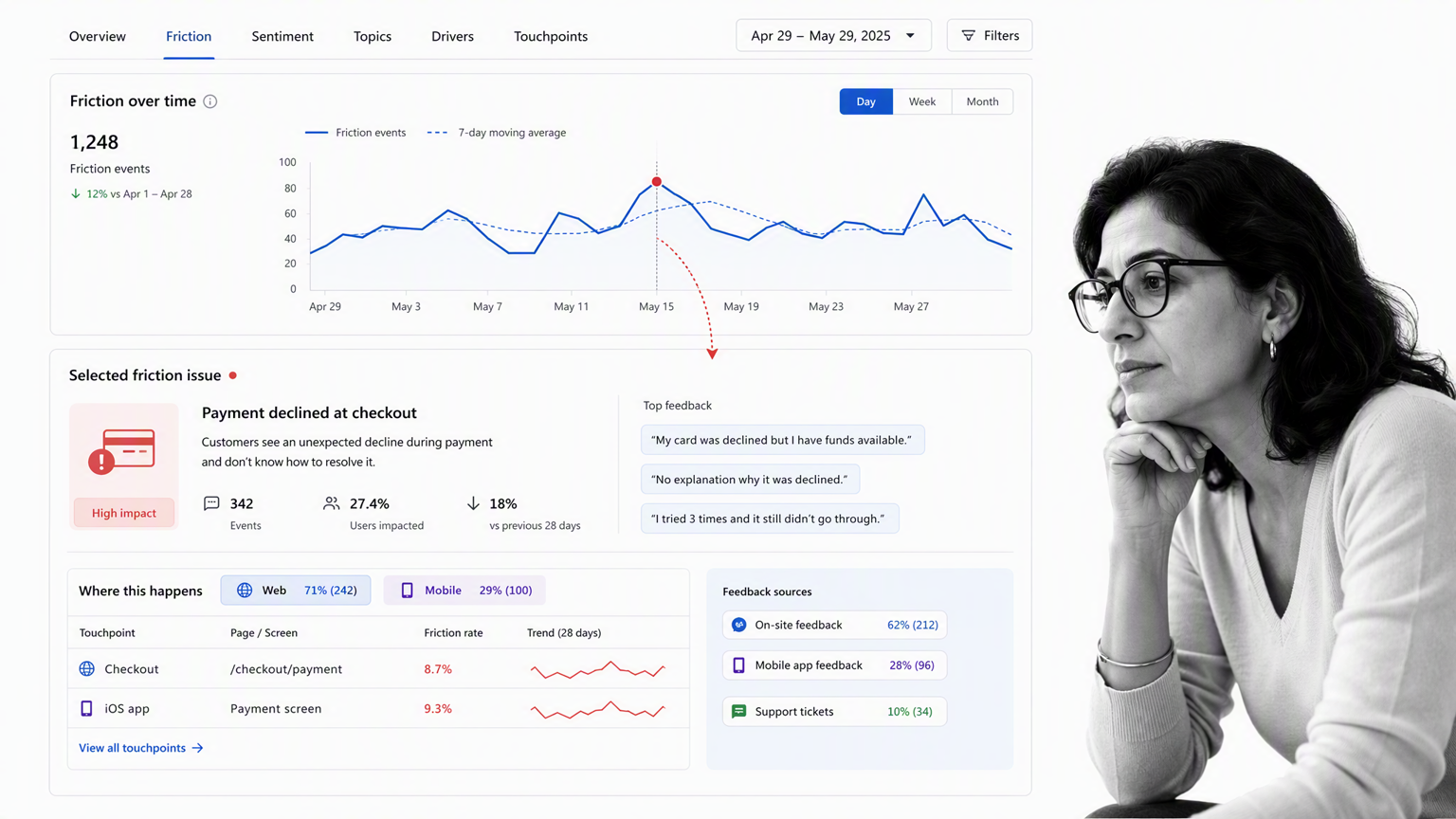
Mopinion is a specialist voice-of-customer platform for collecting and analyzing feedback across websites, mobile apps, and email. Target feedback by page, behavior, device, or audience segment to learn why a prospect hesitated or abandoned a step.
That makes Mopinion most useful when a general analytics dashboard tells you where conversion dropped, but not why. Use the feedback signal to improve the journey, then verify whether the change reduced friction.
Customer lifecycle software to help customers make a purchase
Purchase software should remove friction without creating a disconnected handoff. Buyers need fast answers, a clear next action, and payment methods that fit their context.
Use Apple Messages for Business to reduce conversation friction
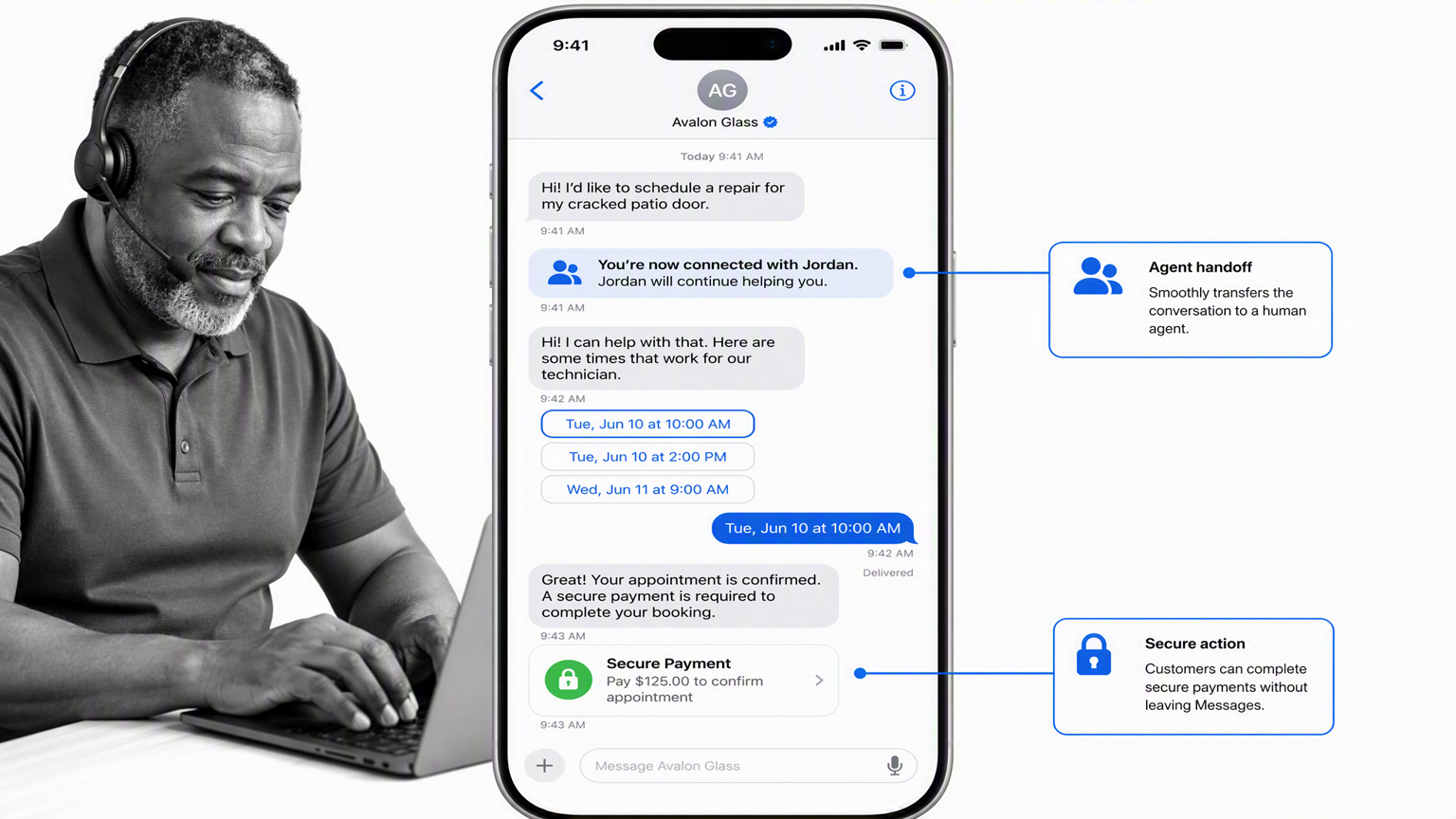
Apple Messages for Business, previously called Apple Business Chat, lets customers contact participating companies from Messages. Depending on the business and its messaging service provider, customers can ask questions, schedule appointments, choose from structured options, and complete supported secure actions.
Treat it as a channel inside an omnichannel service system, not as a standalone customer lifecycle platform. The value comes from carrying the conversation and its outcome back into the customer record and the process that owns the next step.
Use OptinMonster to convert high-intent visitors
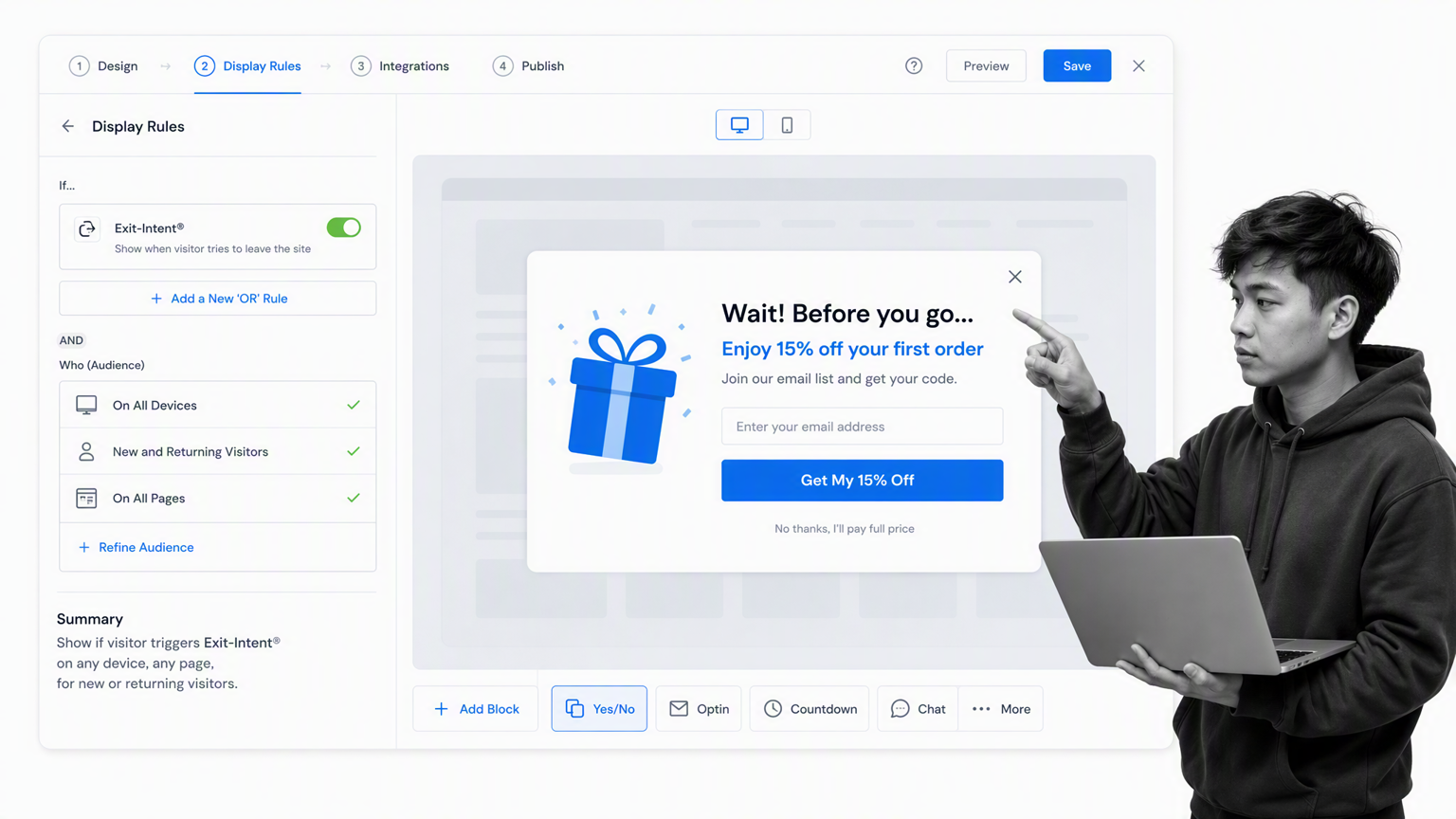
OptinMonster is an on-site conversion tool for targeted forms, offers, and campaigns. Behavioral rules such as exit intent, page history, and audience attributes can present a relevant next step when a visitor shows buying intent.
It is useful for capturing or recovering demand, but it is not checkout infrastructure. Connect the resulting lead or conversion event to the CRM and the workflow that owns follow-up.
Expand payment choice with PayPal
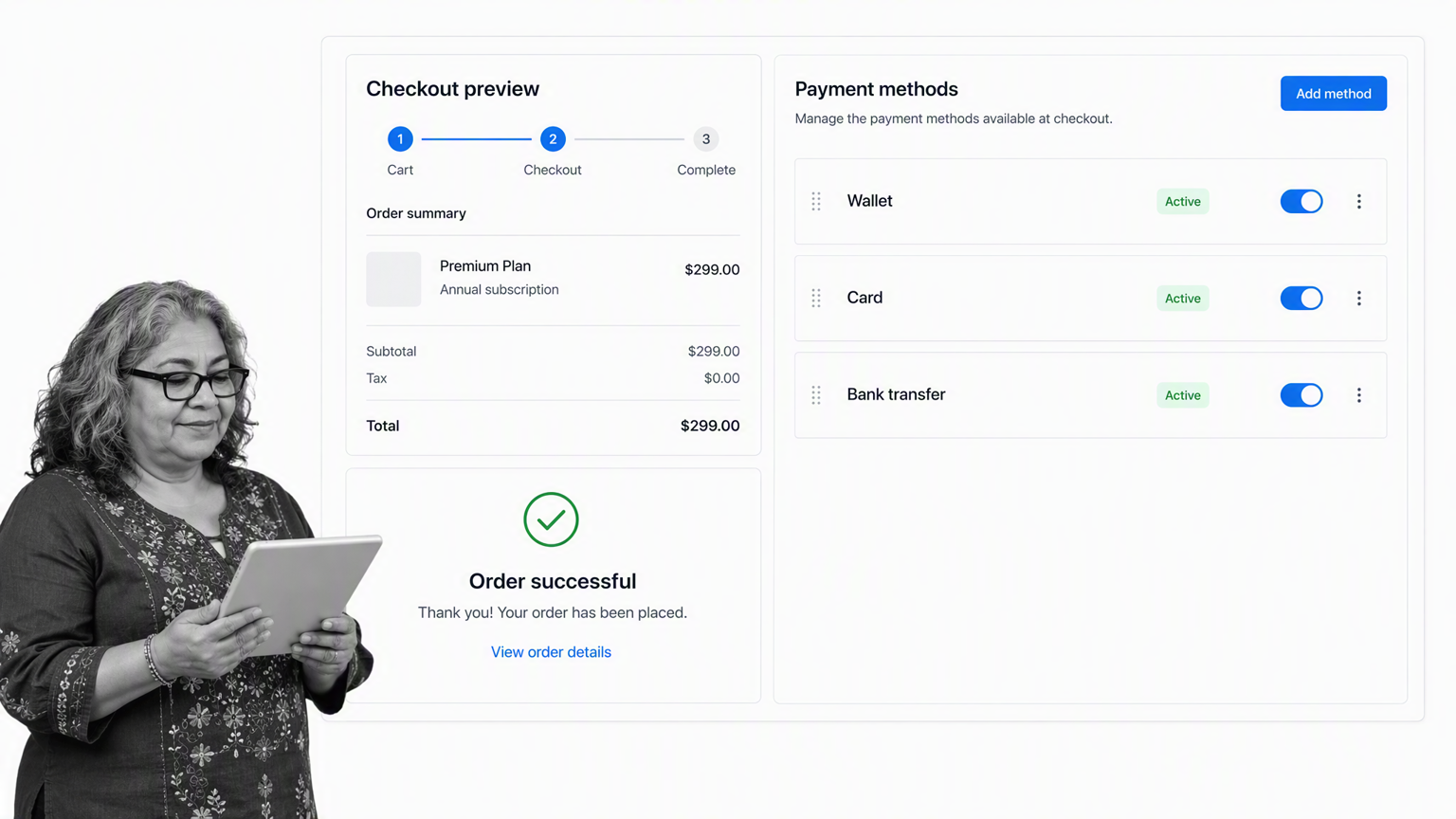
PayPal can add a familiar wallet and payment option to online checkout. The right payment mix depends on country, customer preference, order value, device, and business model, so treat PayPal as one option alongside cards, Apple Pay, Google Pay, bank payments, and relevant local methods.
Do not optimize only for the number of methods. Measure approval rates, abandonment, fraud, refunds, support volume, and the quality of the order handoff into fulfillment and customer success.
Customer lifecycle software after purchase
The post-purchase stage of customer lifecycle management aims to increase CLV and retain your customers. In this section, we present the tools to help you do that.
Use Process Street to deliver consistent customer experiences
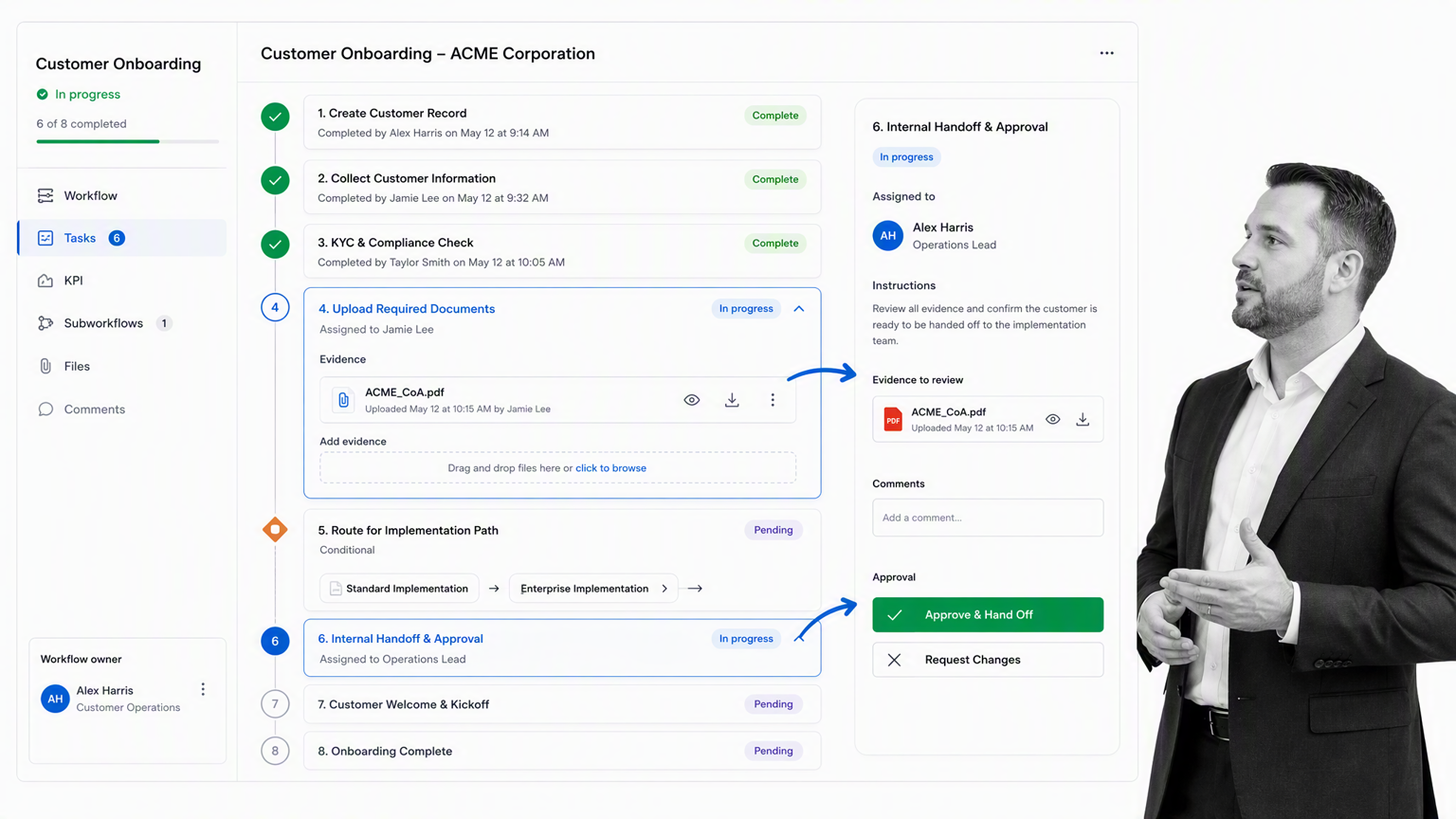
Process Street is a single Compliance Operations Platform with Docs and Ops capability areas plus built-in AI. Docs keeps procedures and customer-facing standards governed. Ops turns them into workflows with assigned tasks, conditional routing, approvals, evidence, and audit history.
For post-purchase work, that means onboarding, implementation, support escalations, renewals, and expansion handoffs can follow one controlled process. Teams can standardize the work, automate repetitive actions, route exceptions to the right owner, and prove what happened for each customer.
A strong place to start is a governed customer success onboarding playbook that connects the promise made in sales to the work delivered after purchase.
- Docs: govern the procedures, policies, and customer standards the team must follow.
- Ops: execute the workflow, assign owners, enforce approvals, and collect evidence.
- Built-in AI: help create, run, and improve the process while humans retain control over high-stakes decisions.
Use ChurnZero to increase customer retention
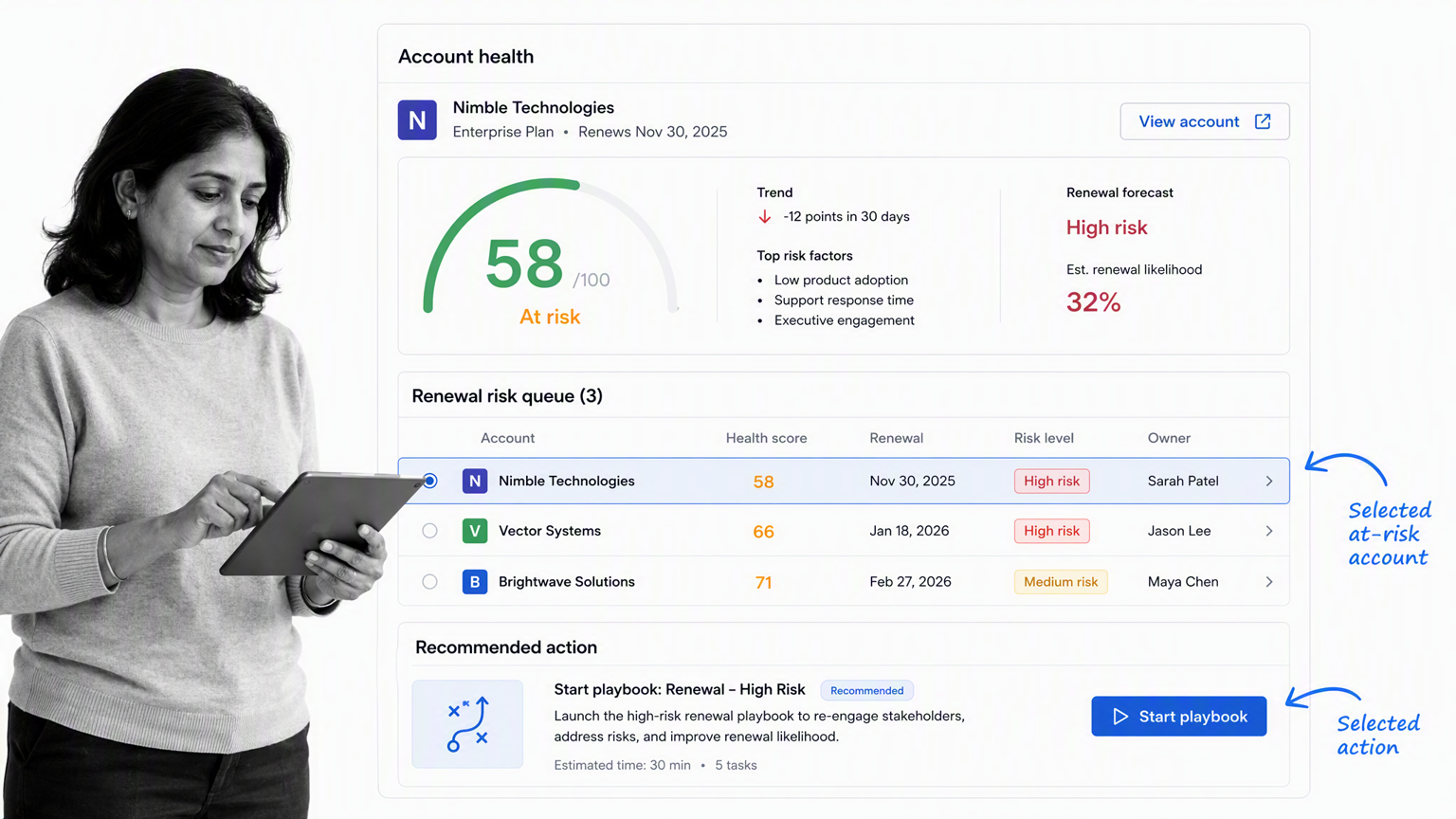
ChurnZero is a real-time customer success platform that helps subscription businesses fight customer churn during the post-purchase phase. The ChurnZero platform is uniquely designed to integrate with CRM systems. By doing so, ChurnZero:
- Helps businesses understand how their customers use their product/service.
- Assesses customer health and the likelihood a customer will renew product/service subscriptions.
- Gives businesses the means to automate and personalize the customer experience through timely and relevant touchpoints.
Features:
- Customer health scores
- Customer profiles and segments
- Customer monitoring
- Reporting and dashboards
- Playbooks
Plans and packaging change. Check ChurnZero demo information for current details.
Customer lifecycle software tools to promote customer advocacy ♀️
Once your customers have purchased your offering, and they are satisfied with the experience, you then want them to be pillars of your brand. Customer advocates are those that spend the most money, bring in customers and shout about your brand from the rooftops. This is the final stage of the customer lifecycle, and below are the tools to use during this stage.
Use Influitive to build a community of advocates
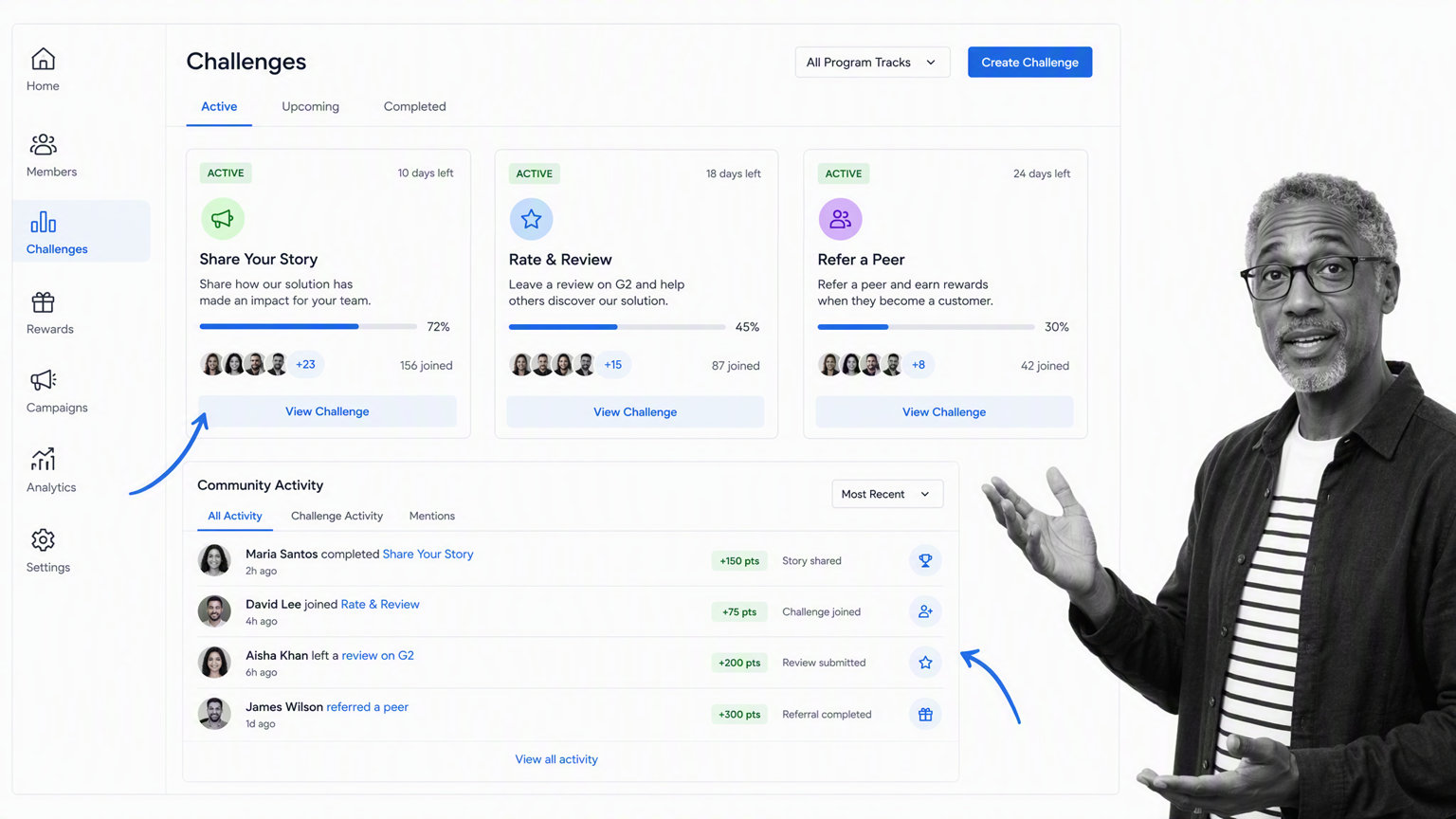
Influitive allows you to build a community of advocates and invite your customers, developers, partners, and employees to complete challenges, referrals, product reviews, social media posts, plus more. As your customers complete these personalized challenges – which you can target at specific groups – they earn points, badges, and move through different levels.
You can easily visualize and report on the customer activities completed and the ROI of those activities by integrating Influitive with your CRM – like Salesforce.
Features:
- Social network integration
- Contact sync
- Customer engagement
- Downloadable reports
- Qualitative solutions
- Social media integration
Plans and packaging change. Check Influitive pricing information for current details.
Use GrowSurf to focus on the referral aspect of advocacy
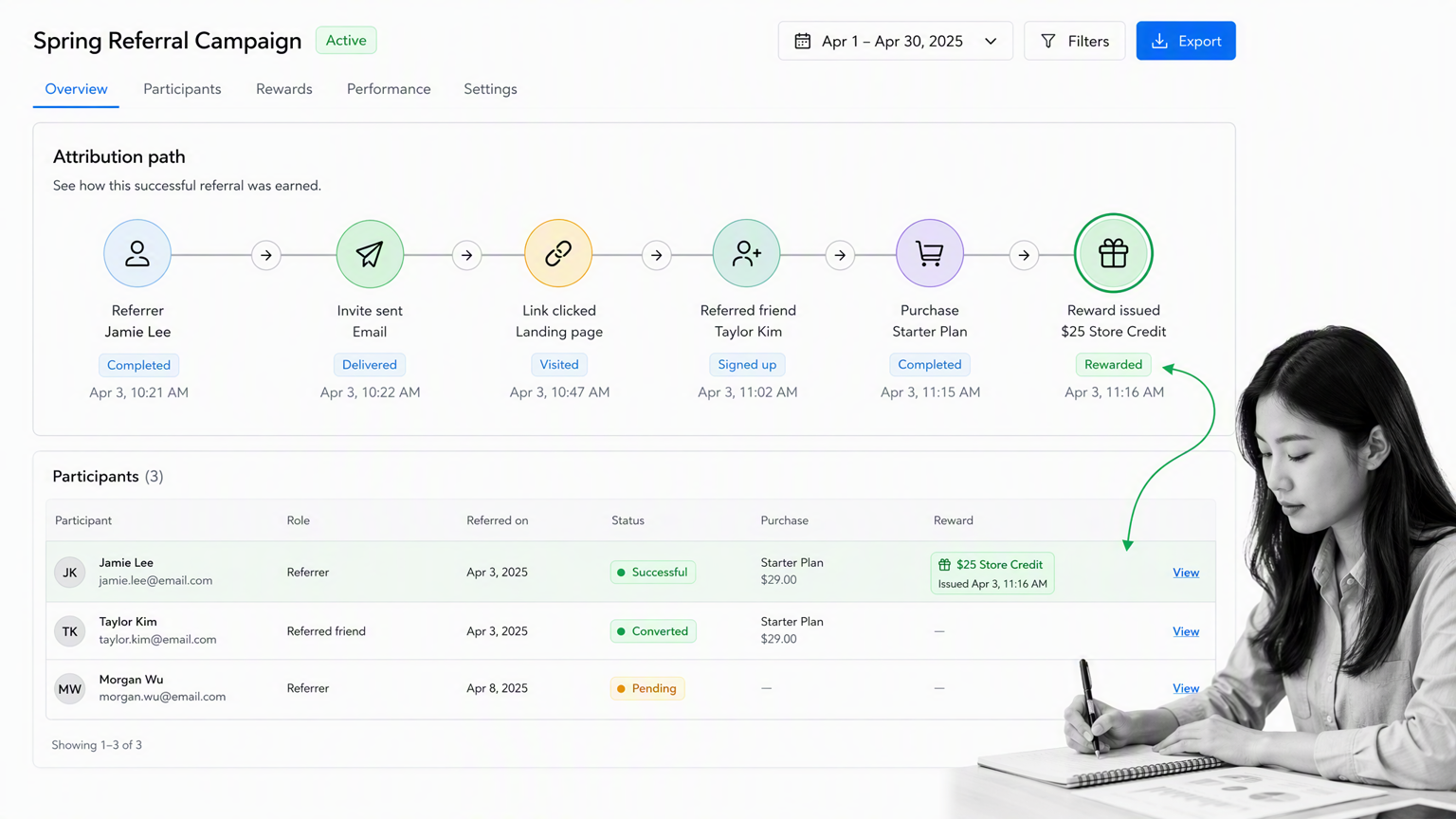
Use GrowSurf to focus on the referral side of brand advocacy. GrowSurf is a leading software that allows you to set up, automate, and track all of your brand advocates using GrowSurf’s simple and effective referral system.
With GrowSurf you can launch a customer-to-customer referral program to incentivize word-of-mouth referrals and grow organically.
Features:
- Activity dashboard and tracking
- Affiliate marketing
- Alerts/notifications
- Campaign analytics, management, and planning
- Customizable branding
Plans and packaging change. Check GrowSurf product information for current details.
Connect the customer lifecycle software stack with Process Street
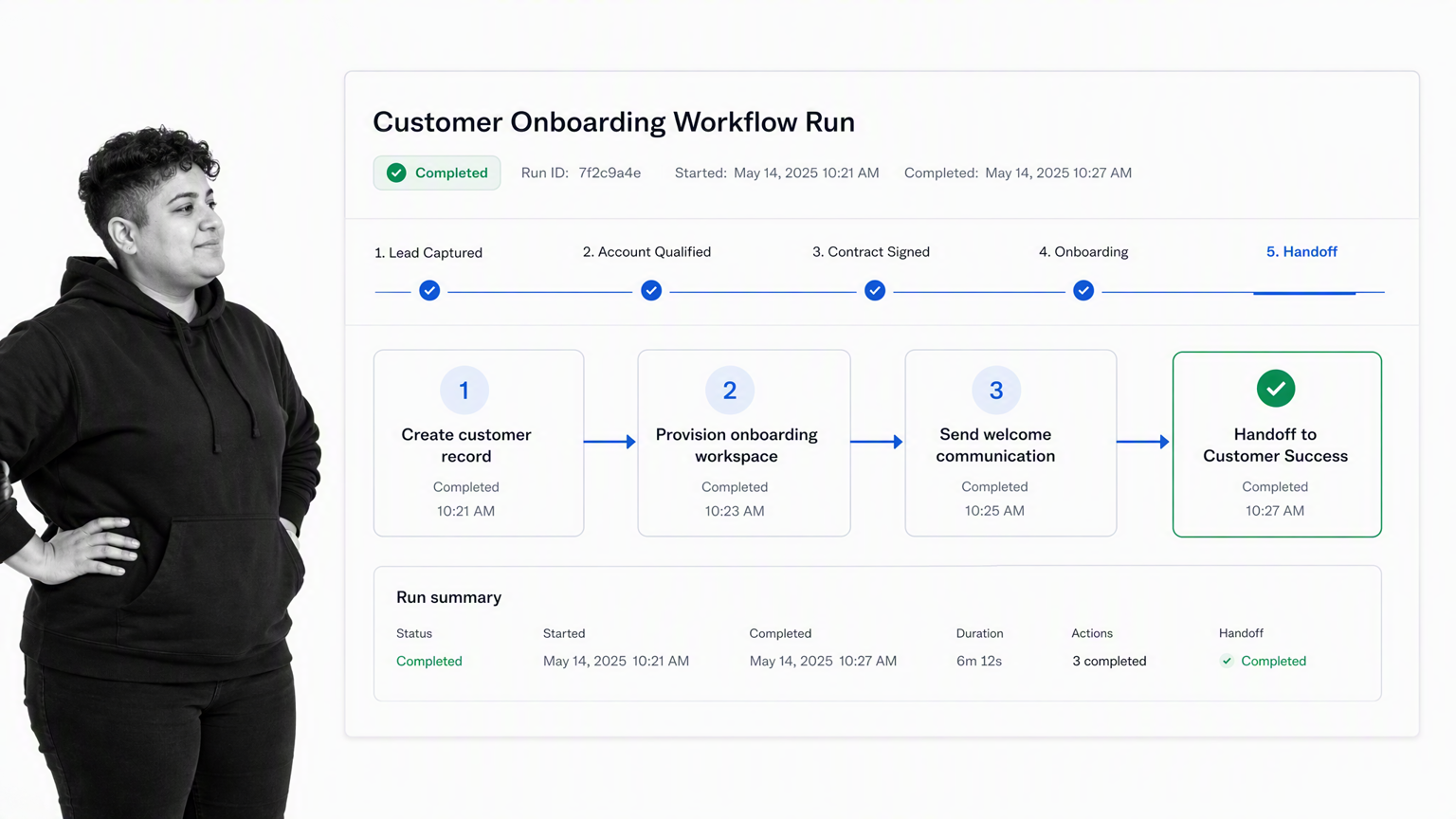
The tools in this guide serve different stages, but customers do not move through the lifecycle in a perfectly straight line. They pause, return, skip ahead, and move backward. The operating process must keep ownership and context intact when that happens.
Process Street provides the controlled process layer between those systems. A lifecycle workflow can create or update records, trigger messages, assign work, request approval, and preserve evidence as the customer moves from one team to the next.
Process Street has direct, universal integrations to 5,000+ systems. Need a new one? An AI agent builds it on the fly. Zapier, Microsoft Power Automate, and other integration partners can still support additional connection patterns, but they are not the only way to connect the stack.
Start with the handoffs that currently lose context: marketing to sales, sales to onboarding, onboarding to customer success, support to product, and renewal back to advocacy. Then use the Process Street integrations guide to connect each step to the system that owns the data.
Customer lifecycle software FAQs
What is customer lifecycle software?
Customer lifecycle software is the connected set of systems and workflows used to manage customer activity from awareness through engagement, evaluation, purchase, retention, and advocacy.
What are the main customer lifecycle stages?
A practical model uses six stages: awareness, engagement, evaluation, purchase, post-purchase, and advocacy. Post-purchase often includes onboarding, activation, adoption, support, renewal, and expansion.
How is customer lifecycle software different from CRM?
A CRM is usually the system of record for customer and opportunity data. Customer lifecycle software is the broader stack around that record, including engagement channels, workflow orchestration, support, feedback, analytics, payments, retention, and advocacy.
How should you choose tools for a customer lifecycle stack?
Map the lifecycle stages and the handoffs between teams first. Choose tools that solve a real gap, share data reliably, support automation, provide useful evidence, and do not create more ownership ambiguity than they remove.