The File Widget lets you upload files directly into your workflows so that anyone running the workflow can access and download those files. Select multiple files at once and upload them in parallel — no need to repeat the process for each document.
Use it to share important documents, templates, or resources, like an employee handbook or onboarding packet, that your team or guests need throughout the process.
The File Widget is ideal for:
The same files will be available every time the workflow is run.
The File Widget supports uploading most generic file types up to 250MB each. (.exe file type is not supported)
Users: Only Admins or a Builder who has been given ‘edit’ access can edit workflows.
Start in your Library and look for the workflow you’d like to add files into. Click the three dots next to your workflow’s name (or click its name). From there click “Edit” in the top right corner.
Next click on the task you’d like to add a file into, then drag and drop or click the “File” widget from the right-hand menu, under “content”. The icon for this is a piece of paper with the corner folded over.
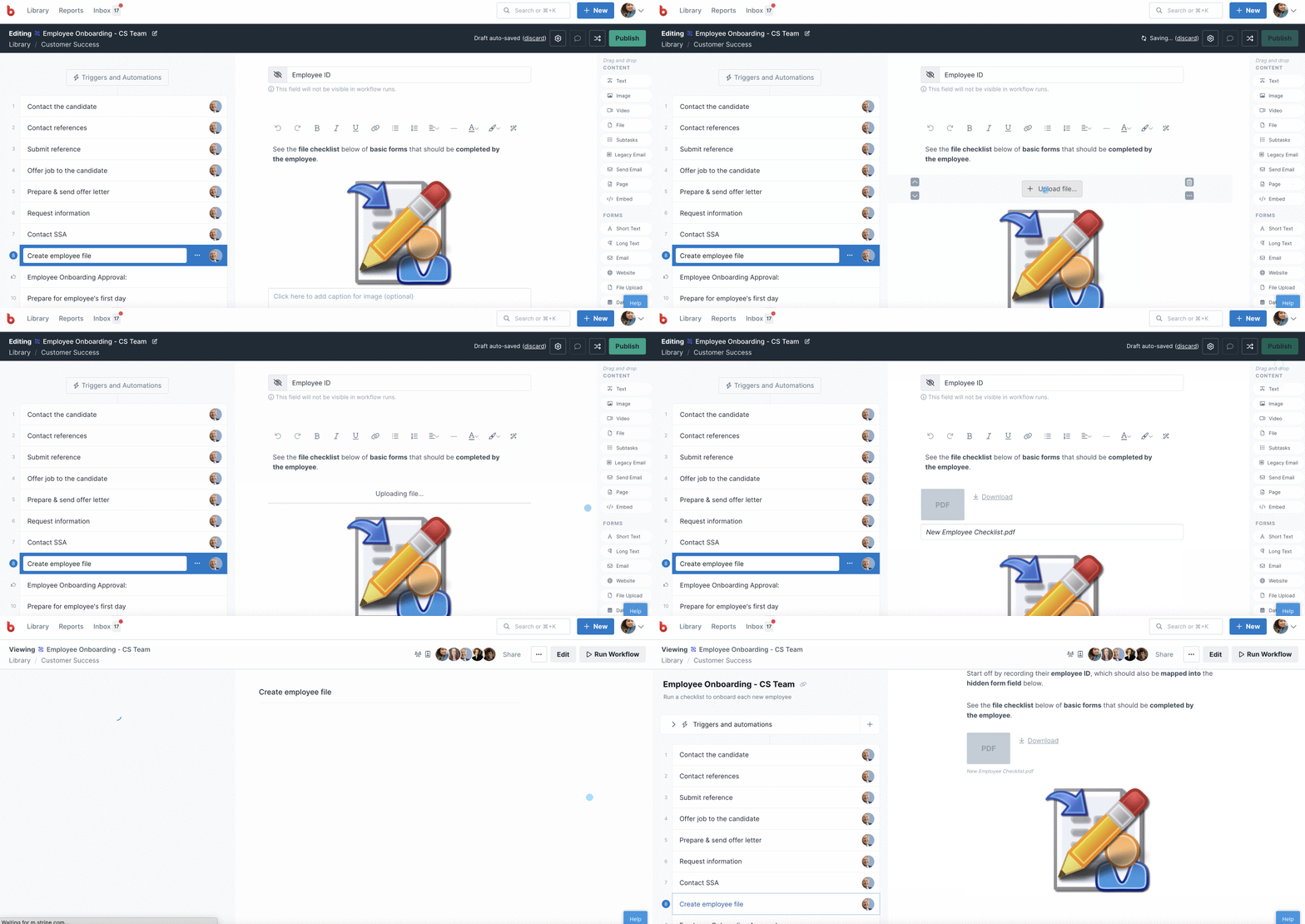
Click “Upload file” and select the file you want to insert. The file will be available for users to download once you publish changes to your workflow.
Alternatively, drag and drop a file into the center of your screen while editing your workflow to achieve the same result.
The File Widget supports multi-file upload, so you can add several files at once instead of uploading them one by one.
Drag-and-drop also works with multiple files. Select several files from your device and drop them onto the File Widget.
Each file uploads independently and in parallel, so large batches finish faster. All uploaded files appear in the widget and are available for download during workflow runs.
Pro tip: Multi-file upload pairs well with text extraction. AI tasks can parse, analyze, and summarize each uploaded document independently.
There is no storage limit on your account. However, each individual file must be under 250MB. This limit applies per file, regardless of how many files you upload at once.
If a file fails to upload, try compressing it and uploading again. For full details on limits by file type, see File Upload Limits.
When you’re done, Publish changes to your workflow.
Note: Detailed logs for file accesses are maintained in our S3 bucket. These logs include information like URL, IP addresses, referrers, and timestamps (DateTime) of all file-related operations like ‘Read/Download’, ‘Create’, ‘Edit’, and ‘Delete’ of files. Athena is utilized to query these logs by a customer, making it a valuable resource for security incident responses. This information is only shared with a customer upon request if a breach was identified.
Help us improve this help center.