






Hotel management is the operating system behind the ability to deliver a 5 star experience. Guests notice the lobby, the room, the food, the cleanliness, and the service. Operators have to manage the recurring work underneath all of it: front office, housekeeping, food and beverage, safety, sustainability, training, and handoffs between shifts.
That is why hotel management processes matter. A good hotel SOP turns a standard into work people can actually run, repeat, inspect, and improve. Process Street helps hotel teams turn those standards into recurring workflows, so every process is assigned, tracked, and auditable.
In this article, you will find eight hotel management templates you can use as digital SOPs and operations checklists:
- Menu Planning Template
- Hotel Sustainability Audit
- Hotel Check In Procedure Template
- Hotel Check Out Procedure Template
- Deep Cleaning Checklist
- Monthly Housekeeping Inspection Checklist
- Hotel Safety Inspection Checklist
- Training Hotel Employees Template
Use them as a starting point, then adapt each workflow to your property, brand standards, team structure, and review cadence. If you are building a broader hotel operations checklist, this guide on process checklists explains how to turn repeatable work into a clear sequence your team can follow.
Hotel management covers all aspects of hotel operations, including guest services, housekeeping, food and beverage, finance, maintenance, and HR. HotelTechReport frames hotel management around coordinating those operational functions. That coordination is where SOPs, checklists, workflow runs, approvals, and reports become useful.
The key to unlocking hotel management success is delivering that 5 star experience consistently. To achieve this, you need effective hotel management processes and workflows that cover all things related to the hotel business: check in, check out, menu planning, deep cleaning, housekeeping, safety, sustainability, employee training, and reporting.
Along with adopting a strategic and organized approach, hotel management also has to be versatile. Versatility helps hotel management processes keep up with a rapidly changing business world, from technological changes and changes in customer expectations to environmental changes and shifting guest needs. A forward thinking and progressive hotel management system gives each team a clear process while still adapting to the specific circumstance in front of them.
Process Street recognizes how organized, strategic, efficient, and versatile workflows influence a successful hotel management system. These templates are designed to provide time effective hotel processes you can access freely, edit easily, tailor to your specific hotel business, and use as a helping hand for consistent service.
Menu planning template
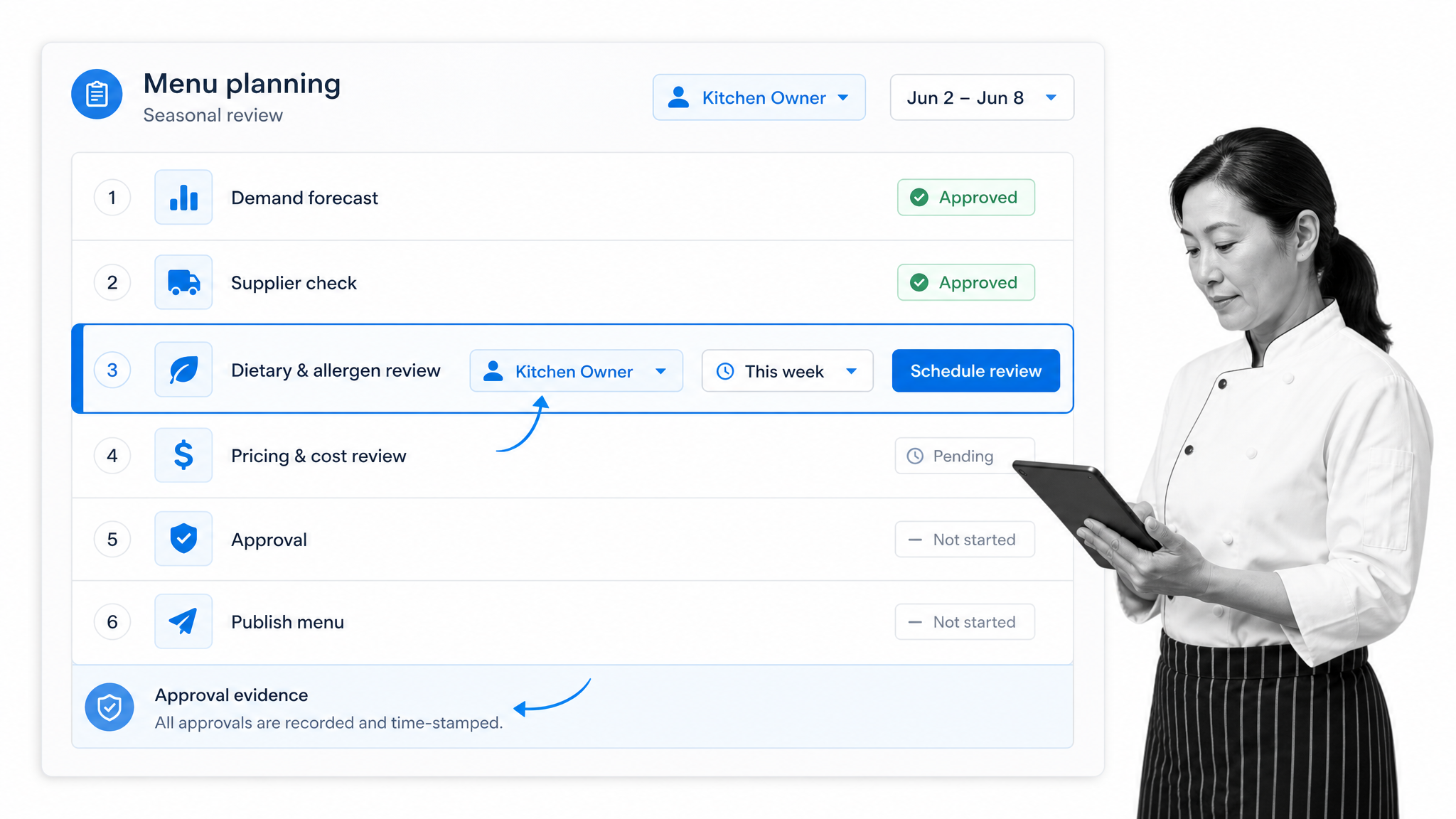
Your menu is part of the guest experience. It affects food cost, supplier coordination, service timing, dietary coverage, and brand perception. When the menu changes without a repeatable process, the kitchen, purchasing, servers, and marketing team can all end up working from different assumptions.
The Menu Planning Template gives food and beverage teams a structured way to plan menus, review suppliers, assign owners, and publish changes. Menu engineering depends on reviewing demand, profitability, cost, and positioning; NetSuite describes that work as a data informed process for improving restaurant profitability.
Inside Process Street, you can use subtasks to break menu planning into smaller checks. A head chef can own ingredient availability, a finance manager can review margin, and a marketing owner can confirm menu copy before launch.
The menu also acts as a vital advertisement tool both online and offline. Its contents and design communicate what kind of experience the guest will have at your restaurant, so both attention and care are needed in its creation and alteration. Regularly adding a trending dish, altering meal plans in accordance with changing seasons, and checking supplier availability can give the hotel restaurant a competitive advantage.
Click here to access the Menu Planning Template.
Hotel sustainability audit
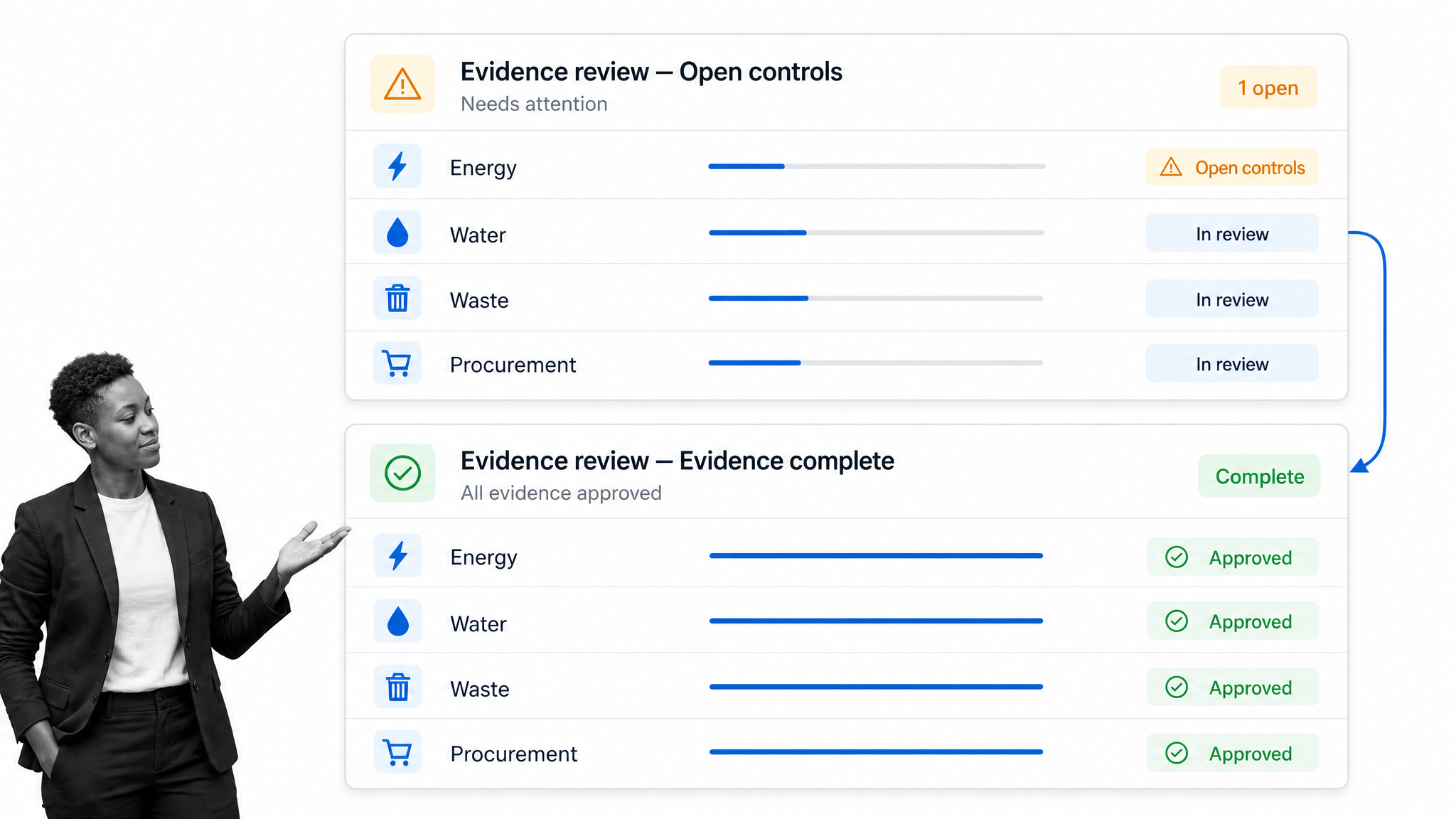
Sustainability is now part of hotel operations, not a side project. Energy use, water use, procurement, waste, and guest communications all need owners and proof. The risk is not just that a hotel misses an improvement opportunity. The risk is that sustainability claims are made without a repeatable audit trail behind them.
The Hotel Sustainability Audit gives hotel teams a structured review across environmental practices. It pairs well with the current GSTC Hotel Standard, which defines sustainability criteria for hotel accommodation. You can use the workflow to assign checks, request evidence, flag gaps, and create a repeatable cadence for review.
Process Street turns sustainability checks into accountable work. Teams can collect notes, route approvals, attach evidence, and repeat the same audit on a monthly, quarterly, or annual schedule. If a requirement changes, update the workflow once and every future run follows the new standard.
Adopting sustainable actions is now part of protecting long-term economic success for a hotel business. The audit eases the process of adapting your business to acquire sustainability in response to the changing environment. By checking off each sustainable action as it is implemented, you can obtain a final report summarising the hotel’s efforts to achieve sustainability.
Click here to access the Hotel Sustainability Audit template.
Hotel check in procedure template
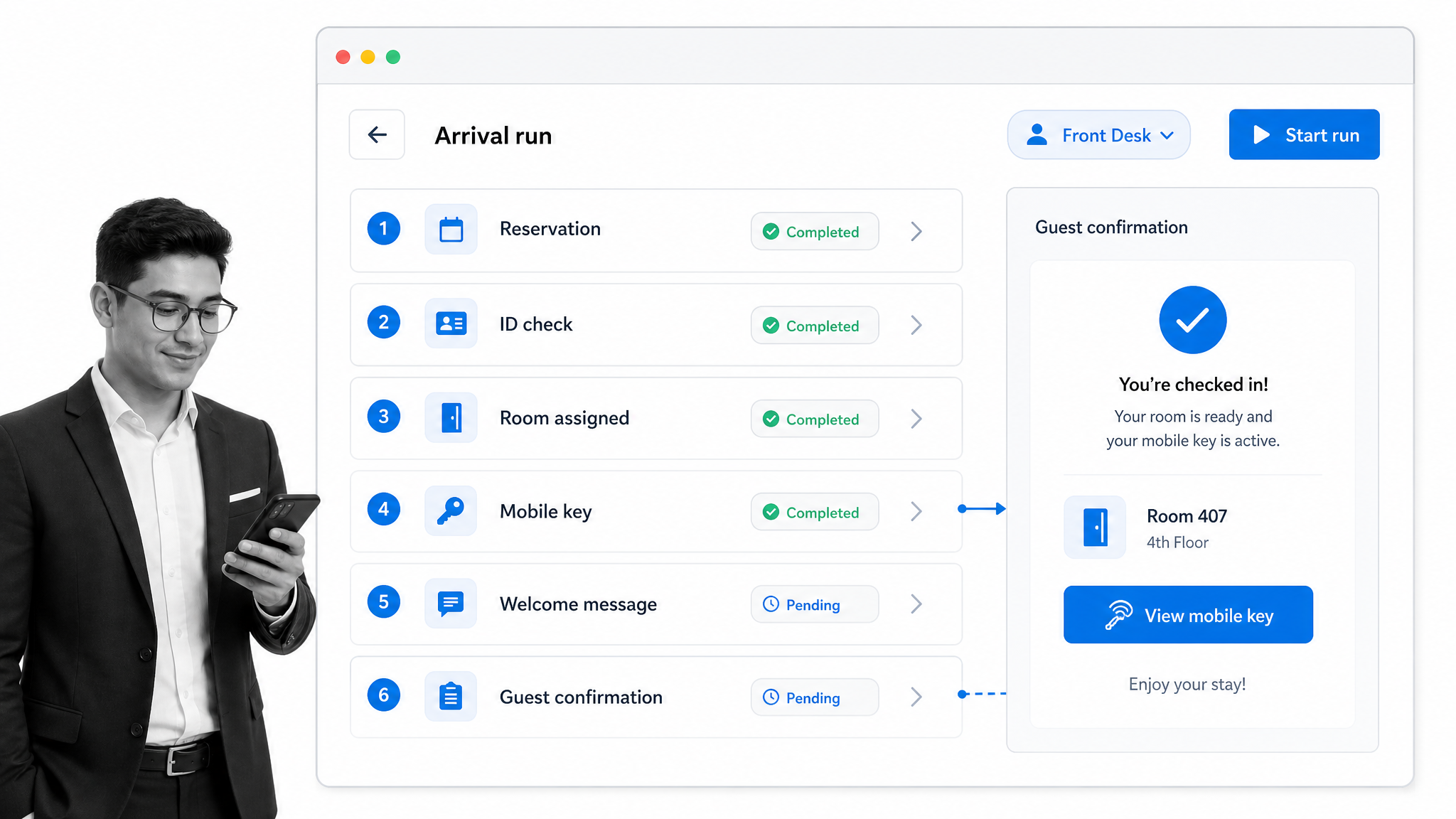
Check in sets the tone for the stay. A guest who has waited in line, repeated information, or received the wrong room starts the experience with friction. A guest who moves through arrival quickly, receives the right information, and knows what happens next starts with confidence.
Modern check in often includes mobile confirmation, digital keys, and contactless steps. SiteMinder describes hotel mobile check in as a way for guests to confirm arrival, choose rooms, and sometimes access the room through a digital key. Even when the property still uses a front desk, the underlying procedure needs to be standardized.
The Hotel Check In Procedure Template gives front office teams a repeatable workflow for reservation confirmation, ID and payment checks, room assignment, guest information, and handoff notes. Use standardization to make sure the core procedure stays consistent across shifts.
You can also use conditional logic to route check in differently based on room type, guest status, payment status, or accessibility requirements. That reduces human error because staff only see the steps relevant to that guest.
The hotel check-in procedure has evolved from a traditional room key to a card, a room code, and a virtual key. The work is becoming faster, but the underlying check-in process still needs to be standardized. Whether the guest has pre-booked or just walked in, two standardized processes can deal with either guest type while changing to fit various situations.
Click here to access the Hotel Check In Procedure Template.
Hotel Check out procedure template
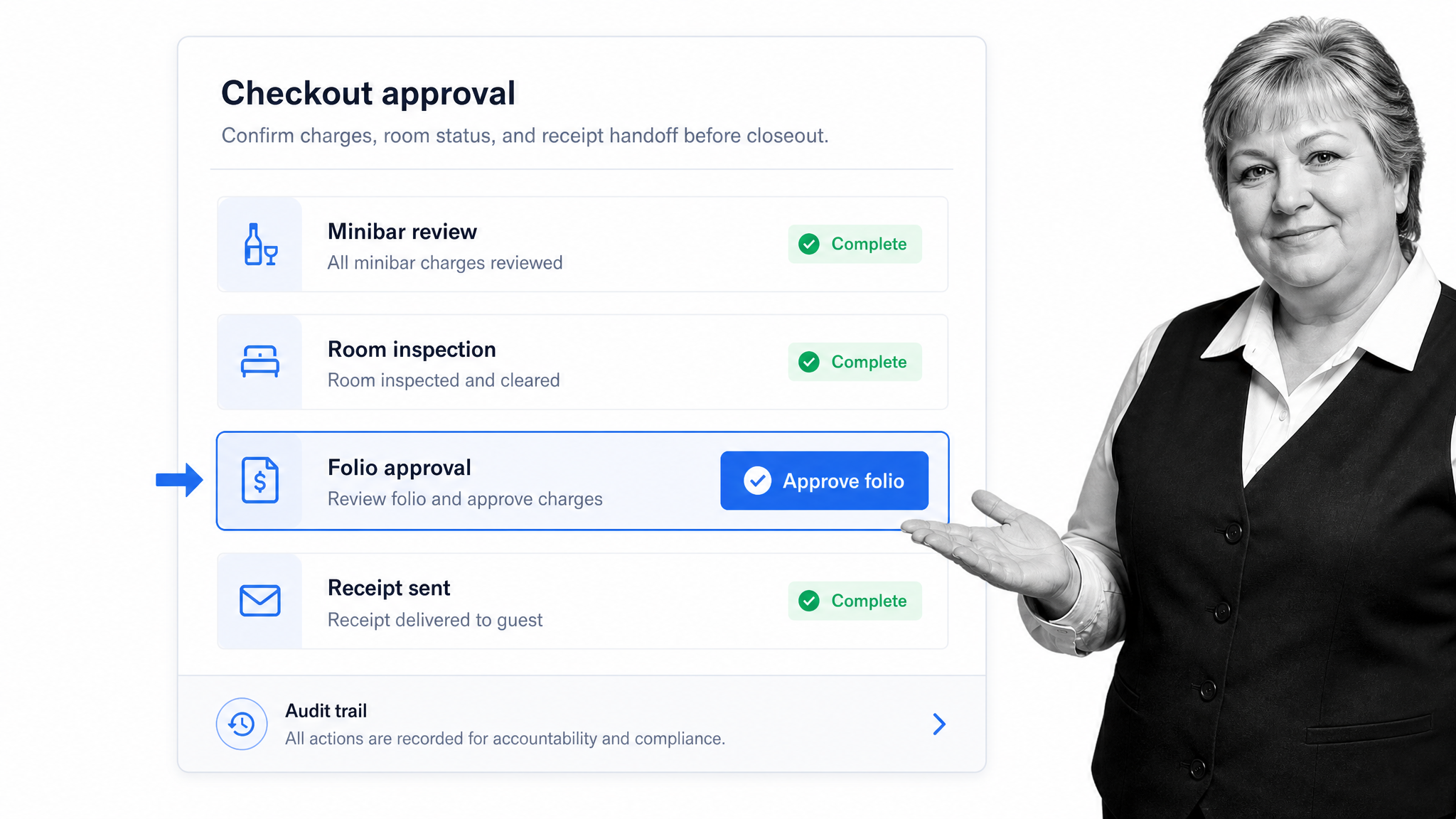
Check out closes the guest experience and prepares the room for the next one. The work looks simple from the outside, but it often touches billing, minibar or incidentals, housekeeping status, guest feedback, lost property, and receipt delivery.
The Hotel Check Out Procedure Template keeps those tasks in order. Front desk staff can confirm charges, record issues, trigger room status updates, and send the final receipt. Managers can see what has been completed and what still needs attention.
If a guest has a special request, a disputed charge, or a maintenance note, conditional logic can route the workflow to the right next step. That way check out is not a memory test. It is a controlled procedure with clear ownership.
Delivering a 5 star experience involves meeting customer expectations at both ends of the hotel experience. Intertwined with a speedy check in procedure comes the need for a speedy check out procedure. Key tasks such as ensuring additional guest account charges are identified should not be forgotten, and progression through the template can be blocked until vital tasks are completed.
Click here to access the Hotel Check Out Procedure Template.
Deep cleaning inspection checklist
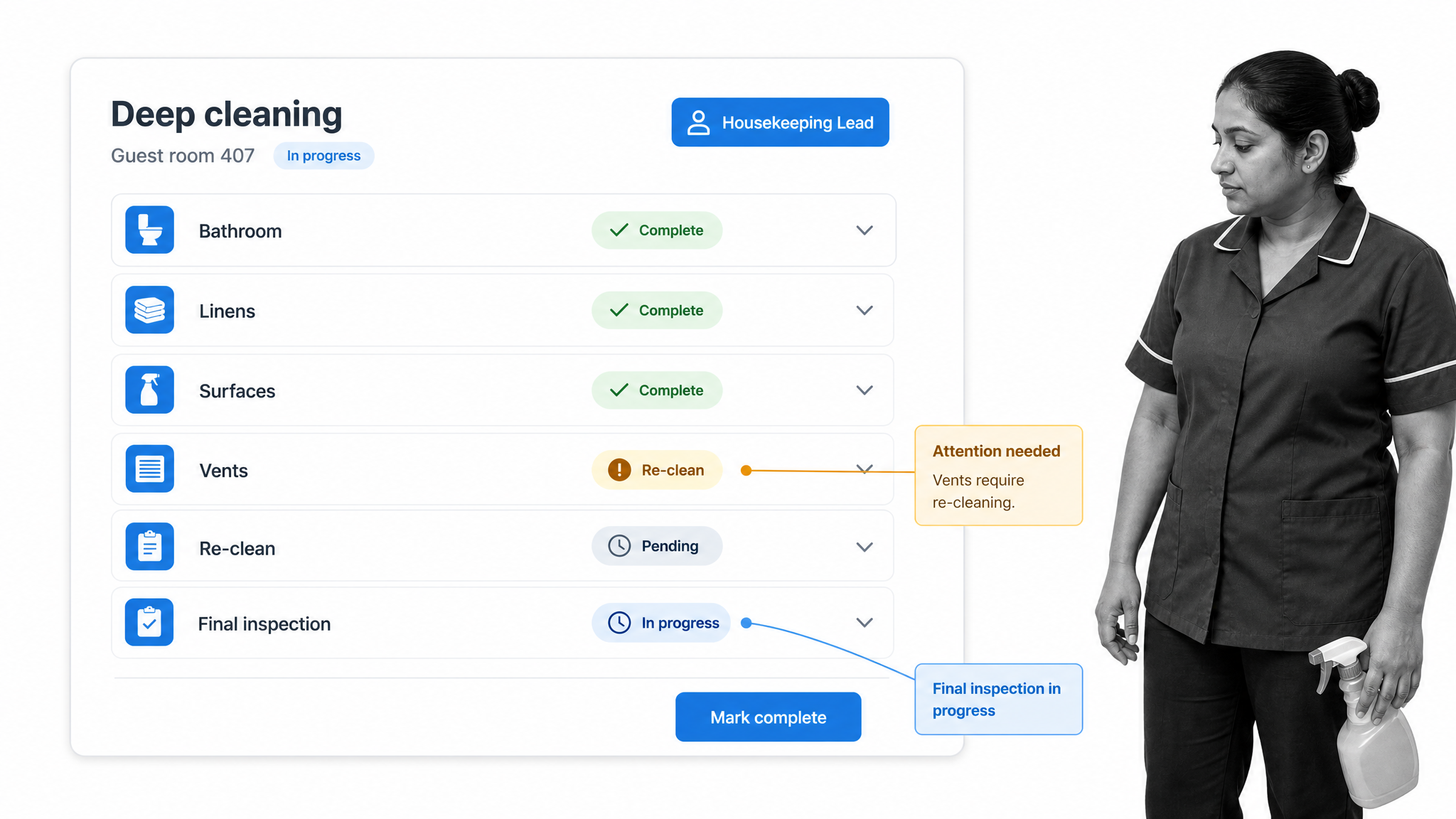
Cleanliness is one of the clearest signals guests use to judge a hotel. It affects reviews, repeat stays, staff workload, safety, and brand trust. A standard room turn is not the same as deep cleaning, so the process needs its own checklist and inspection record.
The Deep Cleaning Checklist turns deep cleaning into a step by step inspection workflow. Teams can confirm bathrooms, linens, surfaces, vents, fixtures, and final review. If something fails inspection, the workflow can assign a re-clean task instead of relying on a hallway conversation.
Current guest cleanliness research is more nuanced than one old stat. Ecolab’s hotel guest consumer study points to visible room indicators such as odor, shower condition, and linens as major cleanliness cues. Use the checklist to make those cues explicit and inspected.
Deep cleaning is an extremely thorough clean of a place. In hotel terms, that means a meticulous, comprehensive, and all-encompassing cleaning procedure for the bedroom, bathroom, linens, fixtures, vents, and surfaces. The checklist also acts as a record, making it easy to visualize what rooms have been deep cleaned and when. Notes from deep cleaning processes can be maintained on record and sent to relevant personnel when breakages or issues need action.
Click here to access the Deep Cleaning Checklist.
Monthly Housekeeping checklist
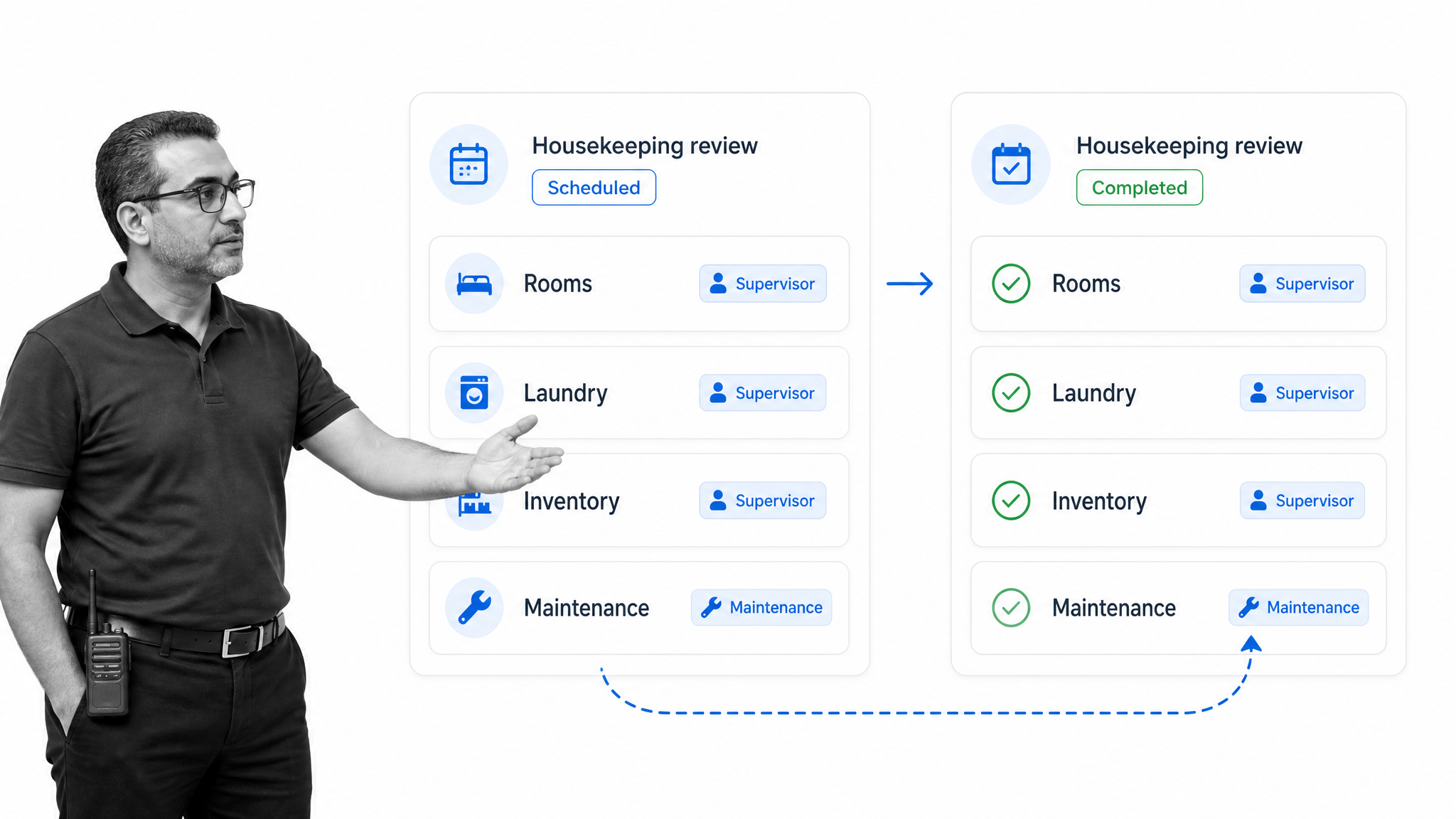
Daily housekeeping keeps rooms moving. Monthly housekeeping keeps the system healthy. It is where recurring problems surface: supply drift, room category inconsistencies, laundry issues, equipment needs, maintenance handoffs, and training gaps.
The Monthly Housekeeping Inspection Checklist gives housekeeping leaders a recurring review workflow. Teams can inspect room categories, record notes, assign follow ups, and produce a report that managers can use to improve operations.
Housekeeping preferences also vary by guest and property. AHLA notes that hotel room cleaning practices increasingly reflect guest preferences. A workflow helps teams make those preferences operational, not just aspirational.
As you work through the Monthly Housekeeping Inspection Checklist by checking off each task with confirmation of its completion, your team can add and record its own notes. Those notes are compiled at the end of the template to produce a general housekeeping report, summarising what housekeeping activities are being done well and which areas need improvement.
Click here to access the Monthly Housekeeping Inspection Checklist.
Hotel safety inspection checklist
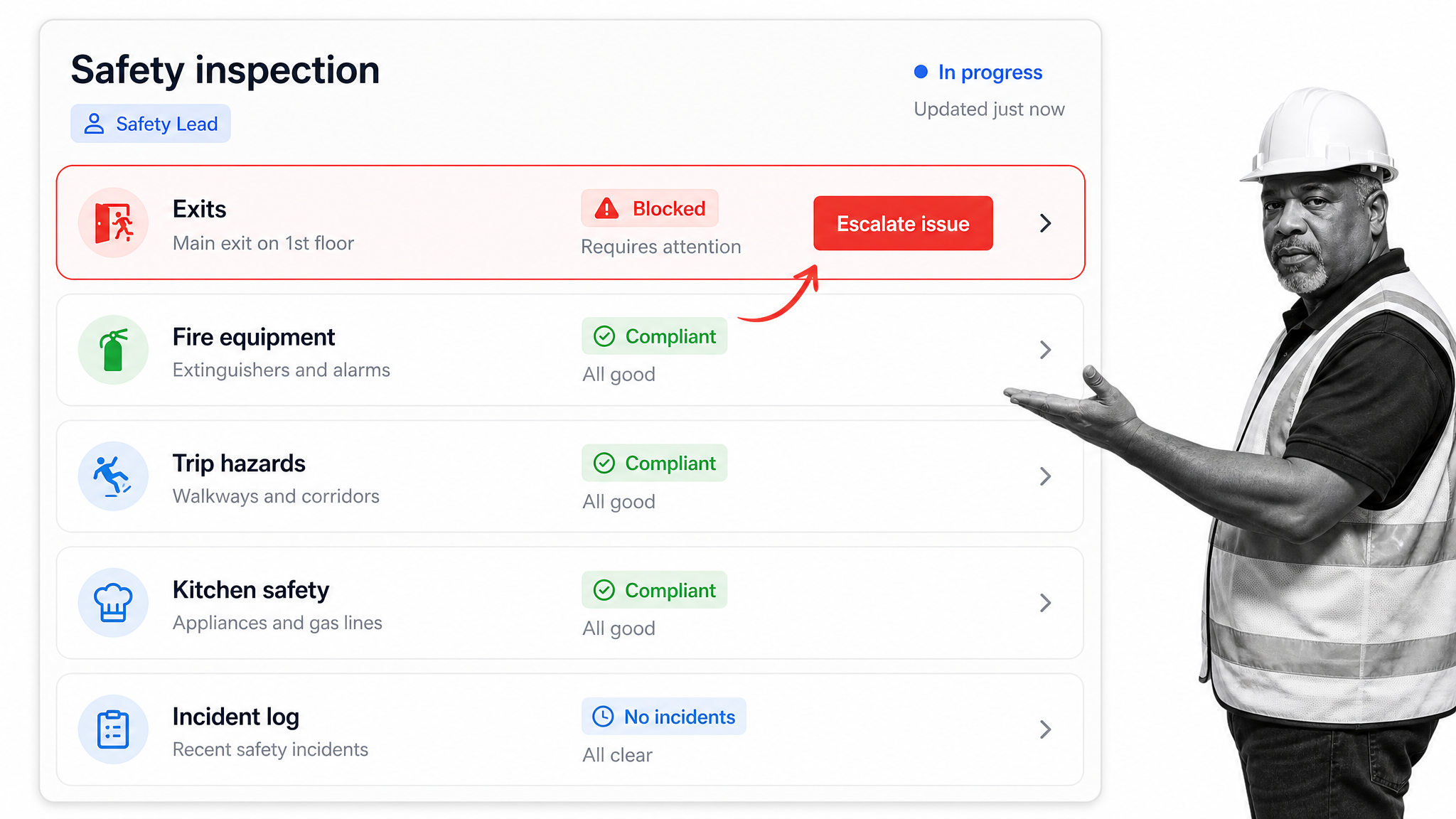
Safety inspections protect guests, staff, and the business. Hotels have many risk surfaces: lobby floors, kitchens, laundry rooms, elevators, stairwells, electrical equipment, fire systems, storage areas, and guest rooms. If safety checks are informal, problems can sit unnoticed until they become incidents.
The Hotel Safety Inspection Checklist gives teams a structured workflow for hazards, corrective actions, and owners. A hotel specific checklist from ASSP covers areas like fall prevention, back safety, fire safety, electrical safety, and infection prevention. Those are exactly the kinds of recurring checks that need a consistent workflow.
In Process Street, every safety inspection can produce a record: who checked it, when it was checked, what failed, who owns the fix, and whether the fix was completed. That is how a checklist becomes operational proof.
Safety in the workplace has improved over the years, but accidents can still happen. Trips, cuts, and burns are common hotel workplace injuries, and correct safety procedures must be carried out to keep guests, employees, and the business protected. The checklist organizes the process of inspecting safety attainment into categories so notes from each category can be pulled through to produce a final report for your records.
Click here to access the Hotel Safety Inspection Checklist.
Training hotel employees template
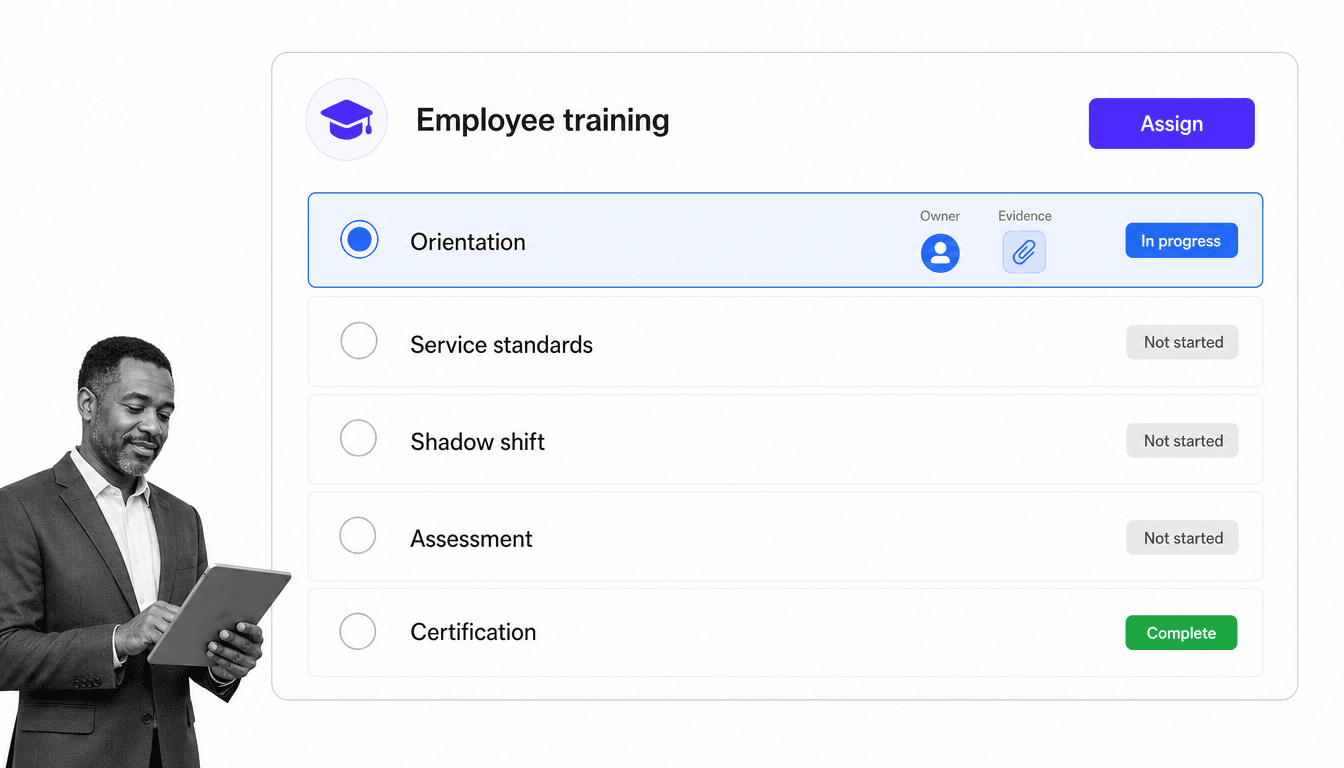
Hotel teams run on service consistency. Guests may interact with front desk, housekeeping, food and beverage, maintenance, and management in the same stay. If training is uneven, the guest experience becomes uneven too.
The Training Hotel Employees Template gives managers a repeatable onboarding and training workflow. Use it to assign orientation, service standards, shadow shifts, assessments, and manager approvals. You can add dynamic due dates so each step is timed around the employee’s start date or first shift.
Training also fails when planning, timing, and follow up are weak. Walden University notes that ineffective training can create real business costs. A workflow gives training a clear sequence, not a loose set of reminders.
Increasing desires and demands of guests are a constant challenge. Many guests want the comforts of home while still expecting a memorable cultural experience, and securing positive guest-staff relationships helps bring that homely vibe to the hotel. Employees need to be trained well, with an emphasis on exceptional communication and customer service skills. Common mistakes in employee training programs include lack of planning and poor timing, so dynamic due dates and clear deadlines help the training process stay on track.
Click here to access the Training Hotel Employees Template.
Conclusion
Hotel management is a coordination problem. The guest sees one stay. The hotel runs dozens of recurring processes behind that stay: planning, check in, check out, cleaning, housekeeping, safety, sustainability, training, reporting, and change management.
These templates help you turn those recurring processes into SOPs your team can actually run. Start with the workflow that creates the most operational risk today, then expand across departments. Process Street gives you the structure to assign work, track progress, collect notes, route approvals, and prove that the standard was followed.
If your hotel is changing, your workflows should change with it. Use these templates as living hotel management processes, not static documents. Process Street’s complete hotel management template pack gives you a way to obtain successful management processes in a changing business climate and keep track of the processes you want to improve next.