





A multigenerational workforce can be a major advantage when managers treat age as context, not a label. Different career stages can bring institutional knowledge, fresh operating habits, customer empathy, technical fluency, and practical judgment into the same team. The management challenge is to turn those differences into clearer communication and better execution instead of letting assumptions harden into friction.
That challenge matters because employee engagement is still under pressure. Gallup reports global employee engagement at 20%, with low engagement carrying a major economic cost. At the same time, workforces are spanning more life stages: the Bureau of Labor Statistics reported nearly one in five older Americans in the labor force in 2025, while younger workers continue to push for growth, flexibility, and stronger manager support.
- What is a multigenerational workforce?
- The strengths and weaknesses of each generation
- Five tips for engaging a multigenerational workforce
What is a multigenerational workforce?
A multigenerational workforce is a workplace where people from several age cohorts work together. In many organizations, that can mean employees from Generation Z, Millennials, Generation X, Baby Boomers, and a smaller number of Traditionalists or Silent Generation workers contributing at the same time.
Those labels are useful only when they help managers ask better questions. Pew Research Center cautions against treating generations as fixed identities, because age, career stage, geography, income, industry, and personal experience all shape workplace behavior. Use generational context to design better systems, not to predict how a specific person will think or perform.
In practical HR terms, multigenerational management means creating norms that work across communication preferences, learning styles, leadership expectations, and life-stage needs. A strong manager can give a recent graduate, a new parent, a mid-career specialist, and an experienced late-career expert the same clarity: what matters, who owns what, how decisions are made, and how success will be recognized.
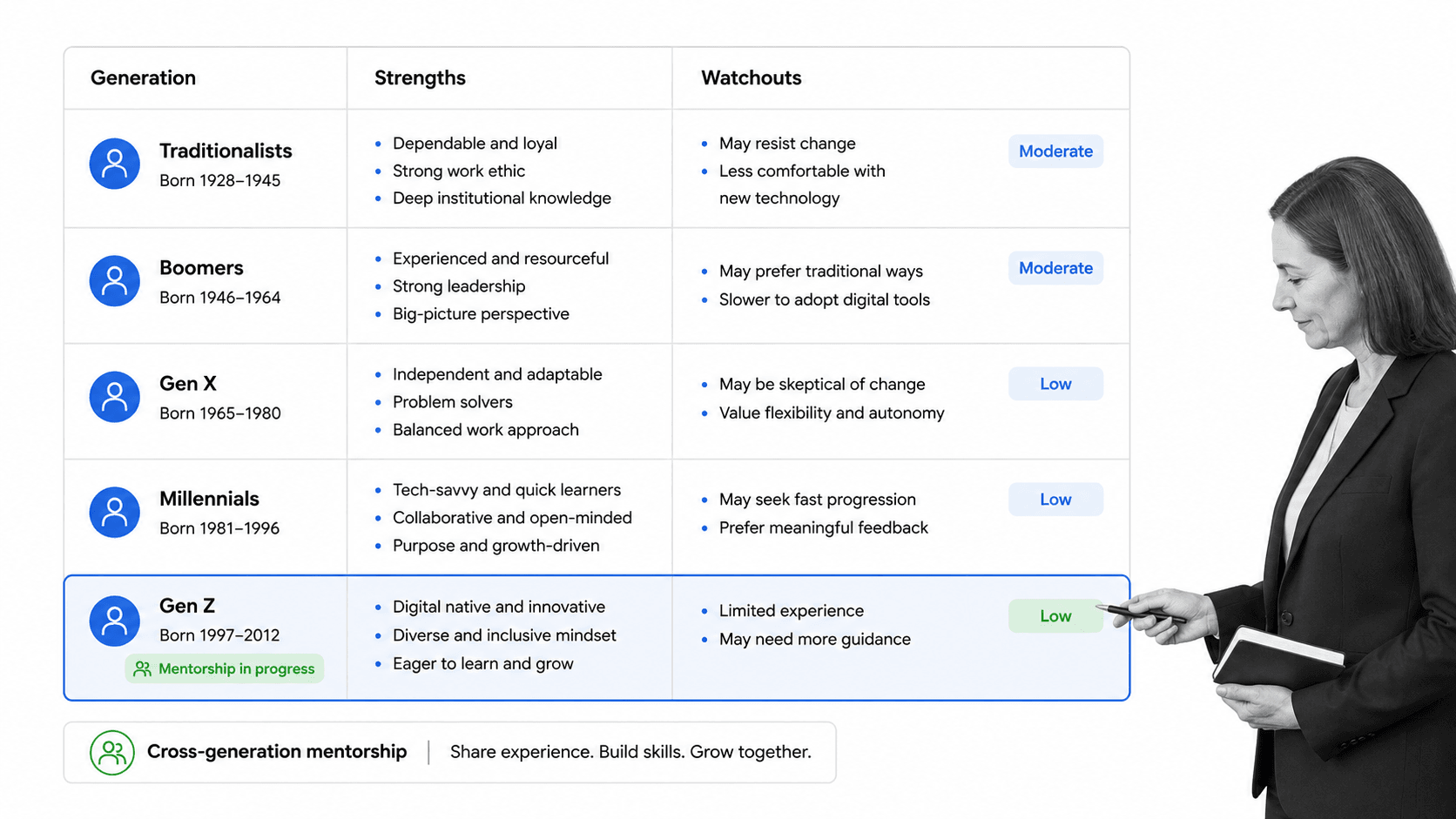
A useful quick reference is still to name the generations that commonly appear in a modern workforce: Traditionalists or Silent Generation workers, Baby Boomers, Generation X, Generation Y or Millennials, and Generation Z. Older ranges often described Traditionalists as born between 1927 and 1946, Baby Boomers born between 1946 and 1964, Generation X born between 1965 and 1980, Generation Y born between 1980 and 1995, and Generation Z born between 1995 and 2010. Exact cutoffs vary by source, so treat the dates as planning context rather than a rule.
The ideas and methods of the above generations are as diverse as their ages. However, understanding each generation can help ensure communication and collaboration across multiple screens, face-to-face conversations, email, letters, voicemail, phone calls, workflow comments, and documented tasks.
The strengths and weaknesses of each generation
The safest way to think about generational strengths and weaknesses is to translate stereotypes into observable work contexts. Instead of saying one generation is loyal, impatient, technical, or resistant to change, look for the conditions each group may have experienced at work: the tools they learned on, the job markets they entered, the management styles they were exposed to, and the life responsibilities they are balancing now.
The traditional strengths list is best read as a conversation starter, not a diagnostic tool. Traditionalists have often been described as committed, hardworking, and practical, with watchouts around inflexibility or discomfort with change. Baby Boomers are often associated with commitment, self-reliance, and a strong work ethic, but they may need recognition to motivate them and may not have the same relationship with software as younger generations.
Generation X is often described through adaptability, independence, and resilience, with possible shortcomings around cautiousness, conservativeness, or becoming too self-reliant. Millennials, also called Generation Y, are often described as creative, far-thinking, and progressive, though managers sometimes complain about focus when priorities are unclear. Generation Z is often seen as communicative, competitive, and entrepreneurial, while also being more cynical about institutions and more reliant on technology to solve problems.
None of those labels should become a stereotype. They are prompts for better management questions: what experience does this employee bring, what support do they need, what communication style helps them do their best work, and what development path would make the role more engaging?
A manager can use that context to prepare better questions: Who has deep customer or process knowledge? Who knows the newest systems? Who needs a clearer growth path? Who is carrying informal mentoring responsibilities that should be recognized? Who may be overloaded by meetings, chat tools, or unclear escalation paths?
- Traditionalists and older workers: Often bring long institutional memory, careful judgment, and strong service orientation. They may need explicit support when work moves to new digital channels or when long-standing expertise is not documented.
- Baby Boomers: Often bring leadership experience, customer relationships, and resilience from long career arcs. They may value formal recognition and clear decision rights, and some may be navigating phased retirement or caregiving responsibilities.
- Generation X: Often acts as the operational bridge between senior leadership and younger teams. Gen X employees may value autonomy and direct communication, but they can become overloaded as the default owners of critical institutional knowledge.
- Millennials: Often expect frequent feedback, meaningful work, and visible development paths. The Deloitte Global Gen Z and Millennial Survey continues to show how financial pressure, wellbeing, purpose, and growth shape younger workers’ decisions.
- Generation Z: Often brings digital fluency, openness to new tools, and a high expectation for transparency. Many are still building confidence in workplace norms, professional communication, and how to escalate risk without over-escalating routine work.
Multigenerational workforce benefits
A multigenerational workplace can improve decision quality because teams can test ideas against several forms of experience. Younger employees may spot outdated assumptions in a workflow, while experienced employees can explain why a control exists, what went wrong last time, or where a customer expectation came from.
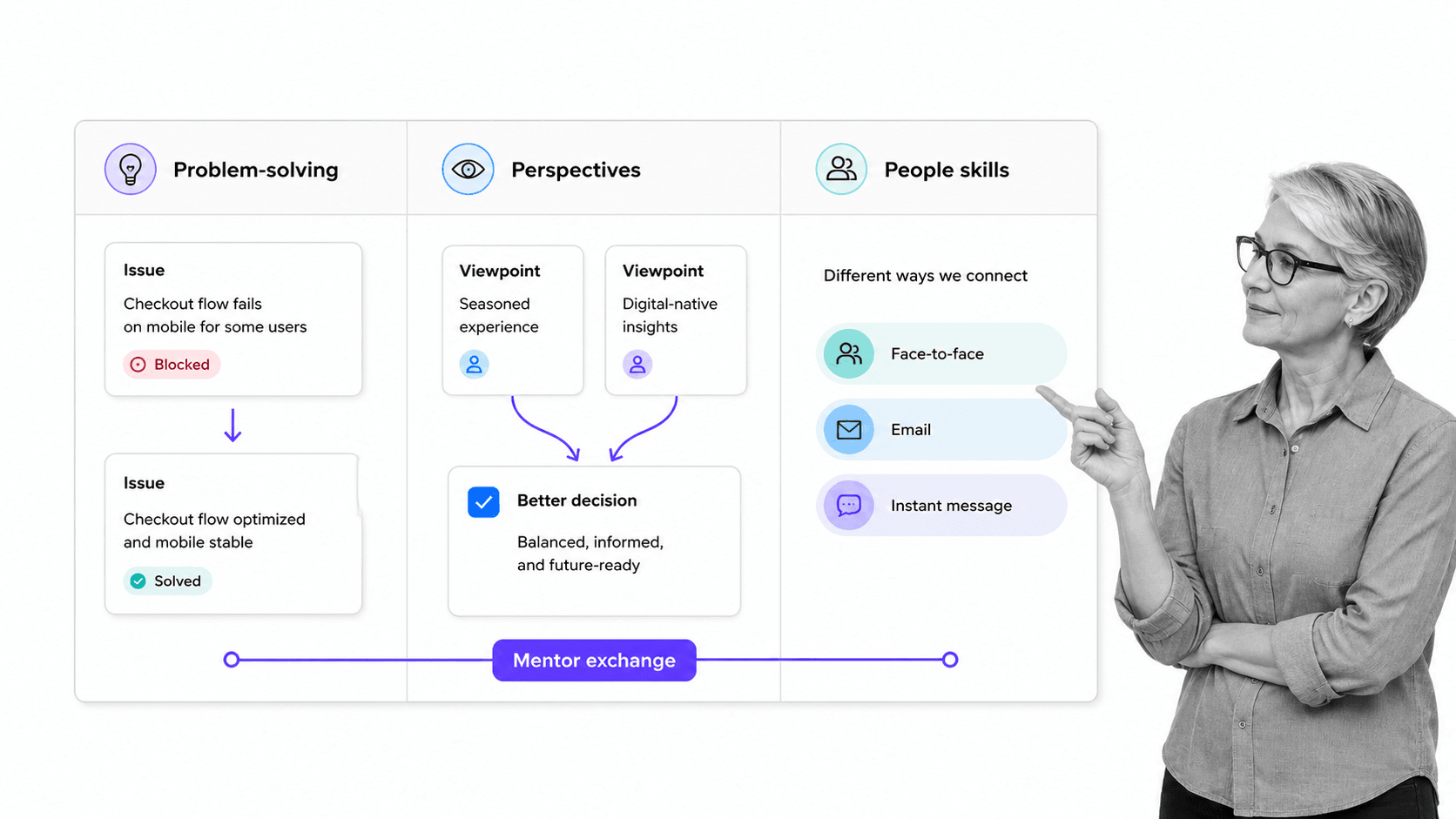
The strongest benefits usually show up in four places: better problem solving, richer customer empathy, stronger knowledge transfer, and more resilient succession planning. A team that pairs newer technical fluency with long-term process memory can improve how work actually gets done, especially in regulated or operationally complex environments.
The three classic benefits are more problem-solving skills, different perspectives, and diverse people skills. Generation X may be good at identifying and developing new talent. Generation Y employees who grew up with smartphones often learn new software quickly and can help implement new processes. Baby Boomers can be strong problem solvers and mentors because they have worked through economic booms, recessions, organizational change, and customer expectations across many years.
Diverse people skills also help organizations attract and retain customers of all ages. Older customers might still prefer a letter or a phone call. Some Baby Boomers are open to email, letters, voicemail, and face-to-face conversations. Generation X may prefer short email communication. Generation Y may expect prompt feedback through internet communication. Generation Z may expect instant communication, additional images, and clear visual context across multiple devices.
Reverse mentoring is one practical example. A newer employee might help a senior colleague get more value from AI tools, workflow automation, or collaboration software. A senior colleague might help the newer employee understand customer history, quality expectations, or how to manage risk in a high-stakes handoff. Both sides learn something useful, and the organization keeps knowledge moving instead of letting it sit with one person.
Multigenerational workforce challenges
The most common multigenerational workforce challenges are not caused by age itself. They come from unmanaged differences in communication channels, feedback cadence, meeting norms, work-life expectations, and assumptions about professionalism.
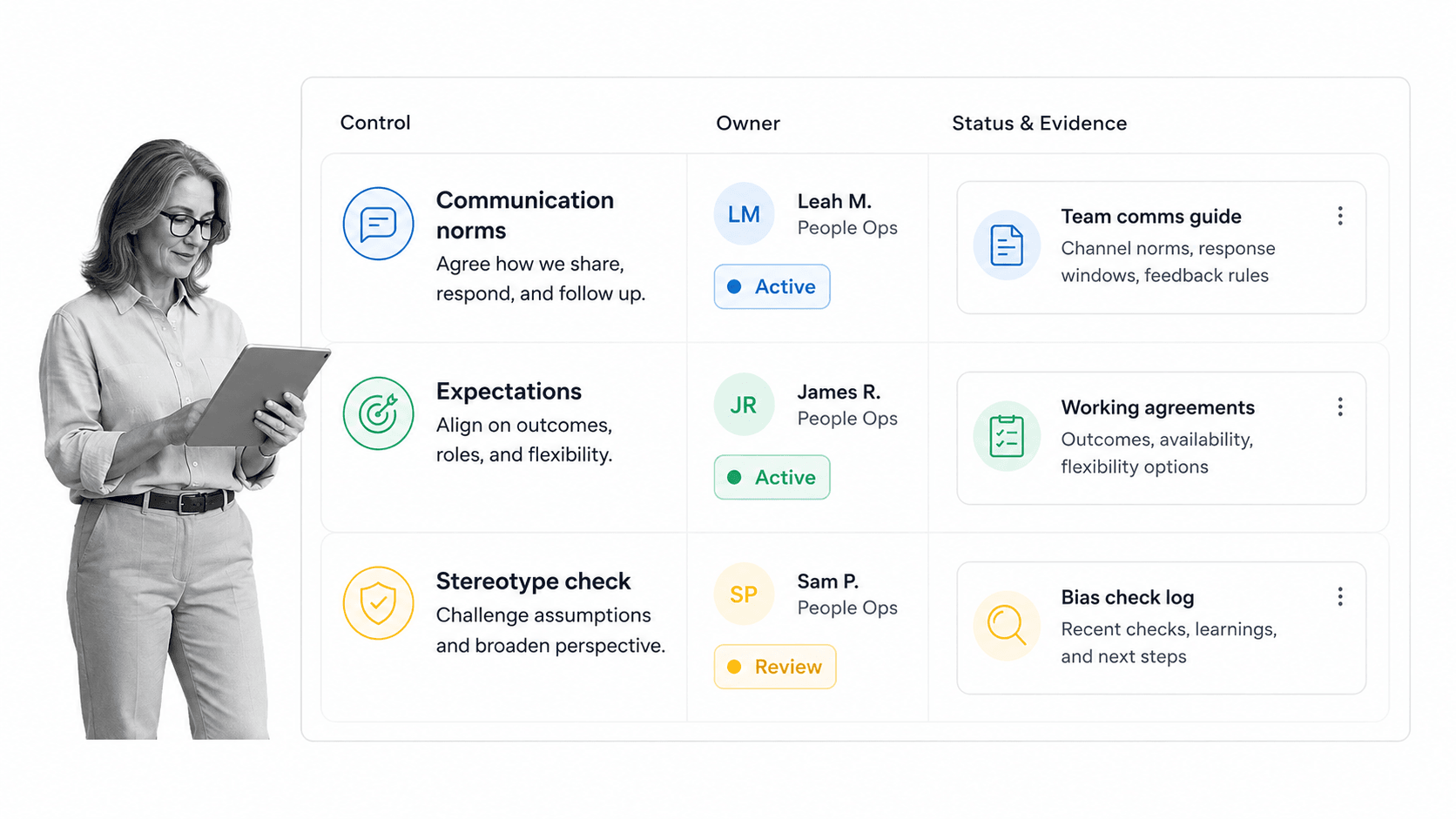
For example, one employee may see a direct chat message as efficient while another sees it as disruptive. One manager may think quarterly feedback is normal while a newer employee sees silence as a warning sign. One team member may prefer detailed documentation before acting, while another wants to clarify the work live and move quickly. None of these preferences is automatically wrong, but unmanaged ambiguity creates avoidable conflict.
A useful rule: do not ask employees to become mind readers. Set team norms for which channel to use, how fast responses are expected, when a meeting is necessary, how feedback is delivered, and what information belongs in a documented process.
Communication problems can cause email blunders, missed handoffs, small conflicts, and expensive misunderstanding. An optimized workflow helps because it gives information visually and in an easy-to-follow process. Tasks can be numbered, assigned, commented on, and completed in order, which makes expectations clearer for everyone regardless of generation.
Different expectations can also affect day-to-day decisions. Employees are at different life stages, may have differing value systems, and may respond to different motivation techniques. Theory Z, associated with Dr. William Ouchi, is one older management lens that emphasizes mutual trust and openness, a strong bond between the organization and employees, collective decision-making, a free-form organizational structure, the role of facilitator and coordinator for management, common culture, informal controls, and human resource development.
Negative stereotypes are another challenge. Unconscious bias training and diversity and inclusion training can help employees question assumptions before they become workplace conflicts. Process Street teams often use templates and documented workflows for training because they make sensitive topics easier to structure, repeat, and improve without relying on a single facilitator to remember every step.
Five tips for engaging a multigenerational workforce
Employee engagement improves when people understand the work, see a future for themselves, and trust that their manager will remove ambiguity before it becomes frustration. These five practices help managers build that clarity across age groups.
1. Improve communication
Do not treat communication preference as a personality test. Set a clear operating system for the team. Decide which messages belong in chat, email, meetings, project management tools, or documented workflows. Then make that system visible so every employee can find the same answer.
Good communication norms also include escalation rules. Employees should know when to ask for help, when to make a decision, who needs to be informed, and what requires documentation. This is especially helpful for teams with a wide range of tenure, because long-time employees often carry unwritten knowledge that newer employees cannot access unless it is made explicit.
Business process management, or BPM, can improve communication by dividing a process into step-by-step tasks. A BPM approach lets managers create policies, add comments to tasks, add videos or documents, and show why a task was completed a certain way. That transparency helps teams avoid miscommunication between older and younger employees.
The same system can support SOPs, ISO processes, approvals, onboarding documents, and knowledge-base material. Instead of storing paper files or scattered Word documents, teams can keep the process accessible on computers, smartphones, and other devices so employees can find guidance when they need it.
2. Offer reskilling opportunities
Reskilling and upskilling keep multigenerational teams engaged because they make growth visible. Older employees may want support adapting to new tools. Younger employees may want structured paths into more complex work. Mid-career employees may need room to build leadership, automation, analytics, or compliance skills while still owning day-to-day execution.
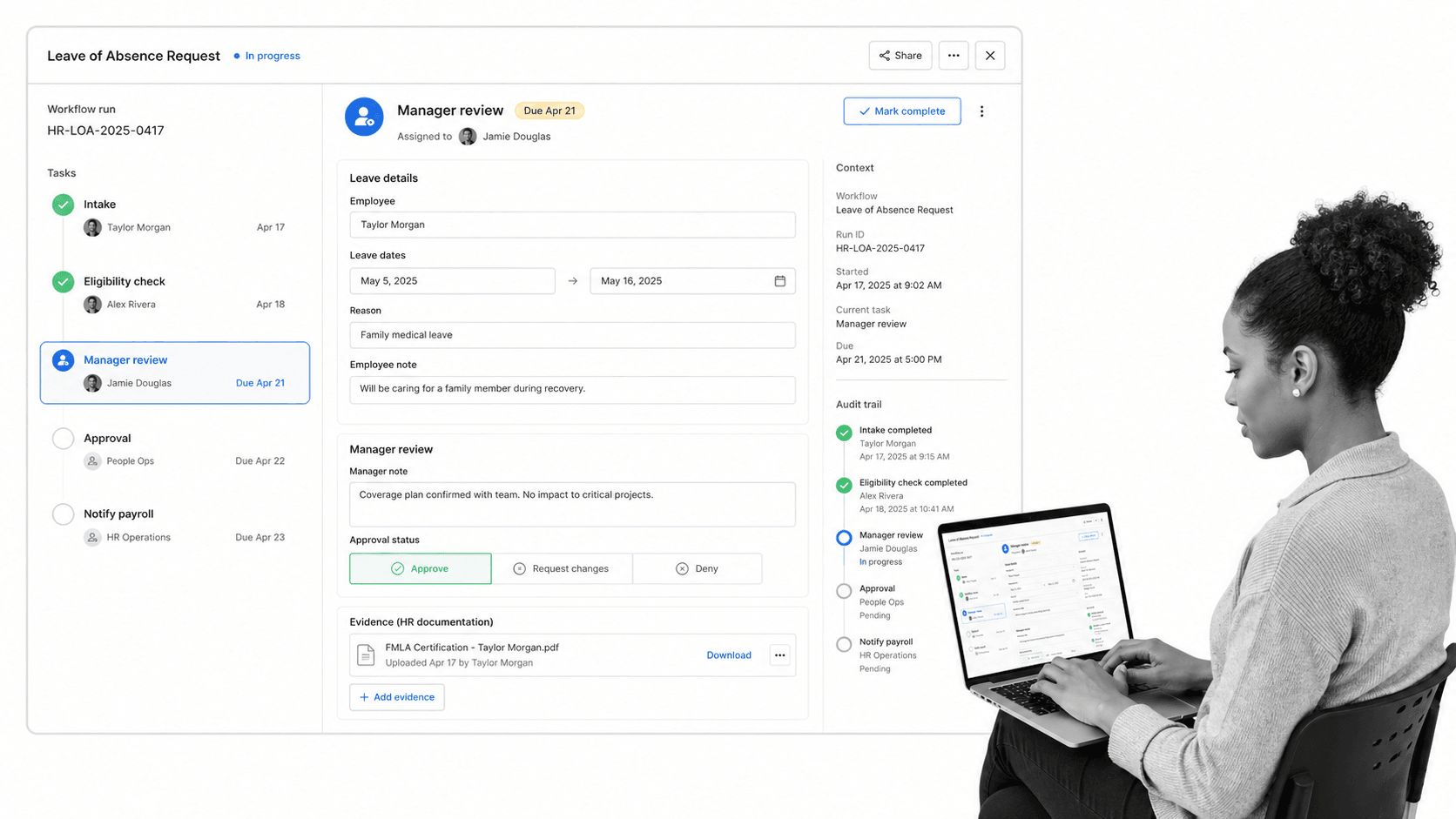
This is where documented operations matter. Process Street is a Compliance Operations Platform that helps teams govern process knowledge in Docs and run recurring work in Ops. For a people operations team, that can mean storing training policies, documenting manager expectations, and turning HR workflows into repeatable runs with assigned tasks, approvals, due dates, and audit trails.
A leave of absence workflow, new manager onboarding checklist, training needs analysis, or performance review process should not depend on one person remembering every step. Clear documentation gives every generation the same baseline, while workflow runs make it easier to see where work is stuck and who needs support.
Training should stay on the daily checklist because business change is a daily process. Some teams create a computer maintenance guide, training needs analysis, aptitude test, or role-specific workflow to identify who needs reskilling and who is ready for upskilling. The point is not to sort employees by age; it is to analyze where the workforce can be made better use of and where support will boost productivity.
A practical reskilling program can include online workflows, knowledge base software, no-code software, comments, documents, screenshots, additional images, and short videos. Those formats make training more accessible because employees can revisit the same instructions instead of depending on memory or one live session.
3. Recognize employee needs
Recognition does not always mean public praise. Sometimes it means noticing what an employee needs before disengagement becomes turnover risk: a clearer growth path, better workload fit, more flexibility, stronger manager check-ins, or a chance to contribute expertise outside their normal role.
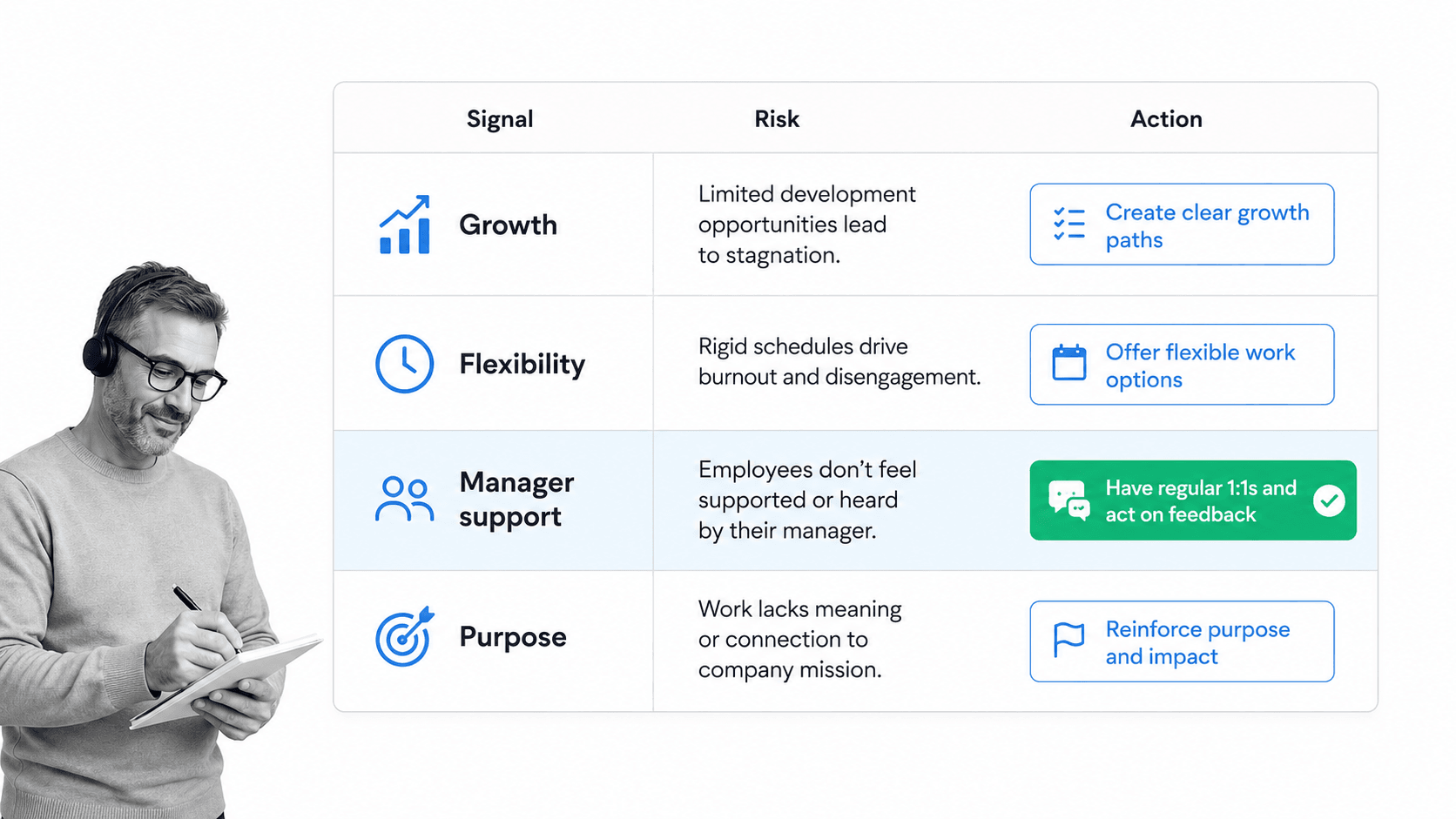
Managers should be careful not to assume needs by generation. A Gen Z employee may want stability. A Boomer may want flexibility. A Millennial may want stronger purpose, or simply a manager who follows through. A Gen X employee may want relief from being the default fixer for every undocumented process. Ask directly, record themes, and turn recurring signals into process improvements.
Pulse surveys, skip-level conversations, stay interviews, and manager one-on-ones can all help, but only if the organization closes the loop. If employees provide feedback and nothing changes, the feedback process becomes another source of disengagement.
Anonymous survey workflows, employee satisfaction surveys, pulse surveys, and stay interviews can all collect feedback from staff members who might not raise uncomfortable issues in a meeting. Giving employees freedom to discuss workplace conflicts can make every employee feel listened to, understood, and engaged.
Feedback should also connect to recognition. Some employees want public thanks, some want private manager support, some want flexibility, and some want to be trusted with a harder project. Different expectations are manageable when managers ask, document, and follow through.
4. Encourage collaboration
Collaboration works best when it has a job to do. Pair employees across generations around specific outcomes: improving a customer handoff, simplifying a workflow, documenting an expert process, testing a new AI-assisted step, or building a training path for a recurring task.
A memorable example is Bill, a 75-year-old butler in Berlin who had worked for Marlene Dietrich and Tom Cruise. He was paired with Ollie, a 21-year-old colleague who was still early in his career. Bill brought deep hospitality experience, professional judgment, and knowledge of exports and importers. Ollie brought speed, curiosity, and a fresh view of the work. Together, they showed how a multigenerational team can combine practical expertise with new energy when the work gives both people a reason to contribute.
The contrast is important. A 55-year-old security guard facing forced retirement may feel pushed out while an 83-year-old expert can still be essential because the organization understands the value of his experience. Bill had been Marlene Dietrich’s butler, but his later working career in exports was just as valuable: his export company brought in millions each year and could not function without him.
That story captures the practical lesson. A multigenerational workforce succeeds when managers understand where experience, mentoring, technology, communication, and documented process come together. The goal is not to make everyone work the same way. The goal is to create a common operating system where every age group can contribute clearly.
That kind of collaboration is not limited to mentoring programs. It can happen in project retrospectives, workflow audits, customer onboarding reviews, or compliance checks. The key is to make contribution visible and specific so each person knows why their perspective is needed.
Collaboration features matter because employees can add comments, upload documents, add photographs, or include additional images to show how a process was done. Traditionalists and Baby Boomers can share letters, procedures, and hard-earned customer context. Generation Z can show a faster digital path. Generation X and Millennials can often translate between both approaches.
The aim is to make the workflow app a shared place for knowledge transfer, not just a productivity app. When the team can see the process, the chosen task order, and the reason behind a decision, collaboration becomes more than a meeting.
5. Document feedback and retention signals
The final engagement lever is documentation. If communication norms, career paths, training requirements, and feedback loops live only in managers’ heads, employees will experience the workplace differently depending on who supervises them. That inconsistency can look like a generational problem when it is really an operating problem.
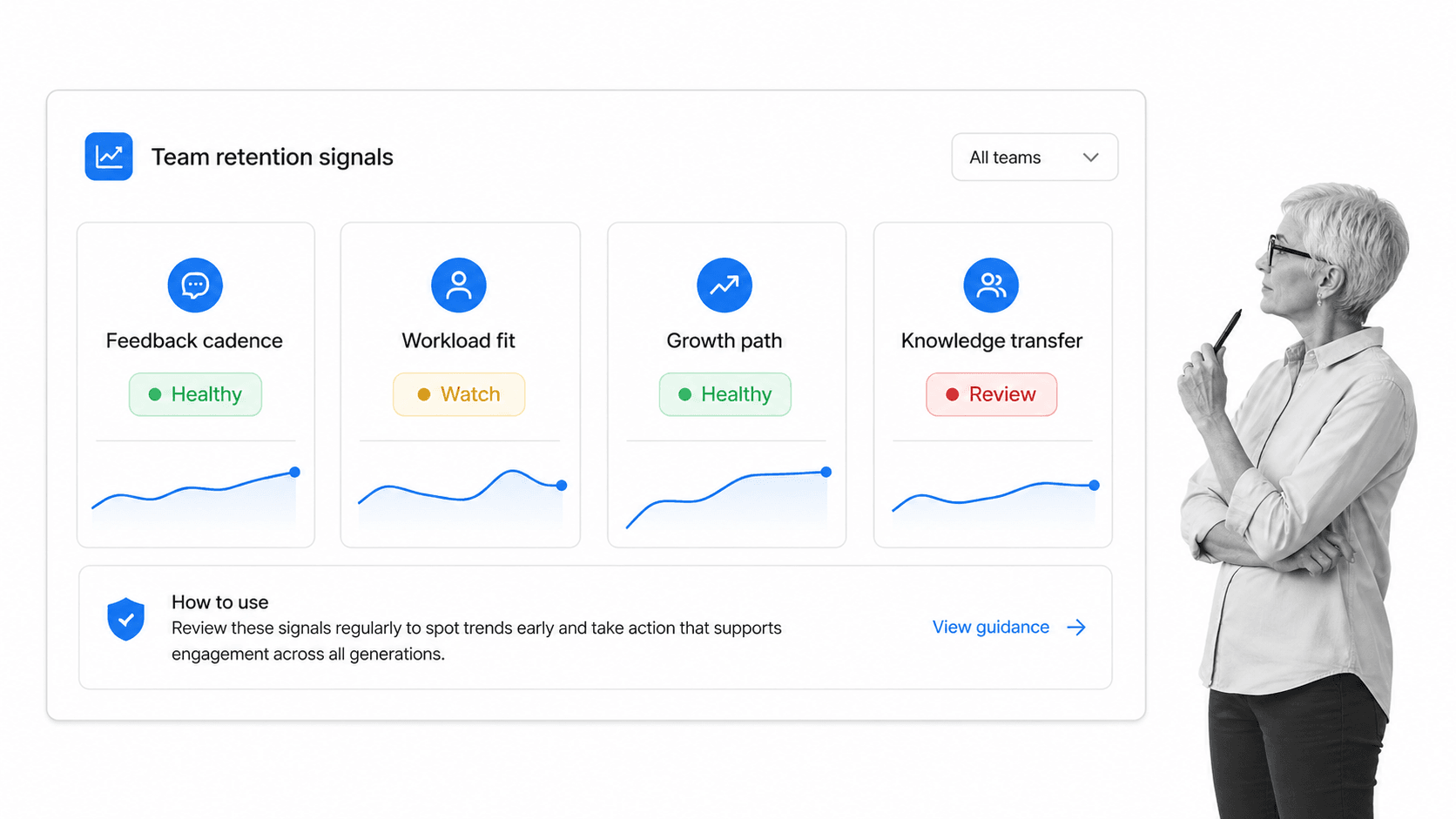
Use shared workflows to track recurring signals: feedback cadence, workload fit, growth path, knowledge transfer, role clarity, and manager follow-through. The goal is not to reduce people to a dashboard. The goal is to make sure issues are visible early enough for managers to act.
Process Street Docs gives teams a governed home for policies, SOPs, and role guidance. Process Street Ops turns that guidance into assigned workflow runs. Built-in AI can help teams improve process drafts, identify risks, and keep routine work moving. If your team needs a repeatable way to run documented processes, Process Street’s workflow process software can help connect the standards people read with the work they actually complete.
A multigenerational workforce is not something to smooth into sameness. It is something to manage with clarity. When employees can see the work, understand expectations, learn from each other, and trust that feedback will be acted on, age diversity becomes an operational strength.