






Office management is the operating layer most teams notice only when it breaks. Records need to be disposed of correctly, safety checks need follow-up, conflict needs a neutral process, performance reviews need documentation, and budgets need approval before spending drifts.
These eight office management checklists turn recurring admin work into repeatable workflows you can run, assign, track, and improve in Process Street. Use them as office manager checklists, office administration checklists, or office procedures checklists when you need practical templates that support astounding operational efficiency without relying on memory.
If you want to go straight to the templates, here they are:
- Records Disposal Checklist
- Office Safety Inspection Checklist
- Office Risk Assessment Checklist
- Office Conflict Resolution Checklist
- Employee Discipline Checklist
- Employment Termination Checklist
- Performance Review Checklist
- Budget Preparation Checklist
Make office management processes fun, fast, and faultless
Office managers have a broad scope of work. They manage sensitive company records, review employee performance, prepare annual budgets, support employee onboarding, keep the office space safe, and handle the constant communication that keeps a calm office environment moving. When there is so much going on, it is challenging to keep track of everything, let alone ensure that specific tasks are completed correctly every time.
The point of these checklists is to make completing recurring office management tasks fast and faultless while still leaving room for judgment. A checklist gives the office manager a brief outline of what needs to happen, who owns it, what evidence is required, and which follow-up date or approval step cannot be missed.
Records Disposal Checklist
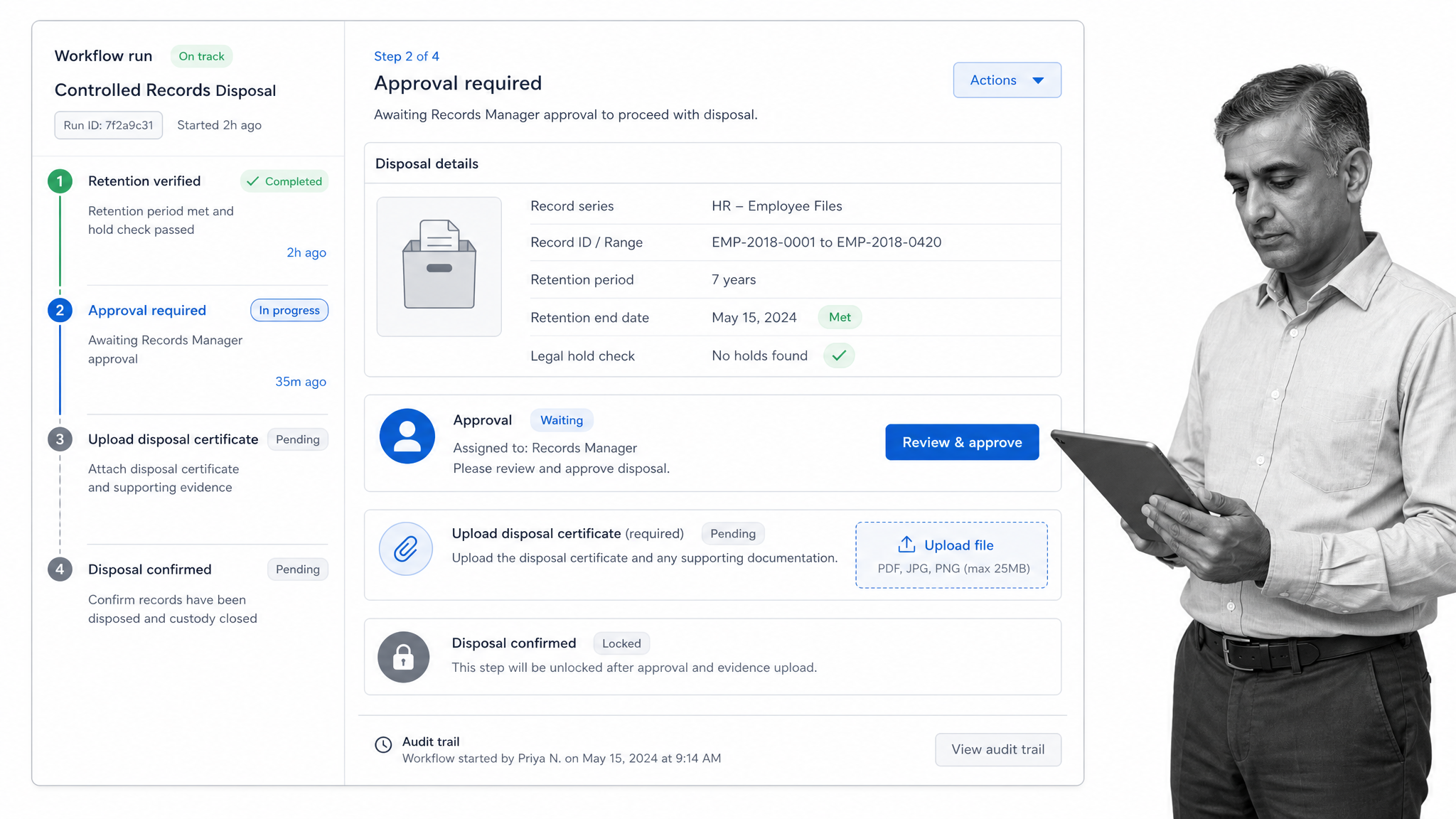
Records disposal is a critical component of records management because poor disposal can create privacy, compliance, and legal exposure. Blue-Pencil highlights how records management failures can become privacy breaches, and a 2018 GazetteNet report covered a dermatology center disclosure involving improperly disposed records.
Use this checklist when records have reached the end of their retention period, when a department is cleaning out old files, or when disposal needs sign-off. The workflow helps you verify retention status, route approval, capture evidence, and confirm disposal so the office does not rely on informal handoffs.
Whether your records are paper or digital, destroyed or retained in a storage facility, the process should guide employees through all the steps needed to dispose of records in a compliant and efficient manner. For enterprises dealing with thousands of records containing private information, a clear record disposal workflow is absolutely necessary to reduce costly legal trouble, public trust damage, and reputation risk.
Click here to get the records disposal checklist.
Office Safety Inspection Checklist
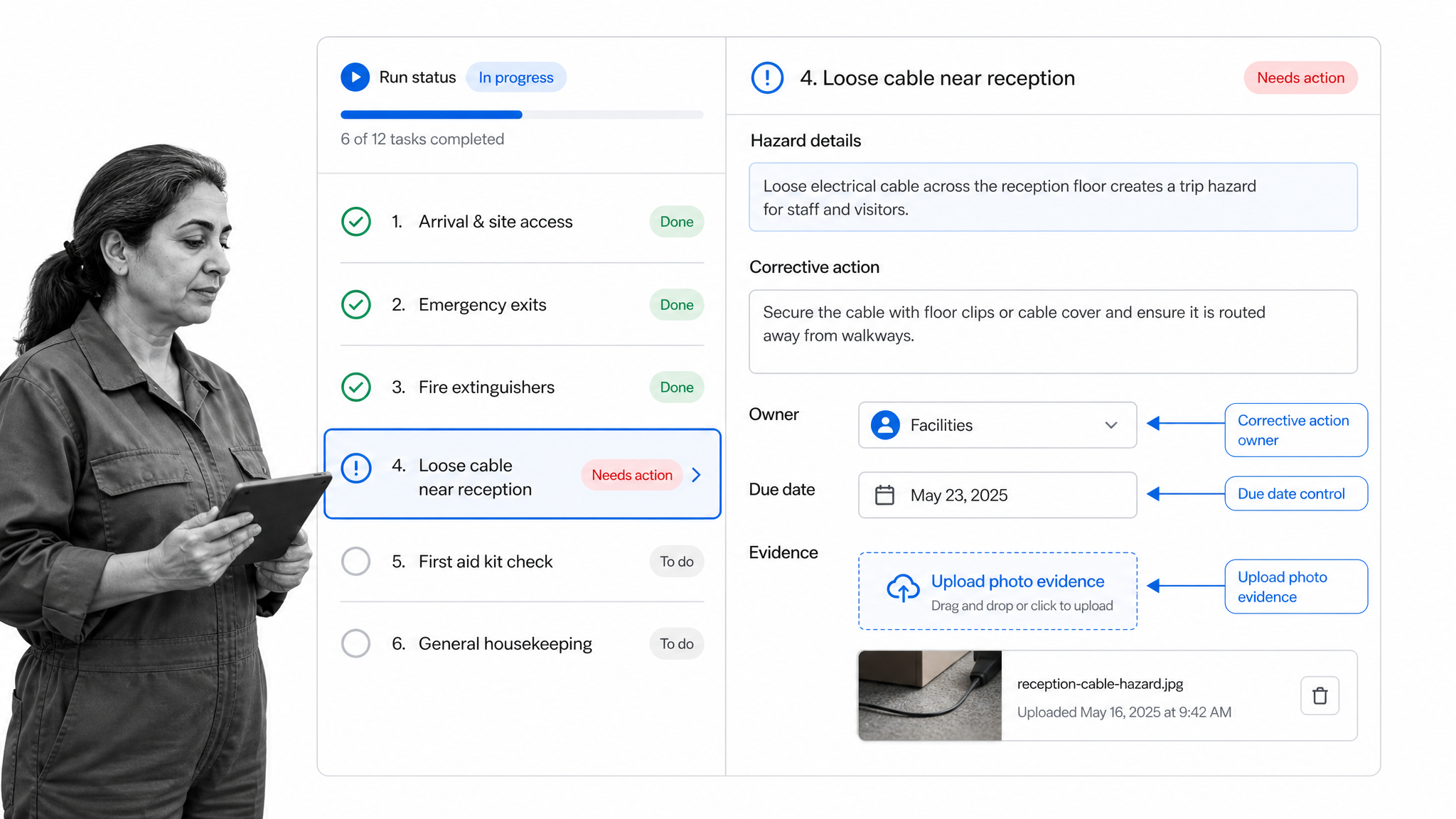
Office safety inspections are not just facilities housekeeping. They are recurring risk controls. A good workplace inspection process helps office managers spot hazards, assign corrective action, and keep evidence that the issue was handled.
Use this checklist for routine walk-throughs, new office setups, return-to-office checks, or recurring facilities reviews. The workflow makes it clear what was inspected, who owns the fix, when it is due, and what proof was attached.
Beyond the general inspection of common hazards, electrical safety, fire safety, and office equipment, the checklist helps managers assess whether the office space is comfortable, secure, and productive. That means ticking the obvious safety boxes while also creating a better working environment for employees.
Click here to get the office safety inspection checklist.
Office Risk Assessment Checklist
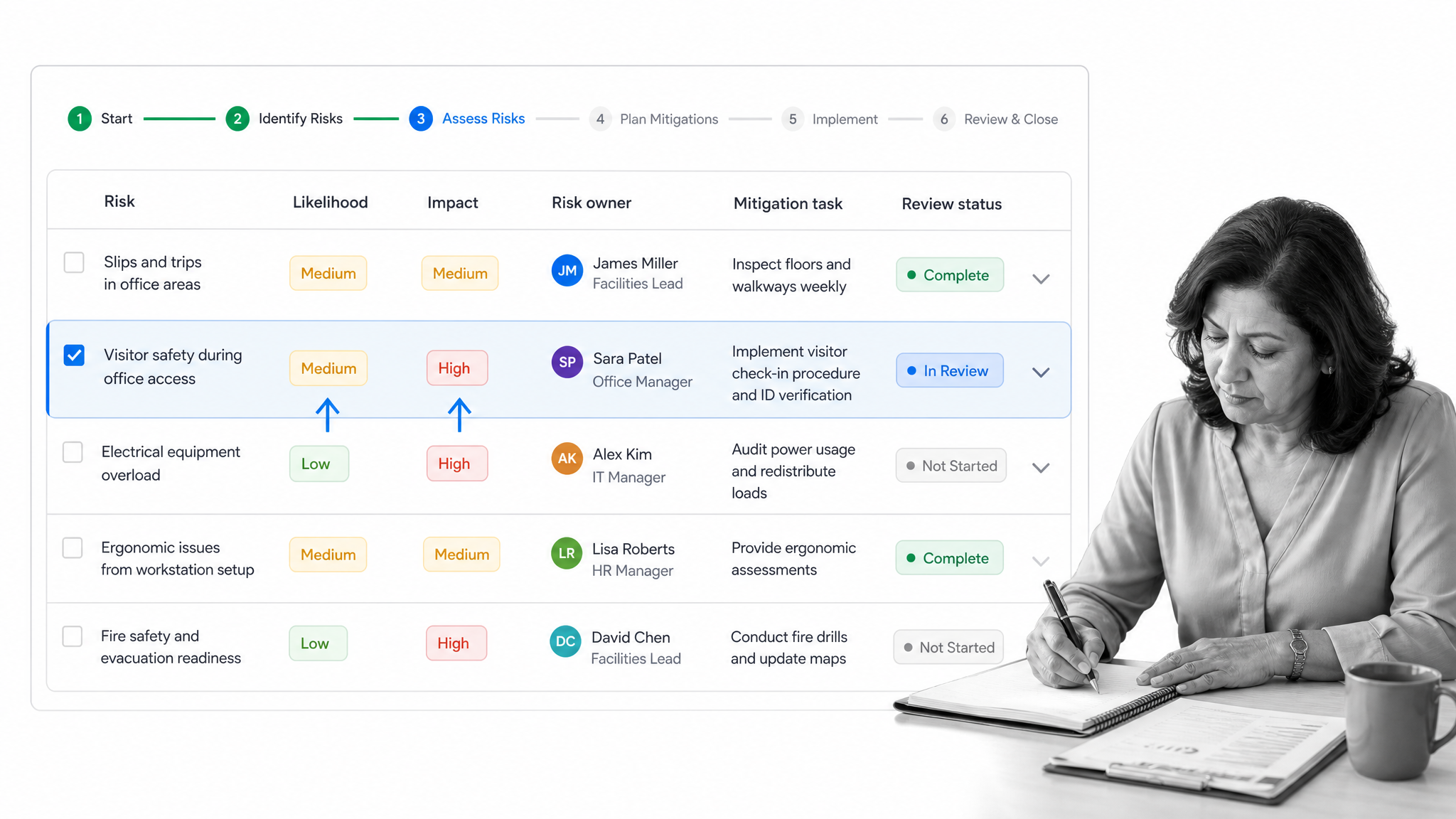
A safety inspection looks for immediate hazards. A risk assessment asks what could go wrong, how likely it is, how severe it would be, and what mitigation should happen next. That distinction matters when office managers need to prioritize limited time.
Use this checklist to compare likelihood and impact, assign a risk owner, track mitigation tasks, and review the outcome. It is especially useful when a change introduces new office procedures, vendors, equipment, visitor flows, or compliance obligations.
The risk assessment checklist contains additional tasks for evaluating employee awareness, reviewing the assessment report with colleagues upon completion, and making sure the right controls are in place. It is a comprehensive guide for routinely assessing and controlling risks across an entire workspace.
Click here to get the office risk assessment checklist.
Office Conflict Resolution Checklist
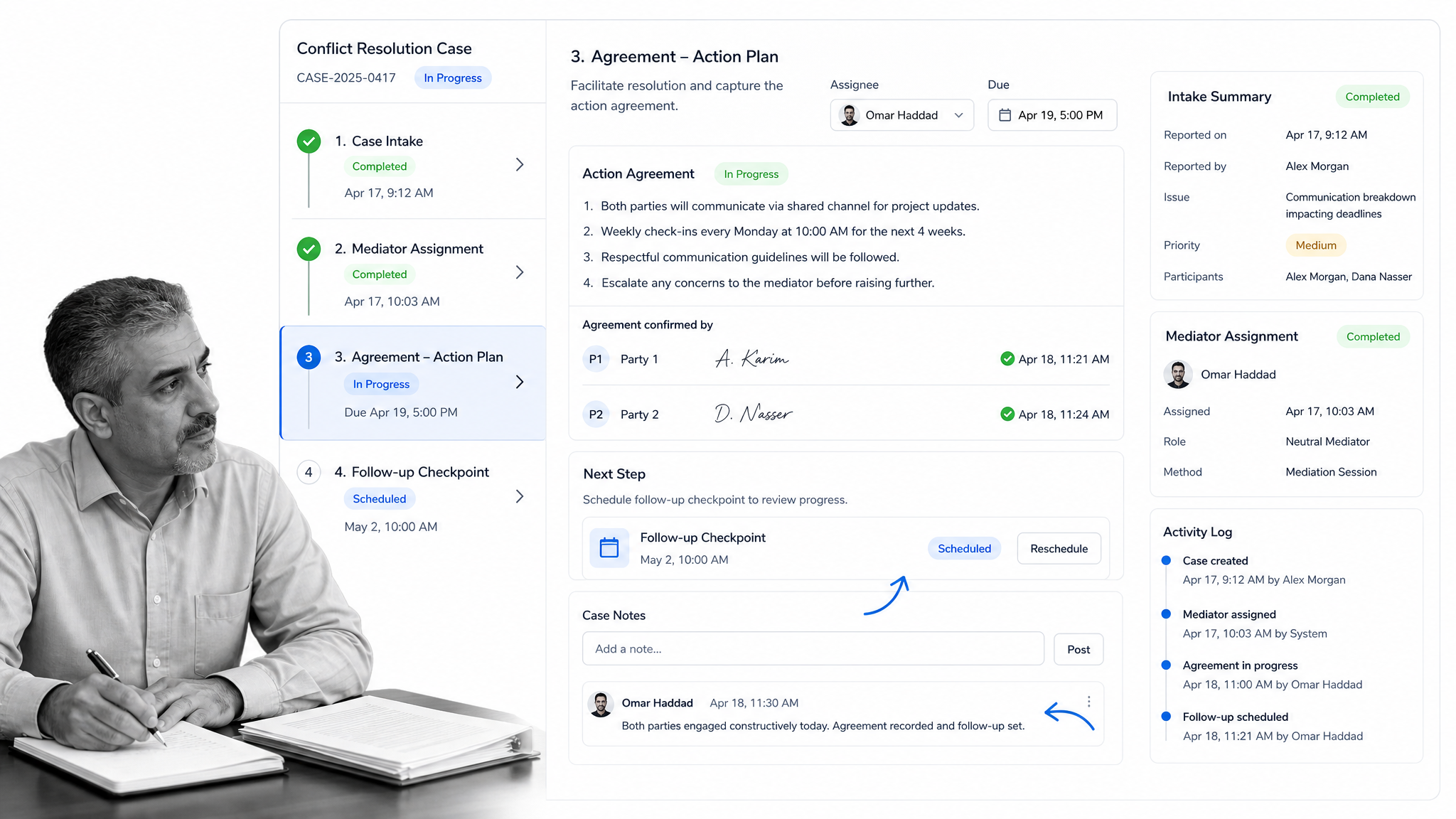
Conflict is common in any workplace. Pollack Peacebuilding cites research that a large majority of employees experience workplace conflict, and communication breakdowns remain a frequent cause. The point of a checklist is not to make sensitive conversations mechanical. It is to make sure the process is fair, documented, and followed through.
Use this checklist to capture the issue, assign a neutral owner or mediator, document the agreement, and schedule follow-up. That structure gives people a clear path forward without turning every disagreement into a one-off scramble.
When conflict is clearly affecting the mood and productivity of other employees, managers can often create a better solution by getting involved as a neutral mediator who is prepared to listen. The checklist walks through the conflict resolution process so everyone can get back to work in good spirits.
Click here to get the office conflict resolution checklist.
Employee Discipline Checklist
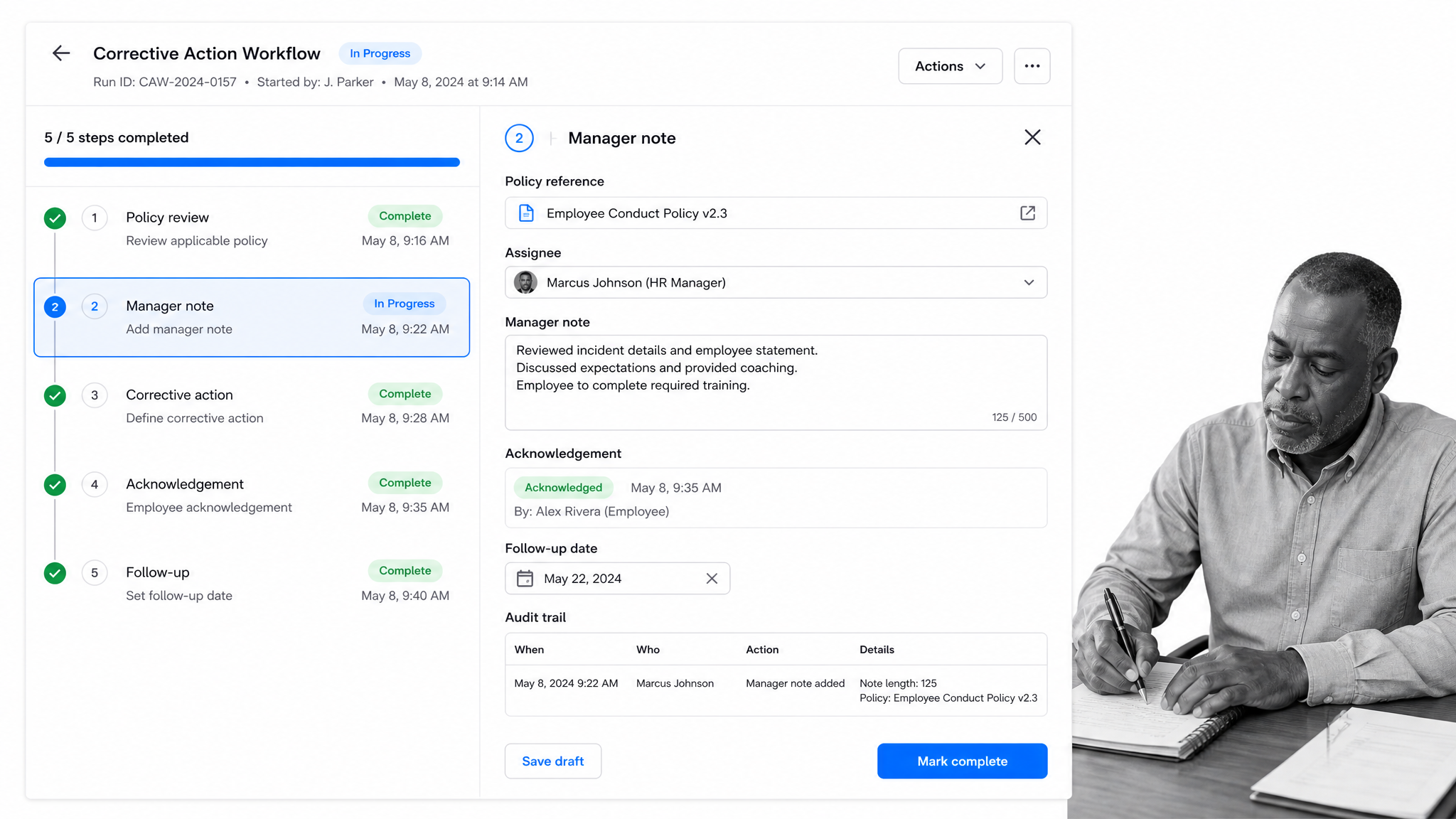
Employee discipline needs consistency, context, and care. Managers need a process that documents expectations, references the relevant policy, captures the conversation, and schedules follow-up. Forbes has covered practical ways managers can build trust with employees, and that trust matters even when the conversation is difficult.
Use this checklist for corrective action workflows where the goal is clarity and accountability, not punishment for its own sake. The workflow can capture a manager note, acknowledgement, next steps, and an audit trail so the company has a consistent record.
Employee discipline is not a form of punishment. It is a clarification of expectations and an opportunity for development. A certain level of trust between employee and manager is necessary for effective disciplinary action, including an active effort to listen to employee concerns, show respect, empower people with new responsibilities, and lead with integrity.
Click here to get the employee discipline checklist.
Employment Termination Checklist
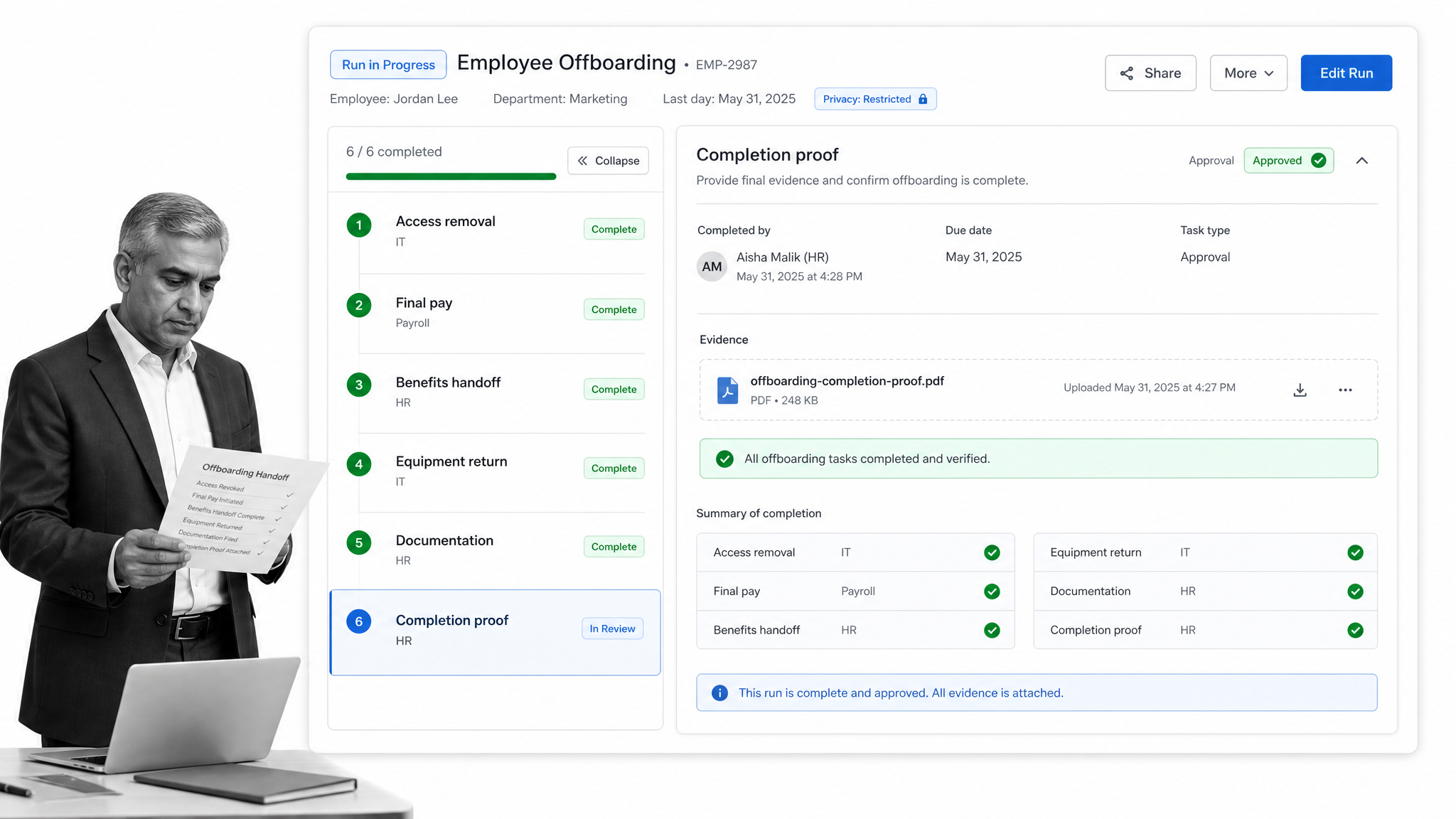
Employment termination is one of the highest-risk office management processes because HR, payroll, IT, legal, and the employee manager all need to complete their parts. SHRM maintains a practical termination of employment overview, and the safest approach is to treat termination as a coordinated workflow rather than a last-minute task list.
Use this checklist to track access removal, final pay and benefits handoff, equipment return, documentation, and completion proof. It helps protect privacy, reduce missed handoffs, and give each owner a clear responsibility.
Whether the employee has chosen to resign or is being involuntarily terminated, the procedure needs to be respectful, compliant, and efficient. Disabling access to company property, issuing a benefits status letter, conducting an exit interview, and confirming every handoff before farewell are all steps that can have serious consequences if not done properly.
Click here to get the employment termination checklist.
Performance Review Checklist
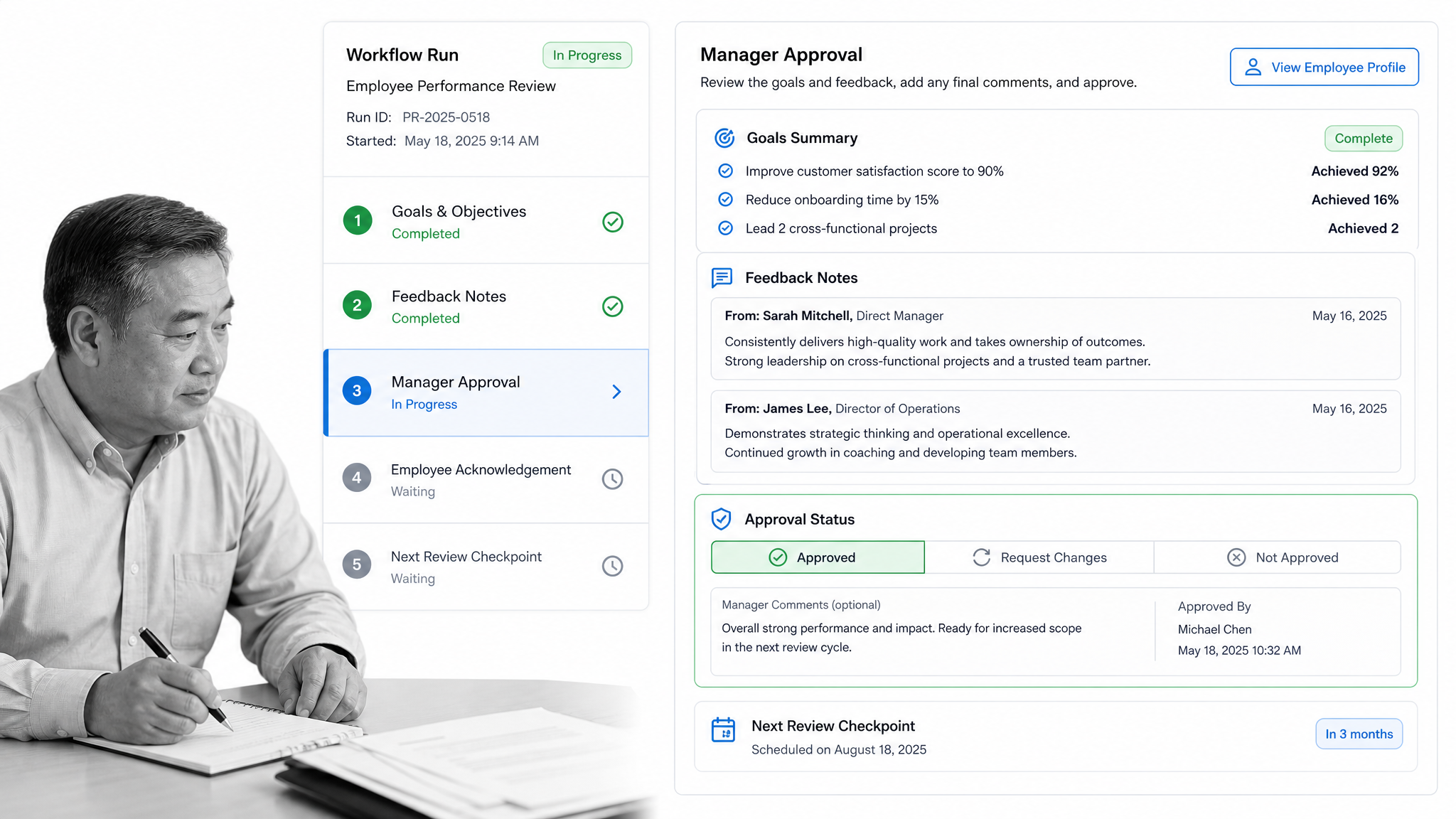
Performance reviews work best when feedback, goals, manager approval, employee acknowledgement, and follow-up are all captured in one place. Gallup has reported that employee retention depends heavily on getting recognition right, which makes the review process more than an administrative ritual.
Use this checklist to prepare goals, capture notes, route manager approval, record acknowledgement, and schedule the next checkpoint. It keeps reviews from becoming a vague conversation with no documented next step.
Performance reviews are also an excellent opportunity to praise employees for what they have done well, correct what is going wrong, and offer opportunities for career development. A candid discussion about the job in general can boost motivation when the review is prepared well and followed by concrete action.
Click here to get the performance review checklist.
Budget Preparation Checklist
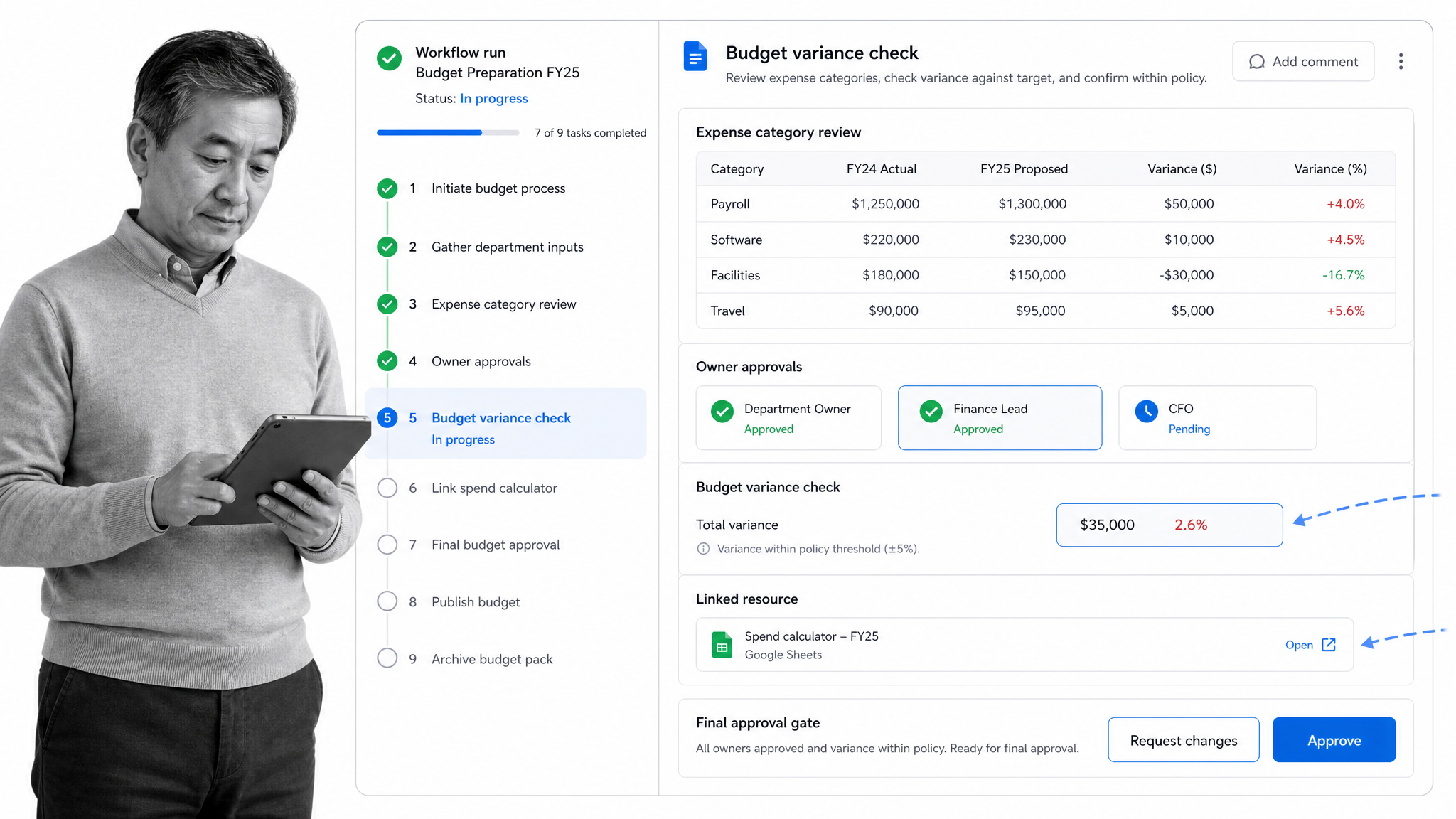
Budget preparation forces office managers to turn expected activity into approved spending. That means reviewing expense categories, checking variance, getting owner approval, and making sure finance has the evidence it needs. The Spendesk spend management calculator is a useful external reference for thinking through spend controls.
Use this checklist to review payroll, software, facilities, travel, and other categories before approval. The workflow can route owners through review, attach supporting calculations, and capture final approval before the budget is treated as ready.
For many office managers, financial planning includes putting together an annual departmental budget. The work can be arduous because it requires analyzing the most recent budget, determining goals, calculating expenses and income, gaining approval from top management, and then implementing the budget without losing control of spend.
Click here to get the budget preparation checklist.
How to run these checklists in Process Street
Each checklist can be run as a workflow, assigned to the right owner, and tracked through completion. That matters for office management because the work spans records, facilities, HR, finance, and communication. If the process lives only in a document, people still have to remember when to run it, who owns each step, and where proof should go.
Process Street is a Compliance Operations Platform that brings Docs, Ops, and built-in AI into one product. You can document the procedure, run it as a workflow, collect approvals and evidence, and keep an audit trail as work happens.
Process Street has direct, universal integrations to 5,000+ systems. Need a new one? An AI agent builds it on the fly. You can also connect common office tools such as Google Workspace, Slack, Trello, and Dropbox Sign, formerly HelloSign. For a broader buyer-oriented view of tools in this space, see our guide to operations management tools.
Useful automations include sending a risk assessment report to your manager upon completion, emailing an employee a summary of their performance review, scheduling a date to review progress after a verbal warning, passing employee performance data between Process Street and Google Workspace apps, creating a Trello card when a safety inspection begins, and uploading attachments such as a certificate of record destruction to Google Drive.
More office and operations templates
If you need more templates for recurring office operations, these related Process Street resources are still useful:
- The Ultimate Guide to Business Process Automation
- HR Templates: The Perfect Pack for Company Success
- 6 Checklists to Perfect your New Employee Onboarding Processes
- The Ultimate Client Onboarding Process Toolkit
- 20 Checklists to Drive Your Sales Processes
- 9 Property Management Workflow Templates
The best office management checklist is the one your team actually runs. Start with the template that matches the recurring problem, assign every step to an owner, and keep the proof inside the workflow.