





All posts in Business Processes

8 Ways to Build a Scalable Business: Ideas to Try Right Now

Black and white operations founder adding a modular storefront model for a scalable business header

Imagine you single-handedly run a lemonade stand. You get 20 customers each day and have just the right amount of ingredients for a normal afternoon.

Then, out of the blue, you get coverage from the New York Times. Customers queue down the block, sugar runs out within an hour, and the stand has to close while demand is still there. That is what happens when demand grows faster than the systems behind it. No hiring process, no onboarding plan, no inventory forecast, no scalability.


Continue Reading

5 Steps to Apply Deloitte’s Customer Service Delivery Model in SaaS

Customer success operations leader presenting a tiered customer service delivery model.

A customer service delivery model defines how support moves from self-service to frontline teams, specialists, product experts, and account owners. In SaaS, that model has to do more than answer tickets. It has to protect retention, route risk early, keep customer data clean, and give every team a consistent way to act.

Deloitte’s customer service delivery model is still useful because it focuses on five capabilities that matter in modern customer operations: omnichannel interactions, connected devices, loyalty, communities, and engaging user experiences. This guide applies those capabilities to SaaS teams and shows how to turn them into repeatable workflows.

Continue Reading

7 Ways to Use Dynamic Due Dates For Enhanced Process Flexibility

Operations manager adjusting a physical workflow timeline model to show dynamic due dates.

You’ve just closed a major deal.

It’s taken months of hard work to convey the value of your product, negotiate a solid agreement, and get the customer ready for launch. The sales team is pumped, but the handoff now matters more than the close.

Continue Reading

50 Efficient Business Process Automation Examples You Can Steal

Operations leader configuring a miniature automated workflow machine for business process automation examples you can steal

Business process automation examples you can steal are easier to understand when you can see the work moving. A form comes in, a customer issue gets routed, a lead gets enriched, a campaign gets approved, a payment reminder goes out. The value is not the software trick. The value is that routine work stops depending on someone remembering the next step.

The examples below show how teams use automation across communication, customer interactions, lead management, marketing, operations, and sales. Some came from earlier Zapier-era workflows, and the pattern is still useful: connect the trigger, route the work, assign an owner, and keep the record. For more current examples of recurring work handled end to end, see these workflow automation examples.

Continue Reading

222 Zaps to Crush Your Current Process Automation

Operations manager presenting a robotic conveyor module for process automation examples

Process automation turns repeatable handoffs into work that moves on its own. Zapier is still one of the fastest ways to connect the apps your team already uses, but the hardest part is knowing which handoffs are worth automating first.

The easiest way to start is not a blank canvas. It is a library of proven Zaps you can adapt, test, and then fold into a broader process automation system that keeps the work visible and accountable.

Continue Reading

5 Business Systemization Mistakes You Need To Avoid

Business owner adjusting a miniature workflow model for a systemization mistakes article

The following is a guest contribution from Wendy Tadokoro, Systemisation Specialist at Organising Works!

As a successful entrepreneur, your business eventually reaches the point where you cannot stay personally involved in every recurring task, handoff, and customer promise. That is when business systemization becomes more than an operations project, and these are the mistakes you need to avoid if you want documented workflows, trained ownership, and a business that can keep improving without everything running through you.

Continue Reading

22 Business Growth Lessons for Startups from SaaStr Europa

Black and white founder presenting a tiered greenhouse as a metaphor for startup business growth lessons

Startup growth gets difficult after the first proof point. The product has to mature, customers expect more, the team expands, and investors want the next milestone to arrive on schedule.

SaaStr Europa in Paris made that pressure concrete. The talks below turn a conference room full of founder stories into practical business growth lessons, from customer health and freemium economics to partnerships, enterprise reliability, and the business tools that help teams turn advice into repeatable execution.

Continue Reading

21 Excel Tips and Tricks to Become a Spreadsheet Sensei

Black-and-white analyst organizing a physical spreadsheet grid for Excel tips and workflow automation.

Excel is still where a huge amount of business work starts. Teams use it to clean data, plan schedules, track revenue, reconcile accounts, manage customer lists, and make quick decisions before a process is ready for a dedicated system.

These Excel tips and tricks move from beginner spreadsheet habits to formulas, tables, macros, add-ins, and workflow automation. The goal is simple: become a spreadsheet sensei without letting the spreadsheet become the whole operating system.

Continue Reading

5 Great Ways to Involve Your Employees in Process Design

Operations lead presenting a connected modular model of a business process, representing involving employees in process design

Finding effective ways to engage your employees in decision-making has become a priority for most organizations, and process design is one of the highest-leverage places to start. When the people who actually run a process help shape it, they adopt it faster, surface the friction you cannot see from the org chart, and stay bought in long after the rollout. The data backs it up: McKinsey found that organizations seeing the strongest returns from change involve 21 to 30 percent of their people in the work, yet most involve only about 2 percent. Treat your employees well, give them a real say in how work gets done, and they will be more motivated to consistently produce their best work.

This guide walks through five practical, tried-and-tested ways to involve your employees in designing and redesigning your internal business processes. Each one gives your team a genuine channel to contribute, and because the processes are built through collaboration, they earn the process adoption that top-down mandates never quite reach. It is a win-win.

Continue Reading

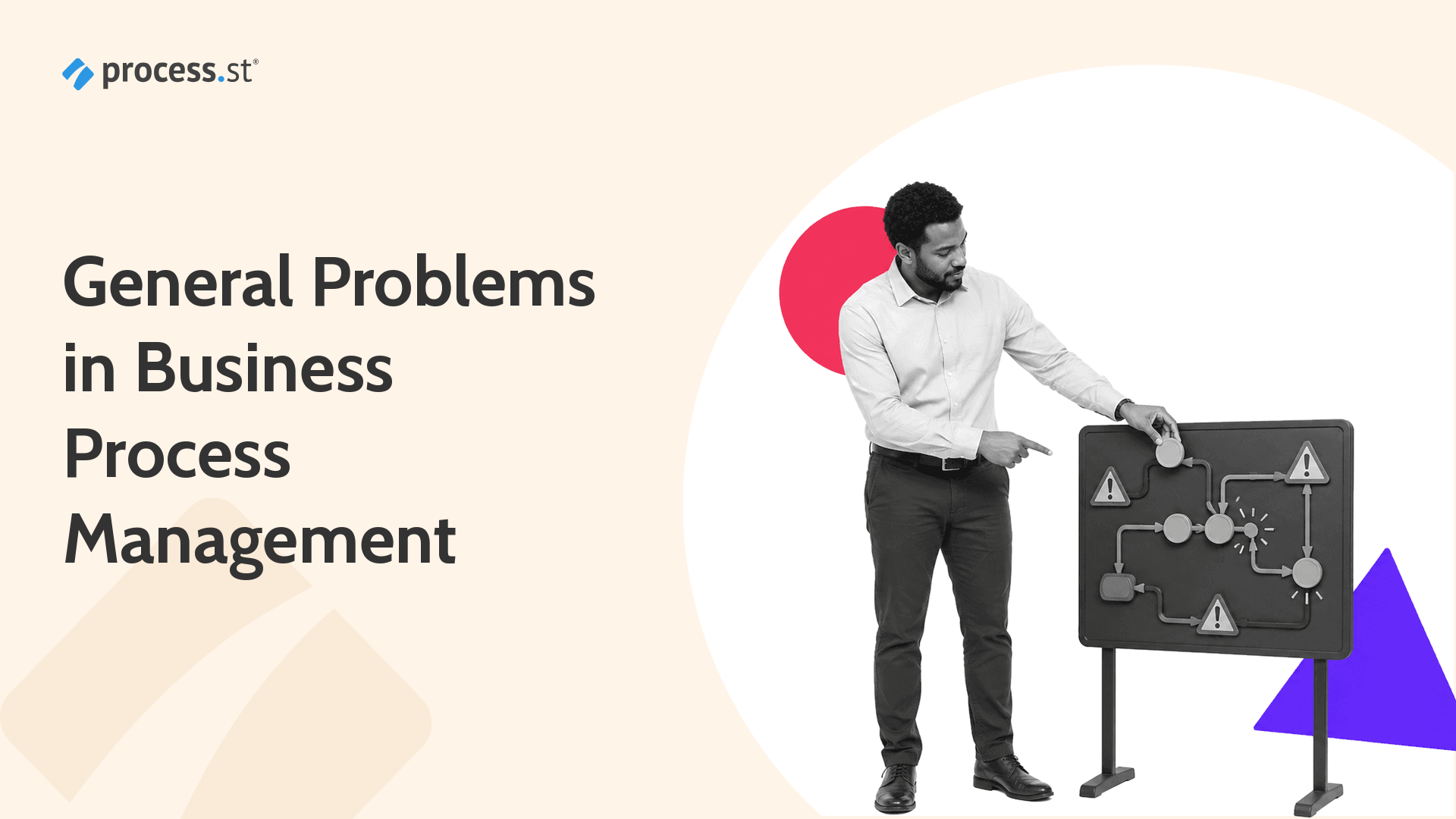
4 General Problems with Business Process Management

Operations manager diagnosing general problems in business process management on a workflow board

Business process management is an excellent way to keep your business organized and running efficiently, but BPM implementation can still create problems along the way. The most common business process management challenges are not just software issues. They happen when people misunderstand the system, do not buy into it, forget steps under pressure, or assume responsibility belongs to the process instead of a person.

It is important to recognize what can occur so you can create an environment that prevents those problems from happening. Here are four general problems with business process management, plus practical ways to counter them before they spread through the business.

Continue Reading

Take control of your workflows today

Choose which optional cookies to allow. You can change or withdraw consent here at any time.