All posts in Document Management

The Best Digital Signature Tools, Integrations, and Workflows

digital signatureGone are the days where signing contracts involved figuring out how to connect to a printer, scanner, or photocopier.

And don’t get me started on fax machines.

Now we live in a glorious new world of rapid digital signature workflows.

There are many kinds of digital signatures. Some may think of the high-tech encrypted keys people like Julian Assange have used to prove whether messages came from them or not.

But let’s be honest, outside of our international secret agent daydreaming we’re not likely to need to use those. What we need is the simple act of being able to add our signature on to digital documents with the fewest number of clicks possible.

Those interested in soccer may remember the high profile signing of David de Gea by Spanish giant Real Madrid from Manchester United. Or, actually, you won’t remember it. Because it didn’t happen. The documents were to be sent in the last moments of the transfer window, and the whole multi-multi-million dollar deal fell through due to a broken fax machine.

Digital solutions to contract workflows are important.

That’s why in this Process Street article we’re going to look at:

  • The 5 best digital signature tools
  • Digital signature integrations you can use today
  • How to connect digital signatures with the workflows in your business

Continue Reading

How to Create and Organize The Perfect Process Library (Free Templates)

process libraryProcesses are all the rage right now, and we’re very pleased to be leading the charge in making processes agile and actionable for organizations of all shapes and sizes.
We’ve written countless pieces about creating a process, writing standard operating procedures, or building business systems.

But sometimes we’re guilty of assuming that having a process automatically makes something organized. It doesn’t.

If you’re a solopreneur or working in a startup, managing processes is fairly easy. You have a limited number and you can easily scroll through to find the one you need when you need it.

But what about large organizations? Companies where people on different teams are in different countries? Businesses where different departments speak and operate in different languages?

How can we manage processes on such a large scale, and what does that tell us about managing processes for small businesses looking to scale?

This is where a process library comes in.

In this Process Street article, we’ll look at:

Or, if you’ve just come for the templates, grab them below:

Let’s get started!

Continue Reading

The 9 Best Organizational Tools to Bring Order to Chaos

Organizational Tools

Documented processes don’t just save you time, money, and give a consistent method for your team to follow. They make everything you do more reliable and efficient, even increasing project success rate by 70%.

Unfortunately, getting started is the hardest part. Whether you don’t feel like you have time to set up your management system or just don’t know what to use for your needs, it’s difficult to get over the initial learning curve.

That’s why I’m going to outline the 9 organizational tools you can use to get started right now.

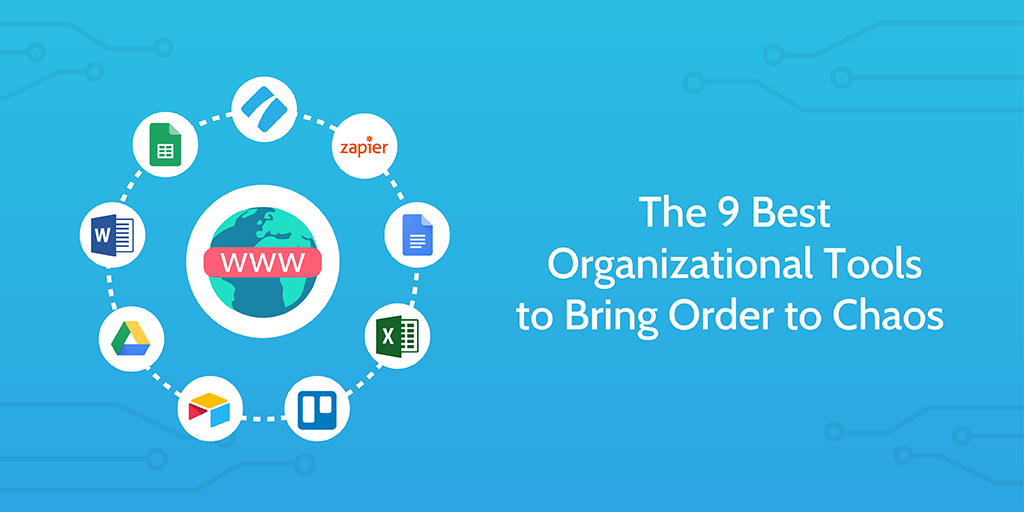
From their pros and cons and best use guidelines to general tips on what to do with your organizational tools, this post will cover:

  • Process Street
  • Office 365 (Microsoft Word and Excel)
  • Trello
  • Airtable
  • Google Suite (Google Docs, Google Sheets, and Google Drive)
  • Zapier
  • …and 4 process management techniques to get you started

It’s time to learn what organizational tools you need to manage your processes, and how to use them.

Continue Reading

How to Create a Style Guide to Improve Business Consistency (with 8 Examples)

To understand the value of a style guide, you should first try working without one.

You’d get the wrong blue on your logo, jarring copy, and code that can only be maintained by a lone developer.

Writers, editors, programmers, engineers, social media managers, and support agents all need an indication of how their company wants to work, so they can ensure consistency.

The number one goal of a style guide is consistency.

Inconsistency weakens your brand image, makes your company look unprofessional, and hurts conversion rate and revenue. Once you’ve settled on your brand voice and style, the style guide is the document that enforces those values.

Continue Reading

Take control of your workflows today

Choose which optional cookies to allow. You can change or withdraw consent here at any time.