All posts in Marketing

Referral Marketing: Learn From the Best to Be the Best, Top 8 Techniques for Rapid Growth

referral marketing

This is a guest post by Jack Paxton, the co-founder of VYPER, a marketing tool that helps brands build email lists, social followings, and revenue using viral giveaways, referral, and reward programs. Jack spent millions of dollars testing different marketing strategies at his marketing agency. He then also co-founded Hyax a fast, conversion & design-focused course and funnel builder for creators.

Famous SaaS brands like Dropbox and PayPal witnessed explosive growth in their platforms. Since 2007, Dropbox has grown into a $4 billion-dollar company, and PayPal went from 1 million users to 5 million in the same year (2000).

Dropbox and PayPal are two entirely different businesses operating in different markets. However, they share a similar viral growth strategy, one that is still used today.

Any ideas on what this strategy might be?

You got it, they both harness the power of referral marketing.

SaaS brands worldwide, including us at Process Street, are realizing the benefits of referral marketing: to constantly acquire new customers, build platforms, and promote customer loyalty and trust.

In this article, we present world-famous referral programs to determine what made them successful and how you can do the same.

Click on the relevant links to jump to your section of choice. Alternatively, scroll down to read all we have to say, to optimize your growth strategy via referral programs.

Let’s jump to it!
Continue Reading
What Are the Best Christmas Ads EVER Made? (And Why You Should Care)

Christmas ads

Q: What do you get if you cross Santa with a duck?
A: A Christmas quacker!

The only thing better than a good old Christmas cracker joke is a good old Christmas ad.

Festive, heartwarming, and thought-provoking, TV Christmas ads signify the start of Christmas.

And they’re a marketers dream. According to research, for every $1.30 that’s spent making a Christmas ad, retailers can expect to get $31 back.

How do Christmas ads generate so much revenue? When did Christmas ads become such a huge deal? What are the best Christmas ads EVER made? And what makes a Christmas ad the best EVER?

Time to find out as we get ‘Santa-mental’ and ‘sleigh’ our way through the following topics in this Process Street post:

Ready? Hold on for ‘deer’ life and let’s ‘snow’…

(The ‘presents’ of these terrible Christmas puns do ‘snow’ down – I promise.) Continue Reading

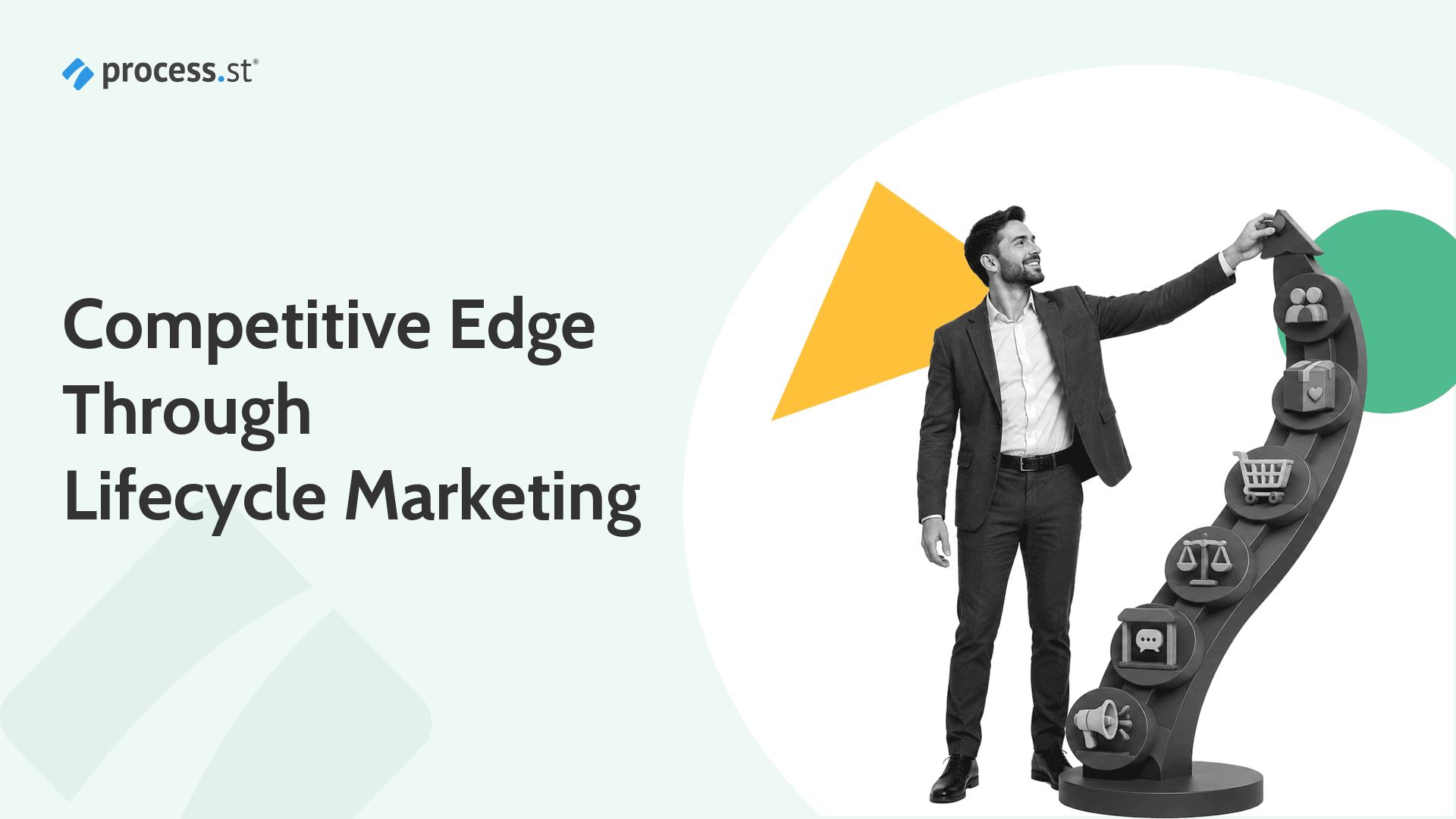
Give Your Company a Competitive Edge With Customer Lifecycle Marketing

Customer operations leader advancing a six-stage customer journey toward a competitive edge

This is a guest post by Jin Choi. Jin Choi is a writer whose favorite hobbies include learning about the newest trends in online marketing and lifting heavy iron at the gym.

Customer lifecycle marketing adapts your message, support, and operations to the stage a customer is in, from first awareness through advocacy. The aim is to reduce friction at each handoff and create more value for the customer over the life of the relationship.

Continue Reading

How to Launch on Product Hunt: What We Learned from 30+ Launches

how to launch a product on product hunt

Way back in 2014, we first tried our hand at launching on Product Hunt with an early version of Process Street. It got featured, but that was a different time; when Product Hunt’s staff manually selected each product feature (these days Product Hunt claims that an automated algorithm decides).

It was hunted (Product Hunt lingo for “promoted”) by Audrey Melnik of Funnel Ventures, didn’t even have a maker (another Product Hunt termin for the creators of a product), yet still found its way to the front page of Product Hunt.

Six years, a couple of relaunches, and a $12 million Series A on from that humble effort, Process Street has changed a fair bit. We’ve shipped over 30 products on Product Hunt; from podcasts, new Process Street feature launches, to whole product launches, to eBooks.

Some of them were great successes, with multiple top 4 spots and a whole bunch of front-page features. Others weren’t so great; some garnered next to no traction and were essentially dead-on-arrival.

The point of this article is to impart some of the lessons we’ve learned, from common myths and misconceptions, to what worked well for us (and what didn’t work so well).

Here’s a breakdown of what I’ll be covering:

Let’s start with the basics, which often get taken for granted when it comes to deciding whether or not to launch on Product Hunt.
Continue Reading

Why Top Brands Are Obsessed With Phygital Marketing

Why Top Brands Are Obsessed With Phygital Marketing

You’re waiting for the train on your way to work. You’ve got a long day ahead, and don’t feel like swinging by the grocery store afterward. Fortunately, there’s a supermarket kiosk on the platform. You scan the barcodes with your phone and arrange for your food to be delivered when you get home.

As you cross the street to your office building, the strap of your computer bag finally breaks. You don’t have time to run out and get a new one, but that’s okay. Once you’re in your office, you log on to the company’s website, put on the augmented reality headset, and virtually try on different bags.

At lunch, you head down to your usual restaurant. The AI in the touch-screen kiosk suggests sandwiches you might like based on your order history, then uses facial recognition to complete the order and charge your account.

This is phygital marketing – all made possible by advances in augmented reality (AR).

The global AR and virtual reality (VR) markets are expected to reach 18.8 billion USD by the end of 2020 – over 78% growth from spending in 2019. By 2025, that growth is only expected to increase exponentially.

With the sophistication of AR/VR tech, more companies are incorporating it into their campaigns – and more consumers are expecting it.

In this Process Street post, we’ll take an in-depth look at the what and why of phygital marketing, but you can also skip ahead to one of the following sections:

Let’s get phygital!

Continue Reading

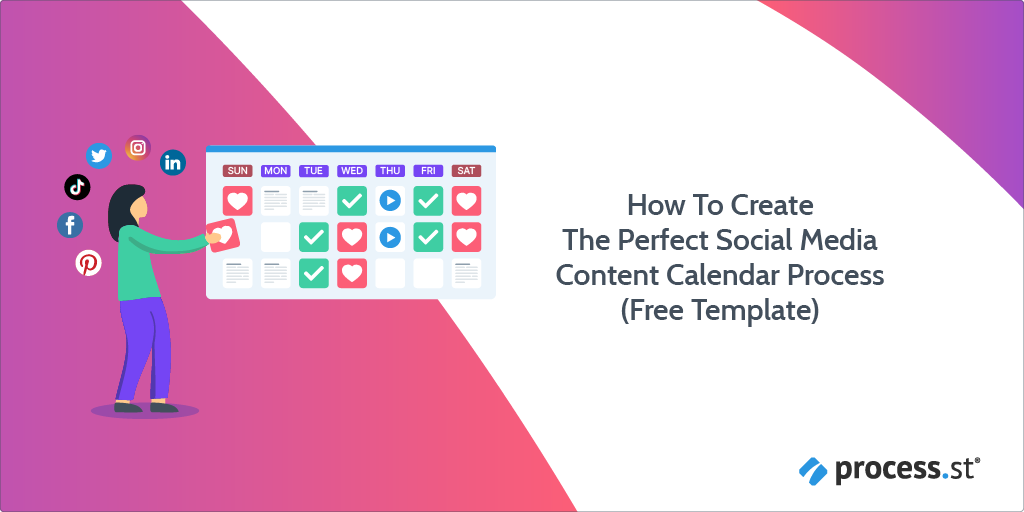
How To Create The Perfect Social Media Content Calendar Process (Free Template)

social-media-content-calendar

“An hour of planning can save you ten hours of doing.” – Dale Carnegie

The formula for success on social media can seem like trying to pick the lottery’s winning numbers – impossible, with a dash of blind luck. What if you could predict some of the outcomes? The game becomes a lot easier, right?

One of the keys to success on social media is creating a well-thought-out social media content calendar process – another is executing it!

Having worked for a creative marketing agency, I understand the difficulty of creating a well-structured social media content calendar process. Waiting for approvals from your clients feels like rallying against Roger Federer at Wimbledon (his social media game is ace too). While cornering your colleague who still owes you that spellcheck is awkward at best.

So how do you become the Roger Federer of social media?

All it takes is a 3-step process to get the ultimate social media content calendar. But first, let’s see what you’ll learn about in this blog post.

Click the headings to jump ahead, or stick with me as we rally for serve.
Continue Reading

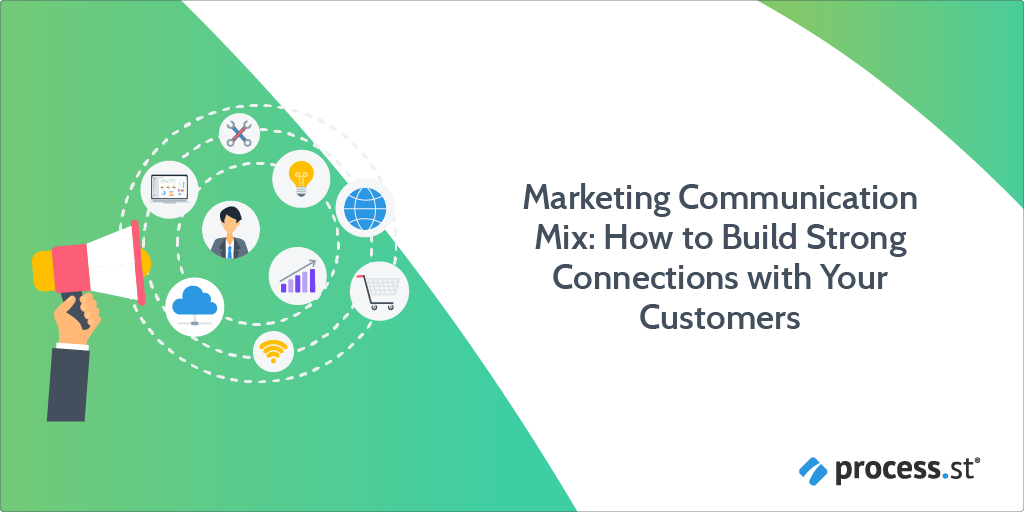
Marketing Communication Mix: How to Build Strong Connections with Your Customers

marketing communication mix

This is a guest post from Alissa Zucker, marketing manager and writer at Mcessay. You can find her reading classical philosophy and writing short fiction in her spare time.

It’s predicted that by the end of 2020, businesses will have spent ~$110 billion on digital advertising alone in the US. To put that into context, that’s more money spent on digital advertising than what would be spent on both television and print ads combined.

This just goes to show the importance of digital advertising in the modern marketing communication mix.

It is essential that every business know how to effectively market their products and services in order to not only survive, but to grow and prosper in a competitive global market.

It’s not uncommon when questioned about marketing, that a business owner will simply produce a business card, a brochure stitched together using a Microsoft Office template, or a barely functional website with little to no traffic.

In this Process Street post, I want to provide you with an overview of everything you need to know about the marketing communication mix, including:

Before diving into the specifics of the marketing communication mix, let’s first discuss the 7Ps of marketing.
Continue Reading

Video SEO Marketing: How to Optimize Video Content for Better Search Rankings

Thom James Carter September 24, 2020

video SEO marketing

Lesley Vos is a content strategist at Bid4Papers, specializing in data research, copywriting, and content promotion. She has been published on Moz, CXL, Forbes, and more. Follow her on Twitter to read her latest articles.

The world’s demand for video content is enormous. It makes up 80% of all online traffic, and yet 53% of people want to see even more videos from brands they support!

In short, if you don’t consider video a part of your marketing plans, you’re missing a huge opportunity to grow. Not only does video content impact your brand’s authority, but it also can improve your traffic and overall search engine rankings by far.

But this is all easier said than done.

While producing and sharing a video might seem a great idea, you need to remember that it should complement your overall SEO and marketing strategy. After all, if you fail to organize and optimize your video content in the early stages, not only will it cost you a pretty sum, but it will be money spent in vain.

That’s why, in this guest post for Process Street, I’ll discuss video SEO marketing and optimization so your video content can achieve better rankings.

Just read through the following sections:

Or, if you wanted to start working through an SEO checklist straight away, use this template.

Click here to get SEO Checklist: The Keyword Research Process!

Lights, camera, action,

Continue Reading

Digital Marketing Hacks For a Successful Product Launch

Product launch leader beside a scale launch vehicle preparing for a successful product launch

A successful product launch is a coordinated release that matches a validated customer need with clear positioning, a ready product, prepared teams, focused marketing, and a plan to learn after launch day.

This is a guest post by Dave Schneider, a serial entrepreneur and co-founder of Shortlist, a marketing agency that serves as an outsourced dedicated marketing team. He also co-founded Less.churn before selling it in 2018. Dave writes about SaaS, marketing, and business, and shares more about his work in this Shortlist founder profile.

Continue Reading

How to Use Social Media for Indie Game Marketing: A Beginners Guide

indie game marketing

Travis Taborek is an SEO and content marketing specialist based in the San Francisco Bay Area. He’s a graduate of General Assembly’s digital marketing course, and has since written content and optimized websites for Wescover and TiVo. He also has a side-business doing PR and social media work for indie games and reviews indie games in his spare time. His most recent accomplishment was finishing Homestuck and thereby winning shelter-in-place.

Back in 2011, you might have been able to get away with uploading your indie game to Steam’s marketplace and expect a revenue of $30-50K in the first year, without any effort or marketing knowledge.

Hell, you might have even been able to get away with that as late as 2014. But these golden days for indie game developers are long gone.

Steam has made many changes to the way it promotes indie games and the current market is far more saturated. There are more game developers than ever and tools like Unity and Unreal have made game development more accessible than ever.

Just getting that final build finished and uploaded to your storefront of choice is no longer enough. To have a successful launch, whether you’re a solo dev or a small team, you have to understand how to market your game.

In principle, marketing your game is relatively straightforward; you just need to know where to start. If you understand who you’re making the game for (your audience) and how to talk about your game as a product (meaning: you’re able to communicate what your game offers and how that aligns to the expectations of your target audience), then you’ve already done most of the hard work. The rest is as simple as following a process.

Once you have this base knowledge, it’s just about taking your product to market and doing the legwork that’s involved with getting the word out and making sure you get eyes on the finished product.

This Process Street article takes a look at one strategy for marketing your indie game: social media marketing.

What is social media marketing?

It’s basically exactly what it sounds like: using social media to get your game in front of your target audience. The term ‘social media marketing’ is a bit vague and encompasses a bunch of different approaches; we’ll be looking at some of the different ways you can use social media to market your game in this article.

Social media marketing is great for connecting on an intimate level with your fans and building lasting communities around your game, from early development until launch, and beyond. When done properly, it can allow you to develop trusting relationships with your audience that will drive them to not just purchase one of your games, but every game you put out.

Here’s a high-level overview of what we’ll be looking at:

Let’s get started beginning with the theory of social media marketing.
Continue Reading

Take control of your workflows today

Choose which optional cookies to allow. You can change or withdraw consent here at any time.