All posts in Processes

DMAIC: The Complete Guide to Lean Six Sigma in 5 Key Steps

dmaic headerWe all like to know about the broader philosophies behind process improvements, but sometimes we need to knuckle down and look at some of the more technical details.

One of the core techniques behind any process improvement, particularly in Six Sigma, is DMAIC.

This handy approach, pronounced duh-may-ik, is the key to employing Six Sigma and beginning your journey to being a process hero. We’re going to cover each step in the process and detail how to effectively enact every section.

This guide will lead you through from start to finish and get you ready to start employing lean Six Sigma within your business!

Continue Reading

Little’s Law: How to Analyze Your Processes (with Stealth Bombers)

little's law - header 2

Simple as it may be, Little’s law is an incredibly powerful tool in the arsenal of almost any team. From performing back-of-the-napkin calculations to showing the performance of a system over time, this formula is one of the key building blocks to running an efficient business.

Without Little’s law, Lean and Kanban wouldn’t exist, and key elements of America’s nuclear deterrence would be left up to chance.

After all, you can’t fly B-2 stealth bombers into action if they’re all under maintenance due to bad queue management.
Continue Reading

How Toyota Saved Children’s Lives with Process Implementation

process implementation toyota headerWhat connects a 75% drop in infection rates, a 48% increase in home rebuilding speeds, and an extra 400 hungry families receiving the supplies they need to get by?

Have you guessed yet?

That’s right. Effective process analysis and implementation. Specifically, the Toyota Production System process analysis and implementation.

In this article, we’re going to look at some of the heartwarming success stories of process implementation carried out by the Toyota team.

The human side of organizational systems demonstrate the importance and effectiveness of learning and understanding how to create continuous improvement in your processes.

Throughout these examples we’ll see a number of key Toyota concepts employed and how they worked in practice:

  • genchi genbutu – to “go and see”, to embed yourself in the system and observe,
  • kaizen – to employ ideas of continual improvement, making small iterative changes,
  • muda – to identify waste, and to recognize that what constitutes waste is contingent on your situation.

From disaster relief to pediatric hospitals, the benefits of strong process analysis are clear for all to see.


Continue Reading

Standardizing Processes: How to Create a Documentation Style Guide

standardizing processes - header

From putting together flat-packed furniture to avoiding nuclear war, we’ve talked at length on why processes are important.

They’re the lifeblood of any consistent business, allowing it to repeat its successes, avoid mistakes, increase efficiency, and create effective to do lists. Without them you have no hope of even knowing what you’re doing right or wrong – you’ve more chance of putting together IKEA furniture with no instructions than of improving your situation and growing your business.

standardizing processes - gif

However, without standardizing processes you make, anything you document will do more harm than good.

Different layouts will make it hard to distinguish what the correct version of the process is, varying language across your teams will make working together a nightmare, while multiple naming and storage methods make it impossible to search for the process you need.

So, today I’ll show you how to standardize your processes by creating a documentation style guide which suits your needs. This guide can then be followed whenever anyone in your business needs to document a workflow.

It’s time to unify your company and cement your success.

Continue Reading

How to Create Business Systems Even When You Have No Time

How_to_systemize_your_business_even_if_you_don_t_have_time

Processes are our deal. It’s what we do.

Unsurprisingly, it’s what our users do too. They use Process Street to manage their internal processes and keep their teams working at maximum efficiency.

In our constant attempt to understand our users’ needs, we asked the community what their biggest pain points were. We wanted to see what obstacles hampered the process management of companies and how we could help them combat that.

Our research across 83 respondents gave us a great deal of insight but one key takeaway stood out:

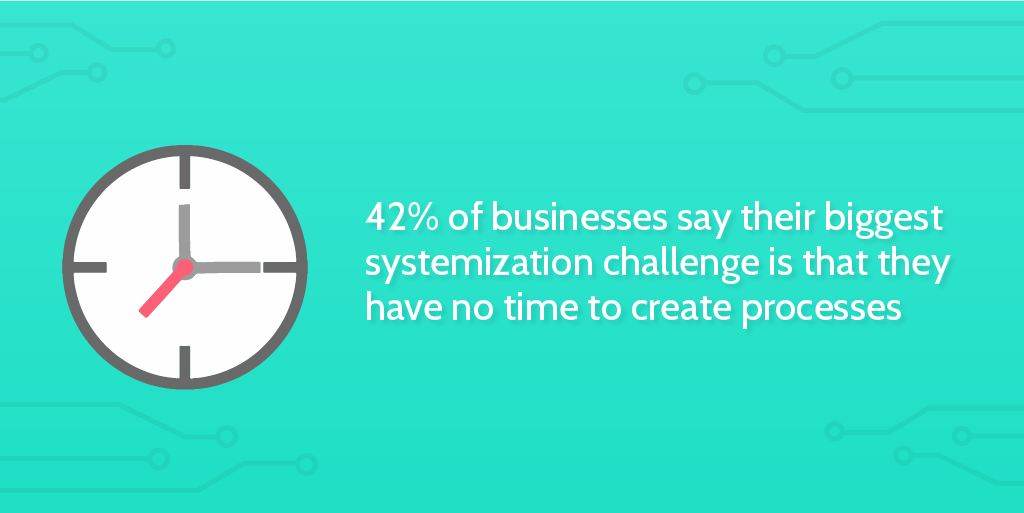
42% of respondents said they had no time to create processes.

Even worse, a further 54% of those (23% of the total responses) say they are currently taking no steps to remedy this situation!

How to systemize your business even if you don't have time Rev1-04

This post will attempt to tackle this problem and present actionable ways you can ramp up your process production and save yourself time.

Continue Reading

How to Organize a Content Marketing Workflow for Your Team

The following is a guest post from Gloria Kopp, a digital marketer and a business consultant from Manville city. She works as a content manager at Paper Fellows and is a regular contributor to such websites as Engadget, Academized, and Huffington Post.

A well-planned workflow is crucial to keeping your content marketing efforts on track and ensuring that you meet your goals.  You may often find that you are receiving content late from your team, that it’s not up to scratch, has been rushed, or just never materializes. The tips in this article should help you to get back onto the straight and narrow.

Before you or your team get stuck into creating more content, make sure that you’ve read through the following points to keep your projects flowing productively.

Continue Reading

Process Adherence: What to Do When No One Follows Your Processes

Process AdherenceProcesses aren’t just a set of documents and rules that help your business run efficiently and reduce human error…


They’re also something that needs to be part of your company culture. Process adherence is the culture side of systemization, and that makes it one of those hard to grasp concepts without many solid rules.

The culture of processes — instead of the act of writing and optimizing them — is something we’ve been meaning to cover for a while because we know it’s a big problem for our users.

Incidentally, we got an insightful comment on our article about creating an operations manual from MamaRed Knight. She outlined an age-old problem with process adherence:

“[Process adherence] is something I’ve been dealing with since I started formally creating documentation in ’83. It really must start at the top level where they don’t answer questions, they ask if it is “in the manual” and it ripples down.

It does take time because, frankly, a very teensy tiny percentage of people want to look something up98% want to ask someone and be done with it.”

In this quote, she highlights two main issues:

  • Employees don’t want to look up processes
  • Procedures are passed on informally by hearsay

In this post, I’m going to explain why processes fail because of human nature, and then unpack each reason with an explanation of how you can improve process adherence in each area.

Continue Reading

Workflow Analysis: Apple’s Secret Ingredient to Success

workflow analysis - header

Apple is well-known for being innovative and immensely successful, to the point where the company is worth $750 billion (and counting). However, without a healthy dose of workflow analysis they would’ve crumbled under their own business model back in the late 1980s.

We could no longer afford the limitations that went with our product development processes… The lack of a formal new product development process led to confusion, wasted time, and often caused project teams to ‘re-create the wheel’” – Jackie Streeter (then VP of Engineering at Apple), Apple Rethinks Core Process: Improves Cycle Time

workflow analysis - apple

The simple truth is that any company (no matter the size or success) needs to regularly review its workflows and processes in order to keep them up to date and efficient. Tasks should be updated, improved, and automated where possible to save time and money, but without using the best workflow management software around to analyze and improve your business practices, your entire business model itself can prevent your success.

Continue Reading

Process Improvement: Stop Bad Processes Killing Your Business

process improvement header

Last week we failed to meet a big deadline for the second time in a month. Vinay (Process Street‘s CEO) wasn’t impressed.

How can you forget something so simple? What’s going wrong?

Then came the kicker.

What was your process?

From missed deadlines to widespread cyber attacks, things go wrong in businesses all the time. The vast majority of problems, however, are caused by following bad processes. Processes might be vital to your business’ success, but unchecked they can just as easily cause you to fail.

process improvement - iphone gif

The only way to change these weak links in your own business is to have a system of process improvement – a way of constantly improving the processes that power your business.
Continue Reading

An Introduction to Process Street for Consultants

process street consultants - header

Today is the first post in a new series – a guide to help consultants and their clients work with Process Street to boost efficiency and be more productive.

Whether you’re documenting your clients’ business processes, updating their toolkit, or generally improving company tools and practices, Process Street is the easiest way to document and manage both your personal and clients’ workflows.

Over the next seven weeks we’ll go through:

  • An introduction to Process Street for consultants – why you should care, and the core features
  • Advanced features such as process automation and custom share links
  • Common use cases and how best to use Process Street in different forms of consulting
  • The benefits of Process Street as part of your (and your clients’) toolkit
  • How to easily set up and hand off processes to your clients
  • How our partner program works
  • Extra resources to become a true master of efficiency

I’ll even be writing this guide to let you give it to your clients to teach them how to use Process Street. After all, efficiency is the name of the game.

process street consultants - efficiency

So, join me today as we kick off this mega guide for consultants by explaining what Process Street is, what the core features are, and why the hell you should care about it.
Continue Reading

Take control of your workflows today