All posts in Blogging

Boost Site Traffic with a 4-Step Content Marketing Framework

Content marketing framework

This is a guest post by Ronita Mohan. Ronita is a content marketer at Venngage, the online infographic and design platform. Ronita is interested in a variety of topics related to digital marketing, visual content, and online engagement, which she enjoys researching and writing about.

Content marketing has certainly become popular.

In fact, it’s become a lynchpin for marketing strategies.

Businesses of all sizes are employing content marketers left, right, and center to ensure that content is created and distributed on a regular schedule.

The purpose of content marketing may have started as a way for businesses to communicate with their audiences, but it has taken on another angle altogether. Content marketing is now seen as a primary driver of SEO and organic web traffic, and content needs to be tailored accordingly.

Unsurprisingly, content marketers are spending huge amounts of time developing blog post ideas that will gain them traction, incite visitors to their websites, and tempt users to use the businesses’ products or services. But without a solid content strategy, the content itself could be insubstantial and ineffective.

That’s why in this informative post I’ll be discussing content marketing in detail, and presenting you with an easy-to-understand, four-step content marketing framework you can follow straight away. Just read the following sections:

Ready to dive in?

Continue Reading

The 10 Most Effective SEO Link Building Strategies of 2023

Vinay Patankar September 26, 2019

Link Building Strategies

This is a guest post from Martha Jameson. As an educator at PhDKingdom.com and AcademicBrits.com, Martha found her calling as a writer, after pursuing web design and management. Her main goals are to share her experience, motivation and knowledge with her readers.

Link building has been a contested subject in SEO circles, not least because of the amount of speculation that goes into figuring out what factors are most important for securing you a top SERP spot.

Despite the controversy around Google’s search algorithm, a great deal of research has actually gone into figuring out what’s happening under the hood. At this point, we can be fairly sure that link building is a significant factor in the SEO of your website.

In fact, it’s actually quite difficult to get your website ranking without the help of link building.

SparkToro’s recent survey of over 1,500 professional SEOs placed the quality of linking sites and pages as the second most important factor, out of 26. That’s a big deal.

Building links is all about linking your website to others, and theirs to yours. As you increase your links, you increase the ability for your readers to access more relevant data, thereby increasing your own website’s relevance.

You’ve got to approach link building seriously in order to use it to your utmost advantage. Search engines will crawl through each page of your website in search of this information.

When you do this right, you can help boost your website rankings and help more readers find and access your content.

Here are 10 of the most effective SEO link building tips of 2019:

Continue Reading

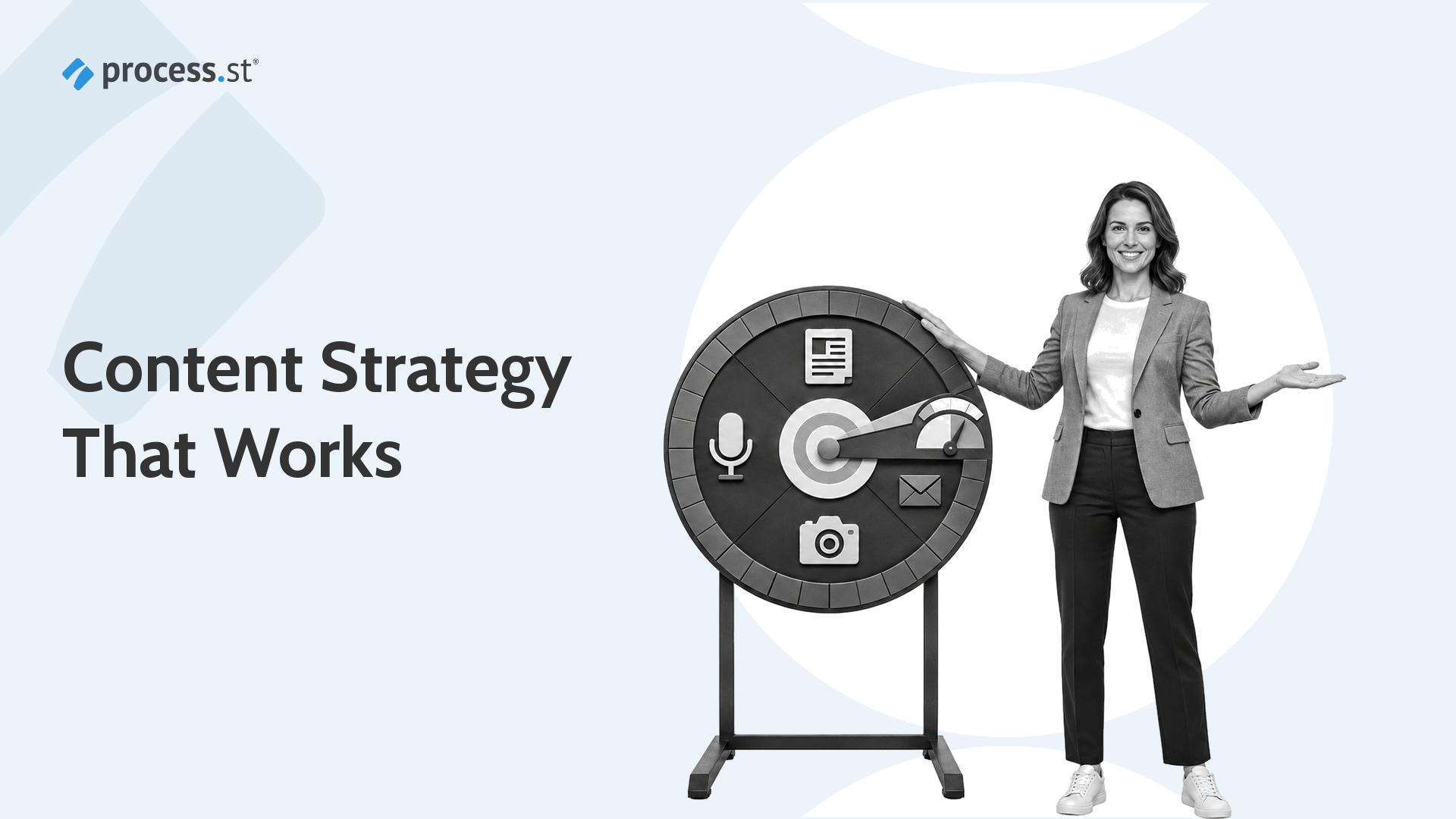
How to Create a Content Strategy That Works

Editorial strategist using a planning wheel to coordinate a content strategy
This is a guest post by Nicole Cowart, an online marketing executive. She works at a cloud-based company that offers smart business solutions and is studying for her Master’s degree in Web Development.

A content strategy is the plan for deciding what content to create, who it serves, how it will be produced and distributed, and how its performance will be measured and improved. A useful content management strategy connects business goals, audience evidence, editorial standards, ownership, channels, and a repeatable workflow.

You do not need to be a professional marketer to build a website content strategy that works. You need a clear purpose, a practical process, and the discipline to review what the evidence tells you. The nine steps below help you turn scattered ideas into a system your team can actually run.

Continue Reading

How to Write Faster Without Losing Quality (Or Going Insane)

How to write faster

I meet so many people who love writing.

Whenever anyone asks me what I do and they find out I’m a writer, they almost always say some variant of the same thing:

“Oh, I would love to write more!”

“I wish I could do that – but I just don’t have time”

“I’ve been meaning to start blogging, but haven’t gotten round to it”

These responses are pretty consistent whether they come from a regular Joe or someone whose business and professional life would benefit from them writing more.

So many companies build a blog and intend to use it properly, only for it to fall into disrepair and get forgotten.

Why?

Because writing isn’t anyone’s core task and is then seen as less valuable.

So what if I told you that you could finish a blog post in 3 hours?

Would 3 hours a week, or even a month, be worth committing to give yourself or your company a functioning and marketable blog? Is that a small enough commitment to open up a new channel or boost your SEO?

It is. You know it. So let me show you how I do it.

Continue Reading

Writing a Listicle: The 11-Step Guide and Why They’re Awesome

listicle

One problem dominates the field when setting out to write a listicle.

They’ve been done to death, and a lot of us are sick of them.

From Buzzfeed and the Huffington Post to Bustle and beyond, thousands of lists are published every year, the majority of which are not exactly high-quality.

People see lists and have been trained to think “clickbait”. That’s what this post will help to avoid and prevent.

Read on to find out:

  • What a “listicle” is
  • Why they are so popular (to read and write)
  • How to plan a listicle in 6 steps
  • How to write a listicle in 5 steps

Enough talk – let’s get to it.

Continue Reading

The Complete Guide to Dictation Software: How I Saved My Hands

dictation software - header edited

Dictation software isn’t just something that can save you time by typing out your speech and performing commands. Talking instead of typing can and will help you prevent lasting damage to your hands.

You might think that sounds silly, and so did I.

I’m 23 – way too young to be worried about my joints or work-related injuries (my work isn’t exactly manual labor).

Then my hands seized up. Repetitive strain injury.

Continue Reading

How to Start a Media Company and Actually Make Money

how to start a media company and actually make moneyThe Guardian is a 195 year old British newspaper which expects to burn through £90m in 2017 after incurring damage of £200m the year before.


The Economist once described The Guardian as:

“[T]he most stylish paper in the hyper-competitive British quality pack, the wittiest and best-designed, the strongest for features, the one most likely to reflect modern life.”

At it’s peak it sold half a million papers per day. In June 2016, at peak Brexit-vote tension, The Guardian online claimed to have over 165m unique monthly browsers.

Yet, despite this history, reputation, and traffic, there are serious warnings that the money will run dry in as little as six or seven years.

If they can’t make it work, how can anyone? What future is there for journalism and traditional media?

In this article, we’ll explore a number of business models in use today on both a large and small scale, and begin to analyze their strengths and weaknesses.

We’ll break that down into 10 key recommendations for anyone looking to hop onboard the media startup bandwagon.

Then, for a bit of fun, we’ll delve into what could lie ahead for the future of print media.

Extra, extra! Read all about it!

Continue Reading

How We Collect and Analyze Customer Feedback to Improve Our Startup

I didn’t used to see the point of surveys…

I’m much more comfortable with scraping data, using software and relying on trends based on in-depth studies. I didn’t understand how it could be beneficial to read unstructured feedback from a few hundred people until I conducted a survey myself.

It’s not easy to know if what you’re doing is important for your ideal user or reader. You might believe that a certain marketing campaign or product feature is going to be the next big hit that brings customers, but without hearing the opinions of your audiences, you’re making another shot in the dark.

In July, I sent out the first reader survey we’ve done at Process Street. I built the processes and learned the benefits as I went along, and in this post I want to share them with you.

As a result of the survey, we received hundreds of common problems to solve in our articles, allowing us to create relevant and high-converting content. And, speaking of conversions, the follow-up conversations with respondents landed us a few new users and customers!

For a quick email template and a few hours of data entry, I’d say it’s well worth trying. In this article, I’m going to show you exactly how we surveyed our readers, and how it’s helped us improve our marketing and product. But first, an explanation of what I mean by feedback.

Continue Reading

How to Read More and Become an Expert Blogger in 30 days

how to read more - header

Over the last year working remotely at Process Street, I’ve been researching as I go. I survived on dumb luck and baseline writing skills.

However, in the last 30 days I’ve built a system to teach myself how to read more. I’ve built up a library of articles, authors, quotes, books, tips, and ideas I can draw upon whenever I need to write or find the motivation to keep going.

The best part is that I spent next to no extra time outside of work in order to do this, and it all boils down to five elements:

  • Filling dead air with podcasts
  • Setting up an RSS feed
  • Always having a book on the go
  • Productively procrastinating
  • Following 50 people on Twitter

how to read more - reading-gif

Continue Reading

Writing App Comparison: Quip vs. Microsoft Word vs. Google Docs

writing app

You need a solid writing app.

It’s vital for practically every kind of company—whether it’s for drafting contracts, writing up website content, or just putting together internal documentation.

But team collaboration can easily become a huge nuisance.

The more people involved, the more difficult it can be to decide on the right edits and produce a coherent piece. That means the last thing you want is even more trouble dealing with a collaboration tool that doesn’t fit your workflow.

We delved into the features of three popular collaborative writing apps—Quip, Microsoft Word, and Google Docs—to help you decide upon which is best for your team.

In this post, we’re going to compare each app’s features in the fields of:

  • Sharing
  • Concurrent editing
  • Revision history
  • Chatting and commenting
  • Organization

Continue Reading

Take control of your workflows today

Choose which optional cookies to allow. You can change or withdraw consent here at any time.