All posts in Quality Control

The Straightforward Guide to Product Strategy (With Templates)

product strategyBuilding a solid product strategy is often thought of as a complex challenge and many companies fail to approach it systematically.

Other teams sometimes operate with a lean methodology and think this excuses them from developing a strong product strategy to guide development.

It doesn’t.

A solid product strategy is an important part of building a functional and coherent product and it shouldn’t be overlooked.

In this Process Street article, we will avoid long explanations and unnecessary detail, cutting straight to the point to give you a clear and actionable understanding of product strategy.

And we have provided an actionable product strategy template you can use in your business!

Continue Reading

What is an ISO Audit? Free ISO 9000 Self-Audit Checklist (ISO 9004:2018)

ISO self-audit

Before we dive into the world of ISO audits, if you’re savvy on ISO audits and are just here for a complete, actionable, and totally free ISO 9004:2018 self-audit checklist, you can grab that here:

Otherwise, read on.

What is an ISO audit?

An audit in the context of ISO standards is the process of making sure a certain business system or feature, whether a process itself, a quality management or business process management system, or a product, is compliant to certain requirements.

The requirements by which the compliance of an organization are assessed could be defined by certain ISO family standards, or they could reflect the need to analyze certain performance indicators or business needs.

Continue Reading

What is a Quality Management System? The Key to ISO 9000

Quality Management System

What do Three Mile Island, the Hubble Telescope, and the Ford Pinto have in common?

They all had fatal flaws caused by their substandard quality management systems.

While most failures that could be solved with a thorough QMS don’t result in a combined $3.9 billion in damages and 180 deaths, it’s impossible to argue that such a system couldn’t also bring massive benefits to your own business.

To name but a few, these effects include:

  • ISO compliant
  • Being more productive
  • Becoming more efficient
  • Reducing employee turnover
  • Systems for measuring and tracking successes and failures
  • Better customer loyalty
  • Not causing a nuclear meltdown

Sadly, quality management system explanations tend to come with a lot of jargon and dry text. That’s why we here at Process Street bring you this guide on how to create and implement one.

Continue Reading

The 7 Core Six Sigma Principles to Build Your Business Around

six sigma principles headerFinding ways to improve processes within your organization can be tough.

There always seems to be so many things to measure and so many variables to consider.

Where do you start? How do you determine what’s good? Who takes responsibility for improvement?

Fortunately, you don’t have to go in blind.

There are loads of approaches you can take to process improvement, but one of the key techniques used by some of the world’s top companies is Six Sigma.

The Six Sigma school of thought is all about finding the right focus and tightening up processes around that goal. The end result should be the reduction of defects from a process. This saves resources, time, effort, and most of all money!

In this Process Street article, we’re going to give you an intro into Six Sigma while linking off to resources for you to explore deeper.

We’ll investigate the key Six Sigma principles which can shape and direct process improvement in your business.

The core Six Sigma principles

The 7 key Six Sigma principles we’ll cover are:

  • Always focus on the customer
  • Understand how work really happens
  • Make your processes flow smoothly
  • Reduce waste and concentrate on value
  • Stop defects through removing variation
  • Get buy-in from the team through collaboration
  • Make your efforts systematic and scientific

You could categorize these as lean Six Sigma if you want to as well.

Given the evolving nature of the different schools of business process improvement, there will always likely be some disagreement over what the specific principles are.

For this reason, I feel it’s important to include the various competing principles even if some other lists might look at only 5 or 6 principles.

Continue Reading

DFSS: How Design For Six Sigma can Supercharge Your Business

dfss design for six sigmaAs we build businesses, we strive to make them successful in what they do and efficient in the way they carry that out.

Six Sigma is framework with dual American and Japanese origins which helps companies achieve both of these aims.

We want to take company processes and make them better, smoother, faster, easier – it’s what Process Street does. But having a complex process optimized to the highest degree, as Six Sigma advocates, is tough.

That’s why we’re going to look at Design for Six Sigma.

This will take the Six Sigma lessons and apply them to creating new processes or products. Importantly, it will help us set up these processes or products in a way which makes them ready from the start for further Six Sigma-inspired analysis.

According to Quality-One:

…[U]tilizing Design for Six Sigma methodologies, companies have reduced their time to market by 25 to 40 percent while providing a high quality product that meets the customer’s requirements.

In this article, we’ll look at:

  • What is Six Sigma?
  • What is Design for Six Sigma?
  • What is DMADV?
  • What is the difference between DMAIC and DFSS

We’ll run through the best practices of creating new products and processes in a way that they can be improved and optimized from the very beginning.

Don’t waste your time with poor processes. Start right and continue properly.

Read on to see how it works!

Continue Reading

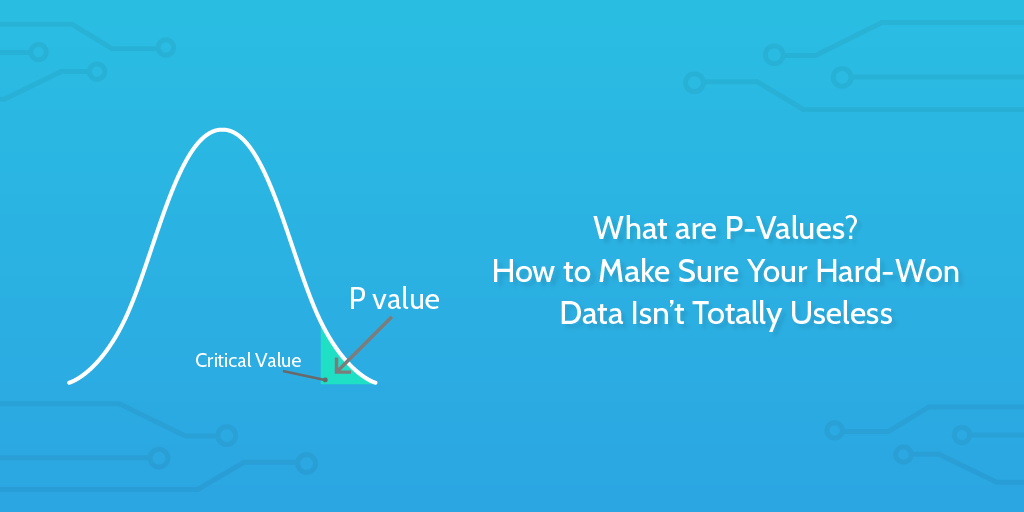
What are P-Values? How to Make Sure Your Hard-Won Data Isn’t Totally Useless

p valueHere at Process Street, we’re always advocating for companies to use data to help in making important decisions.

But data on its own is not massively useful.

I could run an experiment right now and gather loads of data. But if that experiment was run poorly then my data will be poor. Which means any readings of that data will be poor too, leading to poor decisions.

Alternatively, I could run a really well structured piece of research and gather some great data, but if I don’t know how to properly analyze that data then my conclusions won’t be very good.

Simply having large data sets is not enough.

We need to structure our research well and then be able to interpret the results with a degree of rigour. Fortunately, having a good working knowledge of P-Values can help us iron out some alarmingly common mistakes. It can teach us:

  1. How to set up an experiment for meaningful data
  2. The importance of measuring your existing hypothesis against an alternative
  3. When results really are statistically significant, instead of just looking good

This knowledge will help us make better decisions and lead to greater success.

In this Process Street article, we’ll look at 4 key areas:

  • What are P-Values?
  • How do you calculate P-Values?
  • Examples of P-Values in practice – A/B testing
  • Why you need to set up a research process

Continue Reading

Jidoka: Why Automation Plus Intelligence Equals Best Results

jidokaAutomation is all the rage right now.

We at Process Street can’t stop going on about it.

Automation can save time and money while taking the monotonous tasks out of your employees’ days.

It’s a win-win.

But, in order to approach automation properly, it’s best to understand the development of automation over time and what best practices are used in order to deliver effective automations in your business.

That’s why this Process Street article will look at the core Toyota principle of Jidoka, including:

  • What is Jidoka?
  • What are the related concepts within the Toyota Production System?
  • 3 examples of Jidoka in practice

Continue Reading

Taylorism and The History of Processes: 6 Key Thinkers You Should Know

taylorismIf you want to employ approaches like business process management in your business it’s best to have a solid understanding of how these theories work.

One crucial aspect of using these theories correctly is understanding their development.

It’s common for managers to want to employ cutting edge ideas in their business, but without a deep understanding these methods can be misapplied.

These errors will reduce the effectiveness of your process management and hold your business back.

It’s not just business where process improvement efforts are regularly being undermined! In a recent meta-study from the British Medical Journal, researchers found only 2 out of 73 studies had applied the PDSA process improvement methodology in a way which fully met criteria. Commenting:

To progress the development of the science of improvement, a greater understanding of the use of improvement methods, including PDSA, is essential to draw reliable conclusions about their effectiveness.

In this Process Street article, we’re going to look at some of the fundamentals and pick out key historical thinkers whose work we can trace from in order to better inform how process improvement methods should be done. Including:

  • Who is Frederick Winslow Taylor?
  • What is Taylorism?
  • What W. Edwards Deming can teach us about continuous improvement
  • Why Taiichi Ohno helps you cut waste in your business
  • What Ludwig von Bertalanffy tells us about systems
  • How Bill Smith changed the way we view defects
  • What Ray Dalio can show us about company culture

Continue Reading

How to Optimize Your Approval Process and Smash the Bottleneck

approval process headerWhether you’re submitting a draft of an article for review, collating a report for senior management, or presenting a product design, you probably need someone to sign off on your work.


This happens day in day out in organizations all around the world.

Yet, the sign off process can be slow and littered with delays.

Anyone who has worked in software development will know the pain of submitting work for review, only for revisions and changes to drone on and on. The time spent waiting can sometimes be as much as the time spent working.

And this, friends, is bad for business.

Last week I published an article on Muda – waste in production systems – and laid out the different ways poor processes create waste and damage business performance. One of those wastes is referred to as Time on Hand, or waiting.

In this article, we’ll look to cover the most common occurrence of this waste: the approval flow. We’ll look at:

  • What an approval process is
  • What common approval workflows are
  • Best practices for approvals
  • How you can use Process Street to streamline your approvals

Continue Reading

DMAIC: The Complete Guide to Lean Six Sigma in 5 Key Steps

dmaic headerWe all like to know about the broader philosophies behind process improvements, but sometimes we need to knuckle down and look at some of the more technical details.

One of the core techniques behind any process improvement, particularly in Six Sigma, is DMAIC.

This handy approach, pronounced duh-may-ik, is the key to employing Six Sigma and beginning your journey to being a process hero. We’re going to cover each step in the process and detail how to effectively enact every section.

This guide will lead you through from start to finish and get you ready to start employing lean Six Sigma within your business!

Continue Reading

Take control of your workflows today