All posts in Checklists

Employee Checklists: How Successful Organizations Use Them

Employee Checklists

Trump. Pineapples on pizza. Checklists.

What the public is divided on is incredibly varied.

To boot, how the public uses checklists varies even more. For instance, at Process Street, we use checklists for pretty much everything – not only because we’re a virtual team, but also because, well, we know they’re darn useful.

But we also know some organizations don’t use checklists to such a degree – they’re limiting themselves to only 2-3 checklists per team. Or, they’re using business software that wasn’t intended for checklists to create, manage, and house their checklists. ( )

We thought this was all very interesting.

That’s why we’ve done some qualitative research regarding how organizations around the globe are using checklists – specifically, employee checklists.

Dear reader, we’re bringing you some top-secret, never-seen-before material on how organizations really use employee checklists. In the below sections, you’ll find insightful comments from our participant pool:

Now, let’s get into it.

Continue Reading

How to Make Your Own Aptitude Test with Process Street (6 Free Templates)

How to make your own aptitude test with process street

Career aptitude tests are powerful tools for both employers and employees alike. They can be used to gain insight into personal tendencies and make informed responses to career and hiring decisions.

Tests like these can differ in:

  • Purpose (i.e. for career placement, selection, counseling, or training)
  • What they measure (i.e. what they are designed to measure, be it personality type, skills, work approaches, values, or vocational interests)
  • What they predict (i.e. performance, quality of work, management potential, career success and satisfaction, your next job)
  • Format (online, paper form, in-person)
  • Standardization and rigor (how subjective or objective are the test results?)

Some tests are highly structured, with definitive quantifiable outcomes; others are more flexible, and designed to be personally interpreted.

This article will look at six different types of aptitude test, broadly defined, and run through the process of how you can build your own aptitude tests using Process Street.

We’ll cover:

Let’s get started. Continue Reading

ISO 19011:2018 Basics (8 Free Management System Audit Checklists)

internal audit

What exactly is an “audit“?

The International Organization for Standardization defines it as:

“[the] systematic, independent and documented process for obtaining objective evidence and evaluating it objectively to determine the extent to which the audit criteria are fulfilled.” – ISO, from ISO 19011:2018 – Guidelines for Auditing Management Systems

That’s another way of saying someone takes a look at what you’re doing, gathers some evidence, and compares that evidence to what you’re supposed to be doing (in other words, a set of clearly documented requirements).

In the case of ISO, these requirements are known as standards. ISO 9001 is a standard. ISO 14001 is a standard.

Importantly, this understanding of audit implies that there are a few main things being considered by the auditor:

  • What’s documented by the company (e.g. internal processes, policies, and SOPs)
  • Evidence gathered to support how these policies, procedures, and SOPs are implemented in practice
  • The requirements defined by the ISO standard being audited against (e.g. ISO 9001)

Audits performed by companies to assess and analyze their own management systems are known as internal audits. Many resources for guiding companies on how to perform internal audits exist, and foremost of these is the ISO 19011 standard.

For most management system standards, internal audits are an important requirement. Even guideline standards like ISO 26000 for social responsibility depend on reports to evidence the success of their implementations.

As such, ISO 19011 defines a set of guidelines; a framework for companies to plan, implement, and improve upon their audit programs, for auditing the implementation of management systems.

Since the first edition of ISO 19011 was published in 2002, many new management system standards have been published.

These standards often share a common structure, including certain requirements, terms, and definitions being used. That means ISO 19011 can be used to devise highly economic audit programs, wherein knowledge and processes can be shared and applied across various management systems.

By considering how they might take a broader approach to management system auditing and integration, companies implementing ISO management systems stand to save time, money, and confusion when preparing for and implementing internal audits.

The goal of this post is to provide a spring-board for understanding ISO 19011, and how to get started with internal ISO auditing. In this post, I’ll cover:

  • What is ISO 19011
  • 7 principles of ISO auditing
  • Different types of ISO audit
  • Key elements of an ISO audit
  • 8 free ISO audit templates

If you just want the free ISO audit templates, then here they are:

Continue Reading

Offboarding: How to Make the Most of Letting Employees Go

Offboarding
Offboarding a team member is never easy.

Relationships aside, the logistics of making sure that the ex-employee isn’t a security risk, their old tasks are accounted for and covered, and that there will be someone to take their place (with the appropriate training) is a tall order to meet.

That’s why this post will show you everything you need to know about offboarding an employee, including:

  • Why offboarding is important
  • How to effectively (and safely) offboard an employee
  • How to make opportunities out of them leaving

I’ll even throw in some free templates you can follow to make sure that your offboarding goes right every time.

Continue Reading

5 Propertyware Checklists for Keeping Rental Processes Running Smoothly

Black-and-white property manager organizing a rental property checklist board for Propertyware workflows.

We recently released 5 checklist templates designed specifically to help AppFolio users manage a handful of core property management workflows more effectively.

The following templates are a continuation of our effort to support property managers who are already using a software tool to manage their processes. This time we customized the templates for Propertyware users, with a focus on keeping rental processes running smoothly.

Continue Reading

SWOT Analysis Template: What, How, & Why? (Free Template)

swot analysis

SWOT: Whether or not the acronym conjures images of riot gear and armored vehicles for you, we are of course talking about a business methodology for evaluating the internal and external factors governing the performance of your business.

SWOT stands for Strengths, Weaknesses, Opportunities, Threats. A SWOT analysis is a way of evaluating a part of (or even a whole) business, based on the criteria of each of the words in the acronym.

If you just want to dive right in and skip the details, here’s the template, as promised:

When you actually run it, conditional logic will show only the tasks relevant to you, to save you a whole lot of manual work and messing around in the long run.

If you’re interested in learning how to use the template, plus some best practice SWOT principles, real-world use cases and some post-SWOT advice, read on.

Continue Reading

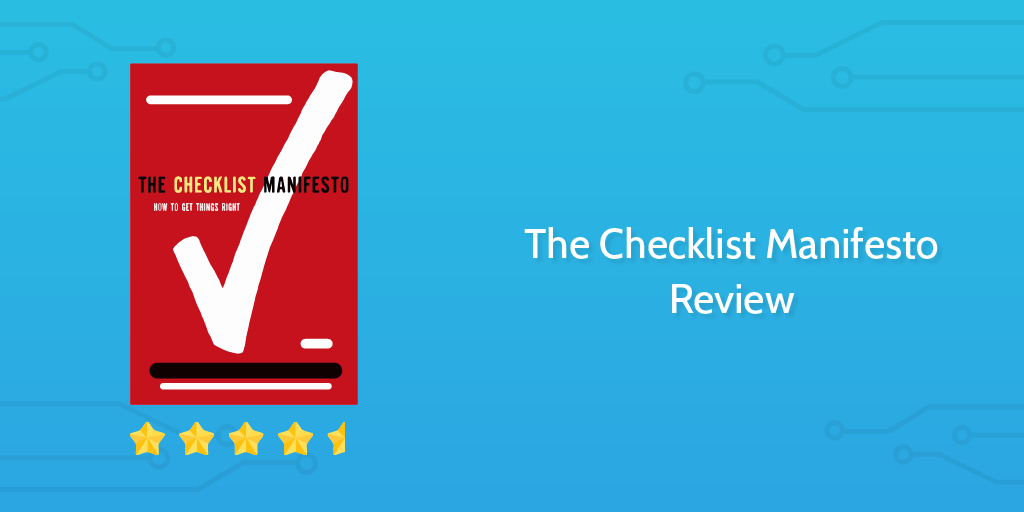
The Checklist Manifesto Review

The Checklist Manifesto Review Header

A book about disasters, human error and a simple tool that could well be the answer

Surely we don’t need any more bureaucracy, do we? Writer and surgeon Atul Gawande says yes, in fact we do. Box-checking and form-filling are often seen as the direct opposites of efficiency, but how many skyscrapers just tumble down out of the blue? Not very many, and The Checklist Manifesto explains why. It all comes down to recognizing that checklists are a powerful weapon in the fight against human error. In a series of anecdotes/case studies spanning from Gawande’s familiar operating theater to the secretive world of venture capitalism, the author makes rock-solid arguments in quick succession about why we all need more checklists in our lives. But not just any old checklists

Continue Reading

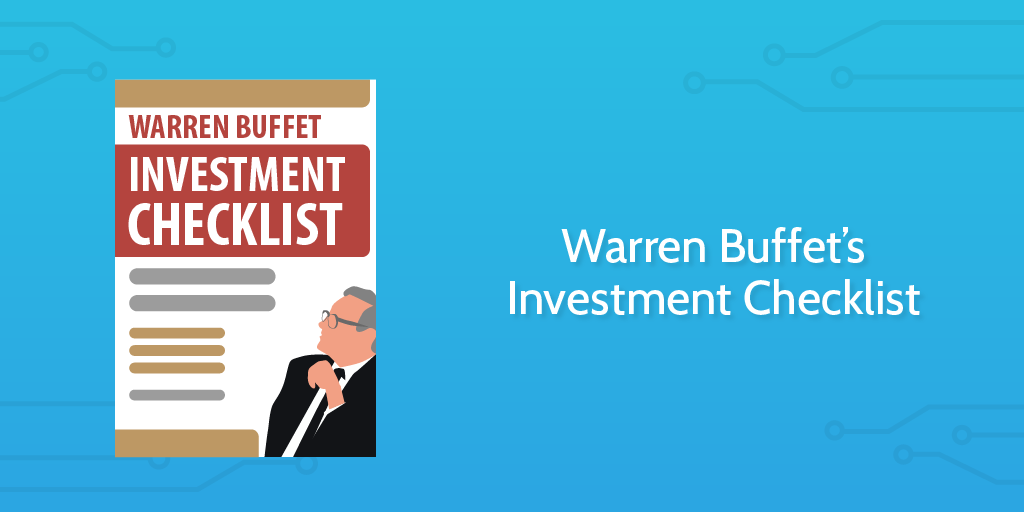
Warren Buffet’s Investment Checklist – The Secret to His Success?

Warren buffets investment checklist the secret to his succes

Click here to get the interactive checklist

Warren Buffet is known as a god among investors and entrepreneurs. He is currently the 3rd richest person in the world and the Chairman and CEO of Berkshire Hathaway, a holding company that owns hundreds of brands including GEICO, Dairy Queen, Heinz and has major investments in American Express, Coca-Cola, and IBM.

Warren Buffet is known for making stellar investment decisions. Putting his money on business fundamentals and long-term success rather than worrying about new fads and market movements.

So, what is the secret to Warren Buffet’s success?

In Robert Hagstrom’s book The Warren Buffett Way, John Wiley & Sons Inc., New York, 1994 he reveals a checklist that Warren Buffet uses when making investment decisions.

Obviously, this is a high-level check before due diligence but it’s the first step Warren Buffet takes when making an investment decision. Read it, use it.

Continue Reading

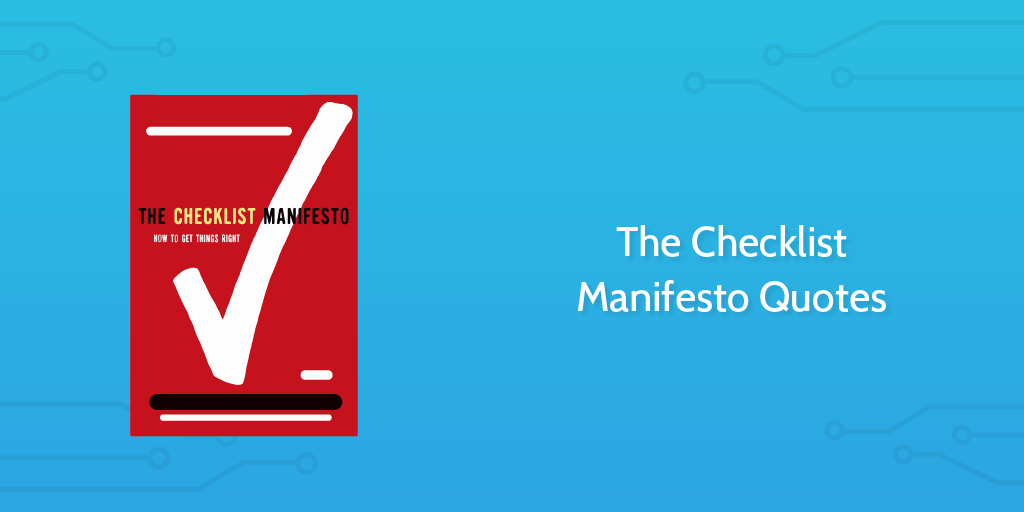
The Checklist Manifesto Quotes

The Checklist Manifesto Quotes

The most useful Checklist Manifesto quotes

After publishing the Checklist Manifesto Review and following up with the Checklist Manifesto Summary, I thought it’d be fun to share the most memorable The Checklist Manifesto quotes by surgeon Atul Gawande. The book is packed full of useful knowledge, and not just from the author himself.

He interviews professionals from the man responsible for foolproof checklists given to pilots flying incredibly complex Boeing airplanes to a group of high-powered venture capitalists. All the people in the book have something in common – they want to reduce risk. And Gawande himself, like every human being with a will to survive, is no stranger to risk reduction. For him, however, it’s vitally important.

The Checklist Manifesto is the story of how this simple checklist was made.

Continue Reading

How To Create a Custom Invoice Generator Using Process Street

How To Create a Custom Invoice Generator Using Process Street

Generating and sending invoices can be a time-consuming process. A properly designed invoice helps a business get paid and provides legal protection for both parties.

Think about it, all the hours and energy you put into completing a project will have an invoice at the end of it. Invoices are the tool that provides freelancers with the ability to receive income. That’s why we over at Process Street sat down and thought up a way to make getting paid even easier; a template which serves as a custom invoice generator.

Never again worry about charging your clients the wrong amount, or even sending them an invoice with an outdated logo or set of information. All you need to do is plug your information into this template and away you go!

Continue Reading

Take control of your workflows today