All posts in Processes

Form Automation: Turning Your Checklists Into Databases

form automation

Introducing Form Fields

It’s been a long time coming but we are beyond excited to announce that you can now add form fields to your process checklists in Process Street.

Check out the short video below for an intro to forms.

Form fields allow you to collect and store important data within set fields in your checklists.
Continue Reading

Zapier vs IFTTT: The Best Way to Automate Your Life?

zapier vs ifttt

[ Download our Free Ebook ] – Click here to download our free 111 page ebook on “How to automate the tasks you hate at work using Zapier“.

Business vs Casual, Zapier vs IFTTT

Whether it’s Coke vs Pepsi, Ariel vs Persil or Hawaiian pizza vs everything good in the world, rivalries are everywhere. They make for fantastic spectator sports and can help improve our lives by showing the flaws in each side.

In our efforts to help you guys automate as much of the laborious shovel work in your lives as possible, we came across two main competitors; the great battle that is Zapier vs IFTTT.

zapier vs ifttt - python battle

Okay, so maybe “battle” is over-dramatizing things a little; it’s not as if they’re running massive smear campaigns. Still, the competition is real, as both Zapier and IFTTT have earned their spots on the map for being darned good pieces of kit. This got us thinking; which is better?

Continue Reading

Why Team Alignment Should Be Your Startup’s Holy Grail

The following is a guest post by Darren Chait, Co-Founder at Hugo. Hugo is the meeting note platform that keeps your team connected with what your customers are thinking and saying. It enables fast-moving teams to make meeting insights shareable and actionable in their existing tools.

As a startup guy, my world is full of buzzwords. We’re disrupting a space, have pivoted, got our minimum valuable product (MVP) out to our total addressable market (TAM) and even had a ‘.ai’ domain name. Undoubtedly, one of my ‘favorites’ is ‘team alignment’.

While team alignment is not a new concept and certainly not unique to fast-growing technology businesses, I’m fascinated with my peers’ obsession with this utopian concept. It’s understandable. Why wouldn’t you want your team moving forward in unison with precise coordination and execution? Why wouldn’t you listen when experts warn that misalignment kills startups?

In this guest post, I’ll share our story and perspective on team alignment and some easy-to-implement solutions to achieve this ideal state with your team.


Continue Reading

Takt Time: How Ford Learned to Make WWII Bombers 24x Faster

takt time

The Ford Production System paved the way for most modern lean manufacturing, and the best physical embodiment of it was the Willow Run B-24 bomber production facility in WWII.

After intervention from Ford, Willow Run was able to go from producing one bomber per day to one per hour. That’s 24x their original output.

At the heart of the facility stood the “pacing clock”. This monitored what we now call takt time.

Takt time is the pulse of your operations – the rhythm and rate by which tasks and products are completed. By monitoring and setting guidelines for this single figure, Ford (and company) was able to build a facility which could produce the same as half of the entire German aircraft industry.

That’s why today we’ll be breaking down what takt time is, how to calculate it, and how it can be used in almost any system to reliably track your progress and provide an early warning system for any problems you encounter.

Let’s get started!

Continue Reading

The Harvard Churn Management Algorithm to Boost Profits 115%

churn managementIt’s an accepted reality of business that customers come and go.

This is why we’re always on the lookout for new customers – we know we can’t just rely on the existing ones to keep things ticking over.

Yet, we don’t have to accept this fact lying down. And many don’t!

This article is about fighting back against those customers abandoning ship; about stemming the tide of the churn.

In this Process Street article, we’ll look at:

  • What is churn management?
  • What are the different types of churn?
  • How the telecom industry pioneered churn management
  • The 4 best practices across telecom’s big players
  • The 3 critical steps to implementing best practices
  • The Harvard trick to boosting profits by 115%

Continue Reading

How to Build Better Employee Accountability with Processes

According to the American Management Association, one-quarter of workers seem to avoid responsibility on the job on average, and 21% of companies believe that the figure is as high as 30-50%. From these stats, it’s clear that low employee accountability is wasting company money on a massive scale.

At the same time, almost two thirds of employees believe their company does not have a strong culture. The link between these two factors is strong, argues management consultant and author Roger Connors. Connors blends The Wizard of Oz with now-influential writings on employee accountability in a series of best-selling leadership books including The Oz Principle and Change the Culture, Change the Game. In the latter, he says:

“Our experience proves that accountability, done the right way, produces greater transparency and openness, enhanced teamwork and trust, effective communication and dialogue, thorough execution and follow-through, sharper clarity, and a tighter focus on results. Accountability should be the strongest thread that runs through the complex fabric of any organization” — Roger Connors, Change the Culture, Change the Game

To paraphrase Connor, a business’ employee accountability depends on leaders creating a transparent culture where responsibility is clear, transparent, and owned. One way to bring clarity to the way your business operates is to use standardized processes and leverage technology that helps track activity, assign tasks, and facilitate hand-offs.

In this article, we’ll go through the links between processes, accountability and company culture, and give you tips on how to improve your business in those areas. But first, let’s look closely at the ties between accountability and culture.

Continue Reading

Jidoka: Why Automation Plus Intelligence Equals Best Results

jidokaAutomation is all the rage right now.

We at Process Street can’t stop going on about it.

Automation can save time and money while taking the monotonous tasks out of your employees’ days.

It’s a win-win.

But, in order to approach automation properly, it’s best to understand the development of automation over time and what best practices are used in order to deliver effective automations in your business.

That’s why this Process Street article will look at the core Toyota principle of Jidoka, including:

  • What is Jidoka?
  • What are the related concepts within the Toyota Production System?
  • 3 examples of Jidoka in practice

Continue Reading

Taylorism and The History of Processes: 6 Key Thinkers You Should Know

taylorismIf you want to employ approaches like business process management in your business it’s best to have a solid understanding of how these theories work.


One crucial aspect of using these theories correctly is understanding their development.

It’s common for managers to want to employ cutting edge ideas in their business, but without a deep understanding these methods can be misapplied.

These errors will reduce the effectiveness of your process management and hold your business back.

It’s not just business where process improvement efforts are regularly being undermined! In a recent meta-study from the British Medical Journal, researchers found only 2 out of 73 studies had applied the PDSA process improvement methodology in a way which fully met criteria. Commenting:

To progress the development of the science of improvement, a greater understanding of the use of improvement methods, including PDSA, is essential to draw reliable conclusions about their effectiveness.

In this Process Street article, we’re going to look at some of the fundamentals and pick out key historical thinkers whose work we can trace from in order to better inform how process improvement methods should be done. Including:

  • Who is Frederick Winslow Taylor?
  • What is Taylorism?
  • What W. Edwards Deming can teach us about continuous improvement
  • Why Taiichi Ohno helps you cut waste in your business
  • What Ludwig von Bertalanffy tells us about systems
  • How Bill Smith changed the way we view defects
  • What Ray Dalio can show us about company culture

Continue Reading

Enterprise Automation: How to Make 100 Employees Feel Like 1,000

enterprise automation

About half of all the activities people are paid to do in the world’s workforce could potentially be automated” – McKinsey Global Institute, Harnessing automation for a future that works

For many, enterprise automation is a complex and scary topic. Many team leaders believe that it takes too much work to set up your automated systems, and a huge number of people are worried that doing so will let robots take over their jobs.

It’s not true.

Those who understand automation for what it is – a powerful tool which lets your team massively increase their value output – quickly find themselves ahead of the curve. Using it lets you quickly and accurately hand off all of your menial tasks so that everyone can focus on more important items.

Here at Process Street, we know how difficult it can be to get started with enterprise automation. That’s why this post will take you through:

  • What automation is
  • What types of business process automation there are
  • Why you should be using it in your enterprise
  • Methods to let you get started with automation

It’s not complex, it’s not scary, and it certainly won’t be putting your team out of a job. If anything, automation is entirely designed around letting people perform their jobs better than ever before.

It’s time to join the newest revolution in enterprise efficiency and accuracy.

Continue Reading

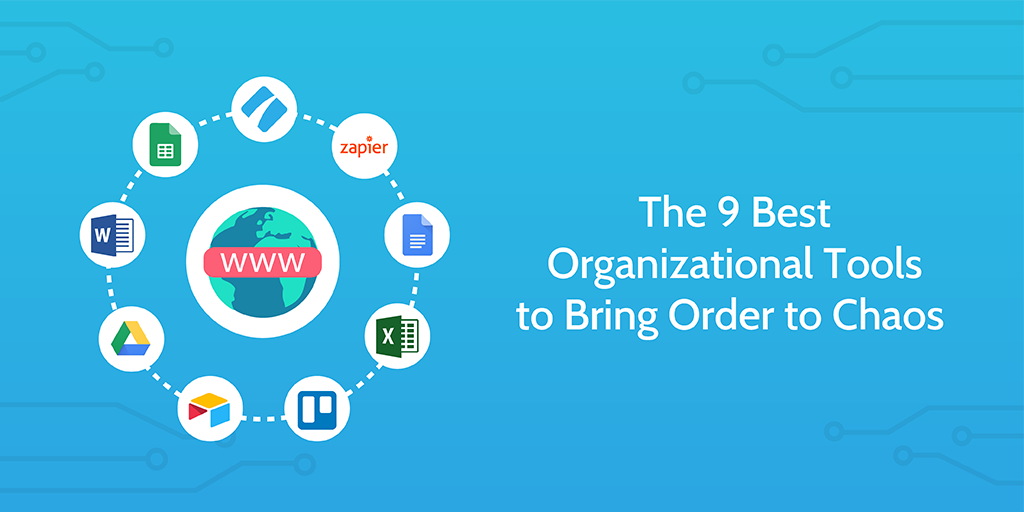
The 9 Best Organizational Tools to Bring Order to Chaos

Organizational Tools

Documented processes don’t just save you time, money, and give a consistent method for your team to follow. They make everything you do more reliable and efficient, even increasing project success rate by 70%.

Unfortunately, getting started is the hardest part. Whether you don’t feel like you have time to set up your management system or just don’t know what to use for your needs, it’s difficult to get over the initial learning curve.

That’s why I’m going to outline the 9 organizational tools you can use to get started right now.

From their pros and cons and best use guidelines to general tips on what to do with your organizational tools, this post will cover:

  • Process Street
  • Office 365 (Microsoft Word and Excel)
  • Trello
  • Airtable
  • Google Suite (Google Docs, Google Sheets, and Google Drive)
  • Zapier
  • …and 4 process management techniques to get you started

It’s time to learn what organizational tools you need to manage your processes, and how to use them.

Continue Reading

Take control of your workflows today