All posts in Processes

How to Perform a Root Cause Analysis (Free Template)

root cause analysis

If you’re chronically ill, pain medication will help but not solve the issue. Just like if you’re experiencing abnormally high customer churn, the last thing you want is to spend all your time firefighting.

You need to find the cause.

That’s exactly why root cause analysis is a vital process. It helps you to understand the causal focus and underlying issues behind your biggest business problems.

For example, Eastman Chemical‘s customer complaint numbers were cut in half after conducting a logic tree root cause analysis to pinpoint their deeper issues. Clipper Windpower saved $1 million in lost revenue by identifying the underlying causes of their turbine malfunction.

In this Process Street article, we have a root cause analysis template for you to follow. Our aim is to give you a comprehensive overview of the root cause analysis process, from a simple introduction and break down of the key principles to when and why you’d want to perform a root cause analysis.

We’ll be covering:

Let’s take a quick look at the root cause analysis template.
Continue Reading

WFH Transition: How Your Team Can Pivot & Work From Home Like Pros (Free Templates)

WFH transition

Unequipped. Unprepared. Uncertain.

34% of people believe their organization isn’t properly prepared for employees to be working from home.

Speaking of which, has your organization recently – and rather hastily – transitioned from office working to working from home?

If the answer is “Yes“, no sweat. Process Street has you covered.

This post will guide you through the basics of working from home (WFH), the positives of it, the potential problems you could run into, on top of offering you our (free!) checklist templates that’ll ensure a safe and smooth WFH transition.

Read through the following sections to get completely clued up:

Or, if all you want is the checklists, get them here:

Let’s dive into all things WFH, ASAP. ‍
Continue Reading

Ultimate SOP Guide: Standard Operating Procedures Made Easy (Free Templates!)

sop templates

SOPs (often pronounced S-O-P) are basically just another way to think about processes. Specifically, with a focus on formally defining the best way of doing something.

In business terms, that means saving time and money by building a clear, concise set of instructions for all of your internal processes. Policies (or standards) are important too; SOPs are kind of like a hybrid of policy and procedure.

Traditionally, SOPs were useful in principle, but often suffered from being difficult to maintain and crucially, hard to enforce. What good is an SOP if it lives its life sat on a dusty stack of paper forms? Your SOPs should be actionable, and that’s where BPM software like Process Street comes in.

If you understand how to build, maintain, and optimize SOPs with software, you can supercharge your standard operating procedures.

In this article, we want to give you everything you will ever need to know about SOPs, including:

Each section will be as concise as possible, with links out to further reading wherever appropriate. Let’s start with the basics.
Continue Reading

ISO: Everything You Need to Know (Ultimate Guide + Free Templates)

isoISO means standards. A standard is just a set of requirements, decided by experts, for doing something specific.

A lot of standards exist under the banner of ISO, for all sorts of things, from quality management, to environmental and social responsibility guidelines, to how to design medical devices.

They’re useful because they help you to write good processes; how to structure, organize, implement, and improve on them.

At the heart of ISO is the principle of systematizing your approach to process management in your company – simple as that! You might be scared of ISO, but there’s really no need to be intimidated. What’s more, recent changes have made it easier than ever to get started with ISO standards.

In this Process Street article, we’ll look at everything ISO, including (but not limited to):

Let’s start with the basics. What exactly is ISO?
Continue Reading
PDCA: How to Eliminate Error in Your Processes and Products

pdca

Product defects can range from benign to deadly. The Ford Pinto, for example, caused up to 180 deaths and many more disfigurements before being recalled due to fuel tank safety defects.

Ford’s resulting loss of reputation (especially because they had known about the issue and failed to take action) and money in lawsuits is something nobody wants to deal with. Errors and defects thus should be identified and dealt with as soon as possible.

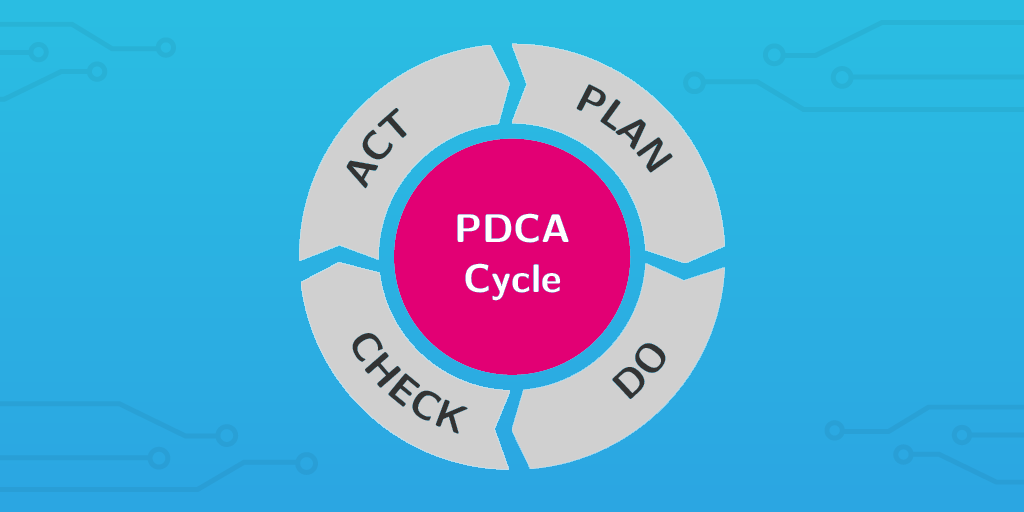
That’s why this article from us here at Process Street will take a look at PDCA – the continuous improvement cycle dedicated to doing just that.

We’ll cover:

Enough talk, let’s dive right in!
Continue Reading

Fleet Management System: Essential Templates for Fleet Managers

fleet management system

In recent years, the rate of commercial fleet driving accidents in the US has increased by about 20%.

The fleet management industry has responded in turn with a re-emphasis on the importance of vehicle and driver safety, chiefly due to the preventable nature of many of these vehicular accidents.

Fleet management systems have grown more and more complex; far beyond the basic cc tracking system of its past.

Today, more vehicle-dependent businesses are implementing these systems to improve the monitoring of their drivers and vehicles, encourage safer driving habits, and facilitate better company-wide transparency.

If your company is managing a large fleet of hundreds or thousands of vehicles, a fleet management system is key to keeping track of everything related to your employees and assets.

Managing your fleet without a system in place inherently leaves room for potential complications and human error, even if your fleet is smaller in size. For example, if a driver gets into an accident, you may run into problems when filing an insurance claim, or it might be difficult to quickly reach your driver to obtain an ETA for a customer.

Fleet management systems are designed to mitigate these potential issues and help strengthen your daily processes, making them more efficient and organized than ever before.

In this Process Street article, we’ll be covering:

Let’s start with the basics.
Continue Reading

How to Handle Workflow Approval (Without the Hassle)

workflow approval

Workflow approvals are a bottleneck of the worst kind.

Projects get delayed waiting for approval, and those reviewing the work spend more time searching for the piece than they do reviewing it.

Professionals take 18 minutes on average to locate a document manually––20% to 40% of their time––and spend 50% of their time searching for information.” – Ashish Deshpande, 50+ Key Statistics to Help You Automate Smarter in 2020 and Beyond

That’s where we here at Process Street come in.

We know how important it is to have an effective method for organizing your workflow approvals. Heck, everything our content team does goes through at least two rounds of review before it goes live.

Check out task five in the following free process template for a snapshot of how we handle workflow approvals with Process Street!

That’s why today we’ll be covering:

Let’s dive right in.
Continue Reading

Simple SOP Format Guide: How to Write Standard Operating Procedures

sop format

One of the most important things you can offer your customers and employees is consistency.

Your customers need consistency in your products and services, your employees need consistency to help them do their job efficiently, and your company needs consistency in order to continuously improve your policies and procedures.

The best way to make sure that you have consistency within your company is by implementing standard operating procedures (SOPs).

Most companies already have SOPs that their employees follow, but they’re either rarely updated, or they’re never even properly documented to begin with.

This is often because writing, reviewing, and regularly updating your SOPs can typically take a lot of time, especially when starting from scratch.

But thankfully, there are ways to make your job a lot easier.

That’s why in this Process Street article, we’ll go over the general guidelines for the SOP format and other ways you can streamline your processes to help you get started building your SOPs.

We’ll be covering:

If you’re simply looking for a SOP format to get started with, then look no further!
Continue Reading

Service Level Management: How to Manage SLAs and OLAs Masterfully

Service Level Management

When defining, documenting, and delivering services to customers, it can be a little difficult (read: incredibly taxing) to keep on top of everything.

As Philipp Unterharnscheidt and Axel Kieninger at the Karlsruhe Service Research Institute both say:

“IT services supporting business operations are an increasingly critical factor for business success today (Guldentops 2003). The management of service quality, which is the central objective of Service Level Management (SLM), however remains a major challenge for many companies.”Philipp Unterharnscheidt and Axel Kieninger, Service Level Management – Challenges and their Relevance from the Customers’ Point of View

To help companies keep on top of things – and manage their services, service levels, and SLAs and OLAs masterfully – there’s service level management.

This may be the point where you’re thinking “But what, exactly, is service level management? What are the benefits of it? The best practices so it’s done properly? And how would Process Street even help with service level management?”

Worry no more, reader. You’ve come to the right place.

Just read through these sections to get to grips with service level management:

Let’s dive straight in. ⬇️

Continue Reading

Inverted Pyramid: Don’t Bury the Lead — Give People What They Want (Fast)!

Inverted Pyramid

Your attention span is shorter than a goldfish’s.

This isn’t meant to be a personal insult. All of our attention spans are now pretty ba-… wait, how was I going to finish this sentence?

Blame it on what you will – the break-neck speed in which content is published on the internet, the various devices all vying for our attention, or a lifestyle that’s overly digitalized – but there’s no getting away from it. There’s only an 8-second window before concentration plummets.

For journalists, content marketers, and pretty much anyone who uses the written word to deliver information, this isn’t news you want to hear.

But with the inverted pyramid, you can quickly supply global audiences with the news they do want to hear – and quickly (read: before they move onto the next shiny, sparkly thing).

In this post from Process Street, you’re going to learn about the inverted pyramid, the benefits of using it, see examples of it in action, and discover how checklists can help you with getting the right information out there. Fast.

Read through these sections to get completely clued up:

Now, what was the topic again? Oh, right – the inverted pyramid!

Continue Reading

Take control of your workflows today