Subscribe to the Process Street blog

Get tips and apps to hack your business straight to your inbox.

How to Implement Workplace Monitoring & Preserve Employee Autonomy

workplace monitoringI play video games at work.

It’s the remote manager’s nightmare: A wayward employee who does whatever they want because they lack the strict supervision of the office to keep them in line. Critics of remote work would seize on this very scenario as proof that remote workers are merely lazy and entitled.

Should employees’ web activity be tracked to make sure they’re putting in a solid eight hours of work time?

For those remote workers who don’t have designated space or equipment that is “work use only,” why should they agree to be surveilled in their homes and on their personal devices?

How do you guarantee that both your clients and your employees can feel secure that what is meant to be private will not be made public?

Most importantly, if the deliverables are delivered when they should be, does it matter how they got there?

In this Process Street post, I’m going to (attempt) to provide answers to some of those questions, discuss the issues employers need to consider before monitoring employees, and look at some “soft surveillance” alternatives to hard data collection.

Read on!
Continue Reading

Get our posts & product updates earlier by simply subscribing

Robbins Estate Law Outperform Competition by 2x (with Process Management)

kyle-robbins-estate-planning-probate-attorney-case-study

Robbins Estate Law is a law firm in the Austin, TX area.

By using Process Street, they have been able to overcome many growing pains that law firms often face, like simplifying long, complex processes, reducing human error, and simplifying the daily recurring tasks.

As a result, their attorneys handle roughly 2x the number of cases for their industry’s average.

Owner Kyle Robbins describes how they achieved this by using Process Street to upgrade their process management methods, letting their business run at scale beyond humble Excel beginnings.

In this Process Street case study, we’ll cover:

Continue Reading

How to Grow Your SaaS Business with Social Proof Marketing

social proof marketing strategy

Kevin Elliott is a Marketing Manager for NiceJob, a platform that helps businesses collect and share customer reviews to improve their reputation and leverage it to increase sales and drive growth. He enjoys writing about business tips, workflow management, digital marketing, and customer experience. He has a cute puppy named Karl.

SaaS businesses and B2B sellers face unique challenges across the business landscape. You have to deal with long sales cycles and supposedly fickle buyers with multiple stakeholders who need to comply with internal policies—barriers unknown to many small, B2C businesses. But it’s exactly these circumstances that make tried-and-true techniques from consumer marketing so valuable for SaaS brands.

Think about it – getting a lead to book a demo or convert on a landing page, let alone actually buy, ultimately comes down to one thing: trust. In other words, are you a trustworthy brand?

All buyers, at the end of the day, are human. B2B buyers of enterprise software carefully evaluate SaaS providers for a reason: they want to feel like they can trust you. And there’s no better indicator of trust than leveraging social proof – the act of using client data, feedback, reviews, or sentiments – to your advantage to gain the trust of leads. So it’s no surprise that social proof is incredibly valuable to B2B companies.

Clearbit – one of the world’s largest marketing-data companies – added a testimonial to their landing pages and increased conversions by 84%!

In this Process Street article, you will learn all about what social proof is, what its benefits are, and some examples of social proof for SaaS businesses to help your company take off to new heights!

Let’s dive in!
Continue Reading

Masters of Process Episode 1: On Deck with Michael Gill and Curtis Cummings

Masters-of-Process-Episode-1In our first episode, we join with two of the team from On Deck, Michael Gill and Curtis Cummings. They join our hosts Philip Lakin and Blake Bailey to give us their insight into where no-code can take new startups and how you can use it to iterate at lightning-fast speeds internally.

Masters of Process brings you the no-code revolution in full. Join us as we meet with top innovators in the space and explore how they are reinventing the way a modern business operates. Brought to you by industry insiders from No Code Ops and Process Street, each half hour episode is a goldmine of productivity, products, and scaling.

Listen now on your favorite podcast platform. Subscribe now so you don’t miss out on the most in-depth no-code insights!
Continue Reading

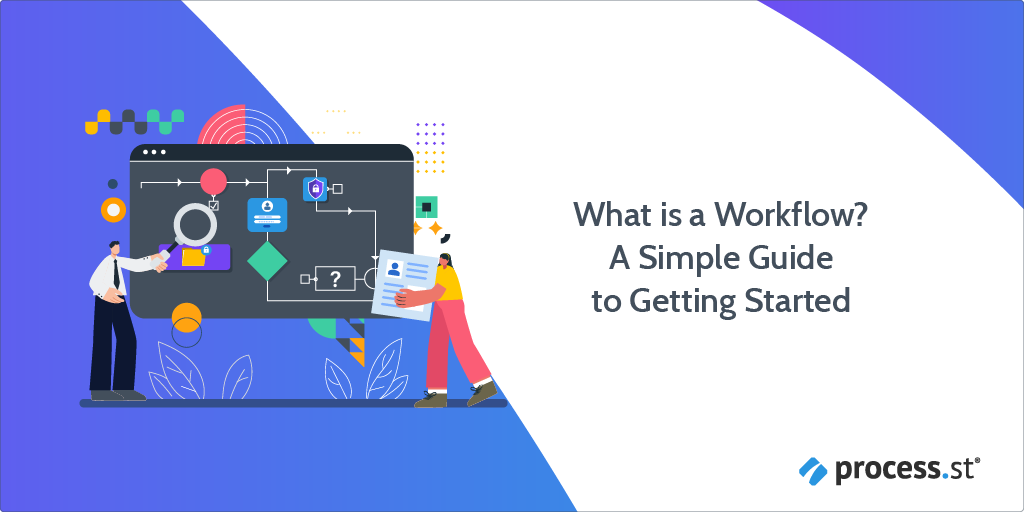
Workflow Meaning & Examples: A Simple Guide to Getting Started

what is a workflow

If you look at the Wikipedia definition of a workflow, you’re probably going to get confused as I did:

“A workflow consists of an orchestrated and repeatable pattern of business activity enabled by the systematic organization of resources into processes that transform materials, provide services, or process information It can be depicted as a sequence of operations, declared as work of a person or group, an organization of staff, or one or more simple or complex mechanisms.”

Let’s put this simply…

Workflows are the way people get work done, and can be illustrated as series of steps that need to be completed sequentially in a diagram or checklist.

Think of it literally as work flowing from one stage to the next, whether that’s through a colleague, tool, or another process. You can execute a full workflow alone (like writing, editing and publishing a blog post), or it can involve multiple people (like invoicing a client).

In this Process Street article, we’ll be looking at:

Continue Reading

The 4 Ingredient Categories Your People Analytics Framework Needs to be Effective

The 4 Ingredient Categories Your People Analytics Team Needs to be Effective

“I really must go to the third floor,” Renfield insists over the other employees’ protests. “I’ve been asked to consult with the head of people management about creating an analytics team. They’re expecting me.”

One of the nearby workers grabs Renfield’s lapels and pulls him close. “You don’t understand,” the man says. “We here in the office believe that people management is…” He glances around, nervously, leans closer and whispers, “We believe they’re really… human resources!”

“Oh, that’s just assistants’ gossips,” Renfield says. “Now, really, you must let me through. I have an appointment.”

“Wait!” The office manager pushes through the crowd, waving a form above her head. “If you won’t listen, then take this W-2. It’ll protect you.” She thrusts the form into Renfield’s hand and adds, “It’s riddled with mistakes.”

The third floor is dimly lit, offices still only partially constructed, furniture still draped in plastic. No signs indicate where he should go and a sense of abandonment clings to the scent of still-wet paint. “Hello?” he calls.

A figure appears, the light flickering around them. “I bid you welcome,” they say, and Renfield notices the tappity-tap-tap of many fingers rushing over keyboards. “Listen to them, the collectors of data. What music they make! Come along,” the People Team leader instructs, gliding down the hallway toward a single shaft of light Renfield can swear wasn’t there a moment ago. “Data is the life, Mr. Renfield.”

Wait. Why are you talking about vampires again, Leks?

There is a reason, and I assure you it’s not merely a way to shamelessly shoehorn my side interests into work-related topics. (Mostly.)

For contemporary businesses, data really is the lifeblood of your company. It’s what keeps everything moving from making sure there are paper clips in the supply cabinet to getting your product into the hands of the right user. Without accurate, up-to-date data, your organization isn’t even in the running to be a successful company.

While gathering quality consumer data is essential for the contemporary organization, data analytics has another equally important role to play: people management.

There are four main categories you need to think about for an effective analytics framework: Enablers, Deliverables, Stakeholder Management, and Governance.

In this Process Street post, I’ll explain what they are, how to use them, and how to not be creepy about it. Before you know it, you’ll wonder how you ever made HR decisions before people analytics came along.

Let’s analyze some data!
Continue Reading

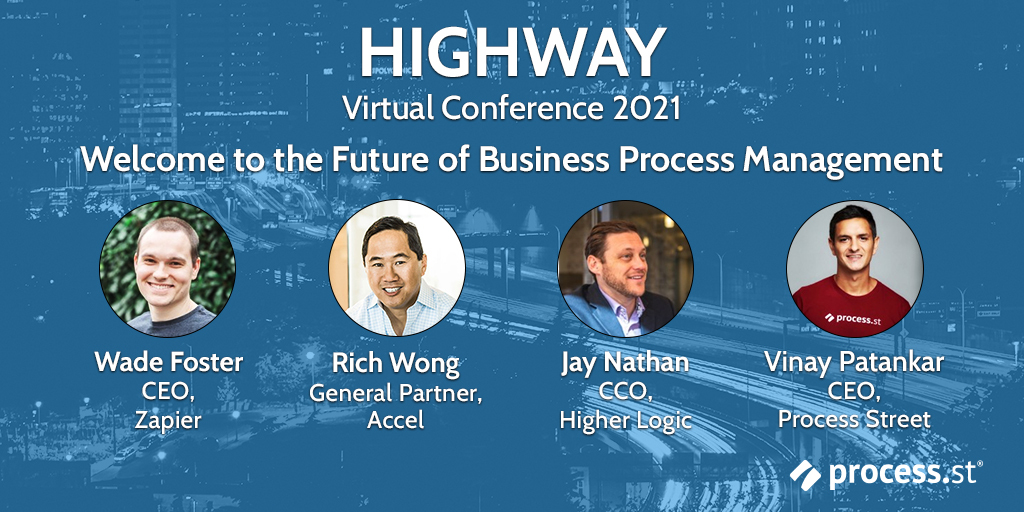
Process Street Highway 2021: Welcome to the Future of Process Management

process street highway webinar virtual event 2021
We’ve just wrapped up our first ever virtual event Highway, and we are super excited to share this roundup of everything!

Highway 2021 was an event we hosted to chat with industry leaders about everything process-related. From exciting developments to life (and business) changing use cases, Highway brought the best that the industry has to offer and streamed it live to an audience of hundreds.

Everyone involved, from our internal team to the guest speakers did such an amazing job pulling this together, and we’re super proud and excited to share the recordings with everyone.

So grab a coffee, sit right down and let Process Street show you to the future of process management!

Here’s an overview if you want to jump ahead:

Continue Reading

Pages: Your Secret Weapon for Totally Free Knowledge Management


Pages, a new product by Process Street, lets you capture, organize and share your team’s operational knowledge.

It’s also free, forever, for your entire team.

Pages is part of Process Street’s development as the modern process management platform for teams.

Thousands of teams from Salesforce to Yext use our interactive workflows to power their processes. In doing so, these teams are evolving their process maturity.

And process maturity, as well as how to think about & use our new Pages product, is exactly what we’ll be covering in this article.

Here’s an overview:

Continue Reading

Supercharge Your HR & Onboarding with Process Street (+ Video Walkthroughs!)

hr-onboarding-process-walkthrough

For HR managers in charge of onboarding new employees, daily tasks can quickly become difficult to track and overcomplicated.

Consider: 4 new hires starting this week, alongside about a dozen others that started in the past few months, and a handful that are wrapping up their first year any day now; it’s clear how HR departments can struggle to stay on top of things without stress or confusion.

That’s why human resources departments worldwide use Process Street to streamline and automate their daily HR work tasks, for processes like:

In this article, we’ll show you how our customers manage their daily HR tasks using Process Street.

You can see exactly how it’s done, with supporting screenshots and video walkthroughs.
Continue Reading

Introducing Pages: Your Free-For-Everyone Home for Team Knowledge

announcing pages

Way back in 2013, in a converted horse stable in Buenos Aires, the first version of Process Street was just starting to come together.

From day one, we were inspired by the concept of a repeatable checklist. We still love checklists. And we’re still guided by that initial concept. But we’ve come a long way.

Over the years, we’ve evolved checklists into Workflows and grown our Workflows product in new and exciting ways. Workflows continues to be a cornerstone of the Process Street platform with even more exciting developments in the works.

Now, we’re excited to announce Pages: a new, companion product to Workflows. It’s the latest step in evolving Process Street from a repeatable checklists tool to a complete, modern process management platform.

Continue Reading

Take control of your workflows today

Choose which optional cookies to allow. You can change or withdraw consent here at any time.