All posts in SaaS

Scaling Your Business? Be Sure You Determine Customer Value

The following is a guest post from Sam Suthar, the CMO of Acquire.


Scaling your business is almost impossible until you know your customer’s value. Whether you’re going to scale a brick-and-mortar business or an online business, it doesn’t matter; it’s vitally important to understand what each customer is worth to your business.
Statistics by Unicom Group show that 50% of customers naturally churn every 5 years. Sadly, this number can increase if you fail to understand what the customer who signed up last night is worth.

Can you reduce your churn and increase customer retention rate?

Yes, it’s doable. Although very tricky. In the rest of this article, I will show you how to scale your business by first knowing the value of each customer.
Continue Reading

Study: How 4 Highly Profitable SaaS Companies Market to Enterprises

Are you ready to market your SaaS product to enterprises? Do you know what makes or breaks a million dollar deal?

There’s a huge segment of SaaS companies that target only SMBs, and an increasingly well-funded bunch that go after the enterprise market from the outset. Some, like Dropbox, Asana, and HubSpot, have gradually scaled their products to meet the needs of enterprise customers. By looking at their enterprise-specific landing pages, we can isolate the key factors these companies have chosen to persuade enterprises, and find out what works.

Continue Reading

How We Built and Launched a Successful Microsite on Product Hunt

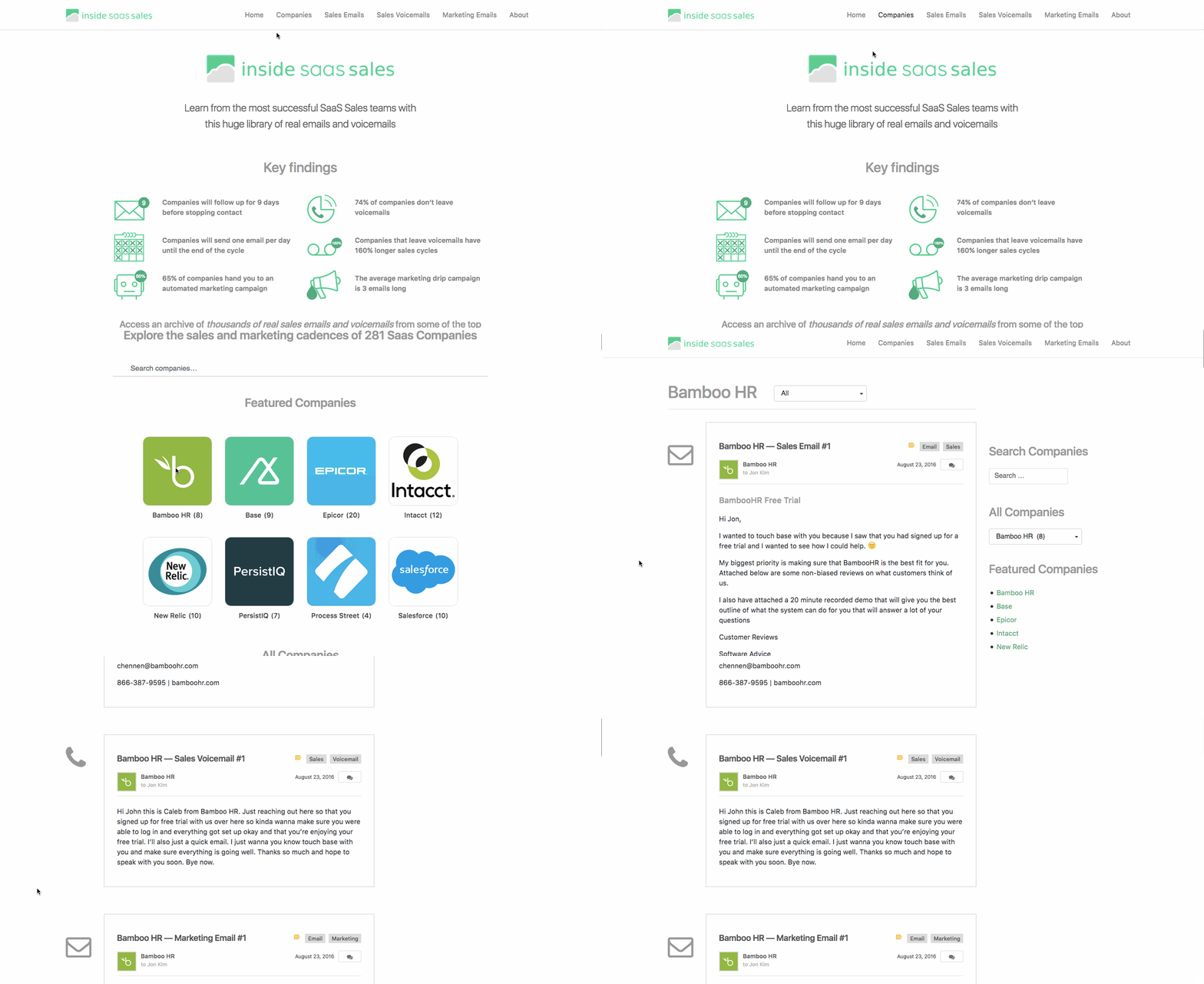
On August 25th, we launched a library of 1000+ real sales and emails from the top 280 SaaS companies.

The library was hosted on a microsite, Inside SaaS Sales, which allows users to browse the full sales cadences, organized in the order the message or voicemail was sent.

The launch landed us almost 800 votes on Product Hunt, 10,000+ site visits, a mention in Hiten Shah‘s SaaS Weekly, and publicity from the SaaS and VC community.

Continue Reading

The Art of SaaS Review: What SaaS Is and How to Do It Right

Art of SaaS review - header

The Art of SaaS shows that even industry veterans are sick of unnecessary jargon and bloated descriptions.

Rather than spending thousands of words (or multiple books) trying to explain every variation of the SaaS model, it draws from the experiences of Dr. Ahmed Bouzid and Dave Rennyson in order to cover all of the basics of a quality SaaS business in less than 60 pages.

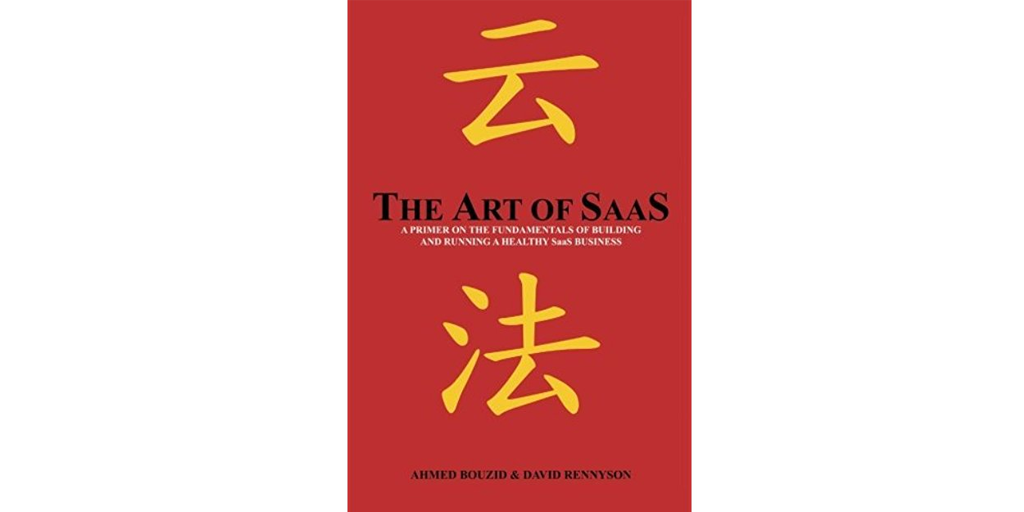
art of saas review - book cover

Being so short, an Art of SaaS review might seem redundant at first. Why not just read the book in about an hour and learn what the authors believe to be:

  • What SaaS is
  • The bargain between vendor and user
  • The importance of uptime (and how to maintain it)
  • The three priorities all teams should share
  • The three practices which achieve those priorities
  • The structure of every team, and how they should be managed

Well, in this post I’m going to cover both the core takeaways of The Art of SaaS and the context surrounding the book itself by drawing from other figures in the field.

I’ll show you why this odd little volume is worth reading and what pitfalls to avoid when taking it at face value.

Let’s get started.

Continue Reading

The Needlessly Complex History of SaaS, Simplified

Benjamin Brandall August 30, 2017

Look up the history of any modern technology, and you’re taken on a quick-fire tour of antiques, innovations, failures, successes, bubbles, booms, and busts.

Unlike the history of the Roman Empire or Greek poetry, software history is almost immeasurably short.

It’s rich and it’s exciting, but it’s also full of strange developments. Developments that never really went anywhere, but serve as warnings to organizations of the kinds of flops to avoid.

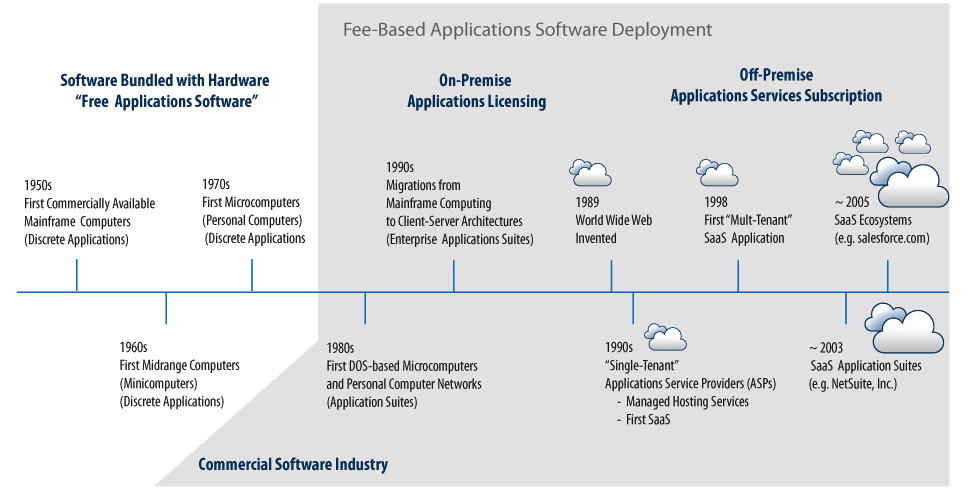
New terminology and seemingly revolutionary inventions have cropped up every single year since the 1960s, but by now most of what formed the foundations for today’s software market is obsolete.

The Department of Defense’s SaaS timeline is broad (and not particularly exciting-looking), but it gets the job done.

In today’s world, the majority of businesses and consumers use software-as-a-service (SaaS). If you define SaaS an application that can be accessed through a web browser and is managed and hosted by a third-party, then Facebook, Snapchat, Google — and many things that most people would just call ‘websites’ — are SaaS products.

Continue Reading

What We Learned Analyzing 281 Full Sales Cycles (1,183 Emails & Voicemails)

Benjamin Brandall August 25, 2017

Every SaaS company pours mountains of resources into building a sales team, creating efficient sales processes, and optimizing sales emails.

That’s because the most direct way to impact your revenues is by making sure your sales processes are as tight as possible.

But, how can you be sure you use the most effective methods to follow up with leads and close more deals?

Maybe we can help.

In partnership with PersistIQ, we analyzed the complete sales cadences of 281 SaaS companies, from intro to break-up. That included signing up for a whole heap of free trials, and then collecting over 1,000 emails and voicemail transcriptions.

If you want to get proven insights from some of the world’s best SaaS sales teams, build your ideal sales sequence and learn to write emails that close deals, then check out Inside SaaS Sales.

Inside SaaS Sales is a microsite we launched that collects and organizes every single piece of sales communication we received. It’s all there for you to browse through, swipe, and analyze.

With such a lot of data, it’d be silly not to study it to find out the key trends and share that knowledge with you. So, keep reading for our full analysis of the data!

Here are our key findings:

Continue Reading

The Only 14 Startup Tools You Need to Build a Unicorn

Imagine if you had to send marketing emails manually, or keep your records in a tattered binder on your desk.

Every company, even startups, needs to make a minimum investment in SaaS tools for work like email marketing, project management, and tracking sales.

But the catch is that some of these startup tools can cost huge amounts of money, and when you’re a young startup you don’t want to be forking out in excess of $2,000/user/month for just one piece of software.

The point of this post is to explain the minimum viable SaaS stack your startup should invest in, based on what we’ve found out at Process Street in our many (many, many, many) tool-testing escapades. I’ll even do the math for you, and collate the estimated annual cost at the end.

Ready to start building up your toolbox with the best SaaS out there?

Continue Reading

An Introduction to Process Street for Consultants

process street consultants - header

Today is the first post in a new series – a guide to help consultants and their clients work with Process Street to boost efficiency and be more productive.

Whether you’re documenting your clients’ business processes, updating their toolkit, or generally improving company tools and practices, Process Street is the easiest way to document and manage both your personal and clients’ workflows.

Over the next seven weeks we’ll go through:

  • An introduction to Process Street for consultants – why you should care, and the core features
  • Advanced features such as process automation and custom share links
  • Common use cases and how best to use Process Street in different forms of consulting
  • The benefits of Process Street as part of your (and your clients’) toolkit
  • How to easily set up and hand off processes to your clients
  • How our partner program works
  • Extra resources to become a true master of efficiency

I’ll even be writing this guide to let you give it to your clients to teach them how to use Process Street. After all, efficiency is the name of the game.

process street consultants - efficiency

So, join me today as we kick off this mega guide for consultants by explaining what Process Street is, what the core features are, and why the hell you should care about it.
Continue Reading

How to Live Stream: The Complete Guide for Businesses

how to live stream - header

Learning how to live stream may be intimidating, but it’s insanity to ignore the marketing opportunities and advantages it creates for your brand and company.

Want to engage your audience beyond your written content? 80% of brand audiences prefer watching a live video to reading a blog post.

Reaching out through social media? Live videos get more than double (+135%) the organic reach of photo posts.

In fact, producing live videos:

  • Lets you reach a wider audience
  • Encourages active engagement with your brand
  • Builds stronger relationships with your viewers
  • Provides a wealth of content to repurpose
  • Makes you stand out from the crowd

live streaming - intro gif

To help you take advantage of live streaming, I’ll break down the benefits of doing it, the platforms and equipment you can use, and the types of streams you can host. If you want to know why, what, and how to live stream to give your marketing efforts a boost, keep reading.
Continue Reading

How to Hire a Virtual Assistant and Ditch the Work You Hate

hire a virtual assistant - header no hand

Your current team can’t handle any extra work. You’ve exhausted your process automation opportunities. You’ve got no choice but to bring in a fresh face.

You could hire a specialist, but they can be expensive and limited in the work you can hand off. You need to hire a virtual assistant.

hire a virtual assistant - overworked
Continue Reading

Take control of your workflows today

Choose which optional cookies to allow. You can change or withdraw consent here at any time.