All posts in Technology

32 Google Drive Tips and Tricks

Process Street illustration for Google Drive power tips: a person organizing files in a labeled card catalog

I made the switch from Dropbox to Google Drive and never looked back. Once you live in Drive every day, you start finding features most people never touch, and a few of them quietly change how you work.

Below is the running list of Google Drive tips and tricks I actually use, including the AI features Google has folded in that most users have not caught up to yet.

Continue Reading

21 Ways to Use Slack Bots to Simplify Everyday Tasks

Black-and-white operations manager adjusting a compact robotic message sorter for Slack bot automation

Imagine if you had an invisible robot running around the internet doing all kinds of tasks for you.

That is still the promise of a Slack bot: simplify everyday tasks by cutting down on repetitive work, answering common questions, routing updates, reminding people about deadlines, and connecting Slack to the tools where work actually happens. If you want to know how to use Slackbot, start with reminders, support answers, custom responses, and private notes. Then use Workflow Builder and the Slack Marketplace when the job needs a dedicated app or repeatable workflow.

Continue Reading

What is Runbook Automation? Process Clarity for More Than Just IT

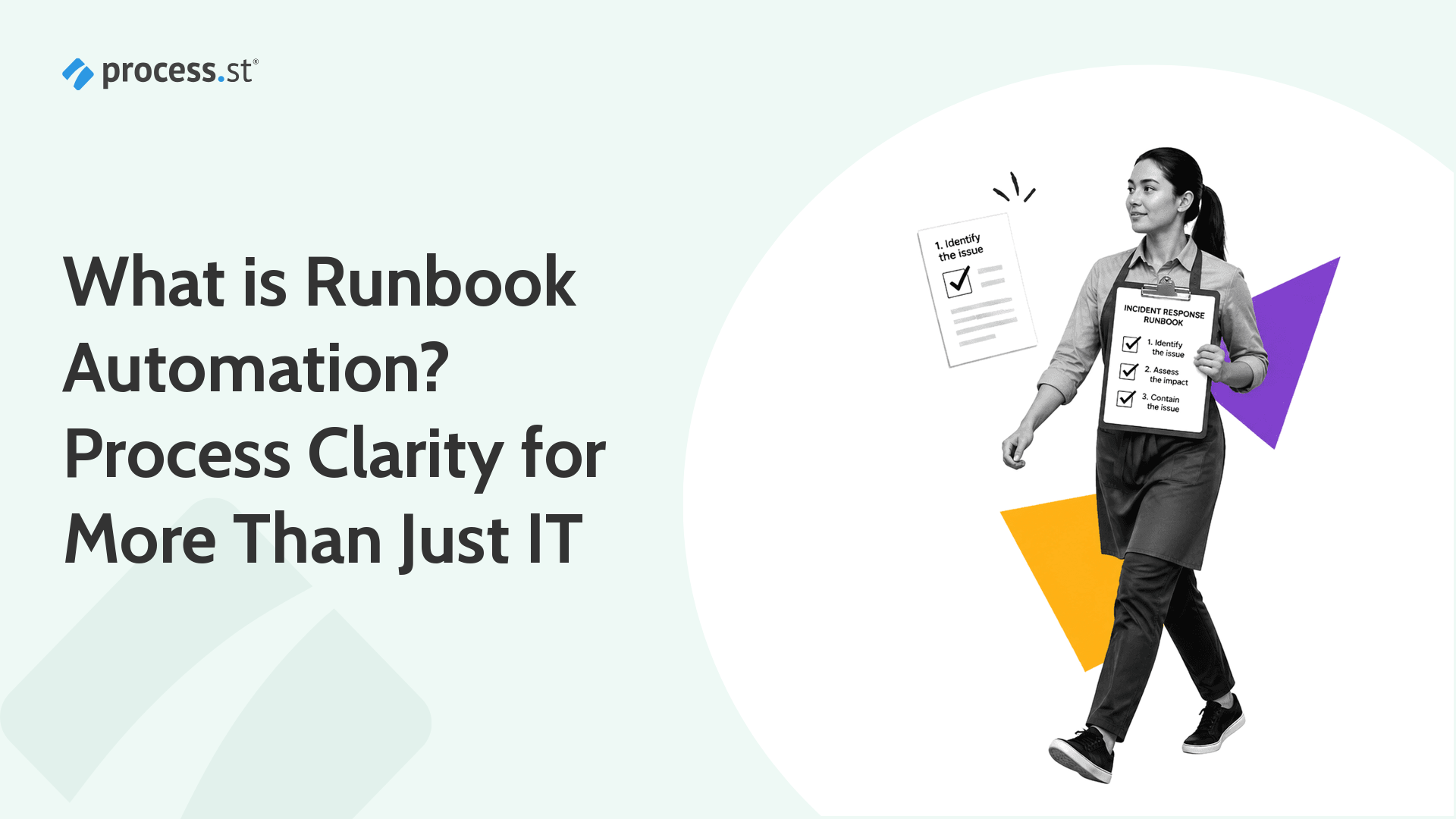
What is runbook automation: process clarity for more than just IT

Most teams have processes. Few can prove they ran the way they were supposed to.

Runbook automation is how IT operations teams closed that gap years ago, and the same idea is now reshaping how every team runs critical work, from incident response to compliance to marketing operations. At Process Street, we treat runbook thinking as the foundation of a Compliance Operations Platform: documented procedures, automated execution, and AI oversight working as one closed loop.

Continue Reading

The 30 Best Free Project Management Software (And Why They’re Great)

project management software

Ah, the days before I started using project management software.

I don’t miss them.

70+ hour weeks of pure stress and disorganized skitting from task to task, unable to focus on the things that mattered when they needed to get done. It was a lesson hard-learned but one of the most valuable I’ve ever had the misfortune of going through.

So I’ll save you the trouble and show you the best free options on offer.

You don’t need a massive budget or a lot of experience to get the most out of these apps – hence why they’re the best free project management software. Most have paid plans but all are functional with the free version and all will help you and your team organize your projects and get things done on time and to a high standard.

I’ll be covering:

  1. Process Street
  2. Agantty
  3. Airtable
  4. Asana
  5. Avaza
  6. Backlog
  7. Bitrix24
  8. FreedCamp
  9. HiTask
  10. KanbanFlow
  11. MeisterTask
  12. Paymo
  13. Pivotal Tracker
  14. Podio
  15. TeamGantt
  16. Toggl
  17. Teamwork Projects
  18. Todoist
  19. Trello
  20. Wrike
  21. Zenkit
  22. Jira
  23. Hubstaff
  24. Basecamp
  25. ProjectLibre
  26. Notion
  27. Zoho Project
  28. Kintone
  29. nTask
  30. Nifty

Enough talk – let’s get stuck in.

Continue Reading

Machine Learning in Business: What It Is and How to Use It

Machine learning in business

While it might seem new and intimidating, machine learning in business is already bringing massive benefits to companies and consumers alike.

From increasingly effective product suggestions to accurate journey time predictions and advanced customer analytics, machine learning is an incredibly powerful tool which lets you analyze every important aspect of your business without wasting human hours on the task.

But what exactly is machine learning, and how do you go from knowing that to actually using it?

“Instead of using labels to teach an AI what each object it’s looking at is, this DeepMind project teaches itself because it learns to recognise images and sounds by matching them up with what it can see and hear.

This method of learning is almost exactly like how humans think and learn to understand the world around them.” – Vaughn Highfield, How Google DeepMind is learning like a child: DeepMind uses videos to teach itself about the world

In this article we will cover:

  • What is machine learning?
  • Benefits of machine learning in business
  • Applications of machine learning in business
  • Different types of machine learning in business
  • Real-world examples of machine learning in business

Continue Reading

How to Optimize Magento Stores to Suit Core Web Vitals Standards

How to Optimize Magento Stores to Suit Core Web Vitals StandardsAlex Husar is the Chief Technology Officer at Onilab. For over eight years, he’s been working on Magento migration and development projects as well as building progressive web apps (PWAs). Alex is an expert in full-stack development who shares his expertise and in-depth knowledge on modern technologies and Computer Software Engineering.

Ecommerce businesses all over the globe have never been as focused on delivering the best possible user experience as now. The mobile-first approach, never-ending performance optimization, and the move towards headless ecommerce architecture are among core signs of this trend.

It’s about to accelerate in the coming months and years. Google has recently announced significant changes in its search ranking, connected exactly with the way people perceive websites. Page experience metrics will soon join other crucial indicators that influence websites’ positions in SERPs.

There are the Core Web Vitals:

  • Largest Contentful Paint (LCP)
  • First Input Delay (FID)
  • Cumulative Layout Shift (CLS)

These signals reflect how successfully users interact with web pages. The aim of measuring them is to improve the level of satisfaction from such experiences considerably.

Firstly, in this article for Process Street, we’ll get acquainted with the peculiarities of Core Web Vitals. And, secondly, we’ll consider what tweaks you could make to ameliorate these metrics on Magento-based online stores.

Let’s get started!
Continue Reading

Process Street 3.0: Even More Versatile for Every Kind of Workflow

process street 3

Process Street is a simple, free and powerful way to manage your team’s recurring checklists and procedures.

Process Street helps you automate tasks, track progress, and manage documents — plus it integrates with over a thousand of your favorite apps.

Thousands of businesses in every industry use Process Street to make their recurring work fun, fast and faultless. We’ve been listening closely to our customers, and Process Street 3.0 proves it. Sign up for a free trial and take Process Street for a spin.

Processes are a part of daily life for every person in every role in every business. We designed Process Street to power any kind of process: employee onboarding, rental property inspections, new client onboarding, firewall security audits, monthly sales forecasts, and many more.

We’ve built strong lines of communication with businesses who use Process Street every day; with the launch of Process Street 3.0, their feedback has helped us make our platform:

  • More powerful, with greater control to orchestrate and automate complex multi-departmental workflows.
  • More intuitive, with a redesigned user experience to help you implement and manage all your processes even faster.
  • More accessible, with new time-savers like application speed improvements, single sign-on, and a slick iOS app.

Before we dive into all of our 3.0 features, you have to check out our new explainer video! As you watch, consider what it can mean for your business if every person on your team knows what to do, and when.

Satisfying, right?

The feeling of working together to get processes done right, and right on time.

Ok let’s jump into it.
Continue Reading

Why Top Brands Are Obsessed With Phygital Marketing

Why Top Brands Are Obsessed With Phygital Marketing

You’re waiting for the train on your way to work. You’ve got a long day ahead, and don’t feel like swinging by the grocery store afterward. Fortunately, there’s a supermarket kiosk on the platform. You scan the barcodes with your phone and arrange for your food to be delivered when you get home.

As you cross the street to your office building, the strap of your computer bag finally breaks. You don’t have time to run out and get a new one, but that’s okay. Once you’re in your office, you log on to the company’s website, put on the augmented reality headset, and virtually try on different bags.

At lunch, you head down to your usual restaurant. The AI in the touch-screen kiosk suggests sandwiches you might like based on your order history, then uses facial recognition to complete the order and charge your account.

This is phygital marketing – all made possible by advances in augmented reality (AR).

The global AR and virtual reality (VR) markets are expected to reach 18.8 billion USD by the end of 2020 – over 78% growth from spending in 2019. By 2025, that growth is only expected to increase exponentially.

With the sophistication of AR/VR tech, more companies are incorporating it into their campaigns – and more consumers are expecting it.

In this Process Street post, we’ll take an in-depth look at the what and why of phygital marketing, but you can also skip ahead to one of the following sections:

Let’s get phygital!

Continue Reading

The Best Mindfulness Apps ‍♀️ Calm vs Headspace vs Waking Up vs Reflectly

Inhale… Exhale… Inhale… Exhale… ‍♂️

Why the deep breaths?

Perhaps because of the pandemic, its subsequent lockdown measures, and the impending breakdown of life as we know it?

In the midst of the global crisis, people are increasingly turning to mindfulness and meditation to regain a sense of calm in their lives.

This means that while the world goes bust, it’s boom time for the mindfulness app industry.

Downloads of mindfulness apps have doubled since mid-March and the digital mental health market is projected to reach $4.6bn in 2026; a massive jump from its value of $1.4bn in 2017.

Continue reading to take a look at the two key rivals in the mindfulness app game: Calm vs Headspace. We’ll also examine why people are turning to mindfulness as a means to cope with the pandemic, and check out two other alternatives beyond the Calm vs Headspace feud: Waking Up and Reflectly.

To skip to a specific section of this Process Street blog post click the appropriate link below:

Take a breath… Now let’s get started! ✨

Continue Reading

Sorry, Windows Users — macOS 11 Big Sur Is the Best Operating System to Date

macOS 11

Republican or Democrat. Brexit or remaining in the EU. Pepsi or Coke.

There are some things that people just can’t agree on.

These debates all pale in comparison to the one argument that is so vitriolic, so polemic, and so bitter that it’s infamous the world over: The Mac vs Windows debate.

The heated rivalry has brought out the worst in people, with message boards, forums, and social media threads being the digital battlegrounds for these two factions to clash. The primary method of attack for Windows supporters is to scoff at the price of Apple’s Mac products. Mac aficionados — while they only make up 9-13% of all operating system users — go for the throat by ridiculing how error-prone Windows is.

But I’m glad to say that the operating system war has finally come to an end with a clear victor.

Mac.

With their trojan horse — Big Sur — they’ve created an OS that’s so streamlined, easy to use, and downright fast — all while tying it in with the interface of iPadOS and iOS — that Windows 10’s defeat was inevitable.

But what’s changed, exactly? What are Big Sur’s most exciting features? And, more importantly, when is macOS 11 being released?

Make your way through the following sections in this Process Street post to find out:

Hey, Siri?

Scroll down so the reader can continue on with the post.

Continue Reading

Take control of your workflows today