All posts by Benjamin Brandall

Why Process Standardization Improves Quality, Productivity, and Morale

The following is a guest post by professional copywriter and freelance writer Michael Schultheiss, owner of Inkwell Freelance.

Imagine if your support staff had no set guidelines for handling a ticket.

It would be like you pulled in a group of random people from the street, sat them down at the helpdesk, and expected to see a job well done.

Instead of a job well done, it’d probably look more like this:

That’s essentially what you’re allowing when you fail to standardize processes. Your company’s operations consist of tasks that must be completed on a daily, weekly, monthly, or yearly basis to ensure that it runs smoothly. But if these processes aren’t standardized, you’re inviting chaos.

These could be core processes like dealing with a customer support request, or tasks that recur less often like SSL certificate renewal.

Every task — regardless of how often you do it — requires rules that define the scope, quality, and methods to be followed. If you don’t standardize these rules, you can’t have visibility over whether you’re ensuring quality and reducing human error.

In short, running your business will be an operational nightmare.

To help you avoid that, in this article we’ll look at process standardization as follows:

  • What is process standardization?
  • The benefits of standardization
  • Common concerns about standardization
  • How Process Street can help you standardize

Continue Reading

How to Create Your First Product Demo Video as a Total Newbie

Product Demo Video

Like any employee who works at a young startup, last month I was given a task which threw me far out of my depth.

Even though I’m an audio tech graduate whose final project was video-based, I can’t say that my skills destroying VHS tapes and creating feedback loops translated too well.

Either way, the task was clear:

Create a 5-minute demo video for Process Street showing off most of the features, with screen recordings and slides.

It took me much longer than it should have. But, in the end, I polished it off nicely and got back to doing what I’m better at — writing articles (phew).

Continue Reading

Trello vs Asana: The Best Project Management App in 2023?

Trello vs Asana

Tracking your work and what you do may sound a little simple (however, we’ve proven before that it’s not necessarily the case). But just imagine having lots of people working on the same project at the same time. That’s when it actually becomes not so easy to track what’s going on.

Online collaboration tools are on the rise with businesses who want to track their employee’s workflow – especially remotely. You might have already seen our previous article comparing Asana and Trello, but instead of comparing the user experience we will look at the features and usability of each app.

Continue Reading

Why Team Alignment Should Be Your Startup’s Holy Grail

The following is a guest post by Darren Chait, Co-Founder at Hugo. Hugo is the meeting note platform that keeps your team connected with what your customers are thinking and saying. It enables fast-moving teams to make meeting insights shareable and actionable in their existing tools.

As a startup guy, my world is full of buzzwords. We’re disrupting a space, have pivoted, got our minimum valuable product (MVP) out to our total addressable market (TAM) and even had a ‘.ai’ domain name. Undoubtedly, one of my ‘favorites’ is ‘team alignment’.

While team alignment is not a new concept and certainly not unique to fast-growing technology businesses, I’m fascinated with my peers’ obsession with this utopian concept. It’s understandable. Why wouldn’t you want your team moving forward in unison with precise coordination and execution? Why wouldn’t you listen when experts warn that misalignment kills startups?

In this guest post, I’ll share our story and perspective on team alignment and some easy-to-implement solutions to achieve this ideal state with your team.

Continue Reading

How to Build Your First Telegram Bot: A Guide for Absolute Beginners

I’ve been obsessed with science fiction since I was a young teen, so coding has always appealed to me. I was fascinated by the idea that it is possible to write a program that behaves randomly — to me, that was already deep in the realms of sci-fi!

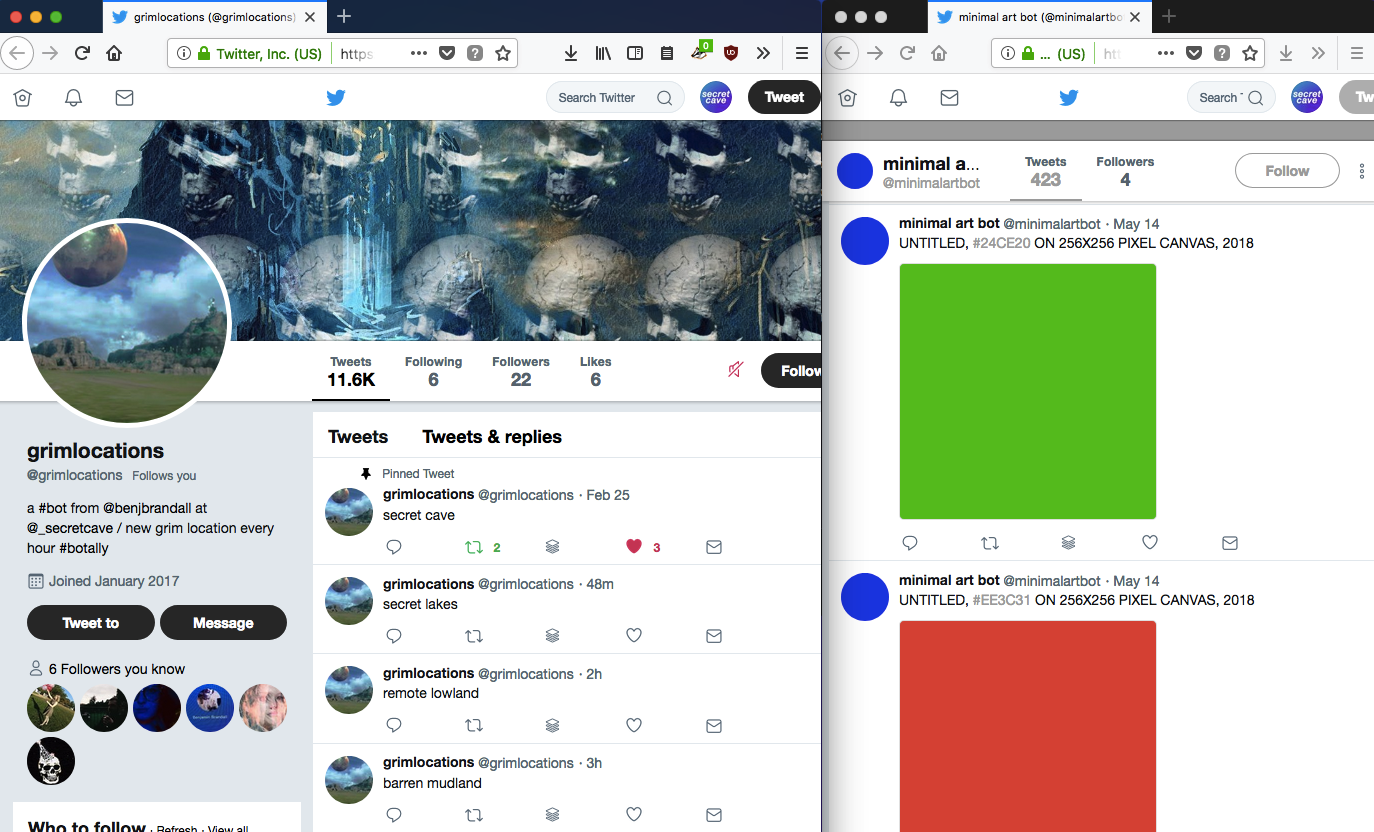
That obsession fueled my first forays into code, and resulted in a ton of fun bots. For example, this one that describes scary-sounding places by combining words at random, and this one that paints PNGs in block colors.

It’s nothing fancy. I’m hardly a master programmer, and you don’t have to be either. With a basic grasp of coding and APIs, you can create genuinely useful software for fun and profit. In this tutorial, we’ll look at creating a Telegram bot from scratch.

Continue Reading

How to Write Your Company Mission Statement: 200 Top Examples Analyzed

Do you recognize this mission statement?

To organize the world’s information and make it universally accessible and useful.

That’s Google‘s. What about this one?

To accelerate the advent of sustainable transport by bringing compelling mass market electric cars to market as soon as possible.

Of course, it’s Tesla.

And finally, how about this?

It’s our responsibility to simplify cutting-edge products and continue to progressively promote and future-proof manufactured solutions, all while striving for technical leadership.

I made that one up! Awful, isn’t it? But the thing is, it almost sounds feasible.

Company mission statements can act as strong guidelines that help promote an attitude and culture that works towards your company’s goals. Or, they can mean so little that you might as well have generated them using a joke tool like this.

So, what goes into a great mission statement?

Continue Reading

How to Level Up Your Sales Operations Career

Born in 1970, sales operations was originally described as “all the nasty number things that you don’t want to do, but need to do to make a great sales force”.

Sales is moving from paper rolodexes into the world of AI, automation and cloud computing. With it comes more nasty number things than ever before, making operations staff a vital part of the sales team.

Continue Reading

How to Build Better Employee Accountability with Processes

According to the American Management Association, one-quarter of workers seem to avoid responsibility on the job on average, and 21% of companies believe that the figure is as high as 30-50%. From these stats, it’s clear that low employee accountability is wasting company money on a massive scale.

At the same time, almost two thirds of employees believe their company does not have a strong culture. The link between these two factors is strong, argues management consultant and author Roger Connors. Connors blends The Wizard of Oz with now-influential writings on employee accountability in a series of best-selling leadership books including The Oz Principle and Change the Culture, Change the Game. In the latter, he says:

“Our experience proves that accountability, done the right way, produces greater transparency and openness, enhanced teamwork and trust, effective communication and dialogue, thorough execution and follow-through, sharper clarity, and a tighter focus on results. Accountability should be the strongest thread that runs through the complex fabric of any organization” — Roger Connors, Change the Culture, Change the Game

To paraphrase Connor, a business’ employee accountability depends on leaders creating a transparent culture where responsibility is clear, transparent, and owned. One way to bring clarity to the way your business operates is to use standardized processes and leverage technology that helps track activity, assign tasks, and facilitate hand-offs.

In this article, we’ll go through the links between processes, accountability and company culture, and give you tips on how to improve your business in those areas. But first, let’s look closely at the ties between accountability and culture.

Continue Reading

How to Move from Business Analyst to Business Architect

As an analyst, you spend your day designing your organization’s processes, measuring their performance and ironing out the fine details. You focus on the “how”. You’re very good at it, but maybe you’re more interested in the “what”? If you want to move past the nitty-gritty of processes and devise end-to-end models and strategies instead, then you’re looking make the leap to business architect.

The necessity of architects is a byproduct of digital transformation.

There’s a growing need for talented pros who can reduce complexity, establish solid technology processes and ensure tech’s used consistently across business units and functional areas.” — Sharon Florentine, CIO

What is a business architect?

As a business architect, you will design the structure of the business as a whole by looking broadly at systems design and requirements. Your aim is to improve the business’ operations in line with goals and strategy. Architects do this by theorizing and testing the components of a system (the technology, the flow of work, the deliverables) and overseeing the implementation of the systems by someone in a business analyst role.

Continue Reading

How A-Team Lending Made Employee Onboarding Paperless with Process Street

The A-Team Lending is a California-based mortgage broker with over a dozen full-time employees and 20 commissioned salespeople. The A-Team hired process consultant Cary Wan to handle their marketing and improve their business systems

Within the first month Cary has already managed to fully automate a large chunk of their HR systems which would otherwise require them to cover at least $30,000 extra in staffing costs to do manually.

A-Team Lending is rapidly scaling up and adding new salespeople to its team. This level of growth drove the firm to make big changes to the way they approach the onboarding process.

Why the A-Team needed Process Street

Instead of bogging the new hire down in a stack of forms to scan, sign and print, Cary uses Process Street as a trigger for form automation, allowing both him and his new hires to save hours per week on repetitive data entry.

Continue Reading

Take control of your workflows today