Merry Christmas and a happy new year from all of us at Process Street!
2017 might have been a mixed bag for most of the planet, but we had a lot of fun writing content for you, our blog readers.
We published 151 blog posts between us this year, with a little help from fantastic guest writers like Pascal van Opzeeland from Userlike, and Sam Suthar from Tagove.
Here are our top picks as well as the posts you, the readers, liked the most.
The following is a guest post from Pascal van Opzeeland. Pascal is CMO of Userlike, software for website and messaging support. He and his team share tips about customer service and communication on the Userlike Blog.
In school, everyone looks forward to the day they can stop learning and start doing. But once inside hamster wheel of working life, many long back to the times in which they had the time to invest in their personal development.
At Userlike, we see this lack of time for personal learning as a serious challenge. The world is developing faster than ever, and the pace is only accelerating. To stay competitive, we need employees to keep up; to keep learning and stay up-to-date with their craft. Other benefits from having a culture that stimulates continuous learning include:
Increased productivity
Attract and retain talent
The ability to grow leaders in-house and reward loyalty
The best employees have an innate desire to grow, but it’s hard to free up time when your daily tasks and duties mess up your schedule. Learning is one of those high importance – low urgency tasks that easily gets pushed aside.
The following is a guest post from Sam Suthar, the CMO of Acquire.
Scaling your business is almost impossible until you know your customer’s value. Whether you’re going to scale a brick-and-mortar business or an online business, it doesn’t matter; it’s vitally important to understand what each customer is worth to your business.
Statistics by Unicom Group show that 50% of customers naturally churn every 5 years. Sadly, this number can increase if you fail to understand what the customer who signed up last night is worth.
Yes, it’s doable. Although very tricky. In the rest of this article, I will show you how to scale your business by first knowing the value of each customer.
In 2016, Process Street went from using a basic Bootstrap theme to a custom-branded website, complete with a logo change and full aesthetic overhaul. We did it to avoid looking dated, and to make the site consistent with our app.
Like many startups, we focused on building a great product first, and rightfully overlooked the importance of a brand until the time was right.
A brand is the often low on the list of startup priorities. Startups develop in a fast-paced, cutthroat environment and are concerned primarily with attracting early users as beta testers, building disruptive products, and iterating based on feedback. Tech is a mercurial industry; many companies start out with a solution to a problem that could be adopted by everyone from individuals to large corporations.
Over time, by stabbing in the dark and following growth over all, a tech startup could find itself with a brand that doesn’t match its product. That’s something we grappled with in 2016, and it’s something even big tech companies come up against every couple of years.
Think about what’s at stake if Salesforce suffered a breach…
American Express, Philips, Vodafone, Virgin, Western Union, GE, the U.S. government, and 150,000 organizations risk their communications leaking to the public
This includes trade secrets, financial documents, passwords, and bank details
Hackers could believably impersonate bank employees or government officials
It’s a terrifying concept for Salesforce customers, and just as frightening for Salesforce themselves; if a breach like that happened, their $61b company would suffer tremendously.
A company as well-known as Salesforce has a huge target on its back, so it needs to have the highest security standards even while scaling up and innovating rapidly.
As a gateways to the internet, browsers are one of the most popular types of software out there. Everyone needs one, but which is the best? The market changes so quickly, it can be hard to keep up with the facts.
Which is the fastest? Which has the best extensions? Which is the most secure? While many people use Chrome, or their default pre-installed browsers, this doesn’t necessarily indicate a ‘best’ browser.
If you’re reading this, you want to find the fastest, most capable, browser for your needs. Finding the most popular isn’t enough, because those stats aren’t always related to quality.
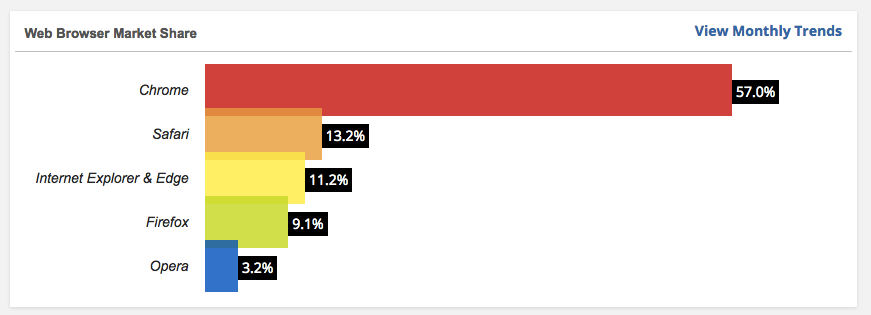
Browser popularity data from W3Counter, retrieved October 2017.
In this article, I’m going to use hard data to decide on the best browser on the market, looking at the most popular options: Chrome, Firefox, Edge, Safari, Opera, and Vivaldi.
I’ll compare speed, memory usage, range of extensions, privacy, and usability.
Looking for a new browser? Want to be sure you’re using the best technology on the market? Keep reading for a full data-driven comparison after a general overview.

Are you ready to market your SaaS product to enterprises? Do you know what makes or breaks a million dollar deal?
There’s a huge segment of SaaS companies that target only SMBs, and an increasingly well-funded bunch that go after the enterprise market from the outset. Some, like Dropbox, Asana, and HubSpot, have gradually scaled their products to meet the needs of enterprise customers. By looking at their enterprise-specific landing pages, we can isolate the key factors these companies have chosen to persuade enterprises, and find out what works.
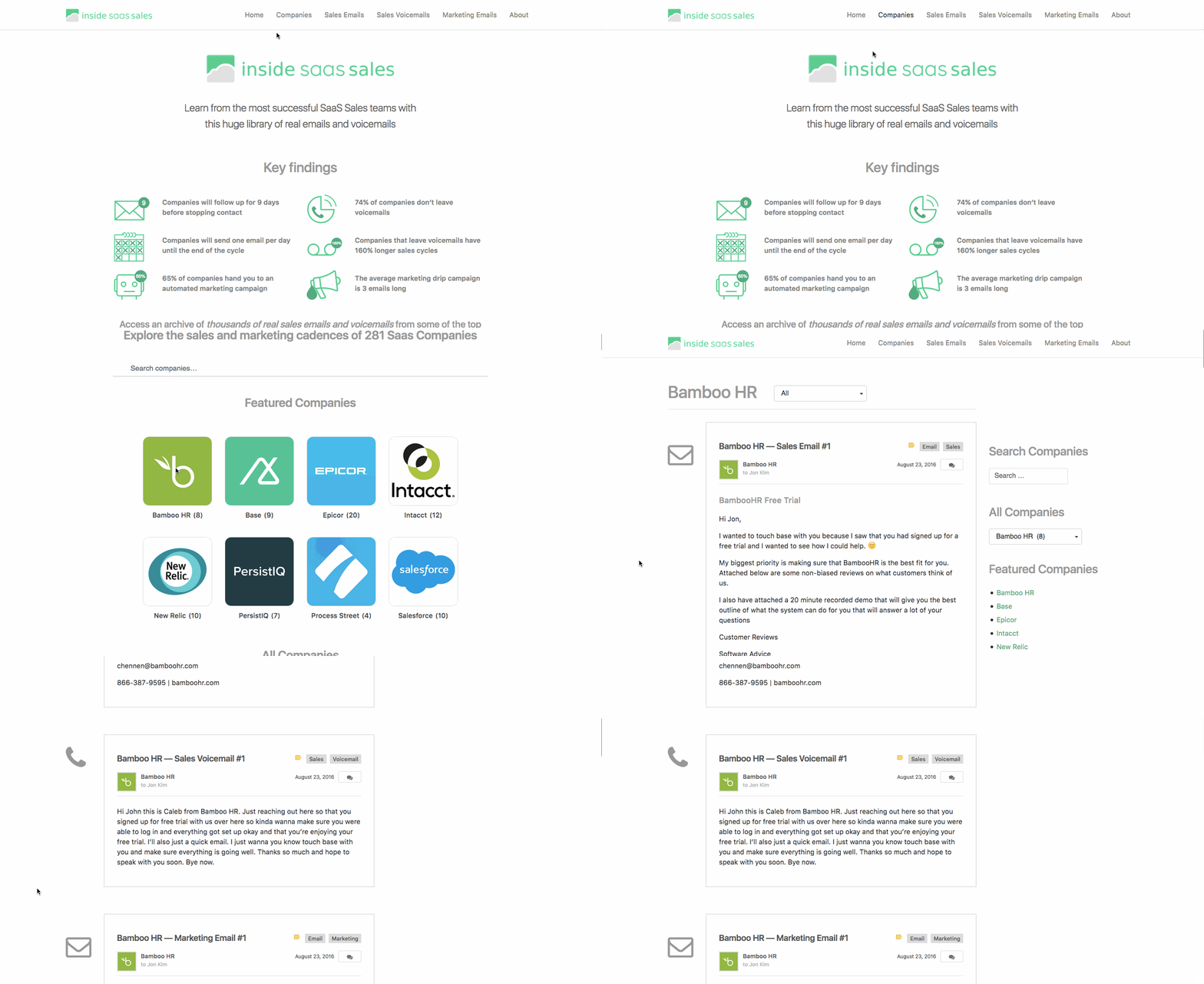
On August 25th, we launched a library of 1000+ real sales and emails from the top 280 SaaS companies.
The library was hosted on a microsite, Inside SaaS Sales, which allows users to browse the full sales cadences, organized in the order the message or voicemail was sent.
The launch landed us almost 800 votes on Product Hunt, 10,000+ site visits, a mention in Hiten Shah‘s SaaS Weekly, and publicity from the SaaS and VC community.
Websites are delicate, messy, and hard to manage effectively. Setup might be easy, but a beginner learning to maintain a website will hit a damaging snag sooner or later.
The main problem is that the tech behind any website is complex for beginners. The files that run your site are written in multiple different languages, depend on each other’s fixed locations, and are controlled by config files. In short, there’s a lot to grasp when you’re starting up a website.
To avoid making mistakes you need a basic knowledge of SQL, cPanel, and phpmyadmin, as well as a general idea of why and how websites work. Like I learned the hard way, tiny tweaks or careless uploads can take the entire site offline for days at a time, which is especially damaging when you have a recurring audience of any kind.
In this post, I’m going to go through the methods you’ll need when maintaining a website, and give you processes you can follow for each task.
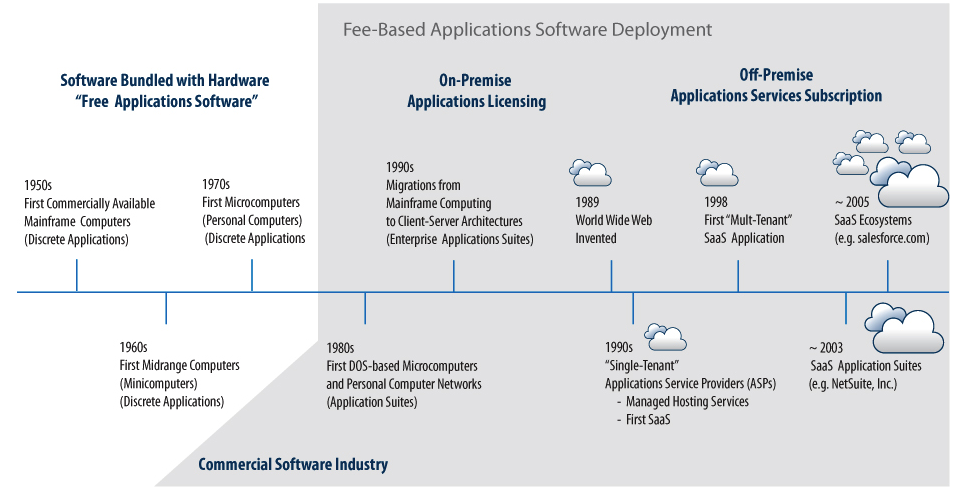
Look up the history of any modern technology, and you’re taken on a quick-fire tour of antiques, innovations, failures, successes, bubbles, booms, and busts.
Unlike the history of the Roman Empire or Greek poetry, software history is almost immeasurably short.
It’s rich and it’s exciting, but it’s also full of strange developments. Developments that never really went anywhere, but serve as warnings to organizations of the kinds of flops to avoid.
New terminology and seemingly revolutionary inventions have cropped up every single year since the 1960s, but by now most of what formed the foundations for today’s software market is obsolete.
In today’s world, the majority of businesses and consumers use software-as-a-service (SaaS). If you define SaaS an application that can be accessed through a web browser and is managed and hosted by a third-party, then Facebook, Snapchat, Google — and many things that most people would just call ‘websites’ — are SaaS products.