Videos are a powerhouse when it comes to marketing, explaining your product, and much more.
Heck, when users are spending 88% more time on websites that have videos, you can see their power just in terms of retention.
Unfortunately, it’s hard to request or create effective videos if you don’t have experience in the field. Terms can be confusing, and video producers might struggle to act on the feedback you give if you don’t know how to communicate the message effectively.
That’s why it’s vital to know how to perform an effective video review; there’s an art to it.
At Process Street, we’ve gone through the hard work of learning how to review videos and give actionable comments. That’s why I’ll be showing you how to do just that., including:
The importance of the relationship between product and marketing is something that’s often overlooked.
But when the product and marketing teams aren’t on the same page regarding the product and the problems it aims to solve, chances are the marketing won’t match the product’s value proposition and in turn, will discourage potential users from signing up.
This could be detrimental to the success of a product organization.
So, what can you do to avoid these miscommunications and build a synergistic relationship between the two?
In this article, I’ll share some tips and information that will be critical in strengthening the relationship and performance of the product and marketing teams at your company to achieve success.
This is a guest post by Nandini Sharma, an Assistant Marketing Manager at ProofHub – a leading collaboration software. With years of experience in marketing, she has found some amazing ways to reach a large audience and create a connection.
The term team management isn’t just about allocating tasks to be checked off by your team before the end of the day. Key factors that contribute to the concept of effective team management are teamwork, collaboration, and recognition. Without them, a company’s overall performance is at risk. This is where team management tools come into play.
Unfortunately, no matter how hard a project manager tries or how many expensive tools she/he invests in, something or someone is often left behind. And here in-lies our problem…
…and where there is a business-related problem, there is a Process Street solution.
You see, not all team management tools are meant for you. Without the right approach and the right tool, your chances of keeping each team member productive and satisfied, are next to impossible.
You need to find a tool that works best for you and your team and you need to find it soon.
In this article, we will explain the importance of effective team management. We will then present you with our 14 top team management tools so that you can find the right one for you.
Click on the relevant subheader below to jump to that section. Alternatively, scroll down to find the information you need to evaluate the best team management tool for you.
Team management: What it is and why it is important?
Team management is the coordination of a group of individuals to perform a specific task. Team management is a subset of the broader discipline: project management.
Project management versus team management
Project management explains how the resources of a project are organized and implemented for successful project completion.
With successful project management comes the delivery of expectations: what can be delivered, when this can be delivered, and the cost of delivery. Resources are maximized, the project cost is controlled, change is managed, and teamwork and collaboration are enforced.
Drawing on the latter point – teamwork and collaboration are enforced – it is clear that team management is a management skill vital for project success.
Team management: An essential management skill
Management skills are certain attributes or abilities a manager should possess to be effectual in their duties and to deliver the needed project results.
A team that goes through the motions, will not care for the success of your project or even your company. Effective team management is essential in maintaining a positive company culture, an environment that promotes project completion and to retain employee engagement.
With this in mind, it can be difficult to select the right tool for you. However, with our list of 14 top team management tools, choosing just got a lot easier.
Team management tools: Our top 14 picks
In this article, we present our top 14 team management software picks. We summarize the pros and cons of each tool so that choosing the right tool is easier for you.
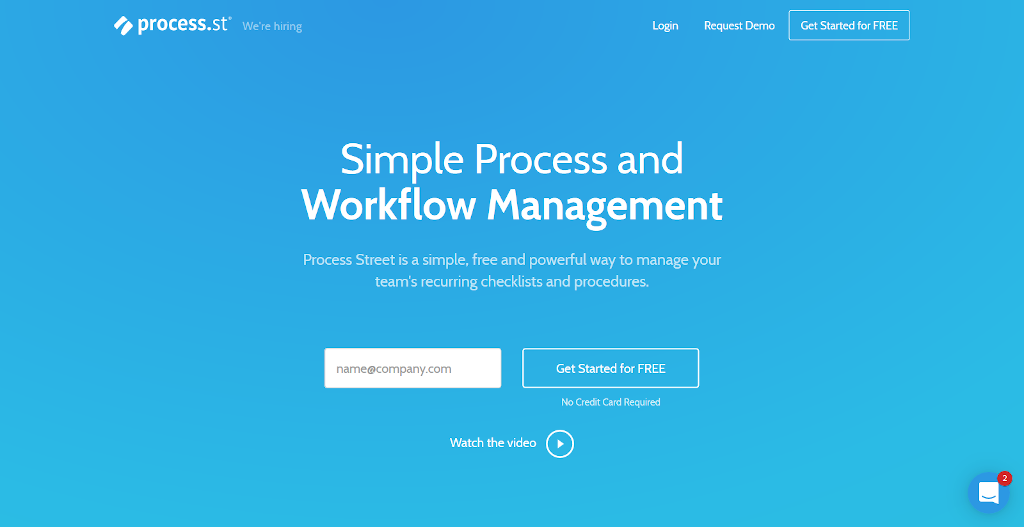
Best team management tool for process management: Process Street
With Process Street, you can create recurring checklists, collaborate around them, track their progress, and complete projects as planned.
What the users like:
With Process Street, process and team management become a breeze. Simply:
Document every step of your project.
Transfer your documented process into a Process Street template.
Add features such as task due dates, stop tasks and role assignments to adapt and refine the management of your project and team.
Activate the template once the project commences. Once activated the template is termed as a checklist. You can have more than one checklist running from the same template at a time.
Track the progress of your team members in terms of their assigned tasks.
Receive regular email updates for each project, keeping you in the loop.
Collaborate with project members in one space.
At Process Street, we have a wealth of free template resources stored in our template library.
Approvals, to sign tasks off within your team. Tasks can be assessed by the relevant team member/s. The assigned approver can easily open the checklist. Information from the tasks is then used to either approve or reject, or reject with a comment.
It is with these features that Process Street checklists are deemed to be superpowered, and can superpower the management of your team.
What the users dislike:
Process Street is a great tool, but there’s no mobile app yet.
Pricing:
Process Street Business – $12 .50 per user per month
Process Street Business Pro – $25 per user per month
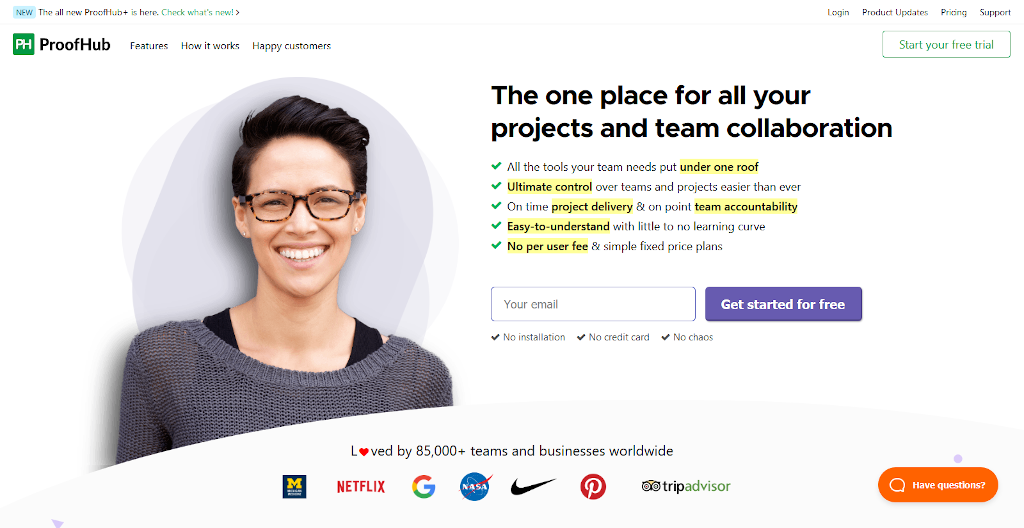
Best team management tool for scalable remote collaboration: Proofhub
ProofHub is an online project management and team management software that helps businesses organize projects, people and get work done. The software delivers basic and advanced features for refined project or team management under one roof. This includes:
What the users like:
ProofHub is an all-in-one solution. That is, every tool you need to manage a team, deliver a project or run a business is available in one place. Unlike other tools, ProofHub pricing doesn’t support any per-user or per-project terms and conditions.
What the users dislike:
ProofHub offers easy access to:
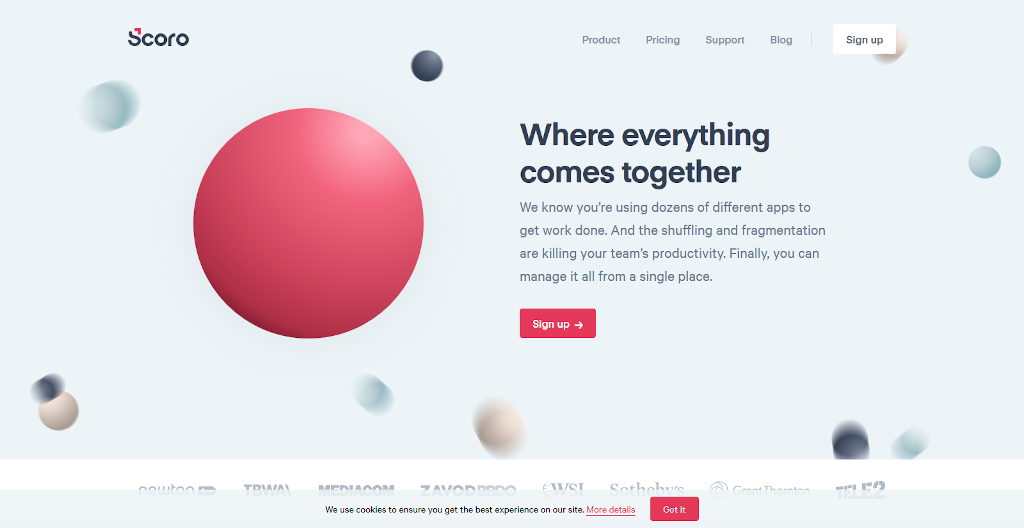
Best comprehensive all-in-one team management tool: Scoro
Scoro is an end-to-end project and business management solution which lets you control your entire business from one place. Scoro offers almost every feature that you need to fully manage your teams and workflows – including:
Task scheduling
Task tracking
Collaboration
CRM
Advanced reporting
Real-time dashboards
…and more.
What the users like:
Scoro is one of the most agile and flexible tools in the market, and it saves teams a lot of time whilst communicating on tasks.
What the users dislike:
Scoro doesn’t stick with all team types. For example, it doesn’t offer any on-premise solution for enterprises.
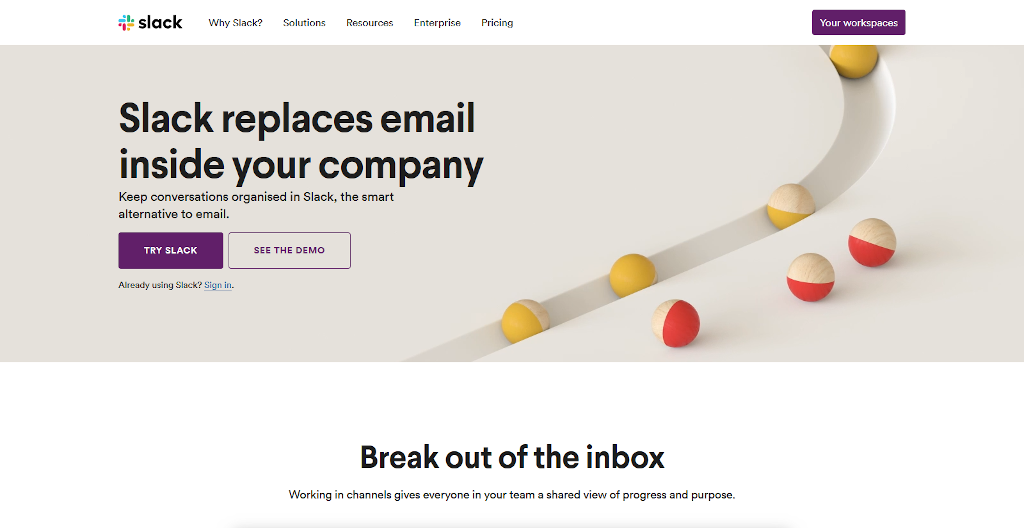
Best team management tool for remote communications: Slack
Slack is a cloud-based collaboration tool specifically designed to improve communication across organizations. Slack is a platform for teams to converse and share files (PDFs, images, documents, and spreadsheets) with easy drag and drop.
What the users like:
In addition to chat, Slack provides shortcuts and hacks for effective team collaboration to support enhanced productivity levels.
What the users dislike:
Slack offers limited integrations in the free version, and it lacks video/audio chat options.
Pricing:
Slack Standard – $6.67 per user per month (billed annually) or $8 per user per month (billed monthly)
Slack Plus – $12.50 per user per month (billed annually)
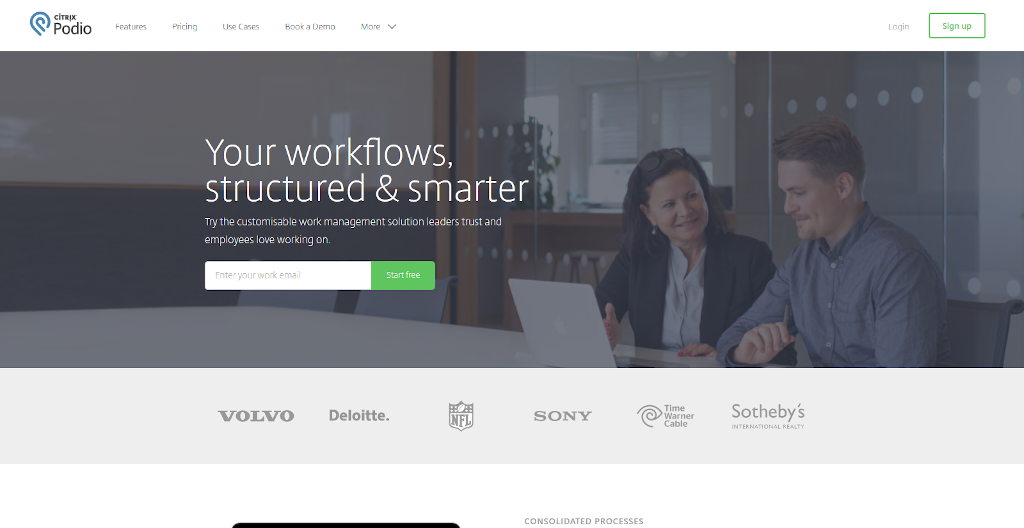
Podio is a team collaboration software that helps keep processes organized and facilitates effective communication. The core purpose of this software is to ease team collaboration and reduce team confusion, improving clarity.
What the users like:
Podio is flexible, customizable, and user-friendly – perfect for growing businesses.
What the users dislike:
Many users have said that Podio is extremely difficult to set up and that they require additional help to do it.
Pricing:
Podio Basic – $9 per month or $ 7.20 per month (billed annually)
Podio Plus – $14 per month or $11.20 per month (billed annually)
Podio Premium – $24 per month or $19.20 per month (billed annually)
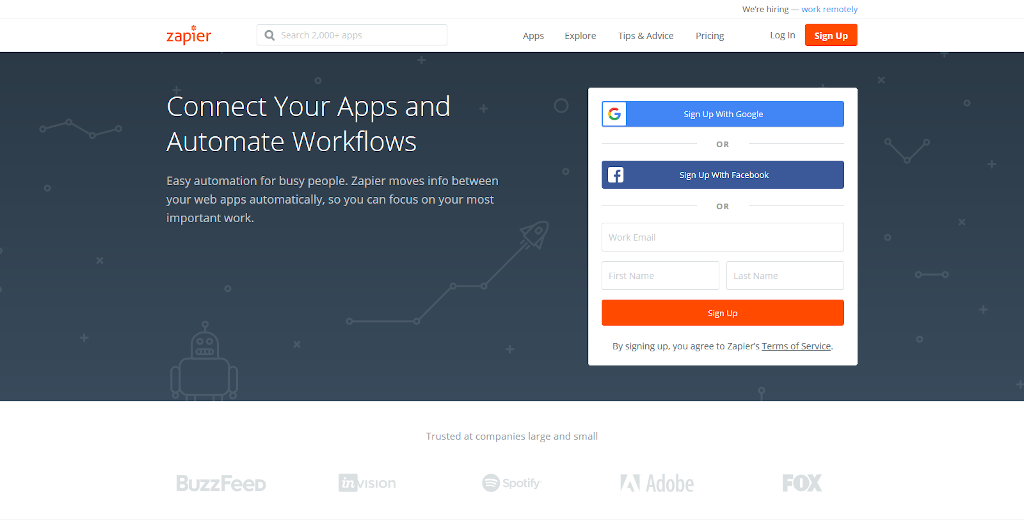
Zapier is a web-based service that connects various apps to automate workflows and elevate productivity levels. This powerful technology is designed to automate your business tasks better and help your teams accomplish more with 10x the impact.
What the users like:
Zapier connects all the different apps a team uses. It makes tasks easier for everyone in the team and frees up their time to do other important jobs.
What the users dislike:
Zapier gets expensive when you use too many of its zaps.
Best team management tool for productivity: Clickup
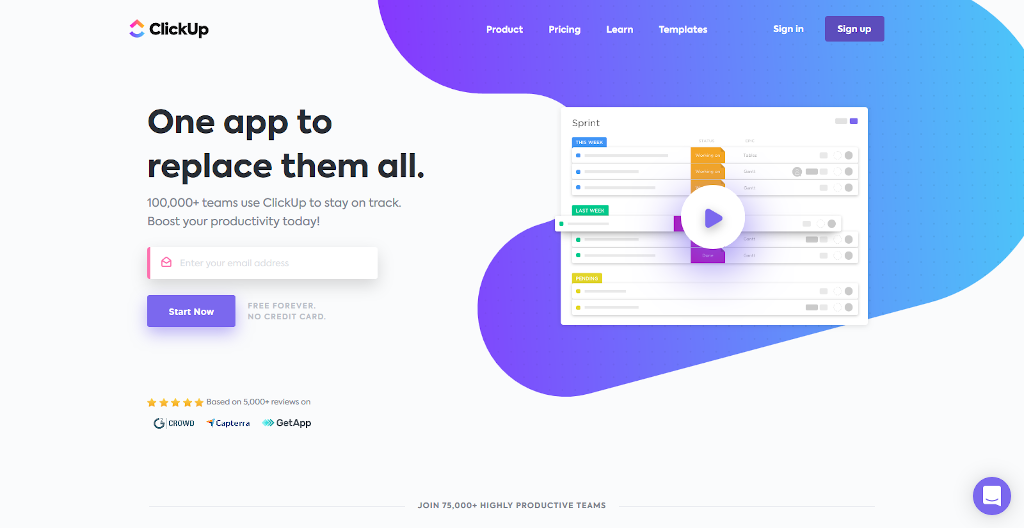
ClickUp is an online work management solution or productivity software. It helps individuals and teams tune tasks and manages workflows in a more collaborative, efficient manner. It’s one tool for all, from task management, collaboration, reporting/project tracking, time tracking to Gantt charts – ClickUp offers all the features you need in one place.
What the users like:
ClickUp offers great discounts on annual subscriptions – you can save 45%. Compare this to tools where savings are limited to 15% – 20%.
What the users dislike:
ClickUp limits storage in a free plan (100 MB) and it does not include integrations with Google Drive and DropBox.
Pricing:
ClickUp Free – $0 per user per month for 1 project
ClickUp Business – $9 per user per month or $5 per user per month (annual billing)
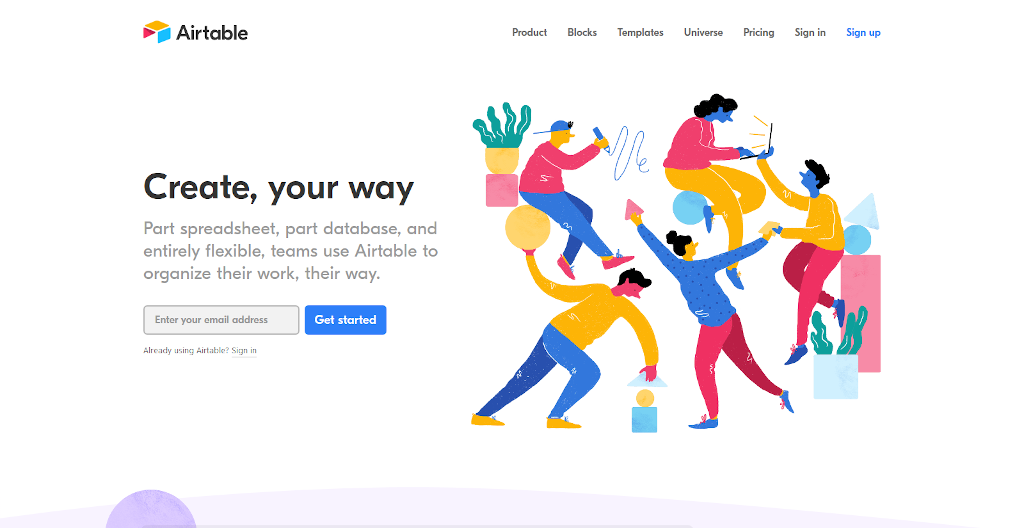
Best team management tool for agile project management: Airtable
Airtable is a collaborative work management solution. The solution allows organizations to manage and organize everything, including projects, tasks, teams, and team communication. The key features of Airtable include:
Calendar
Kanban board
Task management
Collaboration
Reporting
Project tracking
What the users like:
Airtable has pre-built templates for multiple use cases. For instance: content development, HR, digital marketing, and more.
What the users dislike:
The task management and project management features are limited. For example, Airtable has no time tracking option for projects/tasks.
Pricing:
Airtable Plus – $10 per user per month (billed annually)
Airtable Pro – $20 per user per month (billed annually)
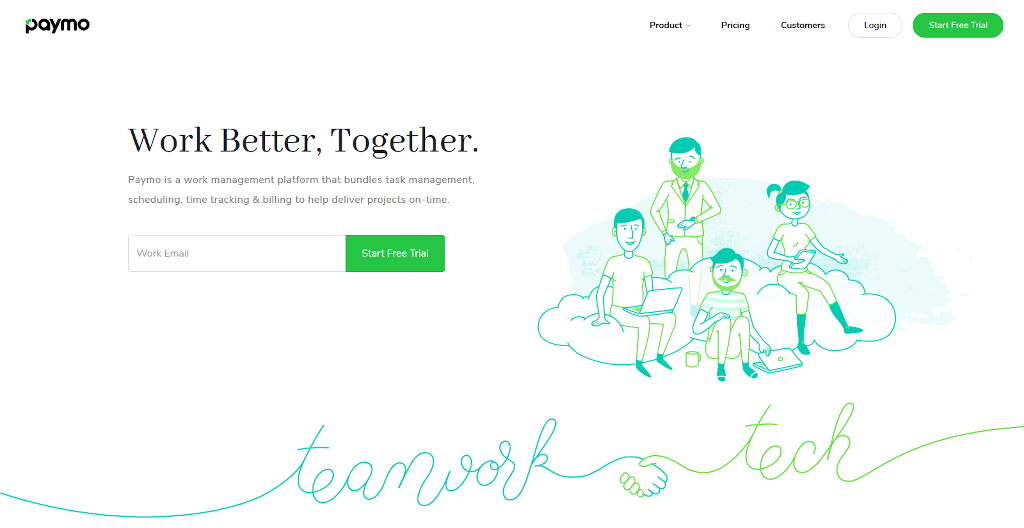
Best team management tool for freelancers and SMBs: Paymo
Paymo is a project and team management app for freelancers and SMBs. The app is designed to help teams with everyday work processes, such as project management, task management, resource scheduling, collaboration, time management, and project accounting.
What the users like:
Paymo has a great customer service and support team.
What the users dislike:
Users need to purchase paid plans to access basic task management functionalities like Gantt charts and resource management.
Pricing:
Small Office Plan – $11.95/user/month (or $9.56/user/month if billed annually)
Business Plan – $18.95/user/month (or $15.16/user/month if billed annually)
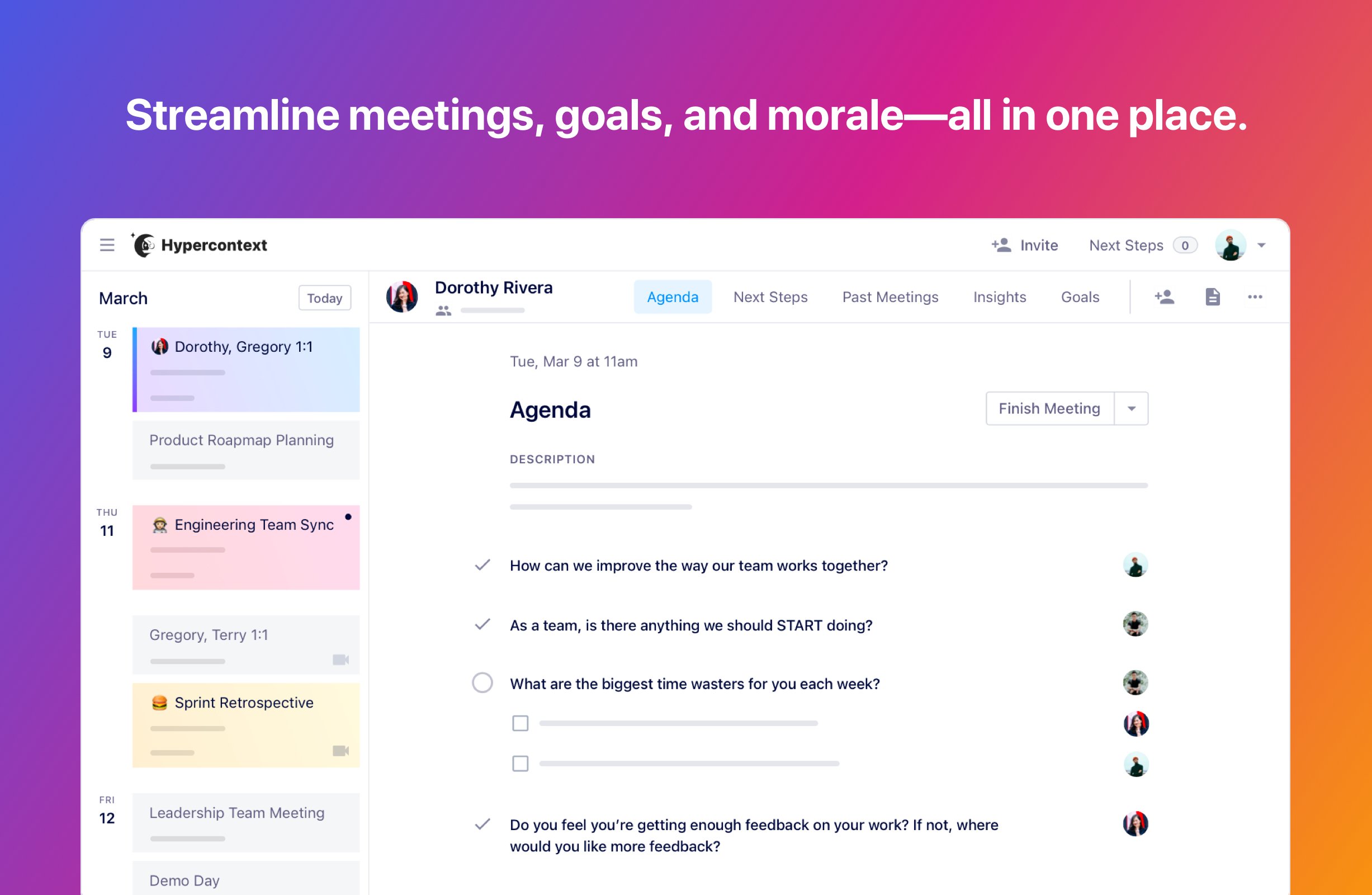
Best meeting software for high performing teams: Hypercontext
Hypercontext enables managers and their teams to be high-performing by combining quarterly priorities, recurring meetings, and engagement measures, all in one place.
With their collaborative agenda software, teams can close the feedback loop orgwide, hold one another accountable, and eliminate bad meetings. With Hypercontext, teams can:
Build collaborative meeting agendas that hold the team accountable for contributing to conversations and showing up prepared to every meeting
Automatically send meeting notes to participants
Collect real-time employee feedback to improve meeting quality and keep a pulse on employee engagement
Hold your team and self accountable for the things you agree to during meetings with their Next Steps tracker
Access a massive library of resources including 500+ conversation starters, 60+ agenda templates, and 250+ goal examples across every role in tech
…And so much more!
What the users like:
Hypercontext makes it easier for managers and employees to have productive conversations when they meet, especially in the context of 1:1 meetings. It’s also a great accountability partner for teams, ensuring that nothing falls through the cracks week-over-week. Hypercontext customers love that they can have discussions, brainstorming sessions, and prioritization exercises asynchronously.
What the users dislike:
There’s always room for improvement when it comes to some UX quirks that can occur within the app. However, the Hypercontext is the gold standard for frequently releasing feature improvements and UX/bug fixes so any quirks that surface typically go away within a week.
Pricing:
Basic – Free forever with no limits on users
Pro – $7 per user per month
Business – $11 per user per month
Hypercontext also has a small team discount for Pro accounts. Teams of up to 5 users only have to pay $5 per month total.
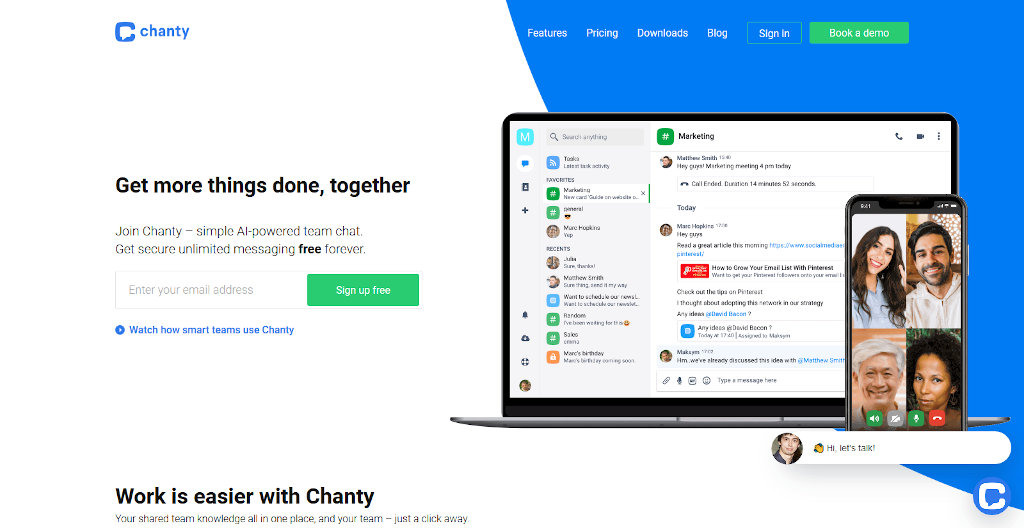
Best team management tool for simple asynchronous communications: Chanty
Chanty is an AI-powered team chat app designed to simplify and streamline communication between teams, irrespective of their actual geographical location. The application provides features to help teams with everyday work processes like collaboration, messaging, file sharing, workflows, and task management.
What the users like:
Overall, Chanty is one of the most intuitive and easy-to-use team chat apps. The biggest plus point of this tool is that it doesn’t burden teams with unnecessary functionalities – it simply provides features/tools that support work and workplace communication.
What the users dislike:
Chanty users often state that they wish to see more powerful third-party integrations and a few advanced communication features. But their wishes didn’t come true, yet.
Pricing:
Free plan – $0 per user per month for teams with up to 10 members
Business plan – Starts at $3 per user per month (annually billed)
Best team management tool for timekeeping & timesheets: Harvest
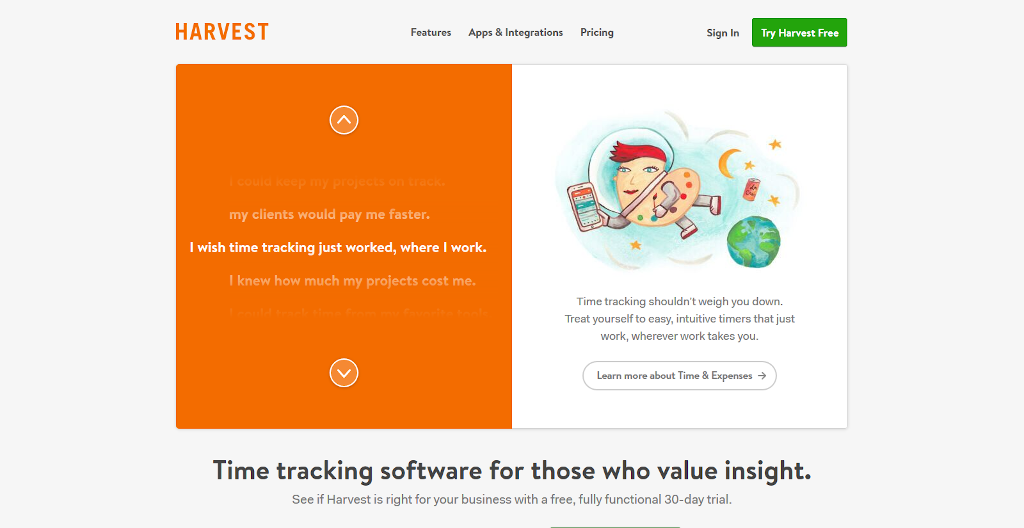
Harvest is an online business management tool. Businesses and individuals can use this tool to track time, generate professional looking invoices, communicate with clients, and update time/data on the weekly timesheet with a click of a button.
What the users like:
It’s a money-saving investment. With Harvest, teams can manage time tracking, oversee/update timesheets, create/mail invoices, access many integrations, plus more with a few clicks – and with good pricing.
What the users dislike:
Lack of permission sets often upset Harvest users. The tool can seriously do better in terms of customizable permissions.
Pricing:
Free Plan – $0 for 1 person and 2 projects
Solo Plan – $12 per month for 1 person and unlimited projects (annually billed)
Team Plan – $12 per person per month for 2+ people and unlimited projects (annually billed)
Best team management tool for staff management: Hubstaff
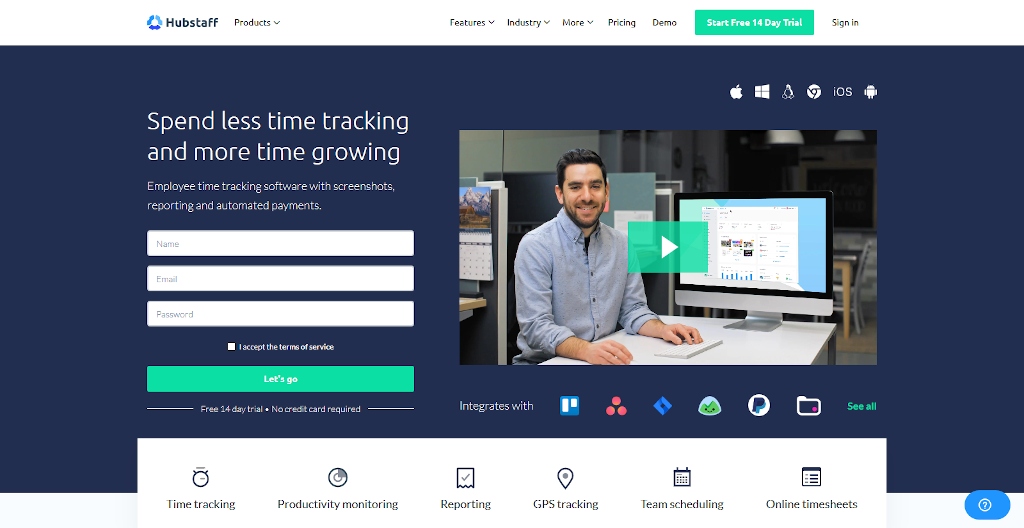
Hubstaff is a time tracking software, but it acts more than that. In addition to tracking time during business hours, Hubstaff allows teams to access advanced capabilities like:
Automatic payroll
Online timesheets
GPS
API
Client invoicing
Advanced reporting
Automatic payroll
…and more.
What the users like:
Hubstaff is great for remote teams. It makes time tracking, progress monitoring, and task management super easy.
What the users dislike:
Hubstaff users have stated that sometimes when they’re watching a video, reading or having a video call, the tool marks them idle. They all wish Hubstaff could measure activity even when still.
Pricing:
Free Plan – $0 for 1 user
Basic Plan – Starts at $7 per user per month
Premium Plan – Starts at $10 per user per month
Enterprise Plan – Starts at $20 per user per month
Best comprehensive all-in-one project management tool: nTask
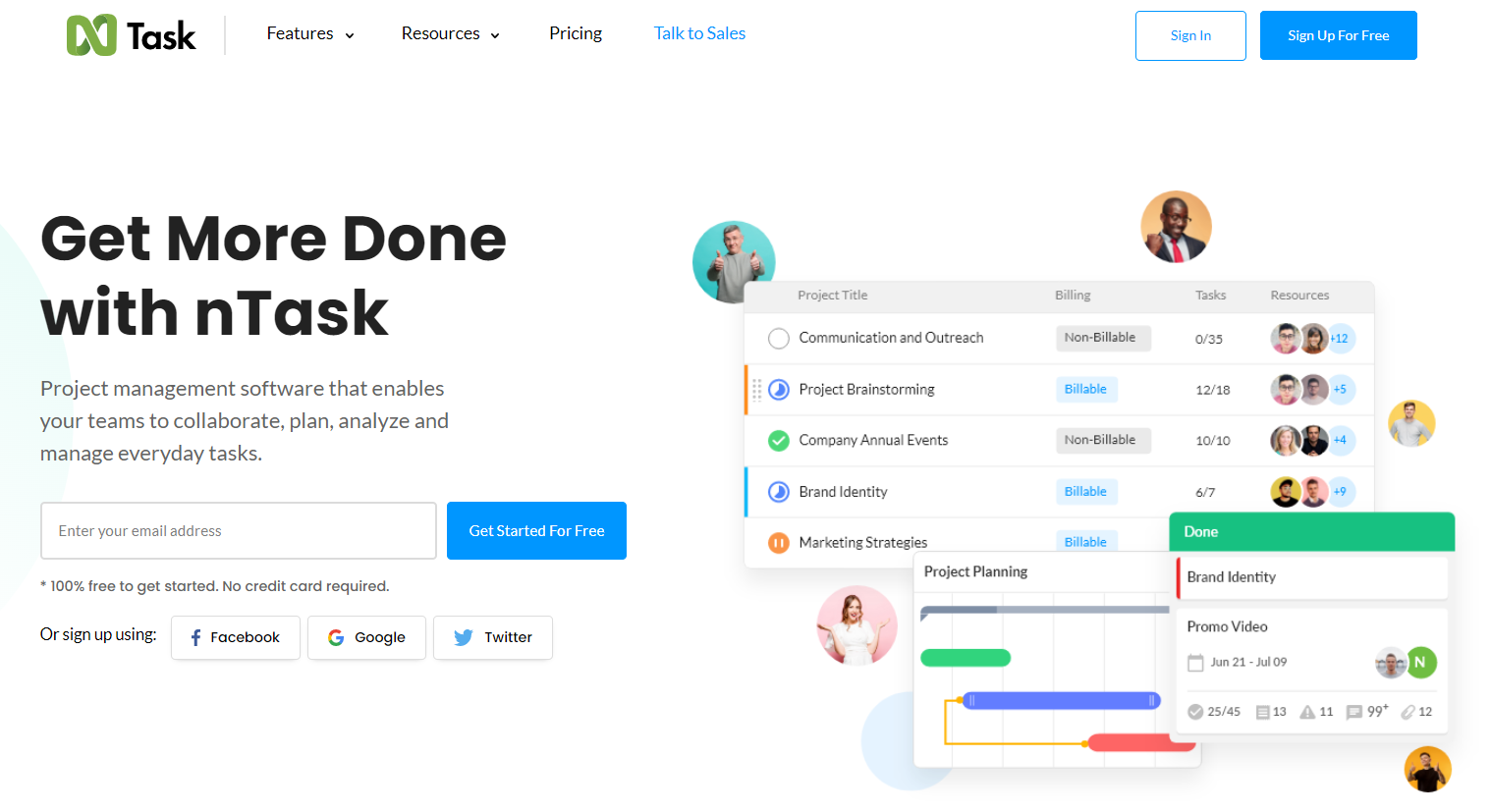
nTask is an all-in-one project management tool that allows all of the project managers and their project development team members to track and manage the tasks and activities that they have to perform regarding the project development process.
Some of the other features that this amazing application has to offer are as follows:
Task management
Team collaboration
Risk management
Time management
Meeting management
Bug tracking
Issue management
Kanban boarding
Gantt charting
….and much more.
What the users like: nTask became an immediate favourite of its users because of its remote effectiveness. The application has incredible team collaboration and task management features that let the project managers know exactly what their team is doing, so they can call them up for immediate feedback.
What the users dislike:
Most of the users that used the software complained that there should be more templates to get them started.
Superpower your team management processes with Process Street
We have already introduced Process Street as a top business process management tool. Process Street is superpowered checklists, and it is with Process Street checklists that you can superpower your team management processes.
For those of you that are unfamiliar with Process Street and our offerings, check out our Monthly Webinar: An Introduction to Process Street below, for further insight.
Process Street can integrate with many other top project and team management applications. This is a key and rare feature.
This is done through integrations using Zapier (already mentioned above ).
You need to choose a tool that is right for you. But, as often is the case, there could be 1,2,3 or more tools working in collaboration to fit your needs. With Process Street, and our available integrations, you can link your team and project management tools together, creating an all-in-one collaborative management software. Play around with these 14 top tools we have presented to you today, and see what works for you.
Choose the right team management tool for you and your business
It’s no secret that when it comes to managing teams and ensuring teamwork, you, as a project manager, have to work twice as hard than others. You perform and oversee so many different aspects – from tracking the overall project progress to tracking each individual’s time and performance. Moreover, it is also you who has to make teams feel more comfortable and reduce work-related stress.
That means you’ll need help.
We have listed our top team management tools in detail.
Use this list so that you don’t waste time and get all the help you need to make team management trouble-free.
Are you already using team management software? Is it included in our list? If not, then tell us all about it in the comments section below. We would love to hear about your favorite team management tool/s, and how these tools make your job easier.
This is a guest post by Travis Taborek. Travis is a content marketer and copywriter based in the San Francisco Bay Area. He is a graduate of General Assembly’s Digital Marketing Bootcamp and has done SEO and content work for business ranging from small tech startups to corporations like TiVo. Read his work here.
Content marketers have their work cut out for them.
They’re tasked with generating fresh ideas for content that stimulates interest in a brand and demonstrates thought leadership consistently, frequently, and at scale.
Fortunately, there is no shortage of productivity apps out there to help keep your mind focused, your writing clear, your headlines eye-grabbing, and your calls-to-action compelling.
To help you do your best work possible, I’ll show you the 10 best productivity apps you need in your digital toolbox.
Specifically, after explaining what productivity apps are, I’ll break each app down into one of four categories – brainstorming, focus, creation, and general productivity – then highlight their features, use cases, and pricing plans.
Just read through the following sections in this guest post for Process Street:
It’s summer. The sun’s shining. You’re on a beach with white sands and an ocean so clear you can see the coral.
You think, “Hey, I wouldn’t mind an ice cream right about now.” So you go to the ice cream kiosk before it closes for the day, choose your flavor of choice, go back to your towel, and eat it.
It’s the best ice cream you’ve ever had.
You want more.
But it’s gone. (And the kiosk is shut, too.)
Your vacation is ruined. R U I N E D.
Sometimes, one of something isn’t enough. Not just when it comes to delicious food, but also concerning more practical things like iPhone charging cables (why are they so flimsy, Apple?!), and of course, checklists.
Having multiple checklists holds you and your team in incredibly good stead when it comes to all kinds of business-related activity, no matter if the team works in marketing, engineering, sales, or customer support.
But don’t take my word for it.
Take the word of the 30+ businesses who’ve offered their insights to the Process Street community regarding the types of checklist they use (and why). Read through the following sections to get the complete lowdown:
This is a guest post by Sarabeth Lewis, a freelance SaaS copywriter and UX writer based in Austin, Texas. Lewis regularly writes for AppSumo, a team of amazing folks who run insane lifetime deals on the best software tools in the world… while eating an impressive number of tacos.
Email. What a blessing (and a curse).
If you’re anything like me, you’ve let your inbox get away with far too many shenanigans. You want to take back control and organize your Gmail. But how?
At Process Street we understand that email is ubiquitous for working professionals. Despite its ubiquitous use, many complain email has a central flaw: a tendency to become your to-do list.
Am I wrong?
This usually occurs passively, inadvertently causing you to lose control of your own time.
When your day is commandeered by your inbox, it means that other people are controlling your calendar.
In this article, you will find out how to take back control and organize your Gmail. Click on the links below to jump to the relevant section, or scroll down to keep reading.
70% of all businesses fail within the first 10 years.
Business owners reading this: for every ten of you, 7 will fold.
Despite that morbid start, I begin this Process Street article looking at the operational audit. I will demonstrate how using an operational audit can refine, improve, and evolve your business operations, setting you up for business prosperity. Wouldn’t it be nice to alter the above stat to 100% business success?
A tall order but, as the Westlife song goes, Nothing is impossible – apologies if you are not a Westlife fan. I believe that optimized operational audits play a significant role in driving business success. In this article, I will explain why. You will also find out:
What an operational audit is
The benefits operational audits bring to Business
Operational audit best practices
How you can implement internal operational audits with Process Street. These will be recurring processes within your business
To jump to the relevant section, click on the links below. Alternatively, scroll down and read all to become an expert in the auditing world.
Bulwer-Lytton was referring to good writing and effective communication being the most powerful tool of all. So powerful that it could win wars.
In business’ modern-day war against tough deadlines, seemingly never-ending workloads, and stiff business competition, Bulwer-Lytton’s adage still rings true.
But the rewards can only be reaped if checklists are well-written.
Not sure how to write checklists properly? Confused whether you’re penning checklists the right way or not?
I’ve got you covered in the following sections where you’ll learn what checklists are used for, why they’re so useful, on top of being given tips and tricks for writing checklists from 15 thriving companies:
Knowledge is power, but you need a system in place to harness that power effectively.
Everything that happens in your business depends on some kind of specialized knowledge, whether it’s new employee onboarding, dealing with customer requests, compliance issues, or marketing a new feature launch.
Your knowledge management system is the firm foundation upon which you build your business.
Despite this, statistics show that as many as 40% of employees do not utilize proper knowledge management solutions, and between 7-20% of their time is spent figuring out a problem from scratch when the solution already exists somewhere in the company.
These bad business practices cost Fortune 500 companies $31.5 billion each year.
How much money are you losing, and how much time are you wasting without a proper knowledge management system in place?
Knowledge management shares many fundamental principles with the idea of business process management (BPM), and as such it’s possible to use BPM software like Process Street to implement a powerful knowledge management system.
This is a guest post by Daniel Ndukwu. Daniel has extensive experience in digital marketing and is the Founder of KyLeads. There he helps business owners and publishers increase their leads and audience engagement with smart popups, interactive quizzes, and surveys.
In 2017, I had a brilliant idea.
Many of the tools for conversion rate optimization are point solutions. They make popups, landing pages, quizzes, surveys. Very few of them – if any – combine those functions into one.
I decided I would tackle the challenge by building a tool (now called KyLeads). It would allow people to create surveys, popups, and quizzes for lead generation and customer research.
After going through two development teams, rebuilding our user interface, and learning first-hand how hard it is to make software, we launched.
There was little fanfare and only a few customers when we started. But my team and I kept going. We knew it would be a long journey to success – and it’s paying off.
This article shares the best practices, tactics, and processes we used (and are still using) to improve our SaaS onboarding and grow our business into something spectacular.
Want to turbocharge your business’ onboarding successes and conversion rates in half the time?
Just read through the sections below to uncover these insider tips and tricks yourself:
Optional cookies and similar technologies support analytics, advertising and visitor identification, and embedded content. Change or withdraw consent in Cookie settings. Cookie policy.