All posts in Business

What is Conversion Rate Optimization? 5 CRO Hacks to Boost E-Commerce Sales

What is Conversion Rate Optimization

This is a guest post by Jessica Bruce. Jessica is a professional blogger, guest writer, Influencer & an eCommerce expert. She’s currently associated with ShopyGen as a content marketing strategist. She also reports on the latest happenings and trends associated with the eCommerce industry. Follow her on Twitter.

As soon as a new eCommerce website launches, there’s a race to get as many visitors as possible.

The race certainly isn’t easy, and what makes it harder are the additional hurdles that come up along the way. One of these hurdles, as you may or may not know, is the acquisition of conversions.

Conversion is the most crucial acquisition for any eCommerce business. An eCommerce business cannot survive with mere website traffic; it needs conversions to drive revenue.

“Trying to increase sales simply by driving more traffic to a website with a poor customer conversion rate is like trying to keep a leaky bucket full by adding more water instead of plugging the holes.” – Bryan Eisenberg, Call to Action: Secret Formulas to Improve Online Results

That’s why, in this post, we’ll be looking at what conversion and CRO (conversion rate optimization) are, how to calculate conversion rates, in addition to giving you a handful of free, useful CRO hacks that will boost your eCommerce sales.

What is conversion? And what is CRO?

Before digging deeper, let’s consider what conversion actually is first.

Continue Reading

How You Can Create a Sustainable Business For Long-Term Success

How You Can Create a Sustainable Business For Long-Term Business Success

It is becoming increasingly apparent that sustained corporate success lies in harmony with a healthy society and environment.

84% of business executives recognize the importance of adopting a sustainable business. Academics, such as the environmental economist Robert Mendelsohn, agree that sustainability is key:

“We can’t afford not to be sustainable.” – Robert Mendelsohn, Can we afford sustainability?

At Process Street we also recognize the increasing priority adopting a sustainable business model should have.

In this article, we explain what a sustainable business is, why it is important, how it can benefit your business in both the short and long term, and how you can implement sustainable actions into your business. At the end of the post, we provide you with templates that act as aids to make your common business processes more sustainable.

Let’s get started.

Continue Reading

What is TAM SAM SOM? How to Calculate and Use It in Your Business

TAM-SAM-SOMHow do you know how much money your business might make?

How do you know how big your business could grow to in future?

How do you explain all that to someone else in a way which makes sense?

Well, a huge part of these kinds of calculations comes down to understanding your market.

Who might need this product? Who tends to buy this type of product? How many of them can you sell to?

There are lots of questions you might ask.

These questions, once you’ve dug deep enough into them, give you your TAM SAM SOM.

In this Process Street article we’re going to look at:

Let’s get started!

Continue Reading

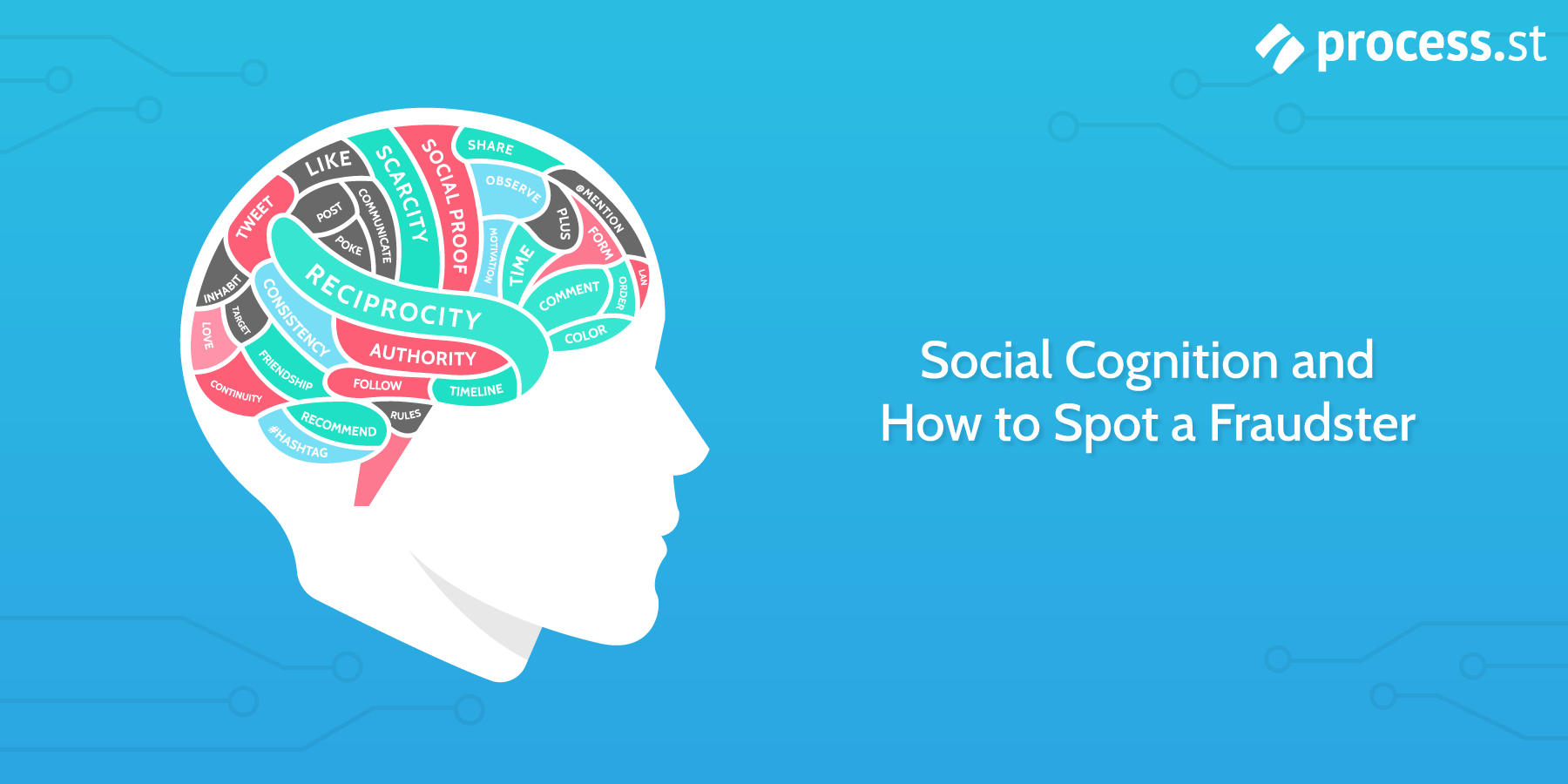
Social Cognition and How to Spot a Fraudster

Social cognition and How to Spot a Fraudster

In experiment after experiment, the real-world human decision-making process falls outside of rational economic theory. Indeed, many of the decisions we make are completely irrational.

Don’t take my word for it.

Dr. Dan Ariely‘s book Predictably Irrational explores our irrationality and motivations in great detail. If you don’t want to read the book then I highly recommend checking out his Ted Talk:

Simply put, our instinctive brain often seems to take control at the pivotal moment of choice. If you could understand why and how this happens, you can better predict your customers’ behavior and give them the value that they’re looking for.

This is where social cognition and behavioral psychology come into play. It’s an area that the marketing team here at Process Street is spending a great deal of time studying so that we can better serve our customer.

Social cognition is the study of how our minds interpret people and the world around us. This article will give you a primer into some of the core concepts and go over real-world examples to help solidify these principles.

You’ll learn how to have a better understanding of how people interpret your messages (marketing, personal, etc…) and be able to apply these concepts to all areas of your life. You’ll be able to communicate to your audience effectively and accurately.

“I am like a machine being driven to excessive rotations: the bearings are incandescing and, in a minute, melted metal will begin to drip and everything will turn to nothing. Quick: get cold water, logic. I am pouring it over myself by the bucketload but the logic sizzles on the hot bearings and dissipates elusive white steam into the air.” – Yevgeny Zamyatin

Continue Reading

How to Pitch Your Company and Land Investors

how to pitch

Your average pitch gets examined by investors for about 3 minutes 44 seconds and (if successful) is worth around $1.3 million.

That’s more than $5800 per second.

With figures like that, you need to know how to pitch to land investors, customers, employees, prizes or whatever it is you’re aiming for.

That’s where we here at Process Street come in.

We pitched to over 2500 top SaaS professionals and investors at SaaStr Europa 2019, walking away with the grand prize from the pitch competition, the contact details of several venture capitalists, and collaboration opportunities for months to come.

However, I’m getting ahead of myself. In this post I’ll show you;

Let’s get stuck in.

Continue Reading

Self-Service Vs. Customer Support: Which is the Best Customer Engagement Strategy?

customer engagement strategy

This is a guest post from Brayn Wills, knowledge management manager at ProProfs. He is responsible for creating unique and relevant content on knowledge base tools and keeping track of the latest developments in the realm of knowledge management. In his free time, he is either reading a new book or exploring offbeat destinations.

When customers deal with businesses, they expect a great experience. This means that some kind of customer support needs to be available to them, around the clock.

Of course, providing quality customer support with real human agents managing helpdesks 24/7 is an expensive proposition.

On the other hand, companies need to make it easy for customers to access information to solve common queries – this is a vital factor in the journey towards consistent, high-quality customer satisfaction.

Many organizations are now implementing customer self-service via traditional and online platforms to ensure that neither the business nor the customer suffers.

This helps them to deliver a double whammy of maintaining their overheads while improving their efficiency in customer service, both of which result in improved customer experience.

With the adoption of digital services, self-service is gradually minimizing the burden on live agents too. It is also allowing businesses to successfully meet customer expectations with regards to servicing queries in a more timely and regulated fashion.

However, going overboard with the automation of customer support self-service can be a risky move for businesses. While it may help in curbing expenses, it may take an adverse toll on customer satisfaction and the overall reputation of the business. Therefore, the key is to hit the right balance between man and machine.

Continue Reading

The 11 Efficiency Killers in Your Workplace That You Should Know About

efficiency-killers

The following is a guest post by Eric Lawton. Eric has been part of the Human Resources sector for most of his career. During this period, he has learnt how to create and tweak hiring strategies to choose specific industries and companies. These days, he prefers to share his experience and knowledge with other people in the business.

The main goal of any workplace is to be as efficient as possible. The more efficient employees are, the more productive they become. This, in the end, leads to greater profits.

Therefore, it stands to reason that you should eliminate any obstacles hindering this process. If you feel that this is easier said than done, though, you are not alone. Most employers have a tough time identifying what the real productivity killers are.

Fortunately, there is quite a lot of research conducted on this topic. As a result, this article contains the relevant statistics and details you need to be aware of. This will make it a lot easier for you to make some real changes in your own workplace.

So, without further ado, here are the efficiency destroyers that you must watch out for:

Continue Reading

Business Trip Security: What are the Risks for Traveling Employees?

Business traveler securing a laptop in a rugged travel device vault

The following is a guest post by Alex Mitchell, a cybersecurity enthusiast, WordPress guru, and data-safety tools tester with over 10 years experience.

Everybody knows Big Brother is watching. We usually imagine that surveillance happening while we sit at a desk, but business travel changes the risk. A familiar device moves through airports, hotels, conference venues, and border controls, often carrying access to company systems and sensitive information.

Continue Reading

Top Startup Accelerators: The Road to Startup Acceleration (Free Infographic)

the road to startup acceleration

This is a guest post by Caitlin Reimers Brumme, Managing Director of MassChallenge Boston. Prior to MassChallenge, Caitlin led the Impact Collaboratory at the Harvard Business School, a multi-faceted effort to develop world class academic leadership on the topic of “Investing in the 21st Century” including sustainable, ESG and impact investing. Caitlin holds an MBA with high distinction from Harvard Business School, where she was a Baker Scholar, and a B.A. with honors from The Woodrow Wilson School of Public and International Affairs at Princeton University.

Accelerating a startup is like pouring rocket fuel into the tank of some crazy, untested contraption. If the engine is strong and built for speed, there’s potential for an explosive reaction.

It’s the job of accelerators to make sure the company they’re funding and mentoring will create the right kind of explosion. Because funding can hurt a company, and mentoring can go to waste if the foundations of a startup aren’t solid.

That’s why some select accelerator success stories like Stripe, Mopub, and SendGrid have graduated and gone on to raise record amounts, go public in record time, or be acquired for vast sums of money.

It’s also the reason why some never make it.

Accelerators are hyper-competitive because they’re looking for startups that have a lot of the scaling infrastructure or potential already in place. With the funding, mentoring, and connections they provide, a startup with a great idea and MVP can break through from obscurity and see headline-grabbing success in a matter of months.

But exactly how likely is it that your startup will get accepted into an accelerator? What are the processes that underpin accelerator programs, and the resources these organizations offer startups that makes it possible to scale so rapidly?

In this article, we take a look at startup acceleration by the numbers, starting with a brief note on what an accelerator actually is.

Continue Reading

How Playing Multiplayer Video Games Helped me Develop a Growth Mindset

can video games make you smarter

I read an interesting post the other day by Salman Khan, founder of Khan Academy about how he has been training his son to have a “growth­ mindset”.

Here is a quote from the post:

Researchers have known for some time that the brain is like a muscle; that the more you use it, the more it grows. They’ve found that neural connections form and deepen most when we make mistakes doing difficult tasks rather than repeatedly having success with easy ones.

What this means is that our intelligence is not fixed, and the best way that we can grow our intelligence is to embrace tasks where we might struggle and fail.

However, not everyone realizes this. Dr. Carol Dweck of Stanford University has been studying people’s mindsets towards learning for decades. She has found that most people adhere to one of two mindsets: fixed or growth. Fixed mindsets mistakenly believe that people are either smart or not, that intelligence is fixed by genes. People with growth mindsets correctly believe that capability and intelligence can be grown through effort, struggle and failure. Dweck found that those with a fixed mindset tended to focus their effort on tasks where they had a high likelihood of success and avoided tasks where they may have had to struggle, which limited their learning. People with a growth mindset, however, embraced challenges, and understood that tenacity and effort could change their learning outcomes. As you can imagine, this correlated with the latter group more actively pushing themselves and growing intellectually.

In short someone with a growth mindset will embrace challenges and be willing to fail multiple times before reaching their goal, whereas someone with a fixed mindset will not even try.

Continue Reading

Take control of your workflows today