Subscribe to the Process Street blog

Get tips and apps to hack your business straight to your inbox.

How to Use WorkFlowy to Take Better Notes Today

Take Better Notes

Lots of text editors, like Word or Evernote, feel too ‘formal’ for proper note taking. They’re clunky and don’t work in harmony with my erratic train of thought at a meeting, lecture or presentation.

Lately, I’ve got instructions introducing me to new projects via video or voice recording, which I’d try to summarize in bullets, expand on and create to-do list items from the notes. When I was done writing and listening, I’d usually be left with a big mess of text that needs organizing, which would take more time still to go through and fix. With this method, I’d need to listen to the recording at least twice to get my notes.

Instead, now I use WorkFlowy to take and edit notes. Here’s how.
Continue Reading

Get our posts & product updates earlier by simply subscribing

How to Make the Perfect Bullet Journal to Organize Your Life

bullet journal

Life loves to throw things at us from all directions. The key to staying on top of everything is having an effective schedule to keep you on track.

So how the hell do you create a system for managing your tasks, events, notes, and calendar no matter where you are?

You need to create a bullet journal.

“A full 93% [of educators] state that using their Bullet Journal… makes their lives easier or significantly easier.

As one educator noted, ‘I find it difficult to track all of my classes and schedule in any other system’.” – Todd Foutz, Educators on Bullet Journaling

We here at Process Street know how difficult it is to keep track of everything, so that’s why this post will take you through everything you need to know to create your perfect bullet journal.

You’ll learn:

  • What a bullet journal is
  • What you’ll need to make one
  • How to create a bullet journal
  • How to get the most out of it

Let’s go!

Continue Reading

The Checklist Manifesto Quotes

The Checklist Manifesto Quotes

The most useful Checklist Manifesto quotes

After publishing the Checklist Manifesto Review and following up with the Checklist Manifesto Summary, I thought it’d be fun to share the most memorable The Checklist Manifesto quotes by surgeon Atul Gawande. The book is packed full of useful knowledge, and not just from the author himself.

He interviews professionals from the man responsible for foolproof checklists given to pilots flying incredibly complex Boeing airplanes to a group of high-powered venture capitalists. All the people in the book have something in common – they want to reduce risk. And Gawande himself, like every human being with a will to survive, is no stranger to risk reduction. For him, however, it’s vitally important.

The Checklist Manifesto is the story of how this simple checklist was made.

Continue Reading

How to Create and Implement a Brainstorming Process in 5 Steps

The following is a guest post from graphic designer and copywriter Erik Fessler.

What do you think is worse: sitting for 100 days because you didn’t know what direction to travel in, or going for 100 days down the wrong path?

Here’s the good news:

This question doesn’t matter if you have a reliable and logical process to find the right direction.

Brainstorming is the key to finding that direction, and it’s something you can implement for your team in a logical, structured way. With that in place, you can use that process as a reliable way to generate ideas, iterate upon them, and harness the power of your team’s combined creative energy to make real business change. That is, if you can build and optimize your brainstorming process…

Continue Reading

How We Use Free Screencasting Apps To Crush Communication At Our Startup

free screencasting apps Screencasts are true powerhouses in team communication; they allow us here at Process Street to convey everything in a concise manner with both visual and audial cues, whilst giving the viewer a resource that they can run through as many times as they want.

Unfortunately, many teams put off using screencasts because you have to:

  • Spend time recording it
  • Wait for the file to export
  • Wait for the video to convert
  • Wait for the video to upload
  • Remember you recorded a video that has now finished uploading
  • Manually send it to the right team member

Whilst conversations are more likely to be forgotten or lost, their ease makes them the go-to method for communication (or, at best, a Skype call). This is a huge mistake.

Using just a couple of free screencasting apps you can record your video, spend three seconds saving it and then have it automatically sent to to the right person. Rather than waiting for your time zones to match up or the other person to reply, you can record, save, then get on with the rest of your day.
Continue Reading

The 19 Best Tips from My 3 Years Working Remotely

working remotely

“I’d give anything to work from home. It must be so relaxing!”

I’ve heard this kind of thing from my entire family, and with the increasing trend of remote workers it’s not surprising that people want to get in on the action.

The last 3 years of working remotely have taught me otherwise.

Yes, you get to work from anywhere, have more flexibility with your hours, and even wear whatever you want. However, remote work can be isolating, demotivating, stressful as all hell, and even physically damaging.

So, I’ve brought together all of the lessons I wish I’d been told when getting into the game, including:

  • How to maintain a work/life balance without a traditional office
  • Creating and sticking to your own schedule
  • How to stay motivated without seeing your teammates
  • Staying healthy and avoiding injuries common to remote work

Also, if you’re looking for remote work, we here at Process Street are hiring!

Check out our jobs page for more information.

Continue Reading

How to Use Emotional Intelligence to Provide Exceptional Customer Service

The following is guest post from Sawaram Suthar. Sawaram is head of marketing at Acquire, and also a founder of Jagat Media. A digital marketing consultant, he has experience in branding, promotions and page optimization, along with research and strategy. He has an MBA from the University of Pune.

Most brands optimize rational factors that affect customer behavior such as price points and product features. But today’s audience make purchase decisions based on their emotional experience as well.

Understanding customer emotion plays a key part in building customer engagement and brand loyalty, both of which can contribute to better sales, revenue and ROI.

There are plenty of studies to back me up on that. For example, research from 1997 at a large insurance company found sales agents with high emotional intelligence sold policies with an average premium of $114,000, which was almost double the figure for agents with low emotional intelligence.

Continue Reading

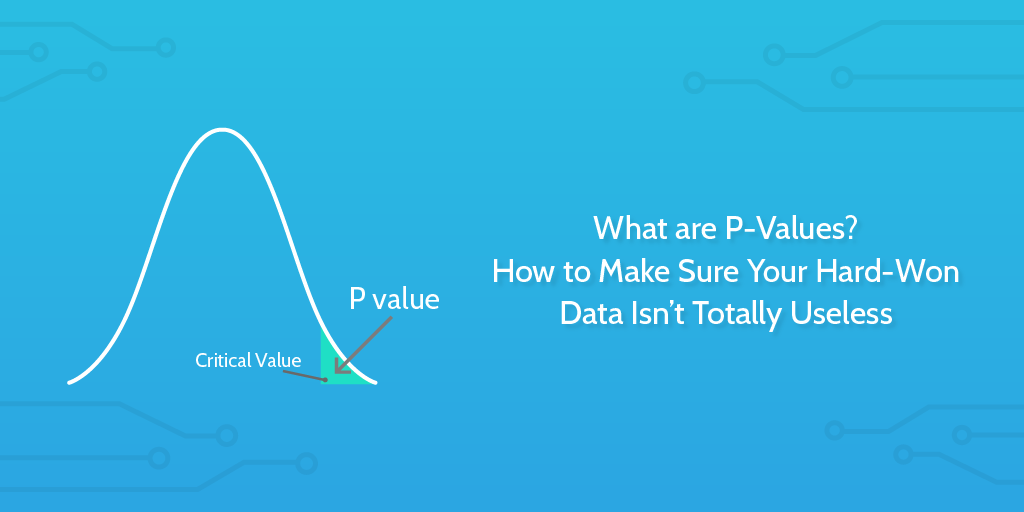
What are P-Values? How to Make Sure Your Hard-Won Data Isn’t Totally Useless

p valueHere at Process Street, we’re always advocating for companies to use data to help in making important decisions.

But data on its own is not massively useful.

I could run an experiment right now and gather loads of data. But if that experiment was run poorly then my data will be poor. Which means any readings of that data will be poor too, leading to poor decisions.

Alternatively, I could run a really well structured piece of research and gather some great data, but if I don’t know how to properly analyze that data then my conclusions won’t be very good.

Simply having large data sets is not enough.

We need to structure our research well and then be able to interpret the results with a degree of rigour. Fortunately, having a good working knowledge of P-Values can help us iron out some alarmingly common mistakes. It can teach us:

  1. How to set up an experiment for meaningful data
  2. The importance of measuring your existing hypothesis against an alternative
  3. When results really are statistically significant, instead of just looking good

This knowledge will help us make better decisions and lead to greater success.

In this Process Street article, we’ll look at 4 key areas:

  • What are P-Values?
  • How do you calculate P-Values?
  • Examples of P-Values in practice – A/B testing
  • Why you need to set up a research process

Continue Reading

What is Predictive Analytics? When AI, Blockchain, and Business Processes Collide

Predictive analytics: a term you may be familiar with if you have even the smallest window into the recent developments in enterprise technology. There is very real hype buzzing around terms that tech startups love to plaster all over their marketing campaigns, such as “artificial intelligence”, “deep learning”, and “blockchain” – but what does it all mean?

Continue Reading

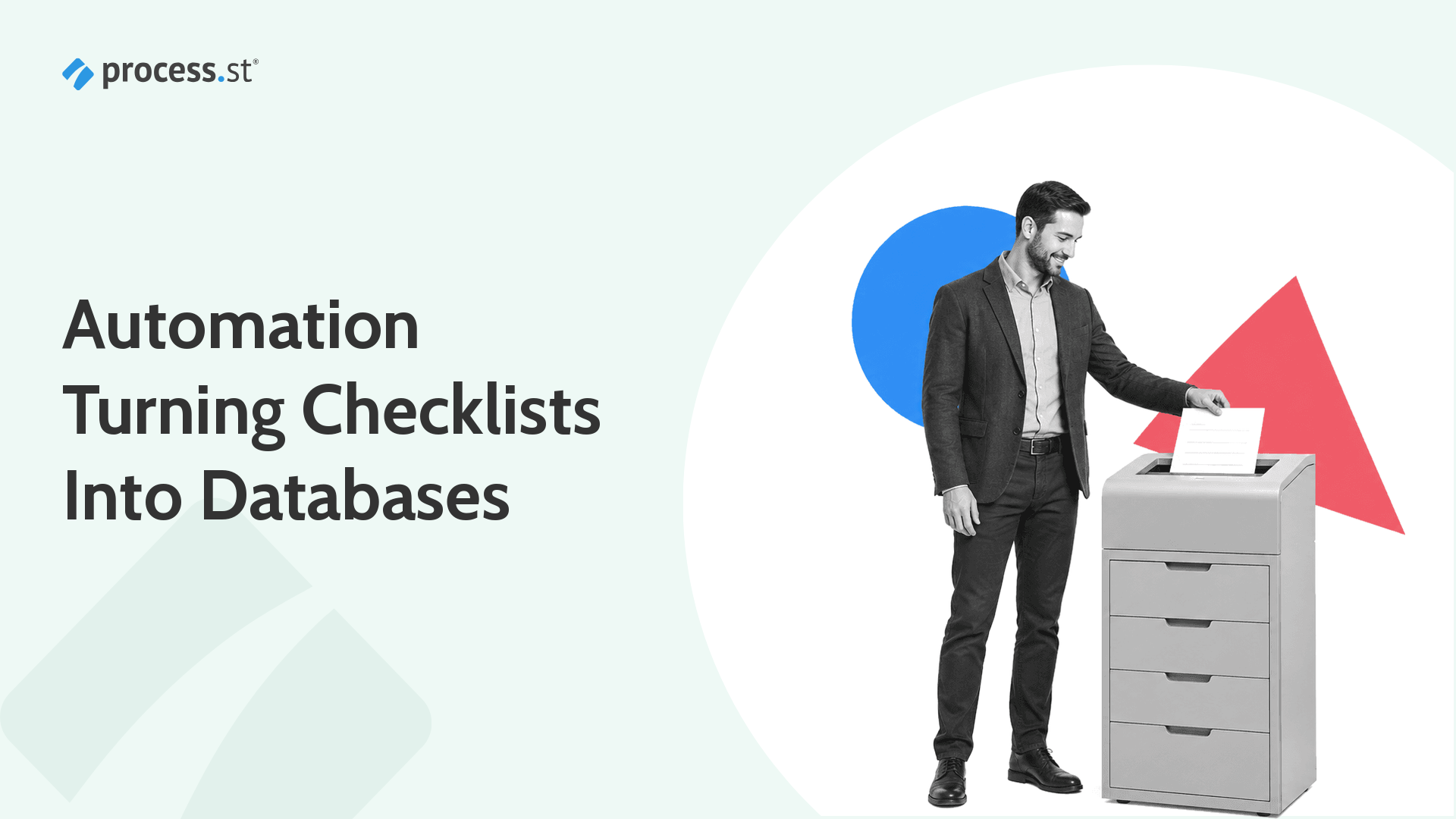
Form Automation: Turning Your Checklists Into Databases

Operations manager using a form scanner that organizes checklist inputs into structured records

Introducing Form Fields

Form automation is the use of form fields and integrations to collect structured data inside a process and pass it into the systems that use it. This is automation turning your checklists into databases.

It’s been a long time coming but we are beyond excited to announce that you can now add form fields to your process checklists in Process Street.

Continue Reading

Take control of your workflows today

Choose which optional cookies to allow. You can change or withdraw consent here at any time.