Subscribe to the Process Street blog

Get tips and apps to hack your business straight to your inbox.

The Best Payment Platforms: Stripe vs Paypal vs Square vs Braintree

stripe_vs_paypal_vs_square_vs_braintree best payment platformIn the first quarter of 2017, the AppStore and Playstore saw record revenues yet again with a whopping total of $15 billion worldwide, representing a year over year growth of 45%.

Add in other online sales and the amount of money being spent is astronomical.

But how do we process all these sales? And what means of processing is best for your company?

We’ve pondered the question at Process Street and decided to write up our findings. In this article, we’ll compare Stripe, Paypal, Square, and Braintree to see what each do and how they do it. We’ll analyze those findings and suggest which might be better for different kinds of businesses.

The key areas we’ll compare are:

  • Features – what do they offer and what can’t they do?
  • Pricing – where can we find those small gains which make a difference at scale?
  • Ease of use – can a regular person integrate it into their business, or is a developer needed?

But first, let’s look at some of the different use cases for these payment platforms to contextualize our investigation.

Continue Reading

Get our posts & product updates earlier by simply subscribing

6 Ways to Use Stop Tasks to Improve Your Team’s Workflow

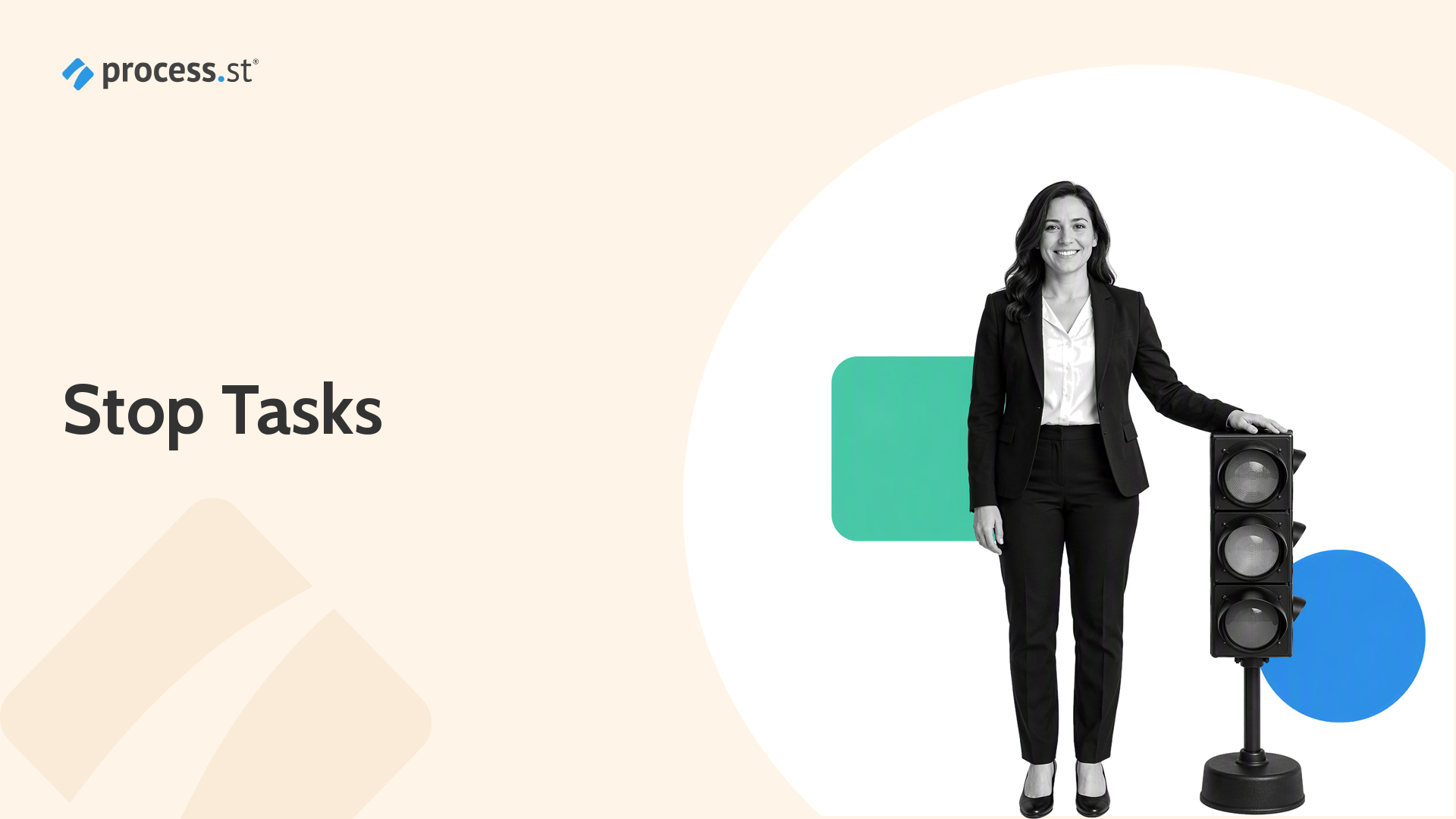
Black-and-white operator presenting a miniature workflow board with a barrier arm blocking downstream task cards.

Process Street is the Compliance Operations Platform for teams that need workflows to run in the right order, with the right people, and with proof that every required step was completed. Teams use it for everything from employee onboarding to content promotion workflows.

Some processes are too delicate to run as a free-for-all checklist. Stop tasks give you more control over the order tasks are completed by pausing a workflow run until the blocking task is done.

Continue Reading

The 17 Best Apps for Business: A Look at Our Team’s Home Screens

best mobile apps for business - header

With today’s fast pace of living, it’s vital to have on-the-go access to everything that’s important to your work.

Rather than staring blankly out of a window on your train or bus to work, you could then instead be planning your day and organizing meetings, or commenting on tasks and sorting through your inbox to avoid getting distracted at the office.

However, with the sheer variety of technology on offer it’s also difficult to know what mobile apps you should be using.

That’s why I asked the Process Street team to share the best mobile apps for business they have installed and how they use them.

best mobile apps for business - intro to post

From the most valuable apps across our entire company to one-off niche cases that could do with a little more exposure, in this article I’ll highlight the apps that let our team stay productive and make every moment count.

Continue Reading

Study: How 4 Highly Profitable SaaS Companies Market to Enterprises

Are you ready to market your SaaS product to enterprises? Do you know what makes or breaks a million dollar deal?

There’s a huge segment of SaaS companies that target only SMBs, and an increasingly well-funded bunch that go after the enterprise market from the outset. Some, like Dropbox, Asana, and HubSpot, have gradually scaled their products to meet the needs of enterprise customers. By looking at their enterprise-specific landing pages, we can isolate the key factors these companies have chosen to persuade enterprises, and find out what works.

Continue Reading

How Toyota Saved Children’s Lives with Process Implementation

process implementation toyota headerWhat connects a 75% drop in infection rates, a 48% increase in home rebuilding speeds, and an extra 400 hungry families receiving the supplies they need to get by?

Have you guessed yet?

That’s right. Effective process analysis and implementation. Specifically, the Toyota Production System process analysis and implementation.

In this article, we’re going to look at some of the heartwarming success stories of process implementation carried out by the Toyota team.

The human side of organizational systems demonstrate the importance and effectiveness of learning and understanding how to create continuous improvement in your processes.

Throughout these examples we’ll see a number of key Toyota concepts employed and how they worked in practice:

  • genchi genbutu – to “go and see”, to embed yourself in the system and observe,
  • kaizen – to employ ideas of continual improvement, making small iterative changes,
  • muda – to identify waste, and to recognize that what constitutes waste is contingent on your situation.

From disaster relief to pediatric hospitals, the benefits of strong process analysis are clear for all to see.

Continue Reading

How We Built and Launched a Successful Microsite on Product Hunt

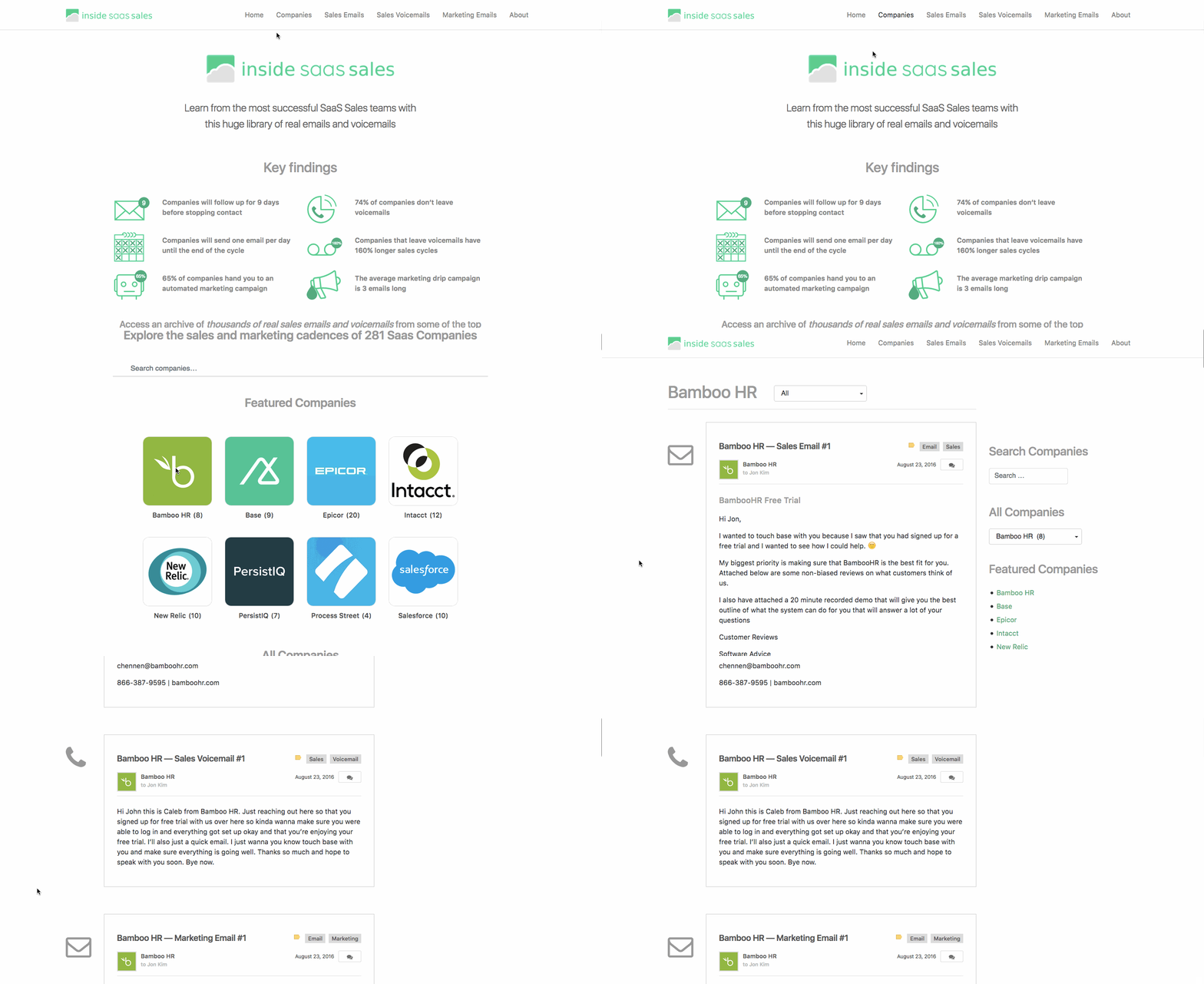
On August 25th, we launched a library of 1000+ real sales and emails from the top 280 SaaS companies.

The library was hosted on a microsite, Inside SaaS Sales, which allows users to browse the full sales cadences, organized in the order the message or voicemail was sent.

The launch landed us almost 800 votes on Product Hunt, 10,000+ site visits, a mention in Hiten Shah‘s SaaS Weekly, and publicity from the SaaS and VC community.

Continue Reading

The Ultimate Website Launch Checklist: Improve Design, SEO & Speed

Launching a website can be a huge undertaking. A successful launch requires managing many moving parts including content, design, marketing and the technical side. That’s why we have created this handy checklist for you to use on your next website launch or redesign.

And don’t forget, you can get this as an interactive checklist that you and your team can collaborate around. Just create a free account with Process Street and grab it from the examples section.

Continue Reading

Web Maintenance: A Process-Driven Guide with 4 Handy Checklists

Websites are delicate, messy, and hard to manage effectively. Setup might be easy, but a beginner learning to maintain a website will hit a damaging snag sooner or later.

The main problem is that the tech behind any website is complex for beginners. The files that run your site are written in multiple different languages, depend on each other’s fixed locations, and are controlled by config files. In short, there’s a lot to grasp when you’re starting up a website.

To avoid making mistakes you need a basic knowledge of SQL, cPanel, and phpmyadmin, as well as a general idea of why and how websites work. Like I learned the hard way, tiny tweaks or careless uploads can take the entire site offline for days at a time, which is especially damaging when you have a recurring audience of any kind.

In this post, I’m going to go through the methods you’ll need when maintaining a website, and give you processes you can follow for each task.

Continue Reading

The Complete Guide to Dictation Software: How I Saved My Hands

dictation software - header edited

Dictation software isn’t just something that can save you time by typing out your speech and performing commands. Talking instead of typing can and will help you prevent lasting damage to your hands.

You might think that sounds silly, and so did I.

I’m 23 – way too young to be worried about my joints or work-related injuries (my work isn’t exactly manual labor).

Then my hands seized up. Repetitive strain injury.

Continue Reading

The Art of SaaS Review: What SaaS Is and How to Do It Right

Art of SaaS review - header

The Art of SaaS shows that even industry veterans are sick of unnecessary jargon and bloated descriptions.

Rather than spending thousands of words (or multiple books) trying to explain every variation of the SaaS model, it draws from the experiences of Dr. Ahmed Bouzid and Dave Rennyson in order to cover all of the basics of a quality SaaS business in less than 60 pages.

art of saas review - book cover

Being so short, an Art of SaaS review might seem redundant at first. Why not just read the book in about an hour and learn what the authors believe to be:

  • What SaaS is
  • The bargain between vendor and user
  • The importance of uptime (and how to maintain it)
  • The three priorities all teams should share
  • The three practices which achieve those priorities
  • The structure of every team, and how they should be managed

Well, in this post I’m going to cover both the core takeaways of The Art of SaaS and the context surrounding the book itself by drawing from other figures in the field.

I’ll show you why this odd little volume is worth reading and what pitfalls to avoid when taking it at face value.

Let’s get started.

Continue Reading

Take control of your workflows today

Choose which optional cookies to allow. You can change or withdraw consent here at any time.