Subscribe to the Process Street blog

Get tips and apps to hack your business straight to your inbox.

How to Take Back Control of Your Work (& Life) With Digital Minimalism

Digital Minimalism

Modern technology is extraordinary.

After all, without the advancements that have been made over the last 50 years, you wouldn’t be reading this post!

This is exactly why, when asked what has brought the biggest improvements to our lives, four-in-ten Americans said “technology”.

But we’ve reached a critical juncture.

There’s so much technology now. I would dare to say there’s even too many apps, pieces of software, and gadgets we’re using.

From different teams in an organization all using varying project management software, to spreading important information that really should be hosted in one place across a multitude of platforms, using too much software in the workplace can make things incredibly confusing. Not to mention overwhelming.

In reality, we could all do with a digital declutter, using only the essential applications, and ensure we’re utilizing those applications (such as Process Street!) intelligently.

This, in a nutshell, is digital minimalism – and it’s what I’ll deep dive into during the following sections:

Ready to take back control of your work and life with digital minimalism, feel less like a robot, and even find a little zen along the way?

Let’s go.
Continue Reading

Get our posts & product updates earlier by simply subscribing

What is Fleet Management? The Beginner’s Guide (Free Templates!)

fleet management beginners guide

Fleet management is so much more than simply owning and operating vehicles. It’s a complex interplay of many different factors and optimizations – much like the concept of business process management.

In recent years, more and more tools for fleet management optimization are emerging. Fleet management is changing.

Projected growth of the fleet management industry to about $30 billion by 2022 is largely driven by advances in technology – and the rate at which fleet management companies adopt this emerging technology will largely impact the rate of this projected growth.

And it seems fleet management companies are aware of this.

The National Conference of State Fleet Administrators (NCSFA) recommended in a 2018 survey of 44 state and university fleet participants that fleet management companies begin implementing “robust fleet management policies and procedures” as well as “accelerating the implementation of technology to measure the efficiency and effectiveness of fleet management practices”.

That same survey showed that 38% of repairs and 39% of preventative maintenance work were insourced, on top of the in-house work that is done as part of routine fleet management. Just another incentive to tighten up your processes and streamline all of that manual work with a good, solid process.

In this article, we’ll be looking at how you can use Process Street to implement robust fleet management policies and procedures. I’ll cover:

Let’s start by making sure we’re all on the same page; what exactly is fleet management?
Continue Reading

Robotic Process Automation Tool Kit: 5 RPA Tools and Best Practices To Help You Get Started

Robotic-Process-Automation-Tool-Kit-5-RPA-Tools-and-Best-Practices-to-Help-You-Get

This is a guest post by Rahul Varshneya, the co-founder and President of Arkenea. Rahul has been featured as a technology thought leader in numerous media channels such as Bloomberg TV, Forbes, HuffPost, Inc, among others.

Several organizations use a wide range of tools to execute and monitor their internal processes. These systems are interfaced by human agents who pass on the data output from one system as input to the next system in the pipeline.

Because of the non-automatic nature of manual execution, manual data entry work makes these processes slow and error-prone.

Wouldn’t it be nice if you had these interfaces taken care of automatically?

That’s right, we are talking about Robotic Process Automation (RPA) – a transformational paradigm that optimizes such processes by automating repetitive, rule-driven tasks.

According to Forrester Research, RPA market revenue is expected to gross $1 Billion USD in 2019.

With RPA and by using RPA tools, your internal processes can be finished faster and more efficiently. It would free your agents from trivial data entry and data exchange tasks so you could deploy them to do more strategic process initiatives.

In this article, we at Process Street will present 5 best practices for RPA. We will then introduce our favorite RPA tools, so you can walk away with actionable robotically automated processes.

This article has been structured as the following:

Let’s get started!

Note that RPA does not aim to eliminate jobs. It aims to reduce the burden of mundane and repetitive tasks of the existing staff so they can work on more strategic initiatives.
Continue Reading

Content Optimization: Fix Underperforming Content Without Tossing It Out

Jane Courtnell January 10, 2020
Content strategist presenting a repaired webpage puzzle for content optimization

Guest post by Deana Kovac (Deana Kovač), an internet marketing specialist at Point Visible, a digital agency providing custom blogger outreach services. In her free time, she enjoys listening to music and singing karaoke, and she just cannot start her day without a hot cup of coffee.

Content optimization improves an existing page so it serves its intended reader and business goal more effectively. This content optimization fix shows how to fix underperforming content without tossing it out: diagnose why the page falls short, strengthen the answer, repair technical friction, and measure the result. The process uses two stages: identify weak content with evidence, then apply six focused improvements.

Continue Reading

Ecommerce Strategy: 21 Best Books to Build and Grow Your Store

Ecommerce founder presenting an oversized strategy pop-up book

Guest post by Harry Southworth, a professional writer and editor.

An ecommerce strategy is the coordinated plan for attracting a defined customer, converting demand into profitable orders, delivering the promise, and earning the next purchase. The best ecommerce books build that plan with lessons from entrepreneurship, positioning, customer experience, analytics, psychology, and process design.

Continue Reading

Simple Checklist Templates to Use Every Day: Advice from Top Executives

simple checklist template

Perhaps you’ve heard about checklists. Perhaps you know someone who uses checklist templates. Who knows, you may even have a simple checklist template or two you use in your own business.

Chances are, if you clicked this link, you’re interested in learning about simple checklist templates. Or specifically, how you can use them to run your business more efficiently.

You probably already know the basics – why checklists are useful, and the value of using a BPM software like Process Street. But you want more.

You want to know the essential checklists, the ones all the top CEOs and successful executives are using. You want ready-made checklists that will save you time, money, and confusion, and you want to learn about some of the immediate benefits of using simple checklist templates, straight from the mouths of those who have used them to run successful businesses of their own.

Well, you clicked to the right article. Here, I’ll be looking at an extensive correspondence between our content team and a number of successful SMB owners who just happen to be simple checklist template champions.

Whether it’s daily, weekly, monthly, or otherwise, we’ve devised this article as a resource that will help you understand how you can use simple checklist templates in your business.

Breaking it down, we’ll look at:

But first, what is simple checklist template, anyway?
Continue Reading

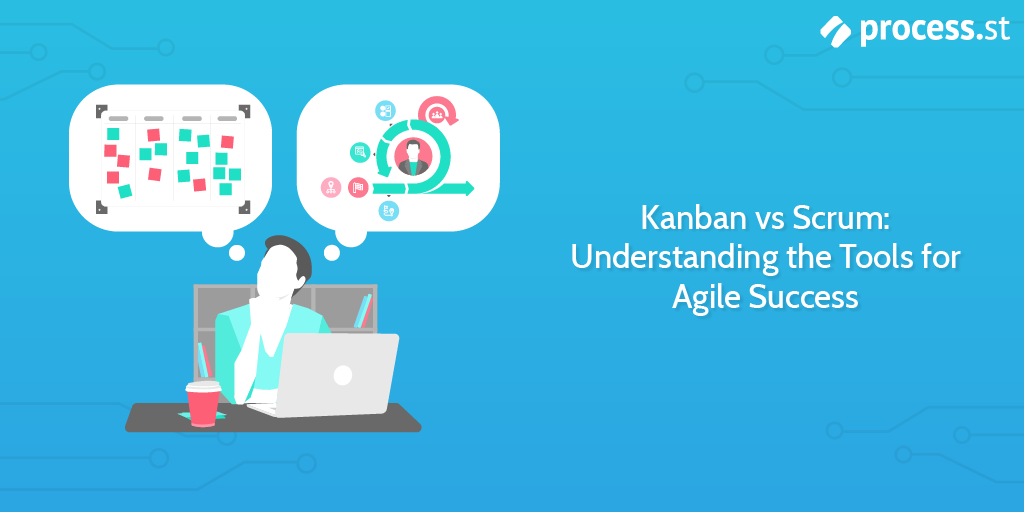
Kanban vs Scrum: Understanding the Tools for Agile Success

Kanban vs Scrum

You’ll often hear the question: “Which is better? Kanban or Scrum?” or variations of this eternal deathmatch between two of the most well-established agile methodologies.

People are wasting energy fighting over which methodology trumps another. If you’re an agile organization, you should be placing principle above practice.

It makes a lot of sense to ask questions like “why might I want to use Kanban over Scrum?”, or even “Kanban and Scrum” as opposed to “Kanban vs Scrum”. There are a lot of differences between the two, but fundamentally, they are both agile methodologies, and the principle behind why you might want to use both can be in alignment.

You may even find they can work well together, as part of a unified strategy referred to as Scrumban. You need to consider what approach will work best for your team.

My aim with this article is to approach the question of “Kanban vs Scrum” by clearly presenting both approaches in terms of when, how, and why you might choose to use either of them.

I’ll also talk about the capacity for overlapping Kanban and Scrum approaches, and how some additional tools like Process Street can factor into that equation.

Here’s a breakdown of how we’ll approach comparing “Kanban vs Scrum”:

Let’s start with a basic primer on what it means to be agile. Continue Reading

Making Checklists: Our Top 5 Tips From Pros Around The World

Making-Checklists

Deadlines.

Meetings.

Presentations.

As an employee and business owner, your agenda is jam-packed full of to-dos. It can sometimes be difficult to stay afloat. This is why we at Process Street have created this article to make your working life a lot easier.

We’re going to look at making checklists for the effective management of your work.

We asked business owners and employees across the globe: What tips or tricks would you give someone for making checklists?

We gathered our responses, sieved out significant commonalities, and wrapped up our findings to produce this article.

Click on a subheader to jump to any section, or scroll down to read a full in-depth account on making checklists.

Continue Reading

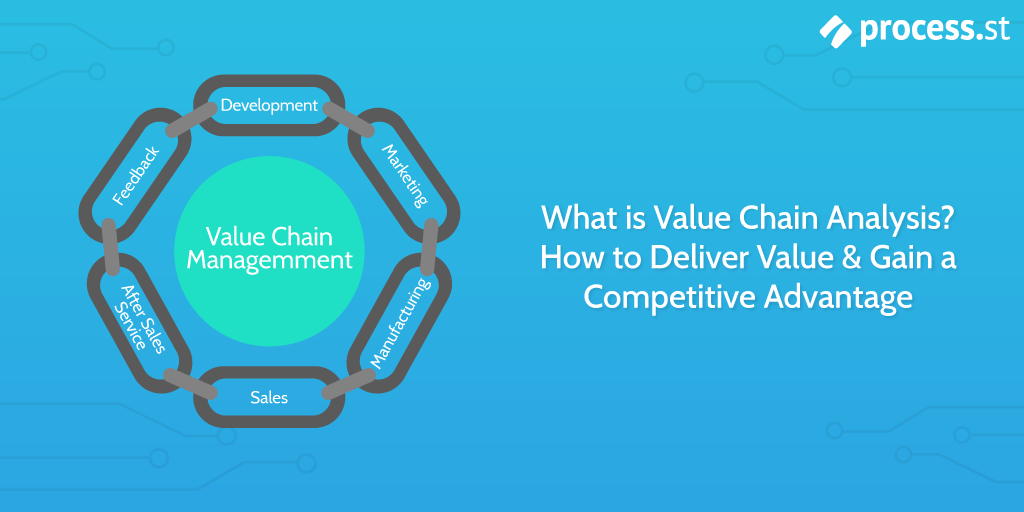
What is Value Chain Analysis? How to Deliver Value & Gain a Competitive Advantage

value chain analysis

How do you stand out against overwhelming competition? You need an edge; a value proposition isn’t enough on its own.

You need to make sure you’re out-competing the competition by keeping costs down and understanding the value you’re delivering to your customer. But how do you continuously improve your value offering while keeping costs down?

Enter the value chain.

A value chain is a model of looking at all of your business processes and figuring out how to gain a competitive advantage by focusing on developing maximum value in your product or service, while keeping your profit margins in the green at the same time.

Originally proposed by Harvard’s Michael Porter in his 1998 book Competitive Advantage, there’s a lot of ground to cover. Where do you start? What’s the process? What kind of tools exist to make the value chain analysis easier?

Well, if you’re looking for a clear, concise introduction to Michael Porter’s Value Chain model, you’ve come to the right place. Read on for a breakdown of:

By the end of this article, you should have a firm grasp on the value chain model, with a better idea of how to apply it to your own business. We’ll also investigate how to integrate BPM software like Process Street into the value chain.
Continue Reading

How to Unlock the Secret to Customer Success: Automation

customer success automationThis is a guest post from Shawn Mike. Shawn has been working with writing challenging clients for over five years. His educational background in the technical field and business studies has given him the edge to write on many topics. He occasionally writes blog articles for Dynamologic Solutions.

According to statistics, it is claimed that US organizations suffer a loss of $62 billion a year thanks to unsatisfactory customer service.

Customer service represents your secondary acquisition test, beyond actually getting that customer on board in the first place.

It’s very much a short-term game of conflict resolution, and your business depends mainly on how you deal with customer feedback and requests.

For maximum lifetime value, you need to consider how to synergize customer service with customer success.

It must be kept in mind that customers are the heart of every business and should be at the top of your priority list.

Satisfied customers help increase sales and build brand identity and reports claim that 77% of customers are estimated to recommend a brand or business to a friend depending on how good their experience with your product is.

Which is why focusing on keeping your customer base satisfied with great service and excellent products can go a long way in improving your sales.

Nowadays, consumers expect more than just a great product. They need you to guide them through the perfect experience. A better customer experience equals a greater lifetime value expectancy.

This article is all about figuring out the best way to analyze and improve customer experience by automating a lot of the manual work that can get in the way.

We’ll focus on:

Read on to learn more about how to optimize your customer success strategy. There’s even a free Ebook for you at the end of it!
Continue Reading

Take control of your workflows today

Choose which optional cookies to allow. You can change or withdraw consent here at any time.