But how did Marie Kondo revolutionize the act of tidying?
With a simple process called the “KonMari Method”.
In this post, you’ll find out who Marie Kondo is, the science behind the lauded KonMari Method, why the method is beneficial for everybody, and you’ll even get your hands on a (free) KonMari Method checklist!
Read through the following sections to get the complete rundown on Marie Kondo:
In this post, we’ll be looking at and learning about performance appraisal.
While we won’t be praising performances of global stars à la the judging panel of the Oscars or Golden Globes, we will be using performance appraisals to assess the conduct of the stars in your workplace.
For instance, 68% of employees who receive consistent, accurate feedback are more fulfilled in their jobs, in turn boosting employee engagement. Additionally, 92% of employees believe feedback – including negative feedback, if delivered appropriately – is effective for improving performance, resulting in increased employee output.
For performance appraisals to be successful, however, certain rules and procedures must be followed diligently.
Otherwise, the appraisal could backfire and have seriously detrimental results, including distrust and demoralization.
From a business perspective, this can be devastating.
So, to learn how to provide effective performance appraisals, read through the sections below:
Organizations face a wide array of uncertainties that can disrupt operations, threaten profitability, and damage reputation. Whether it’s market volatility, technological disruptions, or regulatory changes, the ability to anticipate, assess, and mitigate risks has become a crucial part of successful management. This is where risk management comes into play.
Risk management is the structured process of identifying potential threats, evaluating their likelihood and impact, and developing strategies to minimize or eliminate their adverse effects.
By integrating risk management into their decision-making processes, organizations can not only safeguard their assets but also seize opportunities that arise from taking calculated risks.
In this article, we explore the fundamentals of risk management, its various types, and why proactive risk mitigation is essential for businesses to thrive in uncertain times.
Yahoo! lost $350 million to their sale price after the reveal that a security breach had caused 3 billion accounts to be compromised. They learned the hard way that if you have sensitive data you’ll also need measures to protect it.
You need an easy way to secure your processes without providing extra hoops for your team to jump through and get confused over.
This feature lets you hide tasks from viewers with variable permission levels within your checklists. You’re left with a checklist that shows different tasks to different people based on what you think they should see.
The best thing? It solves your security and clarity issues while providing a singular location for your data to be stored, making it easy to review.
In 2018, we saw more than 3.8 billion email users worldwide. 3.8 billion and increasing. That is almost half the worlds population on email.
From this statistic, Process Street gives to you both good news and bad news. The good news is that you have a fantastic method to communicate with your customers.
Email after email multiplied into the billions loses your line of communication to the spam folder.
How do you make sure your emails are noticed and stand out from this crowd? The answer, by sending follow up emails.
In this Process Street article, we will look at the basics of follow up emails. We provide email templates to help you get started and processes for follow up email campaigns.
We will help you stand out.
In this article you’ll find:
Who needs a follow up email?
How to write a follow up email.
Why do you need to write follow up emails?
Five follow up email templates.
How to write an email campaign.
How you can use Process Street to help your email campaign.
“[the] systematic, independent and documented process for obtaining objective evidence and evaluating it objectively to determine the extent to which the audit criteria are fulfilled.” – ISO, from ISO 19011:2018 – Guidelines for Auditing Management Systems
That’s another way of saying someone takes a look at what you’re doing, gathers some evidence, and compares that evidence to what you’re supposed to be doing (in other words, a set of clearly documented requirements).
In the case of ISO, these requirements are known as standards. ISO 9001 is a standard. ISO 14001 is a standard.
Importantly, this understanding of audit implies that there are a few main things being considered by the auditor:
What’s documented by the company (e.g. internal processes, policies, and SOPs)
Evidence gathered to support how these policies, procedures, and SOPs are implemented in practice
The requirements defined by the ISO standard being audited against (e.g. ISO 9001)
Audits performed by companies to assess and analyze their own management systems are known as internal audits. Many resources for guiding companies on how to perform internal audits exist, and foremost of these is the ISO 19011 standard.
For most management system standards, internal audits are an important requirement. Even guideline standards like ISO 26000 for social responsibility depend on reports to evidence the success of their implementations.
As such, ISO 19011 defines a set of guidelines; a framework for companies to plan, implement, and improve upon their audit programs, for auditing the implementation of management systems.
Since the first edition of ISO 19011 was published in 2002, many new management system standards have been published.
These standards often share a common structure, including certain requirements, terms, and definitions being used. That means ISO 19011 can be used to devise highly economic audit programs, wherein knowledge and processes can be shared and applied across various management systems.
By considering how they might take a broader approach to management system auditing and integration, companies implementing ISO management systems stand to save time, money, and confusion when preparing for and implementing internal audits.
The goal of this post is to provide a spring-board for understanding ISO 19011, and how to get started with internal ISO auditing. In this post, I’ll cover:
What is ISO 19011
7 principles of ISO auditing
Different types of ISO audit
Key elements of an ISO audit
8 free ISO audit templates
If you just want the free ISO audit templates, then here they are:
This is a guest post by Adlin Sherley, an enthusiastic writer specializing in social media marketing techniques. She has a healthy obsession with writing, reading and catching up with her friends. Her passion is to help people in all aspects of marketing through the content she provides.
If you have a product, service or even just an idea that is worth selling, how would you do it? How would you let people know?
In the world of business, certain principles have been relevant for centuries. The concepts of promotion and marketing have existed for as long as humans have been trading.
Humans have always used their voices to communicate, tell stories, and spread messages, which is why word of mouth is still one of the simplest yet most effective ways of marketing something.
Before the internet or advent of the printing press, marketing moved slower. Person A used or came across something that caught their attention, and then they went around spreading the word to B, C, D, and whoever else was along the way. Arguably, it was a lot easier to convince people back then.
One thing that has changed with the advent of digital technology, is the speed and reach of marketing and advertising tools.
Enter the digital era
As we enter into the age of information, technology has made reaching large numbers of people as easy as a single click.
On the other hand, this means that competition in the attention-economy is fiercer than ever, with the coveted-yet-fickle attention span of individuals the shining prize.
“Going viral is not an outcome; it’s a happening. Sometimes it happens; sometimes it doesn’t. Just remember, fans are vanity and sales are sanity.” – Lori Taylor (@lorirtaylor)
Analogies aside, marketing today is a matter of strategy; well-planned, well-implemented, and continuously improved upon. If your marketing strategy is bang-on, then there’s nothing stopping you.
Conversely, a single wrong move could set you back tremendously, and that’s why it’s important to establish a process.
Breaking down digital marketing
Here are some base points we want to touch on before we move on to the meatier part of this article:
Digital marketing is diverse, but still functions on the base principles of marketing
Social media is, and probably will be for a very long time, the most sought-after platform for digital marketing
Social media has a usable database of over a billion people
For the past two years and probably for the next decade, influencer marketing has massive scope for both big and small brands
Digital Marketing is very content driven, both textual and visual, and the consumer today is a highly aware one
As you’re reading this article, at least 100 million people are online, scrolling through a feed that is 60% marketing is various forms (direct and indirect)
Influencers are like the people who were originally invited as guests to a party, but then decided they could be of some use and started helping the host out. By the end of the night, they are running the party themselves, while the actual host just sits back and relaxes.
The only difference now is that a certain chunk of these consumers is becoming a part of the marketing plan because they add both quantitative and qualitative value.
In simpler words, brands want to reach more people and make more money; Influencers want to do the exact same thing. Et voila! A common ground that creates space for influencer marketing to flourish.
Word of mouth has gotten a makeover, a virtual one, and influencer marketing is an extension born of the digital age. And if the numbers are anything to go by, it’s doing pretty well.
Building an influencer marketing strategy for 2019
2019 has been touted as the year that influencer marketing generates a major portion of the revenue for brands that decide to market extensively on digital platforms. So, if you are a company/brand that’s looking to build a strategy with a higher success than failure rate, read on.
Let’s break down the strategizing process into steps:
Step 1: Define your target audience
Step 2: List out your objective(s)
Step 3: Do your research
Step 4: Shortlist the Influencers
Step 5: Do a comprehensive background check
Step 6: Design your campaign
Step 7: Execute your plan
Step 8: Measure your return on investment (ROI)
Step 9: Plan for phase 2
Step 10: Move on to the next campaign
Now that we have the framework for the strategy let’s also understand the more in-depth version of it.
Step 1: Define your target audience
Not just for an influencer marketing plan, for any marketing plan at all the target audience needs to be defined and fully understood.
If you don’t know who you’re catering to, or who is most likely to be associated with your brand, then you probably need to go back to the drawing board. On digital media, the age-spectrum of the audience is vast, which is why you need to find your segment and focus on that.
The lack of targeting in marketing leads to wasted resources and building plans that aren’t as concrete as they should be.
It’s like standing in a shooting range and firing indiscriminately, hoping that it will hit the target eventually.
To avoid wasting time and effort, it’s always smarter to just know who your audience is, what their preferences are, and why they would be inclined to purchase your product or service.
Step 2: List your objectives
Next, you’ve got to ask yourself (and your team) this: Why are we drawing up this plan and what do we hope to achieve?
The long-term goal is always the same – to increase sales and revenue. However, there are a lot of other goals and objectives along the way that you need to focus on as well. Is it brand recognition? Or is it increasing your market share? Or simple expanding your reach?
Whatever your goals, figuring out your process can help align those goals with the work you’re actually doing. You may want to consider using a prioritization matrix to figure out what needs to be done first.
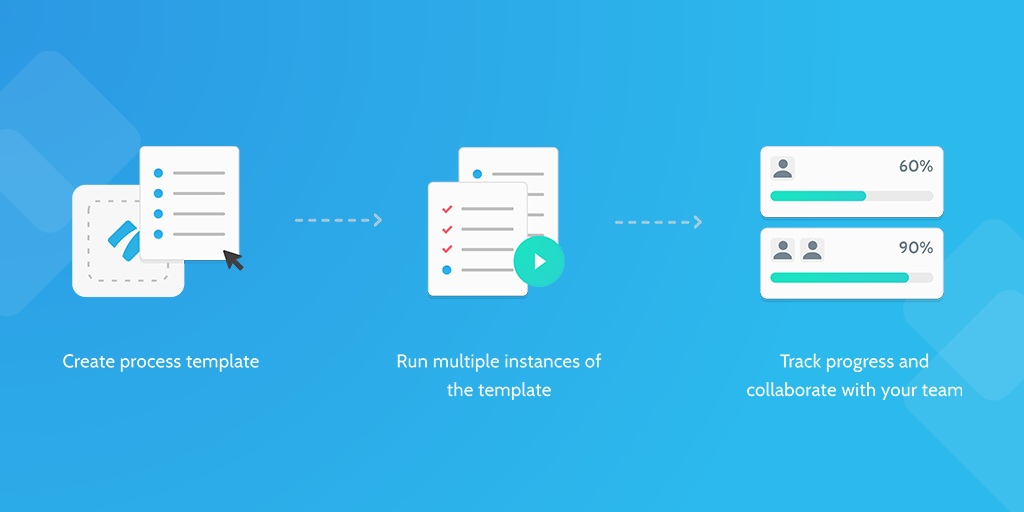
Using Process Street to build, run, and improve your business processes will help you hit your goals in the long run. It’s pretty simple:
There can be multiple objectives, and recognizing them really helps with forging the path ahead of you.
Sometimes the short-term goals are more important than the long-term ones, which means you might have to incur certain expenses now to be able to increase your overall revenue later on.
For influencer marketing, the collaterals delivered by both you and the Influencer are mostly focused on reaching out to more people and increasing the customer base of the brand.
Once you do that successfully, sales and revenue are bound to see a spike.
With your immediate objectives clearly listed out, you can set out on doing your research.
This research would include finding out about current market trends, campaigns that are doing well or and even those that aren’t, relevant market research for your brand’s niche, figuring out which digital platform would be more suitable for you, and also laying out your potential expenditure for the kind of campaigns you’re trying to create.
All of this pretty much lays the foundation for the building that you’re trying to construct. If influencer marketing is going to hold your fort, then you also have to ensure that your fort is strong enough by itself too.
The bottom line is to be fully informed and aware before you move on to the next steps because the right research will steer you in the right direction.
Step 4: Shortlist the influencers
This again involves a lot of research, because you need to know who the most bankable Influencers are at this point and also understand whether or not they would add value to your brand.
Not every influencer is the right one for you, irrespective of how many followers they have. If their niche matches yours, or rather can encompass your brand in it, then you know you’re making a safe choice.
It’s a smart idea to get in touch with multiple influencers, explain your brand’s ideologies to them, and understand whether or not they’d be able to advocate your brand’s personality through their own.
Remember, the audience of an influencer is persuaded by their choices, and they follow them for a reason, so your brand can either fit into the flow or get lost amidst the clutter.
Step 5: Do a calculative background check
This step has more to do with the numbers, which is really quite essential. A background check on the Influencers you shortlist helps you understand what type of content they produce, the quality you can expect, and also the kind of engagement their previous posts have received.
More engagement and more followers means better reach, but the quality of those followers is also important.
Sometimes you’ll see Influencers with not more than 10,000 followers are having better engagement numbers when compared to those with 50,000 followers. And that’s when you need to make a choice between just numbers and actual quality content.
Step 6: Design your campaign
Once you have your chosen Influencers to get on board, your next step would be to design a campaign based on your earlier aligned objectives. While you might be wondering why designing the campaign isn’t being done at an earlier stage, there’s a very solid reason for this.
Designing a campaign along with your Influencers is a smarter choice, simply because their input could make a significant difference in how your campaign turns out.
Another reason is that since they’re the ones who are going to be primarily working the campaign, you want to make sure that all of you are on the same page as well. And if the execution is to be successful, there has to be a lot of teamwork and brainstorming going into it.
Step 7: Execute your plan
The execution is very important, but you already knew that. The real task is improvising when things don’t go according to plan. When there are more overheads involved, the risks can also be higher. In that case, especially, it’s always smarter to have a Plan B for your execution.
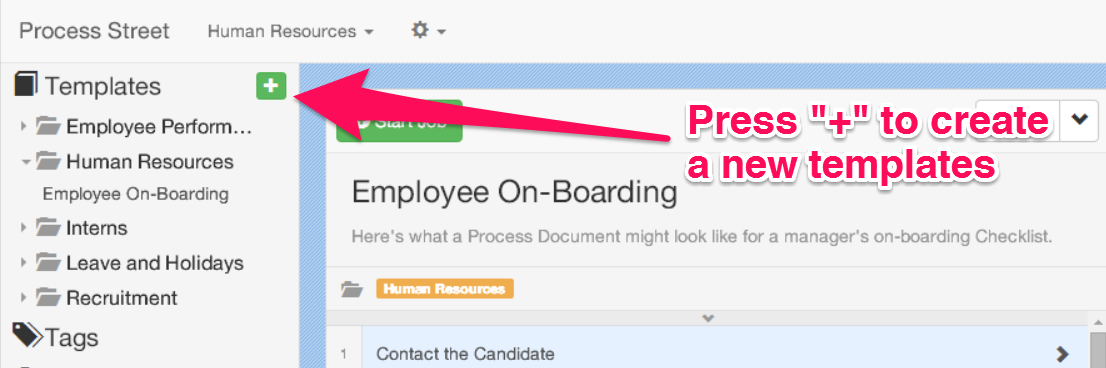
One of the things you can do to ensure success in executing your plan is to use Process Street to run a checklist. That might mean building the process by creating and editing a template, or using one of our custom-built templates like this social media influencer outreach checklist.
By using Process Street, you can streamline the whole process with features like conditional logic and dynamic due dates that eliminate much of the repetitive work you’d usually be burdened with.
For example, in the social media manager outreach checklist, form fields collect important information as you complete the checklist, so you can consolidate everything into and send an outreach email without ever leaving Process Street.
Here’s the social media marketing outreach checklist presented as an embedded template:
Process Street is a BPM software, and you can use it for literally anything that needs a process. Check out this video for more ideas how to use Process Street for your influencer marketing strategy, like how you might streamline the influencer onboarding process:
Usually, if Step 1 to 6 has worked out well for you, then Step 7 plays out pretty smoothly too. Your target should ideally be to get the word out about your campaign; both pre and post need to be done step by step.
Your Influencers play a massive part in bumping up the numbers to make the execution a success, and team players will ensure that this happens.
Step 8: Measure your return on investment (ROI)
The work doesn’t stop post-execution and completion of the campaign. After this, you’ll need to figure out how well your campaign performed by measuring your ROI. Were your objectives achieved? Did you reach the target set? Did your Influencers deliver what they said they would?
This assessment helps you understand where you can improve, what part of the strategy you need to repeat to make your next campaigns successful, and also whether or not the alliance formed with the Influencers would be beneficial for you in the future. Even if you do not see the numbers in terms of sales, seeing an increase in reach and digital presence is just as crucial for your brand.
Step 9: Plan for phase 2
With all your results and data in hand, it’s time to start planning for your next campaign. The key takeaway here is that you shouldn’t stop once you’ve got the ball rolling. Influencer marketing is a continuous process. When you have a set bandwagon of Influencers in hand, it’s smart to build an ongoing relationship with them and carry that forward to your future campaigns as well.
If the partnership works, you’re going to see a boost in following, digital presence, and most definitely in revenue and sales as well. For the bigger picture to become a reality, you need to make a conscious effort to keep rolling out new campaigns and always have your audience engaged with the brand.
Step 10: Move on to the next campaign
As you move on to the next influencer marketing campaign, you’re already going to have a good idea of what has worked for you thus far and what has backfired. Even if you need to go back to the drawing board and start from Step 1, don’t worry. Sometimes it takes a failed campaign to perfect the next one.
A brand needs to typically engage their audience in 5-6 campaigns in a year, although not all of these need to be influencer marketing campaigns. Many brands choose to have a separate set of campaigns dedicated solely to Influencers, and that works out better because the target audience and business goals are more focused.
More social media marketing resources
Business process management is applicable to just about every aspect of your company, from on-page SEO to social media manager daily tasks. Building and using processes for every aspect of the social media influencer marketing strategy can help you to improve success rate and stop wasting time on tedious manual tasks that can easily be automated.
Check out these resources for more ideas how to start implementing marketing processes for your business:
The trends in influencer marketing are continually changing, which is why you need to always be up to speed and ready to take on new challenges.
Recent statistics have shown that brands have seen a significant increase in market presence in a comparatively shorter time due to influencer marketing.
Believe it or not, Forbes claims that it is going to become a $10 billion global industry by the year 2020, so it’d be completely within your interests to cash in on this rapidly growing marketing opportunity.
It’s the ship that might never sink, and you’ve got to make a spot for yourself before it sails away.
How does your influencer marketing strategy differ from this one? Let us know in the comments below. We’re always seeking to improve and expand upon existing processes.
This is a guest post by Nicole Cowart, an online marketing executive. She works at a cloud-based company that offers smart business solutions. She is currently studying for her Master’s degree in Web Development.
Digital marketing is the future of marketing and doing business. Most successful companies currently have their online websites and stores that generate more traffic.
Nevertheless, online marketing is also the right place for beginners who are taking their first steps in the business realm.
Even if you’re not a professional marketer, you can still design and execute a successful content strategy that helps you establish your status in the online world. All you need is a good process for it.
Lease renewals are a core workflow in property management that need to be executed with care and professionalism to get the desired outcome.
As is the case with property management in general, the lease renewal process depends on a series of decisions made by the property manager, property owner, and the tenant which can be unpredictable and demands adaptability on the part of the property manager to avoid delays, frustration, and unnecessary costs.
The dependency on decisions made by owners and tenants means that it is absolutely critical to stay ahead of the game and maintain a consistent flow of communication with both the owner and the tenant to ensure they are comfortable with moving forward, whether that be renewing the lease or vacating the property.
In this post, I’m going to run through the lease renewal process, break down what it involves, explain how a smooth process benefits your property management firm, provide some tips for handling key components like raising rent, negotiating, and evaluating the suitability of month-to-month leases.
Finally, I’ll go through how simple workflow software can streamline the whole process and help you avoid facing challenges that stifle growth, namely having to constantly find, screen and onboard new tenants. Though this is sometimes unavoidable, a formal, documented process that is followed by your team and tracked by managers puts you in the best position to manage the lease renewal process as effectively as possible.
It’s no secret that documenting and analyzing your business processes is vital to creating a healthy business.
Yet, despite the benefits of bpm software and business process mapping being readily talked about, value stream mapping doesn’t get the same share of attention.
This is a mistake.
Value stream mapping is just as, if not more, important to reducing waste and increasing your business’ efficiency than standard process mapping.
That’s why I’ll be showing you how to make a value stream map from start to finish, with no wasted time and no needlessly confusing terms.